Key takeaways
- Baptisia australis has blue, lupin-like spires in early summer and holds an RHS Award of Garden Merit
- It is a legume that feeds itself, so never needs fertiliser
- Plant it once, in full sun, in its final spot: the deep taproot hates being moved
- Expect a slow start: about three years to flower well, then it lasts for many years
- Hybrids such as 'Purple Smoke' and the Decadence series add violet, yellow and maroon
- Dark seed pods stand through winter; cut everything down by late February
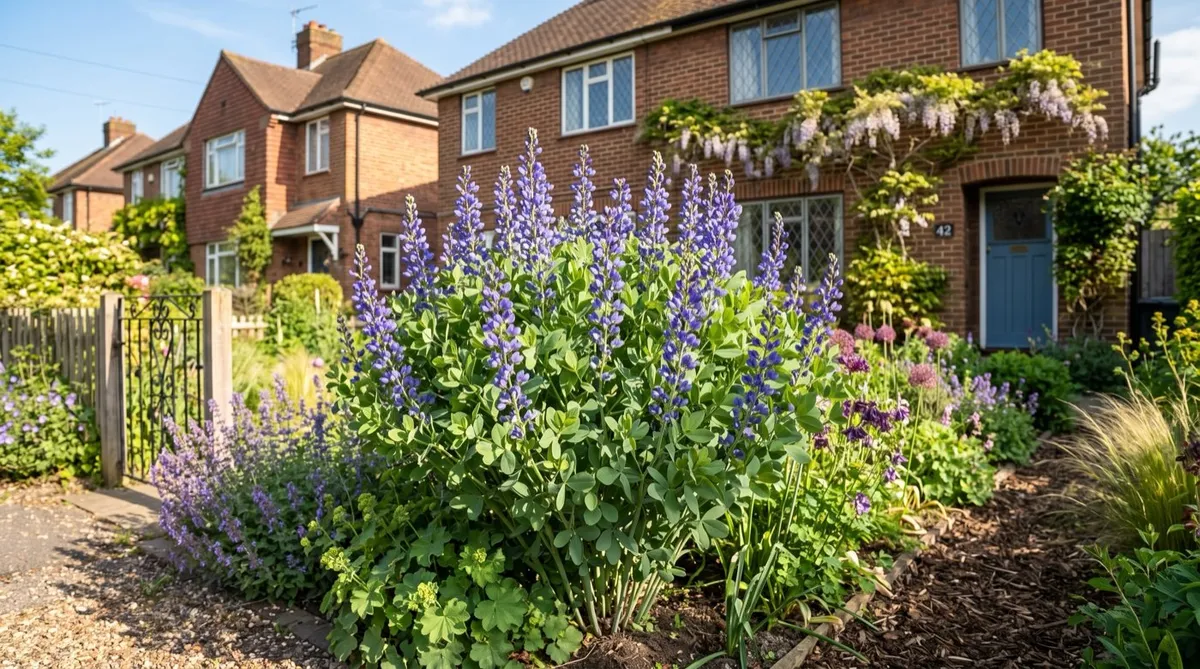
Baptisia, or false indigo, gives you lupin-like spires of blue pea flowers in early summer without the lupin’s troubles. It is fully hardy, feeds itself and, once settled, carries on for many years with almost no care.
There is one catch, and it shapes this whole guide. Baptisia grows a deep taproot. That root makes it tough in a drought, but it also means the plant hates being moved and spends its first couple of years growing down rather than flowering. Choose the spot carefully on day one and it asks for very little again.
What is baptisia and is it better than lupins?
Baptisia is a long-lived perennial from the prairies and woodland edges of North America. The garden favourite is Baptisia australis, blue false indigo. It grows about 1.2m tall, with blue-green leaves and spires of violet-blue pea flowers from late May into July. It holds the RHS Award of Garden Merit. The name comes from its old use as a substitute for true indigo dye.
It belongs to the pea family, so its roots carry nodules that take nitrogen from the air. In plain terms, it feeds itself. You never need to fertilise it, and it flowers better on lean soil than rich.
Compared with lupins, baptisia is slower but far longer-lived. Lupins flower brilliantly in their first year but can be wrecked by lupin aphid and often fade after a few seasons. Baptisia takes about three years to get going, then stays for many years.
Baptisia isn’t edible. Like lupins, it is best kept away from pets and children who might chew it.
Best baptisia varieties for UK gardens
Start with Baptisia australis, the toughest and most reliable. Hybrids then widen the colours and give smaller sizes.
- Baptisia australis: the classic violet-blue, about 1.2m tall.
- ‘Purple Smoke’: smoky violet flowers with a darker eye on charcoal-grey stems. A cross between B. australis and the white B. alba.
- Decadence series: compact hybrids, under 1m, that suit smaller borders. ‘Lemon Meringue’ is lemon yellow, ‘Cherries Jubilee’ is maroon and yellow, and ‘Dutch Chocolate’ is deep chocolate-purple.
- Baptisia alba: clean white spires that shine against a dark hedge.
- B. australis var. minor: a shorter form of the species for the front of a border.
| Variety | Size | Colour | Good for |
|---|---|---|---|
| B. australis | About 1.2m | Violet-blue | The toughest all-rounder |
| ’Purple Smoke’ | About 1.2m | Smoky violet, dark eye | Unusual colour, grey stems |
| Decadence series | Under 1m | Yellow, maroon, chocolate | Smaller borders |
| B. alba | About 1.2m | White | Lighting up dark corners |
Baptisia is usually sold in small pots, because nurseries can’t hold a taprooted plant in a container for long. Don’t be put off. A small plant settles its root quickly and soon catches up with a bigger one.
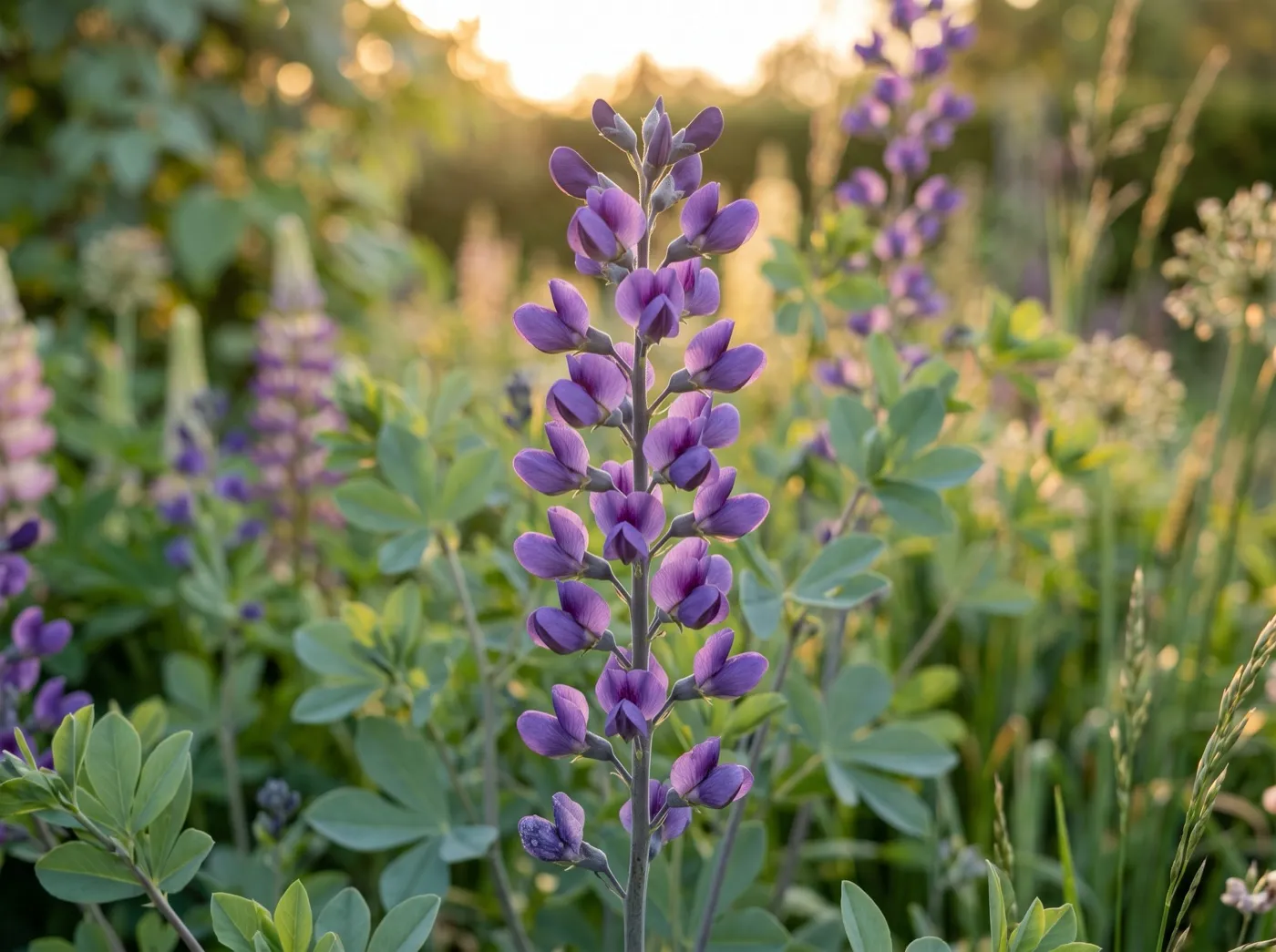
‘Purple Smoke’ has smoky violet pea flowers on dark stems. It is one of the easiest hybrids to find in the UK.
Where to plant baptisia
Plant baptisia in full sun, in well-drained soil, in a spot where it can stay for good.
Sun keeps the plant compact, upright and full of flowers. In part shade it survives, but it stretches, leans and flowers thinly. Give it the sunniest border you have.
Drainage matters more than richness. Most soils are fine, including clay that doesn’t sit wet in winter. Avoid boggy ground.
Permanence is the rule people break. The taproot goes deep, and old plants can’t be lifted without snapping it. Picture the mature plant, a rounded mound about a metre across, before you dig. Leave space for it, so you never need to move it. The general guide to moving perennials and shrubs works for most plants, but baptisia is one to leave alone.
How to plant baptisia
Plant baptisia in spring, from April to early June. That gives the taproot a full season to grow down before winter.
- Dig a hole as deep as the pot and twice as wide.
- Slide the plant out gently. Don’t tease the roots apart, as you might with other perennials.
- Set the crown level with the soil surface, not buried.
- Backfill, firm gently and water in well.
- Water weekly through the first summer if it stays dry.
That first summer is the only time watering really matters. From the second year, the deep root finds its own moisture.
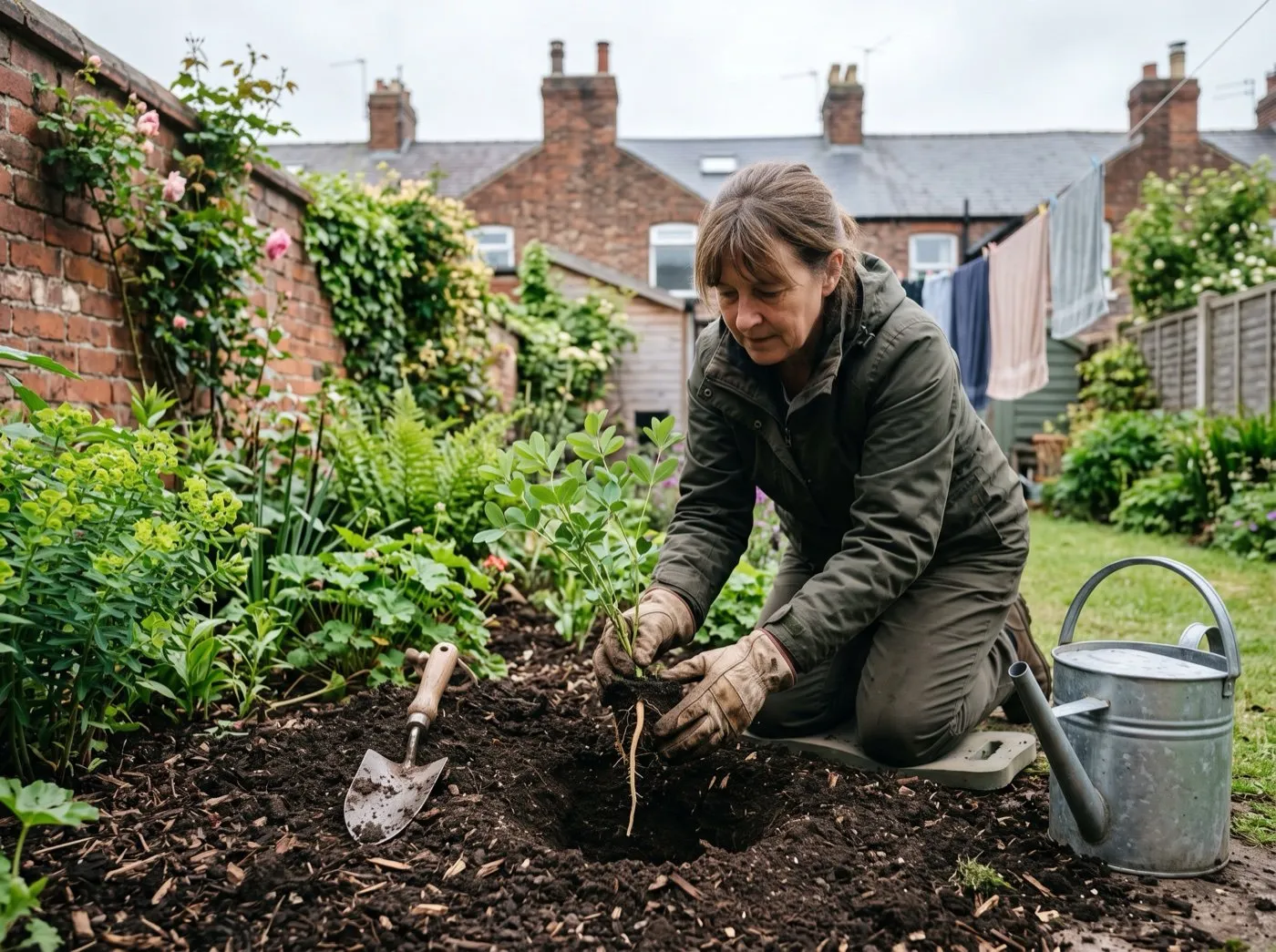
Wide hole, crown level, roots left alone. Planting day is the one decision that really counts with baptisia.
How long does baptisia take to establish?
About three years. Knowing this in advance stops you giving up on a perfectly healthy plant.
There is an old saying about prairie perennials: first year it sleeps, second year it creeps, third year it leaps. In year one, a new plant makes a small tuft of leaves and probably no flowers. In year two it grows bigger and may throw a few spires. By year three you get a proper mound and a real show of flowers. After that, it behaves like a small shrub that dies down each winter.
Baptisia also comes up late in spring, often well after other perennials. Mark its position with a cane in autumn so you don’t dig into it by mistake, and don’t give up on it before May.
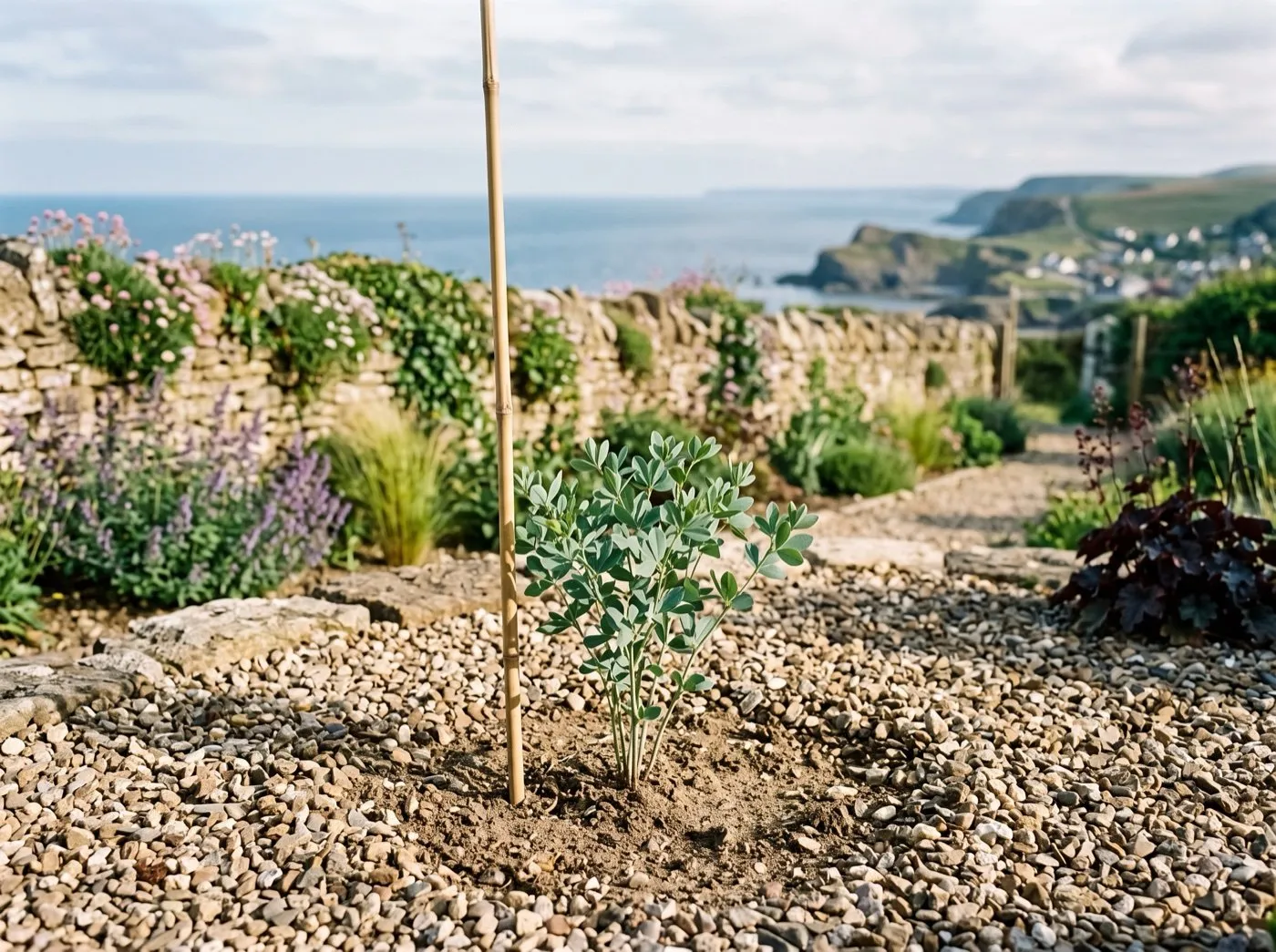
A first-year plant looks modest like this. Most of the action is underground, building the deep root.
Watering, feeding and staking baptisia
Once established, baptisia needs very little.
- Watering: only in the first summer, and only in dry spells.
- Feeding: never. It makes its own nitrogen, and rich soil gives soft, floppy growth.
- Staking: usually not needed in full sun. In part shade, or on rich soil, stems can flop after heavy rain. A grow-through support hoop set over the plant in April hides inside the leaves by June.
If yours flops every year, give it more sun and stop feeding the soil around it. That fixes the cause, not just the symptom.
Baptisia seed pods: cut them or keep them?
Both are fine. After flowering, baptisia sets fat seed pods that ripen dark grey to black in autumn. The loose seeds rattle inside in the wind, and the pods stand on stiff stems through frost. Flower arrangers love them for dried displays.
Cut off the spent spires in July if you want the leafy mound at its freshest. Leave them if you want winter structure and seed to sow. Next to grasses and seedheads, the dark pods are one of the best sights in a frosty border.
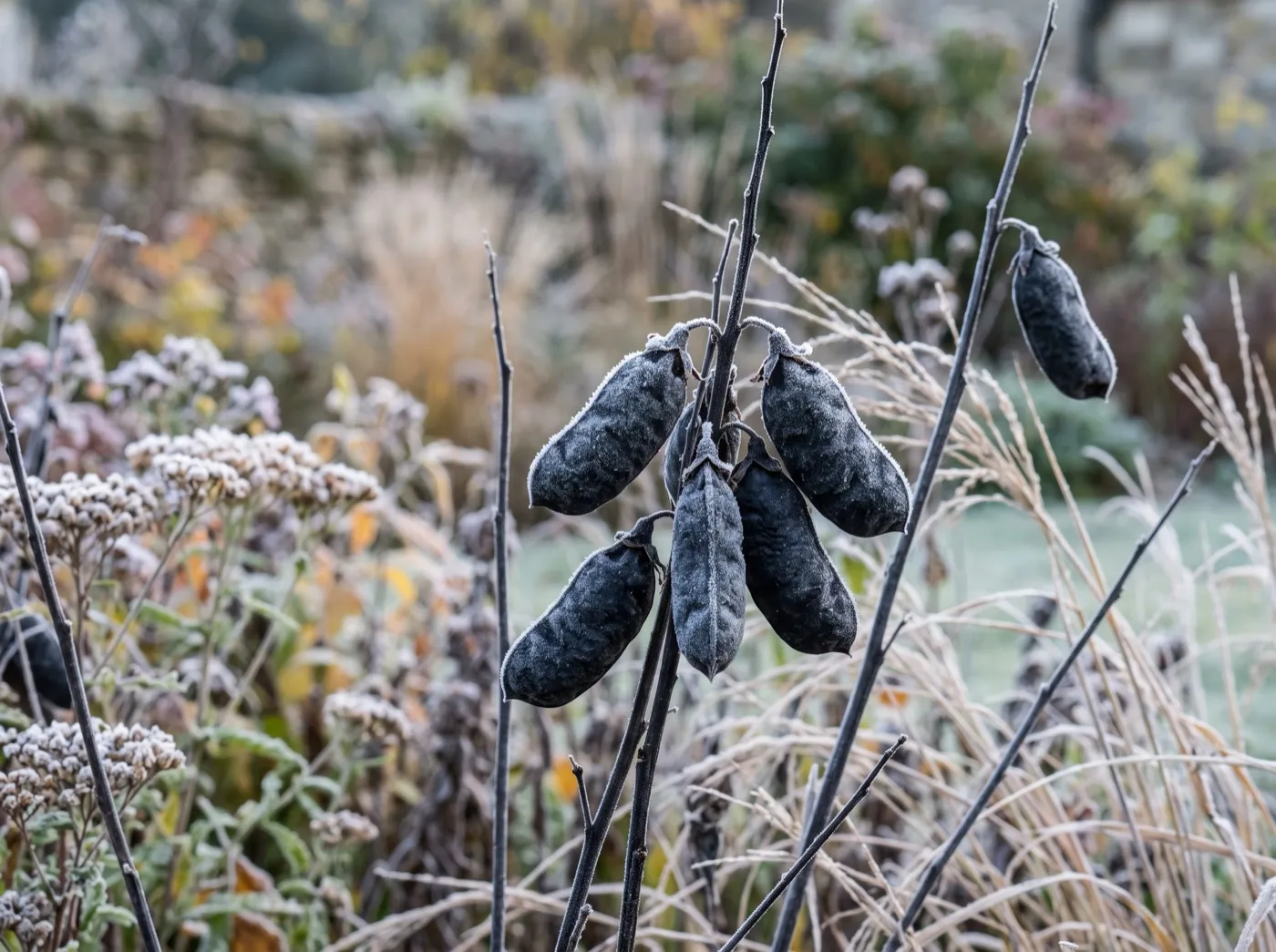
Leave the pods on and they rattle in the wind and stand right through the frost.
How to propagate baptisia
Grow new baptisia from seed or basal cuttings, not division. Splitting an established clump usually kills it.
Seed is the main route. The seed coat is very hard, so rub the seeds gently between two sheets of sandpaper until they look scratched. Then soak them overnight in warm water. Seeds that swell up are ready to sow. Sow them about 5mm deep in pots of gritty compost in spring and keep them somewhere warm. Germination is slow and patchy, so be patient. Fresh seed from your own pods tends to do better than old packet seed. Named varieties such as ‘Purple Smoke’ won’t come true from seed, so this works best for the species.
Basal cuttings are taken in spring when new shoots are a few centimetres tall. Cut a shoot right at the base, with a sliver of the crown if you can. Pot it in gritty compost, keep it in a cool, shaded spot and keep the compost just moist. Some will root and some won’t, so take a few.
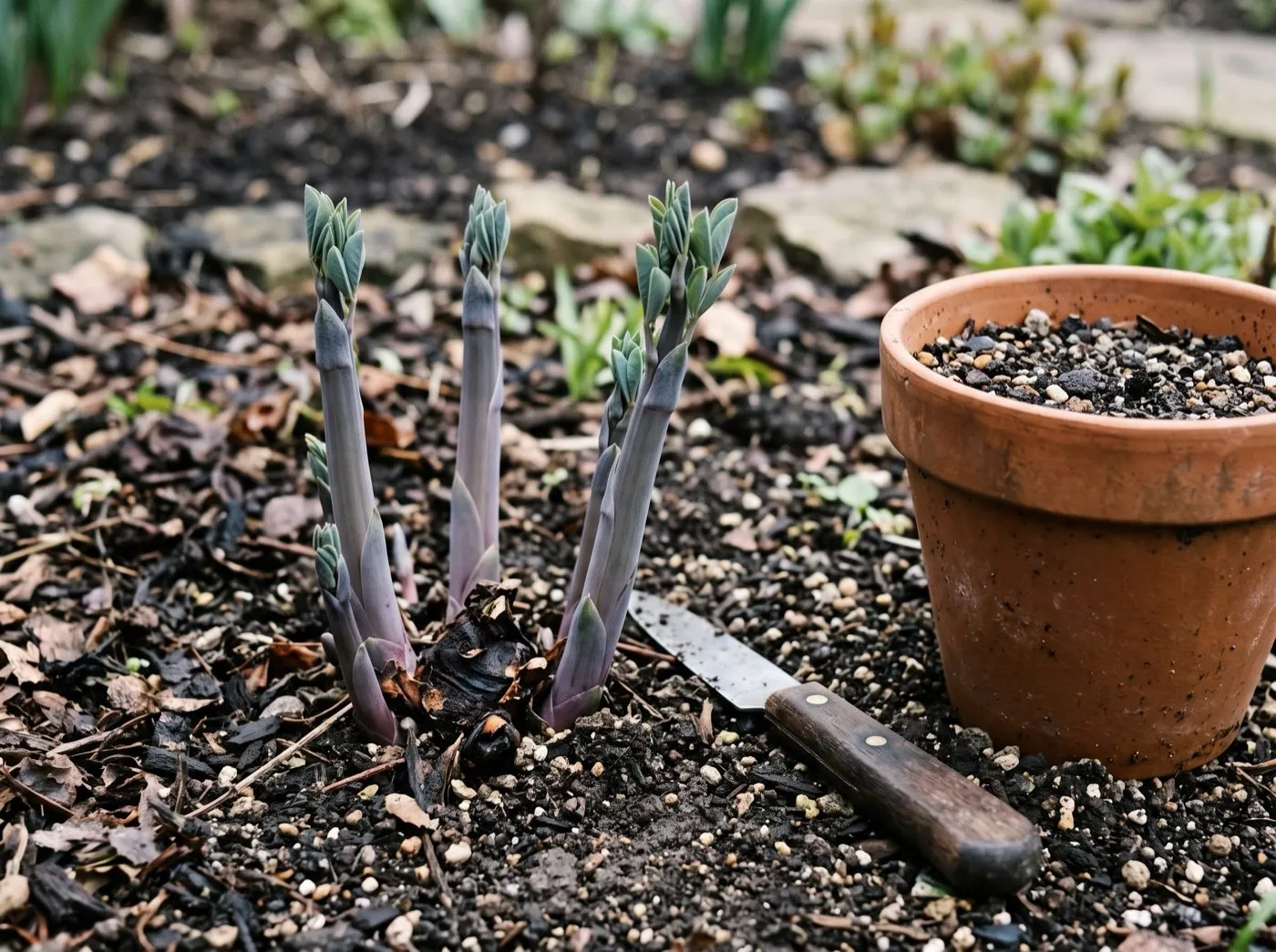
Spring shoots like these are the ones to take as basal cuttings. Cut low and pot them in gritty compost.
Cutting back baptisia in winter
Baptisia dies back completely each winter. The only choice is when to cut it down.
The first hard frost blackens the leaves, usually in late autumn. If you removed the spires in summer, cut the whole plant to the ground then and compost it. If you kept the pods, leave the stems standing for winter interest.
Either way, cut everything to the ground by late February, before the thick, asparagus-like new shoots appear. They snap easily and won’t be replaced that season. No mulch or winter protection is needed.
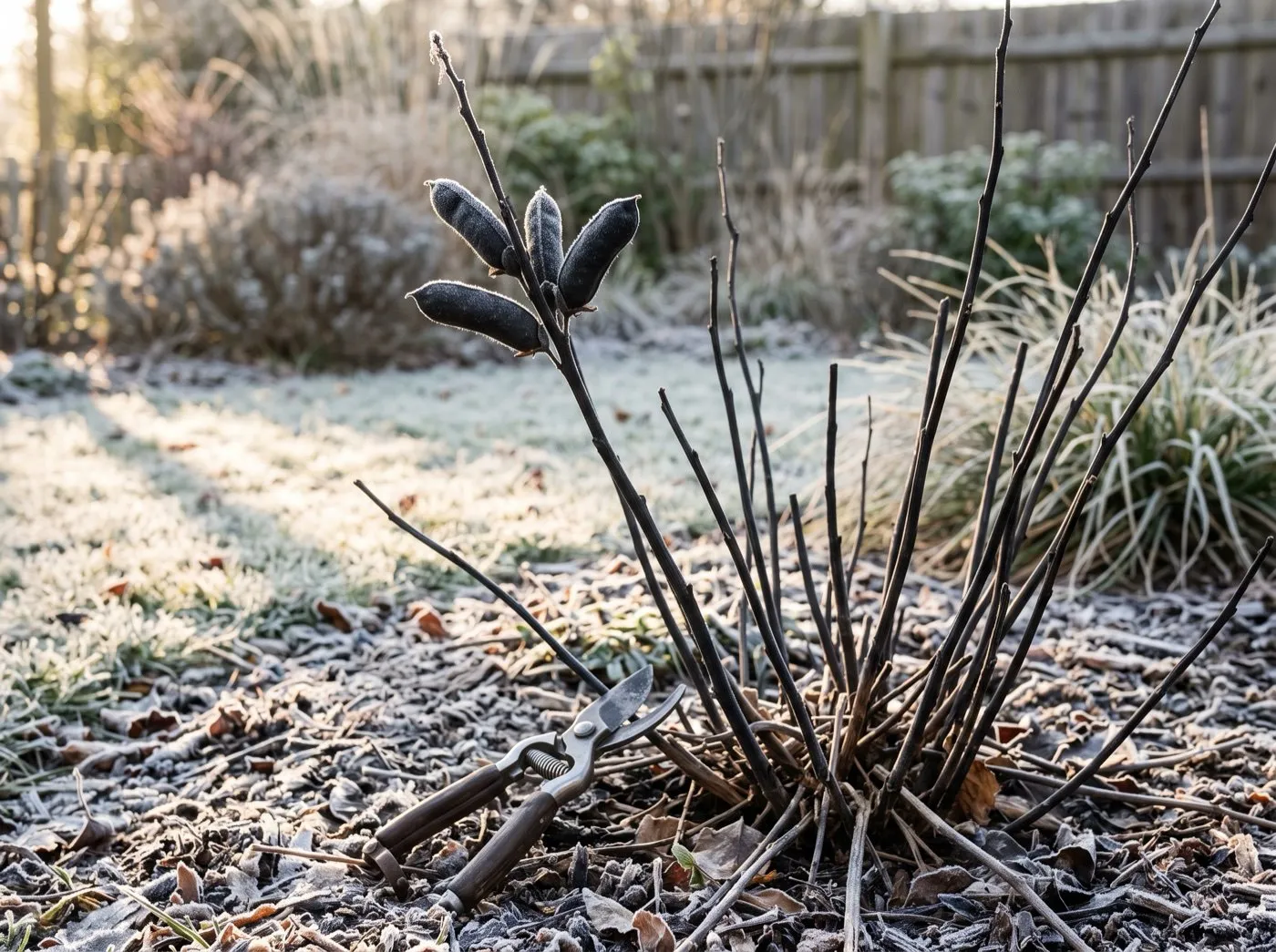
Cut the old stems right down by late February, before the new shoots push through.
What to plant with baptisia
Baptisia flowers in the late May gap, after the tulips and before most summer perennials. Its leafy mound then holds the space calmly until autumn.
For bold contrast, plant it with orange or scarlet geums, which flower at the same time and sit neatly in front of the spires. For a cooler look, deep purple salvias pick up the blue and carry on after baptisia fades. In a gravel or prairie-style border, set it among ornamental grasses, where the pods stand out from late summer.
It suits cottage borders too, giving tall blue spires where you might have used delphiniums or lupins, with far less fuss.
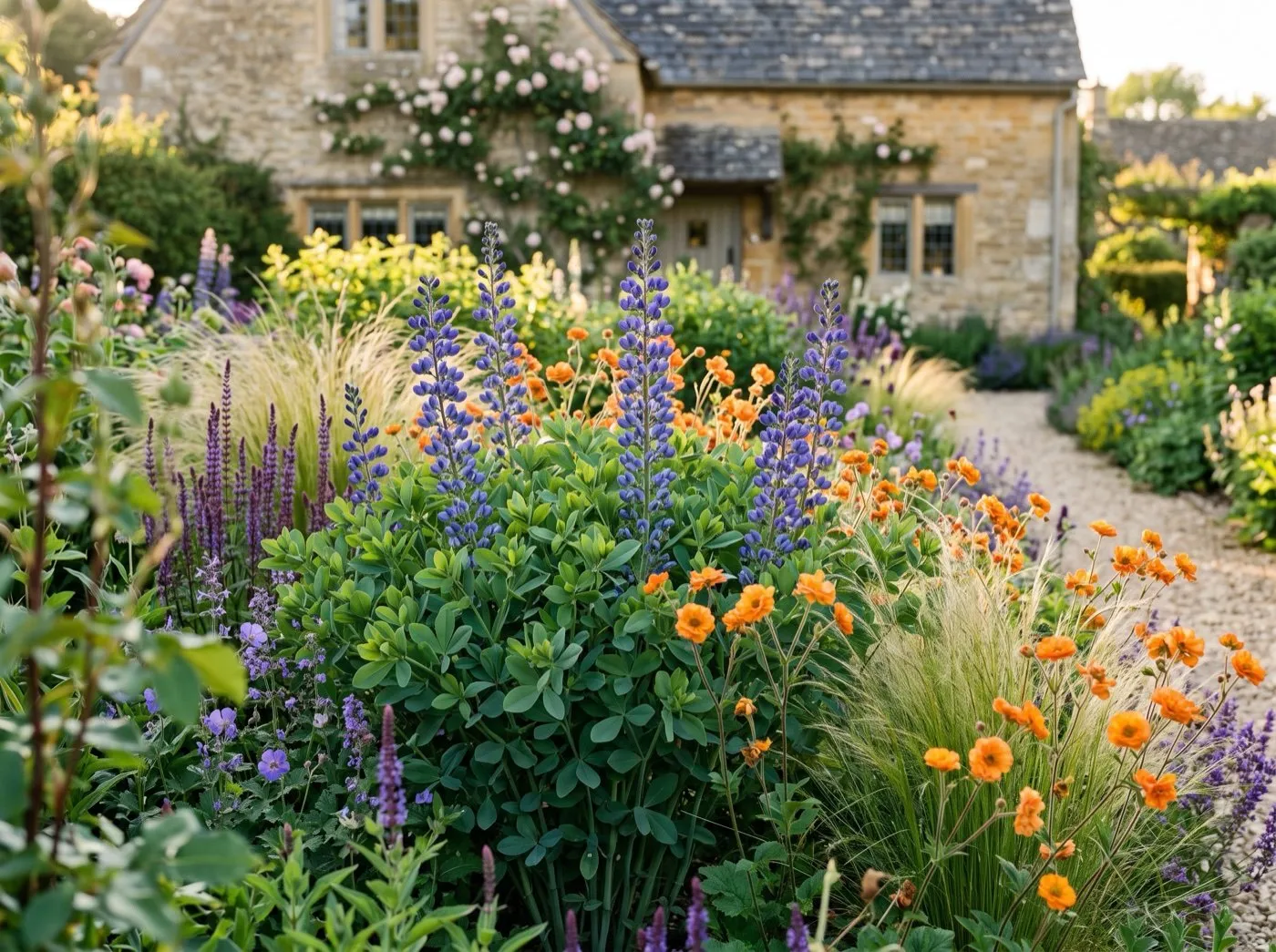
Blue spires and orange geums flower together in early summer, a cheerful pairing that needs very little care.
Baptisia growing calendar
| Month | What to do |
|---|---|
| January | Nothing. Crowns are dormant and hardy |
| February | Cut stems and pods to the ground before new growth |
| March | Mark crowns with canes; shoots appear late |
| April | Plant new baptisia. Take basal cuttings |
| May | First flower spires on established plants |
| June | Main flowering. Water first-year plants in dry spells |
| July | Flowers fade. Cut spires off, or leave them for pods |
| August | Pods swell and darken |
| September | Collect seed as pods turn dark |
| October | Leaves blacken after frost. Cut back or leave standing |
| November | Leave pods standing for winter structure |
| December | Nothing. Enjoy the pods in the frost |
Common baptisia problems
No flowers. Usually the plant is just young. Give it two or three years. An older plant that won’t flower needs more sun.
Sulking after a move. Baptisia hates being moved. A transplanted plant may not flower for a year or more, and some never recover. Leave it where it is and water it in dry spells.
Flopping open. Too much shade or too much food gives soft stems. Move it to sun, stop feeding and add a support hoop in spring.
Late to appear. Baptisia shoots come up later than most perennials, often in late April. It isn’t dead. Wait until May before worrying.
Common mistakes with baptisia
- Planting in shade. It stretches and flowers poorly. Give it full sun.
- Feeding it. It makes its own nitrogen, and feeding gives floppy growth.
- Moving or dividing it. The taproot snaps. Plant it once and raise new plants from seed.
- Giving up too soon. Two quiet years are normal. Wait for year three.
- Cutting back too late. New shoots snap easily. Cut down by late February.
Plan your sunny border
Baptisia is a great backbone plant for a sunny border. For another tall, long-lived perennial that needs no staking, read about veronicastrum. For a soft, long-flowering edging plant in front of baptisia, try catmint, or browse more growing guides.
Frequently asked questions
Why is my baptisia not flowering?
It is probably still young. Baptisia spends two or three years building roots before flowering well. An older plant that won’t flower usually needs more sun. Don’t feed it, as rich soil gives leaves rather than flowers.
Is baptisia hardy in the UK?
Yes, it is fully hardy throughout the UK. It dies back to the ground each winter and reshoots in spring, and copes with cold clay once settled, provided it isn’t waterlogged.
Can you move an established baptisia?
Not safely. The deep taproot snaps rather than lifts, and moved plants often die or sulk for years. Plant baptisia in its final spot, and raise new plants from seed rather than dividing.
Should I cut back baptisia in autumn?
You can, or leave it until late February. Cutting in autumn gives a tidy border. Leaving the stems keeps the dark seed pods, which look great in frost. Either way, cut down before new shoots appear.
Can you grow baptisia in a pot?
Only for a short while. The taproot wants deep soil, so a pot works as a holding measure for a year or two at most. Plant it out in the border as soon as you can.
Is baptisia better than lupins?
For a long-lived plant, often yes. Lupins can be hit hard by lupin aphid and tend to fade after a few years. Baptisia avoids those problems and lasts for many years. The trade-off is patience, as it takes about three years to flower well.
How do you grow baptisia from seed?
Rub the hard seed between sandpaper, then soak it overnight before sowing. Sow in pots of gritty compost in spring, about 5mm deep. Germination is slow and patchy, and seedlings take about three years to flower.
Our team produces practical UK gardening guidance from source research, contributor records and established horticultural practice. Editorial standards are overseen by Matt W.