Key takeaways
- Blue anise hyssop is the reliable, edible type; orange and pink hybrids are showier but shorter-lived
- Give every agastache full sun and free-draining soil, as wet winter soil kills more than cold
- Sow seed on the surface under cover in spring, and early sowings flower the same summer
- The aniseed-scented leaves and flowers of anise hyssop make a lovely herbal tea
- Leave stems standing over winter and cut back in March
- Take cuttings in late spring to keep tender types going
Agastache is a bee magnet for sunny borders, with long spikes of tiny flowers from July into autumn. The blue anise hyssop (Agastache foeniculum) is tough, smells of aniseed and makes a lovely herbal tea. The bright orange and pink types are showier but shorter-lived. Give any agastache full sun and free-draining soil, and it asks for very little.
Despite the name, anise hyssop isn’t the same plant as true hyssop. For that woody Mediterranean herb, see the guide to growing hyssop.
Which agastache should you grow?
Agastache splits into two groups that behave very differently. Knowing which you’re buying saves a lot of disappointment.
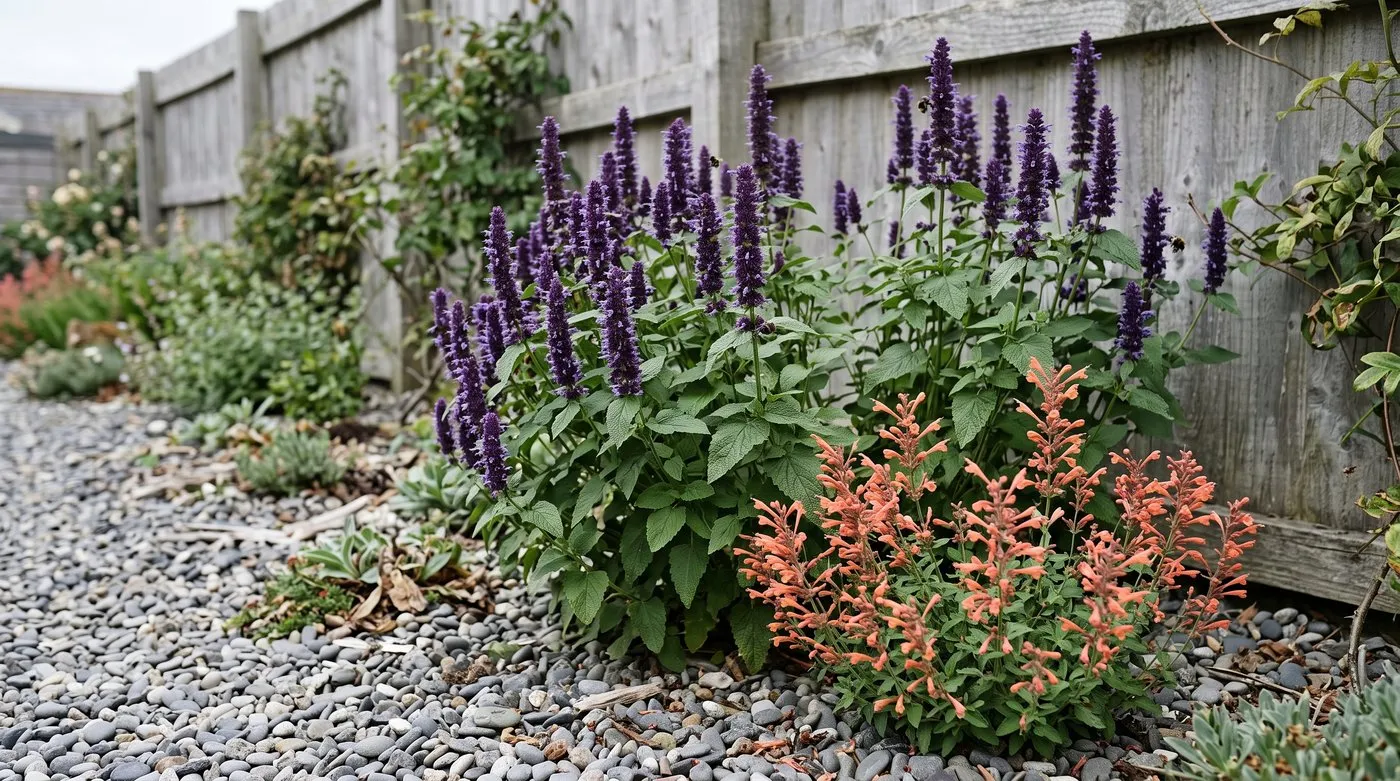
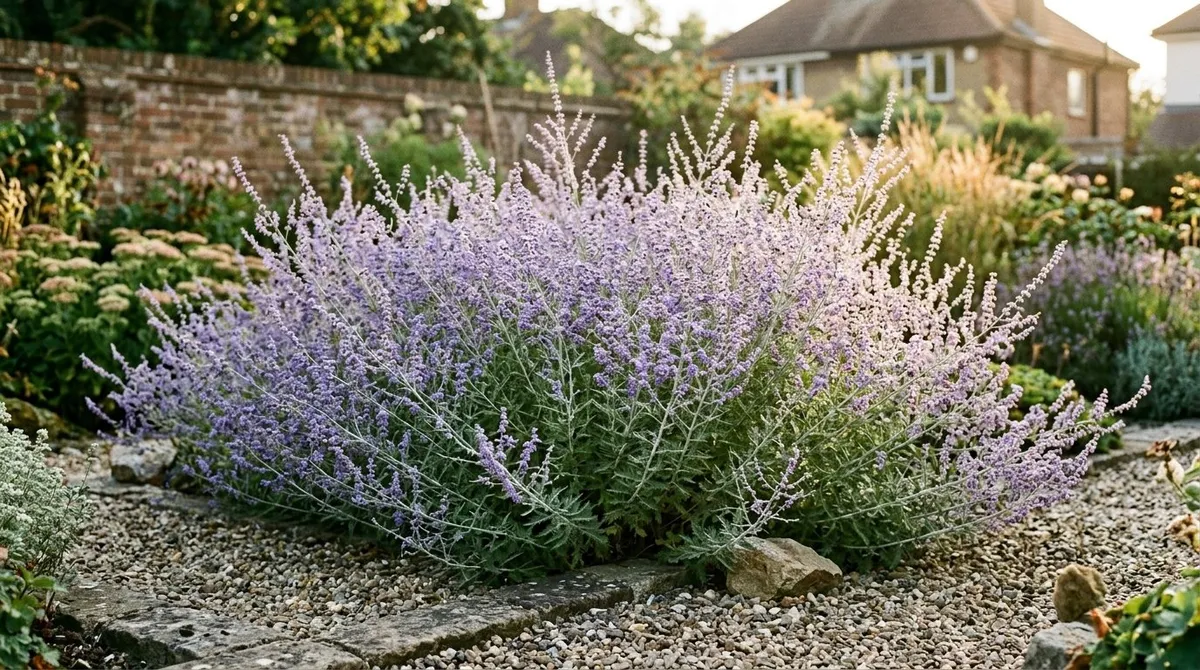
Dark violet Blackadder and the hot orange hybrids are showstoppers. Gravel and sharp drainage give them the best chance of coming back.
| Hardy blue types | Showy hybrids | |
|---|---|---|
| Examples | A. foeniculum, Korean mint (A. rugosa), Blue Fortune | Blackadder, Kudos series, A. rupestris |
| Flower colour | Blue, violet, mauve | Deep violet, orange, coral, pink |
| How long it lasts | Many years, often self-seeds | Often two or three years |
| Leaves | Strong aniseed scent, good for tea | Mostly ornamental |
| Winter risk | Low in free-draining soil | High in wet, heavy soil |
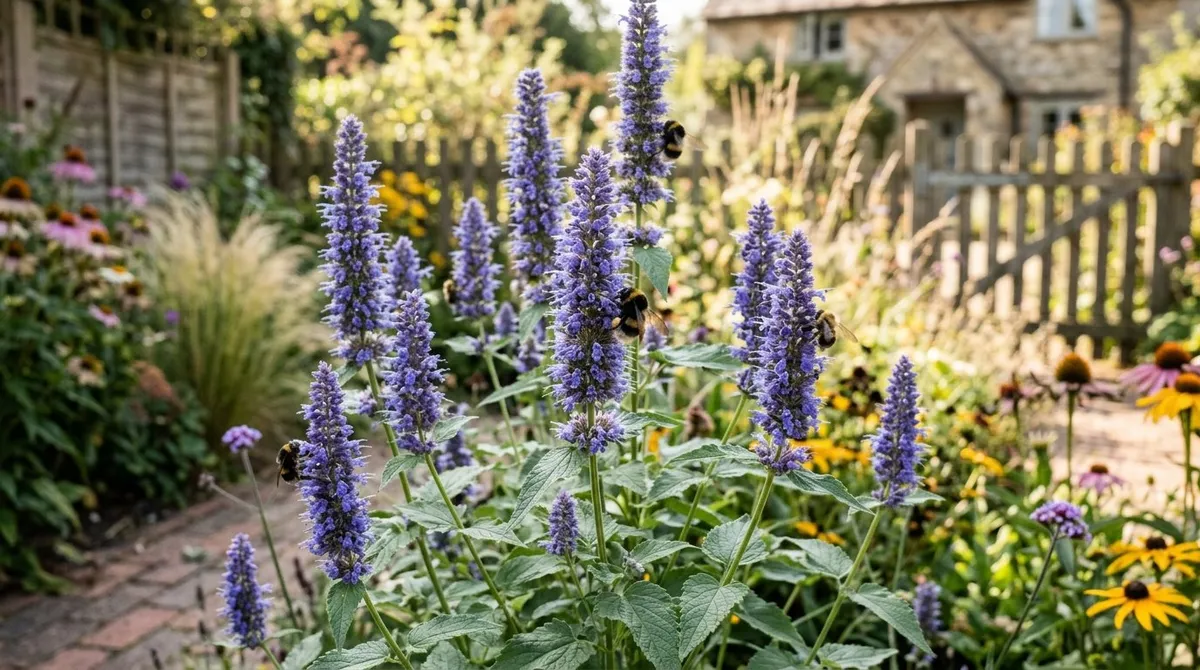
Anise hyssop (A. foeniculum) grows about 60-90cm tall with soft violet-blue spikes. It is easy from seed and the best for tea. Korean mint (A. rugosa) is similar and also used in cooking. Blue Fortune is a reliable, long-flowering blue hybrid.
Blackadder has dark violet spikes and is brilliant for bees, but it doesn’t always last on heavy soil. The orange and pink types, such as the compact Kudos series and A. rupestris, bring hot colour. Treat them as short-lived, and take cuttings of any you love.
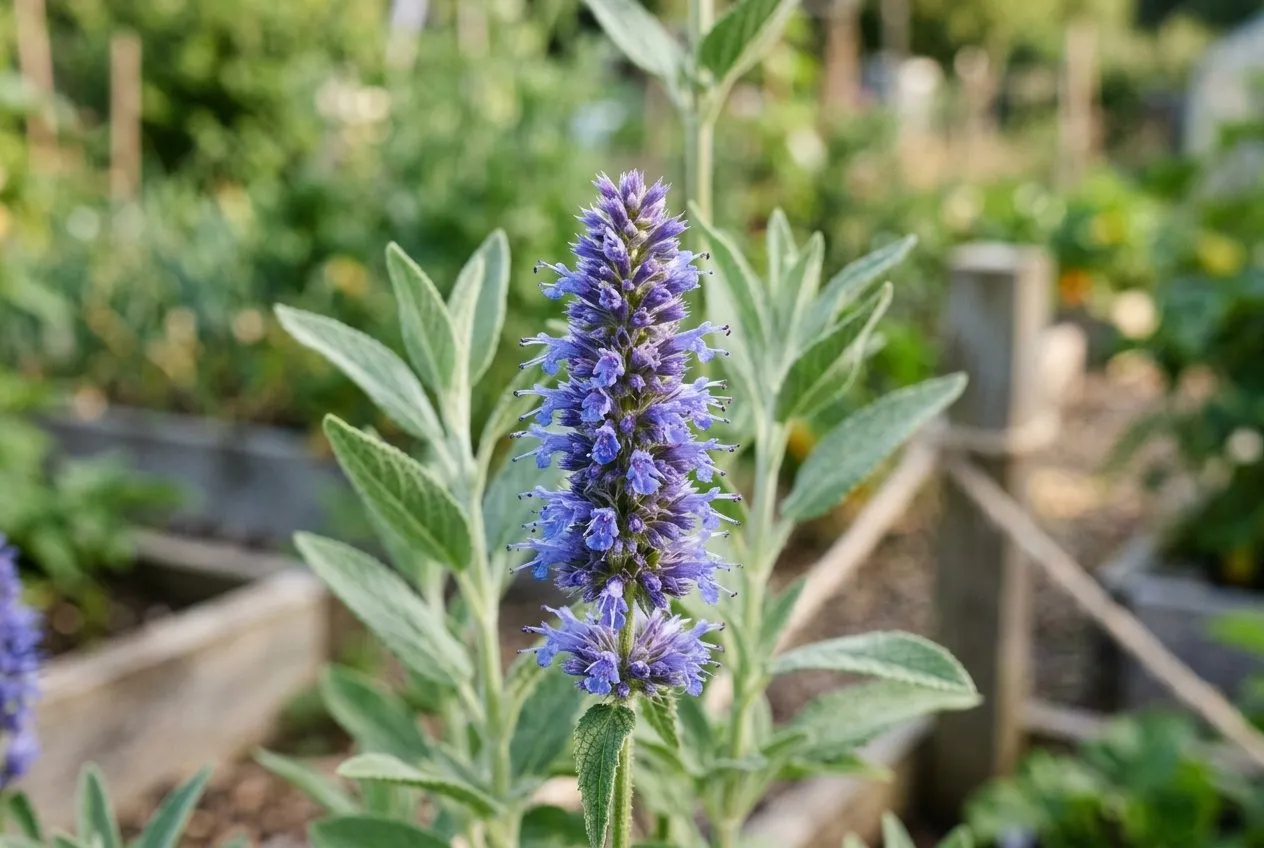
Anise hyssop has soft, aniseed-scented leaves and dense blue spikes. It is the toughest and most useful agastache.
Where to plant agastache
Plant agastache in full sun and free-draining soil. These plants come from sunny prairies and dry hillsides, and they sulk in shade or wet ground.
Lean, gritty soil suits them best. Rich, heavily manured soil gives soft, floppy growth with fewer flowers, and soft growth rots more easily in winter. Light, sandy or chalky soils are ideal.
On heavy clay, add plenty of grit to the planting area and plant on a slight mound. A gravel mulch around the base keeps the crown dry. Agastache looks great in a gravel garden for just this reason. Space plants about 30-45cm apart, and plant in groups of three or five for the best show.
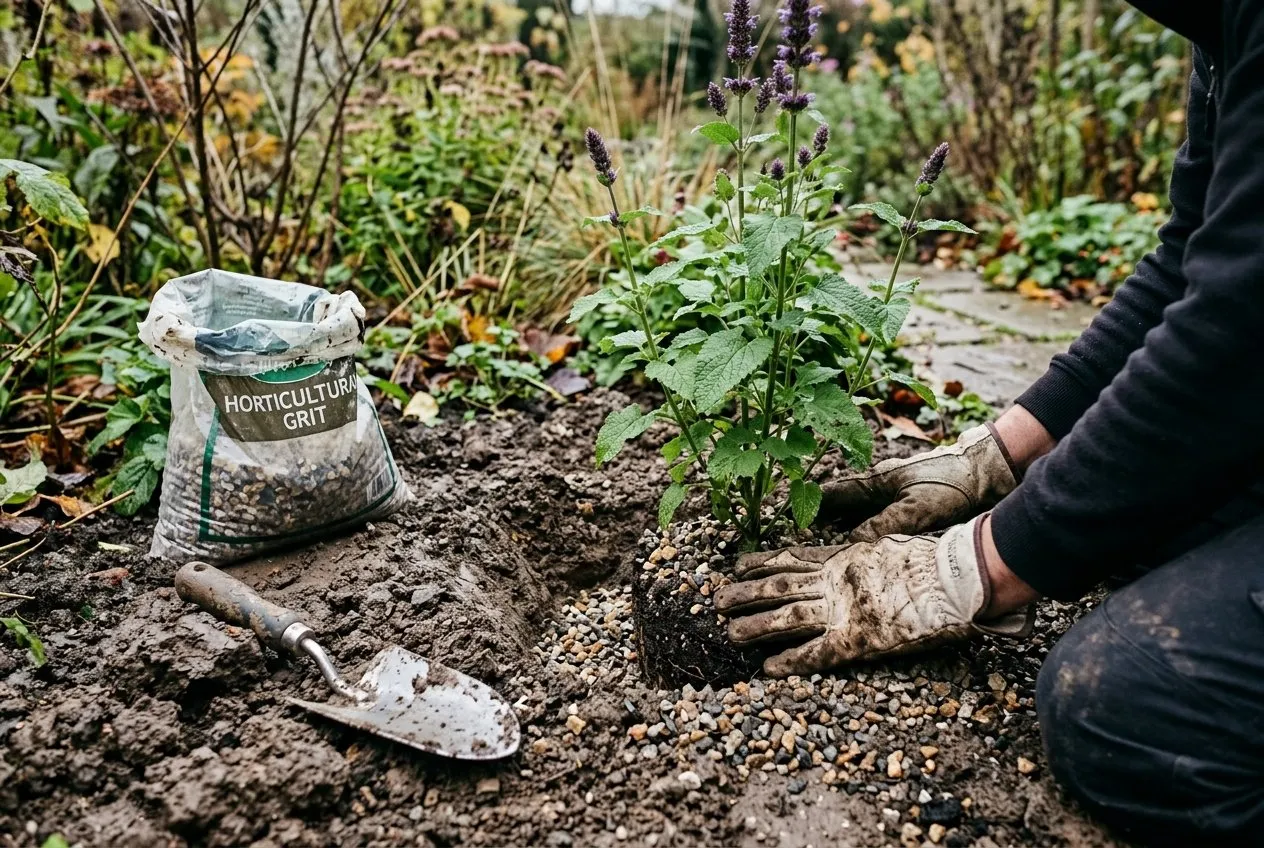
On heavy soil, mix in plenty of grit and plant slightly raised. Good drainage is the key to getting agastache through winter.
How to grow agastache from seed
Agastache is one of the easiest perennials to grow from seed, and early sowings often flower in their first summer.
- Sow from February to April under cover, in a greenhouse, propagator or on a warm windowsill.
- Fill a tray or modules with seed compost and water it.
- Scatter the tiny seeds on the surface. Don’t cover them, as they need light to germinate.
- Keep the compost moist but not wet, in gentle warmth.
- Prick out seedlings into small pots once they have a couple of true leaves.
- Harden off in May and plant out after the last frost.
You can also sow outdoors in late spring, but results are patchier. Anise hyssop self-seeds once settled, so you may never need to sow again. The guide to self-seeding plants has more easy plants that do this.
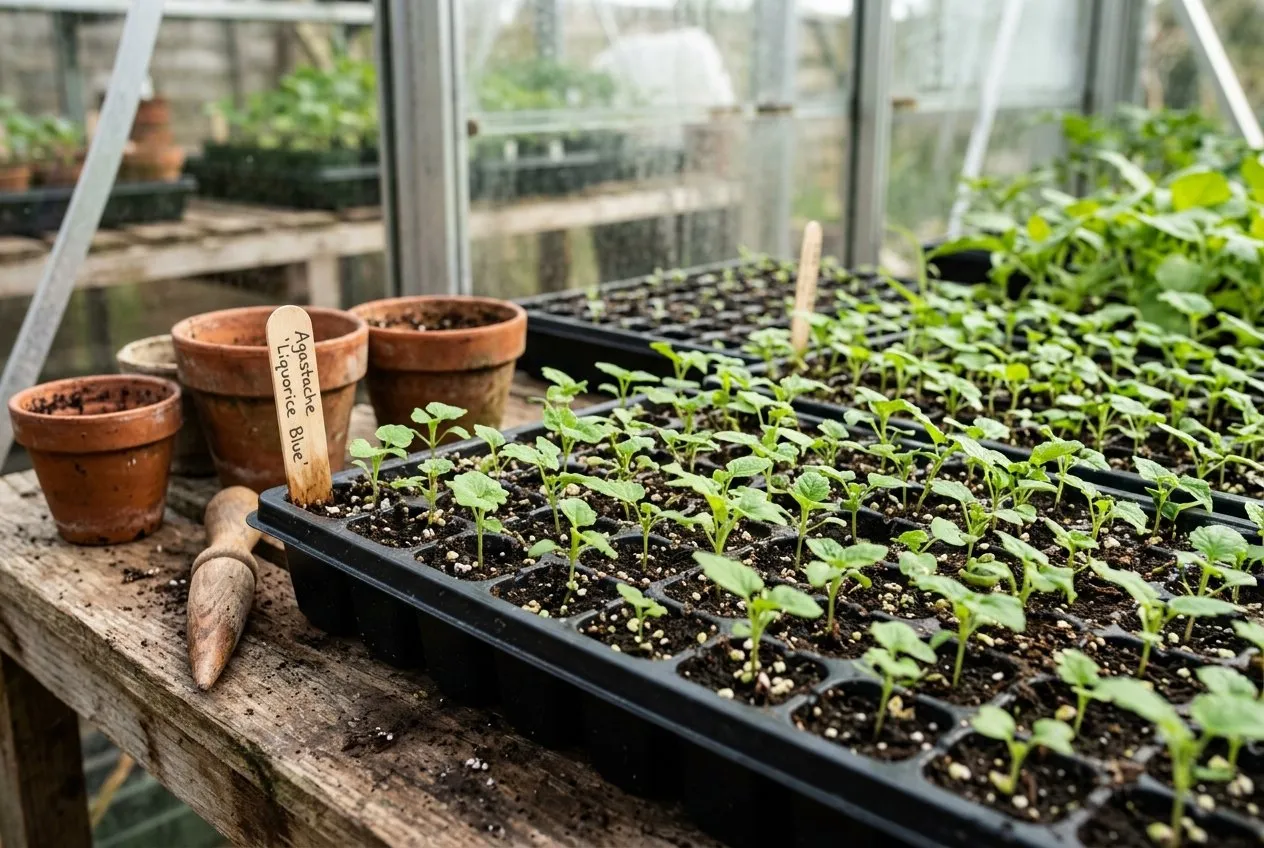
Surface-sown in spring and pricked out into modules, young agastache plants grow fast and often flower the same summer.
Caring for agastache through the summer
Once settled, agastache needs very little. Water new plants in dry spells during their first summer. After that, established plants cope well with dry weather. Don’t feed them, as rich growing makes them floppy.
Deadhead faded spikes to keep new flowers coming, especially on hybrids. On anise hyssop, leave a few spikes to set seed if you want seedlings. Plants in pots need regular watering and a gritty compost.
Getting agastache through winter
Wet soil, not cold, kills most agastache in the UK. The plants cope with cold in dry soil, but a crown sitting in cold, wet soil for months can rot.
To give them the best chance:
- Improve drainage with grit before planting, and plant slightly raised on heavy soil.
- Mulch with gravel, not compost, so the crown stays dry.
- Leave the stems standing over winter. They help protect the crown and look lovely with frost on them.
- Cut back in March, just above the new shoots at the base.
Birds such as goldfinches also enjoy the seedheads. In a cold, wet garden, grow the showy hybrids in pots and move them somewhere sheltered and dry for winter.
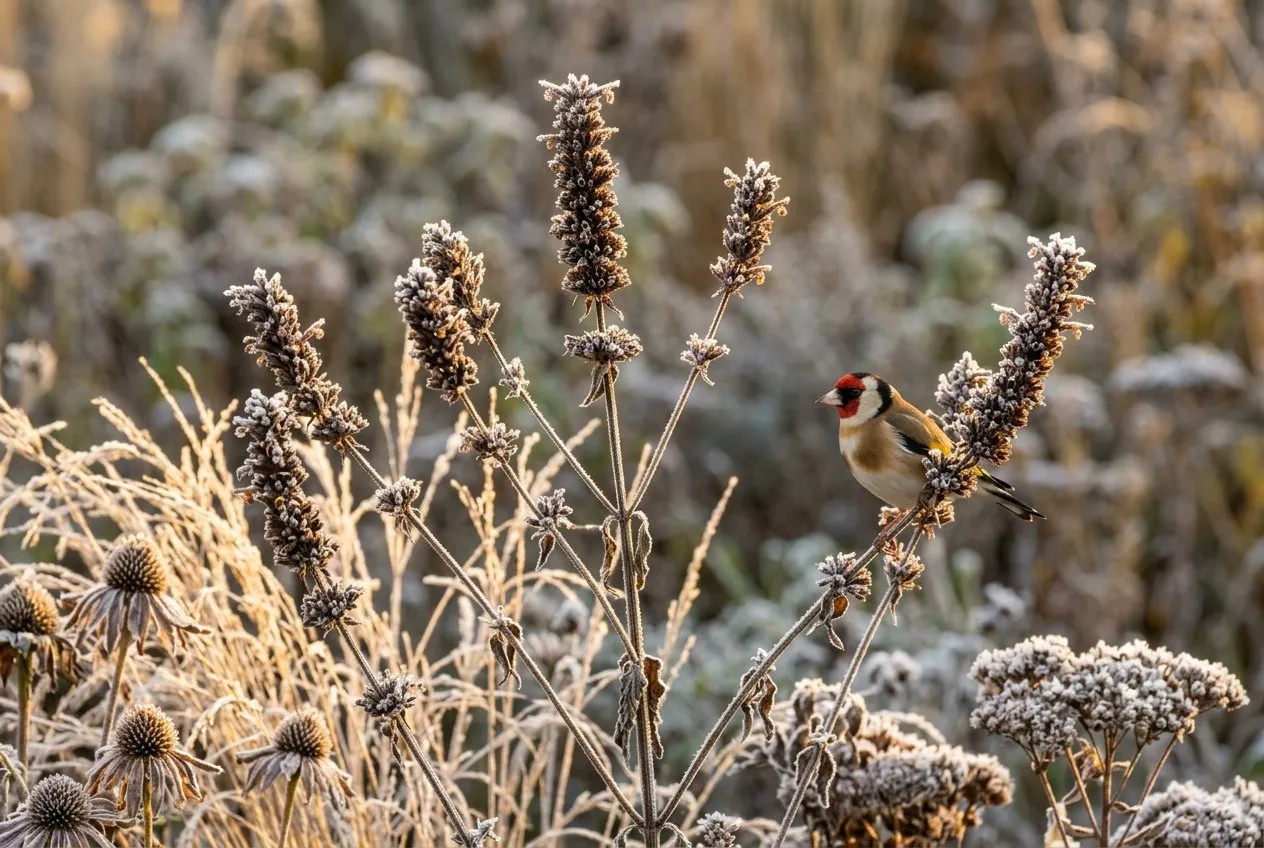
Leave the stems standing until spring. They protect the crown, look lovely with frost and give goldfinches a snack.
Taking agastache cuttings
Cuttings are the easiest way to keep short-lived hybrids going. Take them in late spring or early summer, when the shoots are soft.
- Cut a non-flowering shoot about 8-10cm long, just below a leaf.
- Pull off the lower leaves.
- Push several cuttings around the edge of a pot of gritty compost.
- Keep them out of direct sun and lightly moist.
Once rooted, pot them up and keep them in a cold frame or greenhouse over winter. The guide to May propagation has more plants to take cuttings from at the same time.
Using anise hyssop in the kitchen
The leaves and flowers of anise hyssop and Korean mint taste of aniseed with a hint of liquorice. Use the blue types for eating, and keep the showy hybrids as ornamentals.
- Tea: steep a handful of fresh leaves and a few flowers in hot water for a few minutes.
- Salads and puddings: scatter the little flowers over salads, fruit and cakes.
- Cordials and syrups: the leaves pair well with berries and stone fruit.
Young leaves picked before flowering have the best flavour. The guide to making herbal teas has more plants to try.
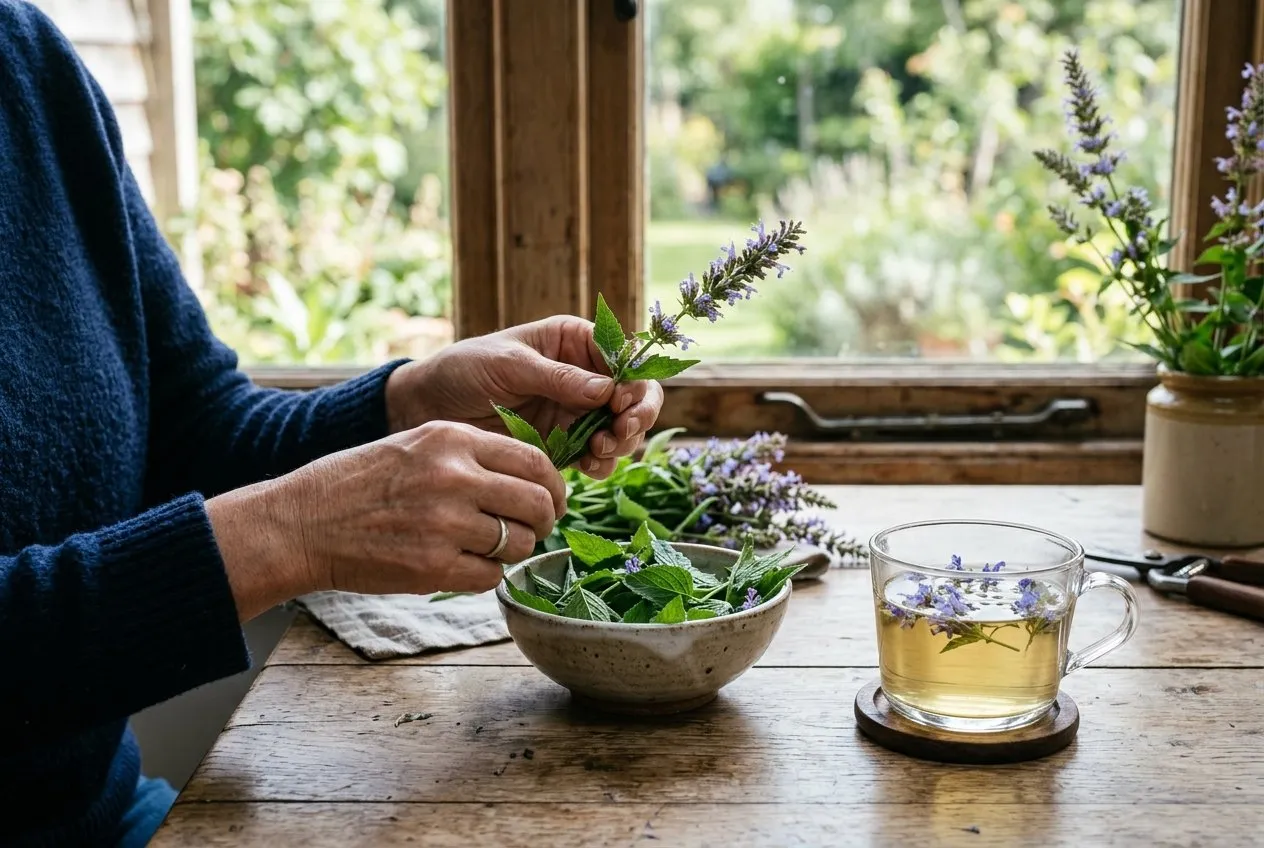
A handful of fresh anise hyssop leaves makes a sweet, aniseed tea. A few flowers in the cup look pretty too.
Agastache for bees and butterflies
Agastache is one of the best plants for late-summer nectar. Each spike holds lots of small flowers that open over several weeks, just as many other border plants are finishing.
Plant it in groups so bees can find it easily. Pair it with other sun-lovers such as salvias, echinacea and sedum for a border that hums until autumn. The guide to bee-friendly plants has more ideas.
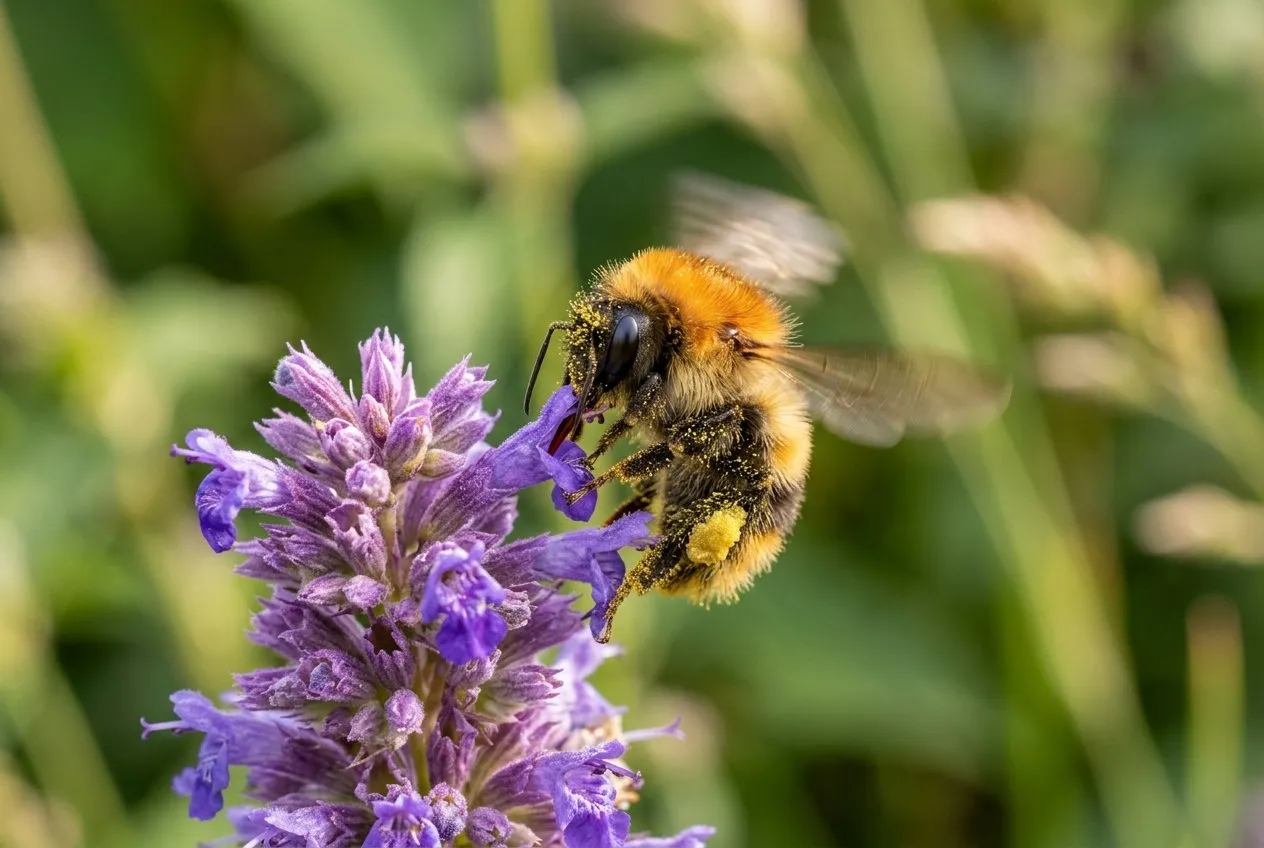
Bumblebees work agastache spikes for weeks. Planting in groups makes them easy for insects to find.
Month-by-month agastache calendar
| Month | What to do |
|---|---|
| January to February | Leave stems standing. Sow seed under cover from February |
| March | Cut old stems back as new shoots appear. Sow seed |
| April | Prick out seedlings. Sow more if needed |
| May | Harden off and plant out after frost. Take cuttings |
| June | Water new plants in dry spells. First flowers on early types |
| July to August | Peak flowering. Deadhead. Pick leaves for tea |
| September | Late flowers. Let a few spikes set seed |
| October to November | Leave stems standing. Mulch crowns with gravel |
| December | Nothing to do. Birds enjoy the seedheads |
Common mistakes with agastache
Expecting all types to be tough. Orange and pink hybrids are short-lived. Check the label and take cuttings.
Rich, wet soil. It gives floppy growth and winter rot. Add grit and skip the feed.
Cutting back in autumn. It leaves the crown open to winter wet. Wait until March.
Planting in shade. Agastache flops and flowers poorly. Give it full sun.
Eating the wrong type. Use anise hyssop or Korean mint in the kitchen, not the showy hybrids.
Frequently asked questions
Is agastache hardy in the UK?
Blue anise hyssop is hardy in most UK gardens. It copes with cold if the soil drains well. The showier orange and pink types are less hardy and often rot in cold, wet soil, so give them sharp drainage or take cuttings.
Can you eat agastache?
Yes, anise hyssop leaves and flowers are edible. They taste of aniseed and work in tea, salads, cordials and baking. Stick to the blue anise hyssop and Korean mint for the kitchen, and use the showy hybrids as ornamentals.
Is agastache good for bees?
Yes, bees love agastache. Its long spikes of small, nectar-rich flowers open over many weeks from midsummer. Bumblebees, honeybees, hoverflies and butterflies all visit.
When should I cut back agastache?
Cut agastache back in early spring, not autumn. Leave the stems and seedheads standing over winter to protect the crown and feed birds. Cut them down to just above the new shoots in March.
Does agastache come back every year?
Blue anise hyssop usually comes back and seeds itself around. The showier hybrids often last only two or three years, especially on heavy soil. Take cuttings or grow them as summer bedding.
How do you grow agastache from seed?
Sow on the surface of moist seed compost under cover from February to April. The seed needs light, so don’t cover it. Prick out, harden off and plant out after the last frost.
Why did my agastache die over winter?
Usually wet soil rotted the crown. Agastache cope with cold but hate sitting wet in winter. Add grit, plant slightly raised, mulch with gravel and leave the stems standing until spring.
To keep your border busy with insects into autumn, read the guide to the best plants for butterflies, or browse more plant guides.
Our team produces practical UK gardening guidance from source research, contributor records and established horticultural practice. Editorial standards are overseen by Matt W.