Key takeaways
- Russian sage was renamed Salvia yangii, so you will see both names on labels
- It flowers on new growth, so cut every stem to about 15-20cm in April, not autumn
- Full sun, poor soil and sharp drainage keep it upright; rich or wet soil makes it flop
- Pick by height, from 'Blue Spire' at about 1.2m to 'Lacey Blue' at about 60cm
- Never feed it, and only water new plants in their first summer
- Winter wet kills it far more often than cold
Russian sage is easy to grow well and easy to kill with kindness. It wants the sunniest, driest, poorest spot in the garden, no feeding and one hard prune each April. Give it that and it fills late summer with a lavender-blue haze on silver stems.
The trouble usually starts when it goes into rich soil, gets watered and fed, and never gets cut back. By its second summer it splits and flops. This guide shows how to avoid that, which variety to choose and how to fit it into a dry, sunny border.
Is it Perovskia or Salvia? The name change explained
Both names mean the same plant. For years it was sold as Perovskia atriplicifolia. Botanists then found that Perovskia belongs inside the big Salvia group, so it was renamed Salvia yangii. Many nurseries and the RHS now list it as Salvia yangii, often with “Perovskia” in brackets so people still recognise it.
Don’t confuse it with the culinary sage you cook with. That is Salvia officinalis, covered in the guide to growing sage for the kitchen. Russian sage is grown for its flowers and silver foliage, not for eating.
The spring prune that keeps Russian sage upright
Russian sage flowers on new growth, so the April prune decides how good your summer show will be. Old stems left long give a sparse, leggy, top-heavy plant. Cut hard, it pushes out lots of strong new shoots from low down, and these hold themselves up.
In April, once you see small grey-green shoots near the base, cut every stem down to about 15-20cm. Cut just above a pair of healthy buds. Use sharp secateurs and don’t be timid. By midsummer it will be a dome of silver and blue again.
Prune in spring, not autumn. The bleached stems look lovely through winter, catching frost and low sun. Cutting to the ground in autumn also leaves the crown exposed to months of cold, wet soil, which is what rots it.
Gardener’s tip: Nervous about cutting so hard? Look at the base in late March. You’ll see small pairs of new leaves on the woody stems. Cut just above the highest strong pair on each stem.
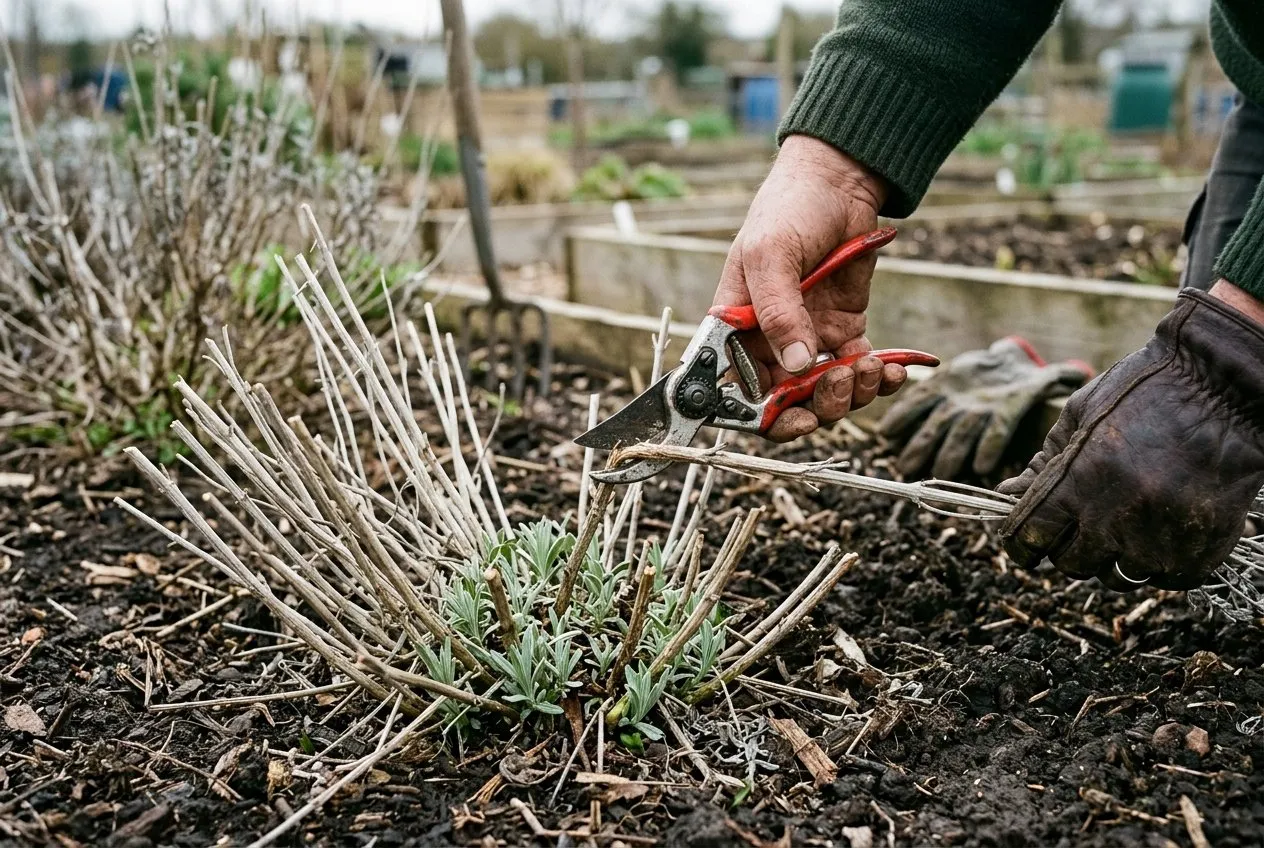
Cut every stem to short stubs just above the new shoots. It looks drastic, but this one job keeps the plant upright all summer.
Which Russian sage variety should you grow?
Pick by height and how well it stands up, because that decides whether you ever need a stake. The plain species is the tallest and floppiest. Shorter selections are better for most UK gardens.
‘Blue Spire’ is the one you’ll see most often. It holds the RHS Award of Garden Merit and grows to about 1.2m with a generous haze of flowers. It is also the most likely to flop if fed, watered or left unpruned. ‘Little Spire’ is a compact form at about 60-70cm and stands up much better. ‘Lacey Blue’ (also sold as ‘Lisslitt’) is shorter and denser still, at about 50-60cm, and suits small or windy gardens.
| Variety | Height | Habit | Best for |
|---|---|---|---|
| ’Blue Spire’ | About 1.2m | Tall, airy | Middle of a sunny border |
| ’Little Spire’ | 60-70cm | Compact, upright | Smaller beds, front of border |
| ’Lacey Blue’ | 50-60cm | Dense, low | Windy spots, pots, small gardens |
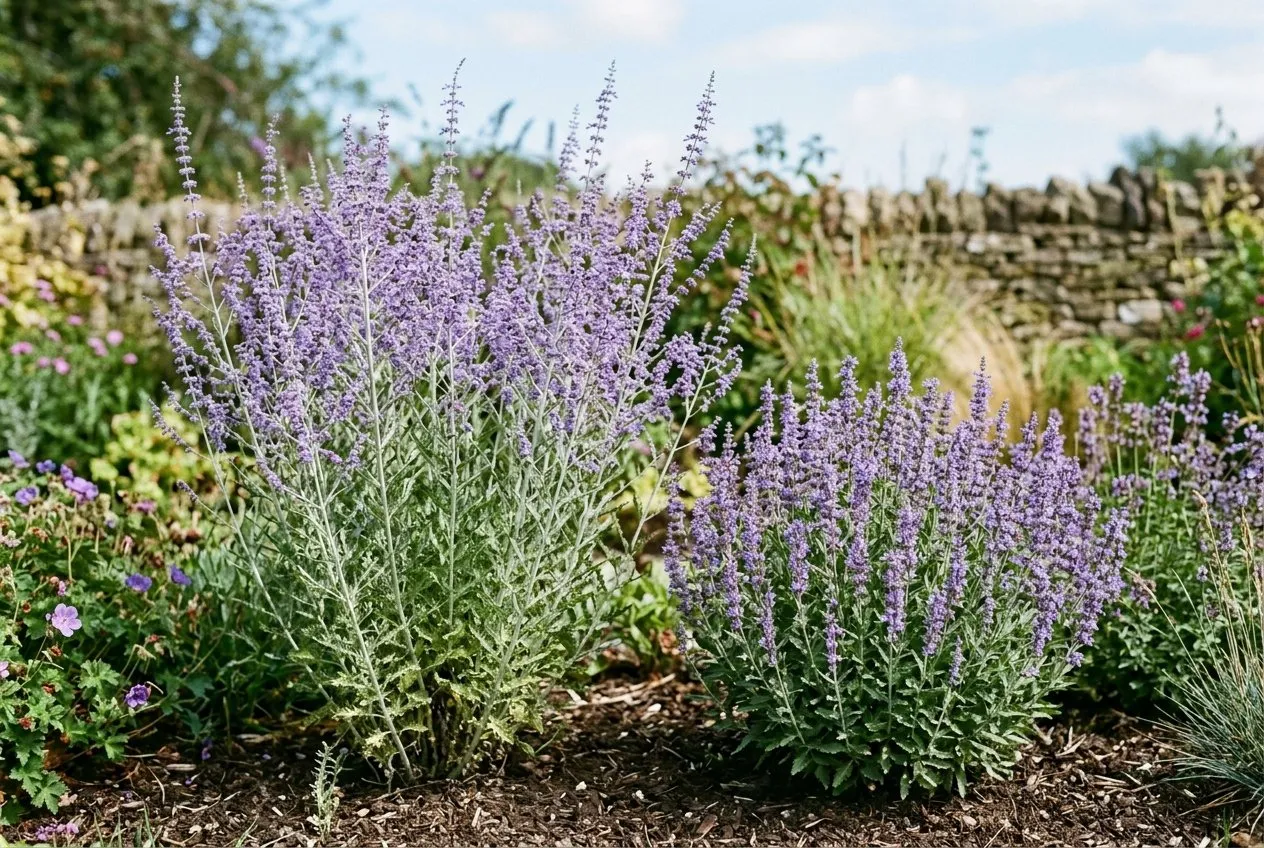
A tall, airy plant beside a shorter, compact one. If you hate staking, the shorter forms stand up on their own.
What soil does Russian sage need?
Russian sage wants poor, stony, free-draining soil in full sun. Lean soil gives short, tough, upright stems packed with flower. Rich, moist ground gives soft, over-tall growth that flops and dies young.
It is happy on chalk and on sandy or stony ground. Don’t add manure or compost to the planting hole. On heavy clay, add plenty of grit or grow it in a raised bed.
Warning: Never plant Russian sage where the soil stays wet in winter. Waterlogged roots rot, even when the weather is mild. If you can’t give it good drainage in the ground, use a raised bed or a large, gritty pot.
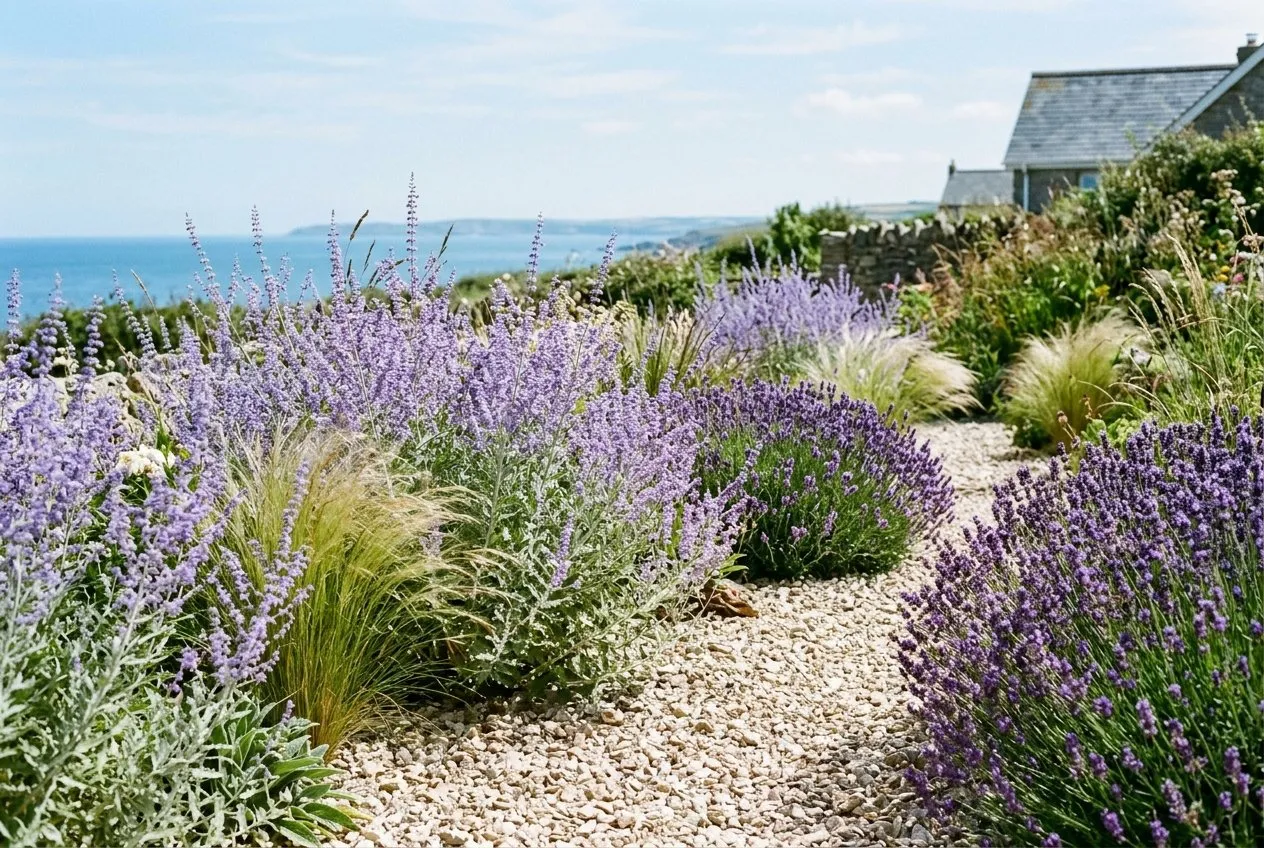
A gravel bed by the sea suits Russian sage perfectly: sun, wind and soil that never stays wet.
How to plant Russian sage
Plant in spring, from April to early June, so it has a full season to root in before winter. Pot-grown plants can go in through summer if you water them for the first few weeks. Avoid planting into cold, wet soil in autumn.
Choose the sunniest, driest spot you have. Dig a hole as wide as the rootball and no deeper. On clay, mix grit into the base and the backfill, and set the plant slightly proud so the crown sits above the surrounding soil. Firm it in and water well.
Space plants 45-60cm apart, a little closer for compact varieties. Planting in groups of three or five gives a confident drift of blue. A gravel garden is an ideal home, and it sits well in prairie-style planting among grasses.
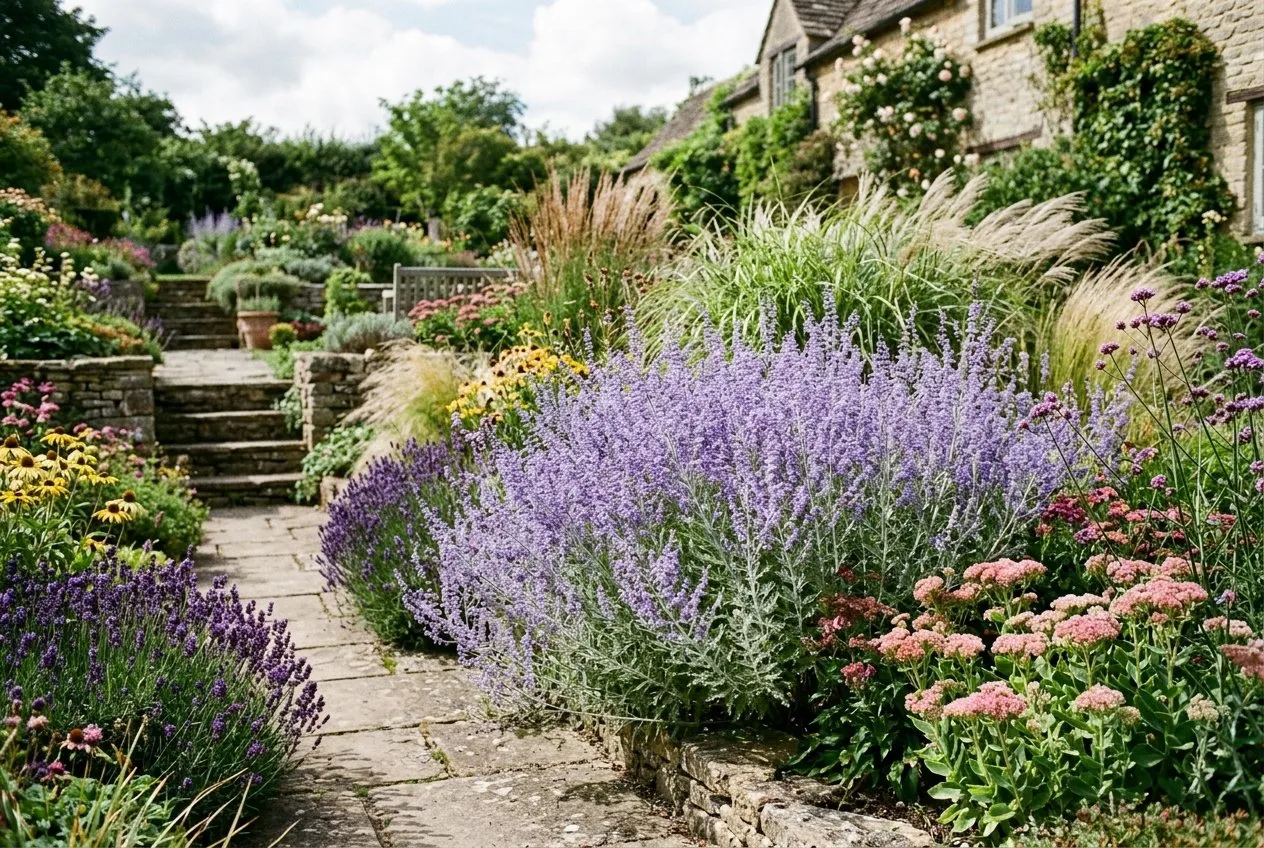
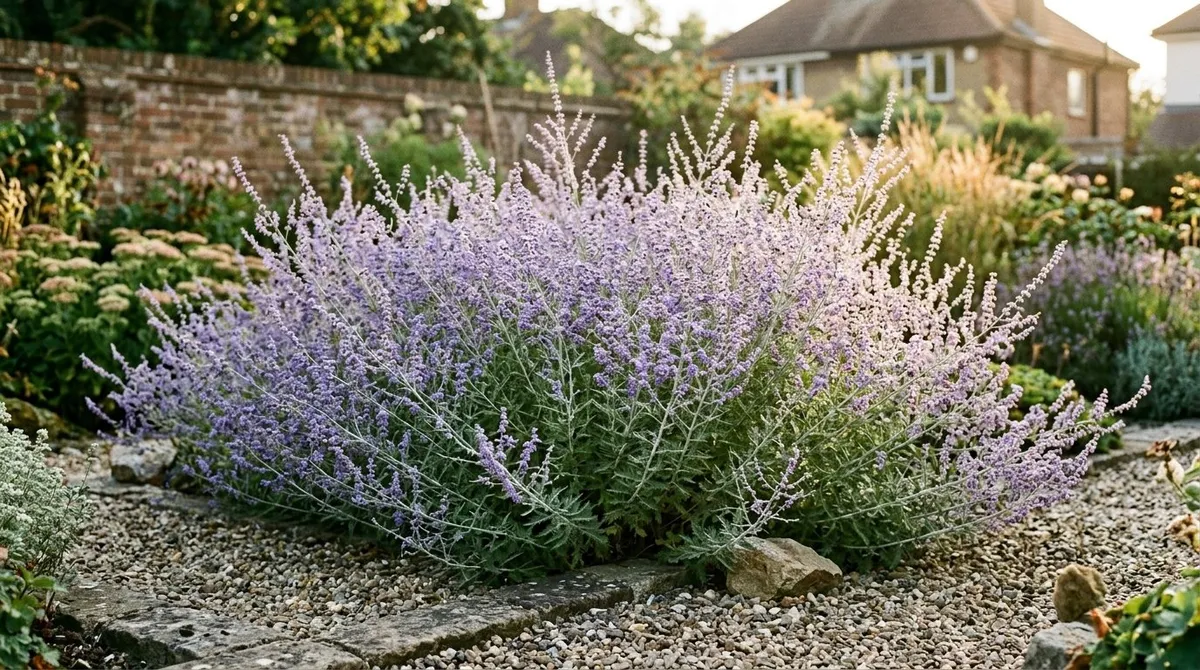
Planted in a group, Russian sage melts into an airy blue drift that you can see right across the garden.
Watering, feeding and everyday care
Once settled, Russian sage needs almost no watering and no feeding. Water new plants about once a week in dry spells during their first summer. After that, leave it alone. It is one of the best drought-tolerant plants for a hot, dry border.
Feeding does harm. Fertiliser pushes soft, leafy growth that flops and carries fewer flowers. If you mulch, use gravel or grit, not compost.
There is no deadheading to do. The flowers fade to soft grey and still look good. Leave everything standing until spring, then prune.
Month-by-month Russian sage calendar
| Month | Task |
|---|---|
| January to February | Leave stems standing; check water isn’t pooling round the crown |
| March | Look for new shoots low on the stems |
| April | Cut every stem back to 15-20cm above the new shoots; plant new ones |
| May | Weed around plants; take softwood cuttings |
| June | Water only if newly planted |
| July | First flowers open; bees start visiting |
| August | Peak flowering; take semi-ripe cuttings |
| September | Flowering continues; no feeding needed |
| October to December | Flowers fade to grey; leave stems for winter interest |
Why bees love Russian sage
Russian sage is a brilliant late-summer bee plant. Each spike carries lots of small tubular flowers that open over many weeks, so it keeps feeding insects when much of the border has finished.
Bumblebees are the main visitors, with honeybees, solitary bees and hoverflies too. Group it with other bee-friendly garden plants so insects find a good spread of food in one place.
Aphids sometimes gather on soft new shoots but rarely do harm. Leave them for ladybirds and hoverfly larvae, or wipe them off by hand. There’s no need to spray a plant that bees rely on.
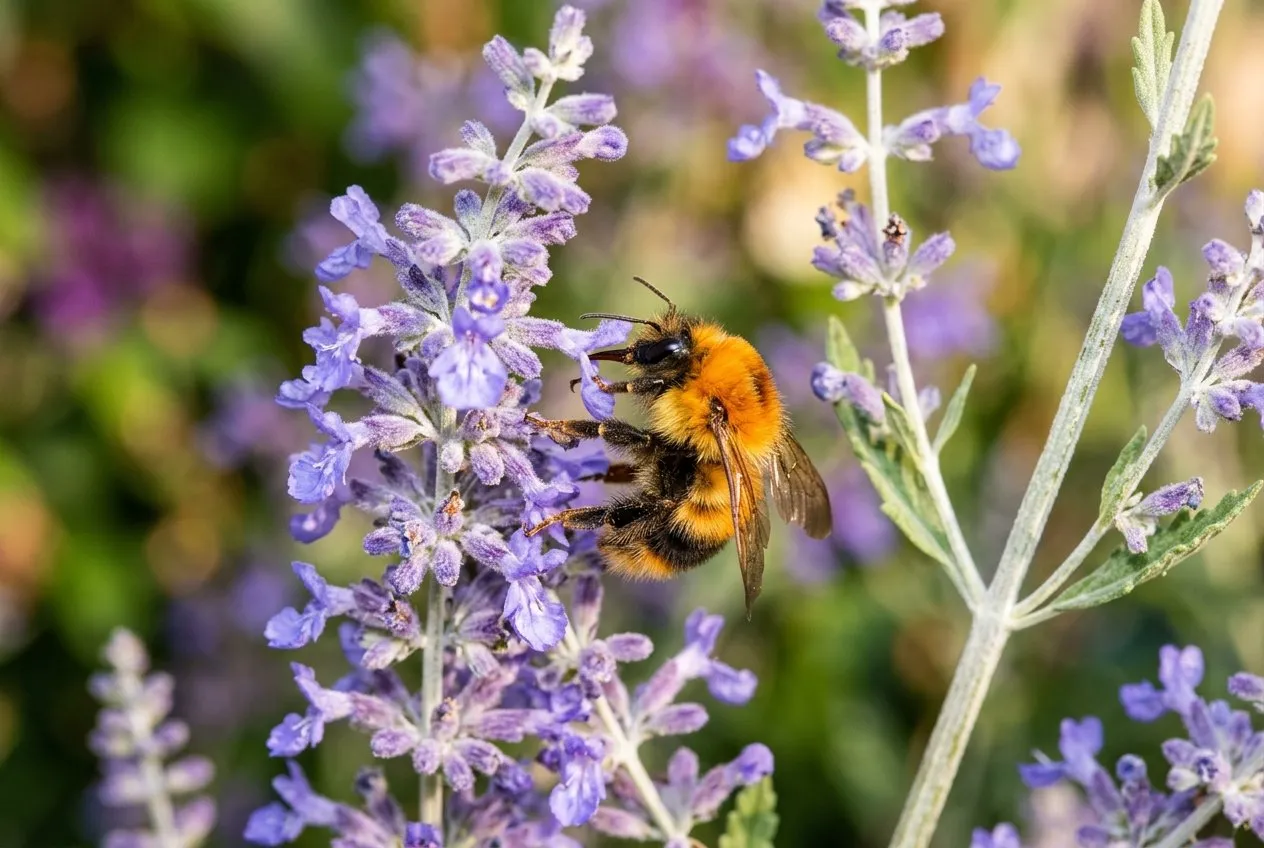
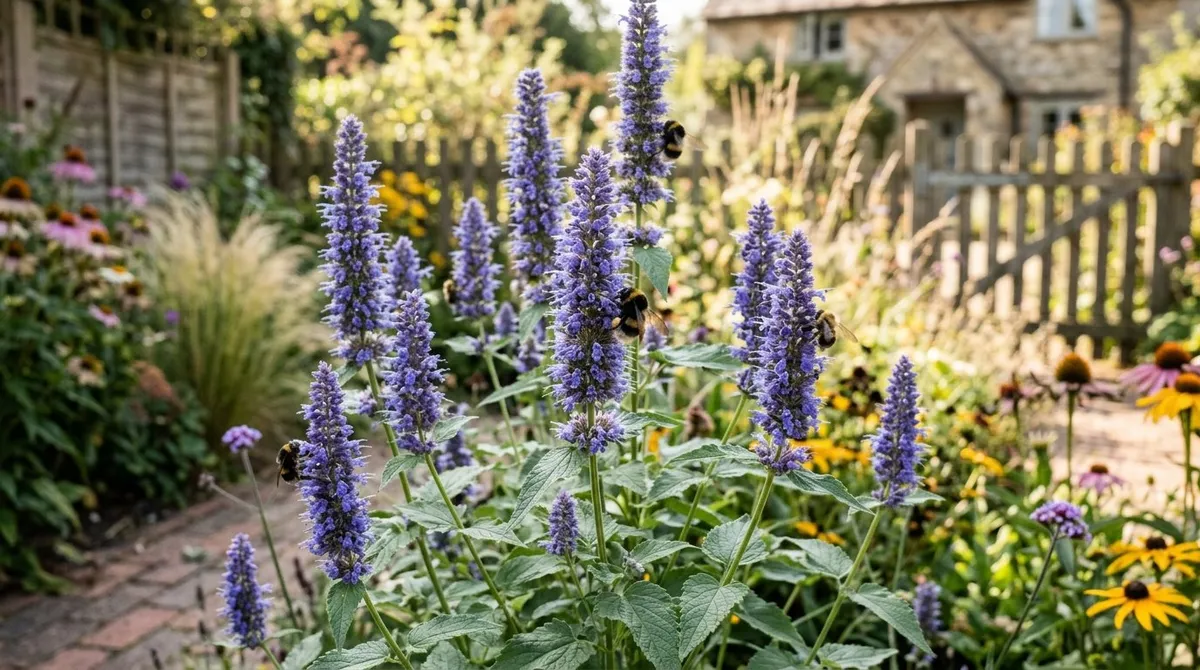
A bumblebee on a flower spike. The small flowers open a few at a time, so there’s nectar for weeks.
Silver foliage and winter stems
Half the charm of Russian sage has nothing to do with the flowers. The finely cut, silver-grey leaves smell sharp and sage-like when you brush past. Rabbits and deer usually leave it alone. The silver also cools down hot colours and sits nicely with pastels.
The pale stems are the other half. Left standing, they bleach to a silvery skeleton that catches frost and winter sun. That gives a second season of interest for free, and it’s another reason to wait until April to prune.
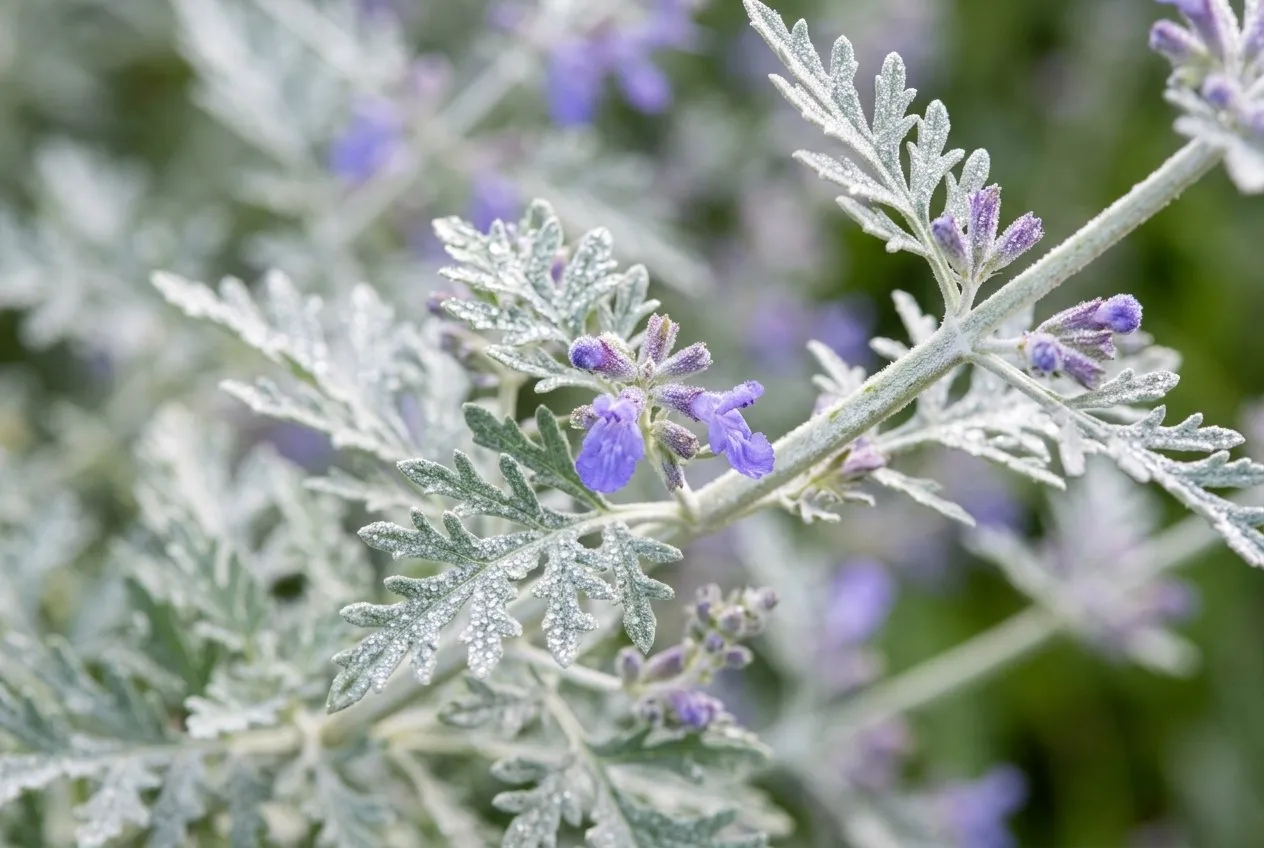
The cut silver leaves earn their place before a single flower opens. Brush past and you’ll get a sharp, sage-like scent.
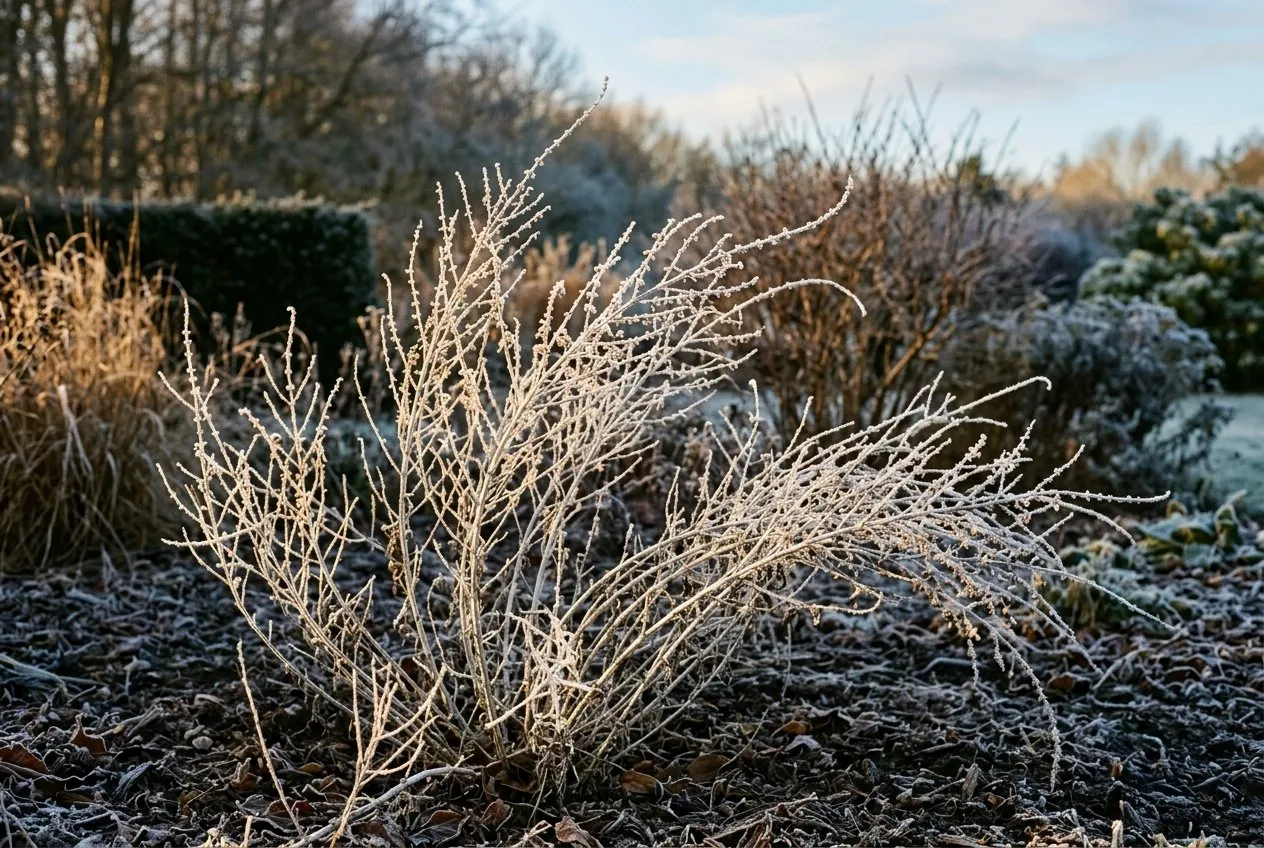
Frosty stems are worth keeping. Leave them standing until April for winter structure.
How to propagate Russian sage
Russian sage roots readily from cuttings, so one plant can soon become a drift. Take softwood cuttings in late spring or semi-ripe cuttings in July and August.
Choose non-flowering shoots 8-10cm long. Cut just below a leaf joint and strip the leaves from the lower half. Push several round the edge of a pot of gritty compost, about half multipurpose and half grit or perlite. Keep them bright but out of hot sun, and don’t let the compost stay wet. The guide to semi-ripe cuttings walks through the method step by step.
Established clumps also send up suckers from the roots. In spring, lift a rooted sucker with a hand fork and replant or pot it up.
Common mistakes when growing Russian sage
- Pruning in autumn. It strips winter interest and exposes the crown to wet. Cut hard in April instead.
- Rich or moist soil. It gives soft, floppy growth. Plant in poor, free-draining soil and never feed.
- Never pruning. The plant goes woody and bare at the base and flops open. Cut back every spring.
- The wrong variety for the spot. A tall ‘Blue Spire’ in a windy, narrow bed will need staking. Use ‘Little Spire’ or ‘Lacey Blue’ there.
- Too much shade. It stretches and leans. Give it full sun.
Frequently asked questions
Is Russian sage a Perovskia or a Salvia?
Both names refer to the same plant. Botanists moved Perovskia into Salvia, so Perovskia atriplicifolia became Salvia yangii. Many nurseries and the RHS now use Salvia yangii, often with Perovskia in brackets. The plant hasn’t changed, only the label.
When should I cut back Russian sage?
Cut it back in April, taking every stem to about 15-20cm. It flowers on new growth, so a hard spring prune gives sturdier stems and more flower. Don’t cut it back in autumn. The silver winter stems look lovely and help protect the crown.
Why is my Russian sage flopping?
It is usually too rich, too wet, too shady or unpruned. Soft, lush growth can’t hold itself up. Grow it in full sun on poor, free-draining ground, never feed it, and cut it hard each April. If it still flops, try a compact variety such as ‘Little Spire’ or ‘Lacey Blue’.
Does Russian sage need full sun?
Yes, give it the sunniest spot you have. Full sun keeps the stems short and upright and gives the best flowering. In shade it stretches, leans and flowers poorly. It copes with heat, drought and poor soil very well.
Is Russian sage good for bees?
Yes, it is a great late-summer bee plant. The long spikes carry lots of small flowers that open over many weeks. Bumblebees, honeybees and solitary bees all visit, and it keeps going when many border plants have finished.
How hardy is Russian sage in the UK?
It is hardy in most of the UK if the soil drains well. Cold is rarely the problem. Winter wet is. A plant in heavy, soggy soil can rot at the base even in a mild winter, so fix the drainage first.
How do I propagate Russian sage?
Take softwood cuttings in late spring or semi-ripe cuttings in summer. Use non-flowering shoots 8-10cm long, strip the lower leaves and root them in gritty compost. You can also lift rooted suckers from the edge of an established clump in spring.
With the drainage and the April prune sorted, Russian sage looks after itself. For its perfect partner in a hot, dry bed, read the guide to growing lavender, or browse more ideas in the plants hub.
Our team produces practical UK gardening guidance from source research, contributor records and established horticultural practice. Editorial standards are overseen by Matt W.