Key takeaways
- Gaura flowers from June to October, with white or pink blooms on thin, wiry stems
- Full sun and free-draining soil are essential, as wet winter soil rots the crown
- It is often short-lived, so take cuttings each summer to keep it going
- Trim the clump back by a third in early July for bushier growth and a fresh flush
- Leave the old stems on over winter and cut back to 10cm in March or April
- Compact types such as the Belleza and Sparkle series are best for pots
Gaura is one of the longest-flowering plants you can grow in a sunny UK border. From June to October it sends out a haze of small white or pink flowers on thin, wiry stems that sway in the slightest breeze. Give it sun and sharp drainage and it asks for very little.
The catch is winter wet. Gaura hates sitting in soggy soil, and it is often short-lived. This guide covers which variety to pick, how to plant it so it survives, the one trim that keeps it tidy, and how to take cuttings so you never lose it.
What is gaura, and why does it have two names?
Gaura is a clump-forming perennial from the open prairies of Texas and Louisiana. It makes a low clump of narrow leaves, then sends up branching stems that flower from the base to the tip for months.
For years it was called Gaura lindheimeri. Botanists have since moved it into the evening primrose group, so its correct name is now Oenothera lindheimeri. Most UK nurseries still sell it as gaura, so look for either name. You may also see it called beeblossom or whirling butterflies.
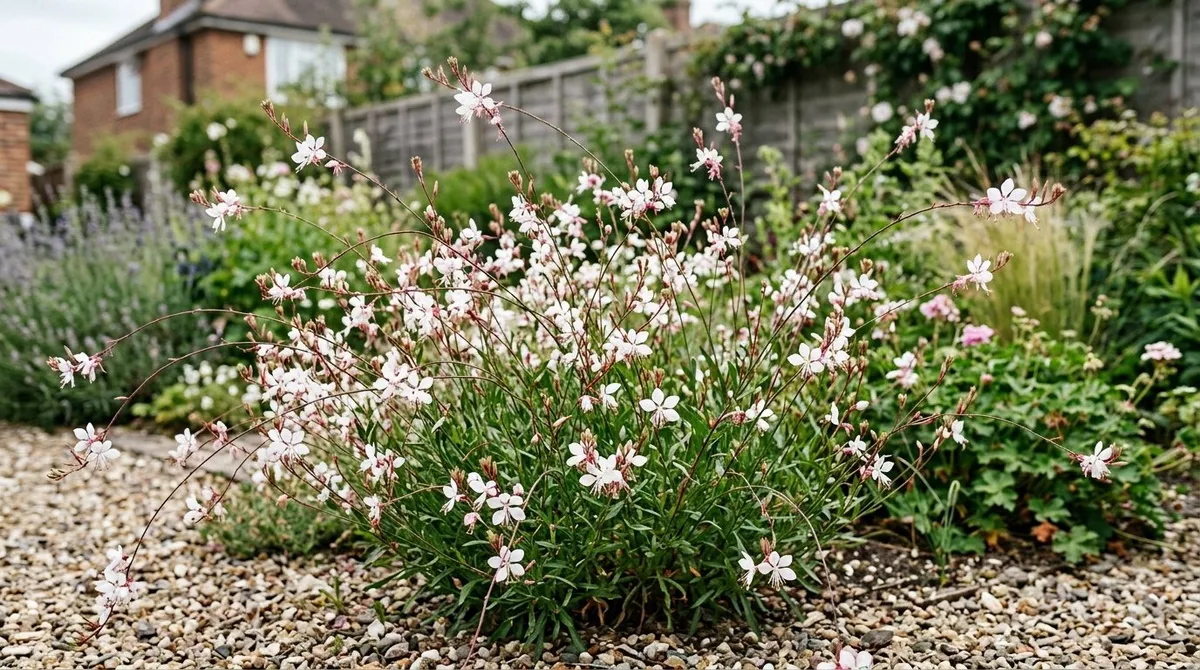
Each flower is only 2-3cm across, with four petals held to one side like a small moth. A few open at a time along each stem, which is why one plant keeps flowering for so long.
Which gaura varieties are best for UK gardens?
Choose by height and how much flop you can live with. Tall types weave through a relaxed border but sprawl. Compact types stay tidy and suit pots and the front of a bed.
- ‘Whirling Butterflies’ is the classic: white flowers from pink buds on reddish stems, about 60-75cm tall. It holds the RHS Award of Garden Merit.
- ‘The Bride’ is another tall white, similar in look.
- ‘Rosyjane’ has white flowers edged in pink, about 60cm tall.
- ‘Siskiyou Pink’ has deep rose-pink flowers on dark stems, about 60-75cm. It flops as much as the whites.
- Belleza and Sparkle series (such as ‘Sparkle White’) are compact, about 40-50cm, and barely need support.
| Variety | Height | Flowers | Best for |
|---|---|---|---|
| ’Whirling Butterflies’ | 60-75cm | White, pink buds | Relaxed borders, gravel |
| ’The Bride’ | 60-90cm | White | Back of a gravel bed |
| ’Rosyjane’ | About 60cm | White edged pink | Borders wanting two tones |
| ’Siskiyou Pink’ | 60-75cm | Deep rose-pink | Warm colour schemes |
| Belleza series | 40-50cm | Pink or white | Pots, front of border |
| ’Sparkle White’ | 40-50cm | White | Pots, small gardens |
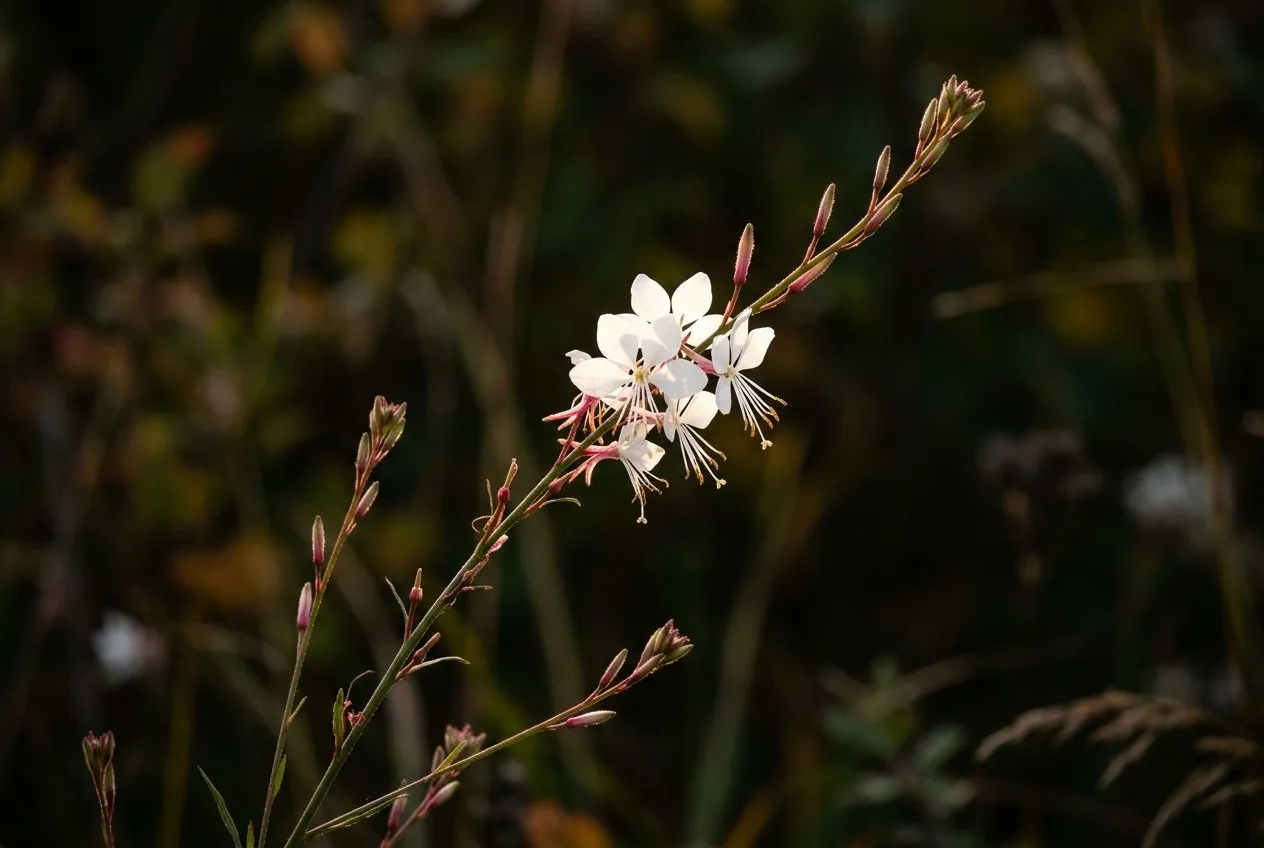
‘Whirling Butterflies’ up close. The white flowers open from pink buds a few at a time, so the show lasts for months.
Where to plant gaura: full sun and sharp drainage
Gaura needs full sun and free-draining soil. It grows naturally on open ground that bakes in summer and drains fast in winter. In shade it gets leggy and flowers poorly. In heavy, wet soil it often rots over its first winter.
Light, sandy or stony soil is ideal. A sunny gravel garden suits it perfectly, alongside other plants that like it dry. Our guide to drought-tolerant plants has good companions that want the same conditions.
Getting the drainage right on clay soil
On heavy clay, add plenty of horticultural grit before planting. Fork it through the top spade’s depth of soil across the whole planting area, not just the hole. Then plant on a slight mound so water runs away from the crown. Use grit rather than fine sand, which can make clay even stickier.
If your soil is very heavy, a raised bed or a pot is the easiest fix.
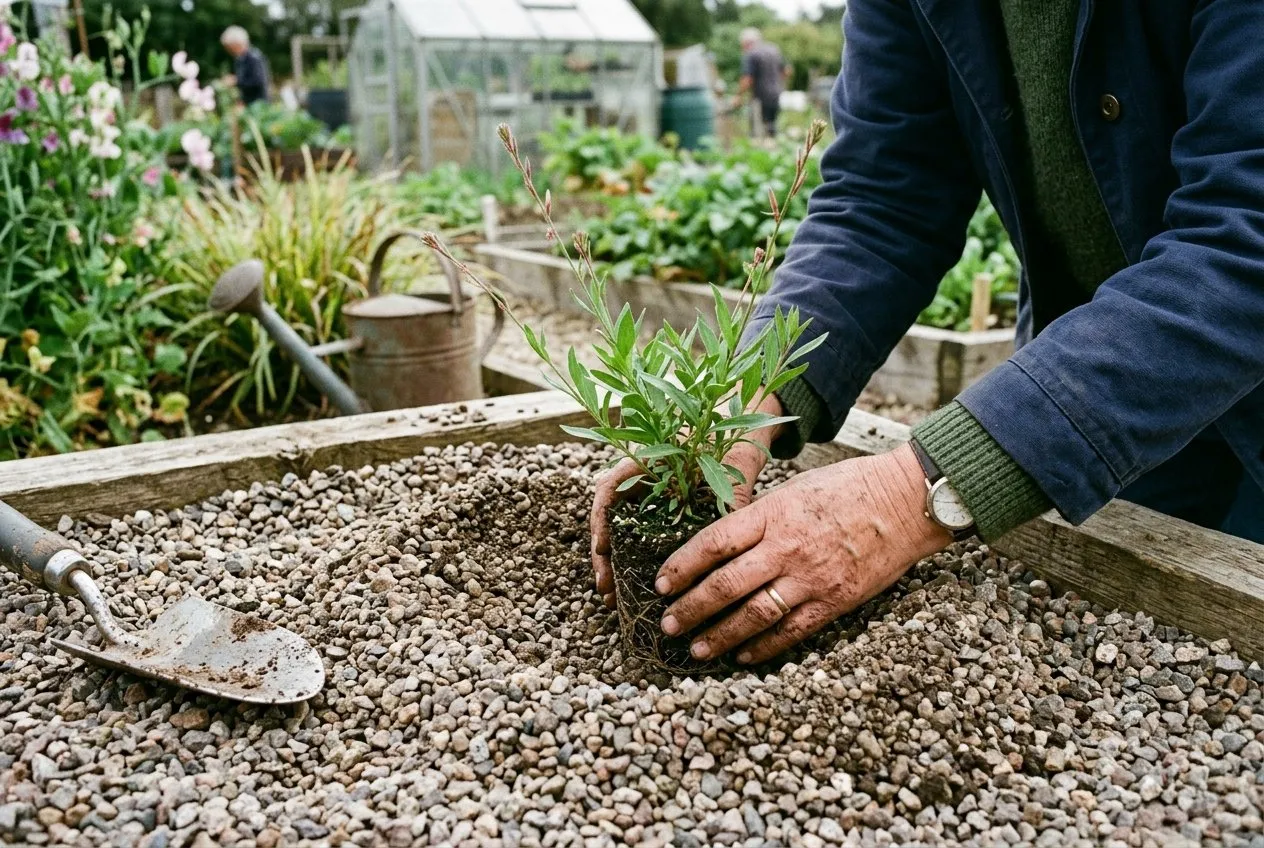
Plenty of grit around the roots keeps winter water away from the crown. That is the difference between a gaura that lasts and one that rots.
When and how to plant gaura
Plant gaura in late spring, from May to early June. That gives it all summer to root in before its first winter. Autumn planting is much riskier, especially on heavier soil.
- Pick a sunny spot and improve heavy soil with grit first.
- Dig a hole twice as wide as the pot.
- Set the plant so the crown sits level with the soil, never buried.
- Firm gently and water in well.
- Space tall varieties 40-60cm apart, compact ones a little closer.
Gaura looks best in groups of three or five, threaded through other plants. It grows a deep taproot, so choose the spot carefully. Moving an established plant usually kills it.
Watering, feeding and the mid-summer trim
Once settled, gaura is very drought-tolerant. Water new plants in dry spells through their first summer. After that, leave them alone except in a long drought. Too much water gives soft, floppy growth and keeps the crown damp.
Don’t feed it on ordinary garden soil. Rich soil gives lots of leaf and weak stems.
The one job that really pays off is a mid-summer trim. In early July, when the clump starts to sprawl, cut it back by about a third. It looks bare for a couple of weeks. Then it pushes out shorter, bushier stems and a fresh wave of flowers that carries on into autumn. It works on the same idea as the Chelsea chop for perennials.
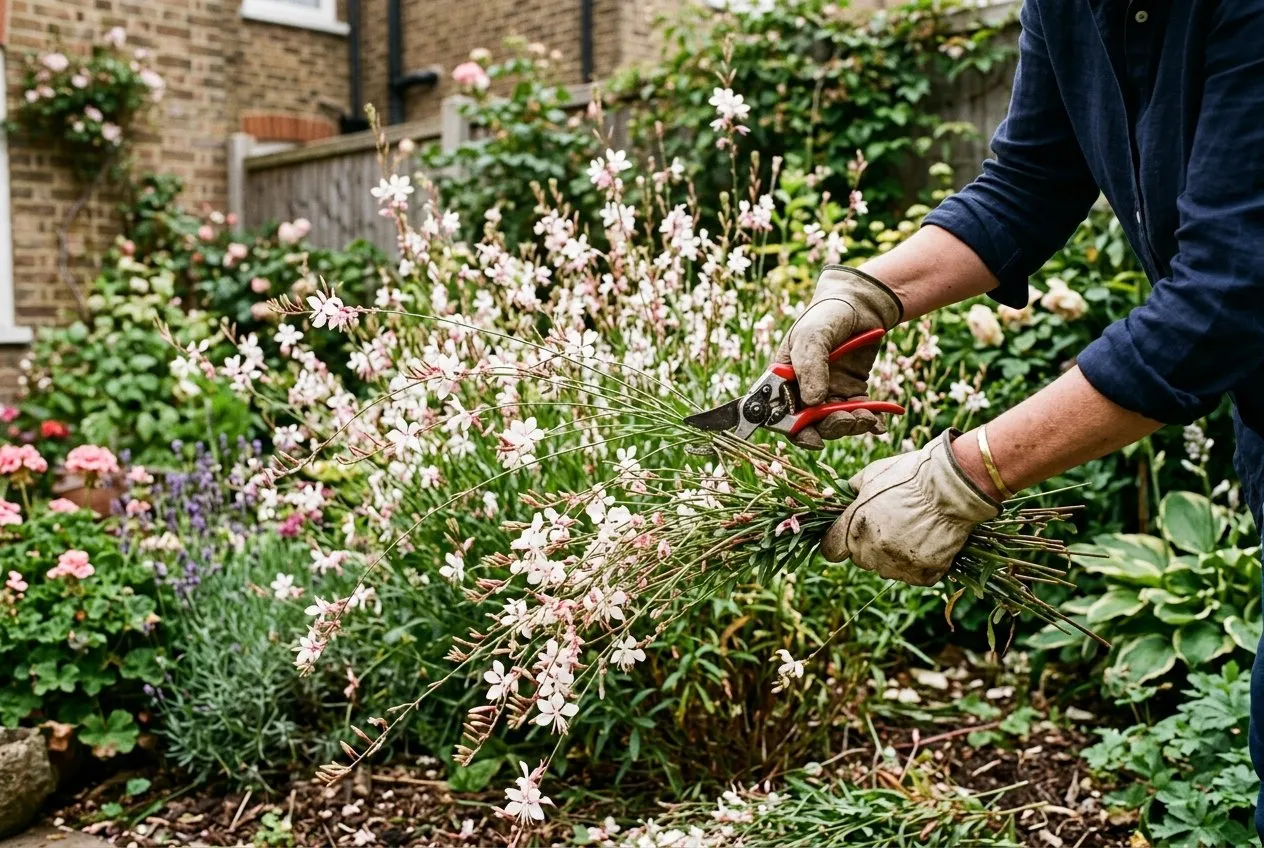
Cut the whole clump back by about a third in early July. It looks bare for a fortnight, then flowers again into autumn.
Why gaura flops and how to stop it
Gaura flops because its stems are naturally thin and arching. A single stake won’t fix it, and tying the stems into a bundle looks stiff and can snap them in wind.
The best support is other plants. Grow gaura through low, sturdy neighbours so the flowers float above them. Ornamental grasses, hardy geraniums, salvias and catmint all work well. Twiggy pea sticks pushed in around the clump in spring also help without showing.
Keeping the soil lean and doing the July trim both give shorter, stronger stems.

Grasses and salvias hold gaura’s wiry stems up, so the flowers drift above the border instead of falling over.
How to get gaura through a UK winter
Gaura copes with cold well enough, but winter wet is the real danger. A crown sitting in cold, soggy soil from November to March can rot, and the plant collapses by spring.
- Don’t cut it back in autumn. Leave the old stems standing until spring. Cut back to about 10cm in March or April, once new shoots appear at the base.
- Keep the crown dry. Make sure water isn’t pooling around it. Grit around the base helps.
- Move pots under cover. An unheated greenhouse, a porch or a spot against a sunny house wall keeps the rain off.
- Keep a back-up. Take cuttings in summer and keep the young plants in a cold frame over winter.
On very heavy soil, many gardeners simply treat gaura as a two or three year plant and replace it. Our guide to overwintering plants covers more ways to protect tender and borderline plants.
Growing compact gaura in pots
Compact gaura makes a lovely pot plant, and a pot solves the drainage problem. Choose the Belleza or Sparkle series, which stay about 40-50cm and need no support.
Use a pot at least 30cm wide with plenty of drainage holes. Mix two parts loam-based compost, such as John Innes No. 2, with one part grit. Raise the pot on feet so water drains straight through.
Stand it in full sun. Water when the top few centimetres feel dry, and never leave it sitting in a saucer of water. In winter, move the pot somewhere sheltered and keep it on the dry side.
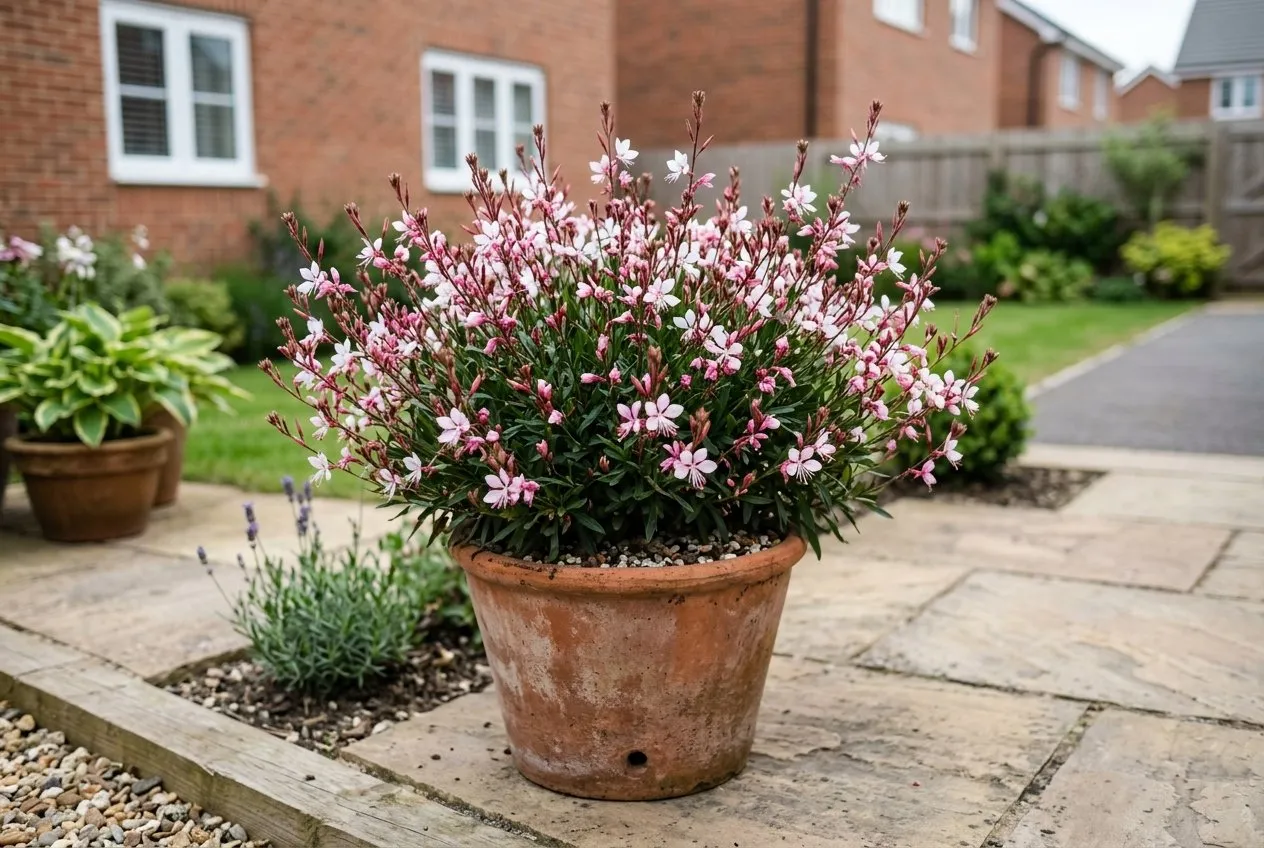
Compact types flower all summer in a pot and stay neat without support. Gritty compost keeps the roots happy.
How to propagate gaura from cuttings and seed
Cuttings are the best way to keep a named variety going. Take 8-10cm non-flowering shoots in early summer, or basal shoots in spring. Strip the lower leaves and push them into gritty compost. Keep them in a covered propagator or under a clear bag, out of direct sun. They usually root in a few weeks. Pot them on and keep them in a cold frame or greenhouse until the following spring.
Seed works for the plain species, which has white flowers. Sow in spring indoors in a warm spot, then prick out and grow on. Plants often flower in their first year. Named varieties won’t come true from seed.
Don’t try to divide an established gaura. The deep taproot means division usually kills it.
Gaura for bees and pollinators
Gaura is a good plant for pollinators, which is how it got the name beeblossom. Its flowers keep coming from June to October, so bees and hoverflies have something to visit well into late summer. For more long-season nectar plants, see our list of bee-friendly plants.
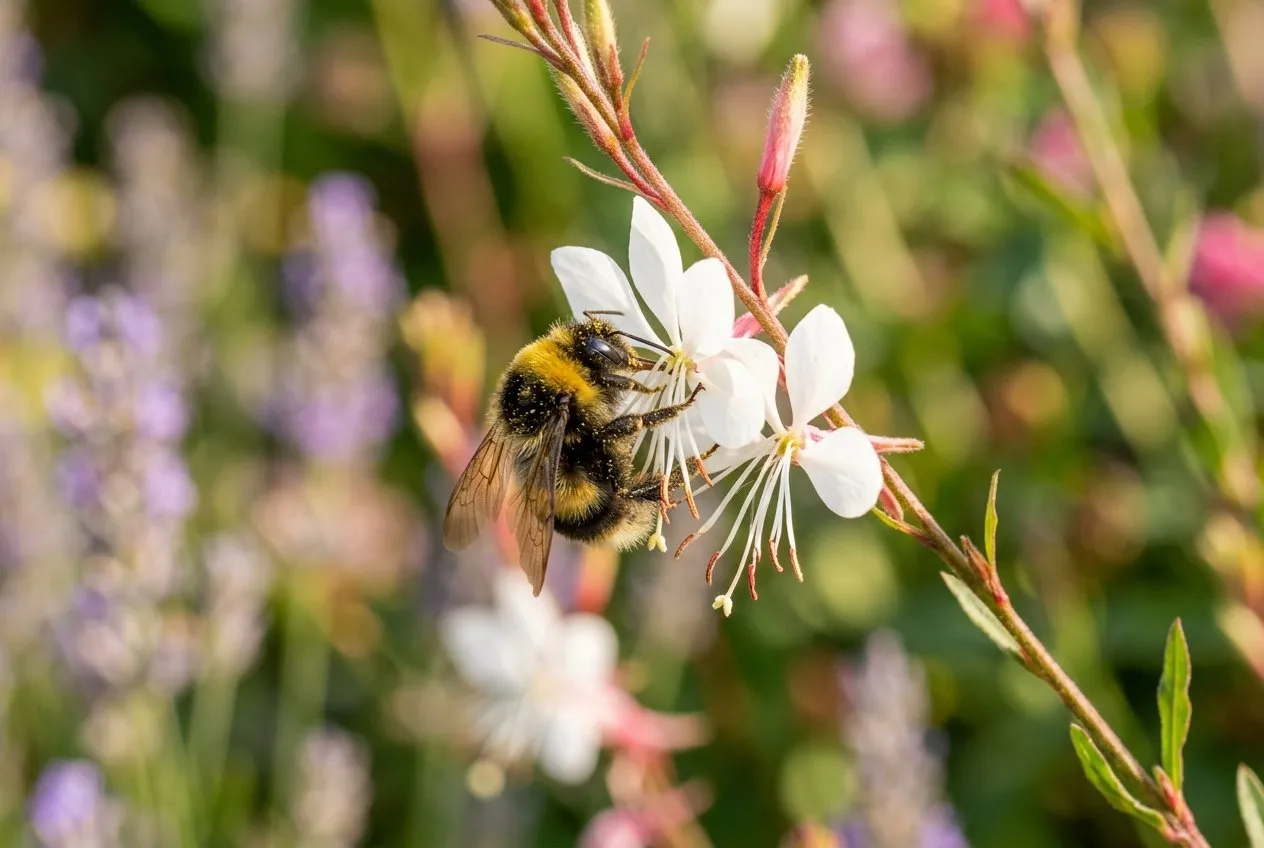
Bumblebees are regular visitors. Gaura’s long flowering season keeps feeding them when many border plants have finished.
Month-by-month gaura calendar
| Month | What to do |
|---|---|
| January to February | Leave old stems standing. Check water isn’t pooling round the crown |
| March | Cut old stems to 10cm once new shoots appear |
| April | Take basal cuttings. Buy new plants |
| May | Main planting month. Add grit on heavy soil |
| June | First flowers. Water new plants in dry spells. Take softwood cuttings |
| July | Trim the clump back by a third early in the month |
| August | Second flush of flowers. Little else to do |
| September | Flowering carries on. Pot up rooted cuttings |
| October | Last flowers. Leave the stems on |
| November to December | Move pots under cover. Keep crowns dry |
Common mistakes with gaura
Planting in heavy, wet soil. This is the main reason gaura dies. Add grit, plant on a mound, or grow it in a raised bed or pot.
Feeding and watering too much. Rich, moist soil gives floppy stems and fewer flowers. Keep it lean and on the dry side.
Cutting back in autumn. This exposes the crown to winter wet. Wait until March or April.
Trying to move or divide it. The taproot hates disturbance. Plant it once and take cuttings instead.
Expecting it to live for years. Gaura is often short-lived. Treat it as a generous, replaceable plant and keep a cutting or two going.
Pairing pink gaura in a border
Pink varieties such as ‘Siskiyou Pink’ bring warmth to a border. They look good with silver foliage, deep purples and soft oranges, and want exactly the same sun and drainage as the whites. If you love long-flowering, airy plants, scabious is a lovely partner and makes a good cut flower too. You’ll find more ideas on the growing hub.
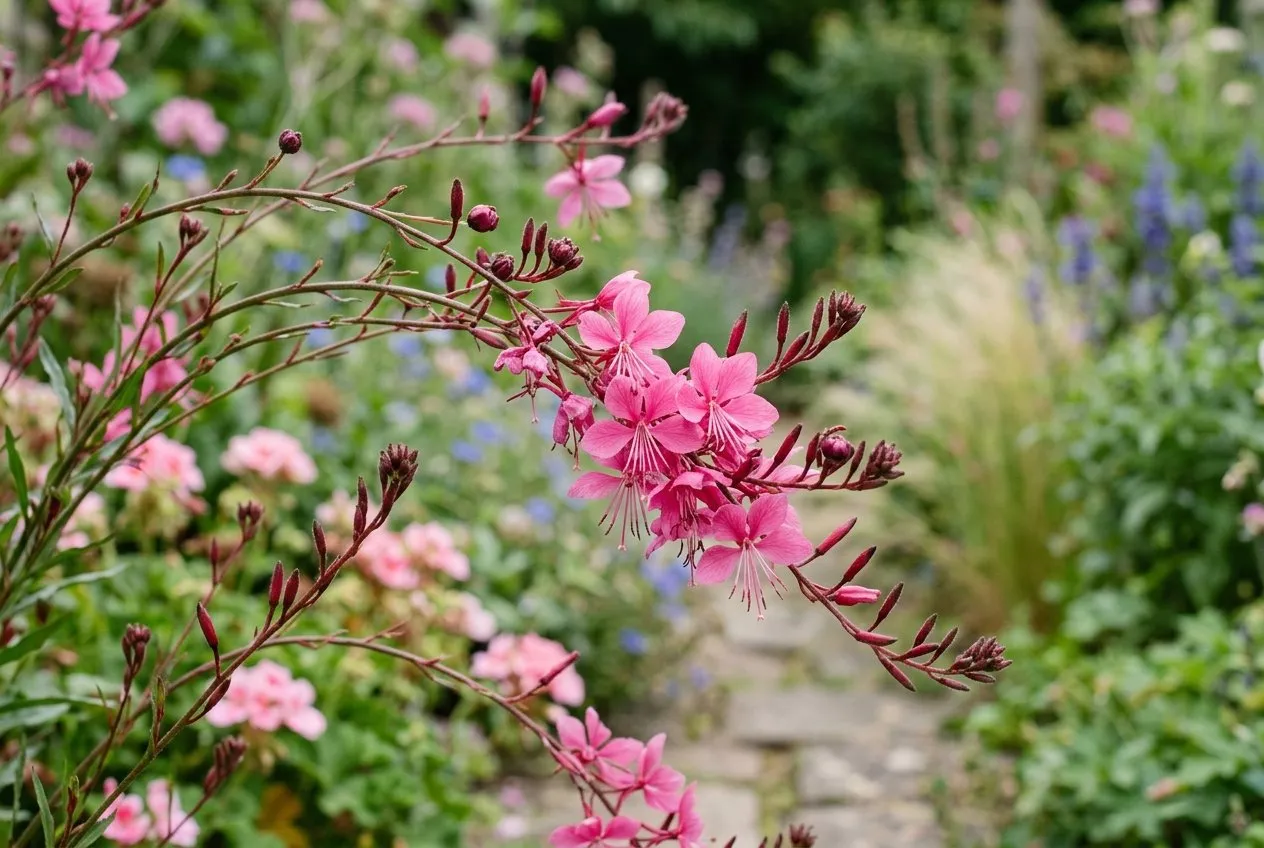
‘Siskiyou Pink’ adds warmth to a border. It flops like the whites, so give it some low neighbours to lean on.
Now you know how to grow gaura, our guide to creating a gravel garden shows how to build the sunny, free-draining spot it loves.
Frequently asked questions
Is gaura the same as Oenothera lindheimeri?
Yes, they are the same plant under its newer botanical name. Botanists moved gaura into the evening primrose group, Oenothera. Most nurseries still sell it as Gaura lindheimeri, so you’ll see both names on labels. It’s also called beeblossom or whirling butterflies.
Is gaura hardy in the UK?
It copes with most UK winters if the soil drains well. Cold is rarely the problem. Wet, heavy soil in winter is what rots the crown. Even in a good spot it often lasts only two or three years, so keep a few cuttings as a back-up.
Why is my gaura flopping over?
Gaura naturally has thin, arching stems that lean and sprawl. Rich soil, shade and too much water make it worse. Plant it among low, sturdy neighbours that hold it up, keep the soil lean, and trim it back by a third in early July.
Should I cut back gaura in winter?
No, leave the old stems on until spring. They help protect the crown over winter. Cut back to about 10cm in March or April, once new shoots show at the base.
Can you grow gaura in pots?
Yes, and compact types are ideal. The Belleza and Sparkle series stay about 40-50cm tall. Use a pot at least 30cm wide with gritty compost and good drainage holes. You can move it somewhere sheltered and dry for winter.
How do you keep gaura flowering all summer?
Give it sun, lean soil and one trim in early July. You don’t need to deadhead every stem. Cutting the clump back by a third gives a fresh flush that lasts into autumn. Heavy feeding gives leaves rather than flowers.
Can you move an established gaura?
It’s risky, because gaura grows a deep taproot. Older plants often fail after being lifted. Plant it where you want it to stay. Take cuttings or sow seed for new plants instead of dividing or moving a clump.
Our team produces practical UK gardening guidance from source research, contributor records and established horticultural practice. Editorial standards are overseen by Matt W.