Key takeaways
- Full sun and free-draining soil matter most; scabious rots in cold, wet clay over winter
- Deadhead every few days and perennials keep flowering from early summer into autumn
- 'Butterfly Blue' and 'Pink Mist' are compact, long-flowering perennials for the front of a border
- Annual scabious such as 'Black Knight' gives the longest stems for cutting
- Cut stems for the vase when the flowers are just starting to open
- Bees and butterflies love the flat pincushion heads all summer
Scabious is one of the longest-flowering plants you can grow for cutting. These pincushion flowers sit on wiry stems, and bees and butterflies adore them. Give scabious full sun and soil that drains well, deadhead often, and a single clump can flower from early summer into autumn.
There are hardy perennials, a crimson cousin and tall annuals bred for the vase. This guide shows which to grow, how to sow and space them, and the simple habit that turns a few weeks of flowers into months. It also explains why so many plants die in their first winter, and how a bag of grit fixes it.
Which scabious to grow for cutting and borders
Scabious falls into three handy groups.
Hardy perennials are the backbone. Scabiosa columbaria types such as ‘Butterfly Blue’ (lavender-blue) and ‘Pink Mist’ are compact, about 40cm tall, and flower for months. Scabiosa caucasica types such as ‘Fama Blue’ and ‘Fama White’ have much bigger heads, the classic florist’s scabious.
Knautia macedonica is a close cousin that grows the same way. It carries lots of small crimson pincushions on stems about 60-75cm tall. It self-seeds gently and suits a relaxed cottage border.
Annuals are the cutting stars. Scabiosa atropurpurea ‘Black Knight’ grows tall, with long, straight stems that are perfect for the vase. Annual mixes add white, pink and deep maroon.
| Variety | Type | Colour | Height | Best for |
|---|---|---|---|---|
| ’Butterfly Blue’ | Perennial | Lavender-blue | About 40cm | Front of border, long flowering |
| ’Pink Mist’ | Perennial | Soft pink | About 40cm | Front of border, long flowering |
| ’Fama Blue’ | Perennial | Sky blue | 50-60cm | Big heads for cutting |
| ’Fama White’ | Perennial | White | 50-60cm | Big heads for cutting |
| Knautia macedonica | Short-lived perennial | Crimson | 60-75cm | Cottage borders, filler stems |
| ’Black Knight’ | Annual | Deep maroon | 75-90cm | Long stems in the cutting patch |
For a steady supply, grow a mix. Put ‘Butterfly Blue’ and ‘Pink Mist’ at the front, ‘Fama Blue’ behind, and a row of ‘Black Knight’ in the cutting patch.
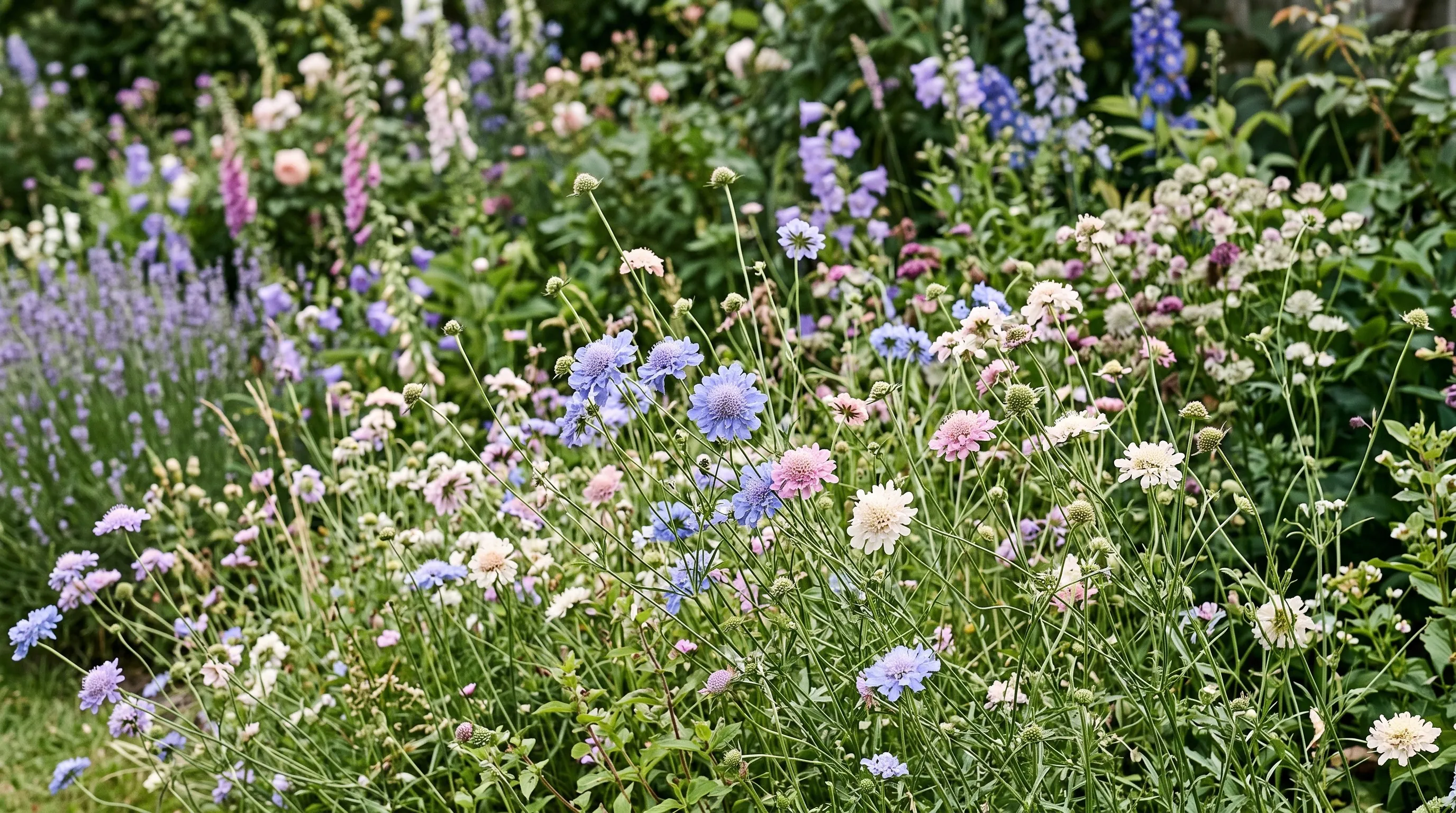
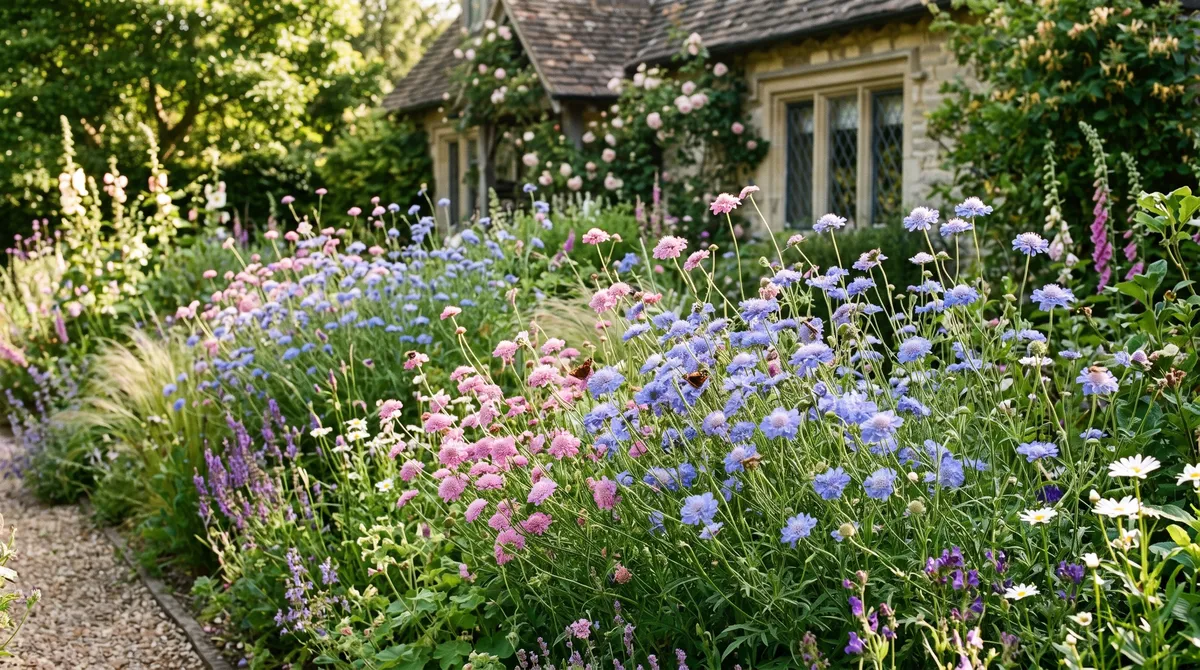
Perennial scabious in blue, pink and cream. Planted 30cm apart, they knit into a drift that flowers for months.
What conditions does scabious need?
Scabious needs full sun and free-draining soil. In shade the stems flop, flowering stalls and mildew can set in.
It grows wild on sunny chalk and limestone grassland, so it likes chalky or neutral soil. What it can’t survive is cold, wet soil in winter. The crown sits in water, rots and collapses.
Heavy clay is the usual culprit. You have three options:
- Fork in plenty of horticultural grit before planting.
- Plant on a slight mound so water drains away from the crown.
- Grow scabious in pots of gritty, peat-free compost.
Warning: Don’t plant scabious into heavy soil in autumn. Young plants in cold, wet ground often rot before spring. Plant in April or May instead.
How to sow annual scabious
Annual scabious is one of the easiest cut flowers to raise from seed. Sow under cover from February to April for flowers from midsummer.
Fill module trays with peat-free seed compost and sow one or two seeds per cell. Cover lightly with compost or vermiculite. Keep them somewhere warm, such as a bright windowsill or a heated propagator.
Once seedlings have two true leaves, thin to the strongest in each cell. Grow them on somewhere cooler and bright so they don’t stretch. Harden off over a week or two, then plant out after the last frost. You can also sow annual scabious direct outdoors in April. The guide to sowing hardy annuals direct covers the method.
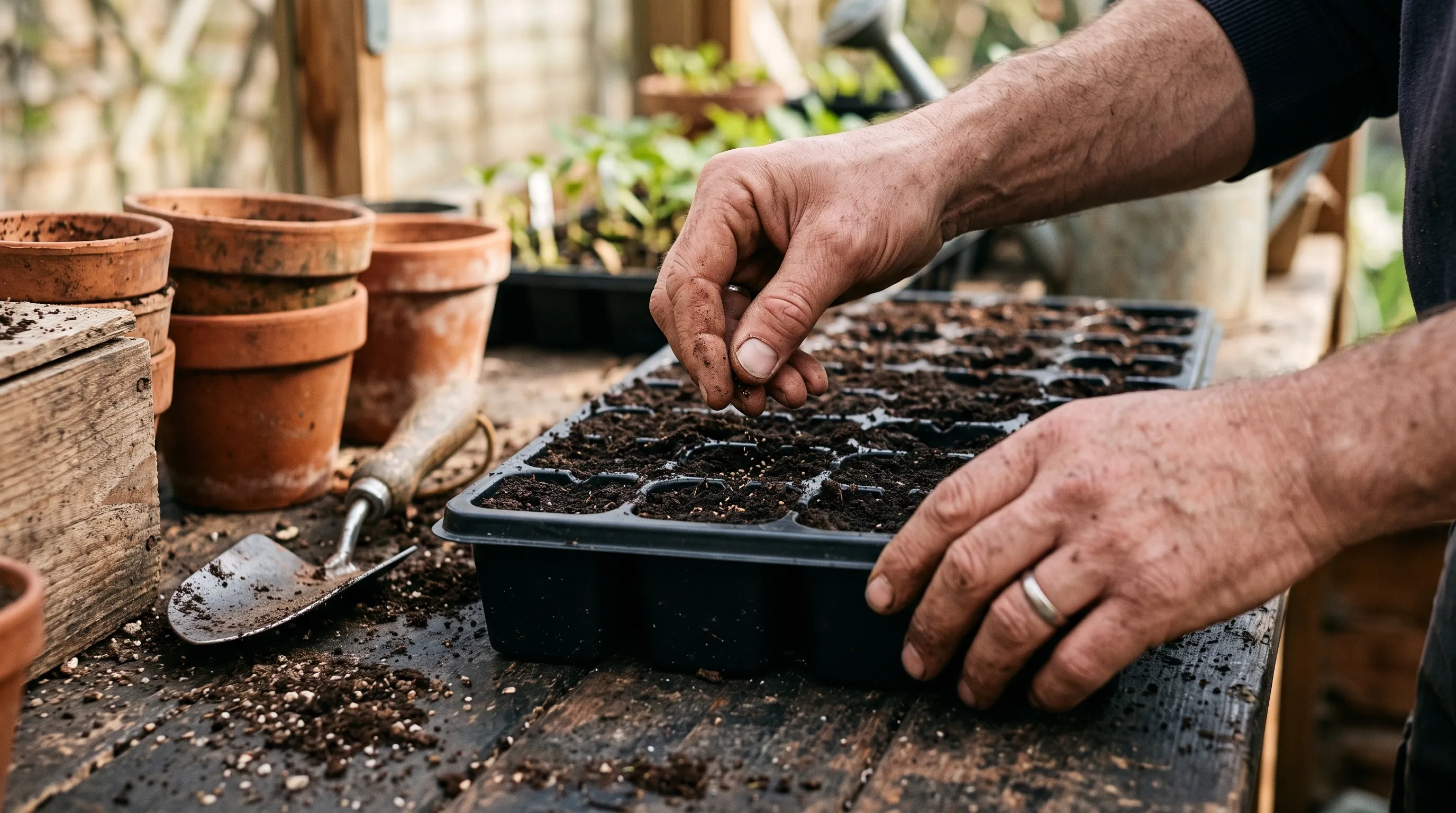
One or two seeds per module is plenty. Thin to the strongest seedling once they have two true leaves.
Planting and spacing perennial scabious
Perennial scabious can be sown under cover in spring, but it is slower and less even than the annuals. Many gardeners simply buy young plants, which often flower in their first summer.
Plant in spring into gritty, well-drained soil. Space compact types such as ‘Butterfly Blue’ and ‘Pink Mist’ about 30cm apart. Give taller Scabiosa caucasica and Knautia 40-45cm, as they make wider clumps. Firm gently and water in well.
The secret to months of flower: deadhead often
This is the habit that matters most. Scabious flowers to set seed. Every faded bloom left on the plant turns into a seed head, and then the plant slows down. Remove spent flowers and it keeps making new ones.
From early summer, check your plants every few days. Cut each faded flower back to a leaf joint or the next bud, not just the head. Done regularly, perennials keep flowering into autumn. Skip a week or two in July and flowering soon drops off.
Gardener’s tip: Keep a pair of snips and a jar of water by the back door in summer. Snip off faded heads as you pass, and drop any fresh stems straight into the jar.
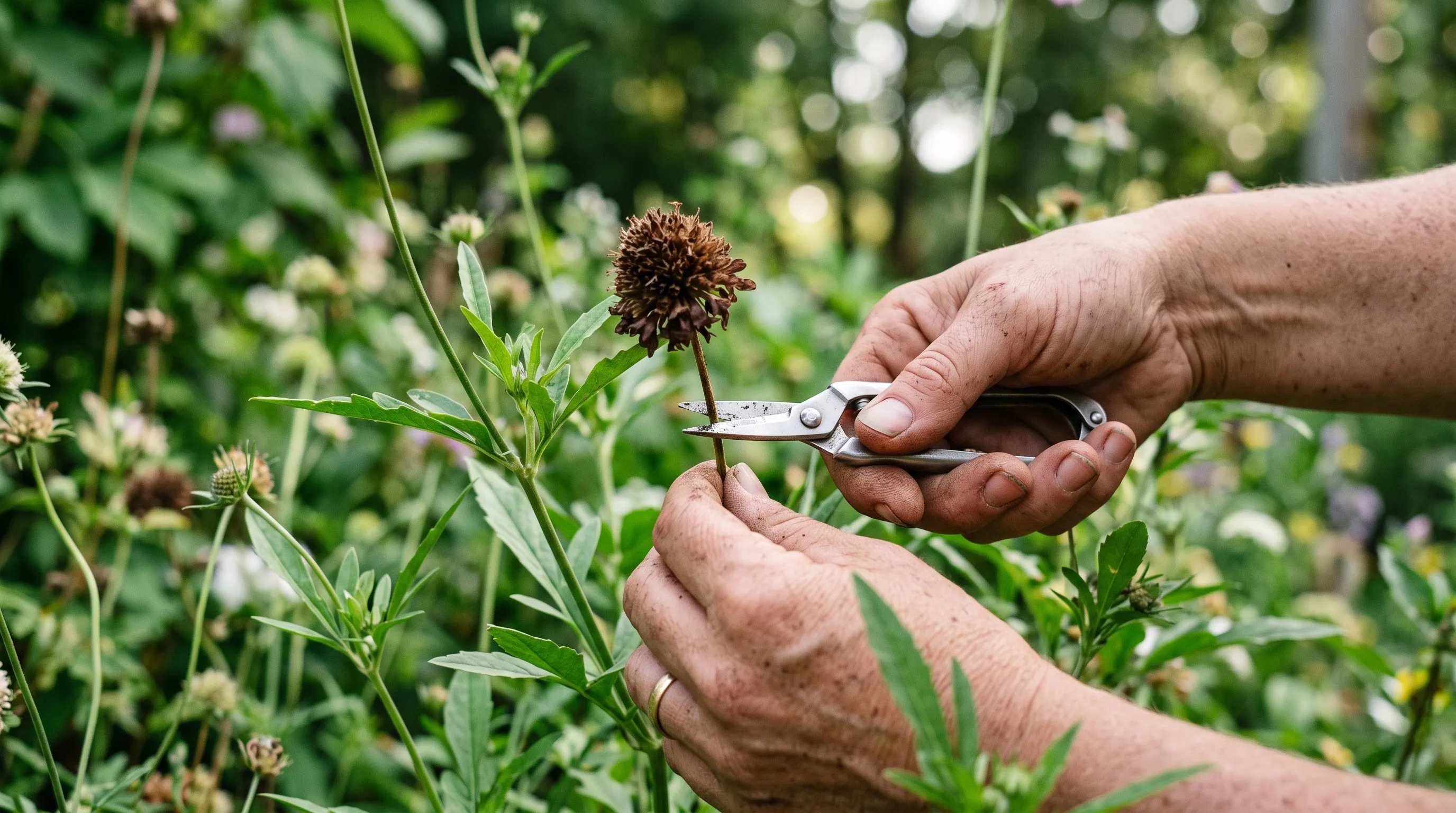
Snip faded heads back to a leaf joint or bud. A few minutes every few days keeps fresh flowers coming.
Cutting scabious for the vase
Scabious is a florist’s favourite: airy, long-stemmed and pretty in any jug. Timing matters. Cut when the flowers are just starting to open. Fully open flowers drop their petals sooner.
Cut in the cool of the morning, when stems are full of water. Take a long stem and strip off any leaves that would sit below the waterline. Stand the stems in deep, cool water for a few hours before arranging. The guide to conditioning cut flowers explains the routine.
Change the water every couple of days and re-cut the stem ends. ‘Black Knight’ gives the longest, strongest stems, while Knautia makes a lovely airy filler. For more ideas, see the guide to the best flowers for cutting.
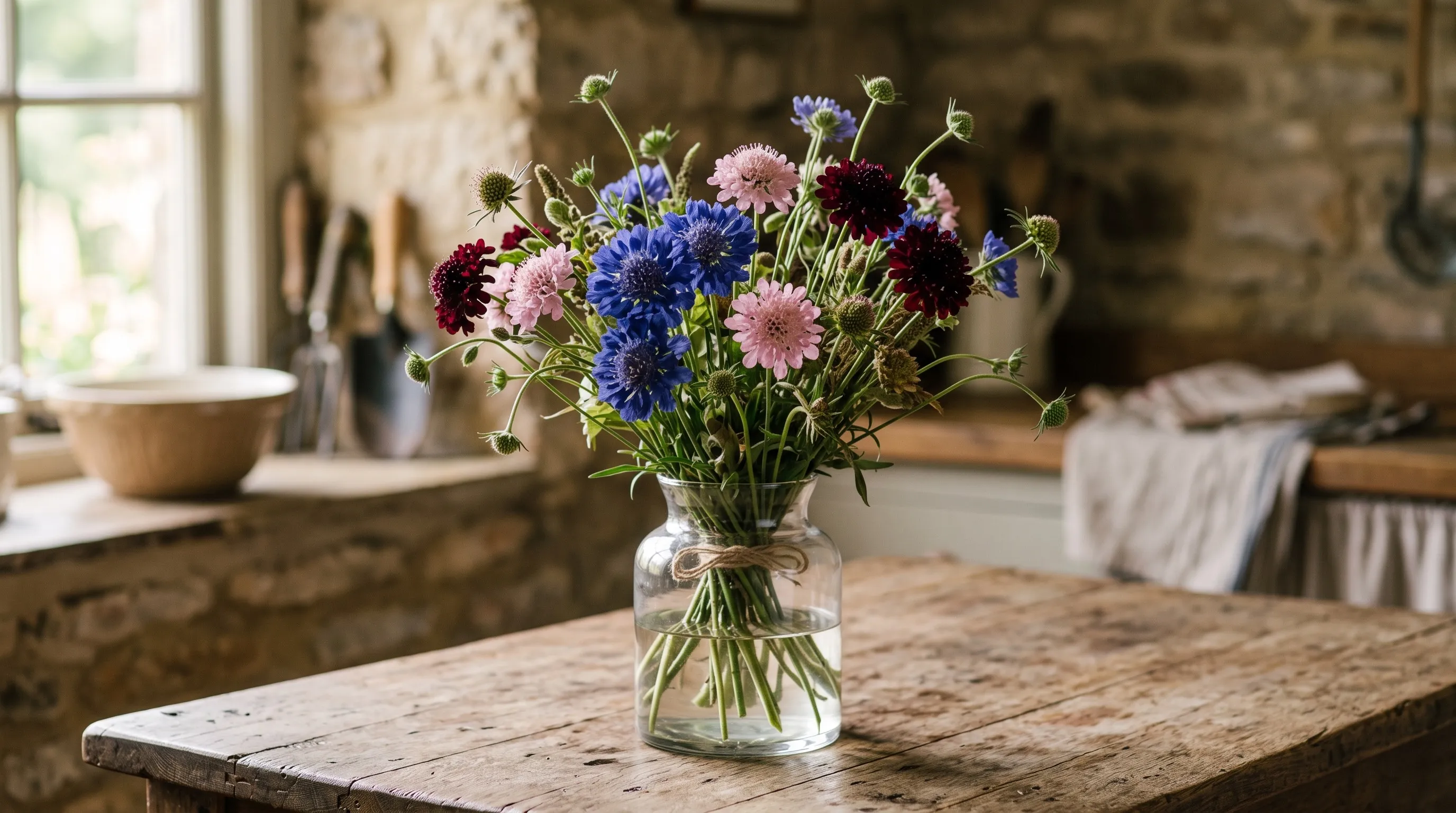
A simple jar of mixed scabious. Every stem you cut also counts as deadheading.
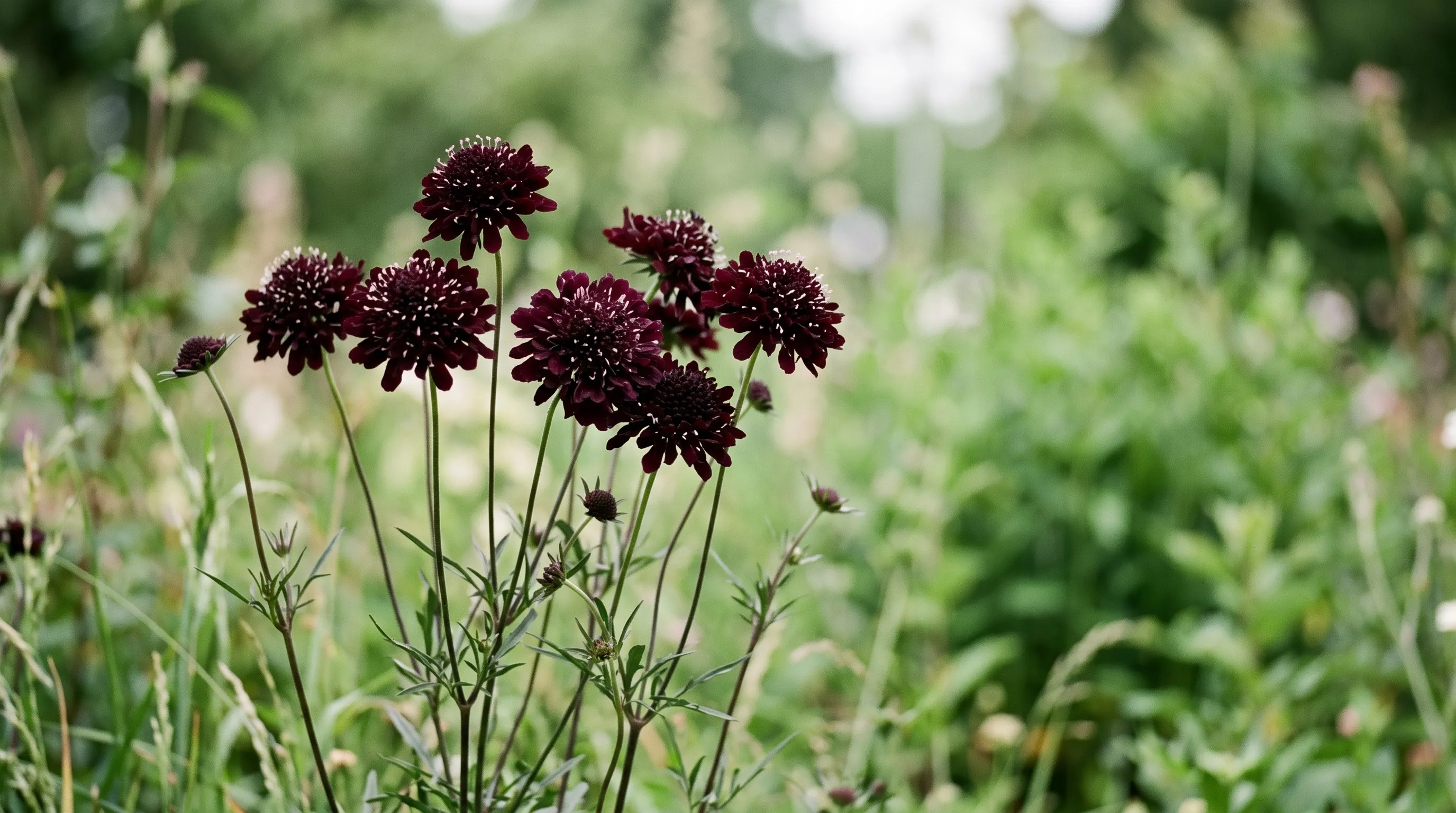
‘Black Knight’ has deep maroon pincushions on tall stems. It is the one to grow if you want lots to cut.
Feeding, dividing and overwintering scabious
Scabious isn’t a hungry plant. On reasonable soil, a light mulch of compost in spring is plenty. Rich soil or high-nitrogen feeds give soft, floppy stems and fewer flowers.
Divide perennials every few years in spring, as clumps tire and flower less from the middle. Lift the plant in March or April and split it into pieces, each with roots and shoots. Replant into fresh, gritty soil.
Overwintering comes down to drainage. On free-draining soil, perennial scabious needs no winter protection. On heavy ground, a cloche over the crown in the wettest months can help. Annuals finish at the end of the season, so collect seed or buy fresh each year.
Why bees and butterflies love scabious
The flat pincushion head is a perfect landing pad, and the little florets hold nectar and pollen that many insects can reach. On a warm July day a single clump can be busy with honeybees, bumblebees, hoverflies and butterflies.
The long season is what makes it so useful. A deadheaded plant keeps flowering through late summer, when many borders fade.
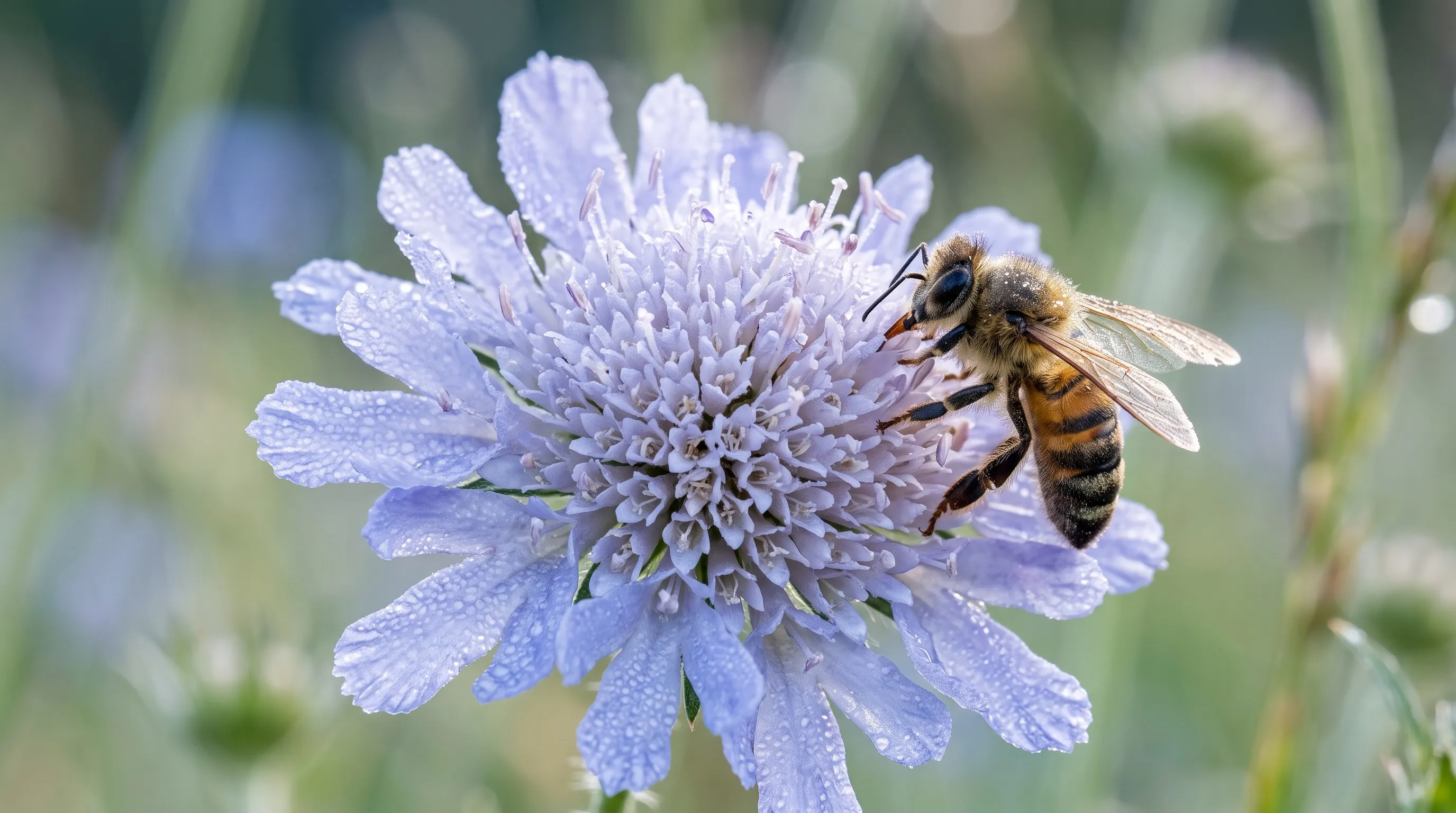
Bees can land and feed easily on the flat flower heads.
Pair scabious with other plants for butterflies so there’s always something in flower. At the end of the season, leave a few seed heads standing for winter interest and wildlife.
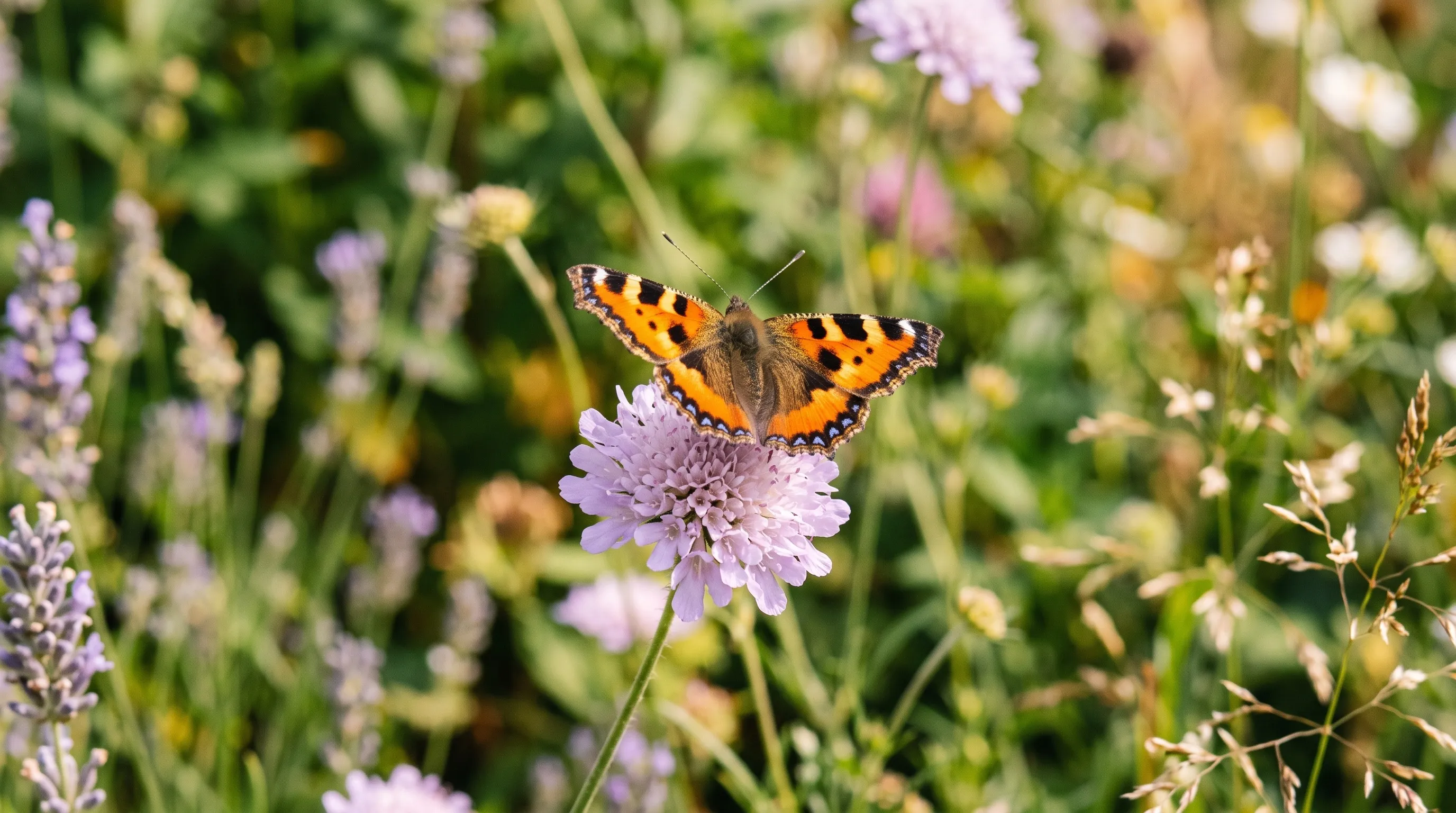
A small tortoiseshell on scabious. Deadheaded clumps keep feeding butterflies into autumn.
Month-by-month scabious calendar for the UK
| Month | Task |
|---|---|
| January | Order seed. Keep pots raised on pot feet so they drain |
| February | Sow annual scabious under cover |
| March | Sow more annuals. Divide established perennials. Fork grit into planting spots |
| April | Prick out seedlings. Sow annuals direct. Plant young perennials |
| May | Harden off and plant out annuals after the last frost. Support tall types |
| June | Flowering begins. Start deadheading every few days |
| July | Peak flowering. Deadhead and cut for the vase. Water in long dry spells |
| August | Keep deadheading. Watch for mildew in hot, dry weather |
| September | Flowering continues. Collect seed from annuals |
| October | Last flowers. Leave a few seed heads standing |
| November to December | Tidy tired perennial foliage. Make sure crowns aren’t sitting wet |
Shift timings a week or two later in Scotland and the north.
Common scabious mistakes
- Planting into wet clay in autumn. Young plants rot. Plant in spring, with grit, or use pots.
- Not deadheading often enough. Once it sets seed, flowering slows. Deadhead every few days.
- Growing it in shade. It flops and gets mildew. Give it full sun and good airflow.
- Feeding too much. Rich soil gives leafy, floppy plants. Keep it lean.
Frequently asked questions
How do I keep scabious flowering all summer?
Deadhead every few days without fail. Scabious flowers to set seed, so removing spent blooms makes it keep producing new ones. Cutting stems for the vase does the same job. Keep the plant in full sun and don’t overfeed it.
Why does my scabious keep dying over winter?
Cold, wet soil rots the crown; the cold itself is rarely the problem. Heavy clay is the usual cause. Add grit, plant on a slight mound or grow scabious in pots of gritty compost. Plant in spring rather than autumn so roots settle before winter.
Is scabious a perennial or an annual?
Both, depending on the type. Scabiosa columbaria and Scabiosa caucasica are perennials that come back for years. Scabiosa atropurpurea is usually grown as an annual from seed each year. Knautia, a close cousin, is a short-lived perennial.
When should I sow scabious seed in the UK?
Sow annual scabious under cover from February to April. Harden off and plant out after the last frost. You can also sow it direct outdoors in April where it is to flower. Perennials can be sown under cover in spring, or bought as young plants.
How far apart should I plant scabious?
Space compact perennials about 30cm apart and taller types 40-45cm. ‘Butterfly Blue’ and ‘Pink Mist’ knit together at 30cm. Tall annuals like ‘Black Knight’ need about 40cm and often a few twiggy supports.
When do you cut scabious for a vase?
Cut when the flowers are just starting to open. Fully open flowers drop their petals sooner. Cut in the cool of the morning, strip the lower leaves and stand the stems in deep water for a few hours before arranging.
Do bees and butterflies like scabious?
Yes, scabious is a brilliant pollinator plant. The flat pincushion heads make an easy landing pad for bees, hoverflies and butterflies. Deadheaded perennials keep feeding them from early summer into autumn.
Now you know how to keep scabious flowering, plan where it will go with the guide to creating a cutting garden, or browse more ideas in the growing hub.
Our team produces practical UK gardening guidance from source research, contributor records and established horticultural practice. Editorial standards are overseen by Matt W.