Key takeaways
- Canterbury bells are biennials: sow one year, flower the next June
- Sow in May or June on the surface of the compost, uncovered, because the seed needs light
- Plant out 30cm apart in September or early October on free-draining ground
- Winter wet around the crown, not cold, is what usually kills them
- Stake by mid May, before the 60-90cm spikes flop
- The 'Champion' series flowers in its first year if you can't wait
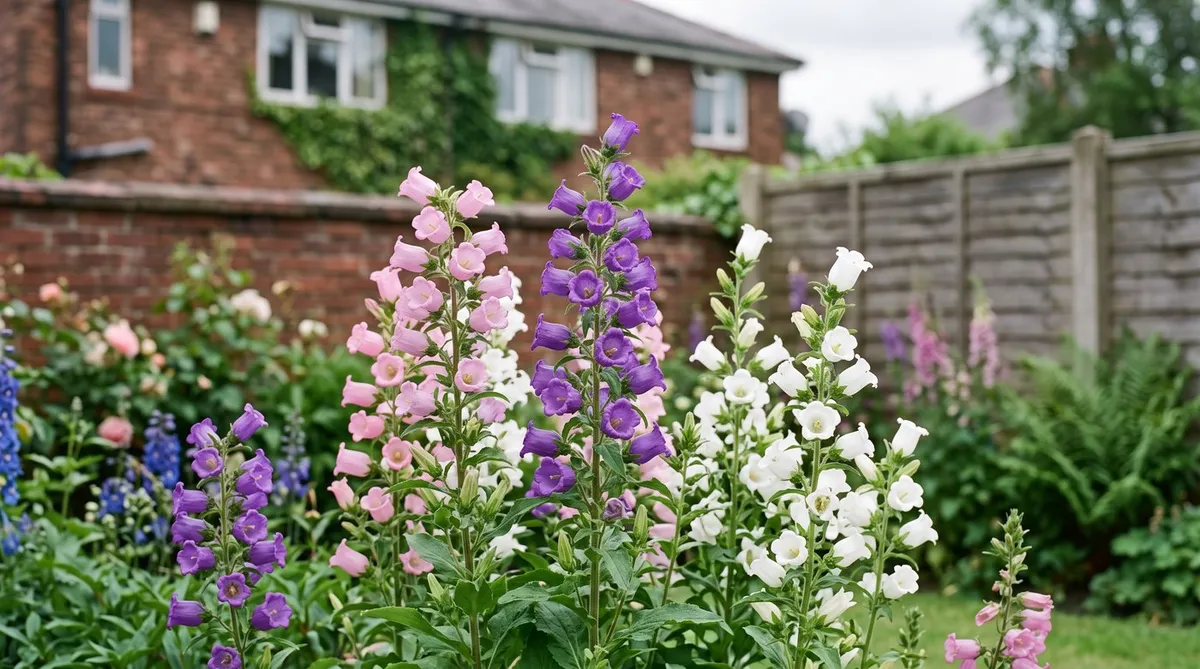
Canterbury bells catch out lots of gardeners. You sow the seed, get a neat green rosette, and then nothing happens all year. That isn’t failure. Canterbury bells (Campanula medium) are biennials, so they flower in their second year. Sow in May, plant out in autumn, and the next June you get 60-90cm spires of fat bells in purple, pink, blue and white.
This guide walks through the full two-year cycle. For the bigger picture on sowing wallflowers, foxgloves and the rest of the group, see the guide to sowing biennials.
Why do Canterbury bells take two years to flower?
Canterbury bells spend their first year building a leafy rosette. They need that winter cold before they can flower. So a plant sown this spring won’t flower until next summer.
Here’s how the cycle runs:
- May to June: sow the seed
- Summer: the seedlings grow into a flat rosette of oval, slightly hairy leaves
- Autumn: plant out into the border
- Winter: the cold sets up the flowering signal
- Next June and July: flower spikes shoot up, bells open, then the plant sets seed and dies
The classic mistake is sowing in spring and expecting bells that summer. That rosette hasn’t had a winter, so it just sits there.
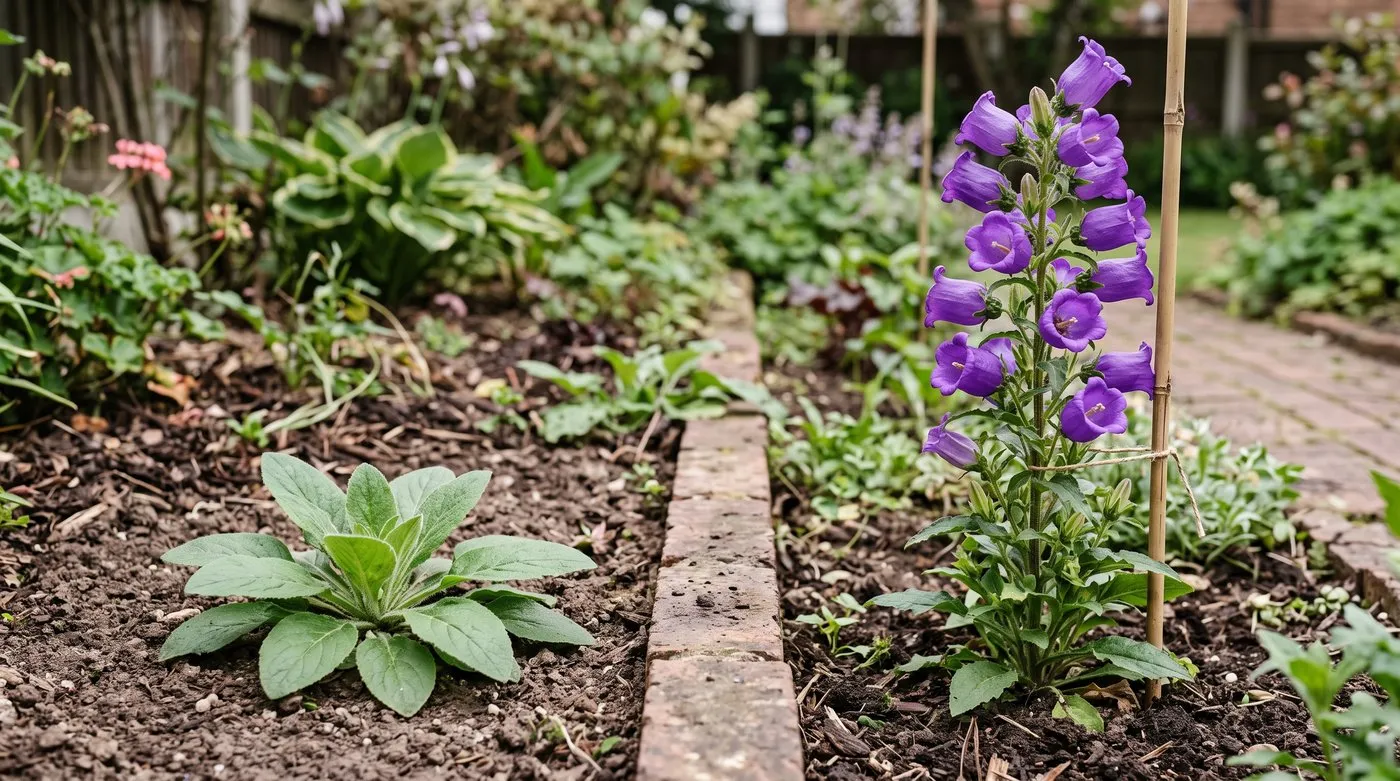
Year one on the left, year two on the right. A rosette with no flowers in its first summer is doing exactly what it should.
When and how to sow Canterbury bells
Sow from mid May to the end of June. That gives the rosette all summer to grow. Much earlier and plants can get big and soft before winter. Much later and they go into winter too small.
- Fill a seed tray with peat-free seed compost and firm it lightly
- Water from below
- Scatter the tiny seed thinly on the surface
- Don’t cover it. The seed needs light to germinate
- Cover the tray with a clear lid or bag to hold in moisture
Keep the tray somewhere bright but out of direct summer sun, such as a shaded cold frame. Seedlings usually appear in two or three weeks, often unevenly, so be patient.
When seedlings have two true leaves, move them into their own small pots. Don’t overwater at this stage, as soggy compost causes seedlings to collapse.
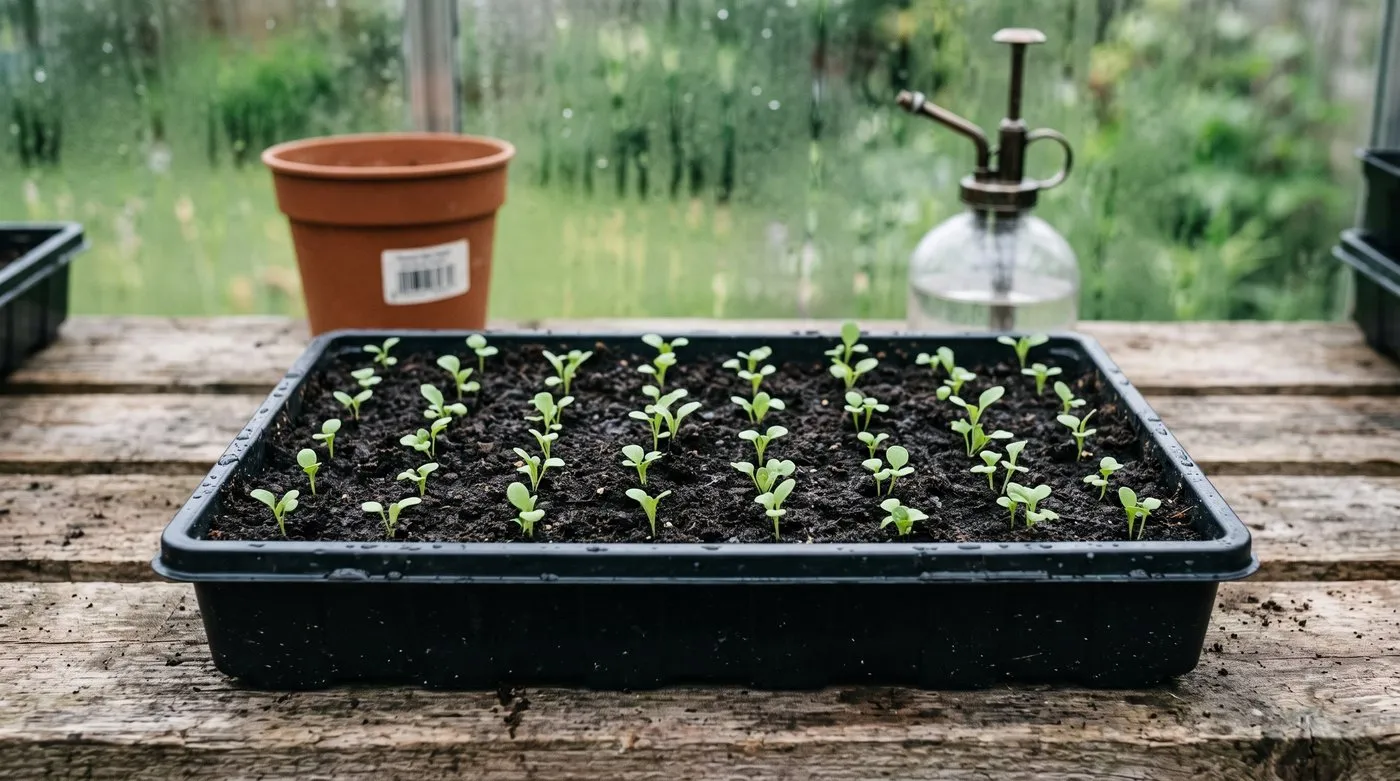
The seedlings start tiny and slow. Keep them bright and just moist, and they soon pick up.
Growing the rosette on through summer
The size of the rosette in autumn decides how good next year’s show is. Aim for a plant about 15-20cm across by late September.
- Move young plants into 1 litre pots in late July
- Mix a little grit or perlite into the compost, as the roots hate sitting wet
- Stand pots on gravel or slats, not a tray that holds water
- Give a high-potash liquid feed, such as tomato feed at half strength, every couple of weeks in August
Don’t push them with nitrogen-rich feed. Soft, lush rosettes are the ones that rot in winter.
Slugs love the flat rosettes from autumn to spring. Keep pots off the ground and check under rims regularly. The guide to getting rid of slugs naturally covers the options.
Planting out and getting through a wet winter
Plant out in September or early October, while the soil is still warm. Space plants 30cm apart, in groups of five or seven for a good block of colour. Pick a sunny or lightly shaded spot with sharp drainage.
Canterbury bells are hardy, so frost isn’t the problem. Winter wet is. Water sits around the crown, and the base of the plant goes soft and black.
- On soil that puddles, plant on a slight ridge or in a raised bed
- Fork grit into the planting area on heavy ground
- Keep mulch away from the crown itself so air can move around it
- Don’t plant into freshly manured soil, as soft growth and wet crowns go together
If you garden on heavy ground, the guide to improving clay soil helps more than any winter fleece.

A raised bed is ideal on heavy soil. Set the rosettes 30cm apart with the crown sitting just proud of the surface.
Which Canterbury bells should you grow?
The main choice is between single bells and Cup and Saucer types.

Cup and Saucer types have a flat collar behind each bell, while singles are a plain bell. Both make lovely cut flowers.
| Type | What it looks like | Good for |
|---|---|---|
| Cup and Saucer (var. calycanthema) | Bell sitting on a flat coloured collar | The showiest border display and cutting |
| Single | Plain bell with a small green calyx | Classic cottage borders |
| Double | Bells packed with extra petals | Novelty, but heavier in rain |
| Dwarf, such as ‘Bells of Holland’ | Shorter spikes | Front of the border, pots, windy spots |
| ’Champion’ series | Tall single bells | Flowers in its first year from a February sowing |
The ‘Champion’ series is the shortcut for impatient gardeners. Sow it in a heated propagator in late winter and it flowers that same summer, with no winter needed. The seed costs more and the colour range is smaller.
How to stake Canterbury bells
Put supports in by mid May, when the plants are about 25cm tall. A flowering spike is top-heavy, and one wet June night can flatten it. Once a stem kinks, it won’t straighten.
- Pea sticks: hazel or birch twigs pushed in around each plant. Cheap and invisible once the plant grows through
- Grow-through rings: neat in a formal border and last for years
- Canes and soft ties: one cane per stem, best on windy or exposed plots
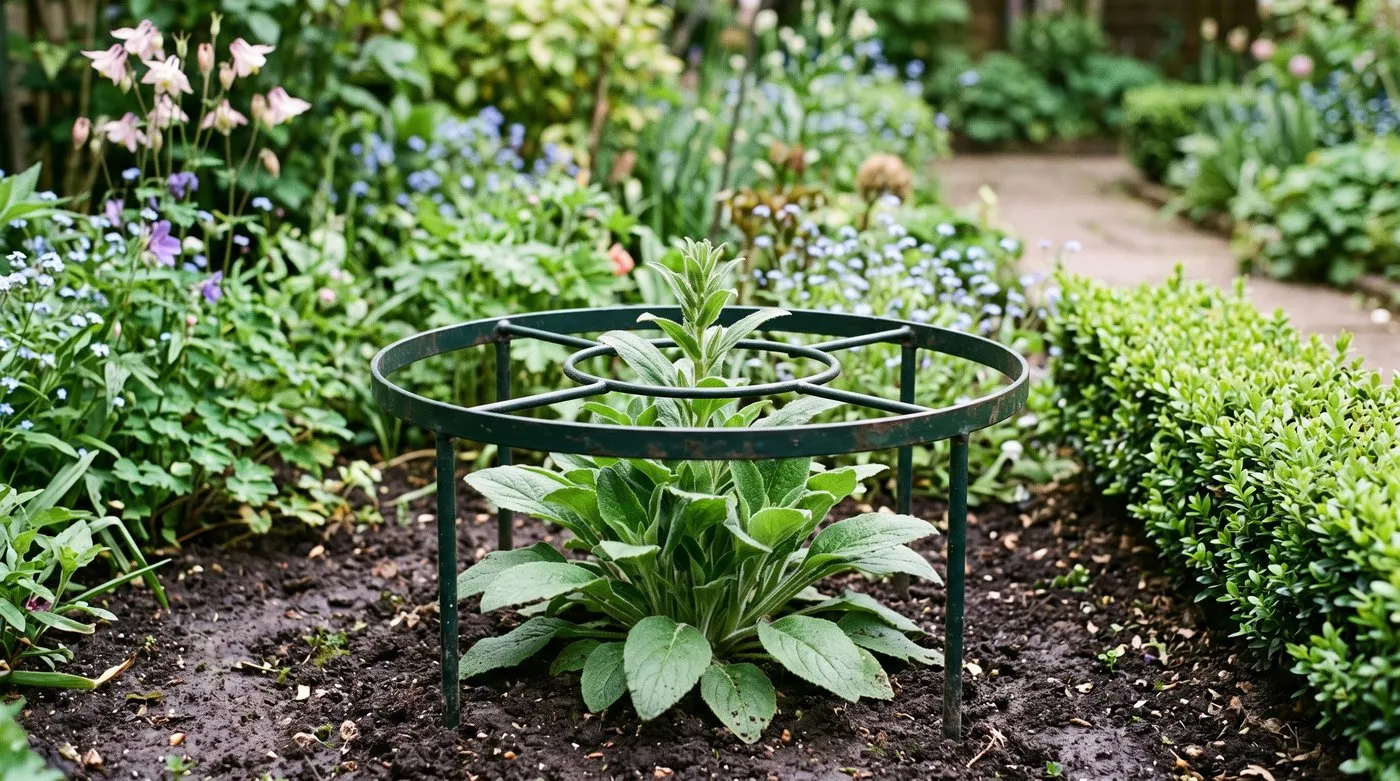
Fit the ring early, like this. The spike grows up through it and the support disappears from view.
Month-by-month Canterbury bells calendar
| Month | Task |
|---|---|
| January | Check crowns for rot. Clear fallen leaves off rosettes |
| February | Sow ‘Champion’ in a heated propagator for flowers this year |
| March | Re-firm plants lifted by frost. Watch for slugs |
| April | Spikes start to grow later in the month |
| May | Stake by mid month. Sow this year’s seed from mid May |
| June | Peak flowering. Pick for the vase and snap off faded bells |
| July | Last sowings by early July. Pull up plants that have finished |
| August | Pot on rosettes. Give a half-strength high-potash feed |
| September | Plant out on well-drained ground, 30cm apart |
| October | Finish planting. Keep mulch off the crowns |
| November | Clear fallen leaves off rosettes |
| December | Nothing to do but keep the crowns from sitting wet |
Common mistakes with Canterbury bells
- Covering the seed. It needs light, so buried seed often fails. Sow on the surface.
- Sowing in spring for flowers the same summer. Unless it’s a ‘Champion’ variety, it won’t flower until next year.
- Planting on flat, wet ground. This kills more plants than frost. Raise the planting spot and add grit.
- Feeding hard in autumn. Soft growth rots. Use a high-potash feed and stop by early autumn.
- Staking too late. Once stems have flopped and kinked, it’s too late. Stake in mid May.
Growing Canterbury bells with other biennials
Canterbury bells fit neatly alongside the other classic cottage biennials. They all want a May or June sowing, a summer rosette and an autumn planting, so you can sow them in one session.
Wallflowers flower first, from April. Being in the cabbage family, they can get club root, as the guide to growing wallflowers explains. Sweet william flowers alongside Canterbury bells in June but is shorter, so it sits in front. See the sweet william guide for spacing. Foxgloves add taller spires behind, and the guide to growing foxgloves covers them. Foxgloves are poisonous, so wear gloves and keep them away from pets and children.
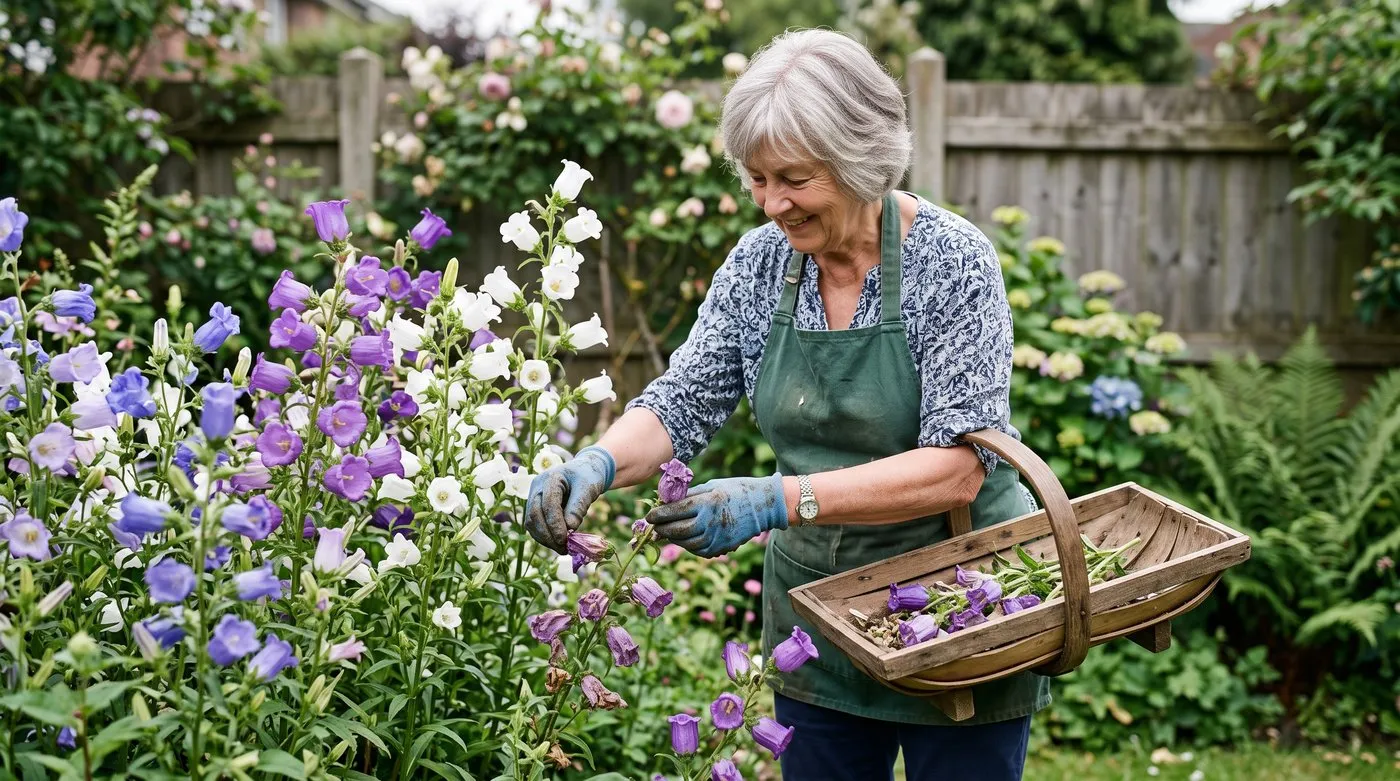
Snapping off faded bells keeps the spike looking fresh while the buds further up are still opening.
Frequently asked questions
Are Canterbury bells annual, biennial or perennial?
Canterbury bells are biennials. Campanula medium makes a leafy rosette in year one, flowers in year two, then dies. The ‘Champion’ series is the exception, flowering in its first year from an early sowing.
When should I sow Canterbury bells in the UK?
Sow from mid May to the end of June. That gives the rosette all summer to bulk up before autumn planting. Much later and plants go into winter too small to flower well.
Do Canterbury bell seeds need light to germinate?
Yes, so sow them on the surface. Press the tiny seed onto damp compost and leave it uncovered. Burying it is the most common reason nothing comes up.
Why did my Canterbury bells not flower?
Usually they were sown too late, or in spring of the same year. A small rosette going into winter may not flower. A spring sowing hasn’t had the winter it needs to trigger flowering. Sow in May or June for flowers the next June.
What is the difference between Cup and Saucer Canterbury bells?
Cup and Saucer forms have a flat collar behind each bell. Botanically they are Campanula medium var. calycanthema. Single forms are a plain bell with a small green calyx. Cup and Saucer types are showier and popular for cutting.
Do Canterbury bells need staking?
Yes, almost always. The spikes are top-heavy and one wet June night can flatten them. Put in pea sticks or a ring by mid May so the plant grows up through it.
Will Canterbury bells self seed in a UK garden?
Yes, but only lightly. If you leave a few seed pods on, expect the odd seedling on gravel or path edges rather than a reliable colony. Sow fresh each year for a good show.
Want bellflowers without the wait? The campanula guide covers the perennial kinds that come back every year, or browse more in flowers and plants.
Our team produces practical UK gardening guidance from source research, contributor records and established horticultural practice. Editorial standards are overseen by Matt W.