Key takeaways
- Fillers are the airy stems that sit between the big focal flowers in a bunch
- Ammi majus is the easiest, most generous filler to start with
- Most fillers are hardy annuals you can sow in September or from March to May
- Sow a fresh batch every few weeks for cutting all summer
- Cut early in the morning straight into a bucket of water
- Ammi and other umbellifer sap can burn skin in sunlight, so wear gloves and sleeves
Filler flowers are what turn a handful of home-grown blooms into a proper bunch. The dahlias and sweet peas get the attention, but without fillers they sit in the jar like separate stems. Fillers are the airy, lacy, small-flowered stems that link everything together. They are easy to grow from seed, and most are cheap hardy annuals.
This guide covers the best fillers for a UK cutting patch, how to sow them for a steady supply, and how to use them in a bunch. If you’re planning the patch itself, start with the guide to creating a cutting garden.
What are filler flowers?
Fillers are the connecting stems in a bunch. Florists build arrangements from three jobs:
- Focal flowers are the big blooms the eye lands on first, such as dahlias, peonies, roses and zinnias
- Fillers are airy or textured stems that fill the gaps, hide the stems and lead the eye around
- Foliage sets the outline and gives a green base for everything else
Learn the jobs and you can swap in whatever the garden gives you that week. Most home patches have plenty of focal flowers and too few fillers.
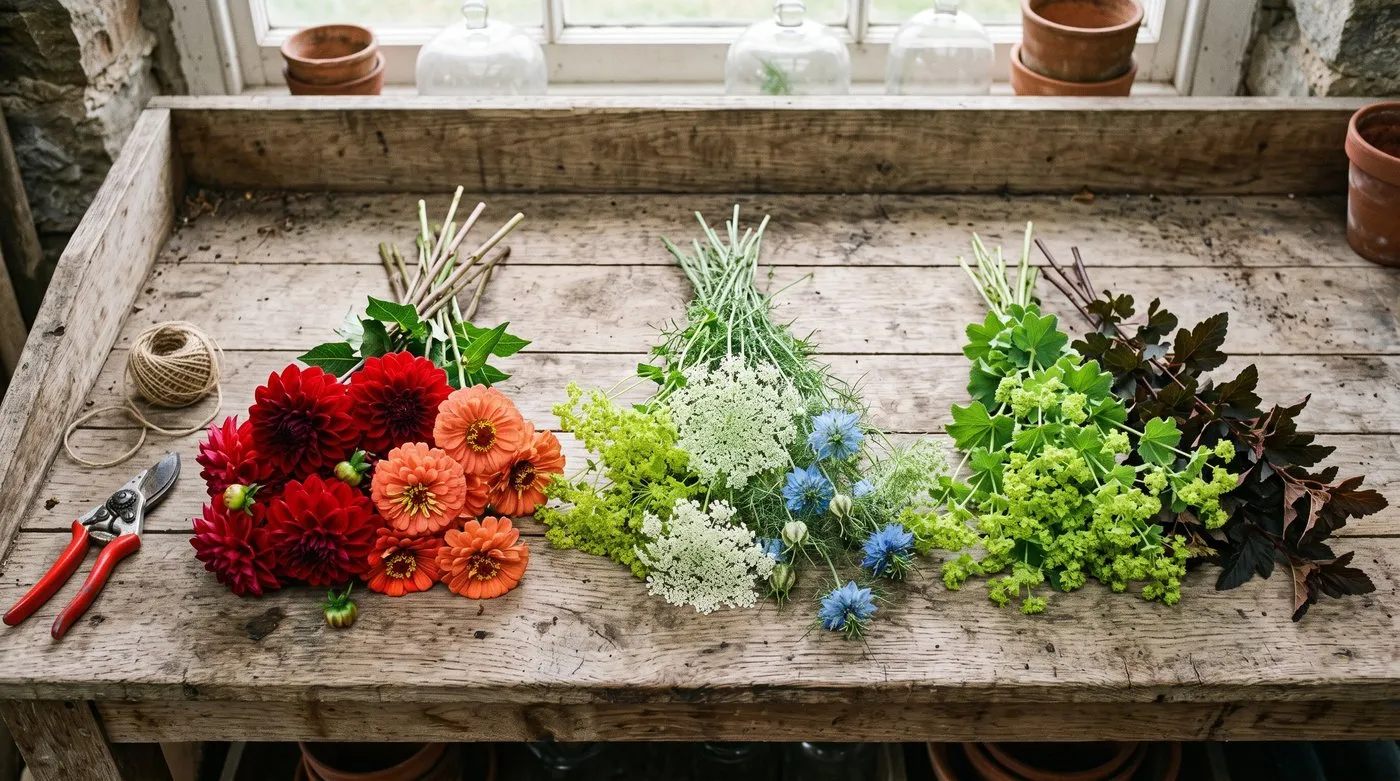
Focals on the left, fillers in the middle, foliage on the right. The middle group is the one most home patches are missing.
The best filler flowers to grow
Start with Ammi majus. It’s easy, tall and generous, and its white lace goes with every colour. Add two or three more from this list for variety.
| Filler | Look | Sow | Notes |
|---|---|---|---|
| Ammi majus | Flat white lace | September or March to May | Easiest to grow; net against wind |
| Orlaya grandiflora | White lace with frilly outer petals | September or March to April | Shorter, neater, loves an autumn sowing |
| Bupleurum rotundifolium | Lime-green bracts | March to May | Bridges clashing colours |
| Daucus carota ‘Dara’ | Lace from white to dusky plum | March to May | Brings soft colour |
| Nigella damascena | Blue, white or pink flowers, then seed pods | September or March to May | Seed pods dry well |
| Cerinthe major ‘Purpurascens’ | Blue-purple bells and grey leaves | September or March to April | Sear stem ends to help it last |
| Euphorbia oblongata | Acid-green bracts | Early spring under cover | Sap irritates skin; wear gloves |
| Gypsophila elegans | Clouds of tiny white flowers | April to June | Quick and dainty |
| Panicum elegans ‘Frosted Explosion’ | Fine, airy grass heads | Spring under cover | Light and see-through in a bunch |
| Alchemilla mollis | Frothy lime flowers | Buy plants or sow in spring | Hardy perennial; doubles as foliage |
Two need care. Euphorbia sap is a strong irritant, so wear gloves and keep it away from your eyes. Searing the cut ends in boiling water for a few seconds helps both Euphorbia and Cerinthe last in the vase.
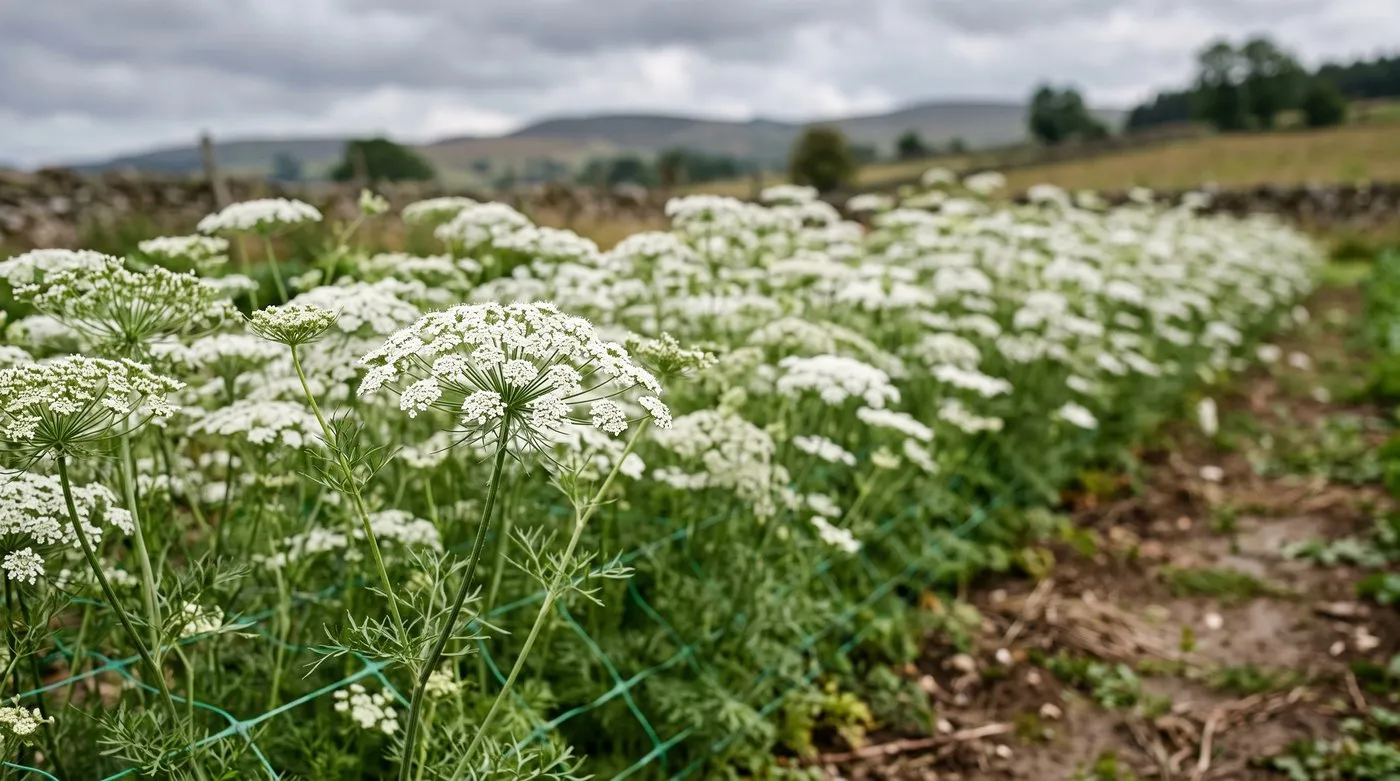
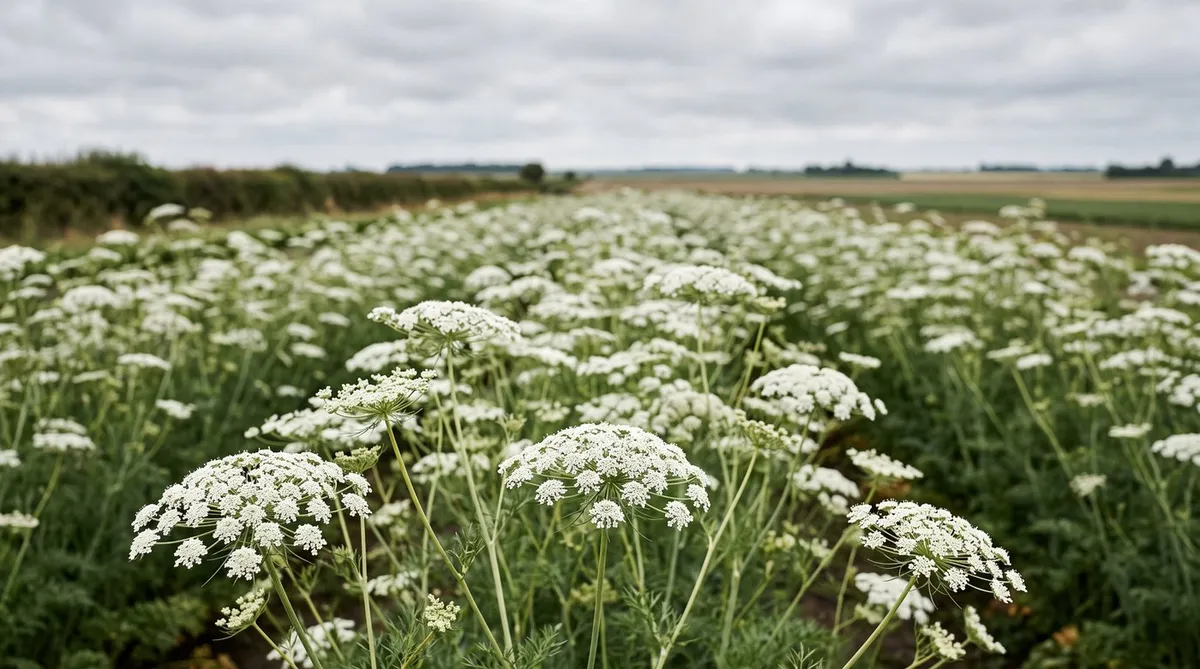
Ammi majus in full flow. One good row gives armfuls of white lace, and cutting encourages more side shoots.
Ammi, Orlaya and Bupleurum: how they differ
These three get lumped together, but they do different jobs.
Ammi majus is the workhorse. It has loose, flat, bright white heads on tall, wiry stems, and it copes with an average spring. It leans in wind, so put netting over the row at about 30cm. The guide to growing Ammi majus has more on its autumn sowing.
Orlaya grandiflora is the refined one. Its heads are smaller, but the outer flowers have large frilly petals that give a lacy edge. It’s shorter and slower, so grow it for the bunches that matter.
Bupleurum rotundifolium isn’t white at all. It has small lime-green bracts on branching stems. Acid green sits happily between almost any colours, so it’s brilliant for linking oranges, pinks and purples. It can be slow to come up, so be patient.
Daucus carota ‘Dara’ opens white and deepens to dusky plum. It adds colour that white umbellifers can’t. The guide to growing Daucus ‘Dara’ covers it in detail.
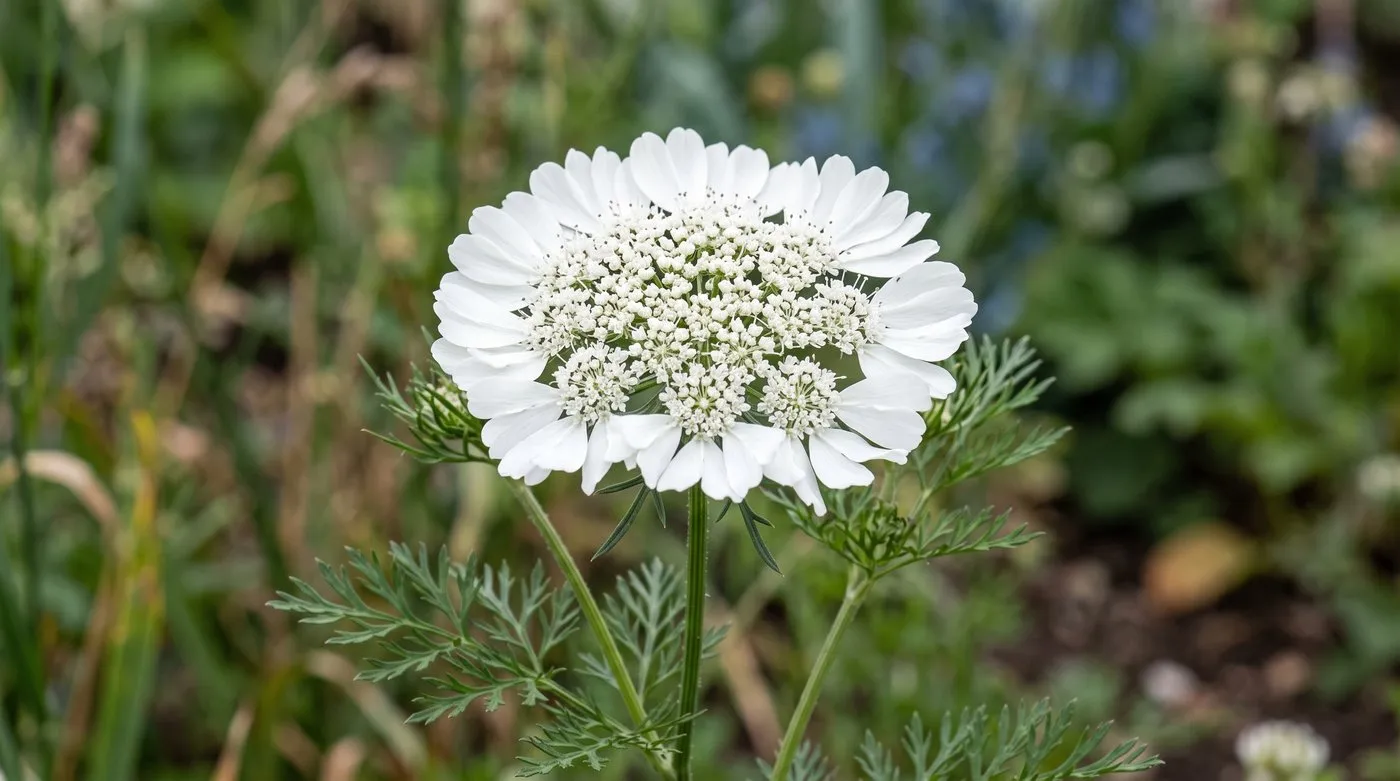
Orlaya’s big frilly outer petals are the easy way to tell it from Ammi. It’s a little fussier, but worth it.
How to use fillers in a hand-tied bunch
Build in layers: foliage, then filler, then focals. For a jam-jar bunch of about 30 stems:
- Foliage first. Lay a few stems crossed at the same angle in one hand. This sets the width.
- Fillers next. Add them a few at a time, turning the bunch a little after each addition.
- Focals last. Push them in at slightly different heights so no two heads sit level.
- An accent or two. A tall spire or seed pod breaking the top stops the bunch looking too neat.
For a relaxed, garden-grown look, use more filler stems than focal ones. A bunch with more focals than fillers tends to look stiff. Tall spires such as Canterbury bells make good accents in June.
Gardener’s tip: Cut filler stems longer than you think you need. You can always trim them in the vase, but you can’t add length back. Cut just above a side shoot so the plant branches again.

Foliage first, fillers in a few at a time, focals last. Turning the bunch as you go gives it a natural round shape.
Sowing fillers for cutting all summer
Sow little and often. A single spring sowing of Ammi gives a few weeks of cutting and then it’s over. A fresh batch every three or four weeks from March to May keeps the stems coming.
Autumn sowing is the secret weapon. Many hardy annual fillers, including Ammi, Orlaya, Nigella and Cerinthe, can be sown in September. Overwinter them in modules in a cold frame or sow them direct in a sheltered spot. They make bigger plants and flower earlier the following summer.
Pinch out branching fillers such as Cerinthe when they’re young to get more stems. Umbellifers such as Ammi and Orlaya branch well on their own. The guide to pinching out cut flowers explains which plants benefit.
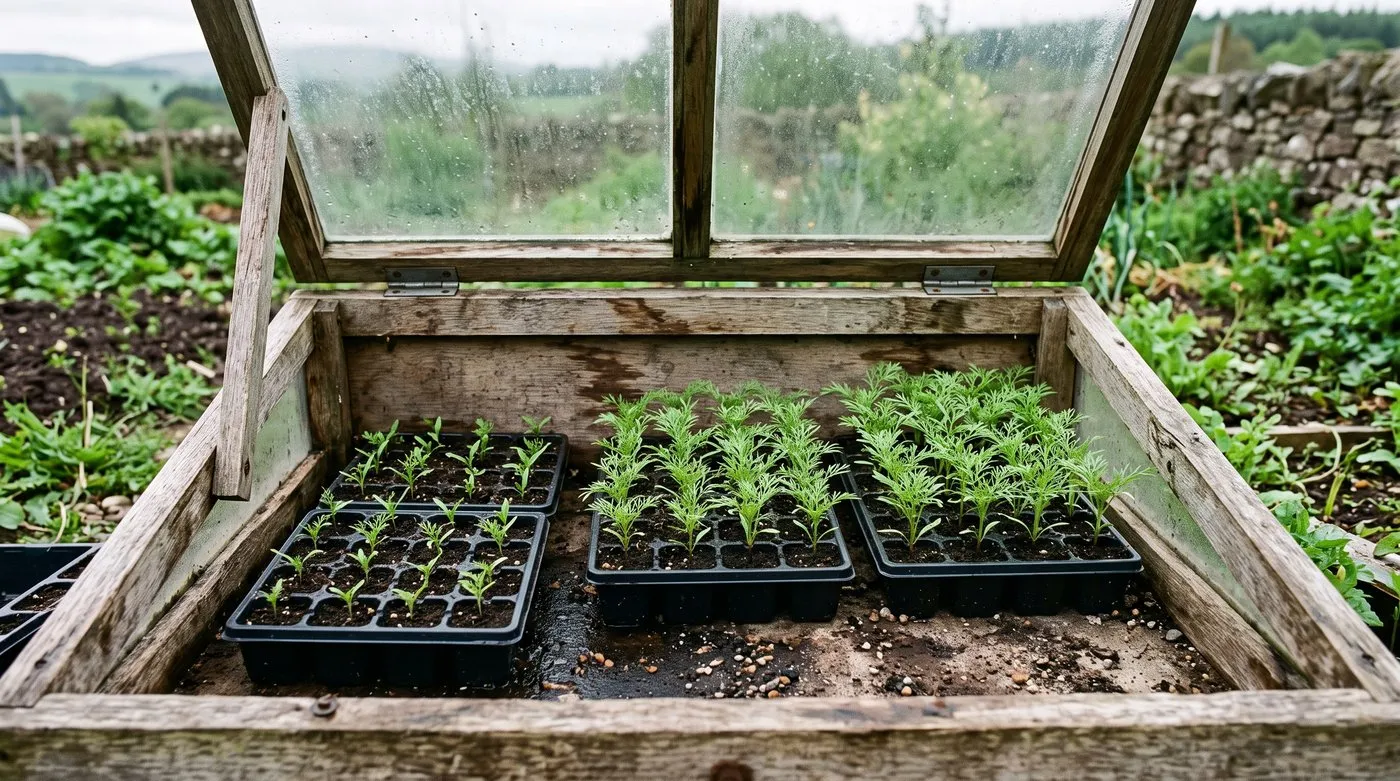
Module-sown seedlings waiting in a cold frame. A new tray every few weeks keeps the cutting rows going.
Net tall fillers early. Lay a single layer of wide-mesh netting flat over the row at about 30cm, and raise it as the plants grow. It saves the whole row in a summer gale.

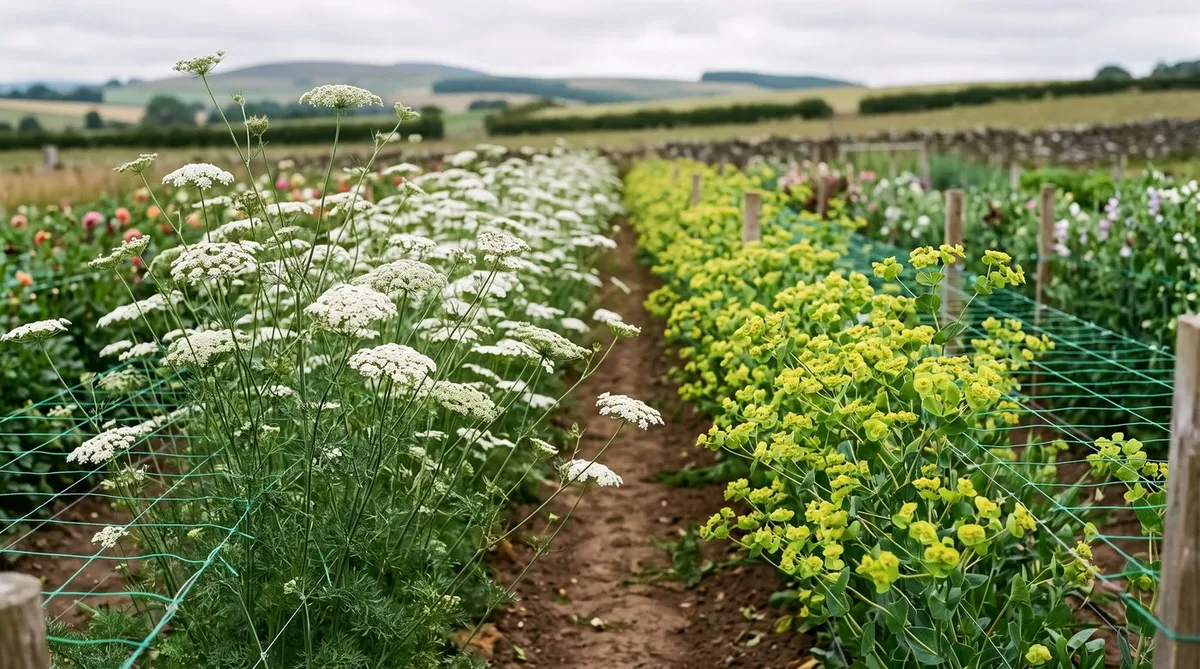
Lime Bupleurum and blue Nigella growing up through netting. One layer lifted as they grow keeps the stems straight.
Cutting and conditioning fillers
Cut early in the morning, straight into water. Hollow umbellifer stems lose water fast and struggle to take it up again once air gets in. That’s why fillers often flop before the focals.
- Take a bucket of water to the row, not a dry trug
- Cut umbellifers when most of the tiny flowers on the head are open. Fully open heads soon drop
- Strip every leaf below the water line, as soggy leaves rot and foul the water
- Let the stems drink in a cool, shady place for a few hours, or overnight, before arranging
The guide to conditioning cut flowers covers searing and hot-water tricks for awkward stems.
Warning: Ammi, Daucus and other umbellifers have sap that can cause painful blisters on skin exposed to sunlight. Wear gloves and long sleeves when cutting, and wash your arms afterwards.

Cutting straight into a bucket of water, with gloves on. Stems that go into water right away last much longer.
Filler flower calendar
| Month | What to do |
|---|---|
| January to February | Order seed. Plan where each succession row will go |
| March | First spring sowings of Ammi, Orlaya, Bupleurum, Nigella and Daucus |
| April | Sow again. Sow Cerinthe, Gypsophila and Panicum. Plant out autumn sowings |
| May | Last main sowing. Net tall rows at about 30cm. Pinch Cerinthe |
| June | First cuts from autumn-sown plants. Cut every few days |
| July to August | Peak cutting. Cut in the cool of the morning |
| September | Sow hardy fillers for next year. Collect Nigella seed pods |
| October to December | Protect autumn sowings from slugs and hard frost. Clear spent rows |
Common mistakes with filler flowers
- Growing too few fillers. One packet of Ammi next to a bed of dahlias runs out fast. Grow at least as many filler plants as focal ones
- Sowing only once. Sow a fresh batch every few weeks, plus an autumn sowing
- Cutting in the afternoon heat. Stems flag quickly. Cut early, into water
- Leaving leaves under water. They rot and shorten vase life
- Writing off umbellifers as weeds. Ammi and Daucus are cow parsley’s cousins, and the biggest upgrade a home bunch can get
Fillers for pollinators too
Flat, open umbellifer heads are easy feeding for hoverflies, beetles and small bees. Cerinthe and Nigella are popular with bumblebees. Leave part of each row uncut in late summer to feed insects and drop seed for next year. The RHS Plants for Pollinators list is handy for choosing more. For easy-going Nigella, one sowing gives flowers and seed pods.
Find more flower guides on the flowers and plants hub. Now you’ve got the fillers sorted, read the beginner guide to growing cut flowers for the focal flowers they sit around.
Frequently asked questions
What are filler flowers in an arrangement?
Fillers are the airy stems that link and support the main blooms. They fill the gaps between the big flowers, soften the outline and stop a bunch looking like separate stems. Lacy umbellifers, small-flowered annuals and seed heads all make good fillers.
What is the best filler flower to grow in the UK?
Ammi majus is the best all-round filler for most gardens. It’s easy from seed, tall and generous, with white lacy heads that suit any colour scheme. Orlaya grandiflora is a neater, shorter alternative for special bunches.
What is the focal, filler, foliage rule?
It splits a bunch into three jobs. Focals are the big eye-catching blooms. Fillers are airy connecting stems. Foliage sets the outline and colour base. For a relaxed garden look, use more filler stems than focal ones.
When should I sow filler flowers in the UK?
Sow hardy annual fillers in September or from March to May. Autumn sowings, overwintered in a cold frame or sheltered spot, give sturdier plants that flower earlier. Sow a fresh batch every few weeks in spring for cutting all summer.
How do I make cut Ammi last longer in a vase?
Cut it early in the morning, straight into water. Pick stems when most of the little flowers on the head are open. Strip the leaves below the water line and let the stems drink in a cool place for a few hours before arranging.
Can I use garden foliage as a filler?
Yes, and mature foliage often outlasts the flowers. Lady’s mantle, pittosporum, ninebark and hardy geranium leaves all work well. Avoid soft new spring growth, which wilts quickly.
Do filler flowers need pinching out?
Some do and some don’t. Branching fillers such as Cerinthe make more stems if you pinch out the tip when young. Umbellifers such as Ammi and Orlaya branch well on their own, so most growers leave them be.
Our team produces practical UK gardening guidance from source research, contributor records and established horticultural practice. Editorial standards are overseen by Matt W.