Key takeaways
- Sow in September for bigger plants and earlier flowers; spring sowing is the fallback
- Ammi majus has open lacy heads; Ammi visnaga has dense domed heads and flowers later
- Sow direct or in deep root trainers, because the long taproot hates disturbance
- Thin to 25-30cm apart and put support netting up before plants need it
- The sap can blister skin in sunlight, so wear gloves and long sleeves when cutting
Ammi majus is the frothy white filler that lifts a cutting bed from June to September. Its flat, lacy heads look like a refined cow parsley and go with almost anything in a vase. The secret to growing it well is simple: sow it in September, not spring.
This guide covers choosing between Ammi majus and Ammi visnaga, autumn sowing, raising plants without upsetting the taproot, support, cutting and handling the sap safely.
Ammi majus or Ammi visnaga: which one do you want?
Both are annual umbellifers in the carrot family, and both make excellent cut flowers. They just do slightly different jobs.
Ammi majus, bishop’s flower, has flat, open, lacy heads with gaps between the little clusters. It is airy and delicate, and it flowers first, from June on autumn-sown plants.
Ammi visnaga, sometimes called toothpick weed, has dense, domed heads on stiffer stems and fine, feathery leaves. It flowers a few weeks later and tends to last longer in water. ‘Green Mist’ is a lime-green form.
| Plant | Flower head | Flowers from | Best for |
|---|---|---|---|
| Ammi majus | Open, flat and lacy | June (autumn-sown) | Early white filler |
| Ammi visnaga | Dense and domed | Mid to late summer | Later filler, long vase life |
| Orlaya grandiflora | Small, lacy with showy outer petals | Early summer | Shorter plants at the front |
| Daucus carota ‘Dara’ | Domed, pink to burgundy | Summer | A coloured version of the same look |
Grow both if you have room. Ammi majus fills the early gap, and visnaga carries on later in summer. For a coloured alternative, see the guide to growing Daucus ‘Dara’.
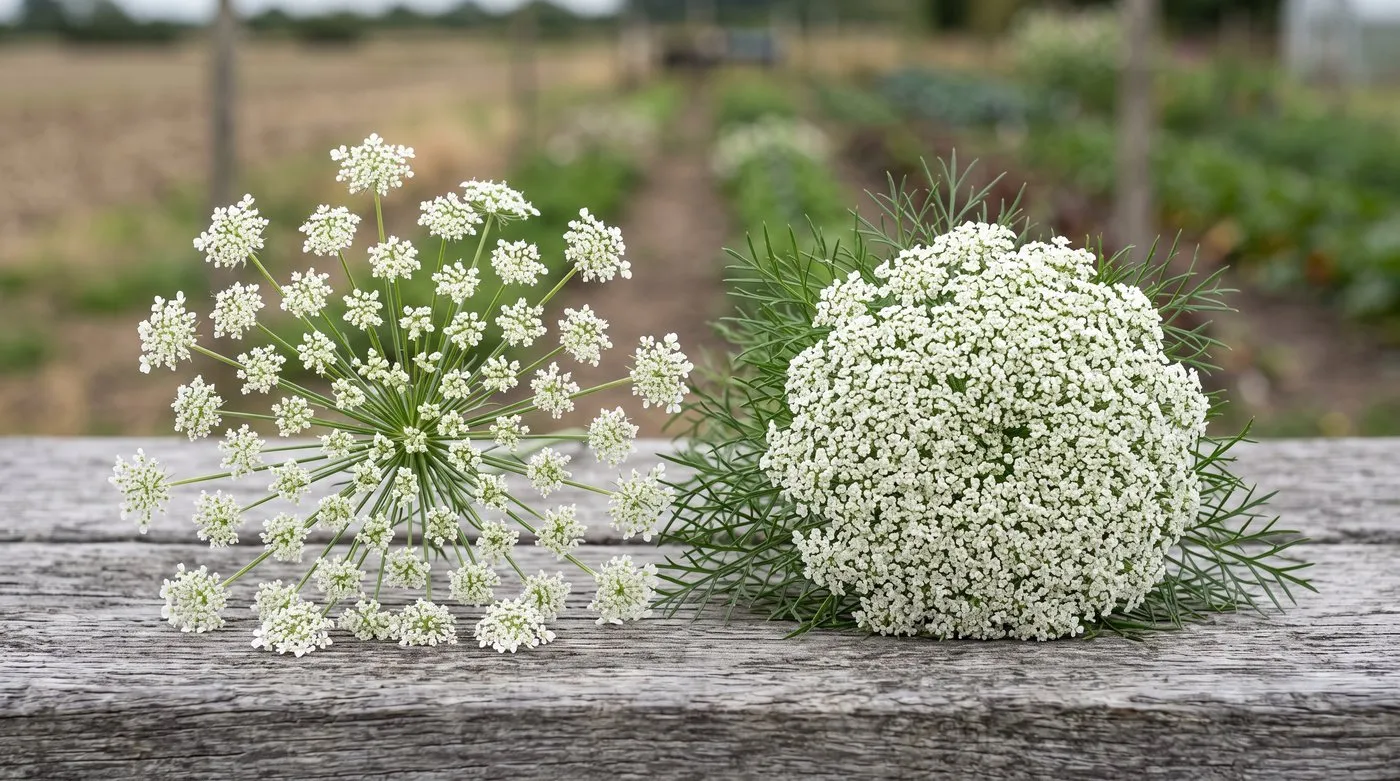
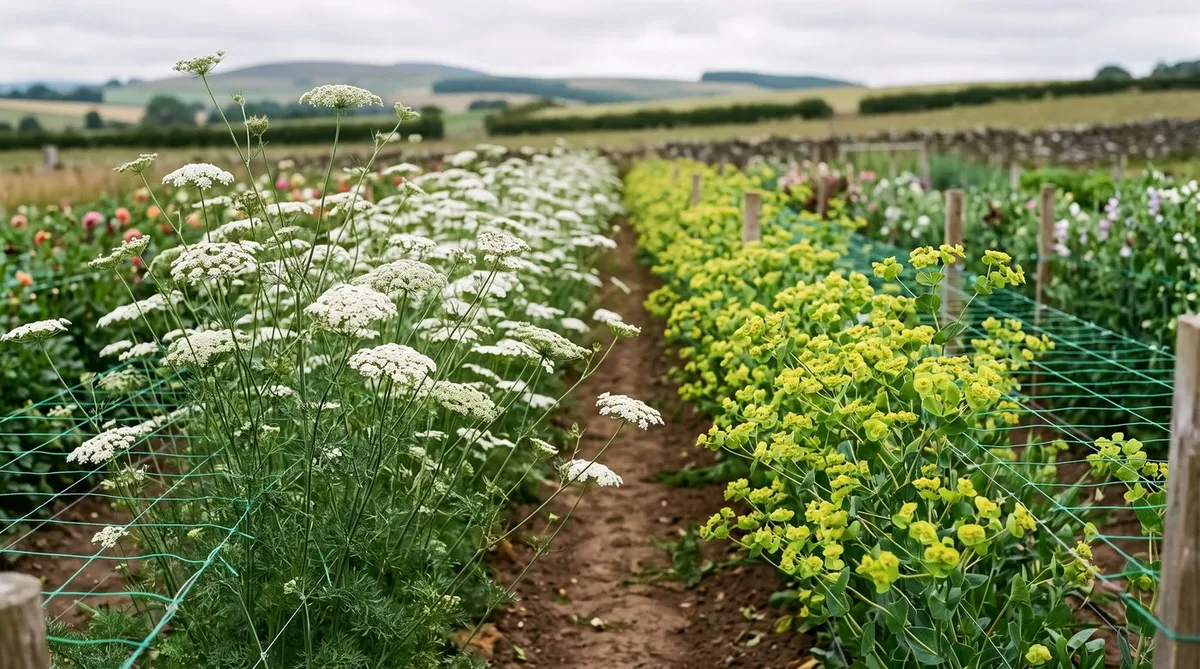
Ammi majus on the left, with its open, airy head. Ammi visnaga on the right is dense and domed, with fine feathery leaves.
Why autumn sowing beats spring sowing
Sow Ammi majus in September and you get taller, sturdier plants that flower from June. Spring sowings still work but give shorter plants that start flowering later, in July.
The reason is roots. Autumn-sown seedlings sit through winter as small, flat rosettes, quietly growing a long taproot. By spring they have the roots to power fast, strong growth. Spring-sown plants have to build roots and stems at the same time.
Ammi majus is a hardy annual and copes with normal UK winters. In cold, wet or exposed gardens, a cloche or a layer of fleece over the bed in the worst weather helps seedlings through. Slugs love young seedlings, so keep an eye on them in autumn.
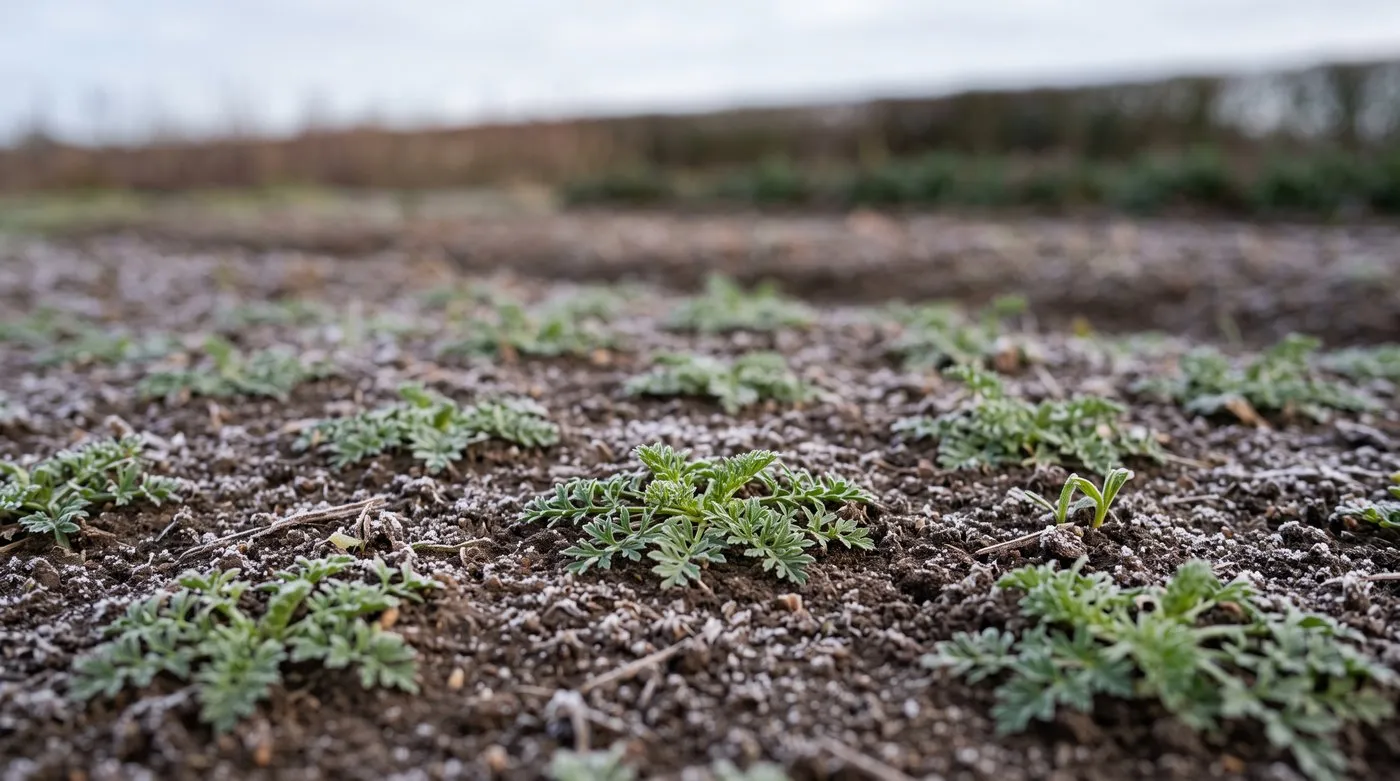
Autumn-sown seedlings look like this all winter. Not much is happening on top, but the roots are busy growing down.
How to sow Ammi majus
Direct sowing is the easiest way to raise Ammi majus, because its long taproot hates being moved.
- Clear weeds and rake the soil to a fine, crumbly surface.
- Water the bed if it is dry.
- Sow thinly in shallow drills about 1cm deep, or scatter and rake in lightly.
- Expect seedlings in two to three weeks.
- Thin to 25-30cm apart once they have a few true leaves.
Thin firmly, even though it feels wasteful. Crowded plants grow thin stems and fewer flowers. The guide to sowing hardy annuals direct covers the technique for a whole bed.
If you’d rather raise plants under cover, use deep root trainers, deep pots or paper tubes. Sow two seeds per cell and snip out the weaker one with scissors. Plant out the whole plug without teasing the roots apart, while the plant is still young. Shallow module trays are best avoided, as the root hits the bottom and the plant stays small.
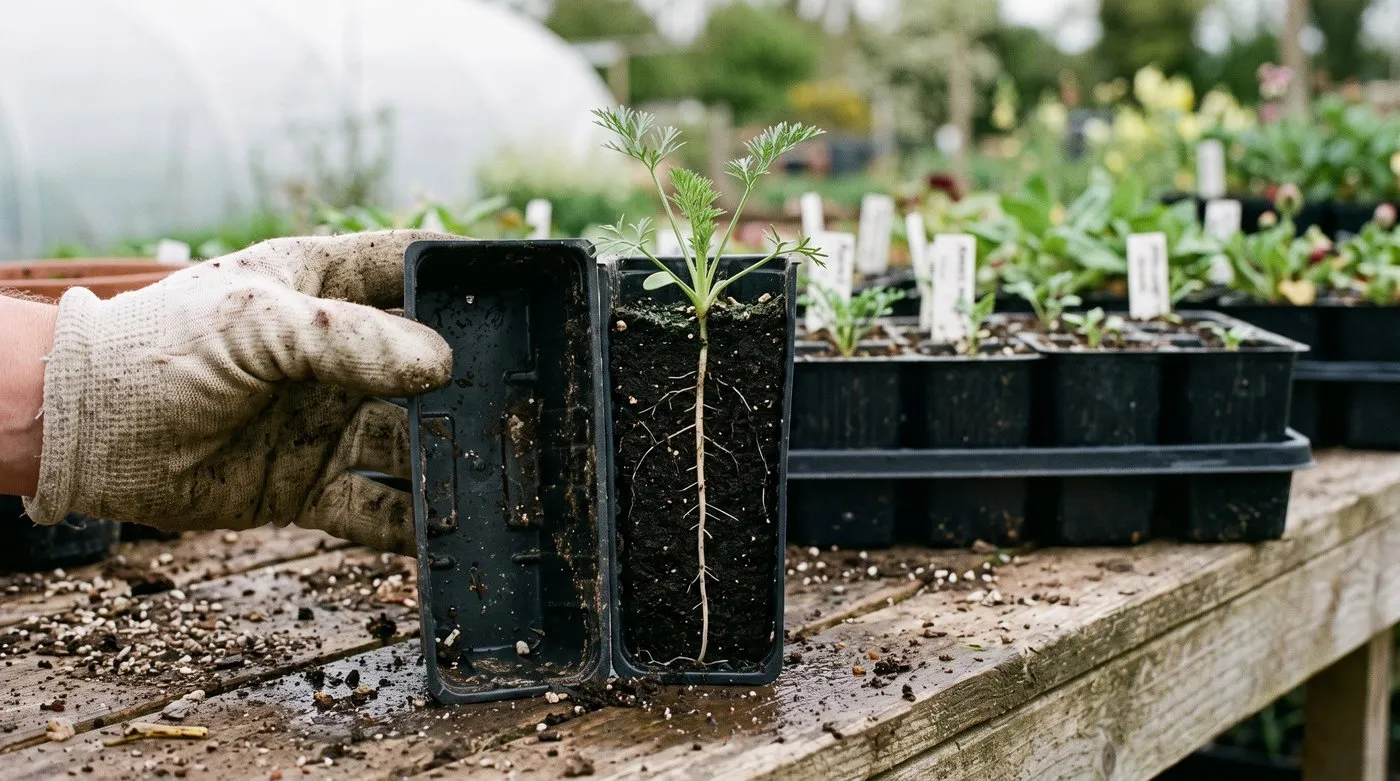
Deep root trainers let the taproot grow straight down. Plant the whole plug out in one piece and it barely notices the move.
How to support Ammi majus
Put support in early, before the plants need it. A metre of slender stem goes over easily in summer wind and rain, and bent stems are no good for cutting.
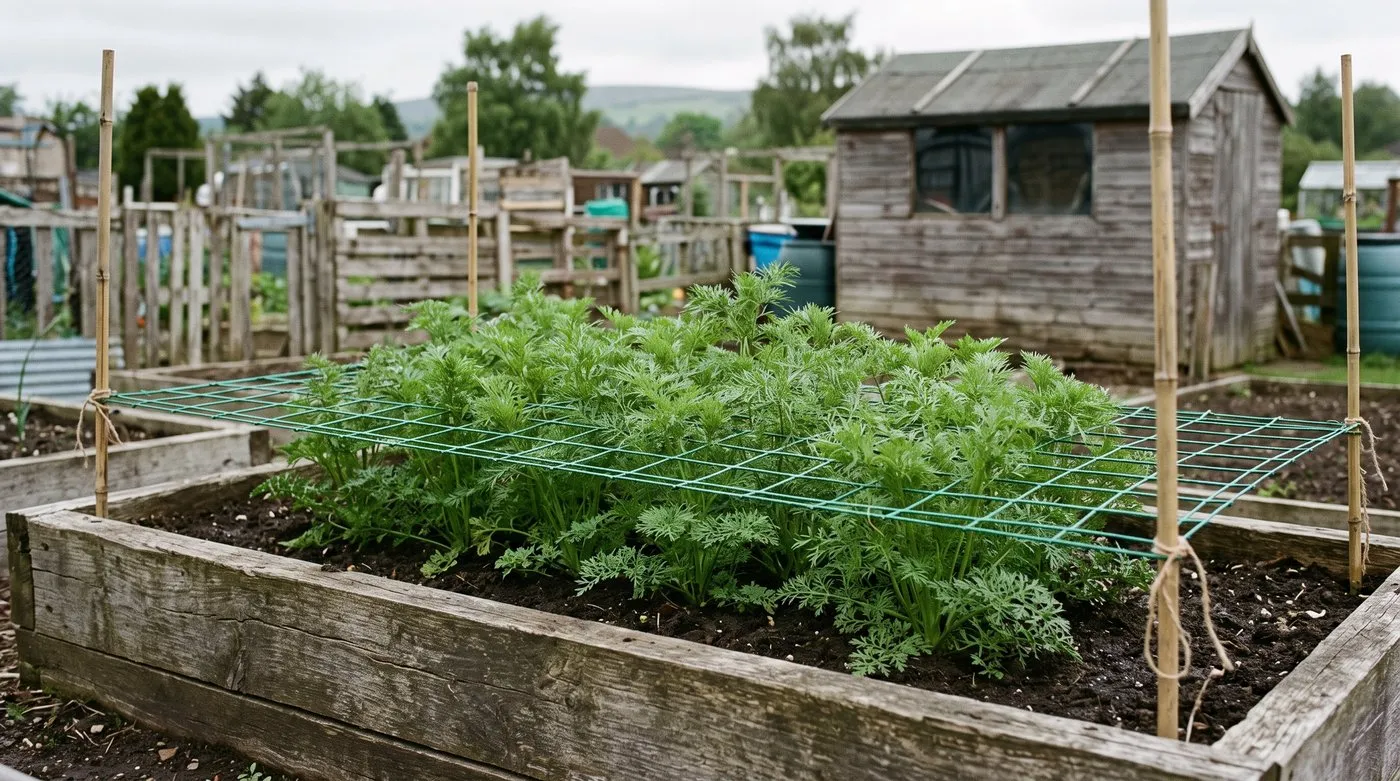
Netting stretched flat across the bed in spring lets the plants grow up through it. By midsummer you’ll hardly see the mesh.
The simplest method is a horizontal layer of wide-mesh support netting stretched across the bed about 30cm above the soil. Fix it to canes or stakes at the corners and along the sides. Put it up in spring while autumn-sown plants are still low, and they grow up through it. On a windy site, add a second layer higher up as the plants grow.
Spacing helps too. At 25-30cm apart, the plants lean on each other through the mesh and the block stands together. The guide to staking and supporting garden plants shows other options for a cutting bed.
When to cut Ammi majus for the vase
Cut Ammi majus when most of the florets on the head are open, with just a few green ones left in the middle. Heads cut too early often wilt without opening, and heads cut too late drop sooner.
Cut in the cool of early morning with clean secateurs. Take the stem low down on the plant, which encourages more side shoots and more stems. Strip off any leaves that would sit underwater, as they rot quickly. Then give the stems a long drink in a bucket of cool water somewhere shady for a few hours before arranging. The guide to conditioning cut flowers for longer vase life explains the method in full.
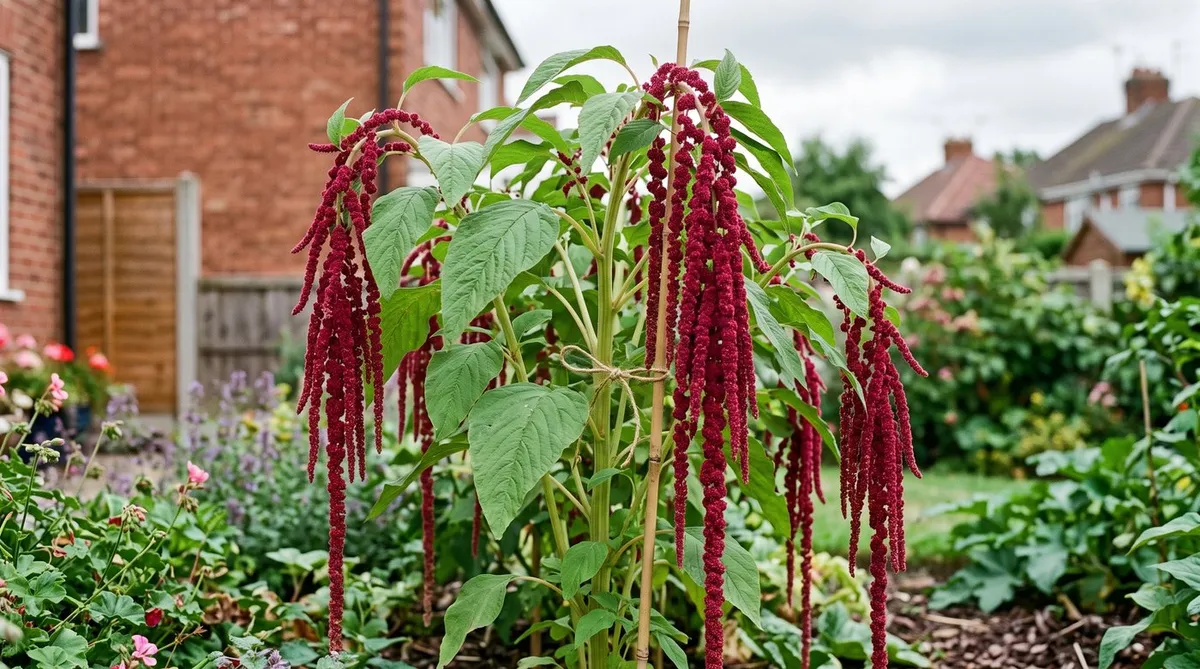
Ammi majus mixes well with almost anything. Try it with the hanging crimson tassels of amaranthus for late summer drama.
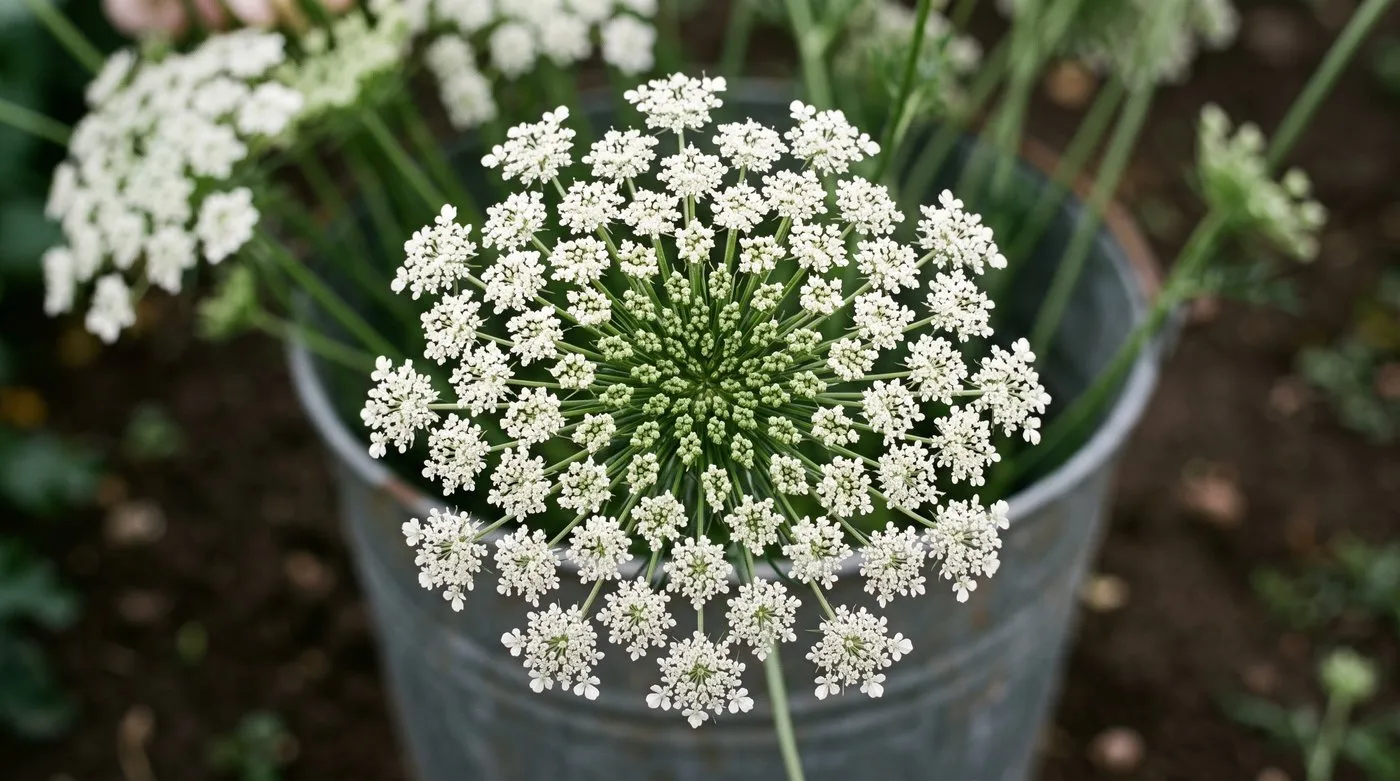
This is the moment to cut: the outer florets are open and just a few green ones remain in the middle.
Handling Ammi majus sap safely
Wear gloves and long sleeves when cutting or clearing Ammi majus. Its sap contains compounds that make skin sensitive to sunlight, a reaction called phytophotodermatitis. Sap on bare skin plus sunshine can lead to redness and blisters a day or so later, sometimes leaving brown marks.
It is much milder than giant hogweed, and many people cut it without trouble. But a few simple habits avoid any risk:
- Wear gloves and long sleeves when cutting, thinning or pulling plants.
- Cut early in the morning or on a dull day where you can.
- Wash any sap off your skin straight away with soap and water.
- Keep any skin that got sap on it out of the sun for a couple of days.
- Pull or cut old plants by hand rather than strimming them, which sprays sap about.
If you are clearing other umbellifers, the guide to giant hogweed explains the same reaction in a far more serious plant.
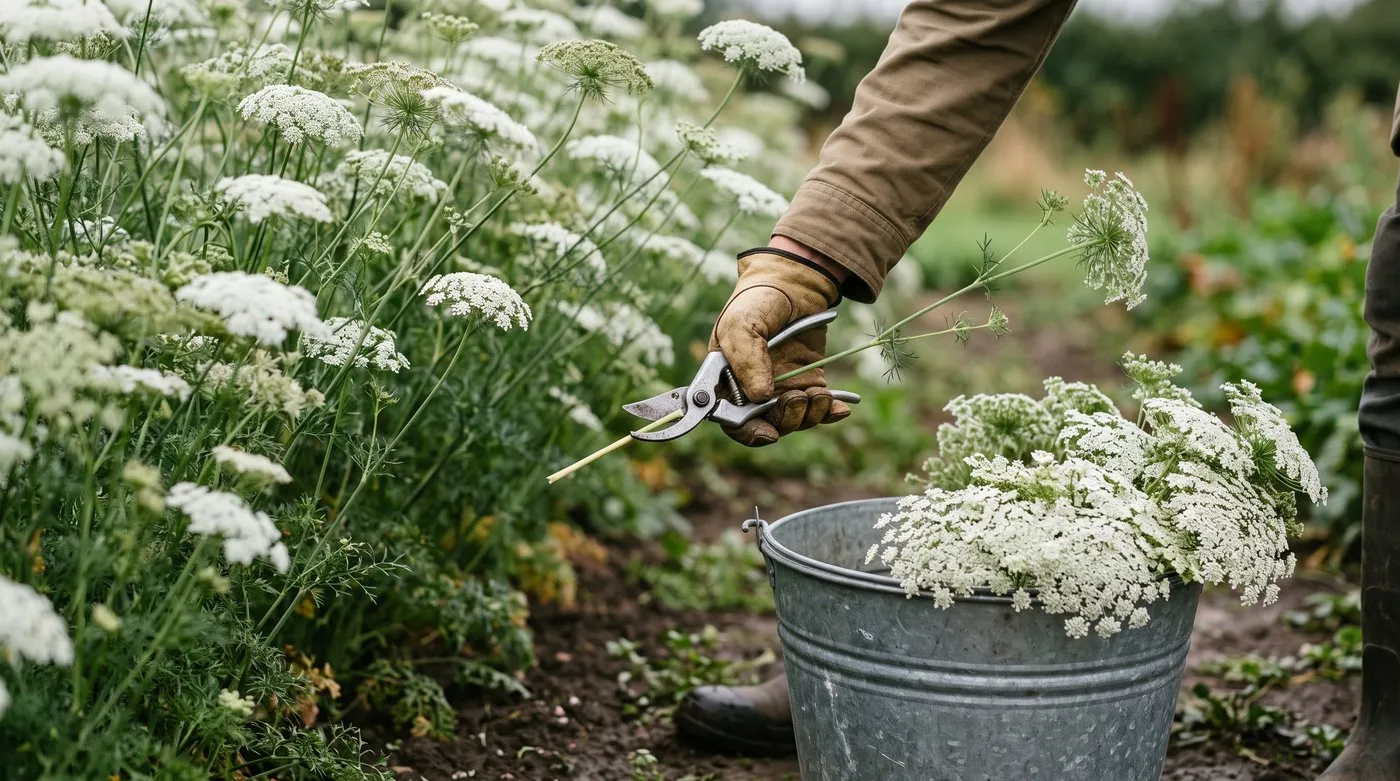
Gloves and long sleeves keep the sap off your skin, which is the simple way to avoid any reaction on sunny days.
Why is my Ammi majus short and finishing early?
Short plants that flower briefly and fade in August usually have restricted roots. The taproot couldn’t go deep, so the plant ran out of steam.
Common causes are seedlings raised in shallow modules, compacted or stony soil, and late spring sowings. Sow direct in autumn, or use deep root trainers, and loosen compacted ground with a fork before sowing. Cutting stems regularly, low down, also keeps plants producing for longer.
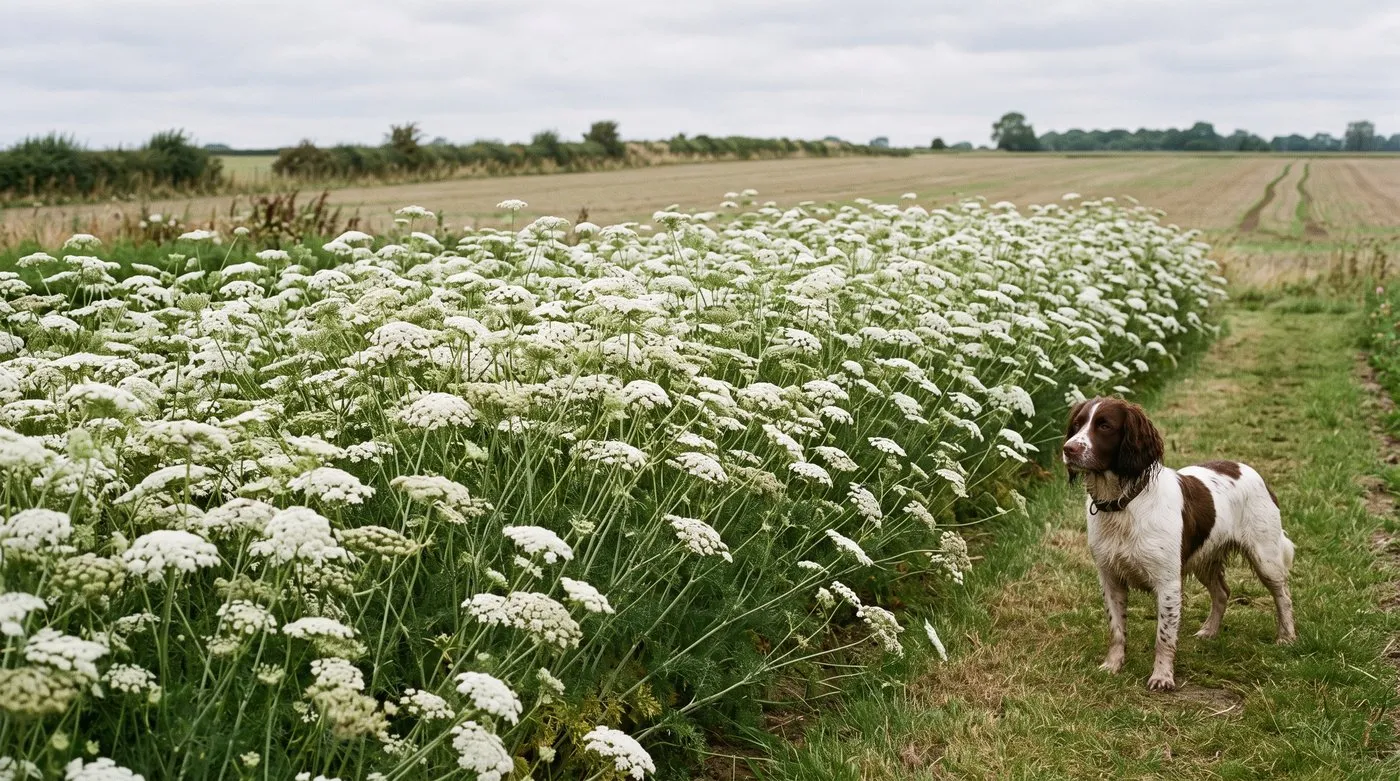
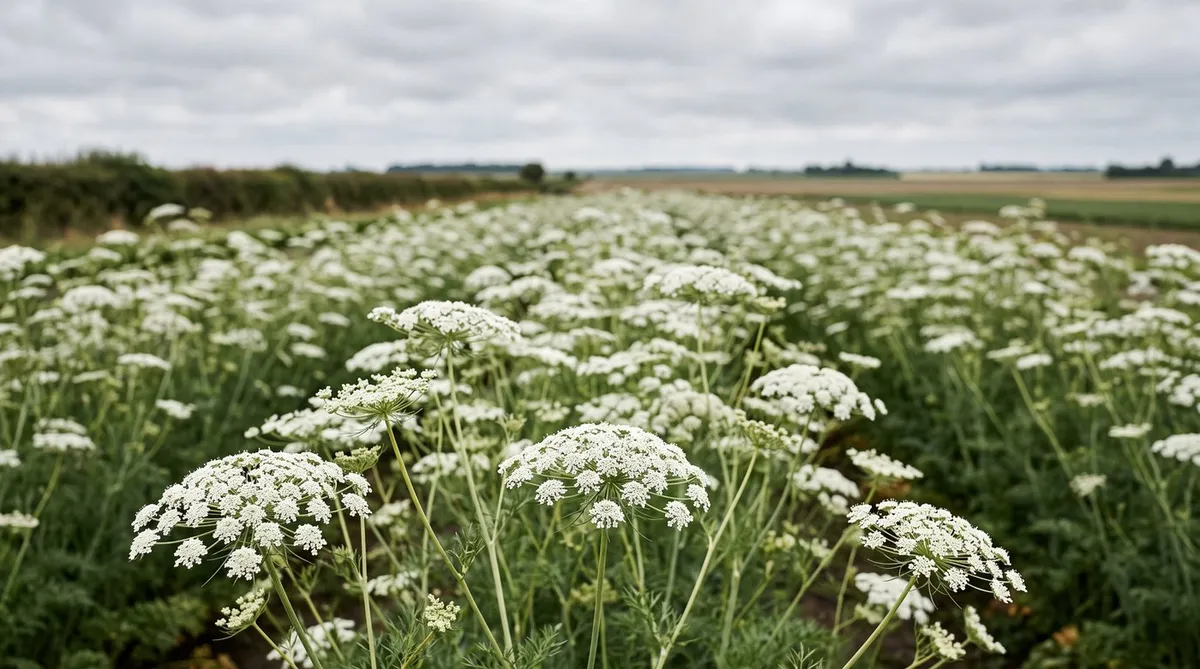
A well-grown block in full flower. Planted close, the stems support each other and give armfuls for cutting.
Ammi majus growing calendar
| Month | What to do |
|---|---|
| January | Leave rosettes alone. Check fleece isn’t sitting wet on plants |
| February | Remove fleece on mild days |
| March | Sow direct or in deep root trainers if you missed autumn |
| April | Put support netting up. Thin seedlings to 25-30cm apart |
| May | Plants grow fast. Water only in long dry spells |
| June | First flowers on autumn-sown plants. Start cutting |
| July | Main cutting. Spring-sown plants start to flower |
| August | Keep cutting. Leave a few heads to set seed |
| September | Main sowing month. Sow direct into a weed-free bed |
| October | Seedlings appear. Hoe carefully around them and watch for slugs |
| November | Plants sit as small rosettes over winter |
| December | Cover with fleece in very cold, wet weather |
Common mistakes with Ammi majus
- Only ever sowing in spring. Spring plants are shorter and later. Sow in September and treat spring as the backup.
- Using shallow modules. The taproot kinks and the plant stays small. Sow direct or use deep root trainers.
- Thinning too gently. Crowded seedlings give thin stems. Thin to 25-30cm apart.
- Netting too late. Threading tall plants through mesh breaks stems. Put netting up in spring.
- Cutting in tight bud. Unopened heads wilt in water. Wait until most of the florets are open.
More flowers for a white cutting bed
Ammi majus is one of many airy fillers that bring a bunch together. The guide to filler flowers for a cutting garden suggests more. For another flower that does better sown in autumn, read about autumn sowing sweet peas, or browse all our growing guides.
Frequently asked questions
When should I sow Ammi majus in the UK?
Sow in September for the best plants, or March to April as a fallback. Autumn-sown seedlings sit through winter as small rosettes building roots. They then flower earlier and grow taller than spring sowings.
What is the difference between Ammi majus and Ammi visnaga?
Majus has open lacy heads; visnaga has dense domed heads. Visnaga also has finer, feathery leaves, stiffer stems and flowers a few weeks later, and it tends to last longer in a vase.
Can you transplant Ammi majus seedlings?
Yes, if raised in deep root trainers and planted young. The long taproot hates disturbance, so seedlings from shallow trays often stay small. Plant the whole plug without teasing the roots.
Is Ammi majus poisonous or dangerous to handle?
The sap can cause blisters on skin exposed to sunlight. Wear gloves and long sleeves when cutting, wash any sap off straight away and keep that skin out of the sun.
How tall does Ammi majus grow and does it need support?
It grows up to about 1m and needs support on open sites. The stems are slender and flop in wind or heavy rain. Stretch netting across the bed early and let the plants grow through it.
When should you cut Ammi majus for the vase?
Cut when most of the florets on the head are open. Heads cut in tight bud often wilt without opening. Cut early in the morning and give the stems a long drink before arranging.
Does Ammi majus self-seed in UK gardens?
Yes, freely, if you leave a few heads to ripen. Seedlings often come up in autumn and grow into strong plants the following year.
Our team produces practical UK gardening guidance from source research, contributor records and established horticultural practice. Editorial standards are overseen by Matt W.