
Key takeaways
- Sow direct in September for strong early plants, or March to May for flowers the same summer
- Barely cover the seed and thin plants to about 30cm apart
- Full sun and poor to average, well-drained soil give the sturdiest stems
- Give support on windy sites, as plants reach about 1m
- Cut when most of the flowerhead has opened, early in the day
- Hoverflies love the flat flowers, and it often self-seeds
Daucus carota ‘Dara’ is a cut flower that looks like lace dipped in wine. Its flat flowerheads come in white, soft pink, dusky rose and deep burgundy, all from one packet of seed. It is easy to grow, looks lovely in a vase and hoverflies adore it.
‘Dara’ is a garden form of wild carrot. If you’re after the native white form for a meadow, see our guide to growing wild carrot. This guide focuses on growing ‘Dara’ for cutting: sowing, care, harvesting and getting the longest vase life.
What is Daucus ‘Dara’?
‘Dara’ is a selection of wild carrot grown for its coloured, lacy flowerheads. It grows about 1m tall on branching stems, with feathery, carrot-like leaves. Plants flower from early summer into autumn, especially if you keep cutting.
It is usually grown as a hardy annual. Spring sowings flower the same summer. Autumn sowings sit as small plants over winter and flower earlier the next year.
The colours vary from plant to plant. You’ll get a mix of white, pink, rose and burgundy, which is part of the fun. Each flowerhead also changes as it opens and ages.

One packet gives a mix of colours, from white through pink to deep burgundy. Every plant is a little different.
When to sow Daucus ‘Dara’
There are two sowing times: September and March to May.
Autumn sowing gives the biggest, sturdiest plants and the earliest flowers. Sow direct in September. Young plants overwinter outdoors in most gardens, as long as the soil drains well.
Spring sowing is the safer choice on heavy, wet soil or in cold, exposed gardens. Sow direct from March to May, once the soil has started to warm. Plants flower later in the summer and are often a little shorter.
How to sow Daucus ‘Dara’
Like all carrots, ‘Dara’ grows a taproot and is happiest sown where it is to flower.
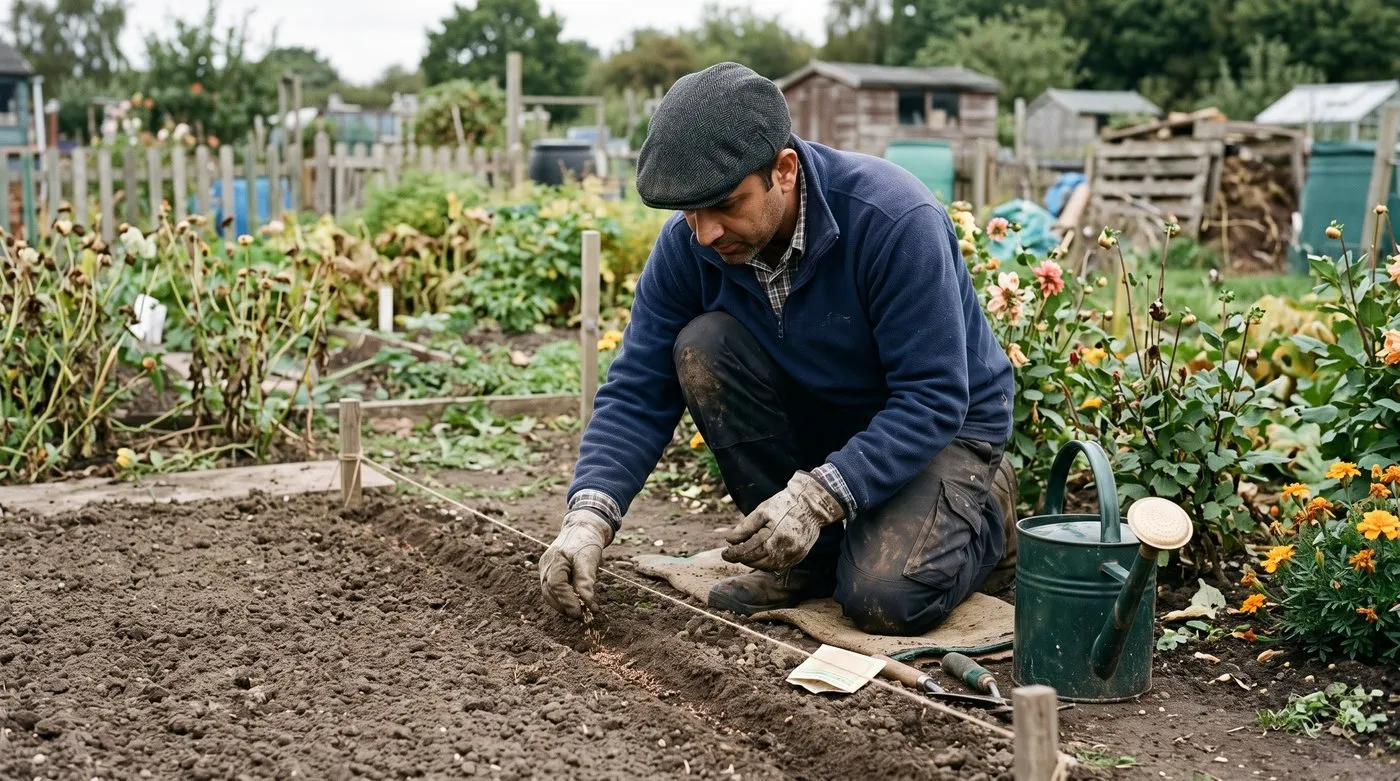
Sow thinly and barely cover the seed. Autumn sowings give the biggest plants next summer.
- Rake the soil to a fine, crumbly surface.
- Sow the seed thinly in rows or patches.
- Barely cover it with a sprinkle of fine soil and pat it down.
- Water gently with a fine rose and keep the surface moist.
- Thin seedlings in stages, ending with plants about 30cm apart.
You can also sow into modules, one or two seeds in each. Plant them out while they’re still small, before the roots coil.
Where to grow Daucus ‘Dara’
Give ‘Dara’ full sun and well-drained soil. It doesn’t need rich ground. Poor to average soil gives sturdier stems, while lots of manure or high-nitrogen feed makes soft, floppy plants. On heavy clay, add some grit before sowing.
It is a perfect plant for a cutting bed, but also looks lovely in a sunny border. Plant it with other airy fillers and summer flowers. Our guide on how to create a cutting garden shows how to plan the space.
Looking after Daucus ‘Dara’
‘Dara’ needs little care once it is growing.
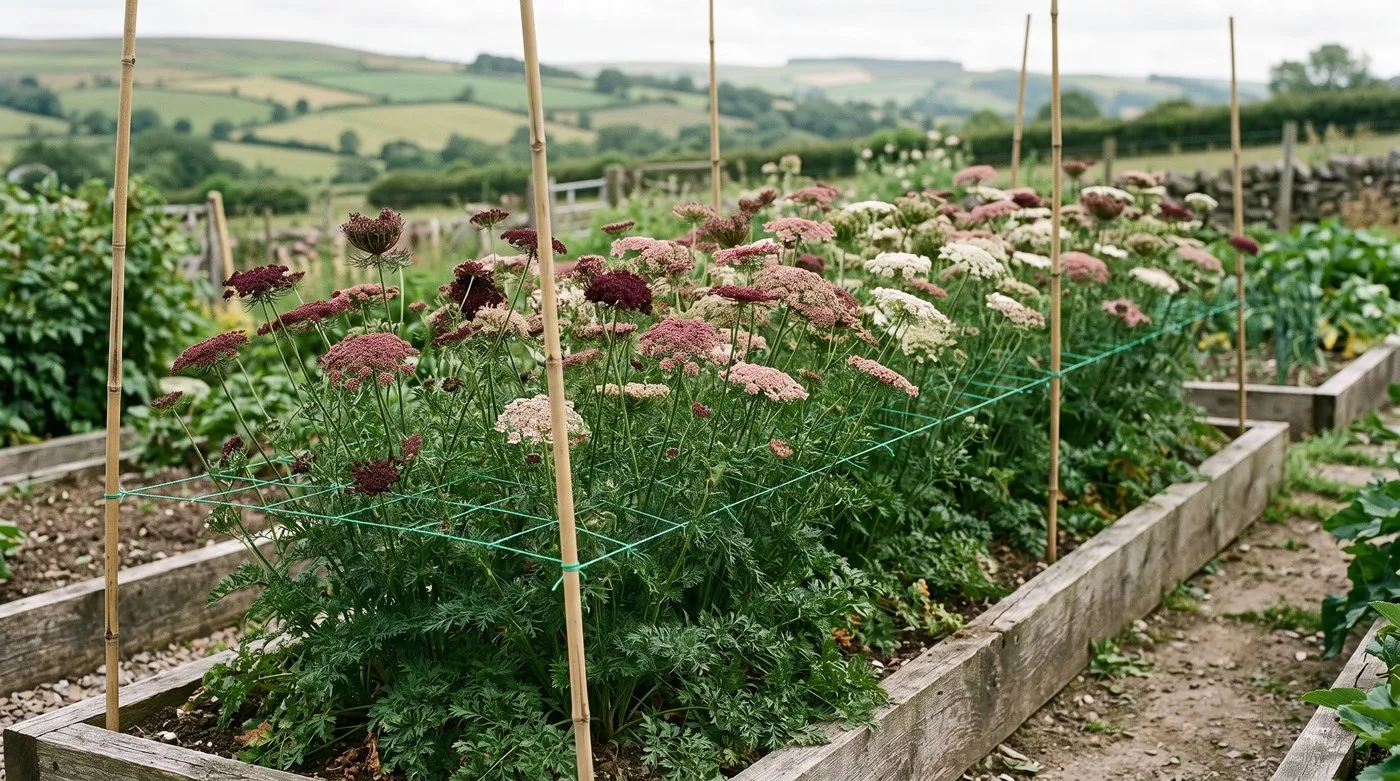
Netting put in early keeps tall stems straight on a windy site, which matters if you’re cutting for the vase.
- Weed around young seedlings, which are slow at first.
- Support plants on windy sites with twiggy sticks or flower netting, put in early.
- Pinch out the main tip when plants are about 30cm tall, if you want more, shorter stems.
- Water in long dry spells, especially spring sowings.
- Keep cutting, as regular picking encourages more flowers.
Most pests leave it alone. If self-sown seedlings pop up, check they are ‘Dara’ before letting them grow. The wild carrot guide linked above explains how to tell carrot from poisonous lookalikes such as hemlock.
How to cut Daucus ‘Dara’ for the longest vase life
Cut stems when most of the flowerhead has opened, but a few tiny flowers in the middle are still closed. Cut too early and stems often droop. Cut too late and the flowers drop.
- Cut early in the morning, when stems are full of water.
- Use sharp, clean snips or scissors.
- Cut long stems just above a side shoot, so more stems follow.
- Strip off the leaves below the water line.
- Stand the stems in a bucket of cool water somewhere shady for a few hours.
Some growers also dip the stem ends briefly in just-boiled water before conditioning. Expect a vase life of about a week. Our guide to conditioning cut flowers has more tips.

A couple of burgundy ‘Dara’ stems add a soft, lacy touch to pink dahlias and grasses.
What to grow with Daucus ‘Dara’
‘Dara’ is a classic filler that softens bolder flowers. It works well with:
- Dahlias, especially soft pinks and cafe-au-lait shades. See our guide on growing dahlias.
- Cosmos, scabious and cornflowers, for more summer colour.
- Ornamental grasses, for movement.
Similar lacy fillers include Ammi majus, with pure white heads, and Orlaya grandiflora, which is shorter. Ammi is the one to try if you want white. See our guide on growing Ammi majus, or our list of filler flowers for a cutting garden.
Daucus ‘Dara’ for hoverflies
The flat, open flowers are easy for hoverflies to feed on. Many hoverfly larvae eat aphids, so a few plants near the veg patch or roses can help keep greenfly down. Bees and small beetles visit too.
Leave a few flowerheads standing into autumn for insects and seeds. Our hoverfly guide shows how to bring more of them into your garden.

Hoverflies love open, flat flowers like ‘Dara’. Their larvae help keep aphids in check.
Self-seeding and saving seed
‘Dara’ often self-seeds if you let some flowerheads ripen. The heads curl inwards as they age, then turn brown and shed seed.
- For more plants: leave a few heads to ripen and drop their seed.
- For fewer plants: cut all the flowerheads before they turn brown.
- To save seed: cut ripe, brown heads on a dry day and shake the seed into a paper bag.
Self-sown plants can drift towards paler colours over the years. Sow some fresh seed every few years to keep plenty of dark burgundy flowers.

Self-sown seedlings often turn up in gravel. Move them while small, or let them flower where they land.
Common Daucus ‘Dara’ mistakes
- Sowing too deep. Barely cover the seed.
- Sowing into rich, freshly manured soil. You’ll get floppy stems.
- Leaving plants crowded. Thin to about 30cm so each plant can branch.
- Cutting at the wrong stage. Wait until most of the head is open.
- Letting it take over. Cut heads before they ripen in beds you need for other crops.
Daucus ‘Dara’ month-by-month calendar
| Month | What to do |
|---|---|
| January-February | Order seed. Add grit to heavy soil where you’ll sow |
| March-April | Sow direct once the soil starts to warm. Thin autumn sowings |
| May | Last spring sowings. Thin seedlings. Put in supports |
| June | Pinch out tips if you want more stems. First flowers on autumn sowings |
| July-August | Cut regularly. Leave a few heads to ripen for seed |
| September | Sow direct for flowers next year. Keep cutting |
| October | Last flowers. Collect seed. Leave some heads for wildlife |
| November-December | Autumn-sown plants rest over winter |
More cut flower guides live in our flowers and plants hub. Now you know how to grow ‘Dara’, read our guide on how to grow cut flowers to fill a whole cutting bed.
Frequently asked questions
When should I sow Daucus Dara seeds in the UK?
Sow direct in September, or from March to May. Autumn sowings make small plants that overwinter and flower earlier and taller. Spring sowings flower later the same summer. Sow thinly and barely cover the seed.
How tall does Daucus Dara grow?
Usually about 1m tall. Autumn-sown plants tend to be the tallest and sturdiest. Rich soil gives taller, floppier plants. On windy sites, support them with twiggy sticks or netting.
What is the vase life of Daucus Dara?
About a week, if you cut and condition it well. Cut when most of the flowerhead is open, early in the day. Strip the lower leaves and stand the stems in cool water for a few hours before arranging.
Does Daucus Dara self-seed in UK gardens?
Yes, it often self-seeds if you leave some flowerheads to ripen. Seedlings can come up in autumn or spring. Colours may vary in later generations, so sow fresh seed now and then to keep the dark shades.
Is Daucus Dara good for wildlife?
Yes, the flat, open flowers are easy for hoverflies and other insects to feed on. Hoverfly larvae eat aphids, so it is a handy plant near the veg patch. Seedheads left standing also give insects winter shelter.
Is Daucus Dara the same as wild carrot?
It is a garden form of the same species, Daucus carota. Native wild carrot has white flowerheads, often with a dark centre. ‘Dara’ was selected for its pink, plum and burgundy colours.
Our team produces practical UK gardening guidance from source research, contributor records and established horticultural practice. Editorial standards are overseen by Matt W.


