Key takeaways
- Hardy annuals go straight into the ground where they flower, so no pots, heat or pricking out
- Sow from late March to May into a fine, firm, weed-free seedbed once the soil has warmed
- A September sowing gives bigger, earlier plants in mild, well-drained gardens
- Sow in short, shallow drills so you can tell seedlings from weeds
- Thin in two or three goes to a final 15-30cm, depending on the plant
- Sow a fresh batch every three to four weeks for flowers from June into autumn
Hardy annuals are the easiest flowers you can grow: sow the seed straight into the soil where you want flowers, and they do the rest. A rake, a few packets and a dry afternoon in April can fill a border by midsummer.
A hardy annual lives for one year and its seedlings shrug off frost. That’s why you can skip pots, heat and pricking out. This guide covers the outdoor, sow-in-the-ground method step by step. If you’d rather raise annuals in trays first, the guide to growing annuals from seed covers the indoor route.
What does sowing hardy annuals direct mean?
Direct sowing means putting seed straight into the ground where the plants will grow and flower. There’s no module tray, no windowsill and no transplanting. The seed comes up where it lands and you thin the seedlings to their final spacing.
It suits hardy annuals because their seedlings cope with cold, and many actively dislike being moved. Poppies, larkspur and ammi do far better sown in place. Breadseed poppies are the classic example, sown direct for both flowers and seed. Compare that with half-hardy annuals such as cosmos and zinnias, which need raising indoors until the frosts pass.
Direct sowing is perfect if you have no greenhouse, or not much time.
When to sow hardy annuals outside in the UK
There are two sowing windows, and they give slightly different results.
- Spring (late March to May) is the main window. Sow once the soil feels less cold to the touch and is dry enough to rake. In the north and on cold clay, wait until mid-April.
- Autumn (September) gives a head start. The plants sit through winter as small rosettes, then flower earlier and bigger next year. It works best in mild, well-drained gardens. On heavy, wet soil they can rot over winter.
Cornflowers, calendula, larkspur, nigella, ammi and field poppies all take an autumn sowing. For everything else you could be sowing month by month, keep the seed sowing calendar handy.
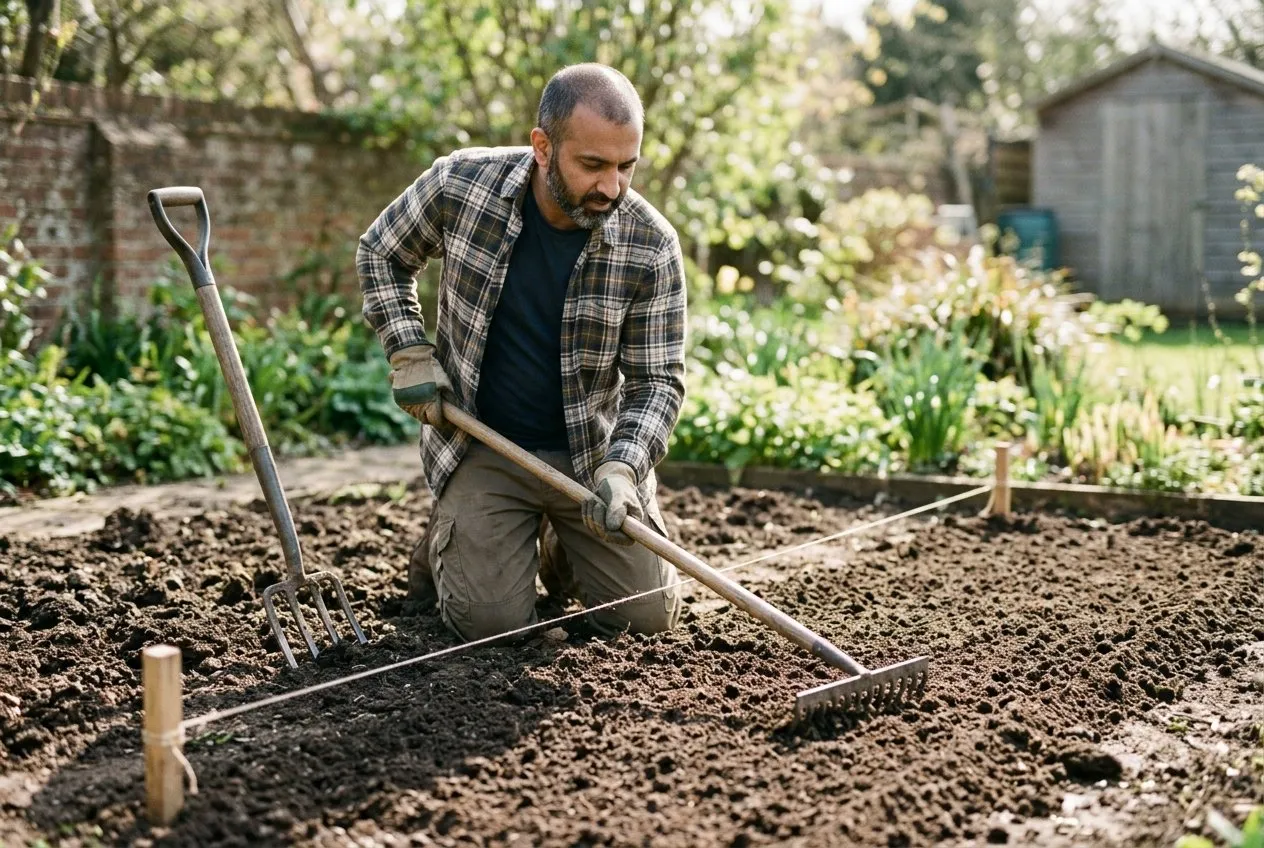
A crumbly, level, weed-free surface is the biggest single help to good germination, so give the raking some time.
How to prepare a seedbed for hardy annuals
A fine seedbed does most of the work. Spend time here and the rest is easy.
- Clear all weeds and pick out large stones. Perennial weed roots left in will swamp the seedlings.
- Fork over lightly, then shuffle or tread across the surface to firm it. Seed needs firm soil around it, not a fluffy layer.
- Rake to a fine tilth. Aim for crumbs no bigger than a pea.
- Skip the manure and rich feed. Hardy annuals flower better on lean soil. Rich ground grows leaves instead of flowers.
If the soil is cold or sticky, wait. Seed sown into cold, wet ground often rots before it comes up. A week’s patience beats a failed sowing.
How to sow hardy annuals in drills and drifts
Sow in short straight drills, even inside an informal border. It’s the trick that makes direct sowing reliable.
- Mark out drifts with a trickle of dry sand, one patch per variety. This stops the border looking like a veg plot.
- Draw shallow drills inside each drift with a cane, 15-20cm apart. Most seed needs about 1cm of soil over it. Very fine seed like poppy barely needs covering.
- Sow thinly along each drill. Thin sowing saves seed and makes thinning quicker.
- Cover and firm gently with the back of the rake.
- Label and water with a fine rose if the soil is dry. Keep the surface just moist until seedlings appear, usually in one to three weeks.
The seedlings come up in lines, so anything growing between the rows is a weed. Hoe it out without a second thought. Once the plants knit together and flower, the rows vanish.
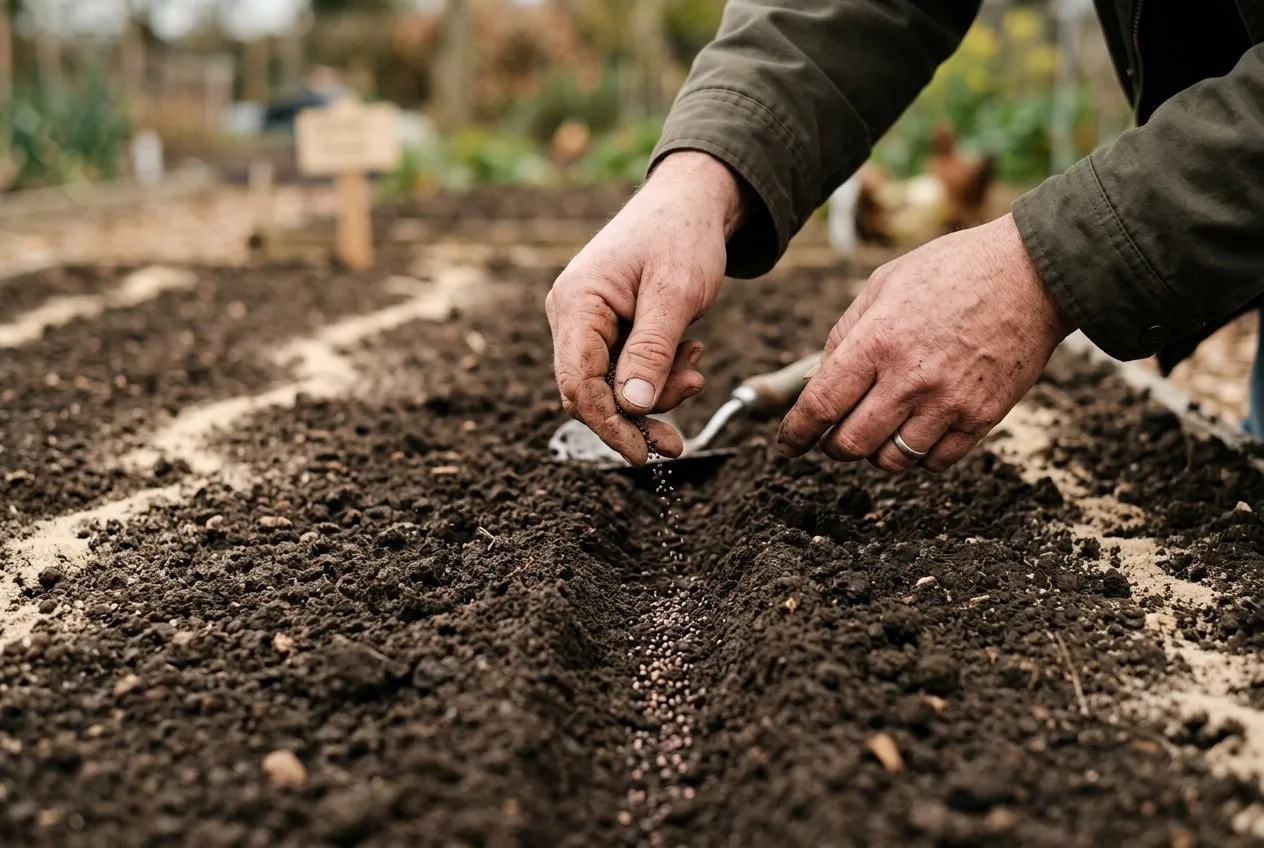
Sand lines mark each drift, and straight drills inside them make weeding easy while the seedlings are tiny.
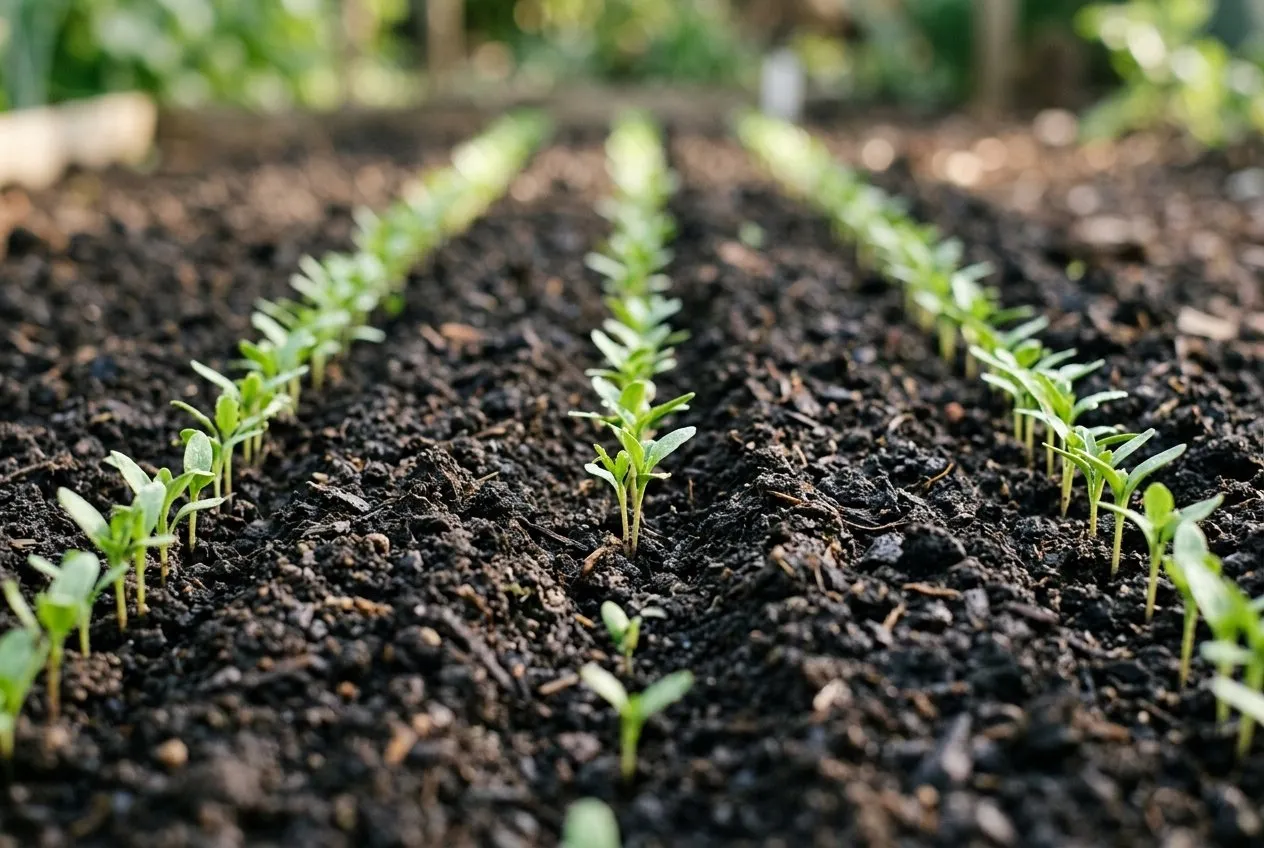
Seedlings in lines are easy to read. If it’s not in a row, it’s a weed.
The best hardy annuals to sow direct
These are the most reliable choices for sowing straight into the ground, with the spacing to thin them to.
| Plant | Sow | Thin to | Height | Good to know |
|---|---|---|---|---|
| Cornflower | Mar-May, Sept | 20cm | 60-90cm | Blue, loved by bees, great for cutting |
| Calendula | Mar-May, Sept | 20cm | 40-60cm | Orange pot marigold, edible petals |
| Nigella | Mar-May, Sept | 15cm | 40-50cm | Love-in-a-mist, pretty seed pods |
| Larkspur | Mar-Apr, Sept | 25-30cm | 90-120cm | Hates moving, sow in place only |
| Ammi majus | Mar-May, Sept | 25-30cm | 90-120cm | Lacy white flowers for the vase |
| California poppy | Mar-May | 15cm | 30cm | Loves poor, dry soil |
| Field poppy | Mar-Apr, Sept | 15cm | 60cm | Barely cover the seed |
Larkspur is poisonous if eaten, so site it away from where pets or small children graze. For more ideas on what to grow, see the round-up of the best hardy annual flowers.
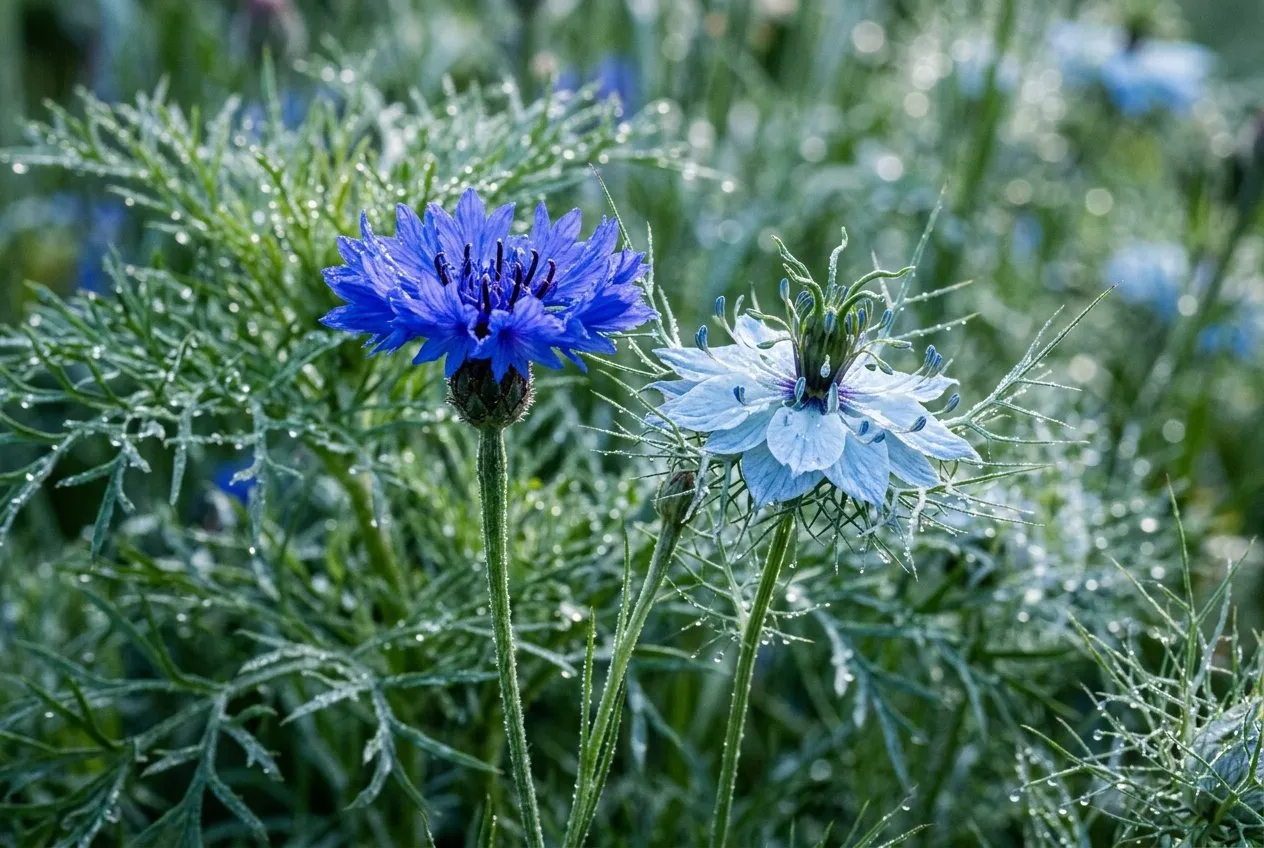
Cornflower and nigella are two of the easiest hardy annuals to sow direct, and they look lovely together.
How to thin hardy annual seedlings
Thinning turns a crowded green mat into strong plants that flower well. Do it in stages.
- First thin when seedlings have their first true leaves and start to touch. Pull the weakest, leaving the rest about 5cm apart.
- Second thin a couple of weeks later, to about half the final spacing.
- Final thin to the spacing in the table once plants are growing strongly.
Thinning in stages leaves spares in case slugs or birds take a few. Young seedlings are a favourite slug snack, so check the rows after damp evenings. The guide to getting rid of slugs naturally has ideas. Water the row after each thin to settle the plants that are left.
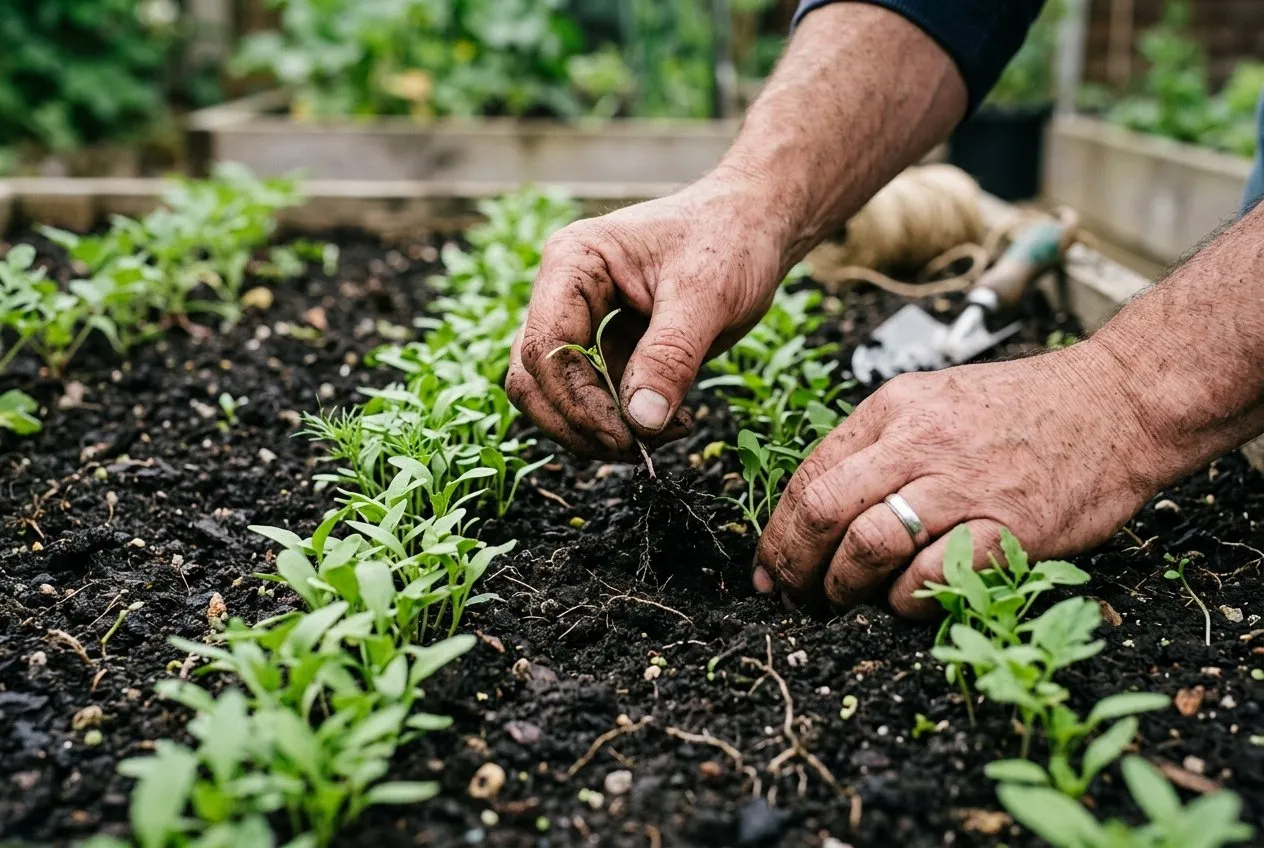
Be brave with thinning. Crowded seedlings stay weak and flop, while well-spaced ones bush out and flower for longer.
Month-by-month hardy annual calendar
| Month | Job |
|---|---|
| March | First sowings of the toughest annuals once the soil can be raked |
| April | Main sowing month. Rake fresh seedbeds and sow in drifts |
| May | Last spring batch. Start thinning the March and April rows |
| June | Thin and hoe. First flowers open. Sow another batch |
| July | Pick and deadhead. Sow a last quick batch of calendula |
| August | Keep picking so plants keep flowering |
| September | Sow for next year in mild, well-drained gardens |
| October to February | Watch autumn-sown seedlings for slugs and leave them be in cold spells |
Picking and deadheading keep the show going, and more sowing ideas live in the growing hub.
Common direct-sowing mistakes
- Sowing too thickly. It wastes seed and makes thinning a chore. Sow as thinly as you can bear.
- Skipping the thinning. Crowded plants stay weak and flop. It’s the most common reason for a disappointing patch.
- Sowing into cold, wet soil. Seed rots instead of coming up. Wait for a dry, crumbly surface.
- Scattering instead of drilling. Scattered seed is hard to weed and comes up unevenly.
- Feeding too richly. Manure and high-nitrogen feed grow leaf, not flower. Keep the soil lean.
Avoid those and a few seed packets give you a summer of flowers.

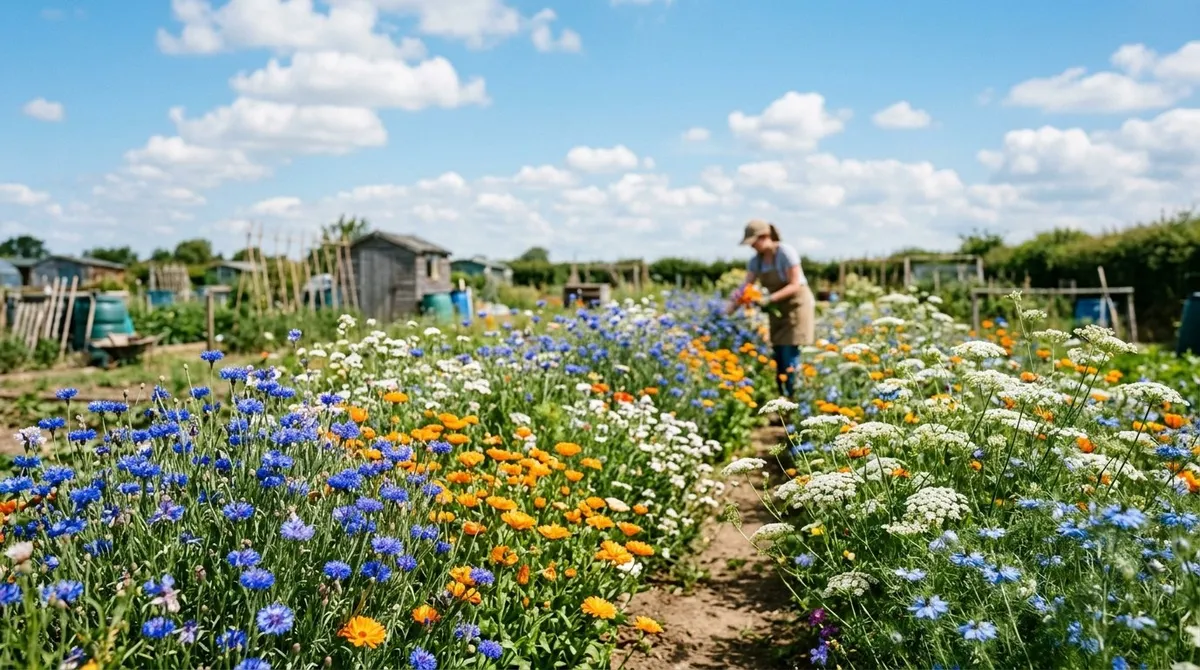
The payoff: a few packets sown in spring can fill a border by July, with plenty to pick for the house.
Frequently asked questions
What does sowing hardy annuals direct mean?
It means sowing seed straight into the ground where the plants will flower. There’s no pot stage, no greenhouse and no transplanting. Hardy annuals suit it because their seedlings cope with cold and many dislike being moved.
When can I sow hardy annuals outside in the UK?
From late March to May, once the soil has warmed a little. You can also sow many in September for bigger, earlier plants next year. Wait until the surface is dry enough to rake to a fine crumb.
Which hardy annuals are best for direct sowing?
Cornflowers, calendula, nigella, larkspur, poppies and Ammi majus are the most reliable. They come up well in cool soil, and poppies, larkspur and ammi dislike being transplanted. California poppies and candytuft are easy too.
How far apart should I thin hardy annual seedlings?
Thin most to 15-30cm apart, depending on the plant. Cornflowers and calendula need about 20cm, larkspur and ammi 25-30cm, and poppies about 15cm. Thin in stages so you have spares if slugs take a few.
Should I sow hardy annuals in rows or scattered?
Sow in short, shallow drills, even in an informal border. Rows make it easy to spot weeds and hoe between them. Angle the drills differently in each patch, and once the plants fill out the rows disappear.
How do I keep hardy annuals flowering all summer?
Sow in batches and keep picking or deadheading. Sow a fresh batch every three to four weeks from spring to early summer. Removing faded flowers stops plants setting seed, so they keep making buds.
Once your seedlings are up, read our guide on how to grow cut flowers to make every sowing earn its place in the vase.
Our team produces practical UK gardening guidance from source research, contributor records and established horticultural practice. Editorial standards are overseen by Matt W.