Key takeaways
- Sow direct in September for flowers from May, or March to May for summer flowers
- Plants grow about 15cm tall, so they suit edges, paths, pots and veg bed fronts
- Bees and hoverflies love the flowers, and hoverfly larvae feed on aphids
- It self-seeds freely, but the seedlings are shallow-rooted and easy to pull up
- Give it sun and soil that stays moist in spring
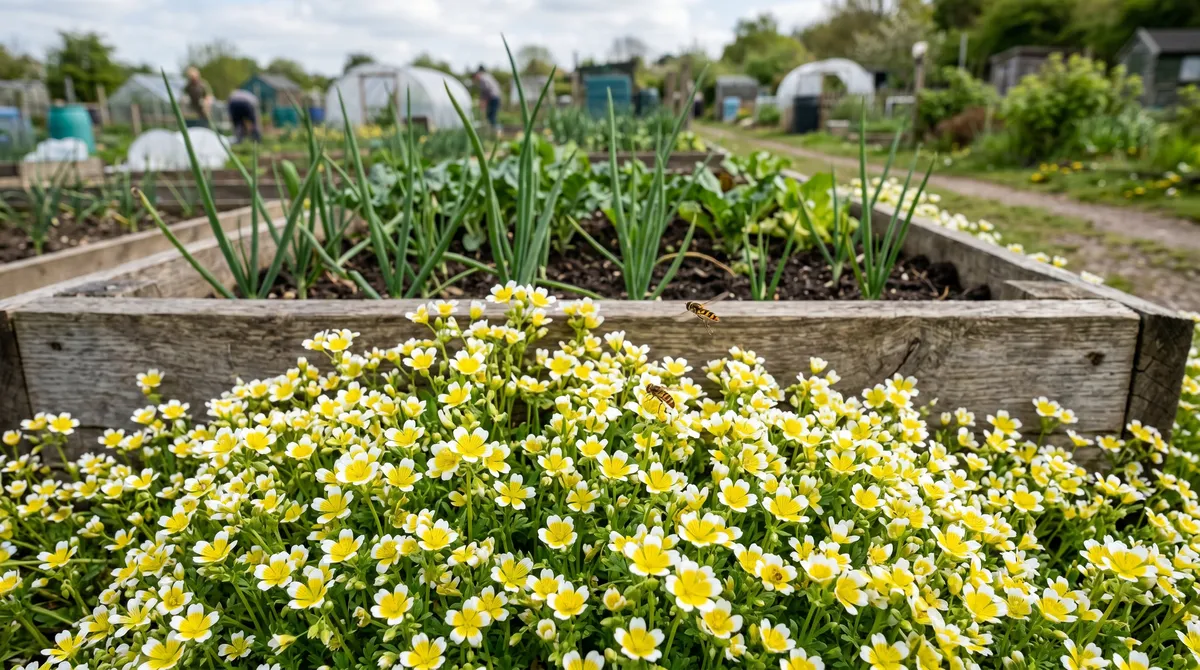
Poached egg plant is a cheerful, low annual with yellow flowers edged in white, just like a fried or poached egg. Sow it once, in autumn or spring, and it usually self-seeds to come back every year. Bees and hoverflies love it, which makes it a handy edging for veg beds.
This guide covers when to sow, where it grows best, how to use it among vegetables, and how to keep the self-seeding under control.
What is poached egg plant?
Poached egg plant (Limnanthes douglasii) is a hardy annual from California and Oregon. It grows into a low mound about 15cm tall, with bright green, ferny leaves. The cup-shaped flowers are yellow in the centre with white edges, and they cover the plants from late spring into summer.
It holds the RHS Award of Garden Merit, which marks it out as a reliable garden plant. A few other forms exist, including all-yellow and all-white types, but the classic yellow-and-white is the one you’ll usually find in seed packets.
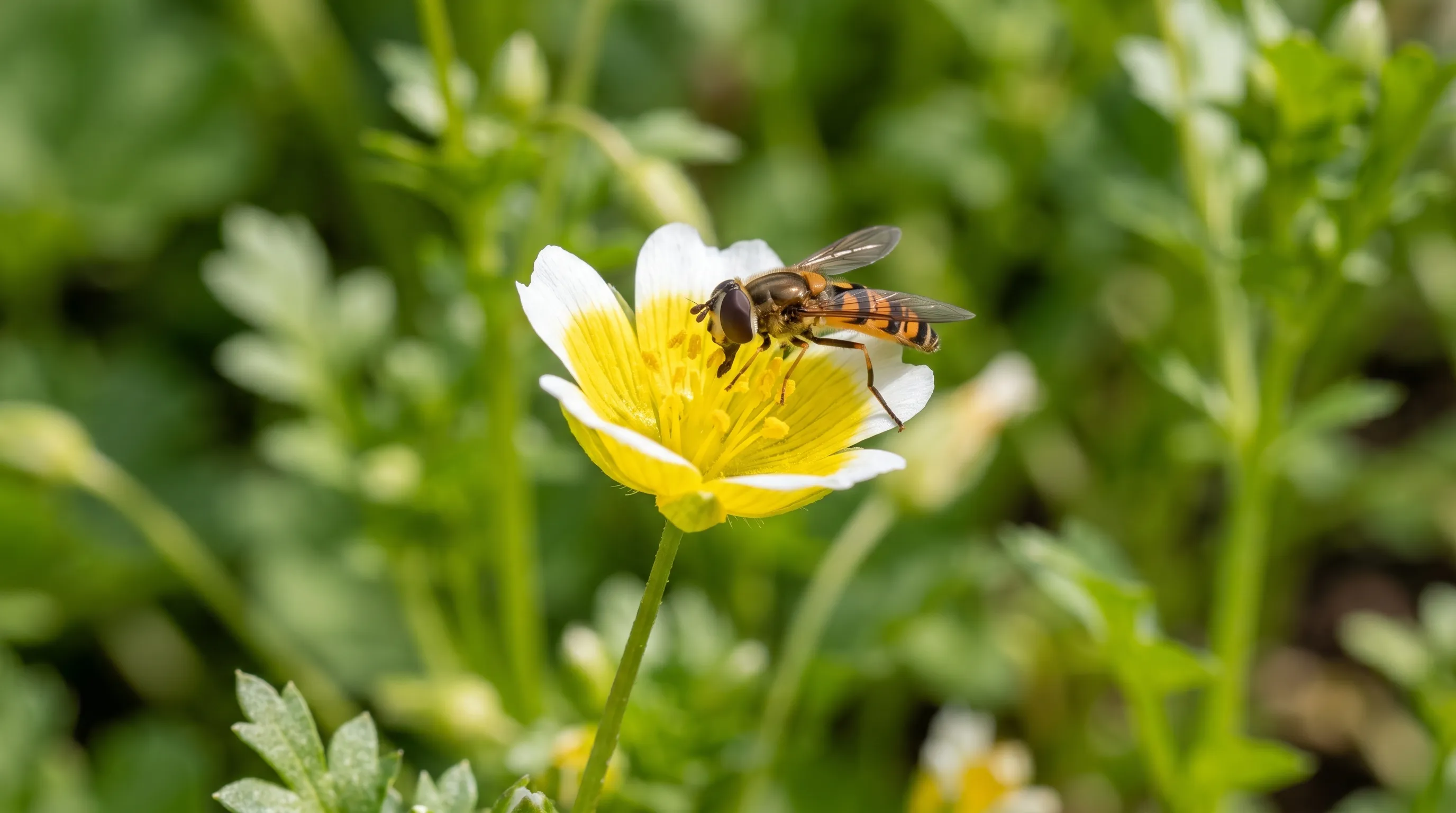
Hoverflies flock to the open flowers. Many hoverfly larvae eat aphids, so it’s a welcome visitor near your veg.
When to sow poached egg plant
Sow poached egg plant outdoors where it is to flower. It doesn’t like being moved, so direct sowing is easiest.
- September: the best time. Seedlings overwinter as small, leafy plants and flower from May. Autumn-sown plants are bigger and flower earlier.
- March to May: spring sowings flower from early summer, slightly smaller and later than autumn ones.
Avoid sowing in the height of summer, when hot, dry soil makes germination poor.
How to sow poached egg plant
- Weed the ground and rake it to a fine, crumbly surface.
- Sow thinly, about 5mm deep, in short drills or scattered in patches.
- Water gently with a fine rose and keep the soil damp until seedlings appear.
- Thin seedlings to about 10-15cm apart once they are big enough to handle.

The seeds are big enough to space by hand, so sow them where you want the flowers and skip the transplanting.
The seeds are big enough to space out by hand, which saves on thinning. For more on this easy way of growing, see the guide to sowing hardy annuals direct.
Where poached egg plant grows best
Give it sun and soil that stays moist in spring but doesn’t sit wet. In the wild it grows in places that are damp in spring and dry in summer, so it copes with most garden soils.
It does well in light shade too, though it flowers less. Deep shade gives leggy plants with few flowers. Very rich soil isn’t needed: average garden soil is fine.
It is fully hardy, so autumn-sown seedlings get through a normal UK winter without protection.
Using poached egg plant to edge veg beds
This is where poached egg plant really earns its place. Its flowers draw in hoverflies, and many hoverfly larvae feed on aphids. A strip along the edge of a veg bed brings these helpers right where you want them.
Good places to sow it:
- Along broad bean rows. Autumn-sown plants flower in May, as blackfly start to appear. The guide to black bean aphid covers other ways to protect beans.
- Between lettuce and salad rows, where its shallow roots won’t compete much.
- Around brassicas and under roses, to bring in aphid eaters.
- At the base of young fruit trees, as a low, flowering carpet.
It won’t wipe out aphids on its own, but it helps tip the balance. Read more about these useful insects in the guide to hoverflies in the garden, and see other options in companion flowers for veg beds.
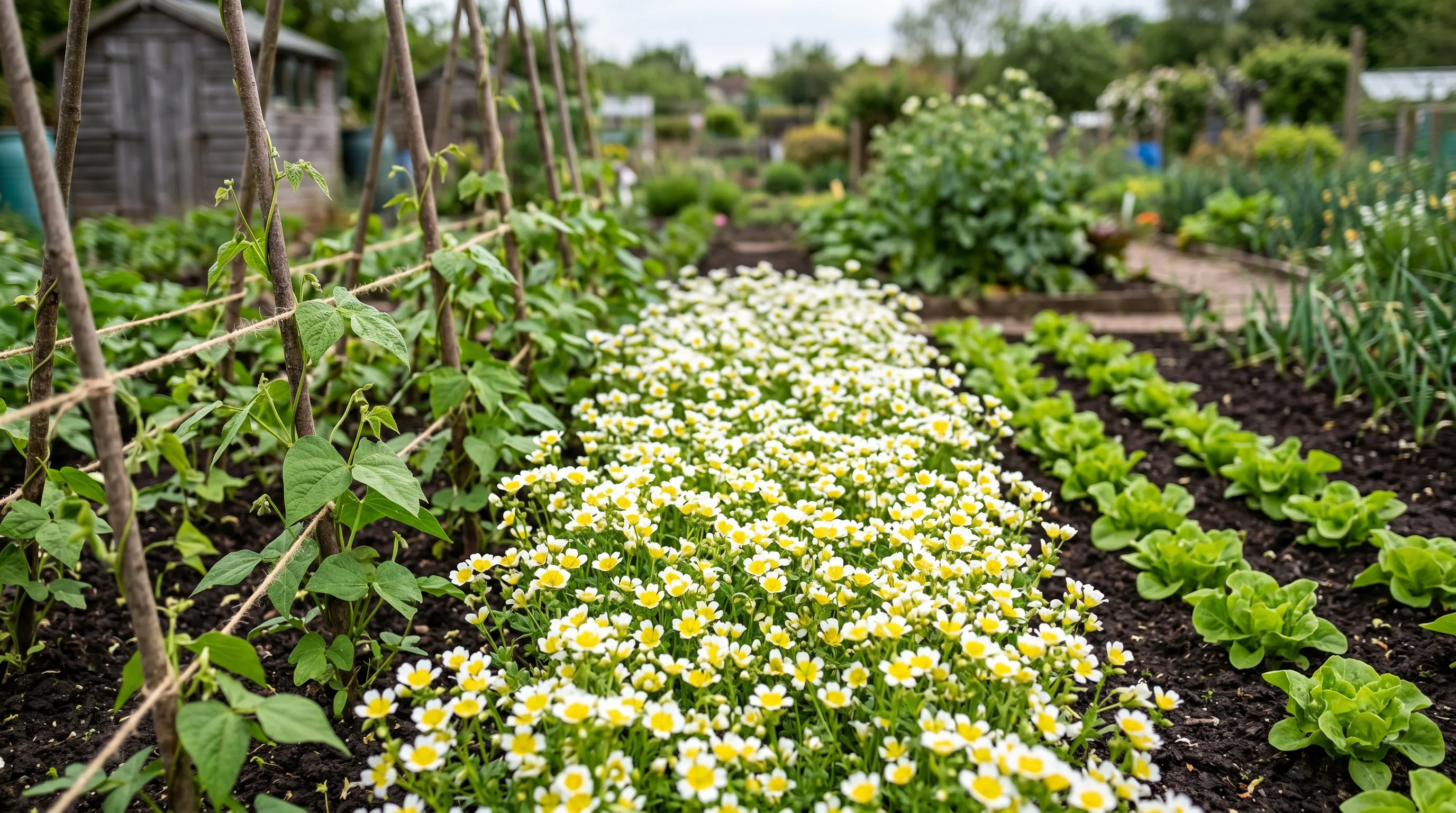
A strip between runner beans and lettuces brings hoverflies right into the veg plot.
Poached egg plant in borders and gravel
Poached egg plant makes a bright, low edging at the front of a border or along a path. It flowers alongside tulips and forget-me-nots in late spring.
It also seeds happily into gravel. There it mixes well with California poppies and other easy self-seeders. The guide to self-seeding plants for easy gardens has more ideas.

Along a path, its low carpet of flowers fronts taller plants like foxgloves without hiding them.
Growing poached egg plant in pots
It grows well in pots and troughs at least 20cm across. Fill them with peat-free multipurpose compost and sow thinly on the surface. Cover lightly and keep the compost damp.
Pots dry out fast, so water regularly in spring and early summer. Stand them somewhere sunny. Expect seedlings to pop up in nearby pots and paving cracks the following year.

A tub by the door gives a cheerful splash of colour, and the bees will find it.
How to manage self-seeding
Poached egg plant self-seeds freely. After flowering, the seeds drop around the plants and come up as new seedlings in autumn or spring. That’s how one sowing keeps a patch going for years.
If it spreads further than you’d like:
- Pull seedlings you don’t want while they are small. The roots are shallow, so they come out easily.
- Pull or cut plants as the flowers fade, before they drop seed, wherever you don’t want it next year.
- Leave a few plants to seed in the spots you do want it.
To save seed, let a few seed heads ripen and turn brown in summer. Collect them on a dry day and keep the seed in a paper envelope until September.
Common mistakes with poached egg plant
- Sowing in midsummer. Hot, dry soil gives poor germination. Wait for September.
- Not thinning. Crowded seedlings grow weak. Thin to 10-15cm apart.
- Moving seedlings. It sulks when transplanted. Sow where you want it.
- Pulling every plant before it seeds. You lose next year’s free plants.
- Treating it as a perennial. Plants die after seeding, and the patch carries on from seed.
Pests and problems
Poached egg plant is mostly trouble-free. Slugs may nibble young seedlings in spring. The guide to getting rid of slugs covers safe controls. Aphids sometimes visit, but hoverflies attracted to the flowers often deal with them.
In dry summers plants can get powdery mildew as they finish flowering. By then they are nearly done, so just pull them out.
Poached egg plant calendar
| Month | What to do |
|---|---|
| March to May | Sow direct outdoors. Thin seedlings to 10-15cm |
| May | Autumn-sown plants start flowering. Hoverflies arrive |
| June to July | Spring-sown plants in flower. Seed starts to ripen |
| August | Collect seed. Pull spent plants |
| September | Main sowing month. Self-sown seedlings appear |
| October to February | Young plants overwinter. Pull any unwanted seedlings |
Frequently asked questions
When should I sow poached egg plant in the UK?
Sow it outdoors in September, or from March to May. Autumn sowings overwinter as small plants and flower from May. Spring sowings flower a little later, into summer. Sow where you want the flowers, as it doesn’t like being moved.
Does poached egg plant attract pollinators?
Yes, bees and hoverflies love its open, nectar-rich flowers. Adult hoverflies lay eggs near aphid colonies, and the larvae eat aphids. That makes it a useful edging plant for veg beds and roses, as well as a pretty one.
How do I stop poached egg plant from taking over?
Pull up unwanted seedlings while they are small. They are shallow-rooted and come out easily. To stop seeding altogether, pull or cut plants as the flowers fade. Leave just a few to seed where you want them back next year.
Can poached egg plant be grown in containers?
Yes, it does well in pots and troughs at least 20cm across. Use peat-free multipurpose compost and sow thinly on the surface, then cover lightly. Keep the compost moist in spring, as pots dry out quickly. It looks lovely spilling over the edge.
What companion plants work well with poached egg plant?
It suits aphid-prone crops such as broad beans, lettuce and brassicas. Sow it along bed edges or between rows. In borders, pair it with forget-me-nots, tulips, hardy geraniums and nigella. It also works under roses.
Is poached egg plant a perennial?
No, it is a hardy annual that dies after flowering and seeding. It comes back each year from the seed it drops, so a patch often keeps going for years. Pulling all the plants before they seed ends the patch.
Looking for more easy flowers to sow? Read the guide to the best hardy annual flowers to grow from seed, or browse more how-to guides.
Our team produces practical UK gardening guidance from source research, contributor records and established horticultural practice. Editorial standards are overseen by Matt W.