
Key takeaways
- Hardy annuals cope with frost, so you can sow them straight outside from March
- Cornflower, calendula, nigella, larkspur, ammi and California poppy are the most reliable
- Sow a short row every 3-4 weeks from March to June for flowers all summer
- They flower best in poor, free-draining soil, so don't add manure
- Nigella, calendula and larkspur seed themselves, giving you free plants next year
Hardy annuals are the easiest flowers to grow from seed. You sow them straight into the ground from March, with no heat or propagator needed. A few cheap packets of cornflower, nigella and calendula can fill a border with colour from May to October. Here’s how to pick them, sow them and keep them flowering all summer.
What are hardy annuals, and how do they differ from half-hardy?
Hardy annuals grow, flower and set seed in one year, and they don’t mind frost. That means you can sow them outside in March, even while night frosts are still about. The seed comes up once the soil starts to warm, usually from mid-March in the south.
Half-hardy annuals, like cosmos, zinnias, French marigolds and nicotiana, can’t take frost at all. You have to sow them indoors in the warm, harden them off and wait until late May to plant them out. That takes trays, windowsill space and time. Hardy annuals skip all that.
On a mild March afternoon, you can rake a bed, scatter some seed and be done in 20 minutes. If you’re just starting out, stick with hardy annuals. You can add half-hardy ones later. Our seed sowing calendar shows when to sow both kinds.
The best hardy annual varieties for UK gardens
Cornflower and nigella are the workhorses of a hardy annual border: easy to sow, quick to come up and loved by bees.
| Flower | Height | Sow | Flowers | Best for |
|---|---|---|---|---|
| Cornflower | 60-90cm | March-May | June-September | Cutting, wildlife, cottage garden |
| Calendula (pot marigold) | 30-60cm | March-June | May-October | Cutting, edging, veg patch |
| Nigella (love-in-a-mist) | 40-60cm | March-May | June-August | Cutting, seed heads, cottage style |
| Larkspur | 90-120cm | March-April | June-July | Cutting, back of border |
| Ammi | 90-120cm | March-April | June-August | Cutting filler, wildlife |
| California poppy | 30-40cm | March-June | May-October | Sunny banks, gravel, pots |
| Nasturtium | 30cm bush or 2m trailing | April-May | June-October | Edible flowers, veg patch |
| Poached egg plant | 15-20cm | March-May | May-July | Edging, hoverflies |
Cornflower (Centaurea cyanus)
Cornflower is the most reliable hardy annual for cutting. ‘Blue Ball’ has those classic bright blue flowers on straight, stiff stems up to 90cm. ‘Black Ball’ has deep maroon flowers for something different. It comes up in a week or two, flowers about three months after sowing, and bumblebees love it. The RHS cornflower page has more growing tips. For the longest vase life, cut before the flowers fully open.
Calendula (Calendula officinalis)
Calendula, or pot marigold, is about as forgiving as a plant gets. It comes up in cool soil, shrugs off light frost, seeds itself everywhere and flowers from May until November in a mild year. ‘Indian Prince’ (deep orange with brown-tipped petals) and ‘Citrus Twist’ (lemon and orange) are both lovely for cutting. It’s a great companion in the veg patch, as it pulls in hoverflies, whose larvae eat aphids. Our companion planting guide shows how to use it.
Nigella (Nigella damascena)
Nigella, or love-in-a-mist, has blue, white or pink flowers sitting in a haze of feathery leaves. The puffy seed pods that follow look great dried too. ‘Miss Jekyll’ is the classic blue and ‘Oxford Blue’ is deeper. Nigella hates being moved, so always sow it where it’s to flower. Leave a few plants to drop seed in August and you’ll have plants that come up and flower earlier the next year.
Larkspur (Consolida ajacis)
Larkspur has tall spires of blue, pink, white or purple flowers, a bit like an annual delphinium. ‘Giant Imperial Series’ grows to 1.2m. Cut it when about a third of the flowers on the spike are open. All parts are poisonous if eaten, so keep it away from children and pets. It hates being moved, so sow it direct. It likes the cold, and a September sowing flowers earlier than a March one. Grow delphiniums too? Our growing delphiniums guide goes nicely with larkspur.
Ammi (Ammi majus)
Ammi is the florist’s secret. It has flat, lacy heads of tiny white flowers, much like gypsophila but on sturdier 90cm stems. It’s perfect for filling out a bunch of flowers. It can take up to three weeks to come up, and like larkspur, it hates being moved. Sow direct in March or April, then again in May for a second round. Hoverflies and tiny parasitic wasps love it, and they help keep aphids down. For more on growing for the vase, see our guide to growing cut flowers in the UK.
California poppy (Eschscholzia californica)
Despite the name, California poppy is right at home in the UK. It loves poor, dry, free-draining soil. The tougher the conditions, the better it flowers. The flowers open in sunshine and close when it’s cloudy, so give it a warm, south-facing spot. ‘Dali’ (scarlet), ‘Milkmaid’ (cream) and ‘Thai Silk’ (mixed) are all reliable. Sow it once and it’ll keep coming back on its own. Breadseed poppies do the same, and you can harvest their seed for baking.
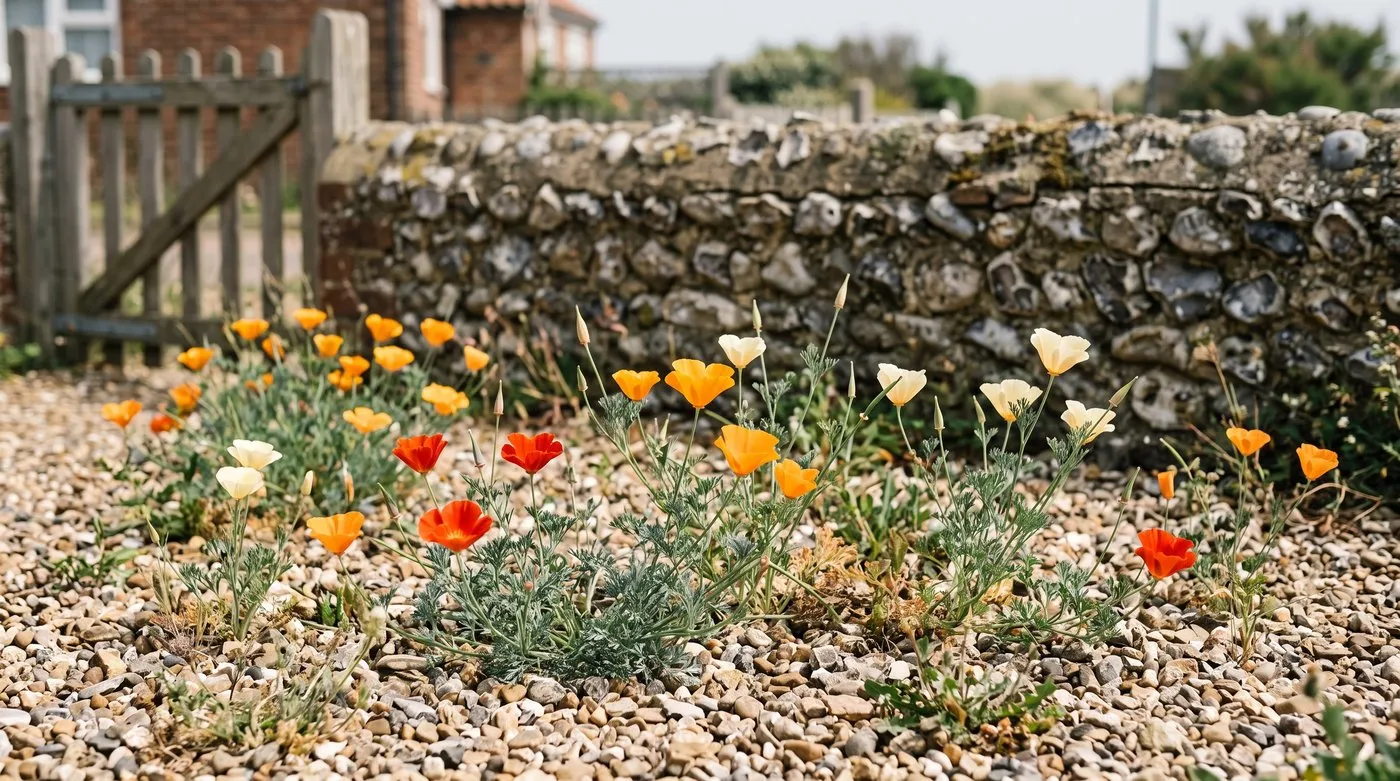
California poppies flower best in poor, dry, stony ground. Sow them once in a sunny spot and they’ll seed themselves for years.
How to sow hardy annuals direct outdoors

Seed sown straight into raked soil in March. No pots, no propagator, no windowsill needed.
Soil preparation
Hardy annuals flower best in poor to average, free-draining soil. It sounds odd, but rich soil makes them grow lots of leaves and fewer flowers. Before sowing:
- Pull out all weeds. The seedlings are small and easily smothered.
- Rake the soil until it’s fine and crumbly, with no lumps bigger than a marble.
- Don’t add manure, compost or fertiliser. On heavy clay, fork in some horticultural grit to help drainage.
- Most garden soils need nothing else.
Sowing method
Straight rows: Sow in short rows 20-30cm apart. It looks a bit regimented at first, but it makes it easy to tell your seedlings from weeds. The plants soon fill in and look natural. Cover small seeds (nigella, ammi, California poppy) with about 2-3mm of soil, and bigger seeds (cornflower, larkspur, nasturtium) with 5-10mm.
Scattering: Scatter seed over the bed and rake it in lightly. It looks more like a cottage garden from the start, but it’s harder to weed. Best where you’ve already got weeds under control.
Thinning: When seedlings are 5-8cm tall, thin them out. Don’t skip this, as crowded plants flower poorly and get mildew. Spacings: cornflower 30cm, calendula 30cm, nigella 20-25cm, larkspur 20-25cm, ammi 30cm, California poppy 20cm.
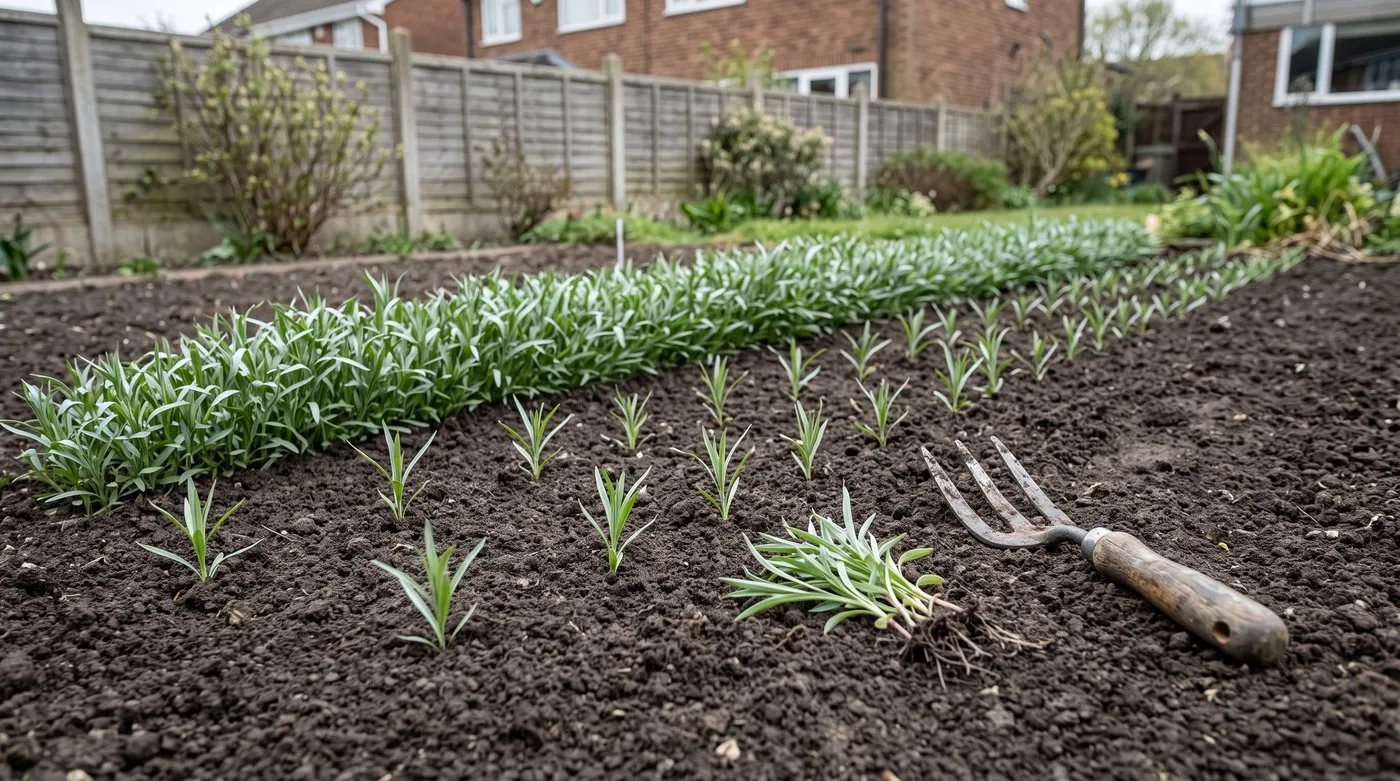
Thinning feels harsh, but crowded seedlings flower poorly and catch mildew. Cornflowers need about 30cm each once they’re 5-8cm tall.
Sowing times by region
| Region | First sowing | Second sowing | Third sowing |
|---|---|---|---|
| Southern England | Mid-March | Early May | Mid-June |
| Midlands and Wales | Late March | Mid-May | Late June |
| Northern England | Early April | Late May | Early July |
| Scotland (lowlands) | Mid-April | Early June | Mid-July |
If you’re sowing some things indoors too, see our guide to how to sow seeds indoors.
Succession sowing: how to get flowers all summer
One March sowing gives you a burst of flowers for a few weeks, then it fades. For flowers from May to October, sow a short row every 3-4 weeks.
A simple plan for a cutting patch:
- Mid-March: Cornflower, nigella, ammi, larkspur
- Late April: Cornflower, calendula, ammi
- Late May: Calendula, nasturtium, California poppy
- Late June: Calendula, for colour into November
Our flower planting calendar has a month-by-month plan with bulbs and perennials too. And our succession planting guide goes into more detail.
Hardy annuals for a cottage garden style
That romantic, slightly wild cottage garden look is mostly built on hardy annuals. They fill gaps between roses and perennials, soften edges and add colour while younger plants grow.
Hardy annuals give you that cottage garden look for the price of a few seed packets.
The trick is to mix them. Pick five or six kinds and scatter them together over one bed, rather than in separate blocks. Cornflower, nigella, ammi, larkspur, calendula and California poppy all like the same conditions and look great together. Low white candytuft makes a neat edge along the front, sown in March like the rest.
Foxgloves add height and structure. Our guide to growing foxgloves explains how to time them with your annuals for colour from May to August.
Hardy annuals also fit into a cottage garden planting plan alongside perennials like salvias, geraniums and achillea. The annuals fill in during the first year while the perennials settle, then seed themselves to keep the show going.
Got a shady north-facing bed? Our guide to plants for shade has ideas for that too.
Self-seeding hardy annuals: free plants every year
Several hardy annuals seed themselves freely. Sow once and you’ll get free plants year after year.

Calendula, cornflower, nigella and California poppy, all from one March sowing.
Best self-seeders:
- Nigella: The most reliable. The seed pods burst in late summer and scatter seed everywhere. Seedlings come up in spring and flower early.
- Calendula: Seeds itself easily. Deadhead if you don’t want it popping up everywhere, or let it spread into gravel and paving cracks.
- Larkspur: Seeds itself after mild winters. Self-sown plants sit through winter as small rosettes and flower a few weeks earlier.
- California poppy: Seeds itself very freely in light, sandy soil. Once it’s happy, it’s there for good.
- Ammi: Less reliable, but does seed itself in mild areas.
Looking after self-seeders: Don’t dig the beds deeply in autumn, as that buries the seed too deep to come up. A light rake over the surface is all they need. In spring, learn to spot the seedlings, then thin them out rather than moving them.
Hardy annuals for the cutting garden
Hardy annuals are brilliant for cutting. For the space they take, few flowers give you more stems for the vase.
A simple cutting patch layout:
| Row | Flower | Spacing |
|---|---|---|
| 1 | Ammi | 25cm |
| 2 | Larkspur | 20cm |
| 3 | Cornflower | 25cm |
| 4 | Nigella | 20cm |
| 5 | Calendula | 25cm |
Cut flower tips:
- Cut early in the morning, before it gets hot.
- Cut in bud or half open. The flowers keep opening in the vase and last longer.
- Recut the stems at an angle and stand them in deep, cold water straight away.
- Change the water every couple of days and trim the stems again.
- Cornflower and ammi last longest, around a week or more in a clean vase.
Our cut flowers growing guide covers layout, picking and making them last.
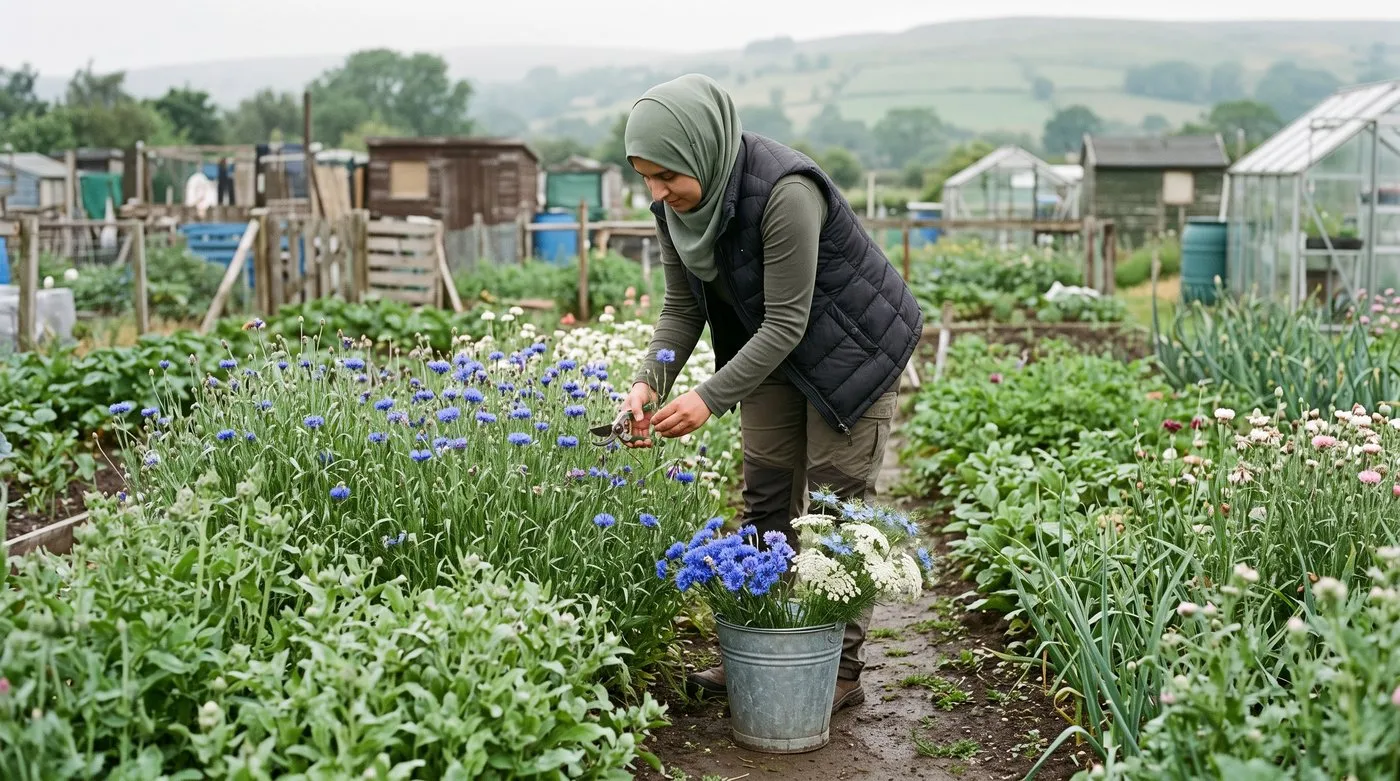
Cut in the cool of the morning and drop stems straight into water. Pick cornflowers just before they fully open for the longest vase life.
Common problems with hardy annuals
Seeds not coming up: Usually the soil is too cold and wet. Wait until it’s warmed up a bit. Covering a freshly sown bed with fleece warms the soil and helps.
Seedlings vanishing overnight: Slugs. They love tiny seedlings in March and April. Use copper tape, wool pellets or a slug nematode treatment. Steer clear of metaldehyde slug pellets, which harm birds and hedgehogs.
Tall, floppy plants: Too crowded or not enough light. Thin to the right spacing and push twiggy pea sticks in around them for support. Thin more than feels right. A 30cm gap between cornflowers looks silly at first, but it’s correct.
White powder on leaves: That’s powdery mildew, common in late summer when air can’t move around the plants. Pick off the worst leaves and give plants more space. By September, a bit of mildew is normal at the end of the season.
Plants flowering and dying fast: That’s just what annuals do. They flower, set seed and die. Cutting and deadheading slows this down, and sowing again every few weeks keeps the colour coming.

Cornflowers and nigella sown in March and flowering by late May. Both will seed themselves for next year.
Related reading
- How to Grow Sweet Peas in the UK, another hardy annual, often started in pots for early flowers
- How to Grow Sunflowers in the UK, great with hardy annuals for late-summer colour
- Seed Sowing Calendar UK, when to sow all kinds of flowers
- How to Sow Seeds Indoors, for half-hardy annuals to go with your hardy ones
- Flower Planting Calendar UK, plan a whole year of flowers from bulbs to perennials
Frequently asked questions
What is the difference between a hardy and half-hardy annual?
Hardy annuals cope with frost and can be sown outside from March. Half-hardy annuals can’t take frost, so you start them indoors in the warm. Cornflower, nigella and larkspur are hardy. Cosmos, zinnia and French marigolds are half-hardy. That’s why hardy annuals are so easy: no propagator or windowsill needed.
When should I sow hardy annual seeds in the UK?
From mid-March in southern England. Wait until late March in the Midlands, early April in northern England and mid-April in Scotland. If the soil feels cold and wet, give it another week or two. Sow again in May and June for flowers right through to October.
Do hardy annuals need a propagator or heated greenhouse?
No, just sow them straight into the ground. That’s their big advantage over half-hardy annuals like cosmos and zinnias, which need warmth to come up. A cold frame can give you an earlier start, but you don’t need one.
Which hardy annuals are best for a cutting garden?
Ammi, larkspur, cornflower and nigella are the top four. Ammi is a frothy white filler, a bit like gypsophila. Larkspur gives tall spires. Cornflowers and nigella add lovely blues and purples. Cut them early in the morning, in bud, and pop them straight into cold water.
How do I stop hardy annuals from going to seed too quickly?
Keep cutting them, every few days if you can. Once a plant starts making seed, it slows down on flowers. Cutting or deadheading keeps it flowering for longer. This works especially well with cornflower, calendula and ammi.
Which hardy annuals self-seed most reliably?
Nigella, calendula, larkspur and California poppy are the best. Leave a few plants uncut in late summer to drop their seed, then lightly rake the soil in autumn. Seedlings pop up in spring and often flower earlier than ones you sow yourself.
Can I grow hardy annuals in containers?
Yes, some do well in big pots. Calendula, cornflower and nasturtium are happy in pots at least 30cm across. Larkspur, ammi and nigella have deep roots and do better in the ground. Use peat-free multipurpose compost, water often and deadhead every few days. Skip high-nitrogen feeds, which give you leaves instead of flowers.
Our team produces practical UK gardening guidance from source research, contributor records and established horticultural practice. Editorial standards are overseen by Matt W.


