
Key takeaways
- A few packets of seed give you months of colour for very little money
- Sow cornflowers, calendula, nigella and poppies straight outside from March
- Wait until after the last frost in May for nasturtiums, cosmos, marigolds and zinnias
- Start sunflowers and sweet peas in their own pots, as they hate root disturbance
- Nasturtiums and cosmos flower best in poor soil, so don't feed them
- Snip off dead flowers every week or so to keep new ones coming
The easiest flowers to grow from seed give you months of colour from a few packets and a patch of bare soil. They aren’t fussy at all. In fact, many of them do better in poor soil than in a pampered border.
The 10 easiest flowers to grow from seed: comparison table
| Flower | Sow indoors | Sow outside | Flowers | Height | How easy |
|---|---|---|---|---|---|
| Sunflowers | Mar-Apr | Late Apr-Jun | Jul-Sep | 60cm-3m | Very easy |
| Nasturtiums | Not needed | May-Jun | Jun-Oct | 20-60cm | Very easy |
| Sweet peas | Jan-Mar | Oct, or Mar-Apr | Jun-Sep | 1.5-2.5m | Easy |
| Cosmos | Mar-Apr | May-Jun | Jul-Oct | 60-120cm | Very easy |
| Calendula | Not needed | Mar-May | Jun-Oct | 30-60cm | Very easy |
| Nigella | Not needed | Mar-May | Jun-Aug | 40-60cm | Easy |
| Cornflowers | Not needed | Mar-May | Jun-Sep | 30-90cm | Very easy |
| Poppies | Not needed | Mar-May | Jun-Aug | 30-90cm | Easy |
| Marigolds | Feb-Apr | May-Jun | Jun-Oct | 15-60cm | Very easy |
| Zinnias | Apr-May | Late May-Jun | Jul-Oct | 30-90cm | Easy |
1. Sunflowers, the crowd-pleaser
Why they’re easy: big seeds that little hands can manage, and you can almost watch them grow.
Sow indoors from late March, one seed per small pot, about 2cm deep. They don’t like their roots disturbed, so skip module trays. A warm windowsill is all they need. Outside, sow from late April once the soil has warmed, 2cm deep and 45cm apart.
Spacing: 45-60cm for tall ones, 30-45cm for dwarf types. Dwarf varieties like ‘Teddy Bear’ are happy in a 30cm pot. Giants like ‘Russian Giant’ need full sun and shelter from wind.
Care: Water weekly. Tie tall ones to a stout cane once they pass about a metre. A liquid feed every couple of weeks from June helps. Leave the seed heads in autumn for the goldfinches.
For more varieties and tips, see our guide on how to grow sunflowers.
Sunflowers and other annuals, all grown from spring-sown seed.
2. Nasturtiums, the true beginner’s flower
Why they’re easy: big seeds, no heat needed, quick to flower, and they thrive on neglect.

Nasturtiums and cosmos, two of the easiest flowers you can grow from seed.
Nasturtiums are probably the easiest of all. Sow straight outside from mid-May, about 1-1.5cm deep, once the soil has warmed. No need to start them indoors.
Soil: Poor soil that drains well gives the most flowers. Rich soil or feeding just gives you huge leaves. If your soil is good, don’t add anything.
Spacing: 30cm apart for bushy types like ‘Alaska’ and ‘Whirlybird’. Climbing types like ‘Jewel of Africa’ need 45cm and something to scramble up, like a fence or a wigwam of canes.
Varieties to try: ‘Alaska Mix’ has pretty cream-splashed leaves. ‘Whirlybird’ is compact and good in pots. ‘Black Velvet’ is a deep, dramatic mahogany.
Tasty bonus: The flowers and young leaves are edible, with a peppery kick in salads.
Watch out for: Blackfly love nasturtiums. Some people grow them near beans to draw the blackfly away. Squash them with your fingers or leave them, as the plants are tough.
3. Sweet peas, fragrant and floriferous
Why they’re easy: tough, long-flowering, and the more you pick, the more you get.
Sweet peas take a bit more effort than nasturtiums, but it’s simple once you know how. Sow indoors from January to March in loo-roll tubes or small pots of peat-free seed compost, about 1-1.5cm deep. Keep them somewhere cool but frost-free, not hot. A seed snail works as well as tubes and takes up half the space.
Soaking: Some people nick the seed coat with a nail file or soak the seeds overnight to help them sprout. It’s optional.
Planting out: Harden them off in April and plant out in May, 20-25cm apart, at the foot of canes or netting. They climb to 1.5-2.5m, so put the supports in on day one.
Picking: This is the golden rule. Pick the flowers often, at least twice a week in summer. Once they start making seed pods, they slow right down.
Soil: Unlike nasturtiums, sweet peas love rich soil. Dig in plenty of well-rotted compost before planting.
For autumn sowing and more tips, see our guide to growing sweet peas.
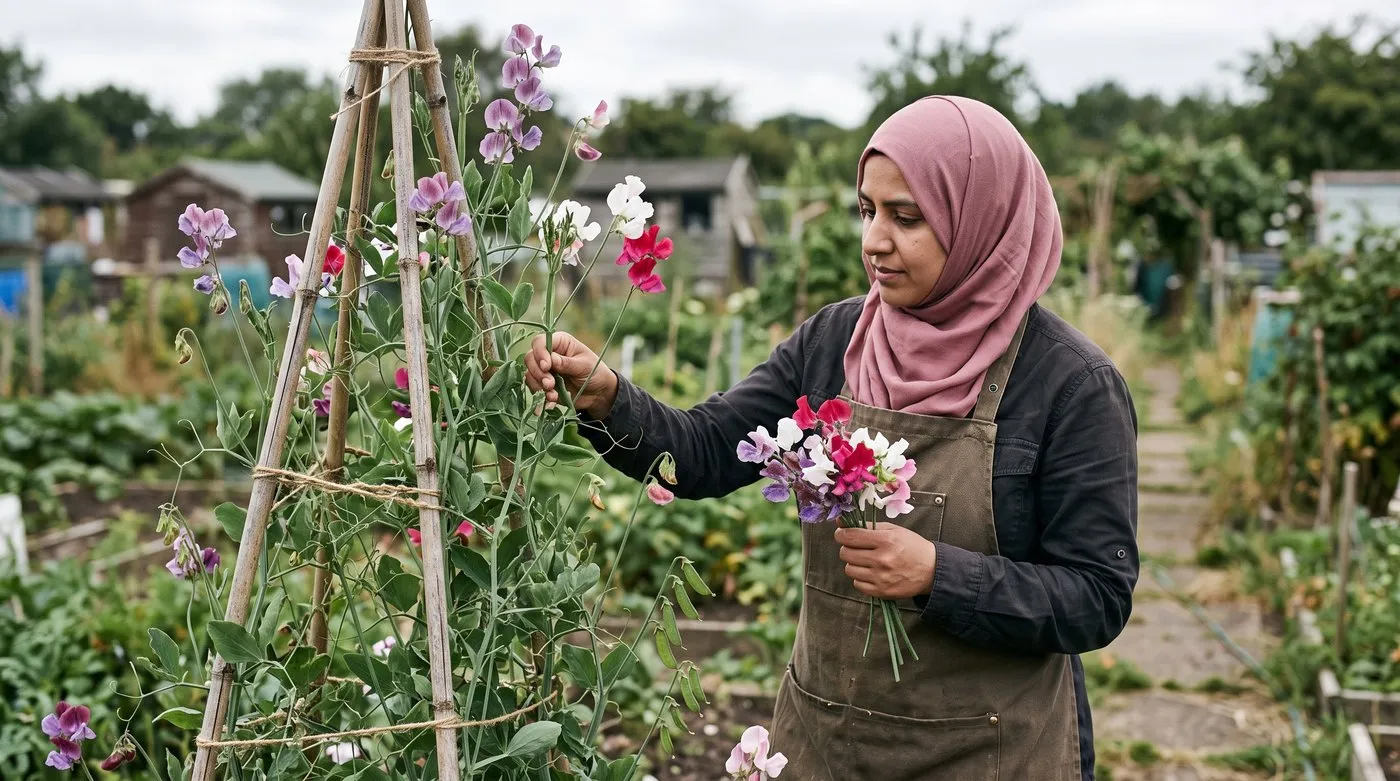
The golden rule with sweet peas is to pick often, at least twice a week in summer. Once they start making seed pods, they slow right down.
4. Cosmos, effortless elegance
Why they’re easy: sow in spring and enjoy pretty daisy flowers until the first frosts with hardly any work.

Tender annuals like cosmos and zinnias get a head start in module trays on a bright windowsill.
Cosmos is one of the most reliable tender annuals around. Sow indoors from March in module trays on a warm windowsill, barely covering the seed. Plant out after the last frost, 30-45cm apart.
Sowing outside: From mid-May, sow in shallow drills outdoors. Thin to about 45cm apart once the seedlings are 10cm tall.
Soil: Like nasturtiums, cosmos flowers best in poor soil. On decent garden soil, don’t feed it at all.
Deadheading: Snip off faded flowers every week or so to keep the buds coming.
Varieties: ‘Sensation Mix’ is a classic for cutting, in pink and white. ‘Purity’ is pure white and elegant. ‘Cupcakes’ is shorter and suits big pots.
For more varieties and chocolate cosmos, see our guide to growing cosmos from seed.
5. Calendula (pot marigold), the unbeatable workhorse
Why they’re easy: shrugs off light frosts, comes up fast and flowers for months.
Calendula isn’t the same as French or African marigolds. It’s fully hardy, so you can sow it outside from March. Scatter the seed over raked soil, rake it in lightly and water. It comes up quickly, even in cool weather.
Spacing: Thin to 30cm apart. It seeds itself freely, so you may never need to buy seed again.
Soil: Copes with poor, dry soil and light clay, but not waterlogging. Best in full sun, though part shade is fine.
Varieties: ‘Indian Prince’ is deep orange with dark centres. ‘Neon’ is bright orange. ‘Art Shades’ is a soft mix of cream, apricot and orange.
Wildlife: Hoverflies and solitary bees love it. The RHS calendula guide has more growing tips.
Edible: The petals add a splash of colour to salads and rice.
Deadheading: It keeps flowering anyway, but snipping off dead heads gives you even more.
6. Nigella (love-in-a-mist), self-sowing cottage garden staple
Why they’re easy: sow once and it seeds itself year after year.
Nigella has blue, white or pink flowers wrapped in feathery green “mist”. Sow straight outside from March to May, or in September for earlier flowers next year. Scatter the seed thinly and cover it lightly with soil.
Spacing: Thin to 25-30cm apart. It hates being moved, so sow it where you want it to flower.
Soil: Likes light soil that drains well, in full sun. Happy on chalk and stony ground.
Seed heads: The puffy striped seed pods are lovely in their own right. Leave some for autumn interest or to dry for vases. They’ll scatter seed for next year too.
Varieties: ‘Miss Jekyll Blue’ is the classic. ‘Miss Jekyll Alba’ is white. ‘Persian Jewels’ gives a mix from sky blue to deep pink.
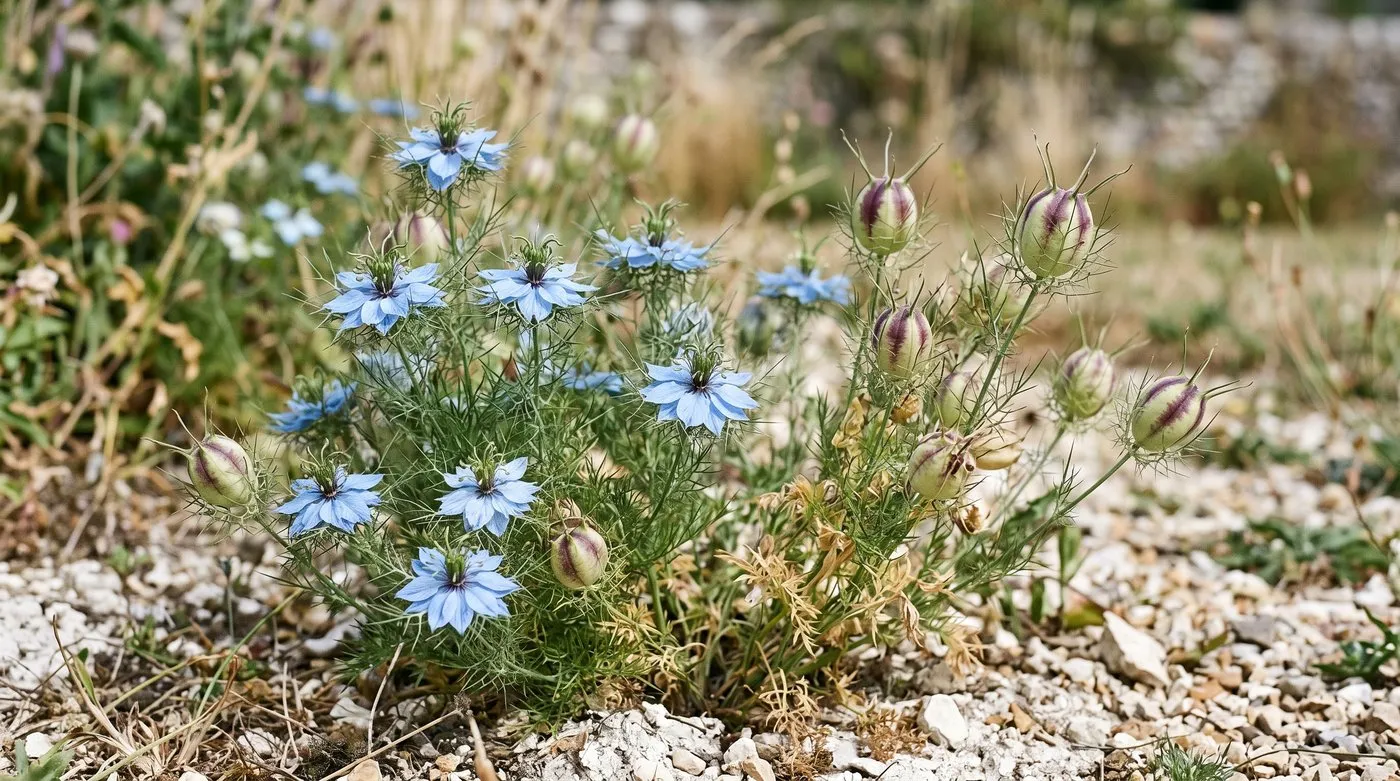
Leave some of the striped seed pods on the plant. They look lovely in autumn and scatter seed for next year’s flowers.
7. Cornflowers, Britain’s beloved blue
Why they’re easy: tough annuals that come up in cold soil and flower their socks off.
Cornflowers are one of the toughest flowers here. Sow straight outside from March, as the seedlings cope with frost. Scatter the seed thinly, rake it in lightly and water.
Spacing: Thin to 30cm apart for short types, 45cm for tall ones. Don’t skip thinning, as crowded plants flower less and get mildew.
Height: Short varieties like ‘Blue Boy’ reach about 30-45cm. Tall ones reach 60-90cm and may need twiggy sticks for support.
Deadheading: Pick flowers every week or so. They set seed fast, and regular picking keeps them going much longer.
Varieties: ‘Blue Boy’ is the classic. ‘Black Ball’ is a striking deep maroon. ‘Frosted Queen’ is a soft mix of pale colours.
Wildlife: Bumblebees adore them.
8. Poppies (Shirley and California), scatter and walk away
Why they’re easy: scatter the seed, rake it in and let them get on with it, even in thin soil.
Shirley poppies and California poppies are different plants, but both must be sown where they’re to flower, as they hate being moved. For more varieties, see our guide on how to grow poppies.
Shirley poppies: Sow outside from March to May, or in September for earlier flowers. Mix the tiny seeds with sand so you can spread them thinly. Rake in very lightly. Thin to 30cm apart. They flower from June to August and seed themselves freely.
California poppies: Sow from March to May in a sunny, dry spot. They love the poorest, driest soil you’ve got, even gravel. Thin to 15cm. They flower in orange, yellow, cream and red from June into autumn, and cope well with drought.
Deadheading: Take off faded Shirley poppy heads for a second flush. Cut California poppies back after their first flush to encourage more.
9. Marigolds (French and African), reliable and pest-repelling
Why they’re easy: quick to come up and flower all summer.
French and African marigolds are some of the most popular summer flowers in the UK. Sow indoors from February to April in module trays on a warm windowsill. They come up within a week, one of the fastest here.
Sowing outside: Sow from mid-May once frosts are over, about 6mm deep. Thin to 20-30cm for French types and 30-45cm for African.
Height: French marigolds are short and neat, great for edging. African marigolds are taller.
Deadheading: Pick off faded flowers often, and they’ll keep going until the frosts.
Companion planting: Lots of gardeners plant French marigolds near tomatoes and beans. The flowers bring in hoverflies, whose babies eat aphids.
Varieties: ‘Naughty Marietta’ (French, yellow with a dark centre), ‘Vanilla’ (African, creamy white) and ‘Zenith Orange’ (African, big double flowers).
Trays of marigolds and cosmos ready to harden off in late April.
10. Zinnias, maximum colour for minimum effort
Why they’re easy: quick to come up and full of bright colour in a warm summer.
Zinnias need warmth. Start them indoors in late April or early May on a warm windowsill, about 6mm deep in module trays. Don’t sow too early, as leggy seedlings in cold March light never really catch up.
Planting out: After the last frost, 30-45cm apart, in a sunny, sheltered spot. They hate cold winds, so a south-facing border or patio is ideal.
Sowing outside: Possible from late May in warmer parts of the UK. Further north, start them indoors.
Cutting: The more you cut for the vase, the more they flower. They’re great cut flowers.
Varieties: ‘Benary’s Giant’ has big flowers in lots of colours. ‘Zahara’ is shorter and copes better with bad weather. ‘State Fair’ is a reliable old favourite.
A note on our weather: Zinnias are the one plant here that sulks in a wet summer and can get powdery mildew. In a cool or exposed garden, choose tougher varieties and space them out.
How to sow seeds indoors: equipment you actually need
You don’t need fancy kit. These are the things that really help:
- Seed compost: It’s finer and less rich than multipurpose, and seeds come up better in it.
- Module trays: Each seedling gets its own space, so they settle in better when moved. Old yoghurt pots with holes in the bottom work just as well.
- Warmth: A warm windowsill is enough for everything here. A propagator speeds things up but isn’t essential.
- Labels: Always label. Seedlings all look the same. Strips cut from a plastic milk bottle and a permanent marker do the job.
- A watering can with a fine rose: A full blast of water flattens seedlings. A fine rose is the most useful bit of kit you can have.
For step-by-step help, see our guide to how to sow seeds indoors.
Sowing outdoors: the direct sowing method
Most of these flowers can go straight into the ground. Here’s how:
- Prepare the soil: Rake it to a fine, crumbly finish and pick out big stones and lumps.
- Make drills or scatter: Hardy annuals like cornflowers, calendula, nigella and poppies can be scattered for a natural look, then raked in. For rows, press a cane into the soil to make a shallow drill.
- Sow thinly: Crowding is the biggest mistake. Thin seedlings once they have two proper leaves. Don’t skip this bit.
- Water gently: Use a can with a fine rose so you don’t wash the seeds away.
- Label: Mark what you sowed and when.
- Watch for slugs: Young seedlings are a slug’s favourite snack. Check after dark and pick them off, and put copper tape round pots.
New to all this? Our guide to gardening for beginners covers soil and timing.
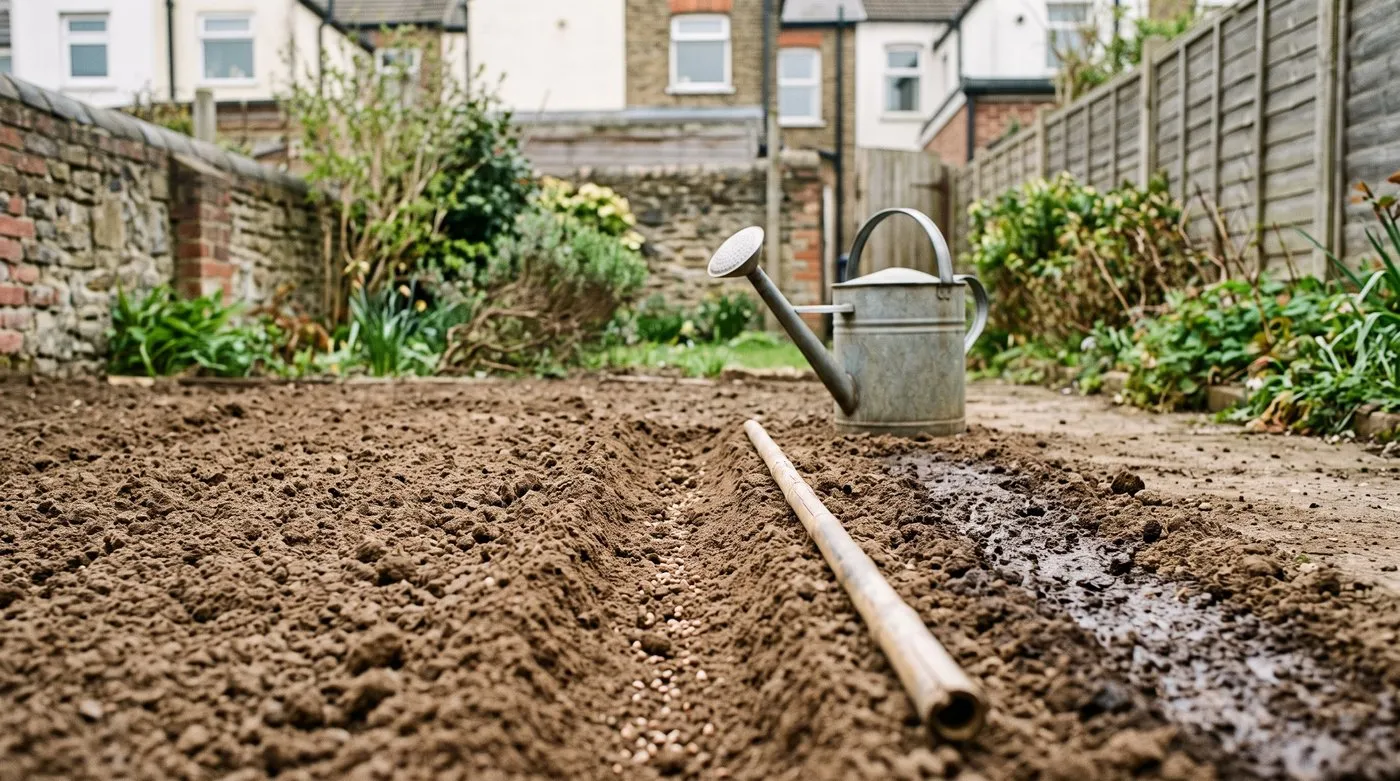
Press a cane into finely raked soil to make a shallow drill, and sow thinly. Water with a fine rose so the seeds don’t wash away.
Getting children involved
All ten suit children, but some are extra good. Sunflower seeds are big and easy to hold, and they grow fast. Nasturtiums flower quickly and you can eat them. Marigolds come up in days, before anyone gets bored. For more ideas, try these Easter garden activities for kids.
Fancy a tallest-sunflower contest? See our guide to growing sunflowers with children. For seed bombs, wildlife corners and more, try our gardening projects for kids.
A summer cottage border full of cornflowers, calendula and cosmos, all grown from spring-sown seed.
Deadheading: the one task that doubles your flower count
Every flower on this list loves being deadheaded. Snip off faded flowers before they set seed and the plant makes more flowers instead.
How: Cut the stem back to the next bud or pair of leaves. Don’t just pull off the petals, as the seed pod needs to go too.
How often: About once a week in summer. A quick wander round with the snips is plenty.
When to stop: In September, leave a few flowers on each plant to set seed. Collect the dry seed heads for next year. Calendula, nigella, cornflowers and poppies seed themselves so freely you may never need to buy seed again.
For growing flowers to pick, see our guide on how to grow cut flowers.
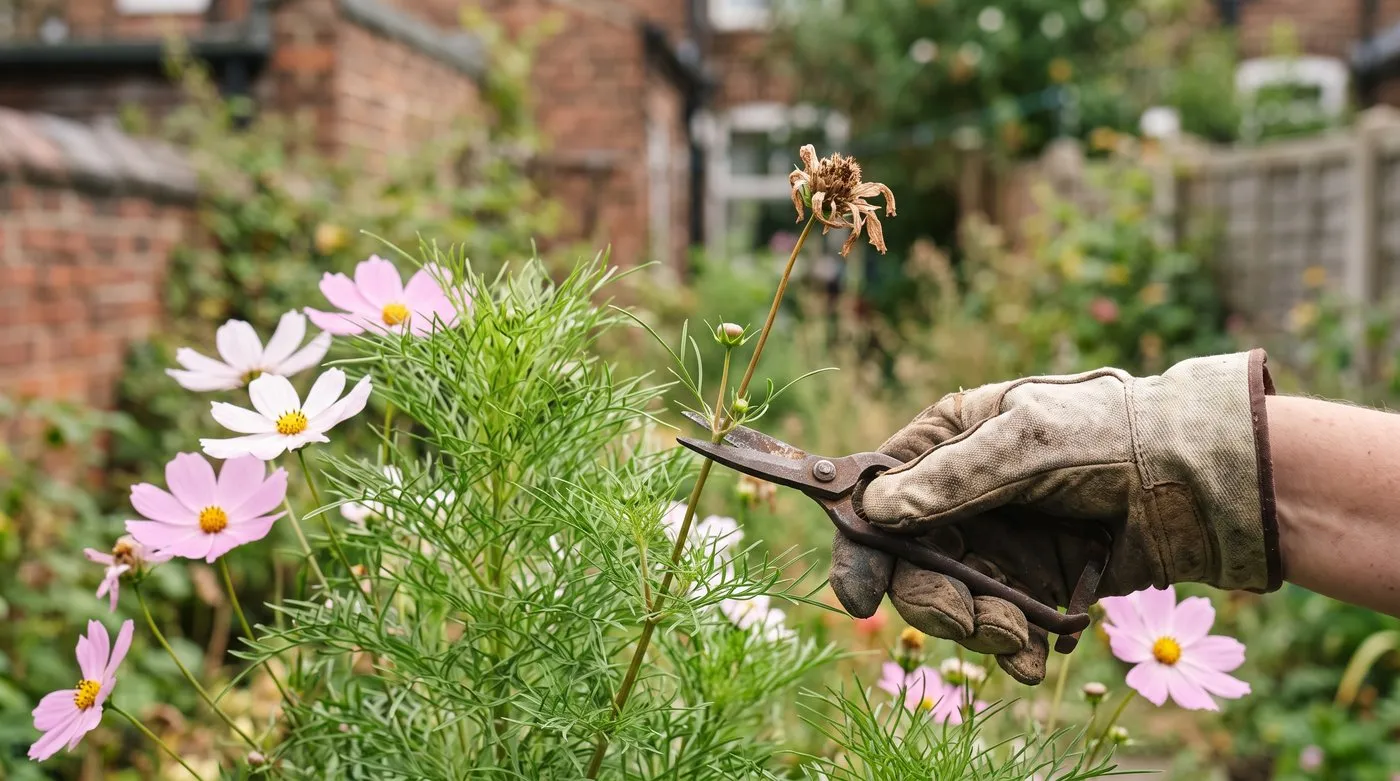
Cut the stem back to the next bud or pair of leaves so the seed pod goes too. A quick wander round with the snips once a week is plenty.
Common problems and how to fix them
Seeds not coming up: The soil may be too cold. It can still be chilly in March even on a sunny day, too cold for tender annuals. Wait a few weeks and try again.
Seedlings collapsing (damping off): Usually too much water and not enough air. Water from below, use fresh seed compost, and take the propagator lid off once seedlings appear.
Leggy seedlings: Not enough light. Move them to a brighter windowsill. Sowing too early makes this more likely.
Slugs eating seedlings: The biggest pest of a UK spring. Use copper tape round pots, or wait until plants are bigger before planting out. Nematodes watered on in spring help in warm, moist soil.
Powdery mildew: A white dusting on zinnias and cosmos in muggy summers. Give plants more space and pull off the worst leaves. It rarely kills them.
For timings across the year, see our flower planting calendar.
Frequently asked questions
What is the easiest flower to grow from seed in the UK?
Nasturtiums are hard to beat. The seeds are big and easy to handle, you don’t need any heat, and they flower quickly from a May sowing. Calendula and cornflowers are close behind, and you can sow both outside from March.
When should I sow flower seeds in the UK?
Sow hardy annuals outside from March. That means cornflowers, calendula, nigella and poppies. Tender ones like cosmos, marigolds, zinnias and nasturtiums go outside after the last frost, around mid-May in the Midlands and late May in Scotland. Sow sweet peas indoors from January to March. See our seed sowing calendar for monthly timings.
Do I need a greenhouse to grow flowers from seed?
No, not at all. Most of the flowers here can be sown straight into the ground. For indoor starts, a warm windowsill is plenty. A propagator lid speeds things up a little but you can manage without one.
How long do annual flowers take to bloom from seed?
Usually two to four months. Nasturtiums and marigolds are among the quickest. Sunflowers vary a lot with the variety. Sweet peas sown indoors in late winter start flowering in early summer.
Can I direct sow flower seeds or do I need to start them indoors?
Most can go straight in the ground. Cornflowers, calendula, nigella and poppies actually prefer it, as they don’t like being moved. Nasturtiums, cosmos, marigolds and zinnias can go in direct from late May. Sunflowers and sweet peas do best started in their own pots.
What flowers grow from seed in poor soil?
Nasturtiums, calendula, cornflowers, nigella, poppies and cosmos. Rich soil or lots of feed gives you big leaves and fewer flowers. On ordinary garden soil, these don’t need feeding at all.
How do I stop flower seedlings from damping off?
Water from below, not over the top. Stand pots in a tray of water for a few minutes. Sow thinly so seedlings aren’t crowded, and use fresh seed compost each year. Take the propagator lid off as soon as the seedlings appear so air can move around them.

Sunflowers, cosmos, calendula and cornflowers, all grown from seed sown in spring.
Related reading
- Seed sowing calendar: what to sow each month
- How to grow sweet peas: the sweetest-smelling annual climber
- How to grow cosmos from seed: varieties, deadheading and chocolate cosmos
- How to grow cut flowers: which of these last best in a vase
- How to sow seeds indoors: step by step on a windowsill
Our team produces practical UK gardening guidance from source research, contributor records and established horticultural practice. Editorial standards are overseen by Matt W.


