Key takeaways
- Get to know your soil and sun before you buy plants
- Start with easy crops: lettuce, radishes, potatoes, courgettes, runner beans and herbs
- Plant tender crops out from mid-May in the south-west to mid-June in northern Scotland
- A spade, fork, trowel, secateurs and watering can cover almost every first-year job
- Spread 5-8cm of compost or well-rotted manure on your beds each autumn
- Sow a little of fast crops every 2-3 weeks for a steady harvest
Welcome to gardening! The best place to start is with two things lots of guides rush past: your soil and your light. Plants have their own likes and dislikes, and choosing ones that suit your garden avoids most early disappointments.
Here’s how to get to know your soil, which tools you really need, the easiest first plants, a few simple techniques and a month-by-month calendar. It works whether you’ve got a big back garden or a patio with a few pots. If you meet a word you don’t know, keep our plain-English gardening glossary open in another tab.
What should a beginner do first in a new garden?
Watch where the sun falls and look at your soil before you buy anything. A few weeks of watching tells you more than any plant label.
Notice which spots get sun in the morning, at midday and in the evening. Look for patches that stay wet after rain, chilly dips at the bottom of slopes and corners where the wind whips between houses. Then dig a few holes to see your soil.
Start small. One bed or a few big pots you can keep on top of beats a whole plot that runs away from you by July. Clear tough weeds like bindweed from that first patch before you plant. If you’ve just moved in, wait to see what pops up through spring before taking anything out.
What type of soil do you have?
Your soil decides which plants thrive and which sulk. Each type drains differently, holds food differently and digs differently.
Pick up a handful of damp soil and squeeze. Clay holds its shape like modelling dough and feels sticky. Sandy soil falls apart and feels gritty. Chalk is pale and stony, and often thin. Loam, the one everyone wants, holds together loosely and crumbles when you poke it.

A cheap pH kit shows whether your soil is acid, neutral or alkaline before you spend money on plants.
Soil can change from one street to the next, so test your own. Chalk is common in parts of southern England, and clay turns up in lots of lowland gardens. Our guide to soil testing and pH adjustment has more detail.
| Soil type | Drainage | Digging | Plants that like it |
|---|---|---|---|
| Clay | Slow, can get waterlogged in winter | Heavy, sticky when wet, hard when dry | Roses, asters, brassicas, beans, fruit trees |
| Sandy | Fast, dries out quickly | Light and easy all year | Carrots, parsnips, lavender, Mediterranean herbs |
| Chalk | Free-draining, often thin | Stony, hard to dig deep | Clematis, pinks (dianthus), spinach, brassicas |
| Loam | Just right | Easy most of the time | Almost everything |
Clay is common and can feel like hard work. It bakes hard in summer and turns to mud in winter. The answer is always the same: add organic matter. Spread 5-8cm of homemade compost or well-rotted manure each autumn and clay gets easier year by year.
How much sun does a vegetable garden need?
Most veg and fruit want a sunny, sheltered spot with sun for most of the day. Tomatoes, courgettes, beans and sweetcorn need the most.
Leafy crops are more relaxed. Lettuce, spinach, chard, rocket and herbs like parsley and mint cope with a few hours of shade. Lettuce is even less likely to bolt in summer with a bit of midday shade. Beetroot and carrots sit in between.
If one side of your garden is shady, put the fruiting crops in the sunniest bed and the salads in the shade. A north-facing garden can still grow plenty, especially leafy crops and shade-happy flowers like hardy geraniums and foxgloves.
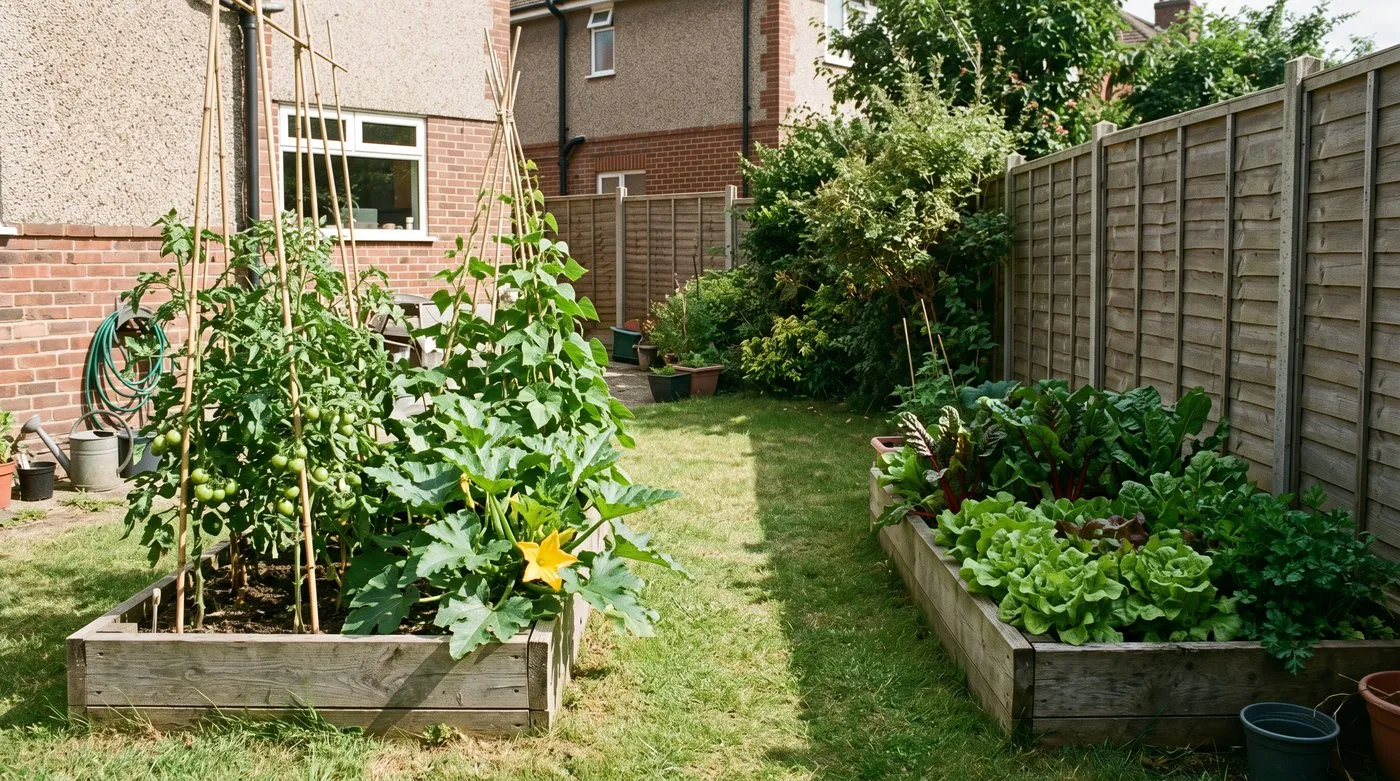
Put fruiting crops like tomatoes and courgettes in your sunniest bed. Lettuce, chard and parsley cope with a few hours of shade, and lettuce is less likely to bolt there.
Essential tools for your first year
You need five tools, not twenty. Garden centres are full of gadgets that sit in the shed after one go. Spend your money on good versions of the tools you’ll use every week.
Buy the best spade and fork you can afford. They work hardest, and cheap ones can bend or snap. Stainless steel heads with ash or fibreglass handles last well.

Five basic tools cover nearly every job in your first year.
| Tool | Must-have or nice extra | What it’s for |
|---|---|---|
| Spade | Must-have | Digging beds, turning soil, edging lawns |
| Garden fork | Must-have | Loosening soil, mixing in compost, lifting potatoes |
| Hand trowel | Must-have | Planting, weeding, pots |
| Secateurs | Must-have | Pruning, deadheading, cutting stems |
| Watering can | Must-have | Seedlings, pots, new plants |
| Hoe | Nice extra | Slicing off weeds between rows |
| Wheelbarrow | Nice extra | Moving compost, soil and waste |
| Rake | Nice extra | Levelling soil for sowing |
| Kneeling pad | Nice extra | Saving your knees |
| Gloves | Nice extra | Thorny plants and rough jobs |
Second-hand tools from car boot sales and online are often tougher than cheap new ones. Older forged steel tools were built to last.
The best first plants to grow
Start with plants that forgive mistakes. Everyone loses a few plants while learning. Pick ones that cope with patchy watering, so-so soil and slightly wonky timing.
Vegetables for beginners
Lettuce and salad leaves are the quickest reward. Sow a short row in the ground or a pot from March and you can be picking leaves in about six weeks. Sow another row every two to three weeks and you’ll pick from May to October. Tomatoes are only a little harder; see growing tomatoes for beginners.
Potatoes are great on new ground, as all that digging and earthing up breaks the soil up. Plant seed potatoes from late March, pile soil over the shoots as they appear, and dig early varieties from June. Courgettes and runner beans need warm soil and no frost, so plant them out from late May. Two courgette plants is plenty for most homes.

Lettuce, radishes and runner beans are some of the easiest first crops to grow.
Should beginners grow from seed or buy plants?
Do both. Sow the quick, easy crops from seed and buy young plants of the slow or fussy ones.
Lettuce, radishes, peas, beans, courgettes, nasturtiums and sunflowers all grow easily from seed, and a packet costs about the same as one plant. Tomatoes, peppers and aubergines need warmth and a long season, so buying young plants in May saves you months of fuss. Rosemary, thyme and sage are slow from seed, so buy them as plants.
When you buy plants, look for healthy roots that aren’t circling the pot. Anything raised indoors needs hardening off (getting used to outdoor life a little at a time) before it goes out.
Herbs for beginners
A little herb garden gives quick, everyday rewards. Basil, parsley, chives and mint grow fast and go straight into your cooking. Mint is tough but spreads like mad, so keep it in a pot, even if the pot sits in a border.
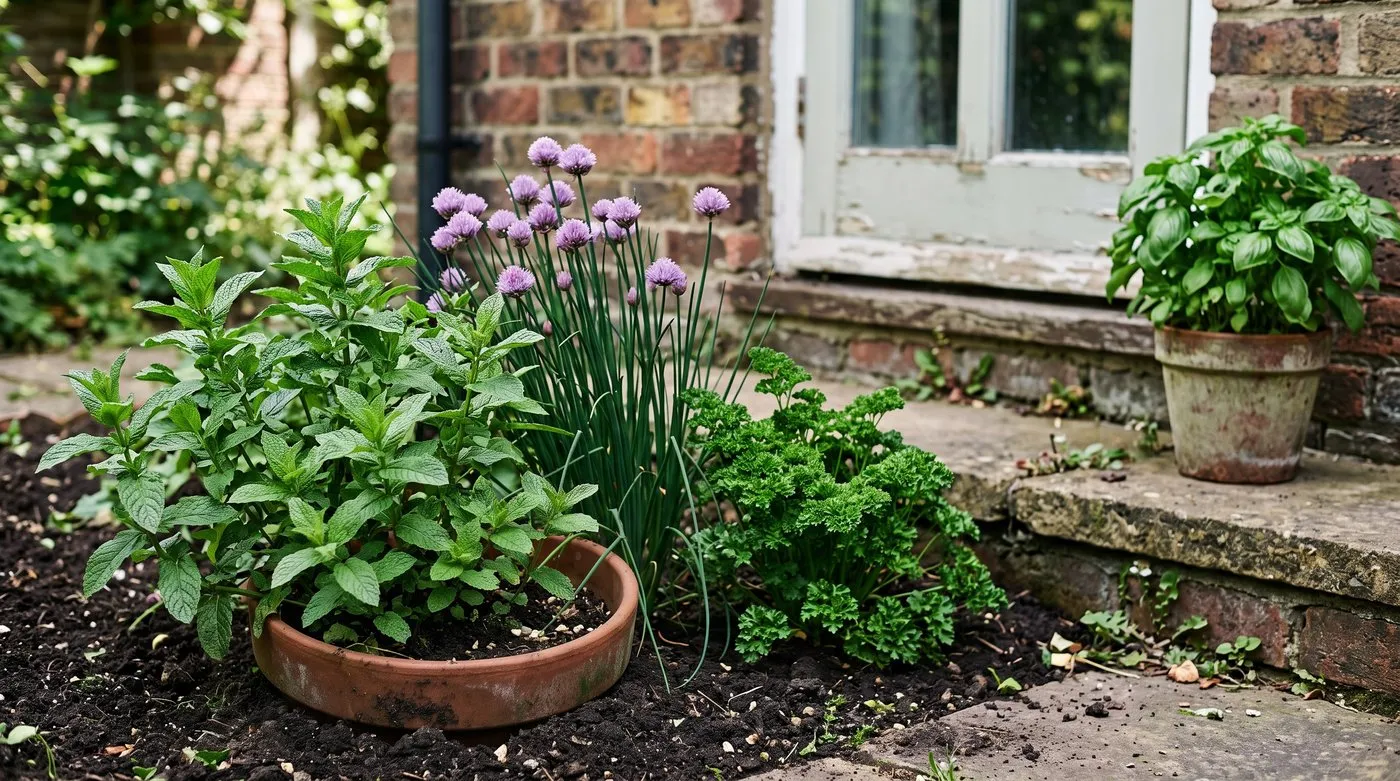
Mint is tough but spreads like mad. Keep it in a pot, even if the pot sits in the border, and it can’t take over.
Flowers for beginners
Sunflowers, marigolds and nasturtiums come up fast, flower well and don’t mind poor soil. They bring in bees and other pollinators, which helps beans and courgettes set fruit. For a garden that looks after itself, see our low-maintenance garden plants.
When is it safe to plant out tender plants?
Wait until the frosts are over, from mid-May to mid-June depending on where you live. Plant out too early and a late frost can finish them off.
The RHS guide to when to plant out tender plants gives typical safe dates. The last frost usually comes a couple of weeks or more before these.
| Region | Usually safe to plant out |
|---|---|
| South-west England and the south coast | May |
| Southern England and south Wales | Second half of May |
| Midlands, north-west England, Yorkshire and north Wales | End of May |
| North-east England, southern Scotland and Northern Ireland | Early June |
| Highlands and northern Scotland | Mid-June |
Every year is different, so keep an eye on the forecast. Harden off indoor-raised plants over two to three weeks first. Sowing seeds indoors gives you a head start without risking frost.
When you buy plants, check the label for an RHS hardiness rating. H4 plants are hardy through most of the UK in a normal winter. H5 plants cope with most of the UK even in a hard winter. H3 and below need winter protection in most gardens. Our garden centre best buys by season shows what’s worth buying through the year.
Simple growing skills every beginner needs
Good watering, feeding, mulching and weeding make the biggest difference in your first year.
Watering properly
Give a good soak once or twice a week in dry weather, rather than a light sprinkle every day. Deep watering sends roots down, so plants cope better when it’s dry. Water in the morning or evening, and aim at the soil rather than the leaves.
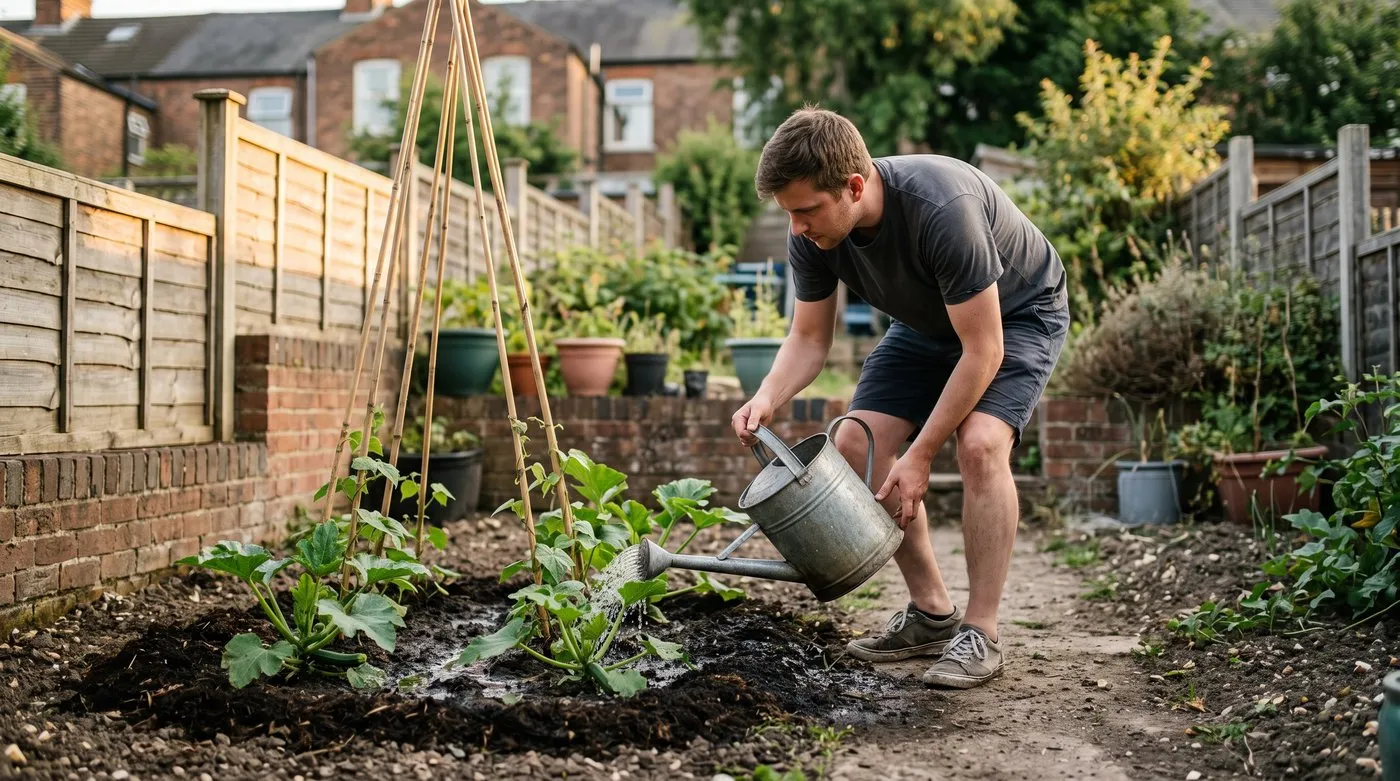
A good soak once or twice a week in dry weather sends roots down deeper than a daily sprinkle. Water the soil, not the leaves.
Feeding the soil
Plants use up the goodness in the soil as they grow, so it needs topping up. Spread 5-8cm of compost, well-rotted manure or leaf mould on your beds each autumn. It helps every type of soil. For lawns, our lawn feeding guide has a year-round plan.
Mulching
In spring, spread about 5cm of bark, compost or straw around plants on damp soil. Mulch smothers weeds, keeps moisture in and slowly feeds the soil. Keep it a few centimetres away from stems so they don’t rot.
Weeding little and often
Ten minutes of weeding a few times a week keeps things under control. A big session once a month doesn’t. Pull or hoe weeds before they flower and seed. Annual weeds come out easily. Tough perennial weeds like bindweed and couch grass need every bit of root out, as small pieces regrow.
Your first-year planting checklist
Follow this simple plan and you’ll be harvesting from early summer into autumn.
| Month | What to plant | Where | How easy |
|---|---|---|---|
| March | Lettuce, radishes, peas, broad beans | Sow outdoors (south) | Easy |
| April | Potatoes, onion sets, spinach, beetroot | Sow or plant outdoors | Easy |
| April (indoors) | Tomatoes, courgettes, French beans | Sow in pots on a windowsill | Medium |
| Late May | Runner beans, sweetcorn, squash | Sow outdoors or plant out after the frosts | Easy |
| Late May | Tomatoes, courgettes | Plant out hardened-off plants | Medium |
| June | More lettuce, beetroot, carrots | Sow outdoors | Easy |
| June | Basil, coriander, dill | Sow in pots or outdoors | Easy |
| July | Spring cabbage, kale, autumn lettuce | Sow outdoors | Easy |
| August | Winter-hardy spring onions, oriental salad leaves | Sow outdoors | Easy |
| September | Overwintering onion sets | Plant outdoors | Easy |
| October | Garlic, daffodil bulbs | Plant outdoors | Easy |
| November | Overwintering broad beans, tulip bulbs, bare-root fruit bushes | Plant outdoors when the soil isn’t frozen or soggy | Easy |
The trick is succession sowing: sow a little lettuce or radish every two to three weeks rather than lots at once. You’ll get a steady supply instead of a glut and then nothing.
Raised beds are great for beginners. They warm up faster in spring, drain better in wet winters and let you choose the soil from day one.
Looking after your soil for the long run
Every soil gets better with the same thing: regular organic matter. It’s a yearly habit, not a one-off fix.
Compost is the most useful thing a gardener can make. Peelings, garden waste, cardboard and grass clippings turn into dark, crumbly stuff that improves any soil.
The no-dig approach puts compost on top instead of digging it in. It saves effort and leaves soil life undisturbed. Garden Organic is a good place to read more about growing without chemicals.
Well-rotted farmyard manure is the other great soil improver, and local stables often give it away. Stack fresh manure for at least six months first, as fresh manure can scorch plants and carry weed seeds. Spread 5-8cm over empty beds in autumn and let the rain and worms work it in.
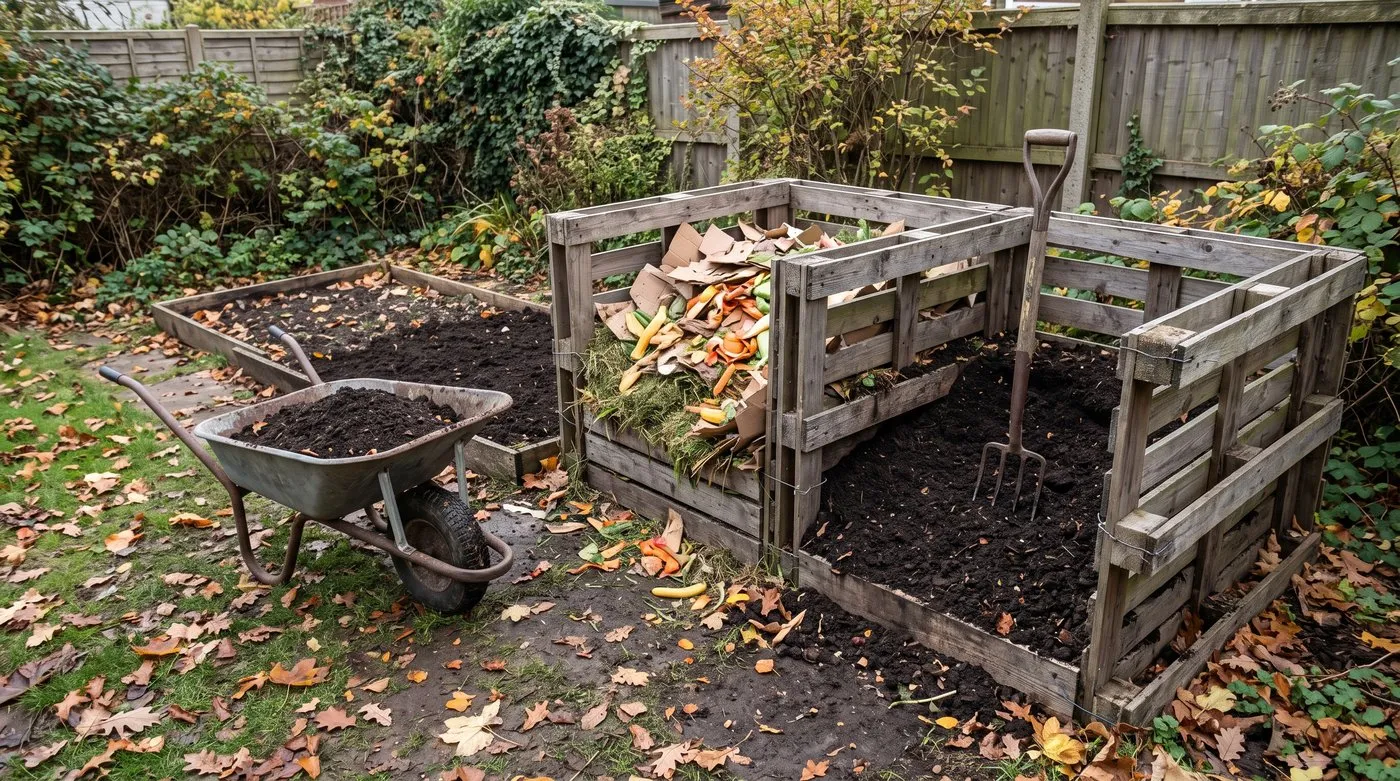
Peelings, garden waste and cardboard turn into dark, crumbly compost that improves any soil. Spread 5-8cm on empty beds in autumn and let the worms work it in.
Month-by-month starter calendar
Here are the main jobs for each month across the whole garden.
| Month | Main jobs |
|---|---|
| January | Plan the year. Order seeds. Clean and sharpen tools. |
| February | Set seed potatoes out to sprout (chitting). Prepare seed beds if the soil isn’t frozen. Prune winter-flowering shrubs once they finish. |
| March | Sow hardy veg outdoors in the south: lettuce, peas, broad beans, radish. Start mowing on a high setting. |
| April | Plant potatoes, onion sets and beetroot. Sow tomatoes and courgettes indoors. Feed the lawn. Weed before annual weeds seed. |
| May | Harden off indoor plants. Plant out tender crops once the frosts are over. Stake tall perennials. Start regular watering. |
| June | Sow more salad and beetroot. Deadhead roses and bedding. Water pots daily in hot weather. |
| July | Pick early potatoes, peas, beans and salad. Summer-prune wisteria. Keep up with watering and weeding. |
| August | Sow spring cabbage. Take cuttings from lavender and rosemary. Order spring bulbs. |
| September | Plant daffodils and overwintering onion sets. Divide perennials. Start saving fallen leaves for leaf mould. |
| October | Plant garlic. Spread compost or manure on empty beds. Clear finished veg plants. |
| November | Plant tulips, bare-root trees, roses, hedging and fruit bushes. Cover tender plants with fleece. Clean out the greenhouse. |
| December | Browse seed catalogues. Check stored fruit and veg for rot. Plan next year. |
These timings suit most of England and Wales. In Scotland and northern England, start spring jobs two to three weeks later and do autumn jobs a little earlier.
Ready for the next step? Read our guide on raised bed gardening for beginners.
Frequently asked questions
What is the easiest thing to grow for a beginner gardener?
Lettuce and radishes are the easiest to start with. Both come up quickly, cope with most soils and are ready to pick in about four to six weeks. Sow a short row every couple of weeks from March to September. Runner beans and courgettes are just as easy once the frosts are over.
When should I start gardening in the UK?
Outdoor sowing starts in March in southern England. Hardy crops like peas, broad beans and lettuce can go out then, a few weeks later further north. Tender crops like tomatoes and courgettes are sown indoors in spring and planted out from mid to late May in the south.
How do I know what type of soil I have?
Squeeze a handful of damp soil and see what happens. Clay holds its shape and feels sticky. Sandy soil falls apart and feels gritty. Chalky soil is pale, stony and drains fast. Loam holds together loosely. A pH kit from the garden centre tells you if it’s acid, neutral or alkaline.
Do I need a big garden to start gardening?
No, pots and raised beds work in any space. One raised bed, sown little and often, can keep you in salad all summer. Balconies, patios and front gardens are great for herbs, tomatoes, salad and bedding. Even a sunny windowsill can grow fresh herbs.
How often should I water my garden?
Give a good soak once or twice a week in dry weather. Deep watering sends roots down, so plants cope better with dry spells. A light daily sprinkle keeps roots near the surface. Seedlings and pots may need watering every day in hot weather.
What tools does a beginner gardener need?
Just five: a spade, fork, trowel, secateurs and watering can. Buy the best you can afford of these. A hoe, rake and wheelbarrow are handy but can wait. Second-hand tools from car boot sales are often sturdier than cheap new ones.
How do I improve poor soil in my garden?
Spread 5-8cm of organic matter on your beds each autumn. Garden compost, well-rotted manure and leaf mould all work. Leave it on top and let the worms pull it in. It helps clay drain, helps sandy soil hold water and feeds every kind of soil.
Our team produces practical UK gardening guidance from source research, contributor records and established horticultural practice. Editorial standards are overseen by Matt W.