Key takeaways
- There are six main soil types: clay, sandy, silt, loam, chalk and peat
- A quick squeeze test tells you what you've got
- Clay is rich but slow-draining, while sand drains fast but loses goodness quickly
- A cheap pH kit shows whether your soil is acid, neutral or alkaline
- Adding compost or manure every year improves every type of soil
- Grow plants that like your soil rather than fighting it
Your soil decides what will grow happily in your garden more than almost anything else. There are six main types in the UK: clay, sandy, silt, loam, chalk and peat. A quick hand test tells you which one you’ve got, and a cheap pH kit shows whether it’s acid, neutral or alkaline.
What are the six main UK soil types?
Britain has very varied rocks under its soil, which gives us six main soil types. Each drains differently and holds a different amount of plant food.
Clay soil is made of very fine particles. It drains slowly, holds plant food well and feels sticky when wet. It’s very common in UK gardens.
Sandy soil has big, gritty grains. It drains fast and loses plant food quickly. You’ll find it in places like Norfolk, the Surrey heaths and along the coast.
Silt soil sits in between. It holds water well, feels smooth and silky, and is very fertile. It’s common in river valleys and floodplains, such as the Fens and around the Humber.
Loam is a happy mix of clay, sand and silt with plenty of organic matter. It drains well but still holds water. It’s the gardener’s favourite, but true loam is quite rare.
Chalk and limestone soil sits over chalky rock. It’s alkaline, drains freely and is often thin and stony. Think of the Chilterns, the Downs and the Yorkshire Wolds.
Peat soil is made of old, half-rotted plants that built up in wet ground. It’s very acid, holds lots of water and is dark and spongy. There’s peat in parts of the Fens, the Somerset Levels and the Scottish Highlands.

The six soil types together: clay (dark, sticky), sand (pale, gritty), silt (smooth, grey-brown), loam (dark, crumbly), chalk (pale with white bits) and peat (dark brown, fibrous).
How to identify your soil type with the hand squeeze test
You don’t need a lab to work out your soil. These three easy tests take a few minutes. Dig a little soil from about a spade’s depth down, rather than the very top layer.
The squeeze test
Wet a golf-ball-sized lump of soil until it’s damp but not dripping. Squeeze it in your fist, then open your hand.
- Clay: Holds its shape. Feels sticky and smooth, and leaves a shiny smear on your palm.
- Sandy: Falls apart straight away. Feels gritty, and you can see the grains.
- Silt: Holds together for a moment, then crumbles. Feels smooth and silky, a bit like flour.
- Loam: Makes a loose ball that breaks up when you press it. Slightly gritty but smooth too.
- Chalk: Crumbles quickly and may have little white chalky bits in it.
- Peat: Dark and spongy. Water squeezes out like a sponge, and it feels fibrous.
The ribbon test
Roll a thumb-sized piece of damp soil between your thumb and finger, pressing it into a flat ribbon.
- Long ribbon: Heavy clay.
- Short ribbon: Some clay mixed in.
- Little or no ribbon: Sandy, silty or loam.
The jar test
This is the most detailed home test. Fill a jam jar a third full with soil, top up with water, shake hard for a couple of minutes and leave it for a couple of days. The soil settles in layers: sand at the bottom, silt in the middle and clay on top.
Roughly equal layers mean loam. A thick sand layer at the bottom means sandy soil. A thick clay layer on top means clay soil.
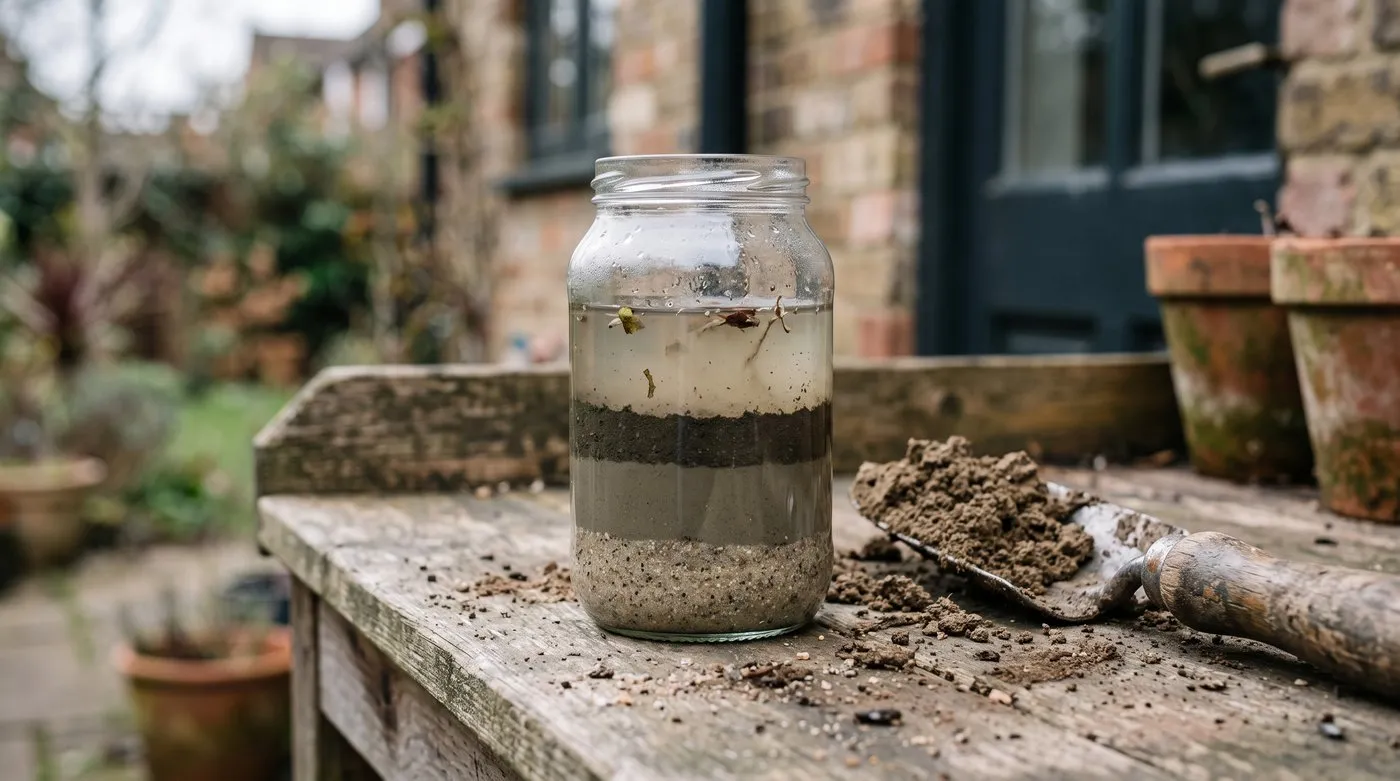
After a couple of days the soil settles with sand at the bottom, silt in the middle and clay on top. Roughly equal layers mean you’ve got loam.
UK soil type comparison: drainage, pH, nutrients, and best plants
Here’s a quick guide to how all six compare.
| Soil type | Drainage | Acid or alkaline? | Holds plant food? | Easy to dig? | Good plants |
|---|---|---|---|---|---|
| Clay | Slow | Usually neutral to alkaline | Very well | Hard when wet or dry | Roses, hardy geraniums, dogwoods, asters |
| Sandy | Fast | Often acid | Poorly | Easy all year | Lavender, cistus, birch, carrots |
| Silt | Medium | Usually neutral | Well | Good when dry, slippery when wet | Most vegetables, willows, alders |
| Loam | Just right | Usually neutral | Well | Easy all year | Almost everything |
| Chalk | Fast | Alkaline | Fairly well | Stony and shallow | Lavender, clematis, beech, yew |
| Peat | Often wet | Very acid | Holds lots, releases slowly | Spongy | Heathers, blueberries, bog plants |
Where are the different soil types found across the UK?
Your soil depends on the rock underneath it, so where you live gives you a good clue.
Clay is common across the Midlands and South East. London Clay covers much of Greater London and Essex, and there’s lots of clay in the Weald of Kent and Sussex and across Oxfordshire.
Sandy soils are found on the Surrey and Hampshire heaths, across much of Norfolk and Suffolk, and in strips along the coast. Heathland sand is often quite acid.
Silt soils lie in river valleys and floodplains, such as the Fens, the Humber, the Severn Vale and the Somerset Levels. They’re some of the most fertile soils in Britain.
Chalk and limestone run in a band across England, including the Chilterns, the North and South Downs, the Yorkshire and Lincolnshire Wolds and the Cotswolds. Soil here is alkaline and often thin and stony. Our guide to plants for chalky alkaline soil shows what thrives.
Peat forms in wet places where plants rot very slowly. It’s found in parts of the Fens and Somerset Levels, and on the moors and bogs of Scotland, the Pennines and Wales. Peaty garden soil suits acid-loving plants like rhododendrons and blueberries.
The British Geological Survey map viewer lets you look up the rocks under your postcode for free. It’s a handy starting point.
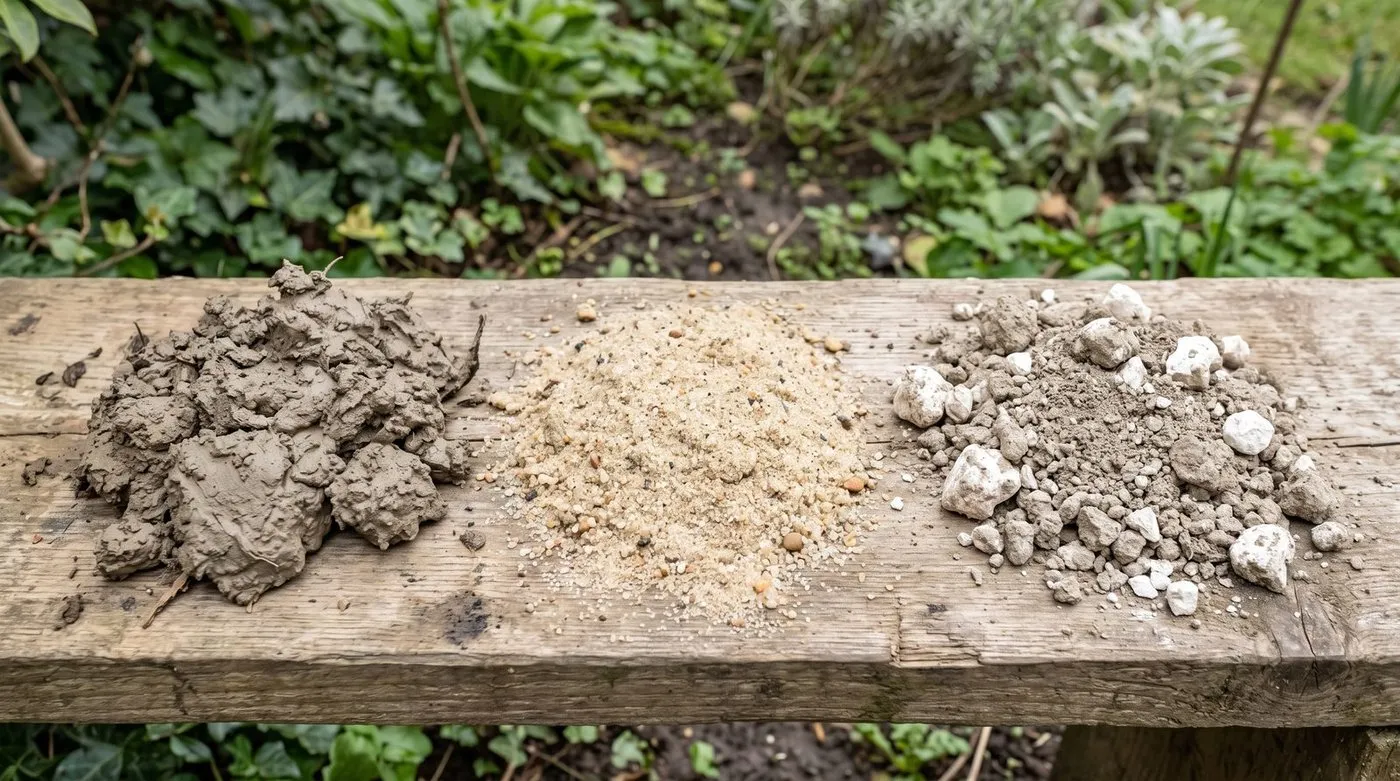
Clay, sand and chalk side by side. UK soils follow the rocks beneath: clay in the Midlands and South East, sand on heaths and coasts, chalk under the Downs and Wolds.
How to test soil pH at home
After soil type, pH is the next thing to check. It tells you whether your soil is acid, neutral or alkaline, which affects which plants will be happy. The scale runs from 0 (very acid) to 14 (very alkaline), with 7 as neutral.
What the numbers mean
| pH | What it means | Plants that like it |
|---|---|---|
| Below 4.5 | Very acid | Heather, bog plants |
| 4.5 to 5.5 | Acid | Rhododendrons, blueberries, camellias |
| 5.5 to 6.5 | Slightly acid | Most garden plants, potatoes, soft fruit |
| 6.5 to 7.0 | Around neutral | Vegetables, roses, lawns, most plants |
| 7.0 to 7.5 | Slightly alkaline | Clematis, lavender, cabbage family |
| Above 7.5 | Alkaline | Box, yew, dianthus, scabious |
Home pH testing methods
Colour-change kits are cheap and easy. Mix a little soil with the solution, wait a few minutes and match the colour to the chart. It’s plenty accurate for choosing plants.
Digital pH meters give you a number on a screen. Push the probe into damp soil and read it off. Very cheap meters can be unreliable.
Lab tests tell you about plant food as well as pH. The RHS soil analysis service also gives advice on what to add. It’s well worth doing once when you start a new garden.
Test every few years. Rain slowly makes soil more acid over time, so it can creep down. Test more often if you’re adding lime or sulphur. Our guide to soil testing and pH adjustment covers it all.
Quick soil tests at a glance
| Test | How quick | What it tells you |
|---|---|---|
| Colour-change kit | A few minutes | pH |
| Litmus strips | A few minutes | Rough pH only |
| Digital meter | Very quick | pH |
| Home NPK kit | Under half an hour | pH and a rough idea of plant food |
| Lab test | A couple of weeks | pH, plant food and more, plus advice |
How to improve clay soil
Clay can be frustrating. It’s soggy in winter, cracks in summer and sticks to your boots the rest of the time. But it’s also very fertile, and improving it is quite simple.
Add organic matter every year. Spread a thick layer of garden compost, well-rotted manure or composted bark over the surface each autumn. On heavy clay, don’t dig it in. Let the worms pull it down for you. This is the best thing you can do. Our guide to making compost shows how to make your own.
Add grit. Mix plenty of horticultural grit (not builder’s sand) into the top layer. It opens up the soil so water can drain. Grit doesn’t rot away, so it’s a lasting fix.
Keep off wet clay. Walking on soggy clay squashes it flat and airless. Lay planks across beds in winter and make proper paths.
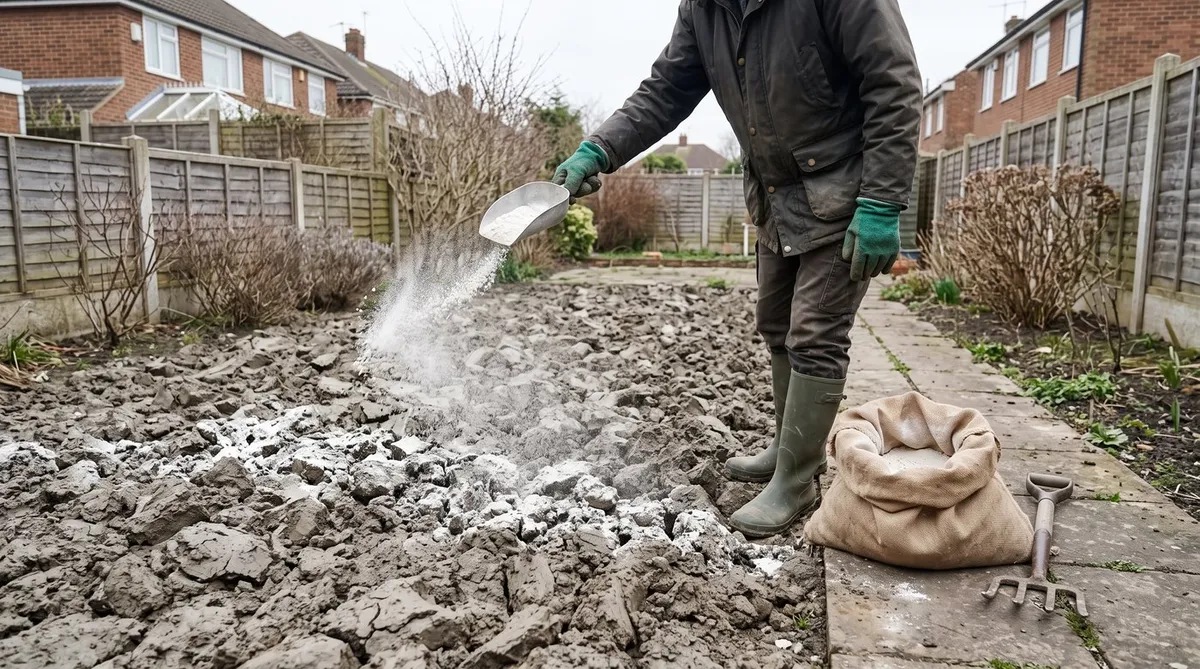
Dig in autumn, if you dig at all. Turn heavy clay over in big lumps in autumn and leave it rough. Winter frosts break the lumps into a nice crumbly soil. Never dig clay when it’s soaking wet or baked hard.
Try no-dig. No-dig gardening avoids squashing the soil altogether. Spread a thick layer of compost on top and plant straight into it. It works brilliantly on clay.
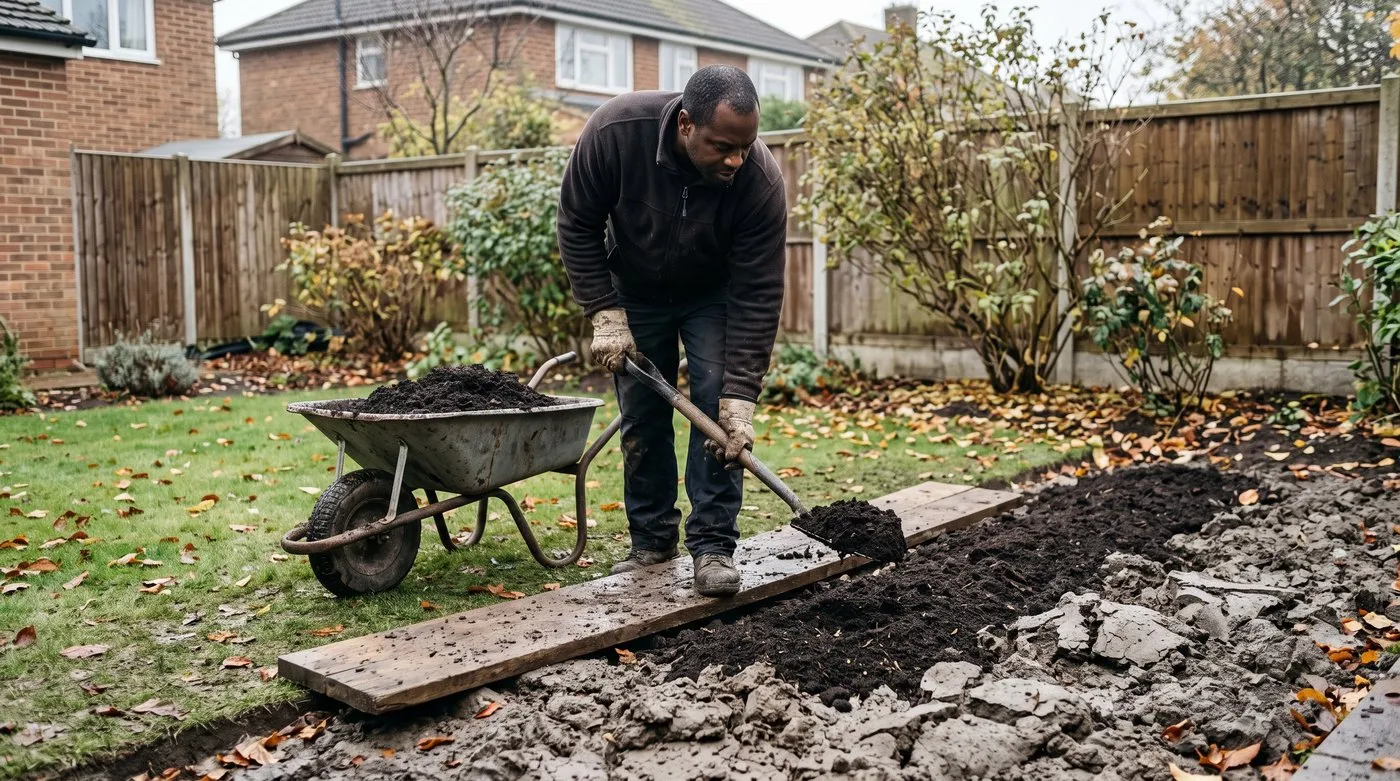
Spread compost on top of clay each autumn and let the worms pull it down. Standing on a plank stops you squashing the wet soil.
How to improve sandy soil
Sandy soil drains too fast and plant food washes out quickly. The fix is the opposite of clay: help it hold on to water and food.
Mulch well with organic matter. Spread a good thick layer of compost, well-rotted manure or leaf mould every year. It acts like a sponge in sandy soil and helps it hold plant food. Mulching is the best single thing you can do for sand.
Grow green manures. Sow green manures like phacelia, crimson clover or field beans on bare soil over winter. Their roots hold the soil together and stop plant food washing away, and they add organic matter when you dig them in. Clovers and beans add some nitrogen too.
Water little and often. Sandy soil can’t store much water. A soaker hose or drip system on a timer keeps roots damp without waste. A gentle soak a couple of times a week works better than one big drenching that drains straight through.
Pick plants that love sand. Lavender, rosemary and cistus come from dry, fast-draining places and are perfectly happy as they are. Our guide to plants for sandy soil has lots more.
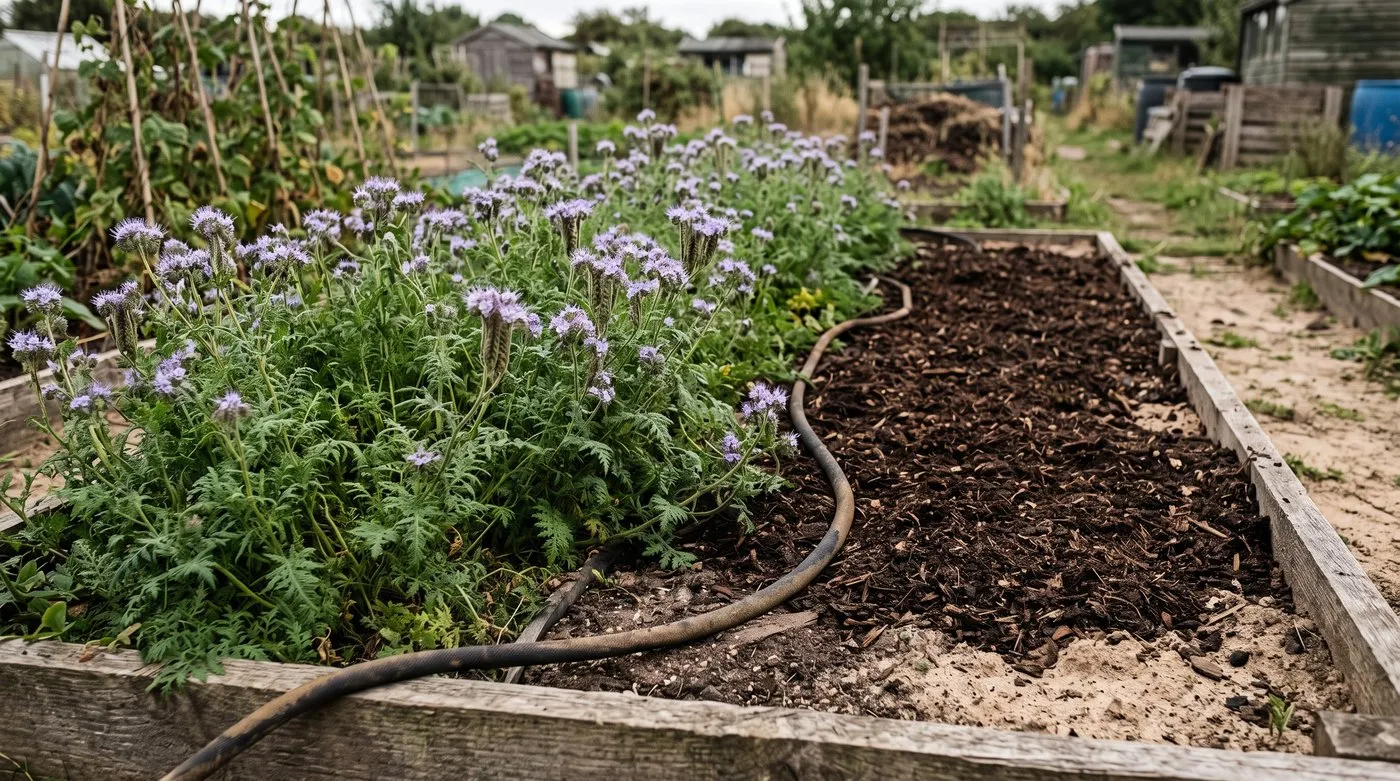
On sandy soil, keep it covered. A green manure like phacelia holds on to plant food, and a thick mulch acts like a sponge.
How to improve chalk and limestone soil
Chalky soil has two quirks. It’s alkaline, which makes it hard for some plants to get iron, and it’s often thin over the rock. Both are easy to live with.
Build it up with organic matter. Spread compost or well-rotted manure every autumn. Over time this deepens the soil. On very thin chalk, raised beds filled with topsoil are a good option.
Don’t fight the pH. Trying to make chalky soil acid doesn’t work for long, as the chalk underneath keeps pushing it back. Instead, grow the many plants that love chalk, such as lavender, clematis, dianthus, beech and yew.
Grow acid-lovers in pots. Want rhododendrons, camellias or blueberries? Grow them in big pots of ericaceous compost and water them with rainwater. Tap water in chalky areas is often hard and slowly makes the compost less acid, so repot every few years.
Yellow leaves with green veins? On chalk, this usually means the plant can’t get enough iron. Sequestered iron gives a quick fix, but for the long term choose plants that like chalk.

A simple colour-change kit shows whether your soil is acid, neutral or alkaline in minutes.
How to improve peat soil
Peat soil is unusual in gardens, but you’ll find it in places like the Fens, the Somerset Levels and parts of Scotland. It’s very acid and holds lots of water, but plants can struggle to get at its goodness.
Add lime to make it less acid. Raw peat is too acid for most garden plants. Scatter garden lime at the rate on the pack, then test again after a few months and add more if needed. Most vegetables like it close to neutral.
Help it drain. Peat holds water like a sponge. Raised beds with added grit help a lot. Where the ground is very wet, drainage channels can help too. Keep off peat when it’s waterlogged, as squashed peat is very hard to fix.
Add some grit. Pure peat lacks the mineral bits that give soil structure. Mixing in sharp sand or grit helps. A balanced fertiliser also helps, as peat’s goodness is released slowly.
Or grow plants that love it. If you’d rather not lime, peaty soil suits heathers, blueberries, cranberries and bog plants just as it is. Our list of the best plants for acid soil includes rhododendrons, camellias and Japanese maples.
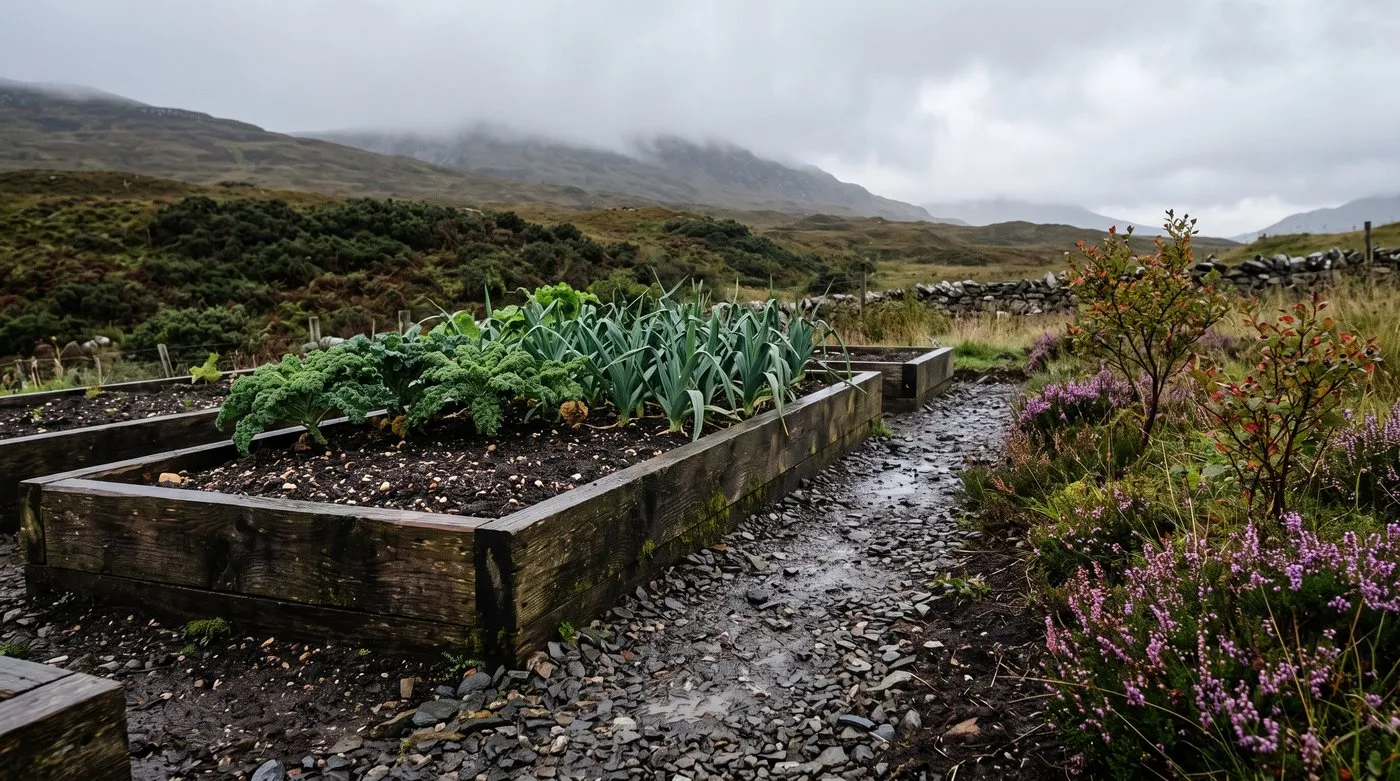
Raised beds with added grit help wet peat drain for veg. Or leave the natural ground to heathers and blueberries, which love it as it is.
What is the difference between soil structure and soil type?
Soil type is what your soil is made of: clay, sand, silt or a mix. You can’t change that without bringing in new soil. Soil structure is how those bits clump together into crumbs, and that’s the bit you can improve.
Good structure means small, stable crumbs with air gaps in between. Water drains through the gaps, while the crumbs hold moisture and food. Roots push through easily, and worms are happy.
Poor structure means the soil is either squashed into a solid lump (common with clay) or doesn’t hold together at all (common with sand). Water either sits on top or runs straight through, and roots struggle.
What improves soil structure
| What to do | How it helps | Best for | How often |
|---|---|---|---|
| Add organic matter | Makes crumbs and feeds soil life | All soils | Every year |
| Keep off wet soil | Stops it being squashed | Clay and silt | Always |
| Grow green manures | Roots open up the soil and add organic matter | Sand and clay | Whenever soil is bare |
| Look after worms | They make drainage channels and mix in organic matter | All soils | Mulch to keep them fed |
| Let frost help | Breaks clay lumps into crumbs | Clay | Leave rough-dug over winter |
What are the best plants for each UK soil type?
Picking plants that suit your soil saves money and effort, and they’ll look happier too. Here are some reliable choices.
Clay soil: the nutrient-rich powerhouse
Clay holds on to water and food that other soils lose. Lots of plants love it, including Rosa rugosa, dogwood (Cornus sanguinea), astilbe, hardy geraniums, Japanese anemones and viburnums. Fruit trees enjoy the steady moisture, and cabbages and beans do well too. See our full list of plants for clay soil.
Sandy soil: Mediterranean paradise
Sandy soil suits plants that like it dry and lean. Lavender, rosemary, cistus, echinacea, agapanthus and Verbena bonariensis are all happy. Silver birch and Scots pine are great native trees for sand. Carrots and parsnips grow long and straight in loose sandy soil. Our guide to sandy soil plants has plenty more.
Silt soil: the fertile floodplain
Silt is fertile and easy to work, and most vegetables do well in it. Willows, alders and moisture-lovers like ligularia and astilbe enjoy it too. Add organic matter to stop it packing down and getting soggy.
Loam: grow almost anything
Lucky you! Loam suits roses, perennials, vegetables, fruit trees and lawns. Keep it in good shape with yearly organic matter, and move your veg around each year.
Chalk: sun-loving lime-lovers
Chalk suits plants that like alkaline soil. Lavender, clematis, dianthus, scabious, buddleia, beech, yew and box all do well. Cabbage family crops and beetroot like it too. Skip acid-lovers, which turn yellow on chalk. See our guide to chalk soil plants.
Peat: acid specialists
Peat suits heathers, rhododendrons, camellias, blueberries, cranberries and bog plants. Japanese maples and magnolias do well in a sheltered spot. With some lime, you can grow vegetables and many more flowers. Our acid soil plants guide has the full range.
How much does soil testing cost in the UK?
Most testing is cheap. Here’s what each option gives you.
| Option | What you get | Good for |
|---|---|---|
| Home pH kit | A pH reading | Choosing plants |
| Home NPK kit | pH and a rough idea of plant food | A quick check |
| Digital pH meter | pH reading, reusable | Regular checks |
| RHS soil analysis | pH, plant food, organic matter and advice | A new garden or problem patch |
| Private lab | A full breakdown and advice | Big projects |
| Contamination test | Checks for things like heavy metals | A new allotment or worrying ground |
For most of us, a simple pH kit tells you all you need to choose the right plants. A lab test is worth it when you’re starting a new garden, turning lawn into veg beds, or can’t work out why plants keep failing.
Related reading: Chalky, free-draining ground is perfect for alpines. See our guide to growing aubrieta.
Frequently asked questions
How do I find out what soil type I have?
Squeeze a damp handful of soil from a spade’s depth down. Clay holds its shape and feels sticky. Sand falls apart and feels gritty. Loam makes a ball that breaks up when you press it. Silt feels smooth and silky. For a closer look, try the jar test or send a sample off for testing.
What is the most common soil type in the UK?
Clay is very common, especially in the Midlands and South East. Large areas sit on clay such as London Clay, Oxford Clay and Weald Clay. Sandy soils are found in places like Norfolk, Suffolk and the Surrey heaths. Chalk lies under the Downs, Chilterns and Wolds.
Is clay soil good or bad for gardening?
Clay is actually good news, as it’s rich and holds water well. It keeps hold of plant food that sandy soil loses. Lots of plants love it, including roses, hardy geraniums and dogwoods. The downside is drainage. It can be soggy in winter and rock-hard in summer, but adding organic matter every year helps a lot.
How do I test my garden soil pH?
Use a simple colour-change kit from any garden centre. Take a little soil from a spade’s depth down, mix it with the solution and match the colour to the chart. A digital meter gives you a number instead. For the full picture, including nutrients, you can send a sample to a lab.
Can I change my soil type?
No, but you can make it much better to grow in. Adding compost or manure every year loosens clay, helps sand hold water and feeds all soils. Grit helps clay drain. For something completely different, build raised beds and fill them with topsoil and compost.
What soil pH do most plants prefer?
Most garden plants like slightly acid to neutral soil. That’s around pH 6 to 7, which suits most vegetables too. Rhododendrons and other acid-lovers want acid soil. Cabbage family crops like it a little more alkaline, which also helps keep clubroot at bay. Lavender and clematis are happy on chalk.
What is the best soil type for a vegetable garden?
Loam is the dream soil for vegetables. It drains well but still holds water and plant food. If you don’t have loam, improve what you’ve got: grit and compost for clay, compost for sand, and lime for very acid soil. Most vegetables grow well in any soil that’s well looked after.
Our team produces practical UK gardening guidance from source research, contributor records and established horticultural practice. Editorial standards are overseen by Matt W.