Key takeaways
- Gypsum only improves sodic clay, which is rare in UK gardens
- On ordinary UK clay it makes little difference to structure or drainage
- It can help after seawater floods a coastal garden
- Gypsum adds calcium without changing pH; lime raises pH
- A yearly mulch of compost, manure or leaf mould is the real fix for clay
- Keep off wet clay, as walking on it squashes the structure
Gypsum is sold in UK garden centres as a clay breaker, a white powder that promises to turn sticky clay into crumbly soil. The honest answer is that it rarely works here. Gypsum fixes one particular kind of clay, called sodic clay, and very few UK gardens have it.
This guide explains what gypsum does, the few times it’s worth using, and how it compares with lime. Not sure you even have clay? Our guide to identifying your soil type helps you check in minutes.
What is gypsum?
Gypsum is calcium sulphate, a soft, naturally occurring mineral. Garden gypsum comes as a white powder or granules.
It adds calcium and sulphur to the soil but doesn’t change the pH. That’s the key difference from lime, which adds calcium and raises pH. For more on these nutrients, our guide to calcium, sulphur and magnesium explains what each one does.
How is gypsum supposed to break up clay?
Clay is made of tiny flat particles. Whether they clump into crumbs or slump into a sticky mass depends on what’s stuck to them.
- When calcium dominates, as it usually does in UK clay, the particles clump into small crumbs. That’s the structure you want.
- When sodium dominates, the soil is called sodic. The particles spread apart and the soil sets into a dense, airless mass that drains badly.
Gypsum works by swapping calcium in for the sodium. On sodic soil the effect can be dramatic. On soil that already has plenty of calcium, there’s nothing for it to fix.
Why gypsum rarely helps UK clay
Most UK clay isn’t sodic. Our rain washes sodium out of the soil, and gardens are watered with rain or mains water, not salty water.
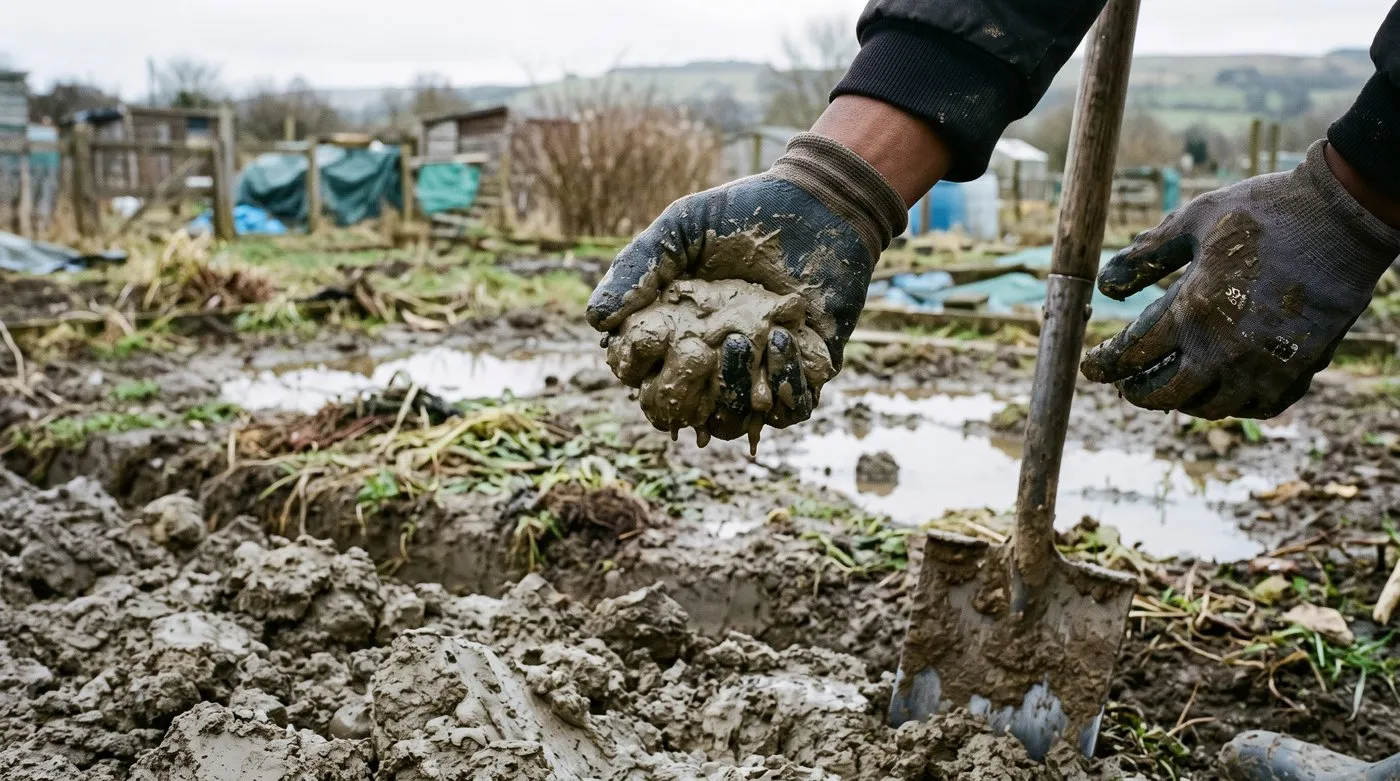
Most UK clay is heavy because its particles are tiny and tightly packed, not because of sodium, so gypsum has nothing to fix.
So UK clay is usually heavy because the particles are tiny and packed tight, not because of sodium. Adding gypsum just adds calcium to a soil that already has enough. You’ll see little or no change in drainage or how the soil handles.
The only reliable way to know if soil is sodic is a laboratory soil test that measures sodium. Unless seawater has flooded your garden, it’s very unlikely.
When is gypsum worth using in the UK?
There are only a couple of times it earns its place.
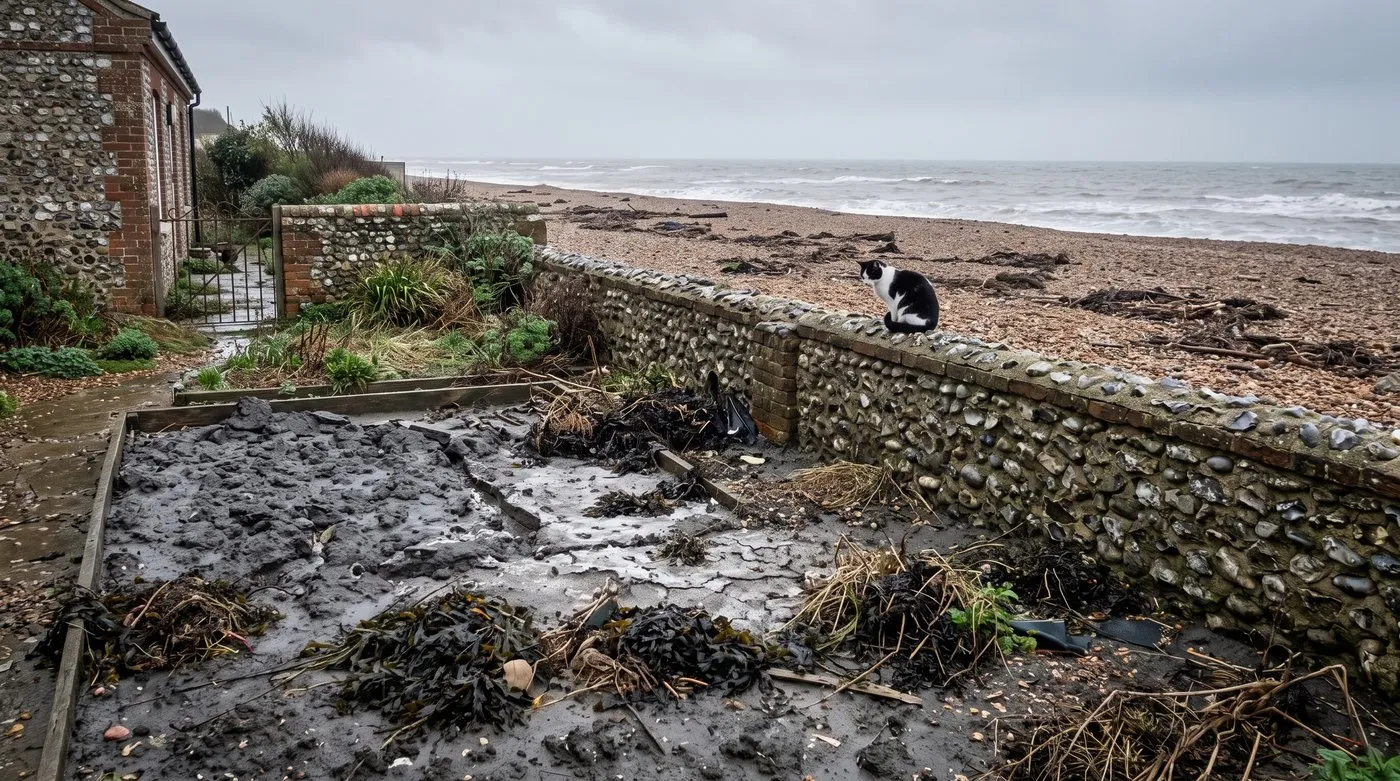
Ground flooded by seawater can turn sodic. This is the one UK situation where gypsum really earns its keep.
After seawater flooding. If a storm surge or high tide floods a coastal garden, the soil can take up enough sodium to slump. Gypsum, used at the label rate and watered in well, helps flush the sodium out. This is the one UK situation where it does exactly what it says on the bag.
When you want calcium without raising pH. Gypsum adds calcium and sulphur without making soil more alkaline. That’s rarely needed in a garden, as most UK soils have plenty of calcium. Get a soil test before adding it for this reason.
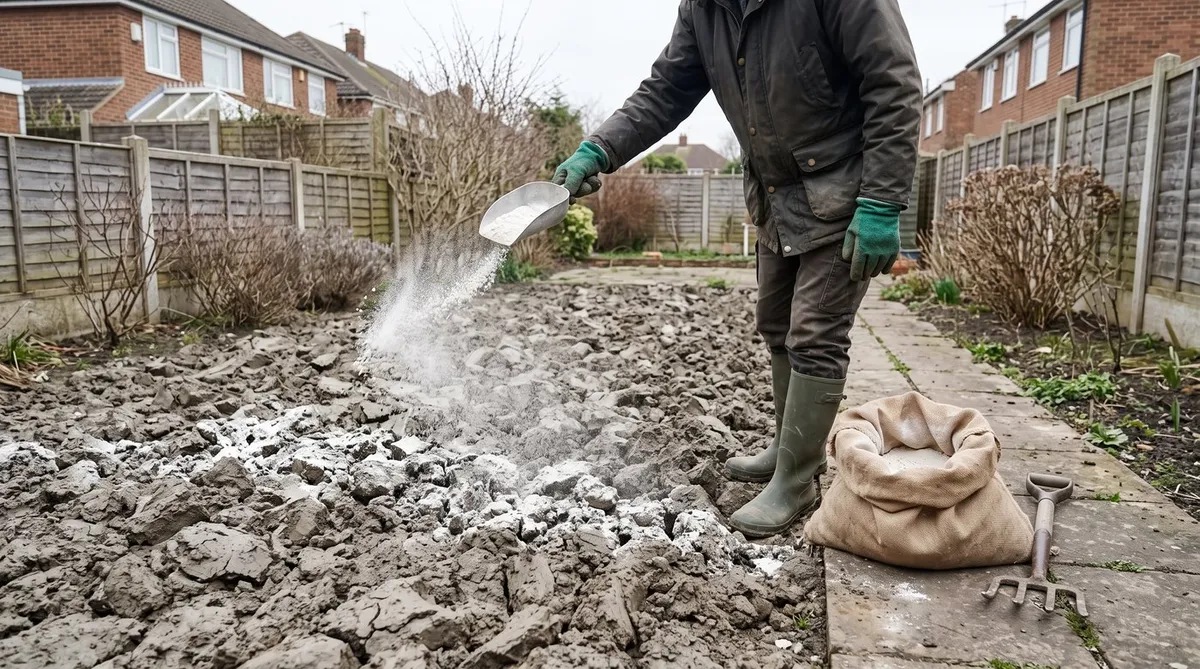
If you do use it, spread it evenly, rake it into the top layer and water it in. Gypsum only dissolves slowly, so it needs moisture to work.

If you have a real reason to use gypsum, spread it evenly, rake it in and water well.
Gypsum vs lime: what’s the difference?
Both add calcium to soil, but they do different jobs.
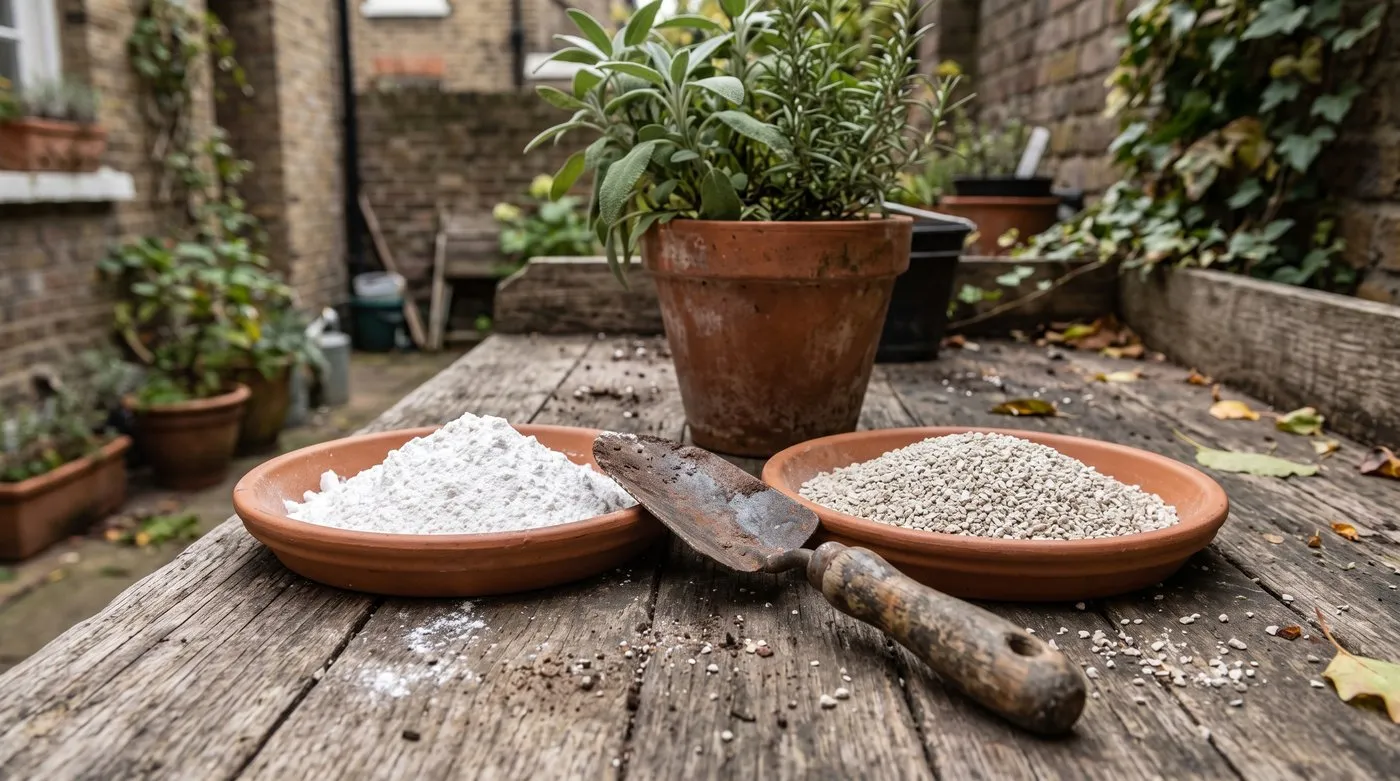
They look alike, but gypsum leaves pH alone while lime raises it. Pick the one that matches your soil test.
| Gypsum | Ground limestone (lime) | |
|---|---|---|
| What it is | Calcium sulphate | Calcium carbonate |
| Effect on pH | None | Raises pH |
| Adds sulphur | Yes | No |
| Use it for | Sodic soil, such as after seawater floods | Acid soil that needs its pH raised |
| Use on chalky soil? | Rarely needed | No, it makes it more alkaline |
If your problem is acid soil, use lime, not gypsum, and only after a soil test. Our guide to garden lime explains how much and when.
What works on UK clay instead of gypsum?
Bulky organic matter, every year. It’s the one treatment that really changes how clay behaves.
- Mulch every autumn. Spread 5-7cm of garden compost, well-rotted manure or leaf mould over the surface. Worms pull it in over winter and gradually build crumbly soil.
- Make your own leaf mould. It’s free and great for soil life. Our guide to making leaf mould shows how.
- Grow green manures. Sow winter cover crops such as field beans or grazing rye after summer crops. Their roots open up the clay. See our guide to green manures.
- Stop digging. Mulching on top and letting worms do the work suits heavy clay well. Our no-dig guide for heavy clay explains the method.
- Keep off it when wet. Walking on wet clay squashes out the air. Lay boards or use paths.
It takes a few years of regular mulching, but the change is real and it lasts. Clay also holds nutrients well, so a lot of plants love it once it’s in good heart. Our list of the best plants for clay soil has plenty of ideas.

A thick autumn mulch of compost or manure does far more for clay than gypsum. The worms do the digging for you.
Common mistakes with clay soil and gypsum
- Buying gypsum without knowing your soil is sodic. On ordinary clay it’s money better spent on compost or manure.
- Using gypsum to fix acid soil. It won’t raise pH. Use lime, after a soil test.
- Expecting a quick fix. Nothing changes clay overnight. Mulch every year and give it time.
- Adding a little sand. Small amounts of sand can make clay set even harder. Organic matter is the answer.
- Working the soil when wet. Digging or walking on wet clay ruins its structure. Wait until it crumbles in your hand.
Frequently asked questions
Does gypsum actually break up clay soil?
Only sodic clay, which is rare in the UK. In sodic soil, calcium from gypsum swaps places with excess sodium and the clay clumps into crumbs again. Ordinary UK clay isn’t sodic, so gypsum makes little difference.
How do I tell if my clay is sodic?
A laboratory soil test that measures sodium is the only reliable way. Most UK garden soils aren’t sodic unless seawater has flooded them. Without that, gypsum is usually wasted money.
How much gypsum should I apply per square metre?
Follow the rate on the product label. Only use it for structure if a soil test shows sodic soil or seawater has flooded the ground. Work it into the top layer and water it in. Using extra brings no benefit.
Does gypsum change soil pH?
No, gypsum doesn’t change soil pH. It adds calcium and sulphur without raising pH the way lime does. If you need to raise pH on acid soil, use ground limestone instead, after a soil test.
What works better than gypsum on UK clay?
Bulky organic matter, added every year. Spread a thick mulch of garden compost, well-rotted manure or leaf mould in autumn. Worms pull it in and gradually make the clay crumbly and easier to work.
Is gypsum safe for vegetables and edible crops?
Yes, gypsum is safe around vegetables. It won’t fix blossom end rot in tomatoes, though. That’s usually caused by uneven watering, so steady watering is the cure.
Ready to start on your clay? Read our guide to improving clay soil for a season-by-season plan, and browse more soil jobs in our how-to guides.
Our team produces practical UK gardening guidance from source research, contributor records and established horticultural practice. Editorial standards are overseen by Matt W.