
Key takeaways
- Test the soil first; many gardens never need lime
- Spread lime in autumn or winter, a few months before spring planting
- Clay needs about twice as much lime as sand to shift pH the same amount
- Ground limestone is the safe everyday choice; skip hydrated lime
- Keep lime and manure apart, and skip the potato bed
- Lime helps hold back club root in brassicas but won't cure it
Garden lime raises the pH of acid soil so vegetables can take up their food properly. The key is to test first, use ground limestone, and spread it in autumn or winter. Many gardens have perfectly good soil and never need lime at all.
This guide is about liming a vegetable plot: when to do it, how much to use and which bag to buy. If you want to know what pH is and how to test for it, start with the guide to soil pH explained, then come back here with your result.
Does my soil need lime?
Only lime if a soil test shows the soil is acid. Most vegetables grow best at about pH 6.5, and brassicas like it a touch higher. If your test reads below about pH 6, a dressing of lime will help. If it reads 6.5 or above, leave the bag closed.
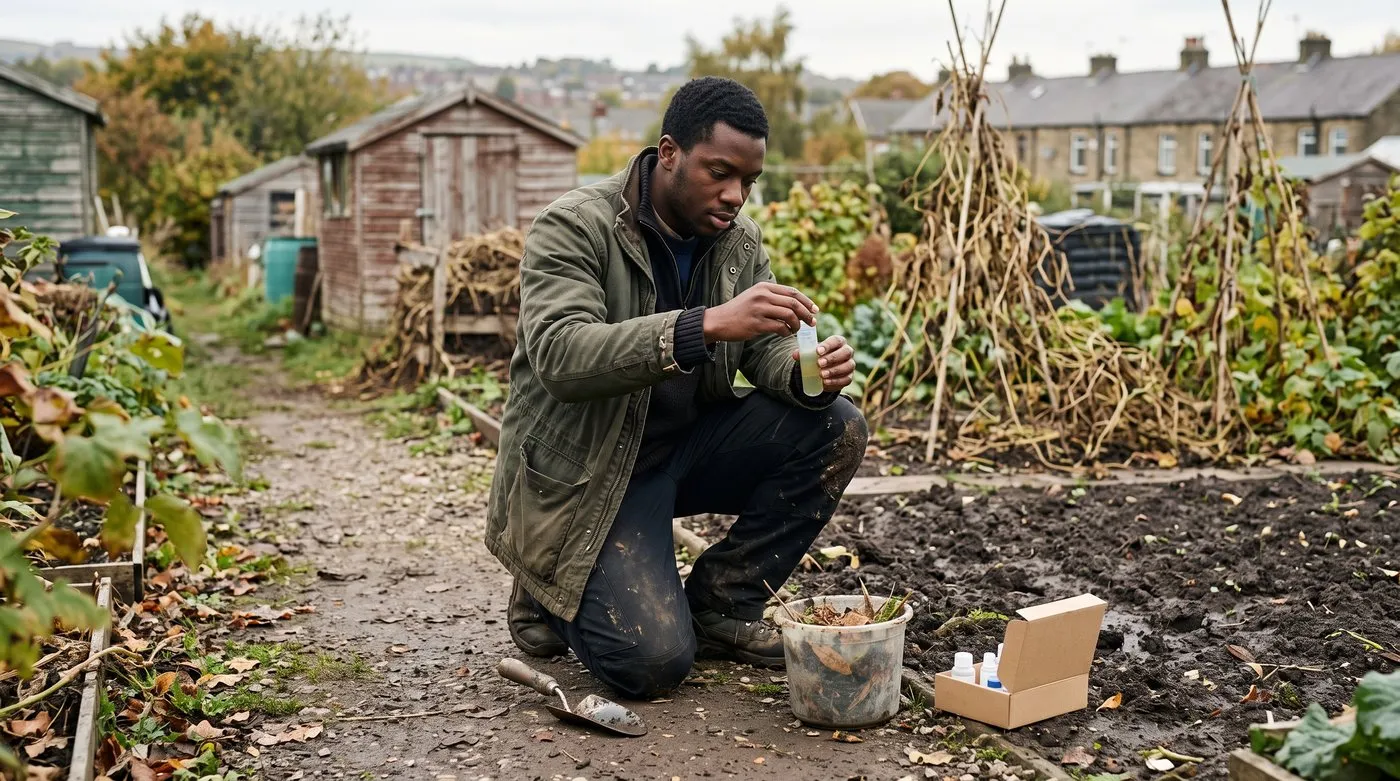
A quick pH test tells you whether the bed needs lime at all. Mix soil from several spots for a fair reading.
A cheap test kit or meter from a garden centre is fine for this. Mix soil from several spots across the bed for a fair reading. The guide to soil testing and pH adjustment walks through the different kits.
Some clues that soil may be acid: moss in bare beds, sorrel growing freely, or brassicas that keep sulking. Treat these as a reason to test, not a reason to lime.
When to apply garden lime in the UK
The best time is autumn or early winter, once crops are cleared. Lime works slowly. Spreading it then gives it a few months to start raising the pH before spring planting.
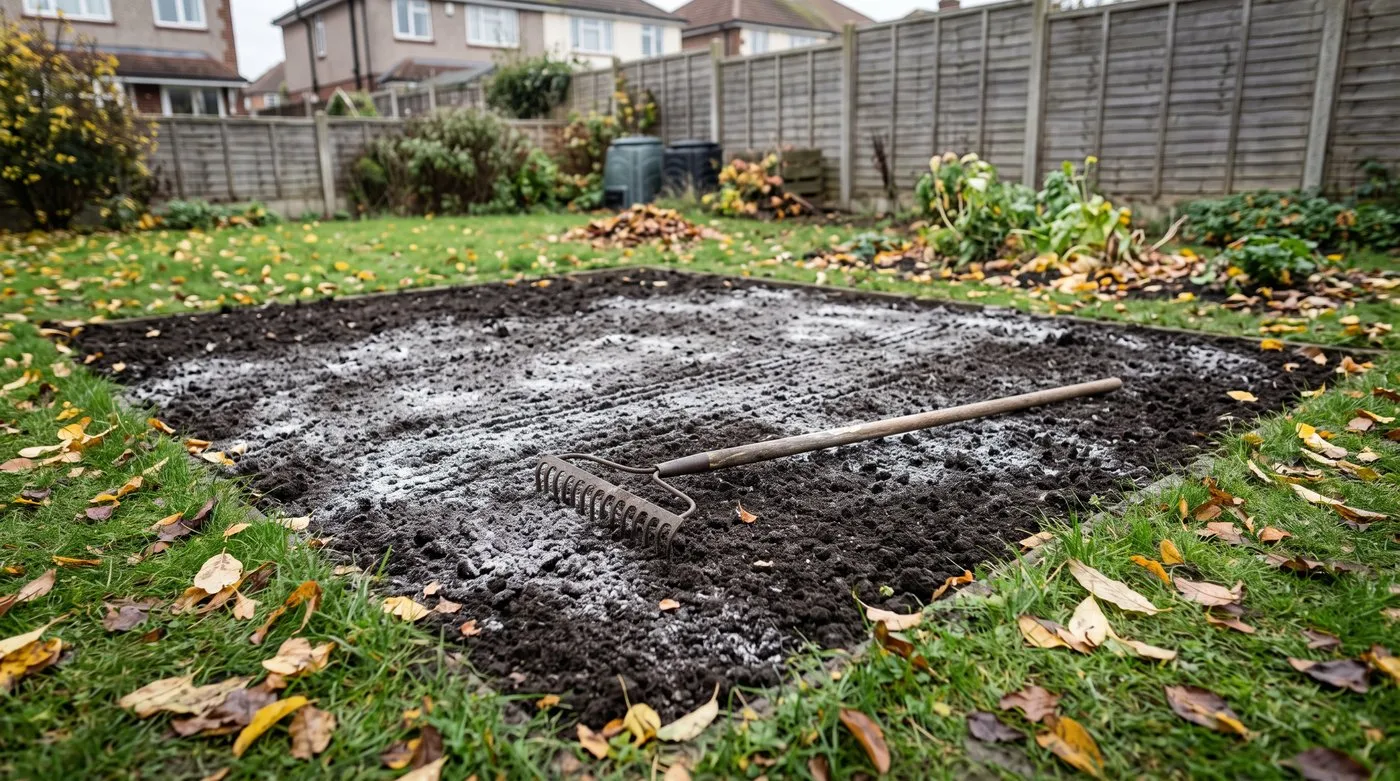
Autumn is the time to lime: spread it evenly on a cleared bed, then rake it lightly into the top few centimetres.
Late winter is the next best time. Avoid liming just before sowing or around young plants, as fresh lime can check their growth. Don’t spread it on frozen or waterlogged ground.
On a rotation plot, the usual approach is to lime the bed where brassicas will go next spring. That way the cabbage family gets the soil it likes, and the potato bed stays unlimed.
How much lime per square metre?
The amount depends on your soil type and how acid it is. Clay and soils rich in organic matter resist change, so they need more. Sandy soils shift easily, so they need less.
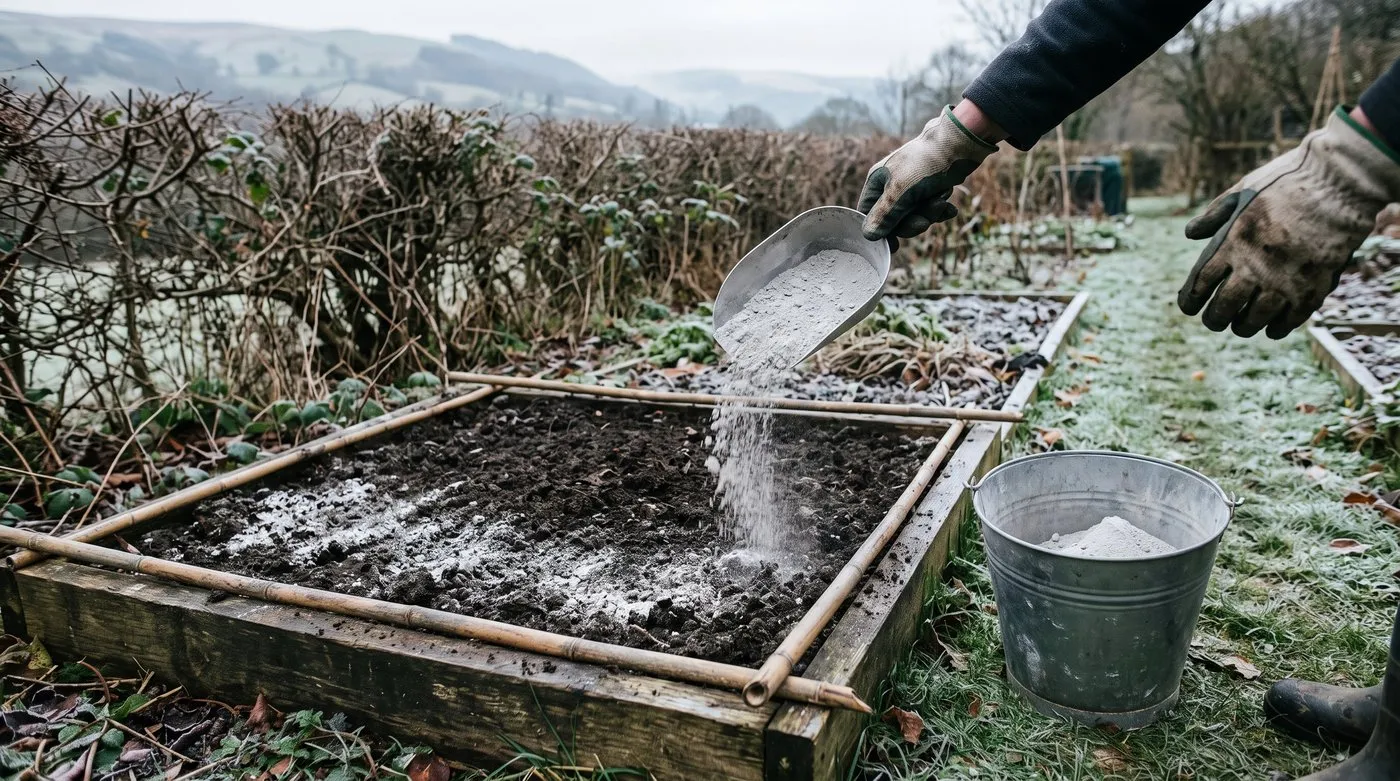
Marking the bed into square metres with canes makes it easy to spread the right amount of lime evenly.
| Soil type | Ground limestone to raise pH by about one unit |
|---|---|
| Sandy soil | About 200g per m² |
| Loam | About 300g per m² |
| Clay | About 400g per m² |
These are rough guides for ground limestone. If your soil is only slightly acid, use less. Always read the rates on the bag too, as products vary.
Spread the lime evenly over the surface, then rake or lightly fork it into the top few centimetres. On a large plot, mark the bed into square metres with canes so each one gets its share. Wear gloves, and pick a still day so the dust doesn’t blow about.
It is easier to add a little more next year than to undo too much. Over-liming can lock up nutrients such as iron and manganese, and lowering pH again is slow.
Which garden lime should you buy?
For most gardens, ground limestone is the one to buy. It is slow, gentle and hard to overdo. Here is how the common types compare.
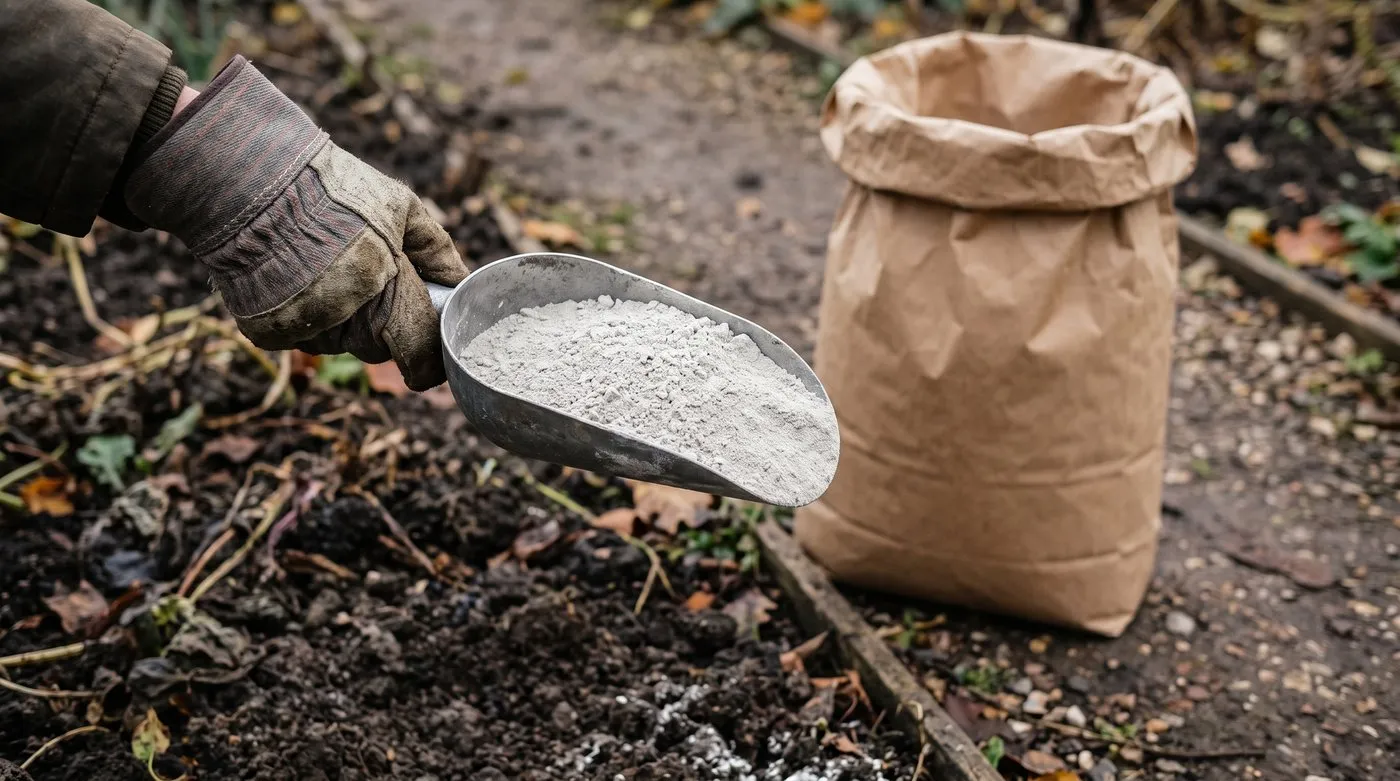
Fine ground limestone is the safe everyday choice. It works slowly and gently, so it is hard to overdo.
| Lime type | What it does | Best for |
|---|---|---|
| Ground limestone | Raises pH slowly and gently | Everyday liming of veg beds |
| Dolomite lime | Raises pH and adds magnesium | Sandy soils low in magnesium |
| Hydrated lime | Raises pH fast but is caustic | Rarely needed in gardens |
Dolomite lime is handy if a soil test or yellowing between leaf veins points to low magnesium. Use it at the same sort of rate as ground limestone.
Hydrated lime acts faster but burns skin, eyes and young roots. If you do use it, wear gloves and eye protection, use less than ground limestone and follow the bag closely. Most home gardeners never need it.
Garden lime and club root
Club root is a soil disease that swells and distorts the roots of cabbages, sprouts, kale, swedes and other brassicas. Plants wilt on warm days and fail to grow. It is worst in acid, wet soil.
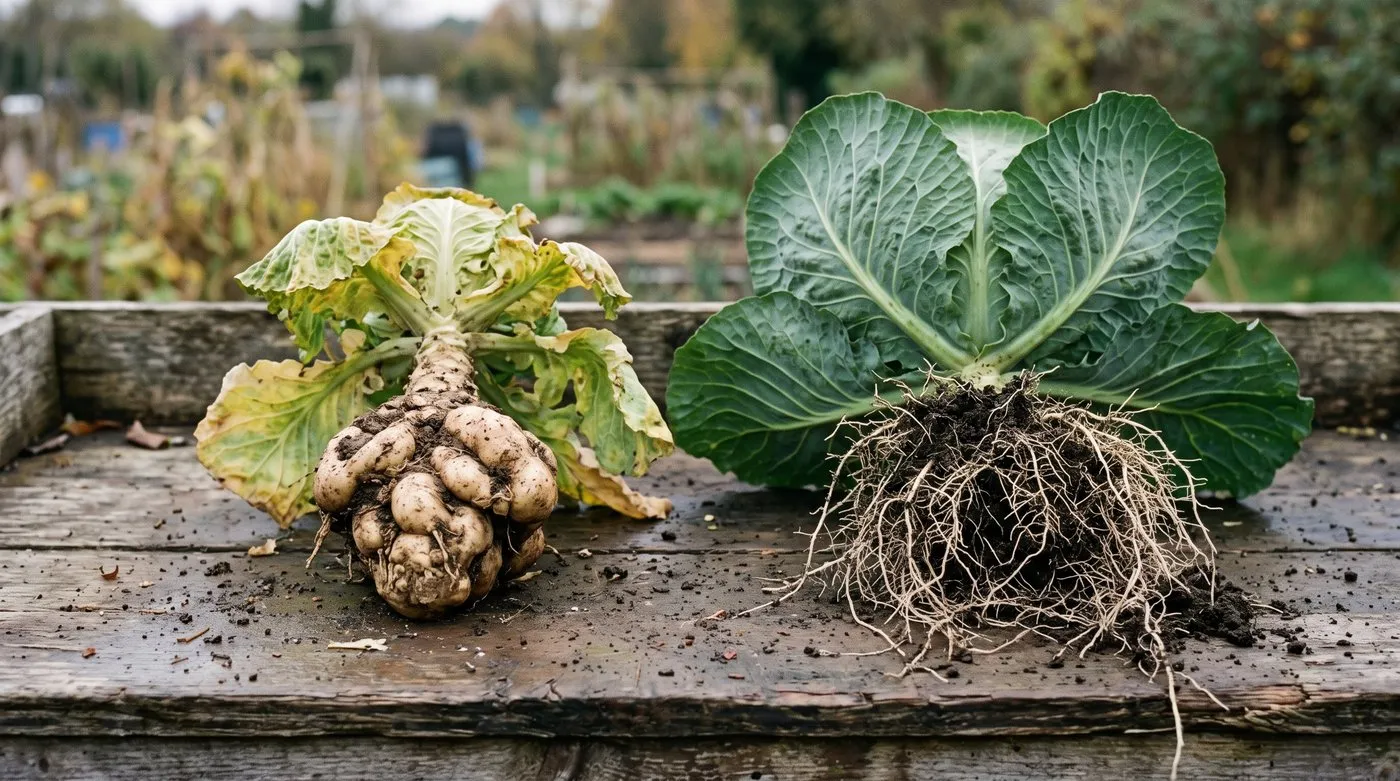
Swollen, knobbly roots like these are club root. Liming helps hold it back, but it won’t clear the soil.
Liming the brassica bed so the soil is neutral to slightly alkaline makes club root less severe. It won’t clear the disease, though. The spores can survive in soil for many years.
Other things that help:
- Raise plants in pots so they go out with a strong root system.
- Improve drainage on wet ground.
- Grow resistant varieties, such as ‘Kilaton’ cabbage or ‘Clapton’ cauliflower.
- Never compost infected roots. Bag them and put them in the bin.
The guide to club root identification and treatment covers spotting the swellings and managing an infected plot.
When not to use garden lime
Lime is not a general soil improver. Keep the bag closed in these cases.
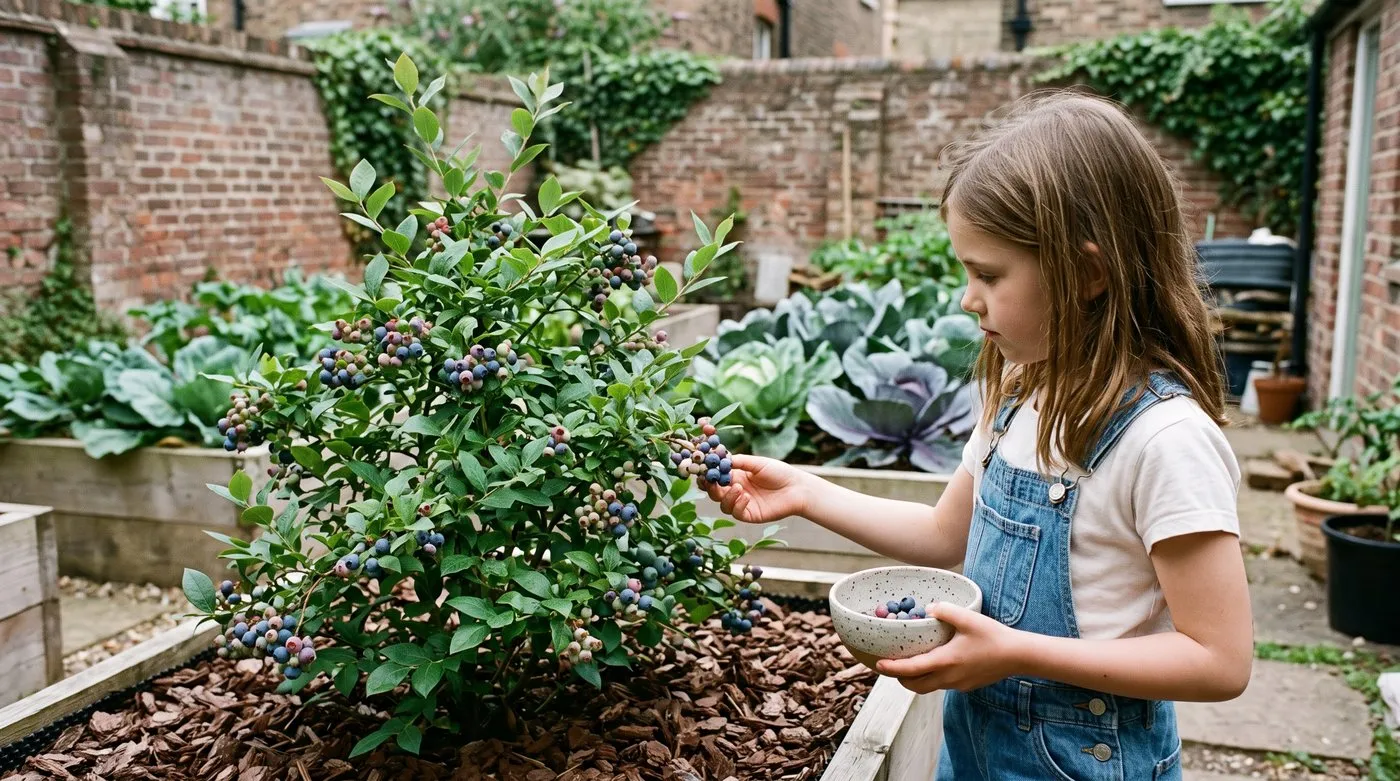
Blueberries and other acid-lovers turn yellow in limed soil, so keep the lime well away from their beds.
On soil that is already neutral or alkaline. Test first. Chalky or limestone soils never need lime. The guide to plants for chalky soil suggests what thrives there instead.
With manure. Lime and fresh manure react, and some of the manure’s nitrogen is lost. Spread them in different seasons, such as manure in autumn and lime in late winter.
Before potatoes. Potatoes prefer slightly acid soil. Liming encourages common scab, rough corky patches on the skin. Leave the potato bed unlimed that year.
Near acid-loving plants. Blueberries, rhododendrons, azaleas, camellias, heathers and pieris turn yellow in limed soil. Keep lime well away from their beds.
Around young seedlings. Fresh lime can scorch tender roots and leaves. Lime well before planting, not on top of a newly planted bed.
Garden lime calendar
| Month | Task |
|---|---|
| January | Lime next year’s brassica bed if you missed it in autumn |
| February | Last good time to lime before spring planting |
| March | Test any new beds before planting |
| April to August | No liming. Plants are growing |
| September | Test the beds you plan to lime |
| October | Main liming time. Spread on cleared brassica beds |
| November | Carry on liming cleared beds, avoiding frozen ground |
| December | Lime any remaining beds when the soil isn’t frozen or waterlogged |
Common garden lime mistakes
- Liming without testing. Many soils are already fine. Adding lime “just in case” can push the pH too high.
- Using too much at once. Over-liming locks up nutrients and is slow to reverse. Little and often is safer.
- Liming with manure. Spread them in different seasons so you don’t lose nitrogen.
- Liming the potato bed. It encourages scab. Lime the brassica bed instead.
- Spreading hydrated lime on a windy day. It is caustic. Ground limestone is safer and does the job.
Frequently asked questions
When is the best time to apply garden lime in the UK?
Autumn or early winter is best, after you have cleared the crops. Lime works slowly, so this gives it a few months before spring planting. Late winter is the next best time. Avoid liming just before sowing or around young plants.
How much garden lime per square metre should I use?
About 200g on sand, 300g on loam and 400g on clay per pH unit. That is roughly what it takes to raise pH by one unit with ground limestone. Test first, then follow the rates on the bag. If your soil is only slightly acid, use less.
Can I apply lime and manure at the same time?
No, keep them apart and spread them in different seasons. Lime reacts with fresh manure and some of the nitrogen is lost. A simple routine is manure in autumn and lime in late winter, or lime one year and manure the next.
What is the difference between ground limestone, dolomite and hydrated lime?
Ground limestone is the safe everyday choice for gardens. Dolomite lime also adds magnesium, which is handy on sandy soils low in it. Hydrated lime acts faster but is caustic to skin and eyes, so most gardeners are better without it.
Does garden lime stop club root in brassicas?
Lime helps hold club root back but cannot cure infected soil. The disease is less severe when soil is neutral to slightly alkaline. Liming the brassica bed, raising plants in pots before planting out and growing resistant varieties all help.
How often should I lime my vegetable plot?
Only when a soil test shows the pH has dropped too low. Rain slowly makes soil more acid, so check the pH every few years. Lime the brassica bed in your rotation rather than the whole plot at once.
Which plants should I never lime?
Never lime around blueberries, rhododendrons, azaleas, camellias, heathers or pieris. These acid-loving plants turn yellow and struggle in limed soil. Keep lime well away from their beds, and avoid liming before potatoes, as it encourages scab.
Now you know when and how much lime to use, read the four-year crop rotation plan to work out which bed gets limed each year, or browse more how-to guides.
Our team produces practical UK gardening guidance from source research, contributor records and established horticultural practice. Editorial standards are overseen by Matt W.


