Key takeaways
- Test your soil pH before adding anything
- Sulphur chips are the main way to lower pH in open ground
- About 135g per square metre lowers sandy soil by roughly one pH unit
- Sulphur takes months to work, so add it in stages and retest
- Chalky soil keeps bouncing back, so use raised beds or pots instead
- Water acid-lovers with rainwater, especially in hard-water areas
You can make soil more acidic by forking in sulphur chips, but only where the soil will hold the change. Sandy and loamy soils respond well. Chalky soil fights back, so there it’s far easier to grow acid-lovers in pots or raised beds.
Here’s how to test your soil, how much sulphur to use, and what to do when your ground just won’t play along. For a wider look at what pH means, see our guide to soil pH explained.
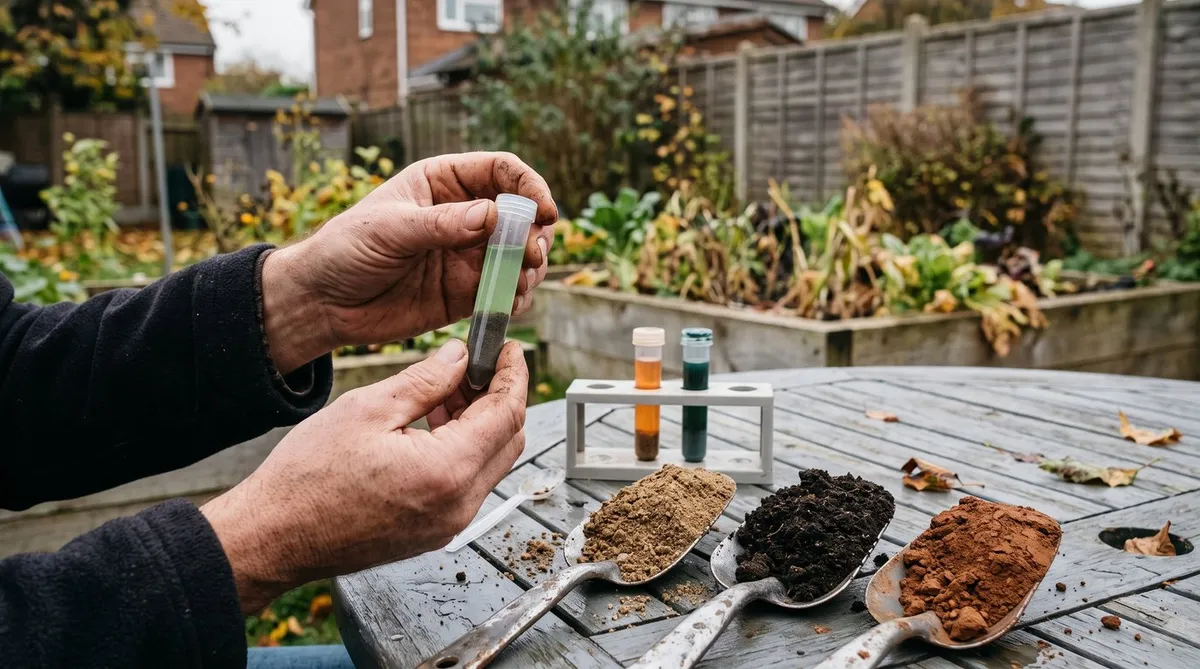
Test your soil pH first
Always test before you add anything. You need to know where you’re starting and where you want to be.
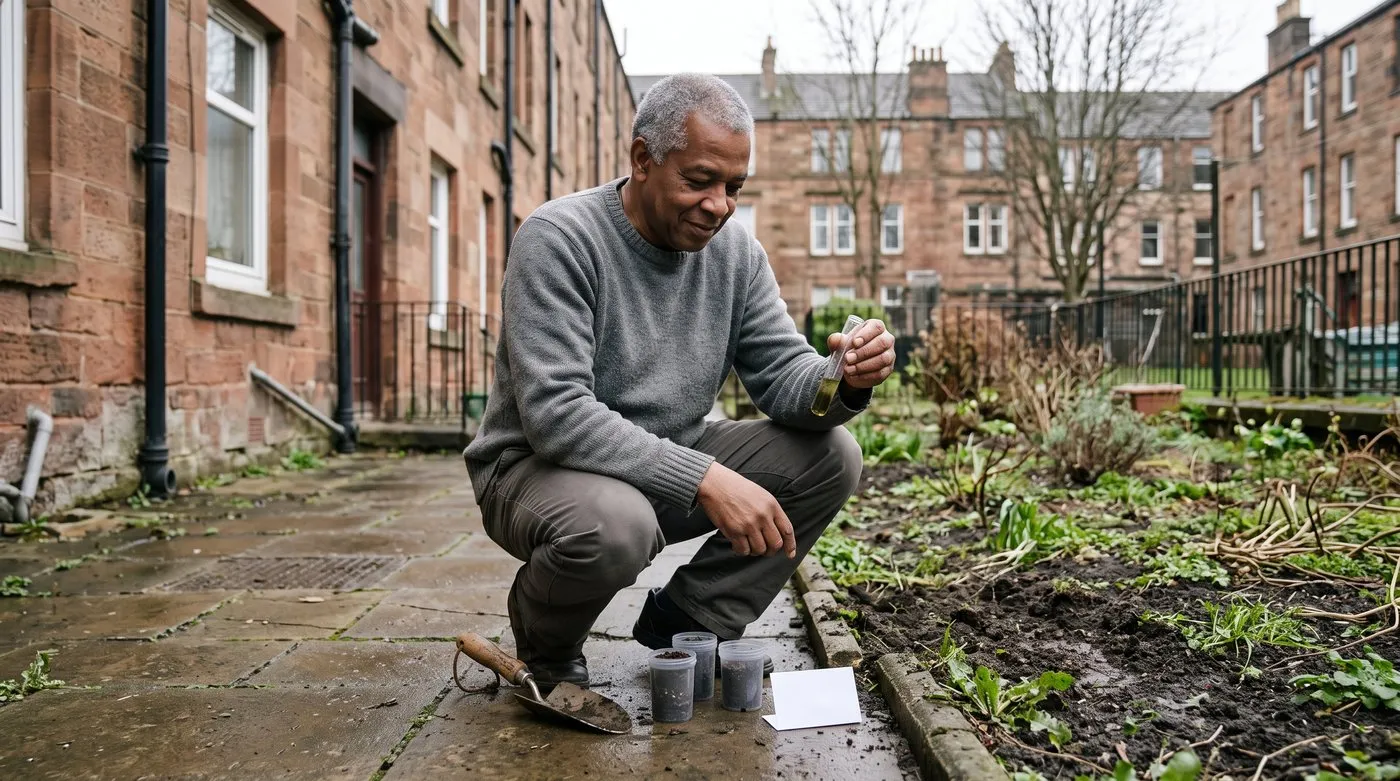
Take soil from a few spots in the bed. Readings can vary more than you’d expect across one garden.
Most acid-loving plants, such as rhododendrons, camellias, pieris and blueberries, like a pH of about 4.5 to 5.5. A reading of 7 is neutral, and anything above is alkaline. The higher the number, the harder it is to bring down.
A simple test kit from a garden centre does the job. Take soil from several spots in the bed, as readings can vary across a garden. Our guide to soil testing and pH adjustment walks through it step by step.
Check for chalk too. Drop a spoonful of soil into a little vinegar. If it fizzes, there’s free lime in the soil and it won’t stay acidic for long.
Why chalky soil won’t stay acidic
Chalk and limestone soils are full of lime, which keeps neutralising any acid you add. You can lower the pH for a while, but it soon creeps back.
Sandy and loamy soils without free lime are different. Once you’ve lowered their pH, they hold it well with small top-ups.
So if your vinegar test fizzes, don’t spend years fighting the open ground. Move to raised beds and pots of ericaceous compost. It’s quicker, cheaper in the long run and it actually works. Or plant things that love your soil. Our list of plants for chalky, alkaline soil has plenty of good choices.
How to use sulphur chips to lower soil pH
Sulphur chips (sometimes sold as soil acidifier) are the main way to make garden soil more acidic. Bacteria in the soil slowly turn the sulphur into acid.
They work best in warm, moist soil, so apply them between spring and early autumn. In cold soil very little happens. Expect the full change to take several months.
| Soil type | Sulphur to lower pH by about one unit | Holds the change? |
|---|---|---|
| Sandy | About 135g per sq m | Yes, well |
| Loam | Between the sandy and clay rates | Yes |
| Clay | Up to about 270g per sq m | Yes, but needs more |
| Chalky | Not worth it | No, it creeps back |
- Weigh out half the dose. Little and often is safer than one big hit.
- Scatter it evenly over the bed, keeping it off plant stems.
- Fork it into the top 15cm of soil and water it in.
- Retest after a few months, then add more if you need to.
Wear gloves while handling sulphur and follow the instructions on the pack.

Scatter the chips evenly, then fork them into the top 15cm. Half now and half later is kinder to the soil than one big dose.
Do faster acidifiers like sulphate of iron work?
Sulphate of iron lowers pH within weeks, but the effect doesn’t last and too much can scorch roots. It’s handy for a quick nudge, not for changing a whole bed.
Sulphate of ammonia is a fertiliser that slightly acidifies the soil as it feeds. Ericaceous feeds do a similar gentle job. Both help keep an already acid bed in good shape. Neither will turn alkaline soil acidic.
Raised beds and pots for acid-loving plants
A raised bed or big pot of ericaceous compost gives you acid soil from day one, whatever your garden is like. It’s the most reliable option on chalk or limestone.
- Raised beds: build them at least 30-45cm deep so roots stay in the compost. Mix ericaceous compost with some composted bark for a rhododendron or azalea bed.
- Pots: blueberries do brilliantly in a large pot of ericaceous compost, at least 45cm across once they’re settled. A half-barrel is ideal.
- Top up: add fresh ericaceous compost or mulch each spring, and repot container plants every couple of years.

A half-barrel of ericaceous compost gives a blueberry the acid roots it needs, even if your garden is pure chalk.
Need ideas for what to plant? Our list of the best plants for acid soil covers shrubs, perennials and fruit. Our blueberry growing guide explains pot sizes and pruning.
Water acid-lovers with rainwater
In hard-water areas, tap water contains lime that slowly raises the pH. Over a season it can undo all your good work, especially in pots.
Collect rainwater in a water butt instead. It’s naturally lime-free and costs nothing. A butt fed by a shed or garage roof soon fills up. If you have to use tap water in a dry spell, switch back to rainwater as soon as you can.

A water butt or two by the shed keeps acid-lovers happy all summer, without the lime in hard tap water.
Do coffee grounds, pine needles or leaf mould make soil acidic?
Not really. They change pH so little that acid-loving plants won’t notice.
- Coffee grounds: used grounds are close to neutral.
- Pine needles: slightly acidic, but they break down slowly and shift pH very little.
- Leaf mould: brilliant for soil structure and moisture, but not an acidifier.
All three make good mulches and improve the soil. Just don’t rely on them to grow a rhododendron on alkaline soil.

A pine needle mulch keeps soil moist and cool around acid-lovers. Lovely stuff, but it won’t change your pH.
How to keep an acid bed acid
Acid soil slowly drifts back towards neutral, especially near lime or with hard water. Check it once or twice a year.
- Retest each spring. If the pH has crept up, add a light top-up of sulphur.
- Mulch with composted bark to keep the soil cool, moist and slightly acidic.
- Feed with an ericaceous fertiliser in spring.
- Keep lime away. Don’t use mushroom compost or lime nearby, as both are alkaline.

Rhododendrons thrive where the soil is naturally acid. Elsewhere, a raised ericaceous bed can do the same job.
Acid soil and blue hydrangeas
Acid soil is also what turns many mophead and lacecap hydrangeas blue, as long as there’s aluminium in the soil. On alkaline soil they flower pink.
It’s one of the most popular reasons for wanting acid soil. White varieties stay white whatever you do. Our guide to keeping hydrangeas blue covers products and timing.
Common mistakes when acidifying soil
- Not testing first. You might add sulphur to soil that’s already acid enough.
- Adding it all at once. A big dose can harm roots. Add half, wait and retest.
- Fighting chalk for years. It won’t stay acidic. Use raised beds or pots instead.
- Watering pots with hard tap water. The lime slowly undoes your work. Use rainwater.
- Relying on coffee grounds. They improve soil but barely change the pH.
For more soil and garden jobs, browse our how-to guides.
Frequently asked questions
What is the fastest way to make soil acidic?
There’s no instant fix; sulphur chips are the reliable route. Soil bacteria slowly turn sulphur into acid over several months. Sulphate of iron works faster, but the effect is short-lived and too much can scorch plants.
How much sulphur do I need to lower soil pH?
About 135g per square metre lowers sandy soil by roughly one pH unit. Loam and clay need up to twice as much. Add half, wait a few months, retest, then top up if needed.
Can I make chalky or alkaline soil acidic?
Not for long. The lime in chalky soil keeps cancelling out any sulphur you add. Grow acid-lovers in raised beds or pots of ericaceous compost instead, and water them with rainwater.
Do coffee grounds and pine needles make soil acidic?
Barely, and not enough to grow acid-loving plants. Used coffee grounds are close to neutral. Pine needles and leaf mould are lovely mulches, but they change pH very little.
Why does rainwater matter for acid-loving plants?
Hard tap water contains lime that slowly raises the pH. Over a season it can undo your work, especially in pots. Rainwater is naturally lime-free, so collect it in a water butt.
How do I know if my soil is chalky?
Drop a spoonful of soil into a little vinegar and watch for fizzing. Fizzing means free lime, which tells you the soil is chalky or limy. A pH test kit then shows how alkaline it is.
Now your soil is ready, read our guide to growing rhododendrons to choose and plant your first acid-loving shrub.
Our team produces practical UK gardening guidance from source research, contributor records and established horticultural practice. Editorial standards are overseen by Matt W.