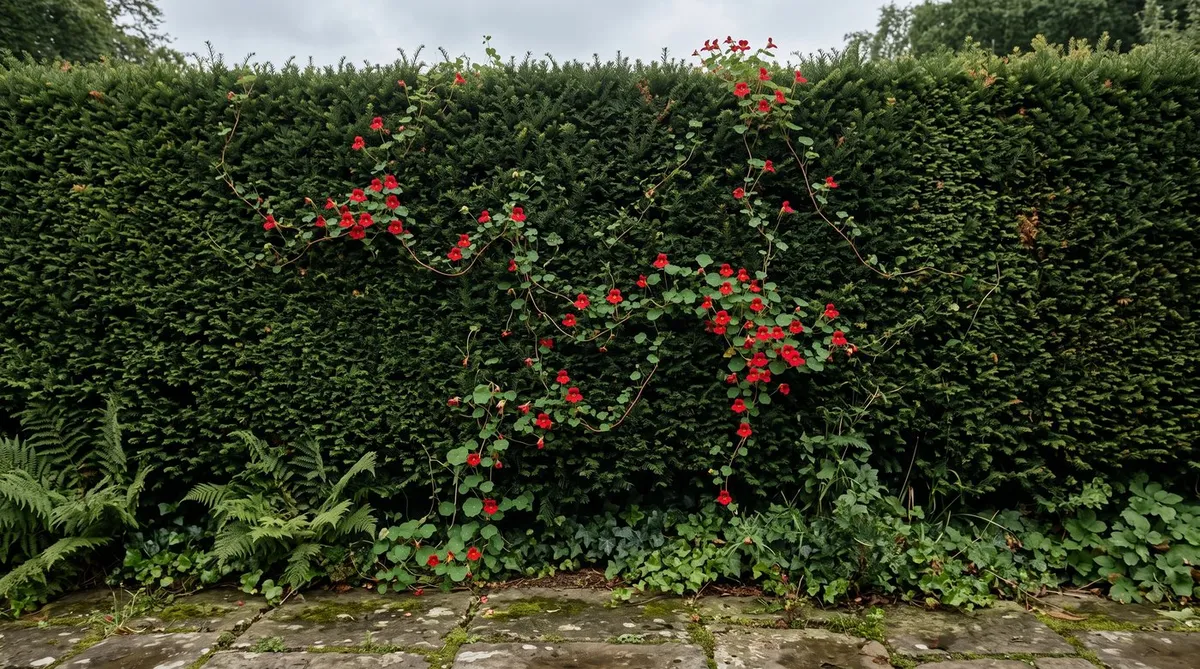
Key takeaways
- A hardy perennial climber to about 3m that scrambles through hedges and shrubs
- Scarlet flowers from July to September, often followed by blue berries
- Needs acid, moist soil and roots kept cool and shaded
- Plant rhizomes flat, 7-10cm deep, in spring near a dark hedge such as yew
- Expect two or three years before it flowers well, so be patient
- Happiest in cool, damp gardens in the north and west of the UK
Tropaeolum speciosum is a hardy climbing nasturtium that covers dark hedges in scarlet flowers from July to September. It’s easy in a cool, damp garden with acid soil, and tricky almost everywhere else. Get the roots right and it comes back year after year.
This guide is for anyone wondering whether the Scottish flame flower will grow for them, and how to give it the best start. You’ll find where it thrives, how to plant the rhizome, which shrubs to grow it through, and what to do when it sulks.
What is the Scottish flame flower?
Tropaeolum speciosum is a perennial climber from the cool forests of southern Chile. It’s also called the Chilean flame flower or flame nasturtium. It earned its Scottish name because it grows so well in the cool, wet west of Scotland.
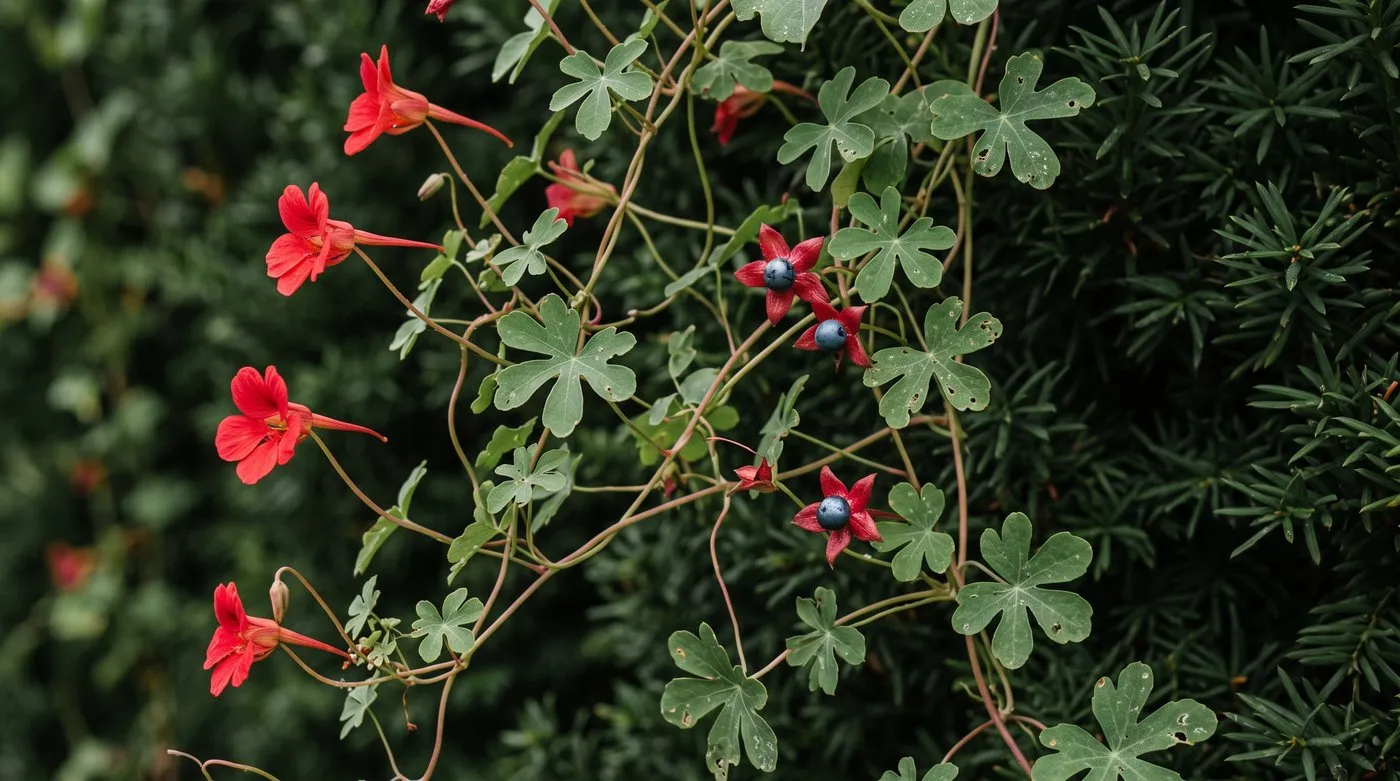
Look for the small leaves split into rounded lobes. They are the easy way to tell it from a garden nasturtium.
The stems are thin and twining. Each leaf is split into five or six small, rounded lobes, so it looks quite different from the big round leaves of a garden nasturtium. The leaf stalks curl around twigs to climb, reaching about 3m in a good spot.
The flowers are bright scarlet, with a long spur at the back. They appear from July to September. After flowering you may see small blue berries sitting in red cups, which look just as striking.
Every autumn the top growth dies back. The plant rests underground as a white, fleshy rhizome and shoots again in late spring.
Where does Tropaeolum speciosum grow best in the UK?
It grows best in cool, damp gardens with acid soil, mainly in the north and west. Western Scotland, the Lake District, Wales and the far south-west are its happy places.
Cold isn’t the problem: it’s hardy in UK winters. Heat and dry soil are what finish it off. That’s why it struggles in hot, dry gardens in the south and east, especially on chalk or limestone.
It needs four things:
- Acid soil. Lime-free and rich in leaf mould. Not sure what you have? Our guide to soil pH and how to test it explains.
- Cool roots. Shade at the base, from a hedge, shrub or north-facing wall.
- Steady moisture. Damp but not waterlogged, all summer.
- Something to climb. A hedge or large shrub, so the flowers can reach the light.
In a southern garden you can still try it. Pick a north-facing spot behind a tall hedge, make an acid bed and keep it watered in dry spells. If your soil is chalky, our guide on how to make soil more acidic shows what helps, and what’s a losing battle.

Cool, damp air and acid soil are why the flame flower feels so at home on Scotland’s west coast.
How to plant Tropaeolum speciosum rhizomes
Plant in spring, laying the rhizome flat about 7-10cm deep, close to a hedge or shrub. Most people start with a pot-grown plant or a rhizome, because seed is slow and patchy.
- Pick the spot. Choose the shady side of a hedge or large shrub. The roots need shade, the flowers will climb up to the light.
- Leave a gap. Plant about 30-60cm out from the base of the host. That keeps the climber away from the thirstiest roots.
- Improve the soil. Dig a hole about 40cm wide and deep. Mix in plenty of leaf mould and some ericaceous compost.
- Lay it flat. Set the rhizome horizontally, 7-10cm deep, with the growing end pointing towards the host shrub.
- Water in. Use rainwater if you live in a hard-water area.
- Mulch. Spread a thick layer of leaf mould, composted bark or ericaceous compost over the spot to keep the roots cool.
If you’re planting a pot-grown plant, set it at the same depth it was in the pot. Push a cane in beside it as a marker.
Homemade leaf mould is the perfect mulch here, and our guide on how to make leaf mould shows how easy it is.

The rhizome goes in flat, about 7-10cm deep. A thick mulch over the top keeps it cool and moist.
Looking after it through the year
Keep the roots damp and cool, mulch every spring, and leave it alone in winter. That’s most of the work.
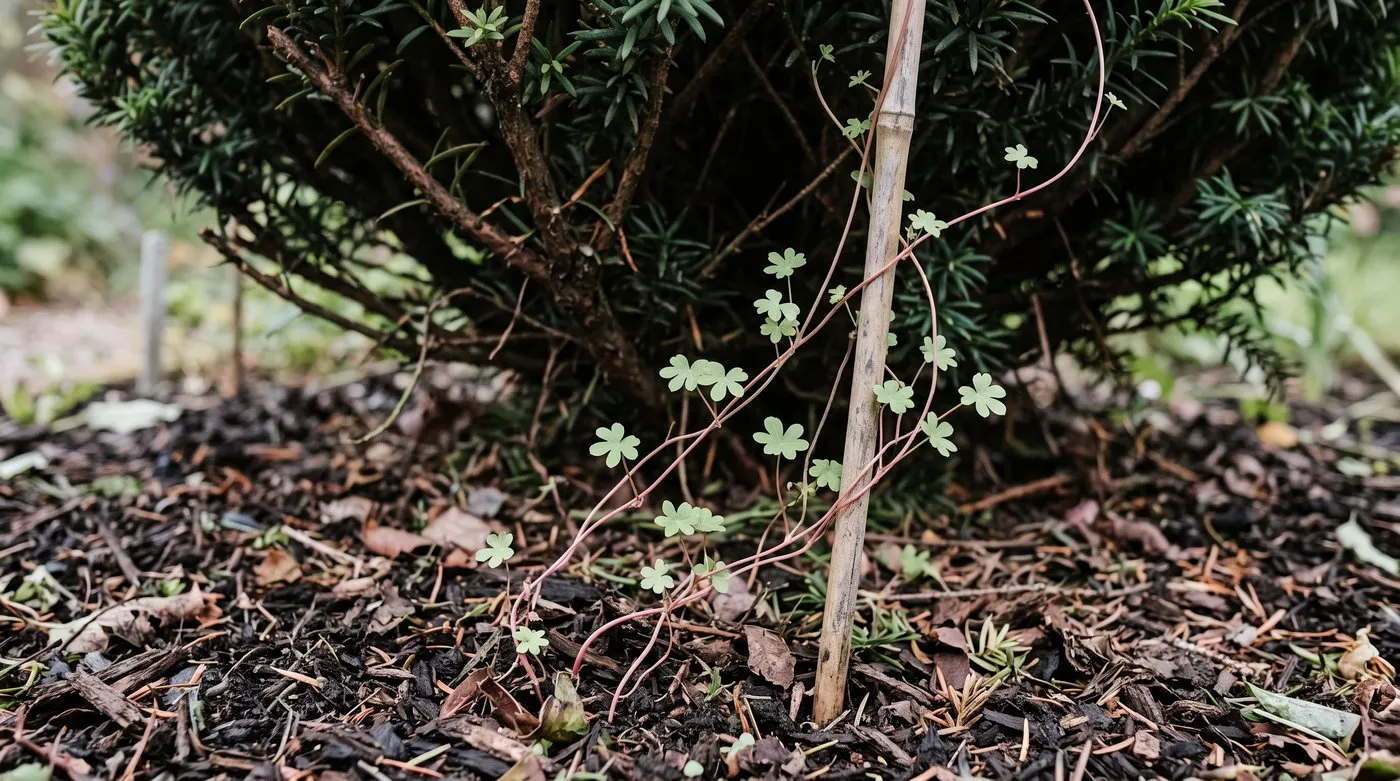
Shoots can appear as late as June. A cane marks the spot so you don’t dig into the rhizome while you wait.
Water in dry spells during its first two summers, and any time the soil dries out. Rainwater from a butt is best in hard-water areas, because tap water there slowly makes the soil less acid. Our guide to installing a water butt makes collecting it easy.
Mulch with leaf mould, bark or ericaceous compost each spring. No heavy feeding is needed.
Pruning isn’t needed either. Clear the dead stems in autumn once they’ve died back, or leave them to fall away.
Be patient. Shoots often appear late, in May or even June, so don’t dig around looking for them. Plants can take two or three years to flower well.
Best plants to grow Tropaeolum speciosum through
Yew is the classic partner. Its dark needles make the scarlet flowers glow, and its dense growth shades the roots. A clipped yew hedge with flame flower running through it is a famous Scottish late-summer sight.
Other good hosts:
- Holly, for the same dark, glossy backdrop
- Rhododendrons, which enjoy the same acid soil (our guide to growing rhododendrons covers their needs)
- Dark conifers and evergreen shrubs with a dense habit
The climber is light and won’t harm a healthy host. Avoid pale, silver or variegated shrubs. The colour gets lost against them, and most silver plants want hot, dry soil anyway.
Planting a new hedge for it to climb? Our hedge planting guide covers yew and holly.

Mild, misty Cornwall suits it too. Dark holly makes the red flowers stand out.
How it differs from other Tropaeolum
The flame flower shares a family with the garden nasturtium, but they need opposite conditions. Pick the right one for your garden.
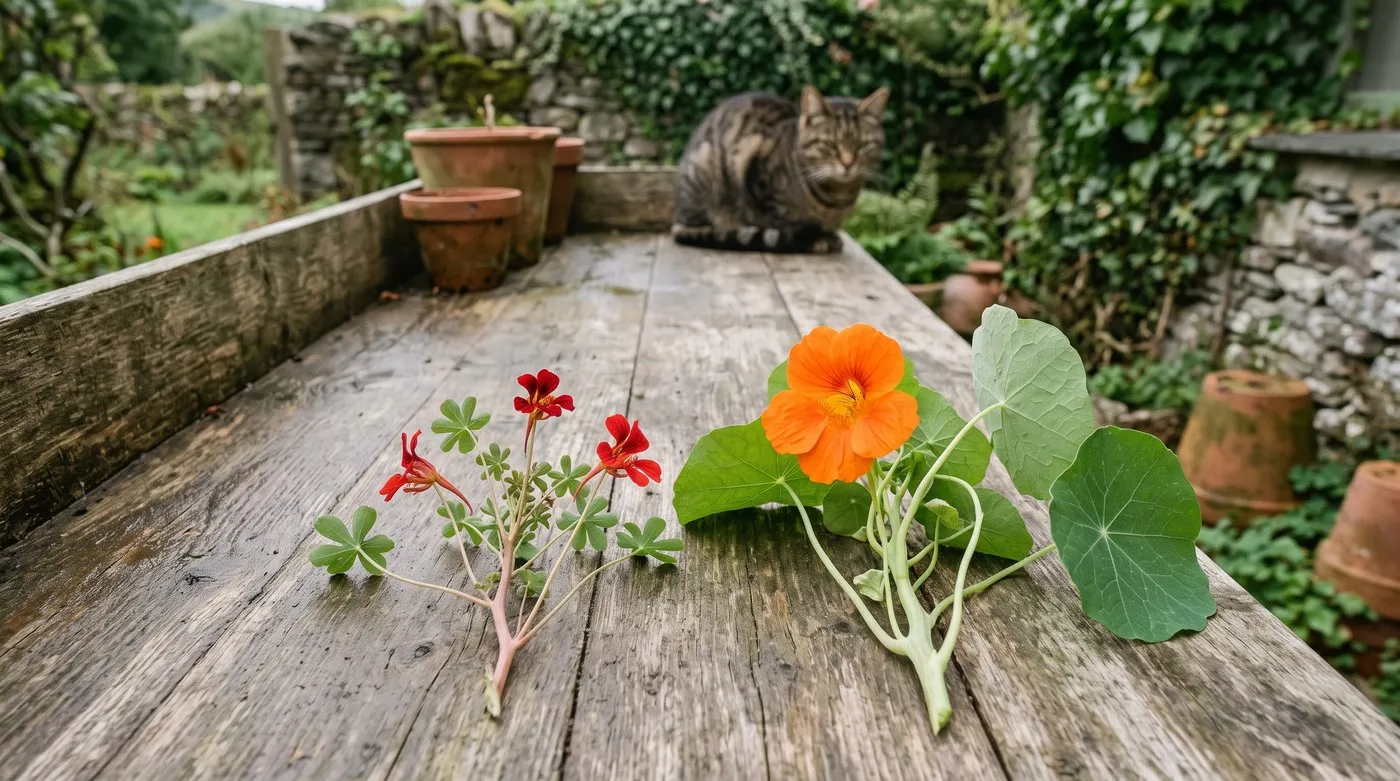
Same family, very different plants. The flame flower has small lobed leaves, the garden nasturtium big round ones.
| Plant | What it is | Likes |
|---|---|---|
| Tropaeolum speciosum (flame flower) | Hardy perennial climber | Acid soil, shaded roots, cool damp summers |
| Tropaeolum majus (garden nasturtium) | Annual trailer or climber | Sun, poor soil, warmth |
| Tropaeolum tuberosum (mashua) | Tuberous climber with edible tubers | Mild gardens, frost protection for tubers |
| Tropaeolum polyphyllum | Trailing perennial with grey leaves, yellow flowers | Sun and sharp drainage |
For the easy annual, see our guide to growing nasturtiums. It’s the one to choose for a hot, sunny spot.
Common mistakes with the flame flower
Planting on chalk or limestone. A bag of ericaceous compost won’t change chalky soil for long. If your soil is alkaline, grow something else, or make a large raised acid bed.
Planting in full sun. The flowers want light, but the roots must stay cool. Plant at the shady base of a hedge and let it climb up.
Digging it up to check. Shoots can be slow to appear in spring. Disturbing the rhizome does far more harm than waiting. Mark it with a cane.
Letting it dry out. Dry summers are the biggest killer. Water in dry spells, especially in the first couple of years.
Expecting flowers straight away. Give it two or three years to settle before you judge it.
Tropaeolum speciosum calendar
| Month | What to do |
|---|---|
| March | Prepare the planting spot. Dig in leaf mould and ericaceous compost |
| April | Plant rhizomes or pot-grown plants. Mulch well |
| May | Shoots start to appear on established plants. Water if dry |
| June | Stems climb fast. Guide young shoots into the host shrub |
| July | First flowers. Keep the roots moist |
| August | Main flowering. Water in dry spells |
| September | Late flowers and blue berries |
| October | Stems die back. Mulch with leaf mould |
| November to February | Dormant. Leave the soil undisturbed |
Frequently asked questions
Why won’t my Tropaeolum speciosum flower?
It’s usually too young, too hot or on soil that isn’t acid enough. Plants often take two or three years to flower well. Check your soil is acid, keep the roots shaded and moist, and mulch every spring with leaf mould or ericaceous compost.
Where in the UK does Tropaeolum speciosum grow best?
It does best in cool, damp gardens in the north and west. Scotland, the Lake District, Wales and the far south-west suit it well. Hot, dry gardens on chalk or limestone in the south and east are much harder.
How deep do I plant Tropaeolum speciosum rhizomes?
Lay rhizomes flat, about 7-10cm deep, in moist, acid soil. Point the growing end towards the shrub you want it to climb. Water in, then mulch with leaf mould or bark to keep the roots cool.
Does Tropaeolum speciosum die back in winter?
Yes, the top growth dies back each autumn. The rhizome rests underground and sends up new shoots in late spring. Mark the spot with a cane so you don’t dig into it by mistake.
What plants pair well with Tropaeolum speciosum?
Yew is the classic partner, with holly and rhododendrons close behind. Dark evergreen leaves make the scarlet flowers glow. These shrubs also shade the climber’s roots and enjoy the same acid soil.
Is Tropaeolum speciosum the same as a nasturtium?
It’s a close cousin, but it behaves very differently. Garden nasturtiums are sun-loving annuals. The flame flower is a hardy perennial that wants shade at the roots, acid soil and cool, damp summers.
If your garden is too hot or chalky for the flame flower, browse our best climbing plants for UK gardens to find one that suits your soil, or see more on the plants hub.
Our team produces practical UK gardening guidance from source research, contributor records and established horticultural practice. Editorial standards are overseen by Matt W.


