Key takeaways
- Rhododendrons need acid soil, so check yours with a simple test kit first
- Plant with the top of the root ball level with the soil, never deeper
- Dappled shade and shelter from hot afternoon sun suit them best
- Yellow leaves with green veins mean the soil isn't acid enough, and sequestered iron helps
- Snap off faded flower heads by hand, taking care not to damage the buds below
- On chalk or limestone, grow them in pots of ericaceous compost
Rhododendrons are some of the most showy shrubs you can grow. In spring they’re covered in big, bold clusters of flowers. The one thing they must have is acid soil. Get that right and they’re easy plants that flower for decades.
Gardenias like the same acid conditions, as we explain in our guide to growing gardenia in the UK.
Why rhododendrons suit UK gardens
Rhododendrons come from cool, damp woodlands in the mountains of Asia. That’s a lot like our own weather, which is why they do so well here.
Britain fell for them in Victorian times, when plant hunters brought them back. Gardens like Bodnant in North Wales and Leonardslee in Sussex are still famous for them.
Most hardy hybrids cope with cold winters anywhere in the UK. They’re evergreen, so they look good all year. Most flower from April to June, bridging the gap between spring bulbs and summer flowers. A few start as early as February, and some go on into summer.
The catch is soil. Rhododendrons hate lime, so they need acid soil. On chalk or limestone, grow them in pots instead. The RHS guide to evergreen rhododendrons is a handy extra read.
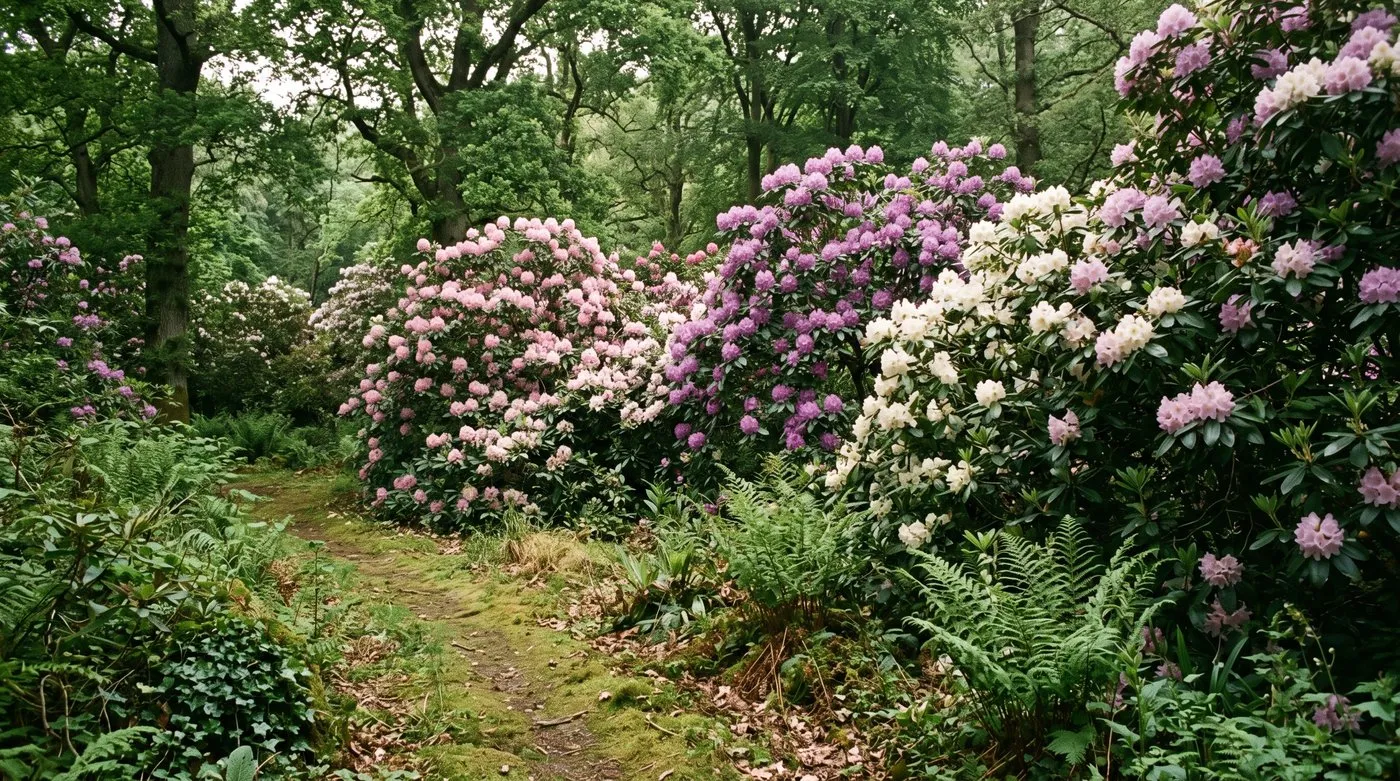
Rhododendrons come from cool, damp mountain woods, which is why they love our climate. Dappled shade and acid soil are what they want most.
Understanding acid soil for rhododendrons
Soil really is the make-or-break for rhododendrons. In acid soil they can take up the iron they need to stay green and healthy.
How to test your soil pH
Use a cheap test kit from a garden centre. Or look at what grows nearby. If your neighbours have happy rhododendrons, camellias or heathers, your soil is probably acid. Much of Scotland, Wales and the Lake District has acid soil. Chalky areas like the southern downs and the Cotswolds are alkaline.
What happens when pH is too high
In soil that isn’t acid enough, the iron gets locked up and the roots can’t take it in. The leaves turn yellow with green veins. On chalk or limestone, rhododendrons slowly go downhill and often die.
How to lower soil pH
If your soil is only a little too alkaline, you can nudge it down.
Sulphur chips work slowly over a few months. Scatter them at the rate on the pack and dig them in. Test again later and top up if needed.
Ericaceous compost (compost made for lime-hating plants) gives the roots an acid home straight away. Mix it half and half with your own soil in the planting hole.
Don’t fight chalk. Trying to make chalky or limy soil acid enough is a losing battle, as the ground under it keeps pushing it back. Grow rhododendrons in pots instead.
 Three rhododendrons side by side, showing some of the colours you can choose from.
Best rhododendron varieties for UK gardens
Pick a variety to suit your space. These ten are reliable and easy to find.
| Variety | Size | Flowers | When | Good for |
|---|---|---|---|---|
| ’Cunningham’s White’ | Large | White with a pink flush | May | Exposed sites, hedging |
| ’Christmas Cheer’ | Medium | Pink fading to white | March to April | Early colour |
| ’Scarlet Wonder’ | Small | Deep red | May | Small gardens, pots |
| ’Purple Splendour’ | Large | Deep purple with a dark blotch | May to June | A star plant |
| ’Nobleanum Venustum’ | Medium | Pink | January to March | Winter flowers |
| ’Ramapo’ | Dwarf | Violet-blue | April to May | Rock gardens, edging |
| ’Ginny Gee’ | Dwarf | Pink and white | April | Pots, troughs |
| R. yakushimanum | Small | Pink buds, white flowers | May | Compact and easy |
| ’Horizon Monarch’ | Medium | Yellow with red marks | May | Warm, sheltered gardens |
| ’Unique’ | Medium | Cream flushed pink | April to May | Mixed borders |
Choosing by garden size
Big gardens: ‘Cunningham’s White’ and ‘Purple Splendour’ grow large and fill a bed beautifully. ‘Cunningham’s White’ is one of the toughest and copes with wind and poorer soil.
Medium gardens: R. yakushimanum and ‘Unique’ stay compact and flower well. R. yakushimanum has lovely leaves with a soft, furry brown underside.
Small gardens and pots: ‘Scarlet Wonder’, ‘Ramapo’ and ‘Ginny Gee’ are true dwarfs with full-size flowers. They’re perfect in pots. For more compact ideas, see our guide to best flowering shrubs for UK gardens.
How to plant rhododendrons
Plant shallow. More rhododendrons die from being planted too deep than from anything else. Their fine roots live near the surface, and the base of the stems must stay at soil level.
When to plant
October is the best month, as the soil is still warm and roots settle before winter. March or April is next best, but water regularly through the first summer. Avoid frozen, waterlogged or very dry ground.
Preparing the planting hole
- Dig a hole twice as wide as the root ball, but no deeper
- Mix the soil you dug out half and half with ericaceous compost
- Break up the sides of the hole with a fork so roots can spread out
- On heavy or wet soil, plant on a slight mound
Planting method
Take the plant out of its pot. If the roots are going round in circles, gently tease them out. Set it in the hole so the top of the root ball is level with the soil. Fill in around it and firm gently. Water well, ideally with rainwater.
Mulch with bark chips, pine needles or leaf mould, keeping it a little away from the stems. It keeps moisture in, smothers weeds, and slowly builds the soft, acid soil they love.
Tip: Use rainwater whenever you can. In hard-water areas, tap water slowly makes the soil less acid. A water butt soon earns its keep.
 Plant with the top of the root ball level with the soil, in a mix of ericaceous compost and your own soil.
Growing rhododendrons in containers
Pots are the answer if your soil is chalky or limy. They’re also great for dwarf varieties on a patio. You’re in charge of the compost and water, so the soil is always right.
Container selection
Use a big pot for standard varieties and a medium one for dwarfs. Terracotta, glazed or sturdy plastic all work. Make sure there are good drainage holes, as soggy roots soon rot.
Compost recipe
Fill the pot with ericaceous compost, ideally peat-free. Don’t use ordinary multipurpose compost, which isn’t acid enough.
Watering and feeding containers
Water with rainwater whenever you can. Feed with an ericaceous liquid feed once a month from April to September.
Repot every 3-4 years into fresh ericaceous compost, one size up. In between, scrape off the top few centimetres each spring and replace it with fresh compost.
For other shrubs that love acid soil, see our guides to growing camellias and how to grow heather.
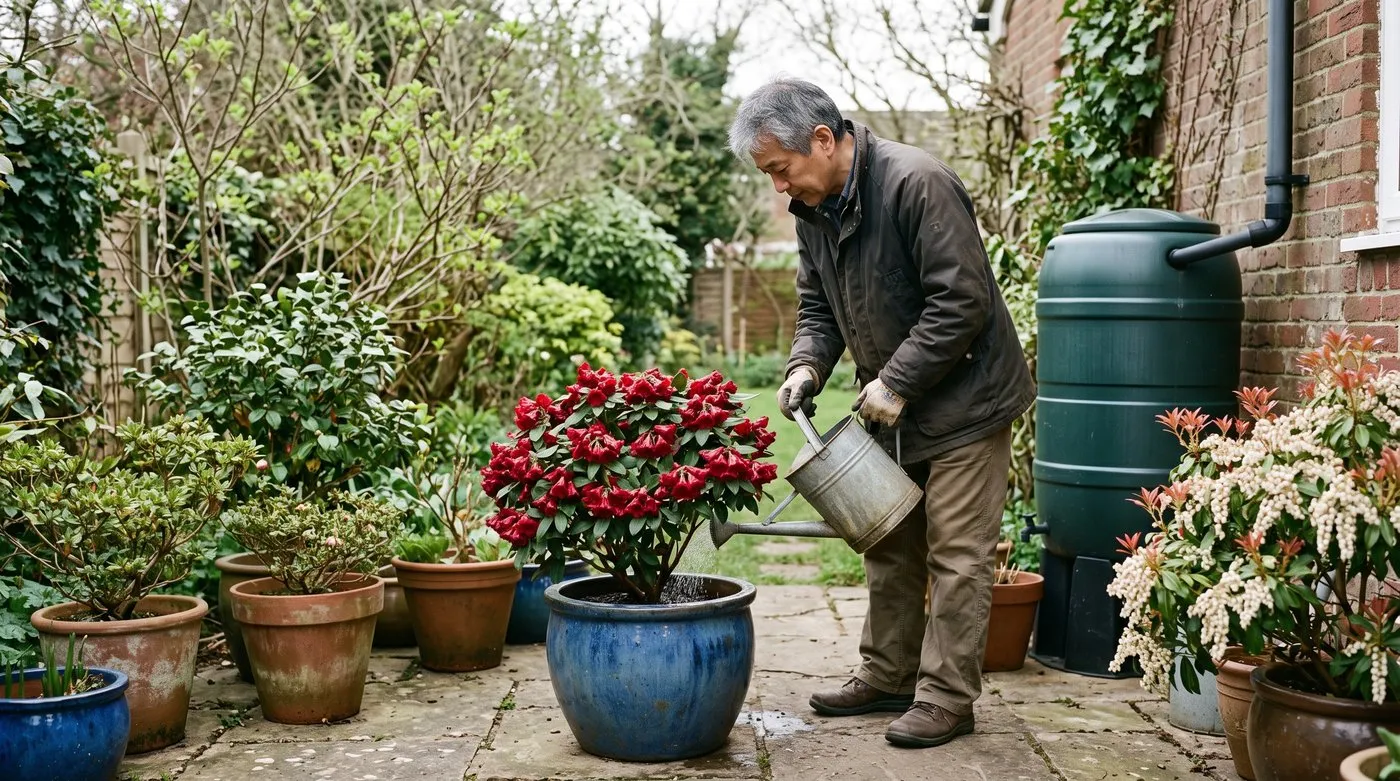
Rainwater keeps the compost acid, while hard tap water slowly works against it. A water butt next to your pots makes it easy.
Seasonal care calendar
Rhododendrons need less fuss than most shrubs. Here’s the year at a glance.
| Month | What to do |
|---|---|
| January | Firm in any plants lifted by frost. |
| February | Scatter sulphur chips if the soil has become less acid. |
| March | Sprinkle an ericaceous fertiliser around the roots. |
| April | Water new and potted plants if spring is dry. |
| May | Enjoy the flowers. |
| June | Snap off faded flower heads. |
| July | Give a good soak once a week in dry spells. |
| August | Look for notched leaf edges (vine weevil). |
| September | Get planting spots ready for October. |
| October | Plant new rhododendrons. |
| November | Top up the mulch to protect the shallow roots. |
| December | Knock heavy snow off branches. |
Common problems and how to fix them
Yellow leaves with green veins (iron chlorosis)
This is the most common rhododendron problem. The newest leaves turn yellow, but the veins stay green. It means the soil isn’t acid enough for the plant to take up iron.
Quick fix: Water on sequestered iron, following the pack. You should see greener leaves within a few weeks.
Long-term fix: Lower the pH with sulphur chips and use rainwater. Repot container plants into fresh ericaceous compost.
Note: Ordinary iron sulphate (sold for lawns) won’t do the same job. Look for “sequestered” or “chelated” iron on the label.
 Yellow leaves with green veins. This is a soil problem, not a sign the plant needs more food.
Rhododendron bud blast
The flower buds turn brown and grow tiny black bristles, then fail to open. It’s a fungus spread by the rhododendron leafhopper, a small green and red insect about in late summer.
What to do: Pick off and bin affected buds. Yellow sticky traps help catch the leafhoppers.
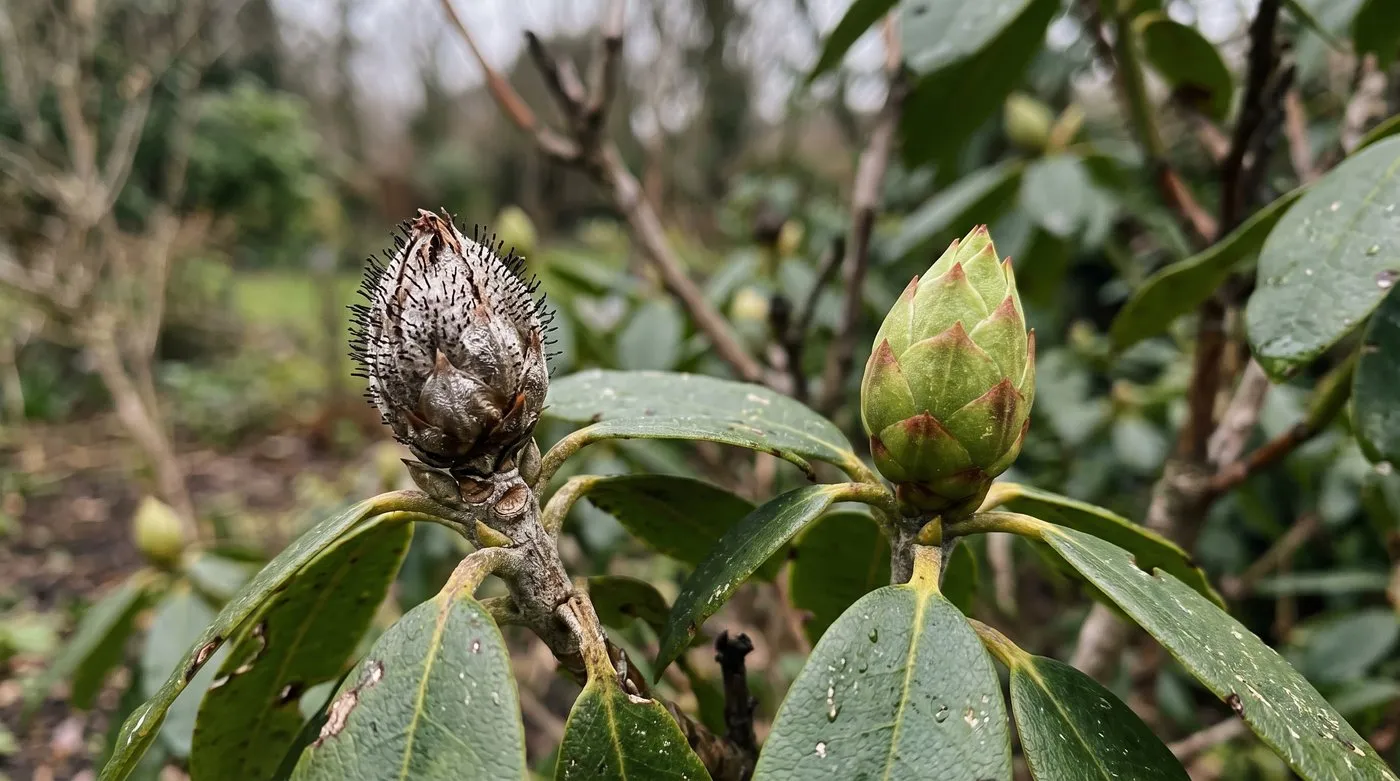
Brown buds with tiny black bristles have bud blast and won’t open. Pick them off and bin them to stop it spreading.
Vine weevil
Adult vine weevils nibble notches from the leaf edges. The bigger worry is the grubs, which eat the roots underground and can kill a plant, especially in a pot.
What to do: Water on vine weevil nematodes (a natural control) in late summer or autumn, when the soil is warm enough for the pack. Check the compost for white, C-shaped grubs when you repot. Our vine weevil treatment guide has the full story.
Powdery mildew
White, powdery patches on the leaves, mostly in hot, dry summers. It’s more common on deciduous azaleas. Thin out crowded branches so air moves through. Our powdery mildew treatment guide has more tips.
Phytophthora root rot
A root rot that strikes in waterlogged soil. The plant wilts even though the soil is wet, and the stem base goes brown. There’s no cure once it takes hold.
Prevention: Plant in soil that drains well. Add grit on heavy clay, or plant on a raised mound. Never leave pots standing in water.
How to deadhead rhododendrons
Deadheading helps the plant put its energy into new growth and next year’s flowers. It’s a quick, satisfying job.
The snapping technique
Each flower head sits just above a cluster of new buds. Hold the base of the faded flower head between finger and thumb, and snap it off sideways. It comes away cleanly, without harming the buds below. It’s quicker than secateurs and safer too.
Do it as soon as the flowers fade, usually late May to July.
Skip deadheading if you want seed heads, and don’t worry about dwarf varieties, which have small flowers.
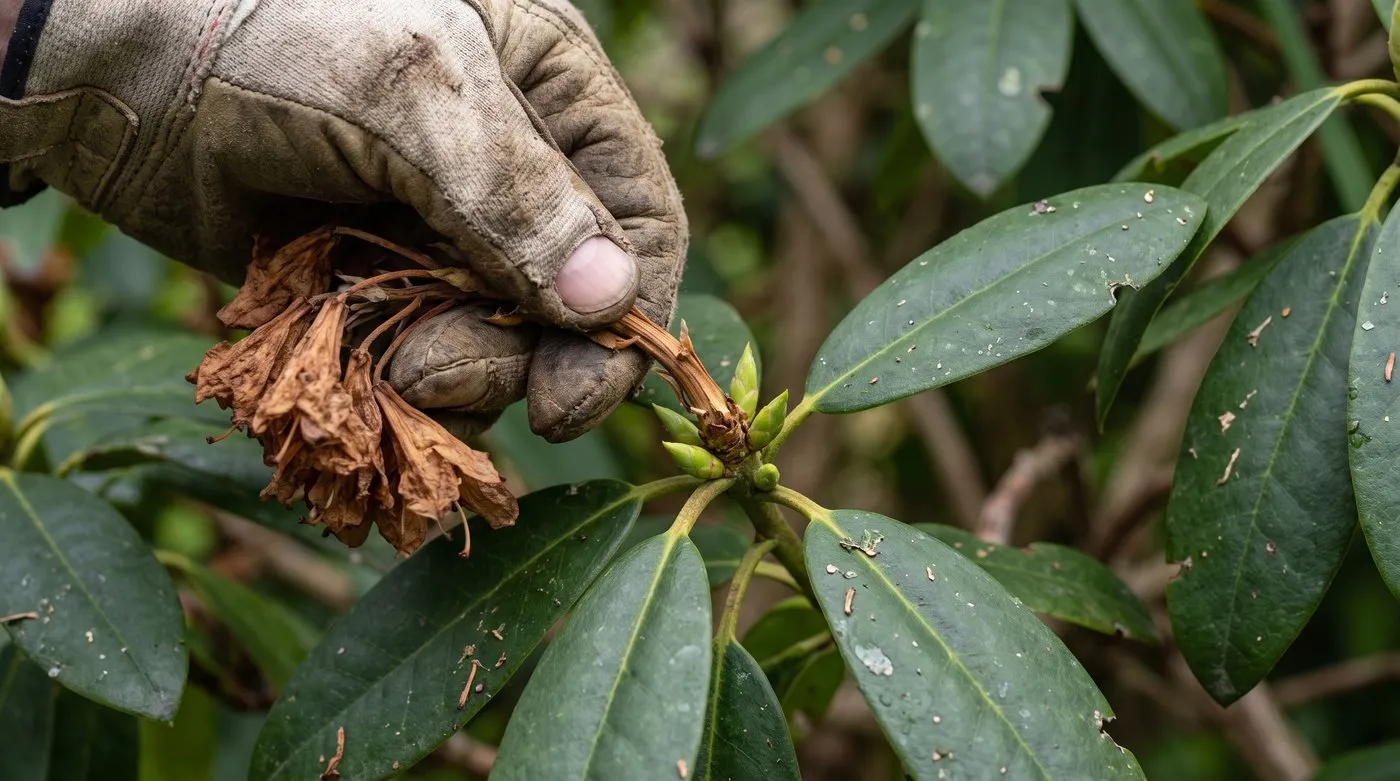
Hold the base of the faded head and snap it off sideways. The new buds just below stay safe, and it’s quicker than secateurs.
Pruning rhododendrons
Most rhododendrons barely need pruning. They grow into a neat, rounded shape on their own.
Routine maintenance
In late winter, take out dead, damaged and crossing branches. Cut just above a bud or a ring on the stem. Use secateurs for thin stems and loppers or a saw for thick ones.
Renovation pruning for overgrown plants
An overgrown hardy hybrid can usually be cut back hard in March, to about 60cm. It looks bare for a while, then sprouts new shoots. Expect to wait a couple of years for flowers.
The gentle way is to cut a third of the main stems each year over three years. That keeps some leaves on the plant all the time. Feed well while it recovers.
Tip: Not all rhododendrons regrow after a hard cut, especially the big-leaved kinds. If you’re unsure, try one branch first and wait a season. Our shrub pruning guide covers other shrubs too.
Companion planting for rhododendrons
Rhododendrons look most at home with other woodland, acid-loving plants.
Camellias flower a little earlier, from February to April, and like the same soil. Plant camellias nearby for colour from late winter to early summer.
Pieris has bright red new leaves in spring that look great with rhododendron flowers. ‘Forest Flame’ and ‘Mountain Fire’ are popular choices.
Heathers make good ground cover under taller rhododendrons. Winter-flowering kinds give colour from late autumn to spring. See our heather growing guide to pick some.
Deciduous azaleas are actually rhododendrons too, with lovely autumn leaf colour. ‘Gibraltar’ (orange), ‘Homebush’ (pink) and ‘Persil’ (white) are good ones.
Ferns and hostas fill the ground beneath them nicely. Shade-loving plants such as lady fern enjoy the dappled light underneath.
Hardy vs tender varieties for UK regions
Pick a variety to suit where you live, and winters won’t be a worry.
| Where you are | Good choices | Be careful with |
|---|---|---|
| South-west England, coastal Wales | Almost anything, including tender kinds | Nothing much |
| Southern England, Midlands | Hardy hybrids, R. yakushimanum, ‘Cunningham’s White’ | Tender kinds without shelter |
| Northern England, lowland Scotland | Hardy hybrids, ‘Christmas Cheer’, ‘Cunningham’s White’, ‘Ramapo’ | Big-leaved kinds without shelter |
| Highland Scotland, exposed hills | ’Cunningham’s White’, R. yakushimanum, ‘Ramapo’, R. impeditum | Big-flowered hybrids without wind shelter |
Common mistakes growing rhododendrons
Mistake 1: Planting too deep
The problem: The root ball sits below the soil. The base of the stems stays wet, rots, and the plant dies.
Why it happens: Lots of shrubs like a deep hole, but rhododendrons don’t. Their roots need air near the surface.
The fix: Keep the top of the root ball level with the soil. On heavy clay, plant it slightly proud, as it will settle.
Mistake 2: Using the wrong compost or mulch
The problem: Some composts and mulches contain lime, which makes the soil less acid.
Why it happens: Spent mushroom compost is cheap and popular, but it contains chalk.
The fix: Mulch with composted pine bark, bracken or leaf mould. Avoid anything labelled “contains lime”.
Mistake 3: Feeding with general-purpose fertiliser
The problem: Some feeds contain lime or calcium, which work against acid soil.
Why it happens: It’s natural to reach for whatever feed is in the shed.
The fix: Use a feed made for ericaceous (acid-loving) plants, at the rate on the pack.
Mistake 4: Planting in full sun on dry soil
The problem: Leaves scorch at the edges, flowers fade fast, and the plant looks stressed all summer.
Why it happens: Rhododendrons are woodland plants. Some cope with sun in cool, damp parts of the country, but most want some shade in the drier south-east.
The fix: Plant where they get morning sun and dappled shade in the afternoon, such as under deciduous trees. Avoid deep, dark shade, which cuts flowering.
Why acid soil matters so much
Here’s the simple version. Plants need iron to make their leaves green. In acid soil, iron is easy for roots to take up. In limy soil it gets locked away.
Some plants have tricks for unlocking it, but rhododendrons don’t. So in limy soil they run short of iron and the leaves turn yellow.
Sequestered iron is iron in a form the roots can use even in less acid soil. It’s a quick rescue, but it doesn’t fix the soil. For that, you need sulphur chips, rainwater, or a pot of ericaceous compost.
Now you’ve got rhododendrons sorted, take a look at the best plants for acid soil to fill the rest of your beds.
Frequently asked questions
What soil pH do rhododendrons need?
They need acid soil, roughly pH 4.5 to 6. In soil that isn’t acid enough, they can’t take up iron and the leaves turn yellow. A cheap test kit from a garden centre tells you where you stand. On chalk or limestone, grow them in pots of ericaceous compost instead.
Why are my rhododendron leaves turning yellow?
Usually because the soil isn’t acid enough. Yellow leaves with green veins mean the plant can’t take up iron. Water on sequestered iron, following the pack, for a quick fix. For the long term, add sulphur chips and use rainwater.
When is the best time to plant rhododendrons UK?
October is best, with March a close second. In autumn the soil is still warm, so roots settle before winter. If you plant in spring, water regularly through the first summer. Avoid frozen ground and summer drought.
Can I grow rhododendrons in alkaline soil?
Not in the ground, but pots work really well. In chalky or limy soil they turn yellow and slowly fail. Use a big pot of ericaceous compost, water with rainwater, and feed with an ericaceous feed from spring to late summer.
How do I deadhead a rhododendron?
Snap the faded flower head off sideways with your fingers. Do it as soon as the flowers fade, usually late May to July. It breaks off cleanly above the new buds. Avoid secateurs, as it’s easy to cut into next year’s buds.
Do rhododendrons need pruning?
Hardly ever, as they grow into a neat shape on their own. Remove dead, damaged or crossing branches in late winter. An overgrown hardy hybrid can be cut back hard in March, but it may take a couple of years to flower again.
What are the best rhododendrons for small UK gardens?
Dwarf ones like ‘Scarlet Wonder’, ‘Ramapo’ and ‘Ginny Gee’ are ideal. They stay under about a metre but still give full-size flowers. They’re great in pots, at the front of a border or in a rock garden.
Our team produces practical UK gardening guidance from source research, contributor records and established horticultural practice. Editorial standards are overseen by Matt W.