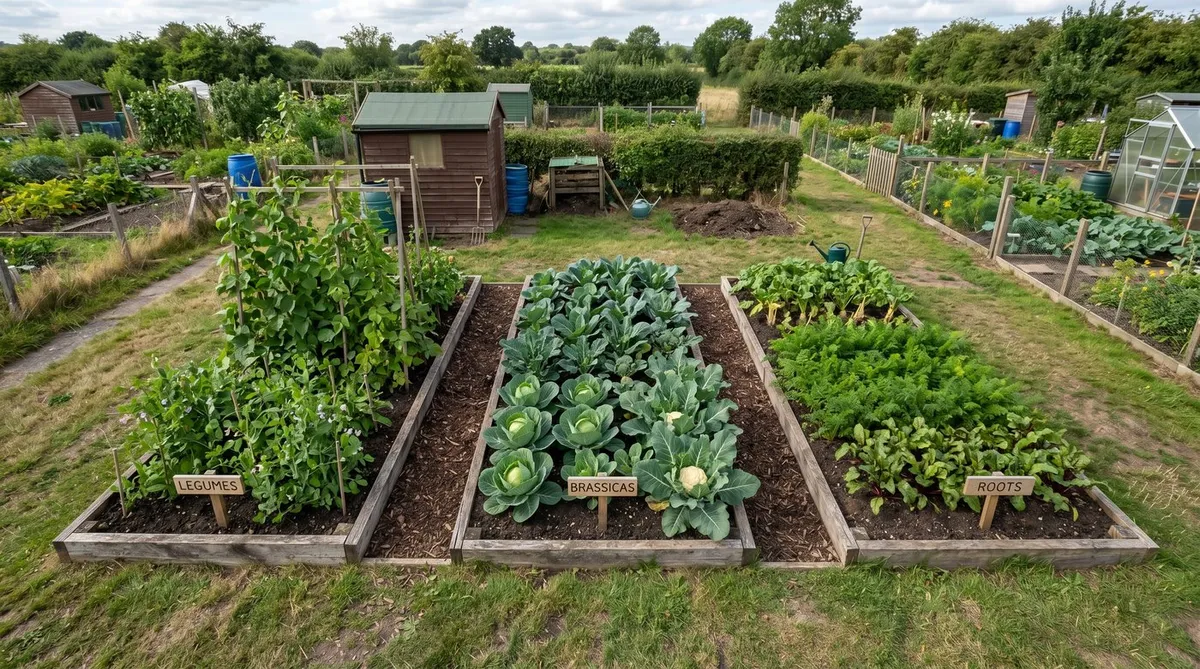
Key takeaways
- Rotate by plant family, because related crops share soil-borne pests and diseases
- Swede, turnip, radish and rocket are brassicas, so they go in the brassica bed
- Tomatoes and potatoes are in the same family and share blight
- Peas and beans are legumes, and their roots add a little nitrogen to the soil
- Leave three or four years before the same family returns to a bed
- Perennial herbs, fruit and quick salads sit outside the rotation
Crop rotation is simple once you know your plant families. Pests and diseases in the soil tend to attack a whole family, not one crop. So the rule is to keep each family moving, not each vegetable.
The tricky bit is knowing who’s related to whom. Swede is a brassica. Tomatoes are cousins of potatoes. Rocket is related to cabbage. This guide sorts out which vegetables belong together and what each family needs. For a bed-by-bed plan to put it into practice, see our crop rotation planner.
Why rotate by plant family?
Related plants share the same soil-borne problems. Grow cabbages in the same bed year after year and clubroot can build up and ruin it. Swap in kale or swede and the problem carries on, because they’re all brassicas.
Moving each family to a new bed every year starves those pests and diseases of a host. Leave three or four years before a family returns to the same spot.
Families also have similar needs. Brassicas like firm, rich soil. Root crops fork in fresh manure. Grouping them makes bed preparation easier too.
The main vegetable families at a glance
| Family | Main crops | Shared problems |
|---|---|---|
| Brassicas (cabbage family) | Cabbage, kale, broccoli, cauliflower, sprouts, swede, turnip, radish, kohlrabi, rocket, pak choi | Clubroot, cabbage root fly, caterpillars, flea beetle |
| Legumes (pea and bean family) | Peas, broad beans, runner beans, French beans | Pea moth, black bean aphid, chocolate spot, foot and root rots |
| Solanaceae (potato family) | Potatoes, tomatoes, peppers, chillies, aubergines | Blight, potato cyst nematodes, scab |
| Alliums (onion family) | Onions, garlic, leeks, shallots, chives | White rot, onion fly, allium leaf miner, rust |
| Apiaceae (carrot family) | Carrots, parsnips, celery, celeriac, fennel, parsley | Carrot fly, parsnip canker |
| Cucurbits (squash family) | Courgettes, squash, pumpkins, cucumbers, melons | Powdery mildew, cucumber mosaic virus, slugs |
| Beet family | Beetroot, chard, spinach, perpetual spinach | Beet leaf miner, downy mildew |
Brassicas: the cabbage family
Brassicas are the family that most needs rotating. Clubroot spores can last in the soil for up to 20 years, and once a bed has it, brassicas struggle there.
The family is bigger than most people think. Alongside cabbages and broccoli, it includes swedes, turnips, radishes, kohlrabi, rocket, mustard, mizuna and pak choi. All of them belong in the brassica bed.
Brassicas like firm, fertile soil that isn’t acidic. Gardeners often lime the brassica bed in winter if the soil is acid, which also makes clubroot less likely. Our guide to clubroot explains how to spot it.

Savoy cabbage, cavolo nero, cauliflower and broccoli all look different, but they’re one family with the same problems.
Legumes: the pea and bean family
Legumes include peas, mangetout, sugar snaps and broad, runner and French beans. Their roots carry small nodules holding bacteria that take nitrogen from the air.
When you cut the plants down and leave the roots in the soil, a little of that nitrogen stays behind for the next crop. That’s why brassicas, which are hungry for nitrogen, often follow legumes in a rotation.
Legumes share pea moth, black bean aphid, chocolate spot on broad beans, and foot and root rots that build up in soil. Clover and field beans used as green manures are legumes too. Our guide to green manures shows how to fit them in.

Broad beans, runners and peas share a bed and a family. Leave the roots in the ground when you clear them.
Solanaceae: the potato and tomato family
Potatoes and tomatoes are close relatives, along with peppers, chillies and aubergines. They share blight, a disease that spreads fast in warm, wet summers, and potato cyst nematodes that live in the soil.
Never follow potatoes with tomatoes in the same bed, or the other way round. Outdoor tomatoes are best kept away from potatoes altogether, as blight moves easily between them. Our guide to late blight on potatoes and tomatoes covers what to look for.
Potatoes don’t like freshly limed soil, which can encourage common scab. Keep lime for the brassica bed.

Tomatoes, potatoes and aubergines are all in the same family, so they share blight and need rotating together.
Alliums: the onion family
Alliums include onions, garlic, leeks, shallots, spring onions and chives. They share white rot, onion fly, allium leaf miner and rust.
White rot is the big worry. It leaves fluffy white mould on the bulbs and stays in the soil for many years. If a bed gets it, stop growing alliums there and move them to fresh ground. Our guide to allium white rot explains more.
In a four-bed rotation, alliums usually join the legumes or the roots. Onions like firm soil that hasn’t been freshly manured.

Garlic, leeks and onions are all alliums. Move them on each year to keep white rot at bay.
The carrot, squash and beet families
These three families fit into a rotation more loosely.
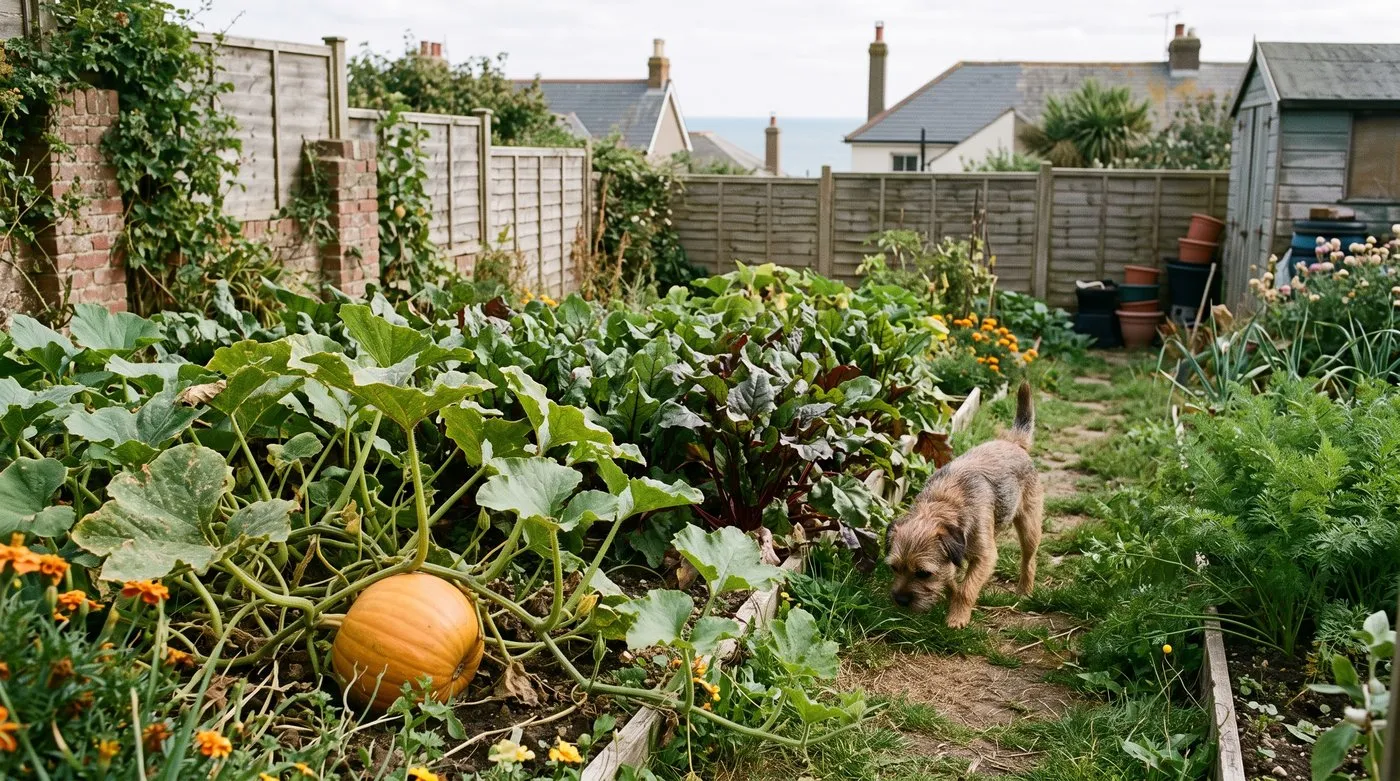
Squash, beetroot and carrots come from three different families, but they can share a bed happily.
The carrot family (Apiaceae) includes carrots, parsnips, celery, celeriac, fennel and parsley. They share carrot fly. They usually make up the root bed. Skip fresh manure before sowing, as it makes roots fork.
Cucurbits include courgettes, marrows, squash, pumpkins and cucumbers. They have fewer long-lasting soil problems, so they can slot into any bed with room, often alongside potatoes or brassicas. They’re hungry, so give them plenty of compost.
The beet family includes beetroot, chard and spinach. They usually go in the root bed with carrots and parsnips. They share beet leaf miner and downy mildew.
Surprising family members that catch people out
These are the crops that most often end up in the wrong bed.

Swedes look like a root crop, but they’re brassicas. They belong in the cabbage bed.
| Crop | Looks like | Actually is |
|---|---|---|
| Swede and turnip | Root crop | Brassica |
| Radish | Root crop | Brassica |
| Rocket and mizuna | Salad leaf | Brassica |
| Tomato | Fruiting crop | Potato family |
| Beetroot | Root crop | Beet family, not carrot family |
| Sweetcorn | Tall veg | Grass family (rotate freely) |
| Lettuce | Salad | Daisy family (rotate freely) |
Putting a swede in the root bed is the classic slip. It can carry clubroot along with it, undoing your careful rotation.
Crops that sit outside the rotation
Some crops don’t need to move each year.
- Perennial veg and fruit. Rhubarb, asparagus, strawberries, raspberries and fruit bushes stay put. Give them their own beds.
- Perennial herbs. Rosemary, thyme, sage, mint and chives stay in a herb bed.
- Quick salads. Lettuce is harvested before soil problems build up, so tuck it into any gap.
- Sweetcorn. It shares few problems with other veg, so it can go wherever there’s space.
Common mistakes with plant families
- Putting swedes, turnips and radishes with the roots. They’re brassicas.
- Treating tomatoes and potatoes as unrelated. They share blight.
- Growing rocket on clubroot ground. Leafy brassicas get it too.
- Forgetting where things grew. Jot down what went in each bed every year. A phone photo of the plot works well.
- Bringing in disease. Clubroot and white rot can arrive on bought-in plants, soil or muddy boots, so buy healthy plants from a reliable source.
Crop rotation jobs through the year
| Month | Job |
|---|---|
| September to October | Clear beds and note what grew where. Sow green manures on empty ground |
| November to December | Plan next year’s beds by family. Order seed potatoes and onion sets |
| January to February | Lime the brassica bed if your soil is acid. Spread compost on the potato bed |
| March to May | Sow and plant each family in its new bed |
| June to August | Watch for family pests and record any problems |
Frequently asked questions
What plants are in the same family as tomatoes?
Tomatoes belong to the potato or nightshade family, Solanaceae. Other members include potatoes, peppers, chillies and aubergines. They share problems such as blight and potato cyst nematodes. Keep them out of the same bed in following years.
Are peas and beans in the same family?
Yes, peas and beans are both legumes. The family includes broad, runner and French beans, peas, mangetout and sugar snaps. Their roots carry nodules with bacteria that take nitrogen from the air. That’s why a legume bed is often followed by hungry brassicas.
Is a swede a brassica or a root crop?
Swede is a brassica, even though you eat the root. So are turnips, radishes, kohlrabi and rocket. They all get clubroot and cabbage root fly. Grow them in the brassica bed, not with carrots and parsnips.
Why do brassicas need their own bed?
Mainly because of clubroot, a soil disease that can last up to 20 years. It attacks every member of the cabbage family. Rotating brassicas stops it building up. If a bed already has clubroot, grow brassicas elsewhere.
Which family do onions and garlic belong to?
Onions, garlic, leeks, shallots and chives are all alliums. They share white rot, onion fly and allium leaf miner. White rot lasts many years in soil. If a bed gets it, don’t grow alliums there again.
Do I need to rotate herbs and salads?
Not usually. Perennial herbs such as rosemary, thyme, sage and chives stay put. Lettuce and quick salads are harvested before soil problems build up, so tuck them into gaps anywhere. Rocket and mizuna are brassicas, though, so keep them off clubroot ground.
Ready to plan your beds? Follow our 4-year crop rotation bed by bed, or try the simpler 3-year crop rotation for smaller plots. You’ll find more in our growing veg guides.
Our team produces practical UK gardening guidance from source research, contributor records and established horticultural practice. Editorial standards are overseen by Matt W.