Key takeaways
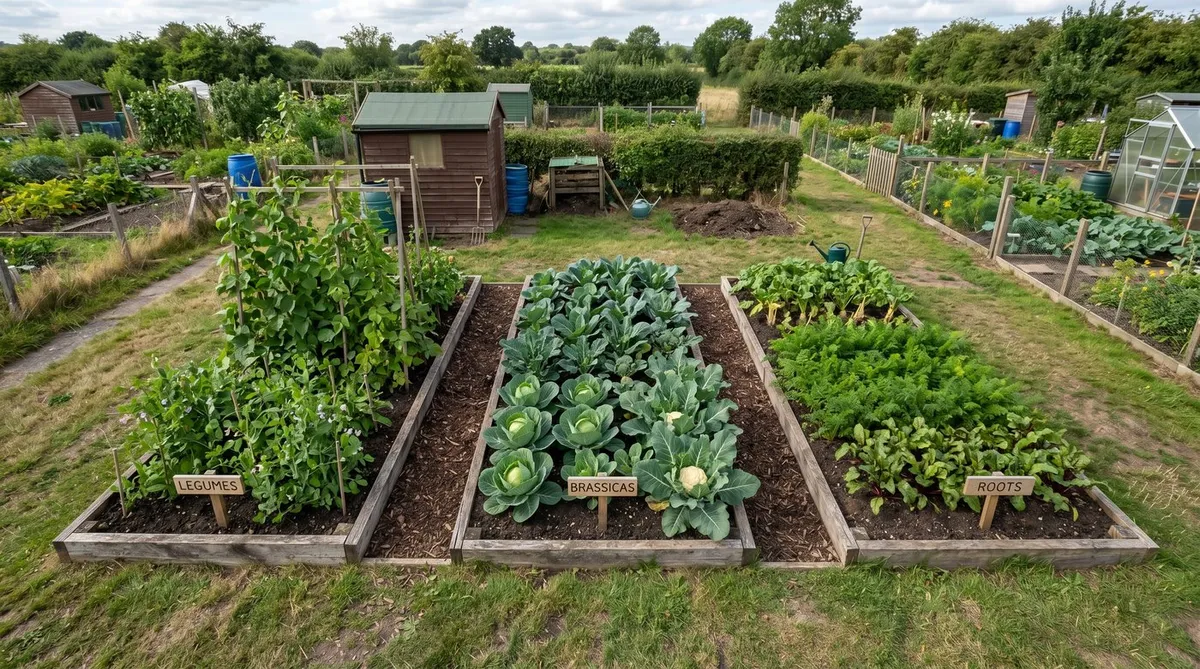
- Three beds, three groups, and every group moves one bed along each winter
- The order in each bed is legumes, then brassicas, then roots, then back to legumes
- Swede, turnip and radish are brassicas, so they go in the brassica bed
- Onions, garlic and leeks share the roots bed
- Potatoes, squash, sweetcorn and perennials stay outside the three-bed cycle
- Write down or photograph what grew where every autumn
A 3-year crop rotation plan is the easiest way to keep a small veg plot healthy. You need three beds and three groups of crops. Each winter, every group moves one bed along, and after three years each bed is back where it started.
This page is the ready-made planting plan: what to sow in each bed, year by year, with varieties that do well in UK gardens. For setting up the beds and feeding them with lime, manure and compost, see the companion guide to 3-year crop rotation bed layout and soil feeding.
How does a 3-year crop rotation work?
Three groups take turns in three beds. In any one year you have one bed of each. Each bed follows the same order: legumes, then brassicas, then roots, then back to legumes.
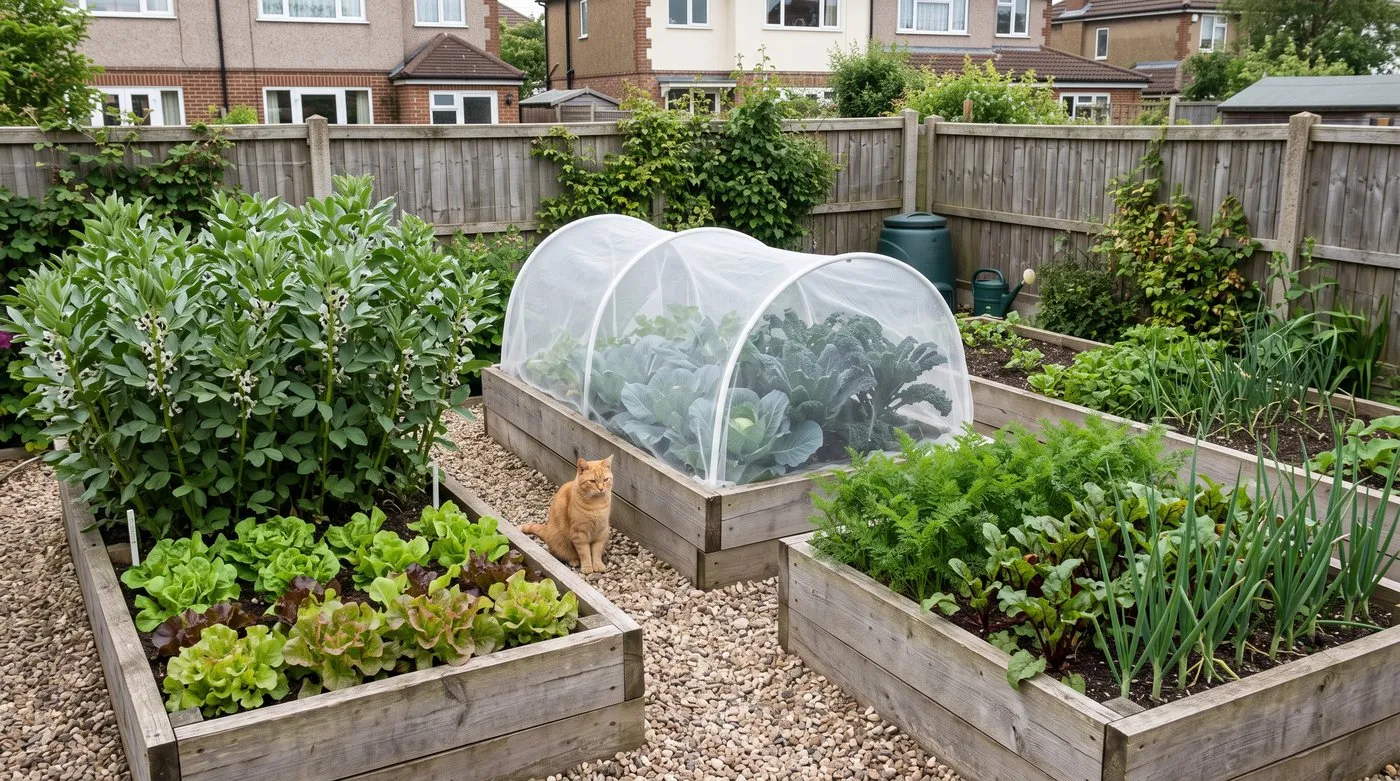
One bed of each group every year. Next winter, each group simply shuffles one bed along.
- Legumes and salads: peas, broad beans, French and runner beans, plus quick lettuce, rocket and spinach.
- Brassicas: cabbage, kale, broccoli, cauliflower, sprouts, kohlrabi, swede, turnip and radish.
- Roots and onions: carrots, parsnips, beetroot, onions, shallots, garlic and leeks.
The order has a simple logic. Peas and beans leave the soil in good heart, and leafy brassicas make the most of it. Roots follow because they don’t want rich, freshly manured ground, which makes carrots and parsnips fork.
Most of the benefit comes from not growing the same family in the same soil two years running. Pests and diseases that live in the soil, such as clubroot and onion white rot, build up when their favourite crop keeps coming back.
Which crops go in each bed?
Sort crops by family, not by what they look like. That’s the one rule that catches people out. Swede and turnip grow like roots but are brassicas. Pests and diseases follow the family, so put them with the cabbages.
| Group | Crops | Handy note |
|---|---|---|
| Legumes and salads | Broad beans, peas, runner beans, French beans, lettuce, rocket, spinach | Leave bean roots in the ground at the end of the season |
| Brassicas | Cabbage, kale, broccoli, calabrese, cauliflower, sprouts, kohlrabi, swede, turnip, radish | Net against pigeons and cabbage white butterflies |
| Roots and onions | Carrots, parsnips, beetroot, chard, onions, shallots, garlic, leeks | No fresh manure before sowing |
| Outside the cycle | Potatoes, tomatoes, squash, courgettes, sweetcorn | Give them their own patch and move it each year |
| Never rotate | Asparagus, rhubarb, globe artichokes, perennial herbs, soft fruit | Fixed beds or borders |
If you want the full family tree, including the odd members that surprise people, read the guide to vegetable plant families for crop rotation.
The year-by-year 3-bed rotation plan
Number your beds and keep the numbers fixed. Only the crops move. Here is the full three-year cycle.
| Bed | Year 1 | Year 2 | Year 3 |
|---|---|---|---|
| Bed 1 | Legumes and salads | Brassicas | Roots and onions |
| Bed 2 | Brassicas | Roots and onions | Legumes and salads |
| Bed 3 | Roots and onions | Legumes and salads | Brassicas |
In year four you’re back to the year one layout. Put it in plain words and it’s easy to remember: where the beans grew, the cabbages go next. Where the cabbages grew, the carrots go next. Where the carrots grew, the beans go next.
The crop rotation planner compares this with two-bed and four-bed layouts if you’re not sure three is right for you.
What to sow in the legume and salad bed
Fill this bed with peas and beans, and tuck quick salads in around them. Here’s a simple year-one sowing list.
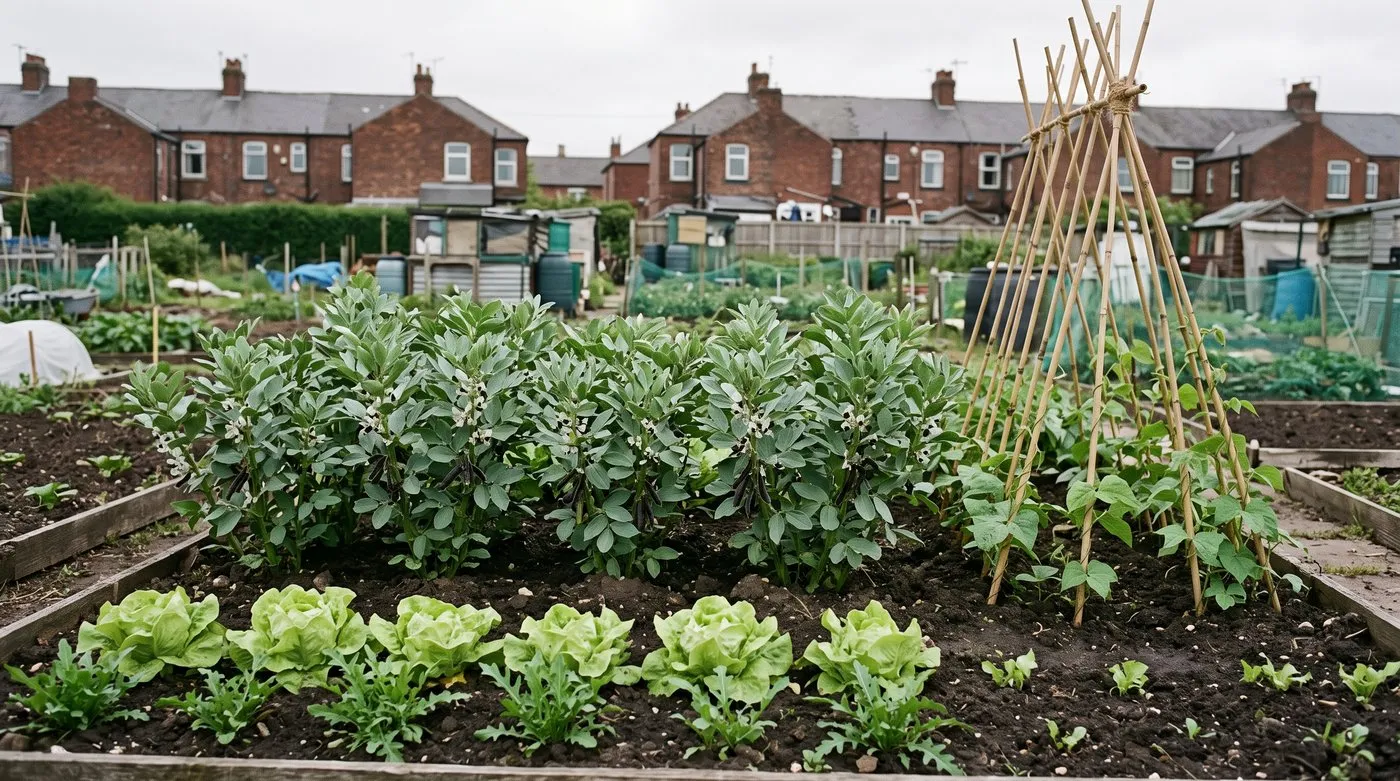
Quick lettuces and rocket fill the gaps while the beans grow. Tall runner beans go at the north end so they don’t shade the rest.
- Broad beans ‘Aquadulce Claudia’ sown in November, or ‘The Sutton’ sown from February. Space them about 20cm apart in double rows.
- Runner beans ‘Polestar’ on a wigwam or row of canes, sown outside in late May or June.
- French beans or peas in a row along the sunny side.
- Lettuce ‘Little Gem’ and rocket between rows while the beans are small.
- Perpetual spinach as a late sowing in July or August, once the broad beans are cleared.
Put tall runner beans at the north end of the bed so they don’t shade everything else. When the beans finish, cut the stems at ground level and leave the roots in the soil.
What to sow in the brassica bed
Plant brassicas firmly and net them straight away. Pigeons and cabbage white butterflies find them fast.
- Cabbage ‘Hispi’ for summer and ‘January King’ for winter.
- Kale ‘Cavolo Nero’ or ‘Red Russian’, which crop all winter.
- Purple sprouting broccoli ‘Rudolph’ for an early spring crop.
- Calabrese ‘Marathon’ for late summer and autumn heads.
- Swede, turnip and radish, because they belong here too.
Brassicas like firm soil, so don’t dig the bed just before planting. Tread it gently instead. They also prefer soil that isn’t acidic. If a simple test shows acid soil, the garden lime guide explains when and how much to add.

Fine netting over hoops keeps butterflies and pigeons off. Put it on the day you plant, not after the first holes appear.
What to sow in the roots and onion bed
This bed wants fine, stone-free soil with no fresh manure. Carrots and parsnips fork in rich or stony ground.
- Carrots ‘Autumn King’ for storing, or ‘Resistafly’ if carrot root fly is a problem.
- Parsnips ‘Gladiator’, sown from March to May.
- Beetroot ‘Boltardy’ for early sowings, or ‘Pablo’.
- Onion sets ‘Sturon’ or ‘Red Karmen’, planted in March or April.
- Garlic ‘Solent Wight’, planted in autumn.
- Leeks planted out in early summer for winter use.
Garlic goes in during October or November, before the rest of this bed’s year starts. Plant it in a cleared corner of the bed moving to roots next year. If that bed is still full of winter greens, start garlic in modules and plant it out in early spring.
Carrot root fly is the main pest here. A fleece barrier around the bed, or a covering of fine mesh, keeps it off. The carrot root fly guide explains the options.

Carrots, beetroot and onions share a bed happily. Next year this bed switches to peas and beans.
Where do potatoes and squash go?
Give potatoes, tomatoes, squash and sweetcorn a patch of their own. They don’t fit neatly into three beds.
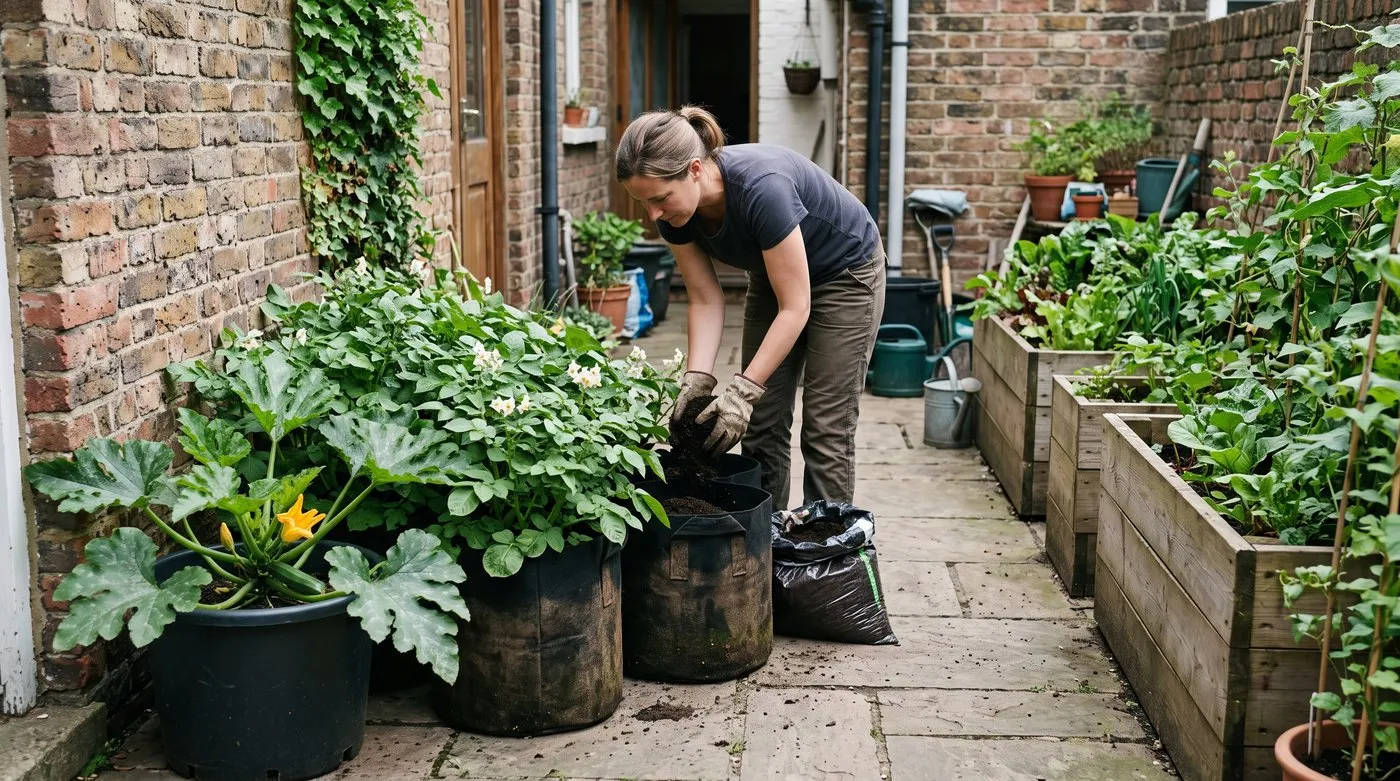
Potatoes in sacks sit happily outside the three-bed cycle. Tip the old compost onto a different bed each year.
Potatoes are the awkward one. They take a lot of space and share blight with tomatoes. The simplest answer is a separate potato patch that moves to fresh ground each year. Growing them in large sacks or tubs works well on a small plot. If you’d rather keep potatoes in the cycle, the 4-year crop rotation plan gives them their own bed.
Squash, courgettes and sweetcorn are hungry but share few soil problems with the main groups. Grow them in a spare corner with plenty of compost, or as a one-year guest in the legume bed if you have room.
Crops that never rotate
Perennial crops stay in one place for years. Moving them sets them back, so keep them in a fixed bed or border.
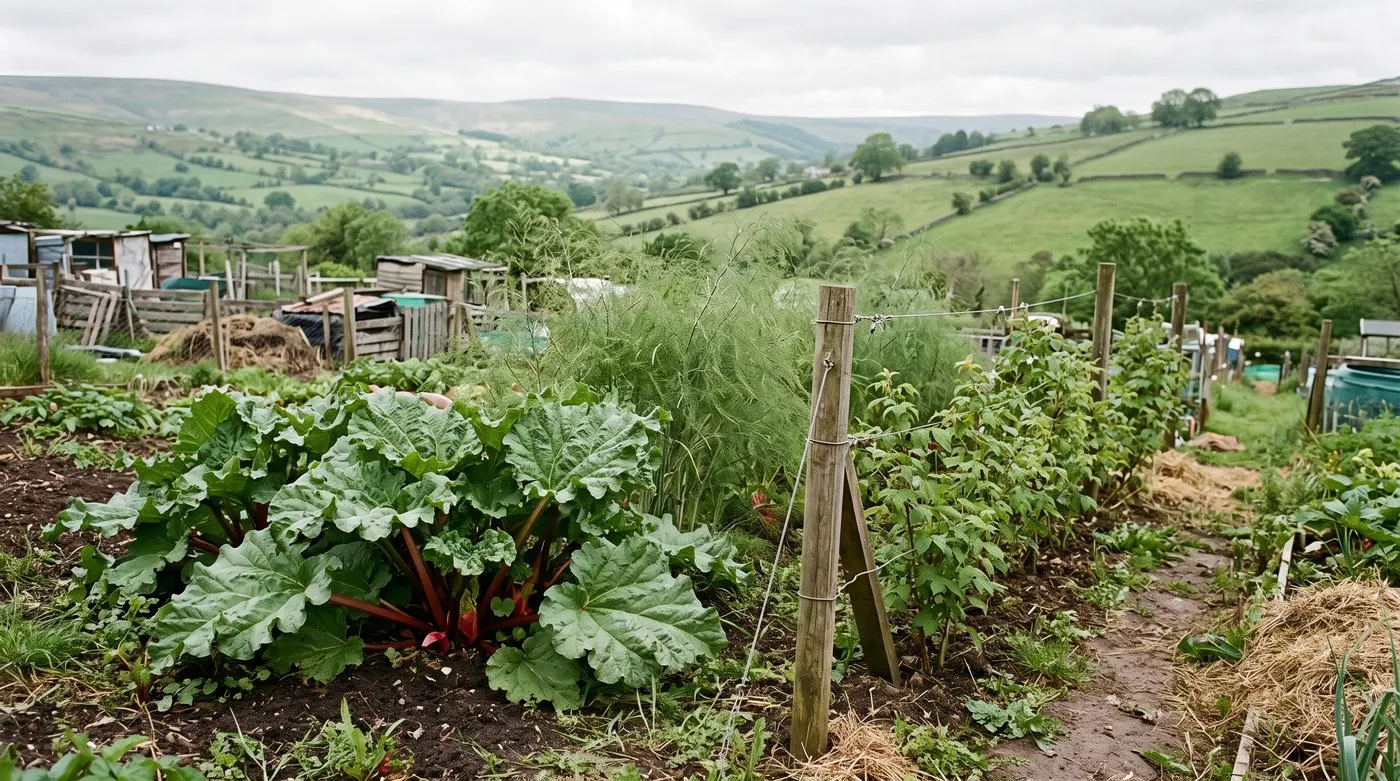
Rhubarb, asparagus and raspberries stay put for years. Give them a fixed bed along the edge, away from the rotation.
- Asparagus crowns crop for many years from one bed.
- Rhubarb crowns dislike being moved. Divide them every five years or so instead.
- Globe artichokes crop for several years before they need replacing.
- Perennial herbs such as sage, rosemary, thyme and mint suit a path edge or herb bed.
- Soft fruit such as raspberries, currants and gooseberries stay put for years.
Strawberries are the exception. Replace them with fresh plants in a new spot every three or four years.
Month-by-month calendar for a 3-bed rotation
Each year uses the same calendar. Only the bed that each group sits in changes.
| Month | Legumes and salads | Brassicas | Roots and onions |
|---|---|---|---|
| January | Order seed to match the plan | Order seed | Order onion sets and seed |
| February | Sow broad beans outside in mild areas | Sow early cabbage indoors | Warm the soil with cloches |
| March | Sow peas and more broad beans | Sow summer cabbage and calabrese indoors | Plant onion sets, sow parsnips |
| April | Sow lettuce and rocket | Sow kale, sprouts and winter cabbage | Sow carrots and beetroot |
| May | Sow French beans indoors | Plant out brassicas and net them | Thin carrots and beetroot |
| June | Plant out runner and French beans | Watch for caterpillars under leaves | Plant out leeks, water in dry spells |
| July | Pick broad beans, sow spinach | Keep nets secure | Lift garlic and dry it |
| August | Last salad sowings | Harvest calabrese and summer cabbage | Lift onions and early carrots |
| September | Cut bean stems, leave the roots | Pick autumn cabbage and kale | Lift maincrop roots for storing |
| October | Clear the bed, mulch with compost | Harvest sprouts | Plant garlic in a cleared corner of next year’s roots bed |
| November | Sow overwintering broad beans in next year’s legume bed | Pick winter greens | Plan next year’s move |
| December | Check the plan, update your notes | Pick kale and sprouts | Check stored roots |
The allotment planner has the wider jobs list for each month, beyond rotation.
Common 3-year rotation mistakes
Forgetting what grew where. This is the main reason rotations fall apart. Photograph each bed in autumn and keep a simple sketch in a notebook or on your phone.

An autumn walk round the plot, notebook in hand, is the best time to sketch next year’s move while you can still see what grew where.
Putting swede and turnip in the roots bed. They’re brassicas. In the roots bed they bring clubroot and flea beetle along with them.
Squeezing potatoes into the legume bed every year. That turns a three-year rotation into no rotation for potatoes. Give them their own moving patch.
Composting diseased roots. Brassica roots with clubroot and onions with white rot should go in the household waste, not the compost heap. Otherwise you spread the problem round the plot.
Giving up after one bad year. Rotation is a long game. Even a rough plan is far better than growing the same thing in the same spot every year.
Once your seed list is sorted, the guide to starting an allotment as a beginner helps with the rest of the plot. For more veg guides, browse the growing veg hub.
Frequently asked questions
Is a 3-year crop rotation enough for a UK allotment?
Yes, for most small plots and back gardens it works well. Each family gets two years away from a bed before it returns. If a bed already has clubroot or white rot, rotation alone won’t clear it. A longer gap or the 4-year plan is safer there.
What are the three groups in a 3-year crop rotation?
Legumes and salads, brassicas, and roots with the onion family. Peas and beans go with quick salads. Cabbages, kale, sprouts, swede and turnips make the brassica group. Carrots, parsnips, beetroot, onions, garlic and leeks share the third bed.
What goes in the first bed in year one?
Peas, beans and quick salad leaves. Broad beans, runner beans, French beans and peas fill most of it. Lettuce, rocket and spinach slot in between rows and after the early beans finish.
Can potatoes go in a 3-year crop rotation?
Not easily, so give them their own patch. Potatoes are greedy, take up lots of room and share blight with tomatoes. Grow them in a separate bed or in sacks, and move them to fresh ground each year. If you want potatoes in the cycle, use a 4-year plan.
How does a 3-year rotation compare with a 4-year rotation?
The 3-year plan is simpler and needs one bed fewer. A 4-year plan gives potatoes their own bed and a slightly longer break between crops. On a small plot, three beds are plenty.
Where do perennials go in a 3-year crop rotation plan?
Outside the cycle, in a fixed bed or border. Asparagus, rhubarb, globe artichokes, perennial herbs and soft fruit stay put for years. Moving them sets them back, so never rotate them.
When should I plan a 3-year crop rotation?
Plan in November or December for the following spring. Look at what each bed grew this year, move each group one bed along on paper, then order seed in January to match.
Our team produces practical UK gardening guidance from source research, contributor records and established horticultural practice. Editorial standards are overseen by Matt W.