Key takeaways
- Aubrieta flowers in April and May and sheets sunny walls, banks and gravel in colour
- Full sun and sharp drainage matter most; wet clay in winter is what usually kills it
- Tuck young plants into gritty wall pockets 30-45cm apart, with the crown angled outward
- Cut the whole mat back hard straight after flowering to stop it going bald in the middle
- Grow it lean in grit, with no feed and no bark mulch
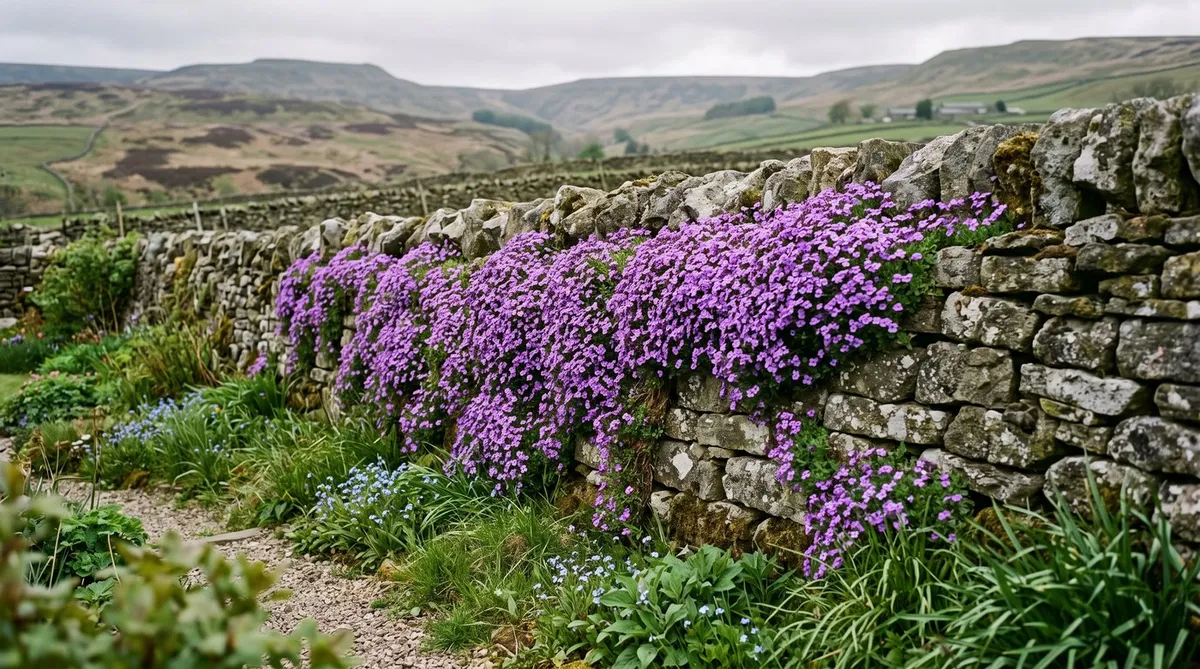
Aubrieta turns a plain stone wall into a waterfall of purple every spring. It’s a low, evergreen mat that spills over walls, steps and banks in April and May. You’ll also see it sold as aubretia or rock cress.
The secret is simple: sun, grit and one hard haircut a year. This guide focuses on getting aubrieta to sheet a wall or bank, and on fixing the two things that usually go wrong: rotting in winter and going bald in the middle. For varieties, pots and general care, see the full guide to growing aubretia.
Where aubrieta grows best
Aubrieta loves the dry, sunny, stony places that most border plants hate. It thrives on dry-stone walls, rockeries, sunny banks, gravel beds and raised bed edges, where it can tumble over stone.
Full sun matters most. A south or west-facing wall is ideal. In shade it stretches, flowers thinly and never covers itself.
The soil must drain fast. Aubrieta is happiest on neutral to limy soil, and it enjoys the lime that seeps out of old mortar. If your garden is chalky, you already have the perfect home for it. The guide to plants for chalky and alkaline soil has more ideas for that kind of ground.
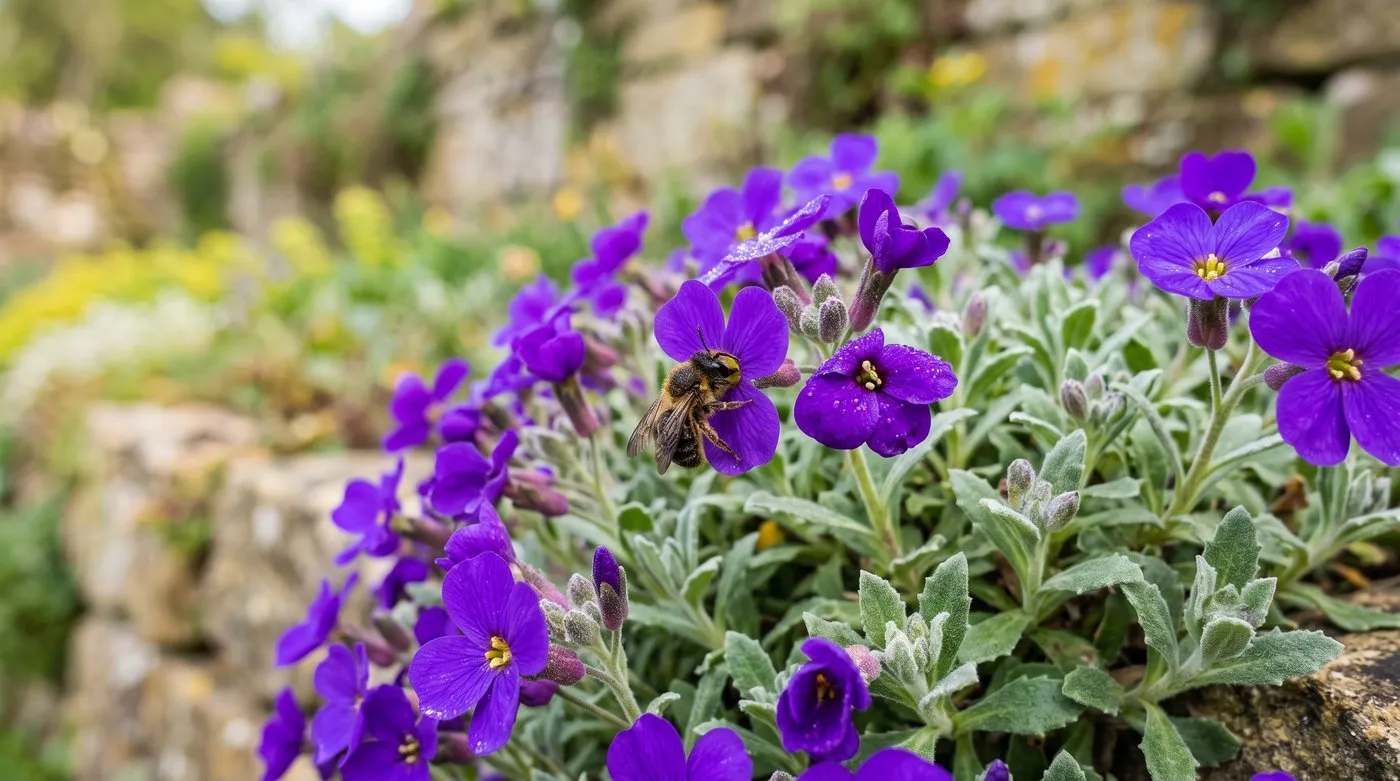
Each small flower has four petals, as aubrieta is a member of the cabbage family. Early bees love them.
Why aubrieta rots in clay
Wet soil in winter kills more aubrieta than cold ever does. The plant is fully hardy, but water sitting round the crown makes it rot from the base.
Clay holds water against the roots for weeks. Grit and stone let it drain away quickly, so the crown stays dry even after heavy rain. That’s why aubrieta looks so happy in a wall and sulks in a flat clay border.
Warning: Don’t plant aubrieta in a low, wet spot or unimproved clay. It may look fine all summer, then rot over its first wet winter. On clay, build up: a wall, raised bed or deep gravel bed.
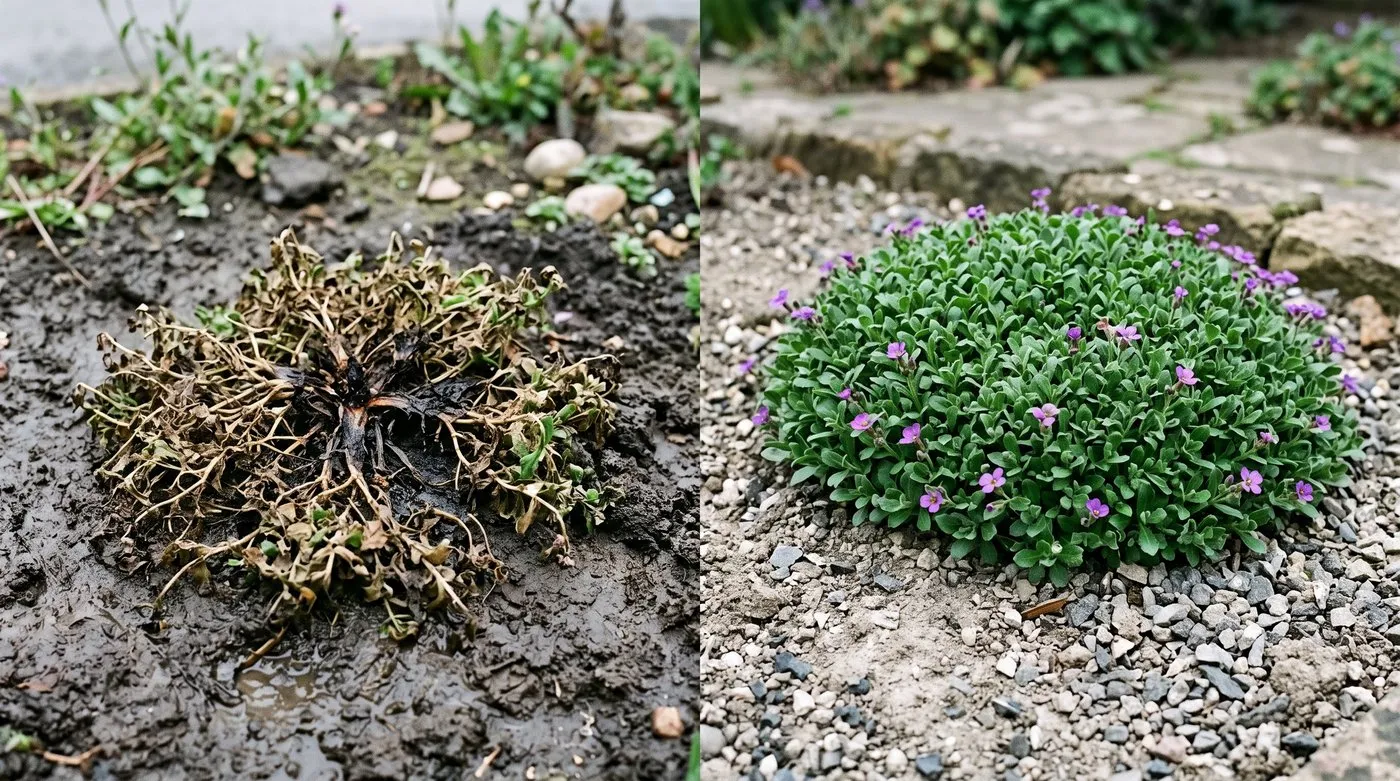
Left, a plant that rotted in wet clay. Right, a healthy mat in gravel. Drainage makes all the difference.
How to plant aubrieta in a wall
Plant in spring or early autumn, when the soil is warm but not baked. Young plants in small pots or plug plants are easiest to fit into gaps.
- Choose gaps in a sunny wall, or leave pockets as you build a new one.
- Tease out a little of the root ball so it fits the gap.
- Push the plant in with the crown angled slightly outward, so rain runs off.
- Firm gritty compost round the roots. A mix of compost and grit works well.
- Space plants 30-45cm apart along the wall. They’ll knit together in a couple of years.
- Water every few days until new growth shows, and in dry spells through the first summer.
Building a new wall or steps? The guide to garden steps and retaining walls covers the build, and you can leave planting pockets as you go.
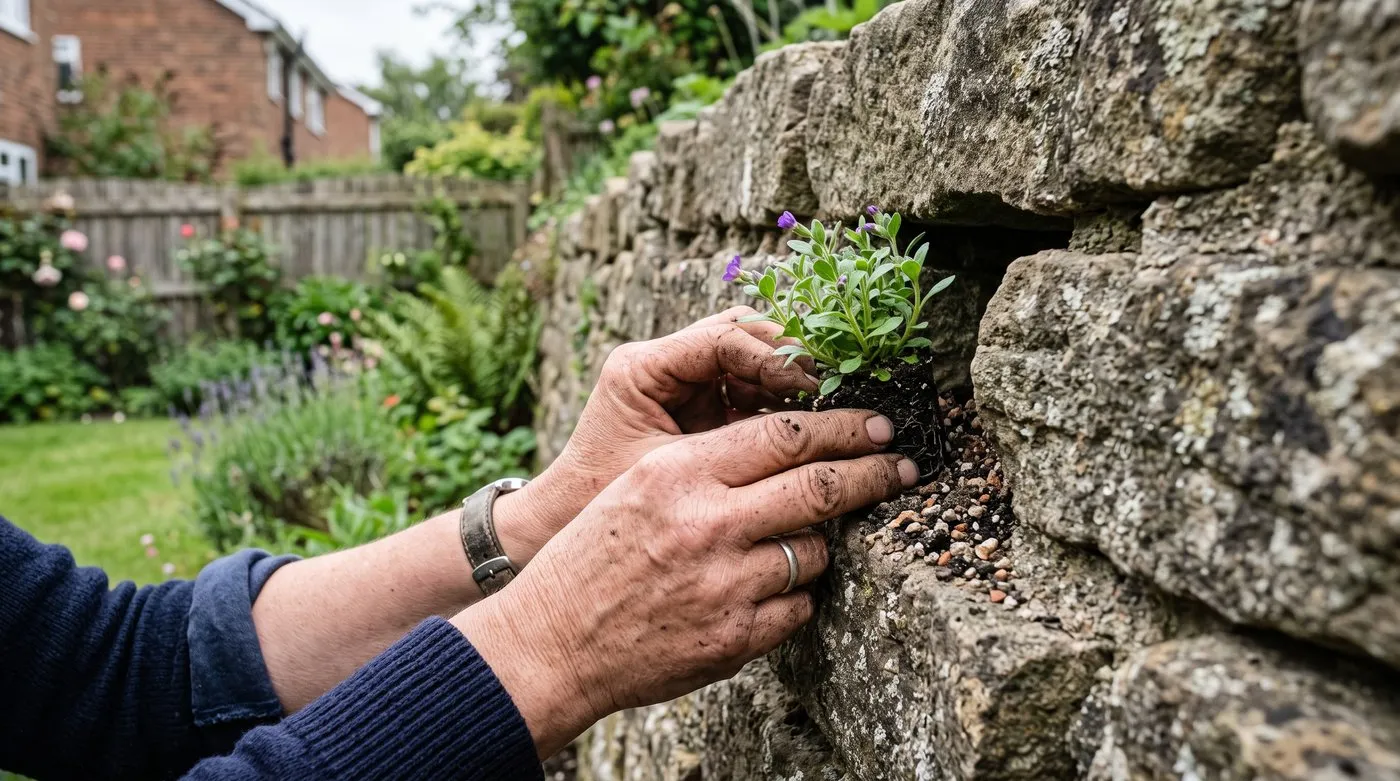
Firm a young plant into a gritty pocket, with the crown tipped outward so rain drains away.
Planting aubrieta in gravel and rockeries
For a rockery or gravel bed, dig in plenty of grit first. Plant so the crown sits level with or just above the surface. Then spread a layer of grit or gravel right up to the base.
That gravel collar keeps the crown dry and stops soil splashing onto the leaves. Never use bark or compost as a mulch around aubrieta, as it holds moisture against the plant. The guide to building a rockery explains how to create free-draining pockets.
The spring rockery trio
Aubrieta looks best in company. A classic mix pairs it with two other easy alpines that flower at the same time and like the same conditions:
- Aubrieta in purple
- Aurinia saxatilis (gold alyssum) in yellow
- Arabis in white
Together they cover a wall or rockery in purple, gold and white through April and May. All three like full sun and grit, and all three get a trim after flowering. Plant them about 40cm apart so they meet without smothering each other.
Once they finish, later plants can take over. Erigeron, the little Mexican fleabane, seeds into wall cracks and flowers all summer.
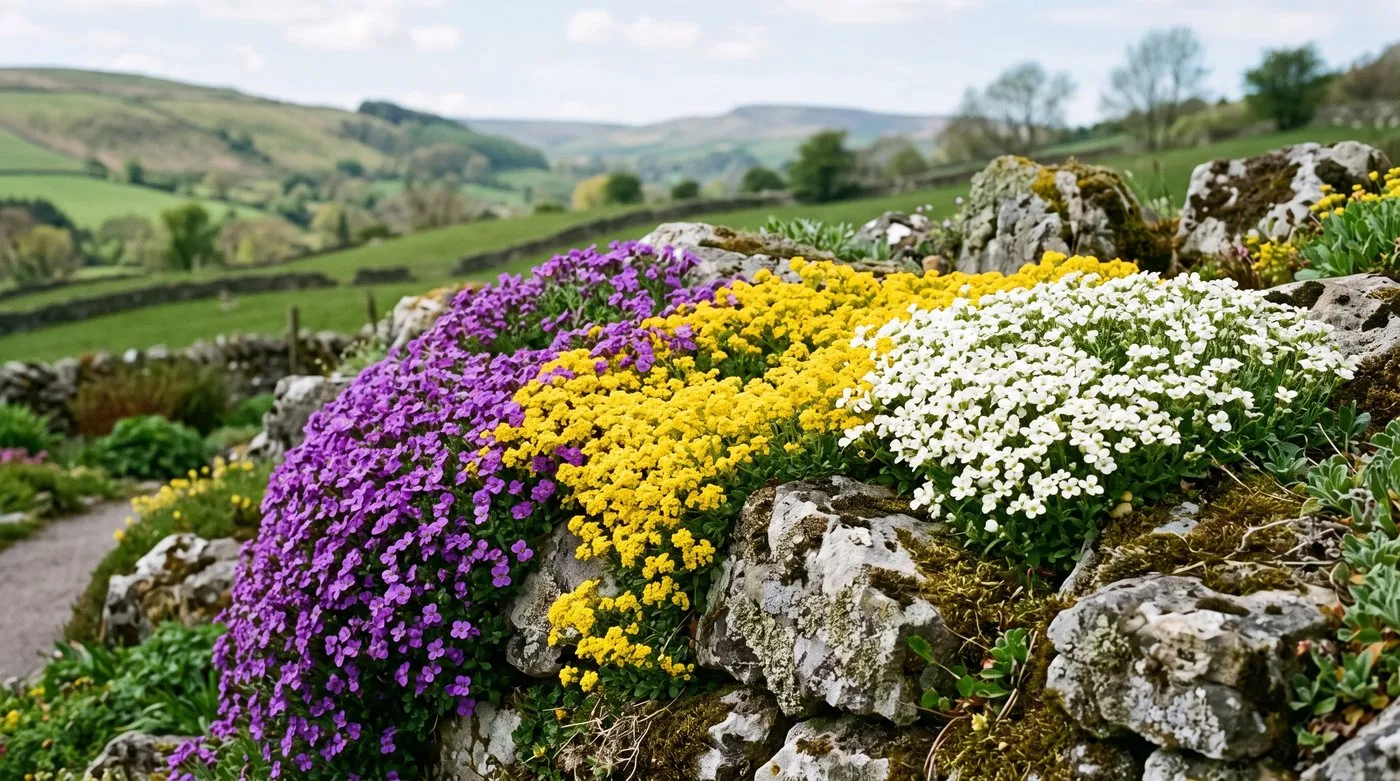
Purple, gold and white: the classic spring rockery trio, all happy with the same sun and grit.
How to stop aubrieta going bald
Cut the whole mat back hard straight after flowering, usually in late May or early June. This one job keeps aubrieta dense for years.
Left uncut, the plant keeps growing outwards. The centre ages, goes woody, loses its leaves and dies back, leaving a ring of green round a bare patch.
Use shears and take the mat back by up to half all over. Don’t be timid. It looks bare for a couple of weeks, then regrows tighter than before. Sometimes you get a few extra flowers later in the year.
Gardener’s tip: Time the cut by the flowers, not the calendar. Trim within a couple of weeks of the last flowers fading. Leave it until midsummer and the regrowth is thin.
Don’t feed aubrieta. Rich soil makes it soft and floppy, with fewer flowers. A lean plant in grit stays tight and flowers best.
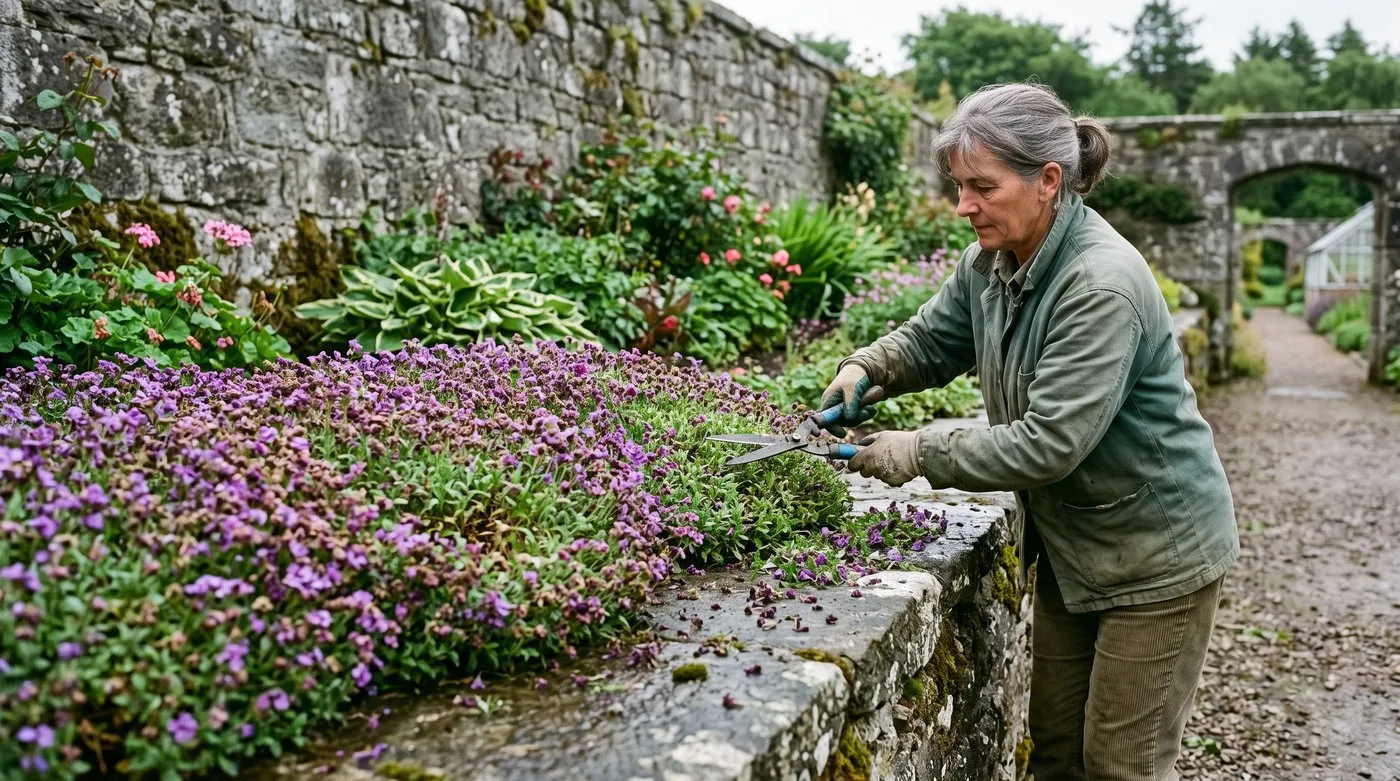
Shear the mat back hard as the flowers fade. It soon regrows tight and green.
Making more aubrieta for a long wall
To sheet a long wall, you’ll want plenty of plants. The easiest way is softwood cuttings in early summer, taken from the fresh shoots after you trim.
Take 5cm shoots, strip the lower leaves and push them into gritty compost. Keep them shaded and just moist. They usually root within a few weeks. Cuttings give you exactly the same colour as the parent.
You can also sow seed thinly on gritty compost in spring, barely covering it. Seed-raised plants can vary in colour, which is fine for a mixed wall. Old, woody clumps can be lifted and divided in early autumn.
Aubrieta care calendar
| Month | Task |
|---|---|
| January to February | Brush wet leaves off mats. Top up grit if rain has washed it away |
| March | Sow seed under cover. First buds show on established plants |
| April to May | Main flowering. Water new spring plantings. Cut back hard as flowers fade |
| June | Take softwood cuttings. New growth flushes from the trimmed mats |
| July to August | Water young plants in dry spells. Established mats need nothing |
| September | Divide old woody clumps. Plant new aubrieta while the soil is warm |
| October to December | Clear fallen leaves off mats. Keep drainage clear. No cutting now |
Common mistakes with aubrieta
- Skipping the trim. The mat goes woody and bare in the middle. Cut it back hard every year after flowering.
- Planting in wet clay. It rots over winter. Use a wall, raised bed or gravel.
- A shady spot. It stretches and flowers thinly. Give it full sun.
- Feeding it. You’ll get soft, floppy growth and fewer flowers.
- Mulching with bark or compost. This holds water round the crown. Use grit or gravel instead.
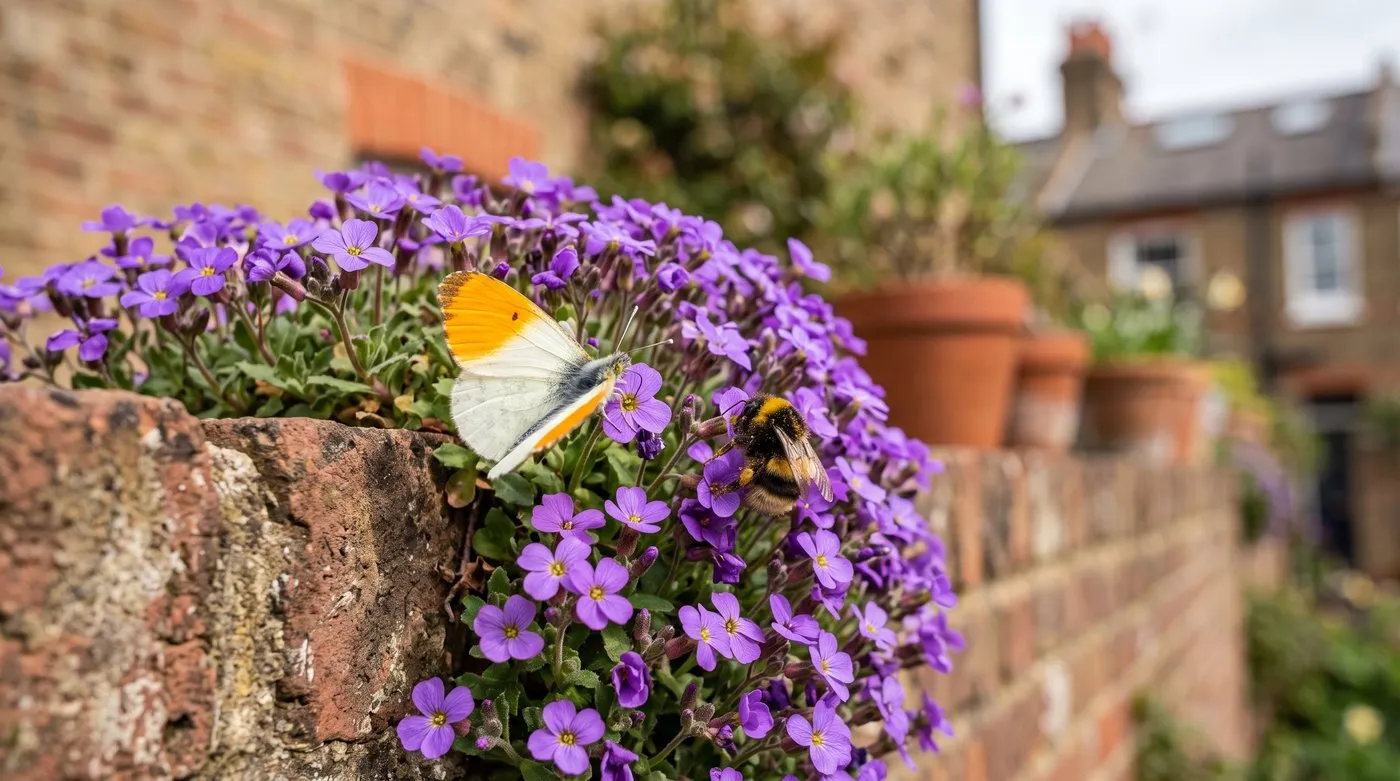
Aubrieta is early food for bumblebees and spring butterflies like this orange-tip.
Aubrieta is one of many plants that feed pollinators early in the year. See the guide to early spring pollinator plants for more, or browse the plants section. For a whole planting that copes with sun and dry spells, read the guide to drought-tolerant plants.
Frequently asked questions
How do you grow aubrieta on a wall?
Plant young plants into gritty pockets in a sunny wall. Angle each crown slightly outward so rain runs off, firm gritty compost round the roots and water until established. Cut the mats back hard after flowering each year.
When does aubrieta flower in the UK?
Aubrieta flowers in April and May. In a warm, sheltered spot the first flowers can open in late March. A trim straight after flowering sometimes brings a few extra flowers in late summer or autumn.
Should you cut back aubrieta after flowering?
Yes, cut it back hard as soon as the flowers fade. Shear the whole mat by up to half. This keeps it dense and stops the centre going woody and bare.
Why is my aubrieta bare in the middle?
Usually it hasn’t been cut back after flowering. Uncut plants grow outwards and the old centre dies off. Shear it hard after flowering, or replace very woody plants with fresh cuttings.
Does aubrieta grow in clay soil?
Not in wet, heavy clay. It rots at the base over a wet winter. On clay, grow it in a wall, a raised bed or a gravel bed with lots of grit so water drains away fast.
Is aubrieta the same as aubretia or rock cress?
Yes, they’re the same plant. Aubrieta is the botanical spelling and aubretia the common one. Rock cress is a common name that reflects its love of walls and rockeries.
Does aubrieta come back every year?
Yes, it’s an evergreen perennial that lasts for years in the right spot. Good drainage and a yearly trim keep it going. Older plants slowly tire, so root a few cuttings now and then.
Our team produces practical UK gardening guidance from source research, contributor records and established horticultural practice. Editorial standards are overseen by Matt W.