Key takeaways
- Laburnum x watereri 'Vossii' has the longest flower chains and sets few seed pods
- It flowers for about three weeks in late May and early June
- Plant in sun on any well-drained soil, including chalk and clay
- Every part is poisonous, especially the pea-like seeds, so keep children and animals away from pods
- Prune only in late summer, as winter and spring cuts bleed sap
- It trains well over a strong arch or tunnel for a curtain of gold
Laburnum, the golden chain tree, fills late May with hanging chains of bright yellow flowers. Grow it in sun on almost any well-drained soil, choose the variety ‘Vossii’, and prune only in late summer. One thing comes first, though: every part of the tree is poisonous, so plant it with care.
For the rest of the year it’s a neat, leafy tree that asks very little. Trained over an arch, it makes one of the great sights of the British spring.
Warning: Every part of laburnum is poisonous, especially the seeds. The pods look like small pea pods. Keep children, dogs and horses away from them, and pick up fallen pods in autumn.
Which laburnum should you grow?
Choose Laburnum x watereri ‘Vossii’ for almost any garden. Three laburnums are commonly sold, and they differ in flower length and how many seed pods they make.
| Type | Flower chains | Seed pods | Best for |
|---|---|---|---|
| L. x watereri ‘Vossii’ | Longest and fullest | Few | Most gardens, arches, family gardens |
| Laburnum alpinum (Scotch laburnum) | Slender, flowers a little later | Some | Cold, exposed and northern gardens |
| Laburnum anagyroides (common laburnum) | Shorter | Many | Wilder spots away from children and animals |
‘Vossii’ is a hybrid of the other two. It holds the RHS Award of Garden Merit and gives the showiest display. Because it sets few seeds, there’s far less of the most poisonous part on the ground.
Scotch laburnum is tough and has glossier leaves. It suits colder gardens.
Common laburnum sets heavy crops of pods every year, so it’s a poor choice near children or pets.
Where to plant laburnum
Plant laburnum in full sun for the best flowers, though it copes with light shade. It’s very easy-going about soil and grows on most well-drained ground, including chalk and clay. It dislikes waterlogged soil.
Give a free-standing tree room to spread to about 6-8m over the years. Keep it away from play areas, ponds and paddock fences, where pods would fall. It also suits a front lawn, where you can enjoy it from the house. The guide to the best trees for small gardens has other options if space is tight.
How to plant a laburnum tree
Bare-root trees are sold from November to March and are usually the best value. Potted trees can go in at other times, but autumn and spring are easiest.
- Dig a hole wider than the roots, but no deeper than the soil mark on the stem.
- Tease out any circling roots on potted trees.
- Set the tree so the graft union (the knobbly joint near the base) sits above the soil.
- Backfill with the soil you dug out. Don’t add compost or fertiliser to the hole.
- Firm gently and water in well.
- Fix a short stake at an angle with a soft tie on the lower part of the stem.
Remove the stake after about two years, once the roots have gripped. Water deeply in dry spells for the first two summers. A ring of bark mulch around the base, kept off the trunk, helps hold in moisture.

A short, low stake lets the top of the tree flex and grow a stronger trunk. Take it away after about two years.
Training a laburnum arch or tunnel
A laburnum arch is pure joy in late May. The famous tunnel at Bodnant Garden in north Wales shows how good it can look, and the same idea works over a single garden arch.
Use a strong metal frame tall enough for the flower chains to hang clear of your head. Plant young, flexible ‘Vossii’ trees along both sides. As they grow, tie the main stems to the uprights, then bend and spread them along the top to make a canopy.
Each late summer, tie in new stems where you need them and shorten the rest back to the framework. Over a few years, short side shoots build up along the frame and carry the flowers. The guide to building a rose arch covers putting up a sturdy frame.

‘Vossii’ is the classic choice for tunnels, as its long chains hang cleanly through the frame.
How to prune and care for laburnum
Laburnum needs little care, and too much pruning does more harm than too little. Prune only in late summer, roughly July to September, once the tree is in full leaf. Remove dead, damaged or crossing branches and lightly shape the tree.
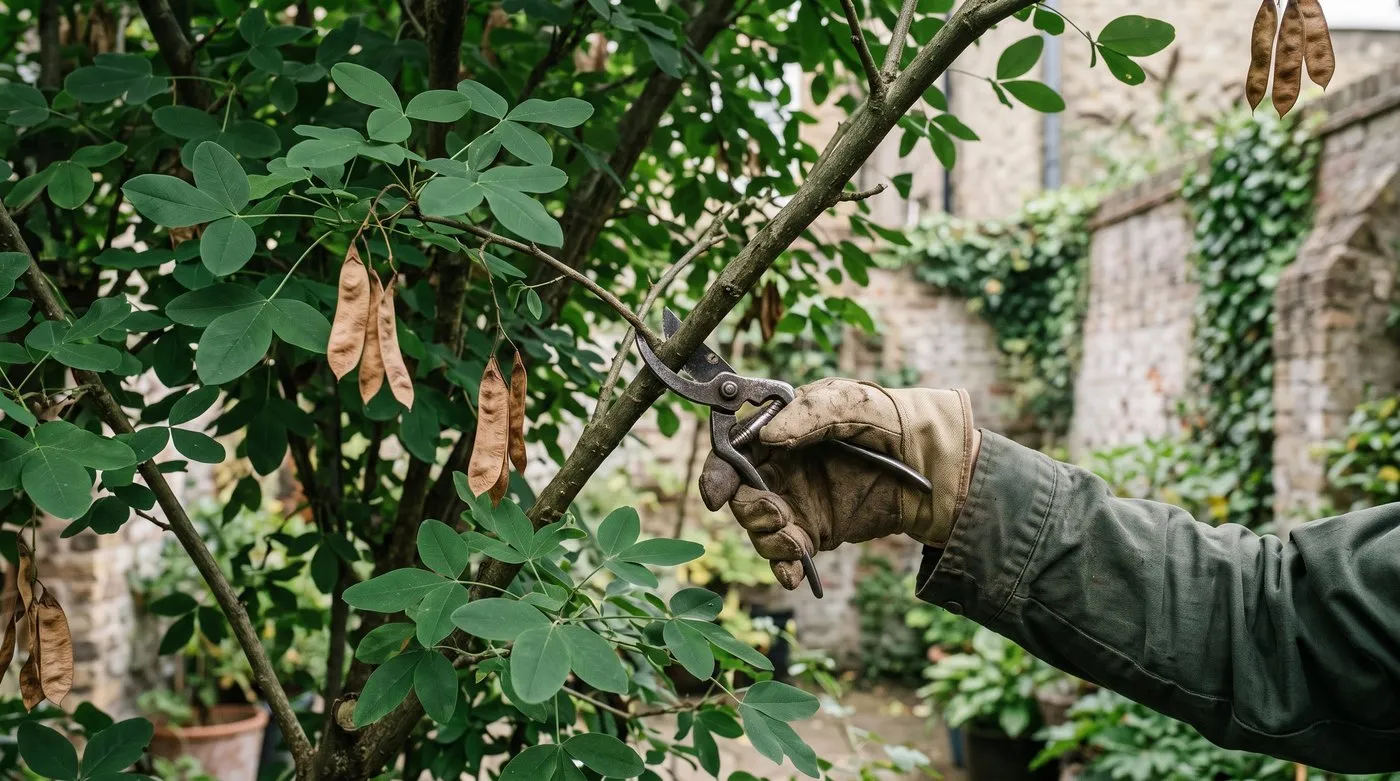
Late summer, with the tree in full leaf, is the only safe time to prune. Cuts heal without bleeding sap.
Never prune in winter or spring. Cuts made then bleed sap heavily, which weakens the tree and can let disease in. The same late-summer timing applies to wisteria, which also loves an arch.
Feeding is rarely needed. On poor soil, a light sprinkle of general fertiliser in spring is plenty. Too much feed gives lots of leaf and fewer flowers.
Laburnum leaf miner is the most common pest. Its small caterpillars make pale blotches inside the leaves in summer. It looks untidy but does no real harm, so you can leave it be.
Laburnum growing calendar
| Month | What to do |
|---|---|
| November to March | Plant bare-root trees. Stake low and mulch |
| April | Check ties and stakes. Light feed on poor soil only |
| May to June | Flowering. Enjoy the display |
| July to September | Prune dead and crossing wood. Train arch growth |
| September to November | Clear fallen pods from lawns, paths and play areas |
Is laburnum poisonous?
Yes. Every part of laburnum is poisonous, including bark, leaves and flowers. The seeds carry the most toxin. They sit in pods that look like small green, then brown, pea pods, which is why children sometimes pick them.
It’s dangerous to children, dogs and horses if eaten. Keep trees well back from paddock fences, as horses may browse overhanging branches.
The best way to manage the risk is simple:
- Plant ‘Vossii’, which sets far fewer pods.
- Pick up fallen pods from autumn wherever children or animals play.
- Teach children that the tree and its pods are off-limits.
- If someone eats any part, get medical advice straight away. For pets, call your vet.
The guides to poisonous garden plants and plants toxic to dogs cover other plants to watch for.

The pods hold the most poisonous part. Clear them from paths and lawns each autumn, with gloves on.
Common laburnum mistakes
- Pruning in winter or spring. The cuts bleed sap. Wait for late summer.
- Planting common laburnum near children. It sets heavy crops of pods. Choose ‘Vossii’.
- Planting by a paddock. Horses can eat overhanging branches and pods. Plant well back.
- Waterlogged soil. Laburnum copes with clay but not with ground that stays wet.
- Too much feed. Rich feeding gives leaf at the expense of flowers.
Frequently asked questions
Which is the best laburnum tree to grow in a UK garden?
Laburnum x watereri ‘Vossii’ is the best choice for most gardens. It has the longest, fullest flower chains and sets far fewer seed pods than common laburnum. Fewer pods means less of the most poisonous part lying around. It’s widely sold as bare-root and potted trees.
Is laburnum poisonous to children, dogs and horses?
Yes, every part is poisonous, and the seeds most of all. The pods look like small pea pods, which can tempt children. It is also dangerous to dogs and horses. Choose ‘Vossii’, clear fallen pods, and keep trees away from paddock fences.
When does laburnum flower in the UK?
Usually from late May into early June. The display lasts about three weeks. Scotch laburnum, Laburnum alpinum, flowers a little later. In colder northern gardens, flowering tends to run later too.
How big does a laburnum tree grow?
Usually about 6-8m tall and wide over many years. It grows fairly quickly when young. Trained over an arch, it stays much more compact. Laburnums are not especially long-lived trees.
When and how should I prune laburnum?
Prune only in late summer, once the tree is in full leaf. Winter and spring cuts bleed sap, which weakens the tree. Remove dead, damaged and crossing branches, and trim arch growth back to the framework. Keep pruning light.
Can you grow laburnum over an arch or pergola?
Yes, laburnum trains beautifully over a strong arch or tunnel. The famous tunnel at Bodnant Garden in north Wales shows what’s possible. Plant young ‘Vossii’ trees along both sides, tie stems to the frame, and prune in late summer.
Planning an arch? Read the guide on pleached trees and how to support them for more ways to train trees, or browse more plant guides.
Our team produces practical UK gardening guidance from source research, contributor records and established horticultural practice. Editorial standards are overseen by Matt W.