
Key takeaways
- Yew, foxglove, lily of the valley, autumn crocus, oleander and sago palm can all kill a dog
- Daffodil and tulip bulbs are the riskiest part, so protect freshly planted beds
- Call your vet or the Animal Poison Line on 01202 509000 straight away, before signs appear
- Some plants take a while to show signs, so a dog that seems fine can still be in danger
- Lavender, cyclamen and alliums aren't fully safe for dogs, despite turning up on "safe" lists
- Keep compost bins shut, as mouldy garden waste can make dogs ill
Lots of common UK garden plants are toxic to dogs. Some just cause an upset tummy, while others can kill. A few of our most popular border plants, spring bulbs and hedges can affect a dog’s gut, heart, liver or nerves.
If your dog eats a plant you’re not sure about, call your vet or the Animal Poison Line on 01202 509000. Below you’ll find the plants to watch, the signs to look for, the risky times of year and safe swaps. For more planting ideas, see our guide to pet-safe garden plants.
Which UK plants are severely toxic to dogs?

Common toxic plants. Knowing what’s in your garden is the first step to keeping your dog safe.
Yew, foxglove, lily of the valley, autumn crocus, oleander and sago palm are the most dangerous, as small amounts can kill. Remove them from any garden where your dog roams.
Yew (Taxus baccata)
Yew is one of the most dangerous plants in UK gardens. Everything is toxic except the red flesh around the seed, and the seed itself is poisonous. Dogs chewing clippings after a hedge trim are at real risk. It affects the heart and can cause sudden death, sometimes before any other signs.
Yew is common in churchyards, hedges and formal gardens. If you have a yew hedge and a dog, think about swapping it for hawthorn, which is listed as non-toxic to dogs.
Foxglove (Digitalis purpurea)
Foxgloves grow wild across the UK and seed themselves all over cottage gardens. Every part affects the heart and can be fatal. Signs include sickness, diarrhoea and a dangerously uneven heartbeat. They really don’t belong in a dog-friendly garden.
Safe swap: Hollyhocks give similar tall spikes of colour and are listed as non-toxic to dogs.
Lily of the valley (Convallaria majalis)
Every part is poisonous, even the water in a vase of cut stems. It can cause sickness, a slow heartbeat and potentially fatal heart problems. The red berries after flowering can tempt curious dogs. If you have pets, it’s best removed.
Autumn crocus (Colchicum autumnale)
Autumn crocus can cause serious organ damage. It’s not the same as spring crocus, which usually only upsets the tummy. Signs can be slow to appear, by which time harm may already be done. Every part is dangerous, so even a little needs an emergency vet.
Safe swap: China asters (Callistephus chinensis) give late colour and are listed as non-toxic to dogs. Don’t use hardy cyclamen instead, as the tubers are toxic.
Oleander (Nerium oleander)
It’s not common in UK gardens as it dislikes frost, but you’ll find it in sheltered southern spots and conservatories. Every part is extremely toxic, and a small amount can kill. It causes sickness, bloody diarrhoea and heart failure.
Safe swap: Camellia japonica gives evergreen leaves and flowers and is listed as non-toxic to dogs.
Sago palm (Cycas revoluta)
Sold as a smart patio plant and house plant. The seeds are the worst part, but it’s all dangerous. It can cause sickness, bleeding problems and liver failure, and liver damage can take several days to show.
Safe swap: Chusan palm (Trachycarpus fortunei) gives a similar look and is listed as non-toxic to dogs.
Moderately toxic plants to keep away from dogs

Rhododendrons and azaleas are common garden shrubs that are moderately toxic to dogs.
These plants can make a dog properly poorly and are now and then fatal, especially for puppies and small dogs. You don’t always have to remove them, but keep your dog away from them or train it to leave them alone.
Daffodil bulbs (Narcissus)
Every part of a daffodil is toxic, but the bulbs are the worst. They can cause bad sickness, diarrhoea and tummy pain, and larger amounts can affect the heart. Dogs love digging up freshly planted bulbs in autumn, so cover new plantings with chicken wire until the ground settles. For planting tips, see our guide on how to grow daffodils.
Tulip bulbs (Tulipa)
As with daffodils, the bulb is the worst part. Tulip bulbs cause a sore mouth, drooling, sickness and diarrhoea. Broken bulbs can irritate skin too, for dogs and people, so wear gloves when planting and keep bulbs out of reach. Planting about 15cm deep makes them harder to dig up.
Don’t swap tulips for alliums, as alliums are toxic to dogs too. Ornithogalum bulbs are also toxic, so plant them deeply as well.
Are bluebells poisonous to dogs?
Yes. Native bluebells carpet UK woods in April and May, and garden bluebells seed themselves about freely. Chewing them can cause sickness, diarrhoea and a sore mouth. The bulbs are the riskiest part, so keep an eye on diggers. Keeping dogs on the path in bluebell woods protects the bluebells too.
Azalea and rhododendron (Rhododendron spp.)
Every part affects the heart and nerves. Signs include drooling, sickness, weakness and an odd heart rate, and it can be fatal. They’re everywhere in UK gardens, especially on acid soil. Fence off big established plants rather than digging them out.
Safe swap: Camellia japonica loves the same acid soil, flowers in spring and is listed as non-toxic to dogs.
Laburnum (Laburnum anagyroides)
The golden chain tree has seed pods that look like little runner beans, which tempts dogs and children. Every part is toxic and can cause sickness, drowsiness and, in bad cases, fits and breathing trouble. Fallen seeds and pods can lie on the ground for months.
Safe swap: Hawthorn gives spring blossom on a small tree and is listed as non-toxic to dogs.
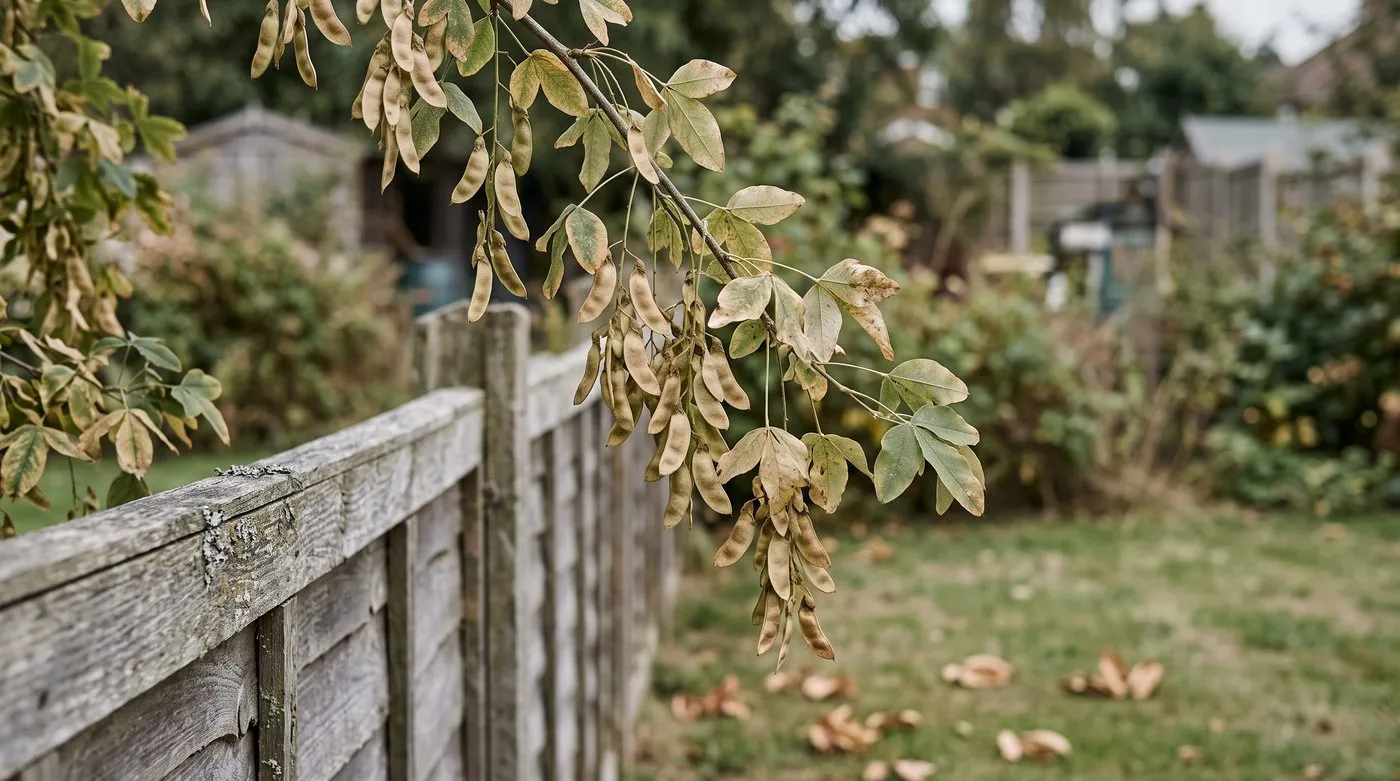
Laburnum pods look a bit like runner beans and can lie on the lawn for months. Clear any that drop from a neighbour’s tree onto your side.
Hydrangea (Hydrangea spp.)
Most dogs that chew hydrangea just get sickness or diarrhoea, and serious poisoning is rare. Keep an eye on your dog around them rather than digging them up. For growing tips, see our hydrangea guide.
Safe swap: Shrub roses give flowers all summer and are listed as non-toxic to dogs.
Ivy (Hedera helix)
Ivy causes drooling, sickness, diarrhoea and tummy pain, and the leaves are worse than the berries. It grows everywhere, especially in shady borders, and is hard to get rid of. Pull out low growth where your dog plays.
Safe swap: Star jasmine (Trachelospermum jasminoides) gives evergreen cover on walls and is listed as non-toxic to dogs.
Wisteria (Wisteria sinensis)
The seeds and pods cause sickness and diarrhoea, can be fatal and may not show signs straight away. Pods drop in late summer and autumn, so clear them up often.
Safe swap: Climbing roses are a safe choice for arches and pergolas. See our guide to growing roses for variety ideas.
Mildly toxic plants to be aware of
These usually cause a short-lived upset tummy, and most dogs recover without treatment. Puppies, small dogs and dogs with health problems can react worse, though, so still ring your vet for advice.
Holly berries (Ilex aquifolium)
Holly berries can cause sickness, diarrhoea and tiredness. The prickly leaves put most dogs off. Fallen berries in winter are the main risk, so clear them up.
Safe swap: Hawthorn gives red autumn berries and is listed as non-toxic to dogs. Avoid cotoneaster, which can cause more serious signs.
Clematis (Clematis spp.)
Clematis can cause drooling, sickness and diarrhoea if chewed. Serious poisoning is unusual, as the bitter taste usually stops dogs eating much.
Safe swap: Common jasmine (Jasminum officinale) covers walls and fences and is listed as non-toxic to dogs. Avoid climbing hydrangea, as hydrangeas are toxic.
Lupins (Lupinus)
The seeds and pods are the worst parts and can cause sickness, shaking and breathing trouble. Lupins are a favourite in cottage garden planting plans, so if you have a dog, deadhead them before seed pods form.
Safe swap: Snapdragons give upright spikes of colour and are listed as non-toxic to dogs.
Which vegetable garden plants are poisonous to dogs?
Rhubarb leaves, tomato leaves and green tomatoes, onions, garlic, leeks and grapes can all harm dogs. Veg beds are easy to forget when you check a garden.
Rhubarb leaves are poisonous raw or cooked, so don’t leave pulled leaves on paths or an open compost heap. All of the onion family is toxic, especially the bulbs, so store onions and garlic out of reach. Grapes are very toxic to dogs, so take care if you grow a vine. Potato leaves and green or sprouting potatoes are harmful too. A fence or raised beds will keep a nosy dog out of the veg patch.
Toxic plant severity reference table
Here are the most common toxic garden plants for dogs. How serious it is for your dog depends on its size, health and how much it ate.
| Plant | How serious | Worst parts | Main signs | Riskiest time | Safe swap |
|---|---|---|---|---|---|
| Yew | Severe | All except red berry flesh | Sudden heart failure | All year | Hawthorn |
| Foxglove | Severe | All | Sickness, uneven heartbeat | May to July | Hollyhocks |
| Lily of the valley | Severe | All, including vase water | Slow heartbeat, heart failure | April to June | None quite like it |
| Autumn crocus | Severe | All | Organ damage (can be delayed) | September to November | China aster |
| Oleander | Severe | All | Bloody diarrhoea, heart failure | June to September | Camellia |
| Sago palm | Severe | All, especially seeds | Liver failure | All year | Chusan palm |
| Daffodil | Moderate | Bulbs worst | Sickness, diarrhoea, pain | October to April | Protect bulbs |
| Tulip | Moderate | Bulbs worst | Drooling, sickness | October to April | Protect bulbs |
| Bluebell | Moderate | All, bulbs worst | Sickness, diarrhoea | April to May | Stick to paths |
| Azalea | Moderate | All | Weakness, odd heart rate | April to June | Camellia |
| Laburnum | Moderate | All, especially seeds | Fits, breathing trouble | May to October | Hawthorn |
| Hydrangea | Moderate | Leaves, buds, flowers | Sickness, diarrhoea | June to September | Shrub roses |
| Ivy | Moderate | Leaves more than berries | Drooling, sickness, diarrhoea | All year | Star jasmine |
| Wisteria | Moderate | Seeds and pods | Sickness, diarrhoea | July to October | Climbing roses |
| Holly | Mild | Berries, leaves | Sickness, tiredness | November to February | Hawthorn |
| Clematis | Mild | All | Drooling, mild sickness | April to September | Jasmine |
| Lupins | Mild | Seeds and pods | Shaking, breathing trouble | June to August | Snapdragons |
Month-by-month danger calendar
The risk changes through the year. Spring and autumn are the riskiest times, thanks to bulbs, berries, conkers and acorns.
| Month | Plants to watch | Why |
|---|---|---|
| January | Holly berries, ivy | Berries knocked down by winter storms |
| February | Holly berries, ivy | Dogs snaffling dropped berries |
| March | Daffodil shoots, crocus | Puppies investigating new shoots |
| April | Lily of the valley, daffodils, bluebells | Leaves and flowers within easy reach |
| May | Foxglove, azalea, laburnum, lily of the valley | Lots of toxic plants in flower |
| June | Foxglove, oleander, hydrangea, lupins | Petals and deadheads on the ground |
| July | Laburnum pods, lupin pods, wisteria | Seed pods forming and dropping |
| August | Wisteria pods, lupin pods | Dry pods falling to the ground |
| September | Autumn crocus, conkers, acorns, yew berries | Lots of fallen fruit and berries |
| October | Autumn crocus, newly planted bulbs | Dogs digging up fresh bulbs |
| November | Holly berries, fallen yew berries | Berries dropping |
| December | Holly, ivy, mistletoe, yew | Festive plants indoors, garden debris |
Keep compost covered: Compost heaps and piles of leaves or grass clippings can grow harmful mould, and toxic clippings like yew stay dangerous as they rot. Use a bin with a secure lid.
What to do if your dog eats a toxic plant

Check your dog and ring the vet straight away if you think it’s eaten something toxic.
Ring your vet or the Animal Poison Line straight away, even if your dog seems fine. Don’t wait for signs. Here’s what to do.
1. Stay calm and move your dog away. Stop it eating any more. Don’t shout at or punish it.
2. Work out what the plant is. Take a photo and a sample. If you’re not sure what it is, take a cutting to the vet, as it changes the treatment.
3. Ring your vet or the Animal Poison Line on 01202 509000. The Animal Poison Line is open 24 hours and charges a fee per call. They’ll tell you whether your dog needs a vet now or can be watched at home.
4. Go to the vet if told to. Ring ahead so they can get ready. Take the plant sample, and tell them roughly how much was eaten and how much your dog weighs.
5. Don’t make your dog sick unless a vet tells you to. Some things do more harm on the way back up, and salt and other home remedies can poison a dog by themselves.
6. Note the time and roughly how much was eaten. Even a rough guess helps the vet.
7. Keep watching. Autumn crocus can take a while to show signs, and sago palm liver damage can take several days. Don’t assume your dog is fine just because it seems well straight away.
Handy tip: Save the Animal Poison Line number (01202 509000) in your phone now, so you’re not hunting for it in a panic. PDSA’s poisonous plants guide is a handy page to bookmark too.
What are the signs of plant poisoning in dogs?
Look out for drooling, sickness, diarrhoea, tiredness, a swollen mouth, wobbliness, collapse, fits and trouble breathing.
Plants that irritate the mouth and gut, like tulip, holly and ivy, usually cause drooling, pawing at the mouth and sickness. Plants that affect the heart, like foxglove, yew, lily of the valley and oleander, can cause weakness, a slow or uneven pulse and collapse. Sago palm can cause dark, tarry poo, yellow gums and bruising. If you spot any of these after your dog has been in the garden, ring your vet.
How long after eating a poisonous plant will a dog show symptoms?
Anything from minutes to days. Tulip bulbs often cause drooling almost at once. Yew can act within hours, sometimes causing sudden collapse. Autumn crocus and sago palm can take much longer, and wisteria pods may not show signs straight away. That’s why it’s best to ring as soon as you know your dog has eaten something, rather than waiting to see.
Common mistakes dog owners make with garden plants
Mistake 1: Assuming a plant is safe because it is common
Daffodils, tulips and azaleas are in millions of UK gardens, but that doesn’t make them safe for dogs. Check a plant before you buy it, using a vet-backed list like PDSA’s or Battersea’s.
Mistake 2: Only removing the flowers
Cutting off foxglove flowers doesn’t remove the risk, as the leaves, stems and roots are still toxic. For really dangerous plants, dig out the whole thing, roots and all, and bag it rather than composting it.
Mistake 3: Leaving garden clippings on the ground
Yew clippings stay toxic after cutting, and dogs may chew them more readily than the hedge. Clear them up straight away and bag them. Never leave them on a lawn or path.
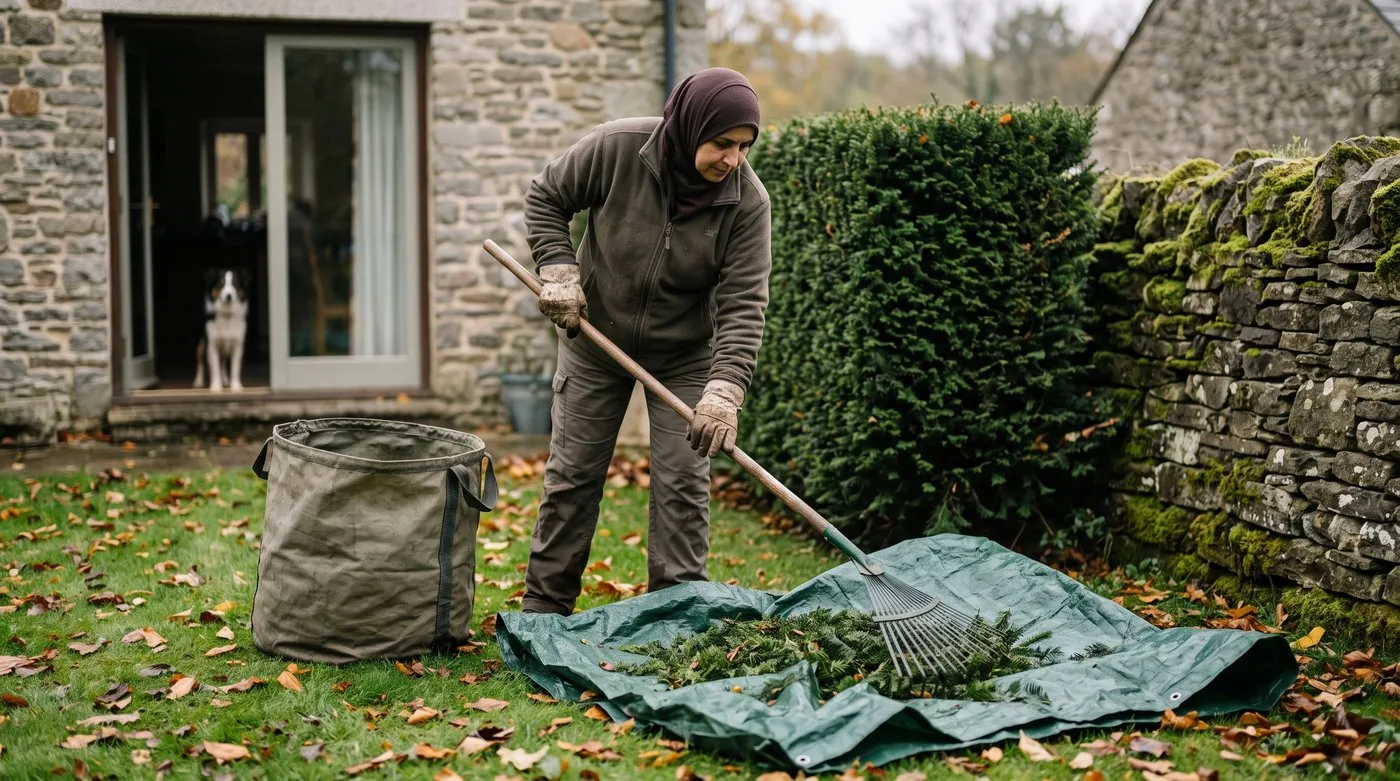
Yew clippings stay poisonous after cutting, and dogs find loose bits more tempting than the hedge. Keep the dog in while you trim and bag every scrap.
Mistake 4: Forgetting about bulb planting season
Autumn is the riskiest time for bulbs. Dogs can dig up fresh daffodil and tulip bulbs within hours. Cover new plantings with chicken wire pinned at the edges, and take it off once the bulbs have rooted and the soil has settled, after about four to six weeks.
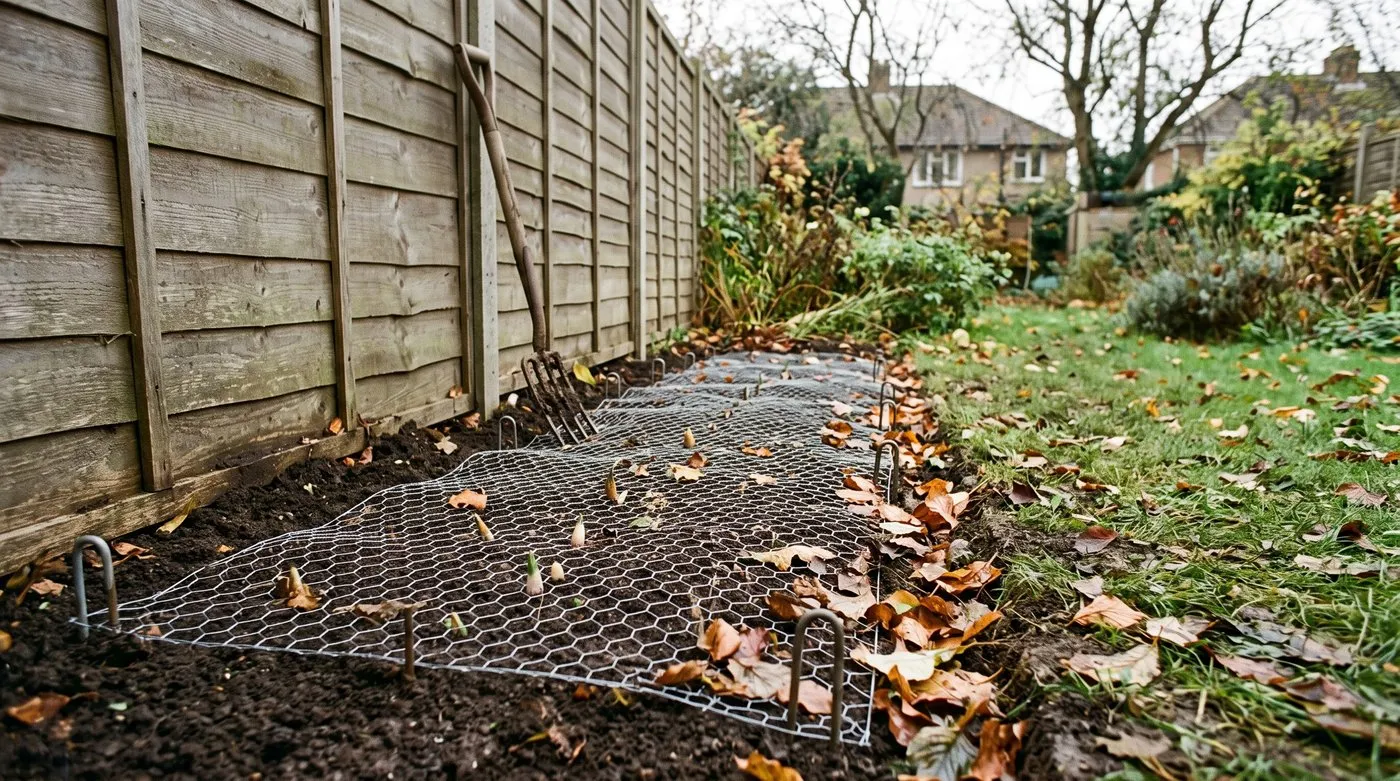
Chicken wire pinned over new bulbs stops a digger in its tracks. Lift it once the bulbs have rooted and the soil has settled.
Mistake 5: Ignoring wild plants that seed into the garden
Foxgloves seed themselves everywhere. Ivy creeps in from next door. Yew seedlings pop up under bird perches. Walk round your garden regularly and pull out toxic plants before they get going, especially during your spring gardening jobs.
Mistake 6: Relying on dogs to avoid toxic plants
Dogs don’t know which plants are poisonous. Puppies chew everything, older dogs eat grass and pull up plants with it, and bored dogs dig up bulbs for fun. Don’t rely on your dog’s judgement.
Mistake 7: Not checking neighbour boundary plants
Laburnum trees hang over fences and drop pods next door. Ivy pushes through boundaries, and yew hedges drop berries onto neighbouring lawns. Check what’s growing along your boundary and have a friendly chat with neighbours if needed. Offer to clear fallen pods or berries on your side.
Mistake 8: Leaving compost heaps open
Foxglove leaves, yew clippings and bulbs stay toxic as they rot, and compost can grow harmful mould. Use a bin with a secure lid, behind a fence or gate where your dog can’t reach.
Creating a dog-safe garden
Swapping out toxic plants doesn’t mean a boring garden. Plenty of popular plants are listed as non-toxic to dogs.

A dog-safe border of sunflowers, snapdragons and roses gives lots of colour without the worry.
Safe border plants: Roses, snapdragons, sunflowers, cornflowers, hollyhocks and China asters give colour from early summer into autumn.
Safe climbers: Common jasmine, star jasmine and climbing roses cover walls and fences without the risk.
Safe hedging: Hawthorn and dog rose make thick boundaries, though their thorns can scratch.
Safe shrubs: Camellia for acid soil and shrub roses for sunny borders.
Safe ground cover: Thyme, which copes with light paws in a sunny, well-drained spot.
For a full planting plan, see our guide to dog-friendly garden design. If you have cats too, our plants toxic to cats guide covers the risks for them, and there’s a lot of overlap.
Handy tip: Planning a dog-friendly garden? Think about a dog-proof lawn too. Hard-wearing grass seed mixes cope with daily zoomies far better than fine ornamental lawns.
Plants often wrongly listed as safe or toxic
Online lists often disagree. Some popular “dog-safe” plants are mildly toxic, while some that worry owners are fine.
Lavender is mildly toxic to dogs and can cause nausea and sickness. Serious poisoning from garden plants is unlikely, but it’s not a “safe” plant.
Hardy cyclamen is often suggested as a pet-friendly autumn flower, but it’s toxic to dogs, and large amounts of the tubers can affect the heart.
Alliums turn up on some safe lists because dogs don’t like the smell. Every part is toxic to dogs, especially the bulbs.
Roses are listed as non-toxic. Thorns can scratch a curious mouth or paw, but the plant isn’t poisonous.
Sunflowers are listed as non-toxic to dogs.
Bamboo (Phyllostachys) is listed as non-toxic. Don’t mix it up with heavenly bamboo (Nandina domestica), which is very toxic to dogs.
Seasonal garden safety checklist for dog owners
Spring: Pull out foxglove seedlings as they appear. Check shady borders for lily of the valley. Keep dogs on paths in bluebell woods. Give the whole garden a once-over before everything starts growing.
Summer: Deadhead lupins before pods form. Clear fallen laburnum pods from lawns and paths. Keep an eye on hydrangeas if your dog likes chewing them.
Autumn: Cover new bulbs with wire mesh pinned at the edges. Clear conkers, acorns and yew berries every day. Watch for autumn crocus popping up. Keep compost bins shut.
Winter: Pick up fallen holly berries after storms. Check festive plants you bring indoors. Mistletoe berries can be fatal, especially to small dogs and puppies, and poinsettia and amaryllis are toxic to dogs too.
Bothered by visiting cats as well? Our guide on how to stop cats pooing in your garden covers kind deterrents. For wider garden protection, see our cat-proof garden guide.
Related reading: for young children rather than pets, read our guide to poisonous garden plants and child-safe planting.
Frequently asked questions
Which garden plants are most toxic to dogs UK?
Yew, foxglove and lily of the valley are among the worst. All three affect the heart and can kill. Autumn crocus, oleander and sago palm are also very dangerous. If your dog eats any of them, call your vet straight away without waiting for signs.
Are daffodils poisonous to dogs?
Yes, every part of a daffodil is toxic to dogs. The bulbs are the worst. Chewing them can cause sickness, diarrhoea and tummy pain, and in bad cases heart rhythm problems. Plant bulbs deeply or cover new beds with wire mesh.
What should I do if my dog eats a toxic plant?
Call your vet or the Animal Poison Line on 01202 509000 straight away. Don’t try to make your dog sick unless a vet tells you to. Note what the plant was, how much was eaten and when. Take a piece of the plant to the vet.
Are hydrangeas poisonous to dogs?
Yes, but usually only mildly. The leaves, buds and flowers can cause sickness and diarrhoea. More serious poisoning is rare.
What climbing plants are safe for dogs?
Common jasmine, star jasmine and climbing roses are all good choices. They’re listed as non-toxic to dogs. Avoid wisteria, ivy and clematis in a dog-friendly garden.
Is lavender safe for dogs?
Not completely, but it’s only mildly toxic. Eating it can cause nausea, sickness and loss of appetite. Serious poisoning from garden lavender is unlikely, but it’s best to stop your dog chewing it.
Are conkers and acorns toxic to dogs?
Yes, both are. Conkers can cause sickness and diarrhoea. Acorns can upset the stomach and, rarely, harm the kidneys. Both can also block the gut. Clear them up in September and October.
Can dogs be poisoned by touching plants?
Sometimes, though eating plants is far more common. Giant hogweed sap can cause burns and blisters on skin in sunlight. Euphorbia (spurge) sap irritates skin and can hurt eyes. Most toxic plants have to be eaten to do harm.
Our team produces practical UK gardening guidance from source research, contributor records and established horticultural practice. Editorial standards are overseen by Matt W.


