
Key takeaways
- Sow indoors in February or March, and don't cover the seed, as it needs light
- Pinch out the tip at 10cm tall for lots more flower spikes
- Tall varieties make lovely cut flowers
- Dwarf and trailing types suit pots, window boxes and hanging baskets
- Deadhead regularly to keep them flowering until the first frost
- Rust is the main problem, so space plants well and look for resistant varieties
Snapdragons are one of the most rewarding flowers you can grow, with bright spikes from June until the first hard frost. Give them sun and they’re happy in most soils. They make brilliant cut flowers too. Squeeze a flower gently from the sides and it “snaps” open like a little dragon’s mouth, which children love.
They come in almost every colour except true blue, from deep burgundy to peach, lemon and white. They fill the gap nicely between spring bulbs and summer perennials, and bumblebees can’t keep away from them.
Which type of snapdragon should you grow?
Snapdragons come in four main sizes. Picking the right size decides whether they’re for cutting, the middle of the border or a pot.
Tall (75-120cm): The ones for cutting. The Rocket series and ‘Madame Butterfly’ give long, strong stems. Grow them in a cutting patch or at the back of a border, with a little support in windy spots.
Intermediate (45-75cm): The most versatile. The Chantilly, Sonnet and Liberty series branch well and usually stand without staking. They’re great in the middle of a border, in cottage gardens and for shorter vases.
Dwarf (20-40cm): Compact bedding types such as Snapshot, Montego and Floral Showers. Ideal for container gardening, window boxes and edging. They branch on their own and flower their socks off.
Trailing (15-25cm): Spreading types like Candy Showers and Luminaire. They tumble over the sides of hanging baskets and tall pots. They cope with a bit more shade than upright types.
How to sow snapdragons from seed
Snapdragon seeds are as fine as dust. They need light to sprout, so sprinkle them on top of the compost and don’t cover them.
Sowing indoors, step by step:
- Fill small pots or module trays with fine seed compost. Water and let it drain.
- Scatter the seed thinly on top and press it down gently with a piece of card.
- Don’t cover it with compost or vermiculite.
- Put it in a propagator or on a warm windowsill, around 18-21C.
- Keep the compost moist with a fine mist. Don’t let it dry out.
- Seedlings usually appear in a couple of weeks, or a bit longer if it’s cooler.
- Once they have two proper leaves, move them into their own small pots.
- Grow them on somewhere bright and a little cooler, so they don’t get leggy.
Our guide to sowing seeds indoors covers propagators and light in more detail.
 Snapdragon seeds are tiny and need light, so press them onto the compost without covering.
When and how to plant snapdragons outside
Harden off seedlings for a week or two before planting out. Put them outside during the day and bring them in at night, so they get used to outdoor life.
Plant out after the last frost. In southern England that’s usually mid-May. In the Midlands and northern England, wait until late May. In Scotland, early June. Add a week to your local last frost date to be safe.
Sun and soil: Snapdragons do best in full sun, ideally six hours a day. They’ll grow in part shade but with fewer flowers and weaker stems. Any soil that drains well suits them. On heavy clay, mix some grit into the planting hole.
Spacing: Plant tall types 30cm apart, medium ones 25cm and dwarfs 20cm. Squeezing them in makes weaker stems and damp leaves, which rust loves.
Pinching out: When plants are 10cm tall, pinch out the main tip between your thumb and finger. This is the most important job of all. It makes the plant send out side shoots from lower down, each with its own flower spike. Only skip it if you want one single tall spike for showing.
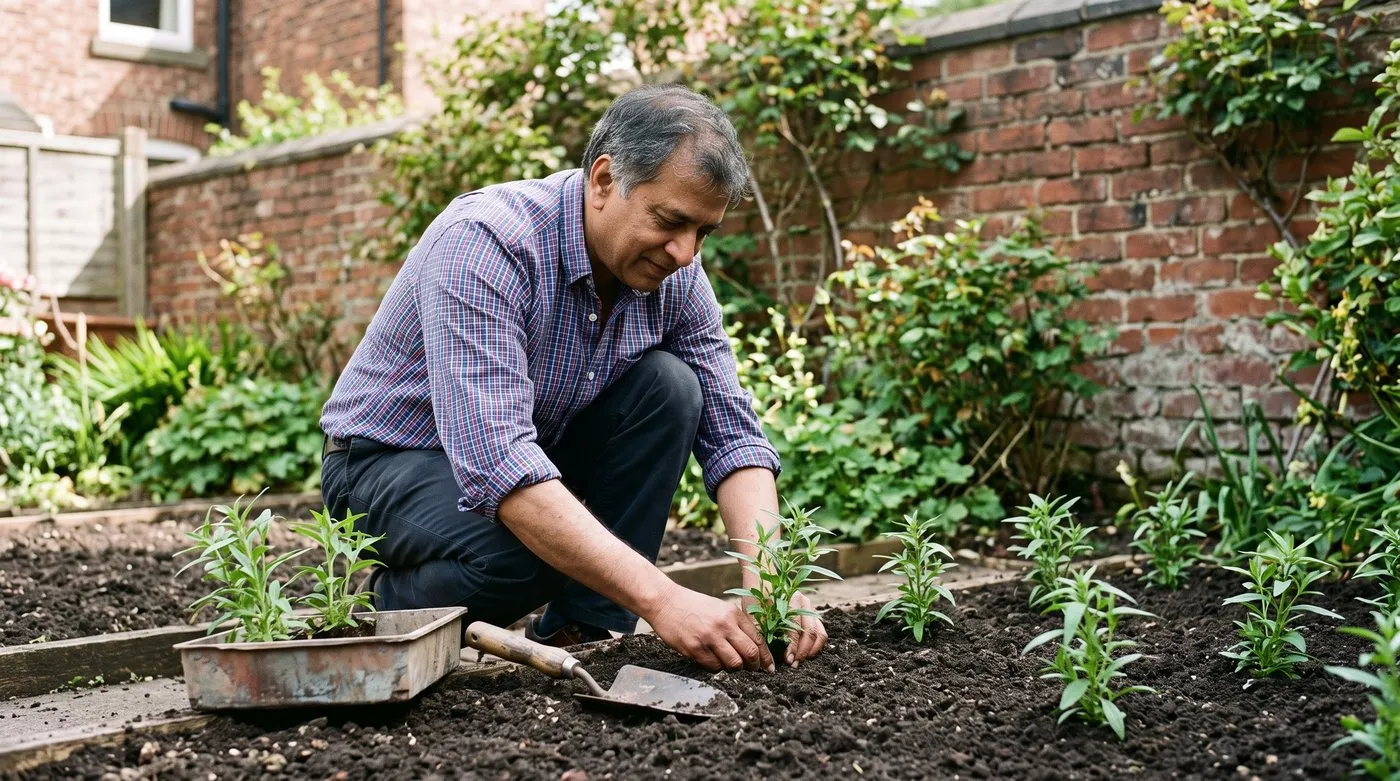
Give each plant its own space. Snapdragons with room around them get more air, stronger stems and far less rust.
Snapdragon care month by month
| Month | What to do |
|---|---|
| January | Order seed. Clean pots and trays. |
| February | Sow seed indoors somewhere warm and bright. |
| March | Keep sowing. Move February seedlings into their own pots. |
| April | Grow them on somewhere cooler. Start hardening off in mild areas. Pinch out tips at 10cm. |
| May | Plant out after the last frost. Water well. Watch for slugs. |
| June | First flowers. Start deadheading and feeding every two weeks. |
| July | Peak flowering. Cut stems for the house. Watch for rust. |
| August | Keep deadheading and cutting. Feed with tomato feed. |
| September | Still flowering in a warm autumn. Collect seed from non-F1 types. |
| October | Frost finishes them off. Clear old plants and compost them if rust-free. |
| November | Have a rest. Note which varieties did well. |
| December | Browse seed catalogues and plan for February. |
Use this with our flower planting calendar to keep your borders bright all year.
Snapdragons as cut flowers
Snapdragons are one of the best cut flowers for UK growers. Flower farmers grow them by the thousand, and you can get lovely results at home with the right varieties.
 Tall types like the Rocket series and ‘Madame Butterfly’ give long stems for big, showy vases.
When to cut: Cut when the bottom third of the spike is open. The rest of the buds will keep opening in the vase. Cut early in the morning when stems are full of water, using clean, sharp secateurs.
Getting them ready: Strip off any leaves that would sit below the water. Stand the stems straight into deep, cool water with flower food. Leave them somewhere cool for a few hours before arranging. Re-cut the stems every few days to help them drink.
Great varieties for cutting:
- Madame Butterfly: double, ruffled flowers on tall stems. Comes in mixed or single colours.
- Rocket series: classic tall, straight spikes. A cut-flower favourite.
- Chantilly series: open, butterfly-like flowers in soft colours. A little shorter and very graceful.
- Costa Silver: white with deep rose. Stands out in a mixed bunch.
Snapdragons look great with dahlias, roses and grasses in late summer vases. They add height that few other annuals can match.
Dealing with snapdragon rust
Rust is the main snapdragon problem in the UK. It shows as orange-brown powdery spots and can strip a plant of its leaves in a few weeks.
How to spot it: Look for small brown spots on top of the leaves. Turn the leaf over and you’ll see raised orange-brown pustules full of spores. Badly hit plants get stunted and stop flowering.
Prevention is your best bet:
- Choose varieties labelled as rust resistant. Seed catalogues usually say so. Older varieties tend to be more prone.
- Space plants 25-30cm apart. Moving air keeps leaves drier, which rust hates.
- Water the soil, not the leaves. Wet leaves help rust take hold.
- Pick off infected leaves straight away. Bag them and put them in the bin, not the compost.
- Move them around. Don’t grow snapdragons in the same bed year after year, and clear away old plants in autumn.
A few garden fungicides are labelled for rust, but they only help before it gets going. Once rust has taken hold, sprays won’t save the plant. The RHS snapdragon growing guide has more help with rust and general care.
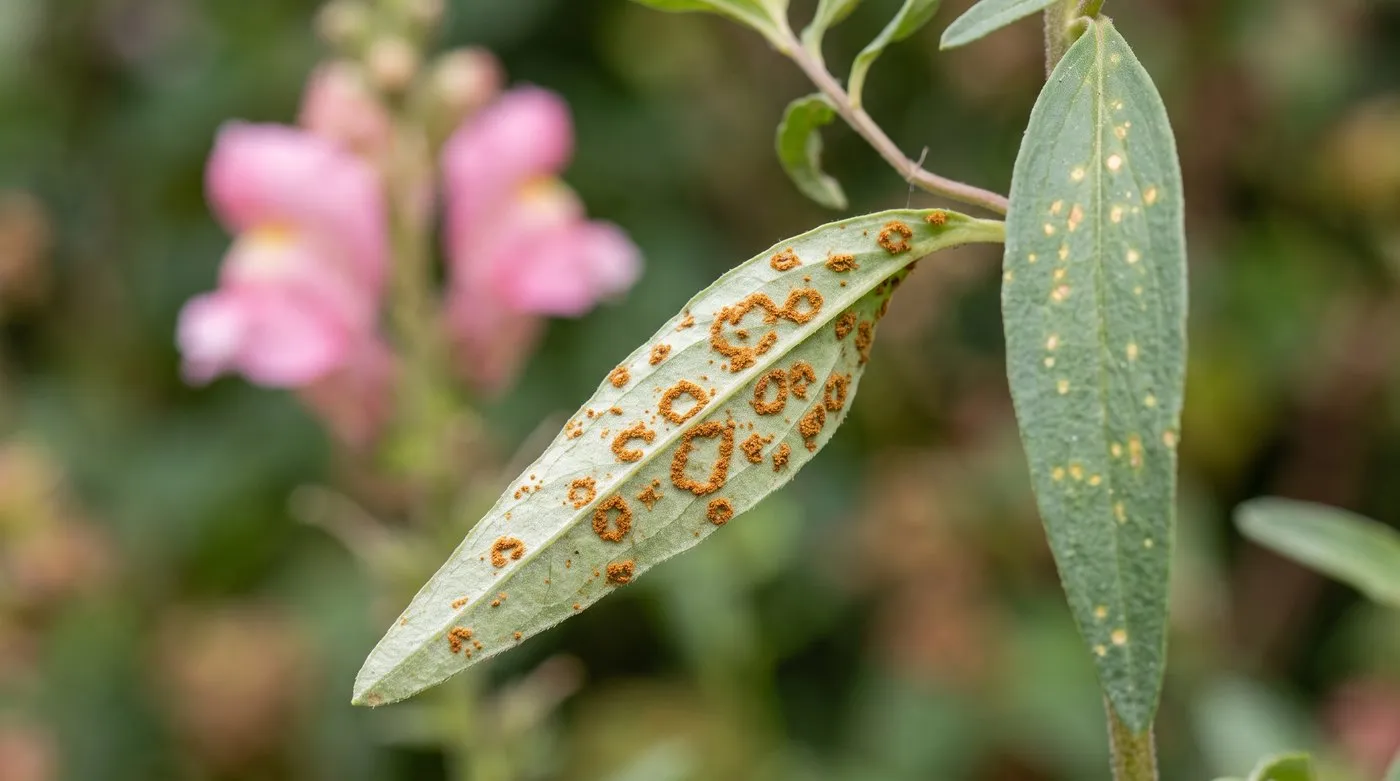
Turn a leaf over if you spot brown flecks on top. Orange-brown powdery bumps underneath mean rust, so pick those leaves off and bin them.
Growing snapdragons in pots
Dwarf and trailing snapdragons are perfect for pots on patios, balconies and doorsteps. They flower from June to October with very little fuss.
 Dwarf snapdragons like Snapshot and Magic Carpet are happy in pots 20cm wide or bigger.
Pot size: At least 20cm wide and deep. Three dwarf plants fill a 30cm pot nicely. In a hanging basket, five trailing Candy Showers plants fill a 35cm basket.
Compost: Multipurpose compost with a little perlite mixed in. Snapdragons hate soggy compost. Terracotta pots dry out faster, which helps.
Feeding: Give tomato feed every two weeks from June. It boosts flowers. High-nitrogen feeds give you leaves instead.
Watering: Daily in summer, and twice a day in a heatwave. Push a finger into the compost, and if it’s dry, water. Snapdragons bounce back from a short dry spell but may lose their lower leaves.
Over winter: In mild areas you can move pots against a sunny wall and fleece them in hard frosts. They may flower again next year, but usually less well. Most of the time, fresh seed each year gives better plants.
Snapdragons in pots look great with other summer bedding plants and fit right into cottage garden planting schemes with sweet Williams, stocks and cornflowers.
Good partners for snapdragons
Bumblebees are strong enough to push open snapdragon flowers, and you’ll see them climbing right in. That makes snapdragons a great addition to a pollinator-friendly planting scheme.
Plants that look great with them:
- Sweet peas: both love sun and soil that drains well. A sweet pea adds the scent snapdragons lack.
- Cosmos: similar height and airy feel. Fills the gaps between spikes.
- Salvias: a nice change of flower shape. Red salvias with yellow snapdragons really pop.
- Lavender: a low front row for tall snapdragons. Both are fine in lean soil.
Keep them away from: very rich, heavily manured beds. Soft, lush growth attracts aphids and rust.
Common snapdragon mistakes
Sowing too late. Snapdragons take a good few months from seed to flower. Sow after mid-March and you’ll get a shorter season. February sowings flower for longest.
Forgetting to pinch. An unpinched plant gives you one stem and one spike. Pinch at 10cm and you get a bushy plant packed with flowers.
Overwatering seedlings. Too much water makes seedlings collapse and rot at the base, known as damping off. Use free-draining seed compost and water from below by standing trays in shallow water for 10 minutes, then lifting them out. Don’t leave pots sitting in water.
Ignoring rust. Rust spreads fast in warm, humid weather. By the time several plants show it, it’s everywhere. Start with resistant varieties, space plants well and act quickly.
Planting in shade. In shade, snapdragons grow tall, weak, floppy stems with few flowers. Give them at least six hours of sun. For a part-shady spot, trailing types are your best bet.
Saving snapdragon seed
Ordinary (open-pollinated) varieties give seed that comes fairly true. F1 hybrids don’t, so don’t bother saving from those.
When to collect: Seed pods form at the bottom of each faded spike. They look like tiny skulls with holes at the top. Wait until they turn brown and dry on the plant, usually August or September. Shake the stem over a paper bag and the tiny black seeds pour out.
Storing: Spread the seed on paper for a couple of days to dry. Keep it in labelled paper envelopes inside a sealed tub somewhere cool and dry. A jar in the fridge is ideal, and the seed should keep for a couple of years.
Self-sown seedlings: In sheltered gardens, snapdragons often seed themselves into gravel, paving cracks and the base of warm walls. These seedlings are often tough, but you won’t know what colour they’ll be. Thin them to 20cm apart in spring and enjoy the free plants.
For more colour ideas, read our guide to the best summer flowers for UK gardens and build a border that stays bright from June to October.
Frequently asked questions
When should I sow snapdragon seeds in the UK?
Sow them indoors from February to mid-March. The seeds need light to sprout, so press them onto the compost without covering. Keep them warm and they should come up in a couple of weeks. In northern England and Scotland, sow by late February for the longest flowering season. Sowing outside rarely works, as they need a long time to reach flowering size.
Do snapdragons come back every year in the UK?
Sometimes, but they’re best grown fresh each year. In mild, sheltered gardens they can survive winter and regrow. Second-year plants are usually weaker, with fewer, smaller spikes. Sowing new seed each February gives stronger plants. You’ll often find self-sown seedlings popping up in gravel and paving cracks too.
How do I stop my snapdragons getting rust?
Start with varieties labelled as rust resistant. Rust shows as orange-brown spots under the leaves and can strip a plant quickly. Space plants 25-30cm apart so air can move. Water the soil, not the leaves. Pick off infected leaves straight away and put them in the bin, not the compost.
Should I pinch out snapdragons?
Yes, pinch out the main tip when plants reach 10cm. This makes the plant send out lots of side shoots, each with its own flower spike. Unpinched plants grow one tall stem with a single spike. Pinching delays the first flowers a little, but you get far more of them.
Can I grow snapdragons in pots and containers?
Yes, they’re great in pots at least 20cm wide and deep. Dwarf types like the Magic Carpet or Snapshot series are ideal. Use multipurpose compost with a little perlite mixed in. Feed every two weeks with tomato feed from June. Pots dry out fast, so water daily in summer.
Are snapdragons poisonous to pets or children?
Snapdragons aren’t known to be poisonous. They’re generally seen as a safe choice for family gardens. Even so, it’s best to discourage children and pets from nibbling any garden plant.
What is the best snapdragon variety for cutting?
‘Madame Butterfly’ is a lovely choice for cutting. It has double, ruffled flowers on tall stems. The Rocket series gives classic tall, straight spikes. For shorter arrangements, the Chantilly series has open, ruffled flowers in soft colours. Cut when the bottom third of the spike is open.
Our team produces practical UK gardening guidance from source research, contributor records and established horticultural practice. Editorial standards are overseen by Matt W.


