Key takeaways
- Petunias, French marigolds and begonias are three of the most reliable bedding plants
- Plant out after the last frost: mid-May in the south, early June in Scotland
- Begonias and busy lizzies are the best picks for shady spots
- Trailing lobelia and petunias are made for hanging baskets and window boxes
- Deadhead weekly and feed pots from July to keep flowers coming until October
Annual bedding plants are the quickest way to turn a bare border into a riot of colour from June to October. Petunias, French marigolds, begonias, lobelia and geraniums are the reliable favourites for UK gardens.
Perennials can take a couple of years to fill a space. Bedding plants look good from the day you plant them. The trick is choosing the right ones for your soil, your light, and how much fussing you fancy doing.
Which annual bedding plants flower the longest?
Petunias, French marigolds, begonias and geraniums flower from early summer right up to the first frosts. Give them sun (or shade, for begonias), a regular feed and some deadheading, and they’ll keep going for months. Others, like some salvias, put on a big show for a shorter spell.
 Trailing petunias and lobelia are made for window boxes. Deadhead the petunias every week to keep the flowers coming.
Best annual bedding plants for sunny borders
A sunny border gets at least six hours of direct sun a day. South and west-facing borders usually do. These plants love the warmth.
Petunias are the showstoppers of summer bedding. Trailing ‘Surfinia’ types tumble over the edges of hanging baskets and window boxes. Big-flowered types make a bold splash, while smaller-flowered ones give you more blooms. All need full sun and a regular feed from July.
French marigolds (Tagetes patula) are about the easiest bedding plant there is. They grow 20-30cm tall, flower from June to October and don’t mind poor soil. The ‘Bonanza’ series is compact and neat for edging. They’re also a popular companion in the veg patch, as our companion planting guide explains.
Geraniums (properly called pelargoniums) are a classic of British bedding. Upright types grow to about 30-45cm and ivy-leaf types trail. Both cope well with dry spells and flower from June to the first frosts. Bring them indoors to a frost-free spot and they’ll live for years.
Salvias (Salvia splendens) give bold spikes of red, purple or white from July to October. They grow to about 30cm and suit formal bedding. ‘Blaze of Fire’ is a well-loved red.
Best annual bedding plants for shade
Shade is the tricky bit, but there are good options. North-facing borders, spots under trees and the gap between fences might only get a couple of hours of sun. Sun-lovers go leggy and sulk there.
Busy lizzies (Impatiens walleriana) were Britain’s favourite bedding plant until a disease called downy mildew hit them hard around 2011. Resistant kinds such as the ‘Beacon’ and ‘SunPatiens’ series are now back in garden centres. Plant them about 20cm apart for a carpet of colour.
Nicotiana (tobacco plant) loves dappled shade under trees. Tall ‘Sensation’ types have starry flowers with a sweet evening scent, so grow them near a bench. Shorter kinds like ‘Domino’ suit the front of a shady border.
Fuchsias are often used as summer bedding. Trailing types like ‘Swingtime’ and ‘Marinka’ drip with flowers in shade from June to October. Hardy fuchsias can stay out all year in sheltered gardens.
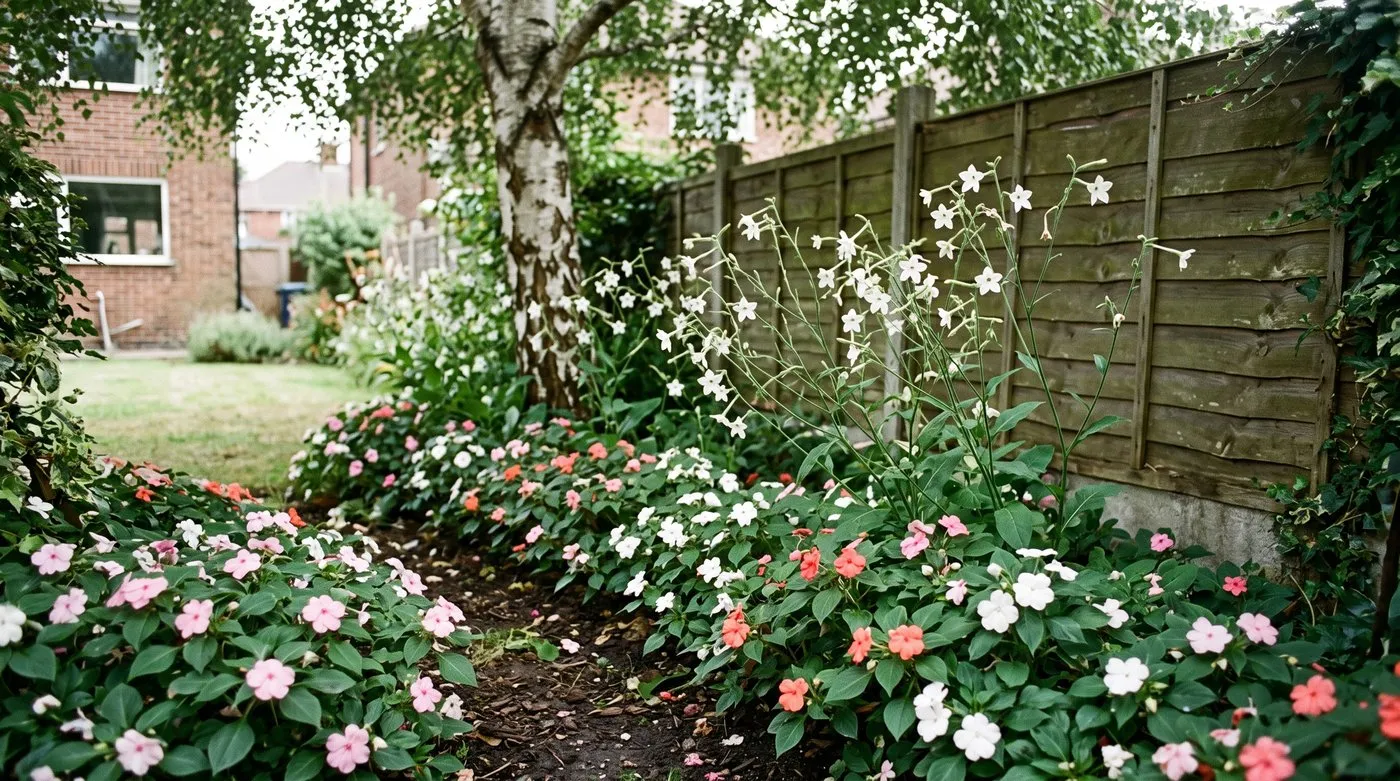
Busy lizzies and nicotiana are happy where sun-lovers would sulk. Grow the nicotiana near a bench for its evening scent.
How to plan a bedding display
Plan in three layers: tall plants at the back, medium ones in the middle and low or trailing plants at the front. That way every plant gets seen.
For a 3m sunny border, try:
- Back row: 5 cosmos ‘Sonata White’, 60cm apart
- Middle row: 7 French marigolds ‘Bonanza Bolero’ and 7 red salvias, alternated, 25cm apart
- Front row: 12 lobelia ‘Crystal Palace’, 15cm apart
It flowers from mid-June to late October, and only the cosmos really need deadheading.
For shade, swap the marigolds and salvias for begonias and busy lizzies, and the cosmos for nicotiana ‘Sensation’. Lobelia copes with part shade, so keep it at the front.
For permanent plants that look good with bedding, see our guide to the best plant combinations for UK borders.
 Terracotta pots suit bedding plants well. The clay lets extra water escape, which helps stop soggy roots.
Growing annual bedding from seed vs buying plug plants
Seed is much cheaper, while plug plants save time and space. One packet of seed can give you dozens of plants. You do need a warm windowsill or propagator and room to grow them on.
When to sow:
| Plant | Sow indoors | Warmth to sprout | Plant out |
|---|---|---|---|
| Petunia | Late February | Warm, about 20C | Mid-May |
| French marigold | March | Warm, about 18-20C | Late May |
| Begonia | January | Very warm, about 21C+ | Late May |
| Lobelia | February | Warm, about 18-20C | Mid-May |
| Cosmos | March | Mild, about 15-18C | Late May |
| Salvia | February | Very warm, about 21C+ | Early June |
| Busy lizzie | February | Very warm, about 21C+ | Early June |
| Nicotiana | March | Warm, about 18-20C | Late May |
Begonias are the fiddliest from seed. The seed is as fine as dust and needs sowing on the surface of damp compost, under a clear cover, in good light. Most people find it easier to buy begonias as plugs and grow the simpler ones from seed.
Our flower planting calendar has month-by-month dates for loads more flowers.
Why buy plugs? Instant results, no heated propagator and no pricking out. Garden centres sell strips of bedding from late April. Online suppliers send trays of plugs from March to grow on in a greenhouse or cold frame. Our guide to growing plug plants explains potting on and hardening off.
Month-by-month bedding plant calendar
| Month | What to do |
|---|---|
| January | Browse seed catalogues. Sow begonias indoors somewhere warm. |
| February | Sow lobelia, salvia and busy lizzies indoors. Sow petunias late in the month. |
| March | Sow French marigolds, cosmos and nicotiana. Prick out earlier sowings into 9cm pots. |
| April | Harden plants off in a cold frame. Order plugs for May. Dig some compost into borders. |
| May | Plant out after the last frost. Water in well and mulch. |
| June | Flowers arrive. Start weekly deadheading of petunias, geraniums and cosmos. Feed pots. |
| July | Peak colour. Feed pots with tomato feed. Watch for greenfly on petunias. |
| August | Trim lobelia if it looks straggly. Water pots daily in hot spells. |
| September | Still flowering. Ease off feeding. Save seed from cosmos, marigolds and nasturtiums. |
| October | First frosts finish tender plants. Pot up geraniums to bring indoors. Compost the rest. |
| November | Clean pots and seed trays. Keep saved seed in paper envelopes somewhere cool and dry. |
| December | Check your seed and plan next year’s colours. |
Common mistakes with annual bedding plants
Overwatering in borders. Pots need watering every day in summer, but borders don’t. Once plants have settled in for a couple of weeks, water border bedding only in long dry spells. Soggy clay soon rots begonias and busy lizzies.
Forgetting to feed. Plants in pots use up the food in their compost within a few weeks. Without a weekly feed from July, flowers get smaller and fewer. Use a tomato feed, which is high in potash and boosts flowers, rather than a general feed that mostly makes leaves.
Buying doubles for wildlife. Double flowers look fabulous but offer bees little pollen. If you want to help bees and pollinators, go for single flowers.
Best bedding plants for containers and hanging baskets
Pots and baskets need compact and trailing plants. Tall upright bedding tends to flop in small pots.
Use the “thriller, filler, spiller” idea:
- Thriller (the star, in the middle): upright geranium, fuchsia or salvia
- Filler (around it): French marigolds, begonias or compact petunias
- Spiller (over the edge): lobelia, trailing petunia, bacopa or trailing verbena
A 30cm hanging basket takes about 5-7 plants, and a 35-40cm one about 7-10. Pack them in tighter than in a border, because you want a ball of colour straight away.
Basket care: water every day in summer, as baskets dry out fast in July heat. Feed weekly with tomato feed from about six weeks after planting. Use peat-free multipurpose compost with some perlite mixed in.
For colour in pots through autumn and winter too, see our guide to the best plants for pots year-round.

A star in the middle, fillers around it and trailers at the edge make a full ball of colour. Pack baskets tighter than you would a border.
Annual bedding plants for cutting
Several bedding plants make lovely cut flowers. Grow an extra row just for cutting, so your display doesn’t end up with gaps.
Cosmos is the star cutting flower here. Cut when the flowers are half open. The ‘Sonata’ series is shorter and stands up better to wind. Read our guide on how to grow cosmos from seed for sowing tips.
Zinnias have bold flowers in every colour but blue. They need warmth, so give them a south-facing border, or a greenhouse in cooler parts of the UK. Cut when the first ring of petals is fully open.
Sweet peas are hardy annuals and a cottage garden classic. Sow in autumn or early spring and grow them up canes or netting. Pick every few days, because once they set seed they stop flowering.
Snapdragons (Antirrhinum) give tall spikes in lots of colours. They cope with a light frost, so you can plant them out from late April in mild areas. Cut when the bottom third of the spike is open.
 A traditional formal bedding scheme with rows of contrasting colour. It looks best in full sun and well-prepared soil.
Whatever your soil, digging in some compost before planting helps more than anything. Clay holds water but can rot roots in a wet summer, while sandy soil drains fast and needs more watering. The RHS bedding plants page has more ideas for choosing plants.
How to extend the bedding season
Bedding usually runs from mid-May to mid-October. Here’s how to stretch it at both ends.
Early in the year: pansies, violas and wallflowers planted in autumn or early spring give colour from April. They fill the gap between spring bulbs and summer bedding. Hardy candytuft sown in autumn or early spring adds low white edging before the tender plants go out.
Late in the year: French marigolds and geraniums often carry on into November in a mild year. Calendula and snapdragons shrug off light frosts. Throw horticultural fleece over plants on frosty nights to buy an extra week or two.
Sow a second batch: sow quick growers like cosmos, marigolds and nasturtiums again in May and plant them out in July. They take over when early plants start to tire, and keep flowering until frost.
For more summer flowers for UK gardens, including perennials that go well with bedding, see our seasonal guide.
Annual bedding and pollinators
Single-flowered bedding plants help bees and other pollinators. Doubles look dramatic, but the extra petals block the way to the pollen and nectar. The Bumblebee Conservation Trust has more tips on gardening for bees.
Mixing bedding with wildflowers in a container garden is one of the easiest ways to help bees from a balcony or small patio.
Now you know the best annual bedding plants for UK gardens, read our guide on the best hardy annual flowers to grow from seed for flowers you can sow straight outdoors without a greenhouse.
Frequently asked questions
When should I plant annual bedding plants in the UK?
Plant out once the last frost has passed. That’s usually mid-May in southern England, late May or early June in the Midlands and the north, and early June in Scotland and high, exposed spots. If you’ve raised plants indoors, harden them off for a week or so first: outside by day, back in at night.
What are the best annual bedding plants for shade?
Begonias and busy lizzies are the stars for shade. Both keep flowering in borders that only get a couple of hours of sun. Nicotiana (tobacco plant) is lovely in dappled shade under trees. Skip petunias and marigolds in shade, as they go leggy and flower poorly.
How much does it cost to fill a bedding border?
Roughly £15 to £40 for a 3m border. Seed is by far the cheapest, as one packet can give you dozens of plants. Plug plants cost more but save you the sowing. Ready-grown strips from the garden centre cost the most. A good middle way is to sow some yourself and add a tray of plugs.
Do I need to deadhead annual bedding plants?
Yes, most flower for longer if you do. Pinching off old flowers every week stops the plant setting seed, so it makes more blooms instead. Petunias, geraniums and cosmos all benefit. French marigolds and begonias drop their old flowers by themselves.
Can I grow annual bedding plants in containers?
Yes, they’re perfect for pots. Use peat-free multipurpose compost with a little perlite mixed in for drainage. Feed weekly with a tomato feed from July, following the label. Water every day in summer, as pots dry out fast. Trailing lobelia, petunias and bacopa are ideal for baskets and window boxes.
What annual bedding plants come back every year?
True annuals only last one season. Some do seed themselves, though, so French marigolds, calendula, nasturtiums and cosmos often pop up again next spring. Geraniums (pelargoniums) can live for years if you bring them indoors to a frost-free spot for winter.
Are annual bedding plants good for bees and pollinators?
Single flowers are good for bees; doubles much less so. Cosmos, single French marigolds and single dahlias are great for bees and hoverflies. Verbena bonariensis is a butterfly favourite. Double petunias and double begonias offer bees very little.
Our team produces practical UK gardening guidance from source research, contributor records and established horticultural practice. Editorial standards are overseen by Matt W.