Key takeaways
- Plug plants come as small mini plugs, standard and jumbo plugs, or bigger garden-ready plants
- Unpack the box the day it arrives and pot small plugs on within a day or two
- Pot mini and standard plugs into 9cm pots and grow on frost-free for four to six weeks
- Harden off for two weeks, then plant out after the last frost, usually mid to late May
- Drying out, damping off and leggy growth are the main problems, and all are avoidable
- Small plugs are the cheapest way to fill borders and baskets with bedding
Plug plants are young plants that arrive by post, ready for you to grow on into bushy bedding for borders, pots and baskets. They sit between a packet of seed and a potted garden centre plant, and they’re one of the cheapest ways to fill a garden with colour.
This guide covers what to do from the moment the box lands: choosing a size, unpacking, potting on, growing on, hardening off and planting out. For more on choosing bedding varieties, see our pick of the best annual bedding plants.
What are plug plants and are they worth buying?
Plug plants are young plants raised by nurseries in cell trays. Each plug is a little cone of roots and compost that slides out of its cell in one piece. The nursery does the sowing or rooting of cuttings, then posts the plants while they’re small.
They take away the two hardest parts of raising bedding. There’s no germinating seed in February, and no heated propagator. The nursery also sends each variety at the right time to pot on. You do the easy middle bit: potting on, watering and hardening off.
Are they worth it? For bedding you need in bulk, yes. Small plugs cost far less per plant than potted bedding in May. If you’d like to go one step further, our guide to growing annuals from seed shows the full job.
Plug plant sizes explained
Plug plants come in four broad sizes. The size decides how much work sits between the postbox and the border. Suppliers use different names, so check the cell or pot size in centimetres rather than the name or photo.
| Size | Roughly | What to do | Time to planting out |
|---|---|---|---|
| Mini or postal plug | 2-3cm cell | Pot into 9cm, grow on 4-6 weeks | About 8-10 weeks |
| Standard or large plug | 3-4cm cell | Pot into 9cm, grow on 3-5 weeks | About 6-8 weeks |
| Jumbo plug | 4-6cm | Pot on, or plant into baskets kept under cover | About 3-5 weeks |
| Garden ready | 7-9cm pot | Harden off only | About 2 weeks |
No greenhouse and one sunny windowsill? Buy jumbo or garden-ready plants. A frost-free greenhouse and time to water daily? Mini plugs give you the most plants for your money.
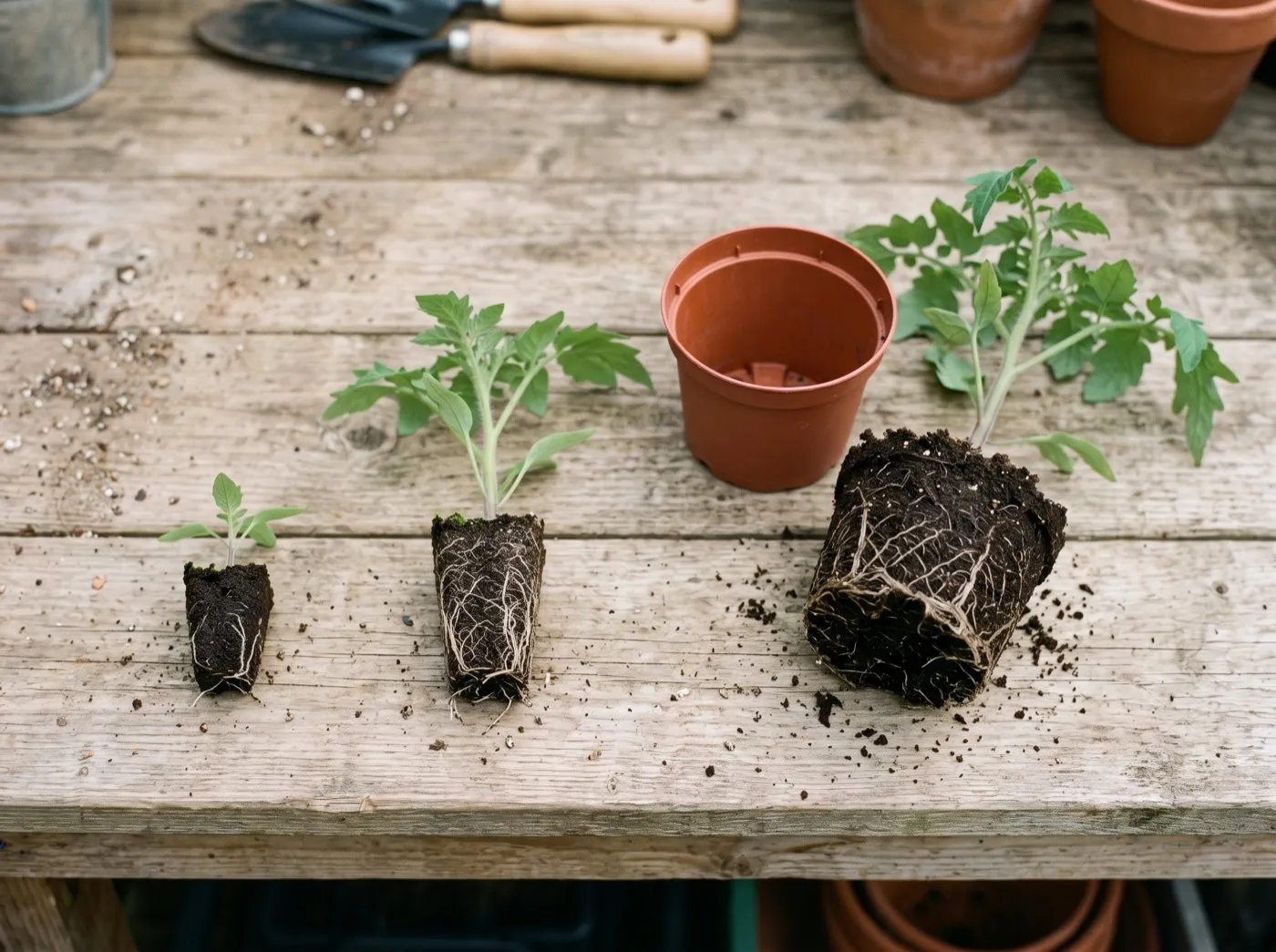
Bigger plugs cost more, but they have more root and need less growing on before they go outside.
What to do the day your plug plants arrive
Open the box the day it arrives. Plugs cope with a couple of days in the post, but every extra day in the dark sets them back.
- Slide the trays out and stand them upright.
- Check the compost. If it’s dry, stand the tray in 2cm of water for about an hour so it soaks up from below.
- Put them somewhere bright, airy and frost-free, out of strong midday sun.
- Pot mini and standard plugs on within a day or two.
Don’t panic if they look a bit yellow or flattened. That’s normal after a trip in a box. If the compost is moist and the stems are firm, they perk up within a few days. Watering from below protects tiny plants and keeps the compost on their roots.
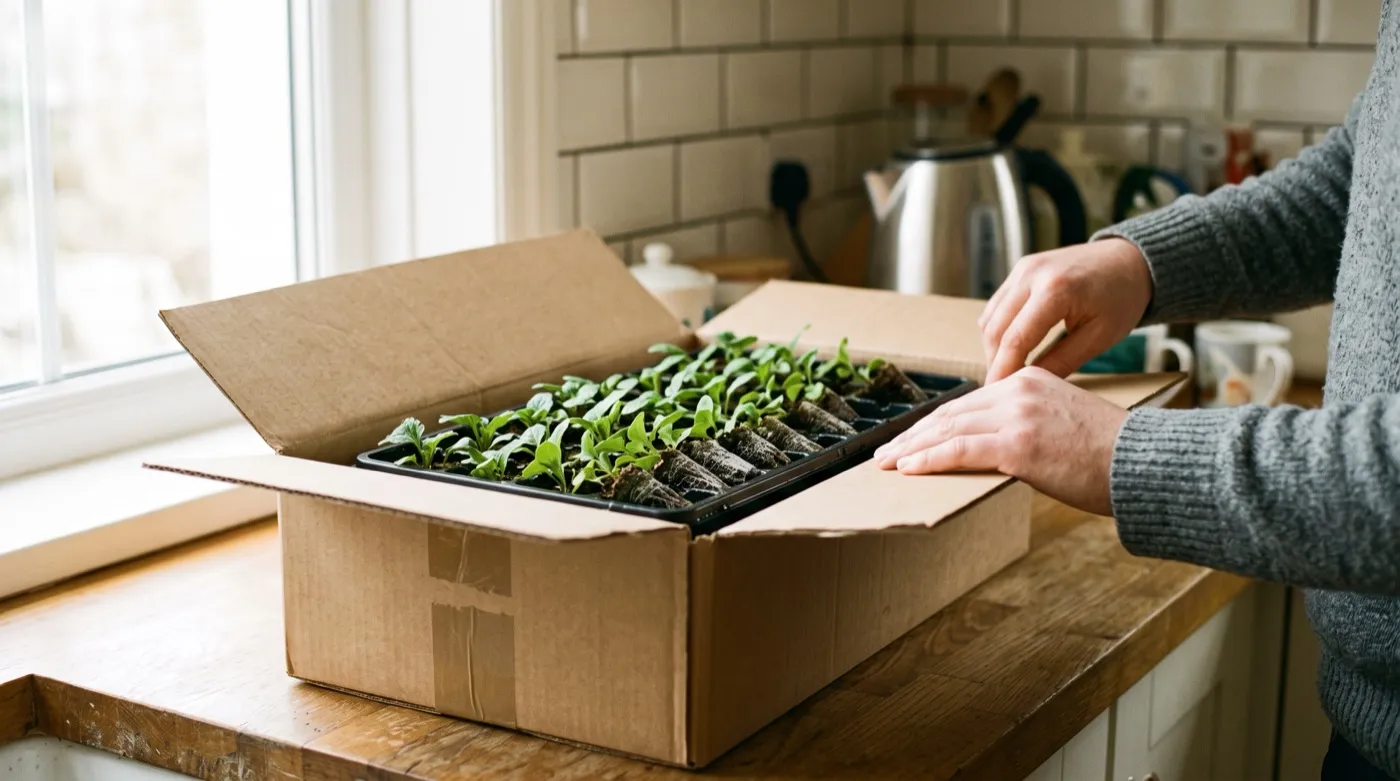
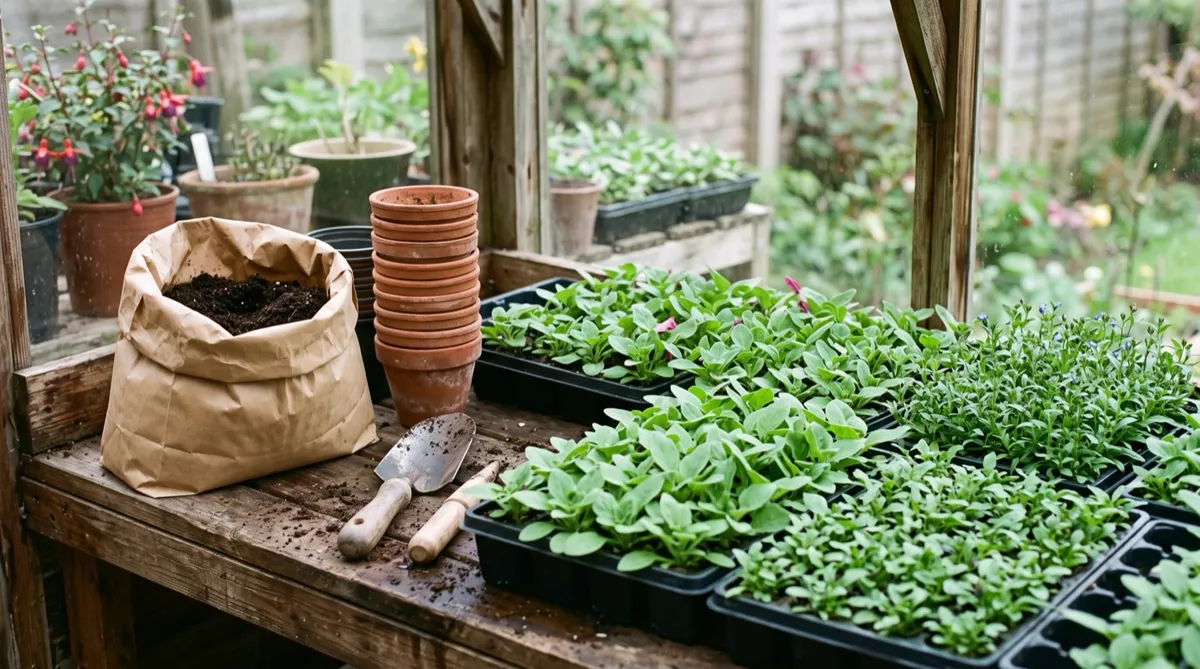
Get them out of the box on the day they arrive. A bright, cool spot soon perks them up.
How to pot on plug plants
Pot mini, standard and jumbo plugs into 9cm pots of fresh peat-free multipurpose compost, one plug per pot. One move is enough.
- Fill the pot loosely and tap it once to settle the compost.
- Make a hole the size of the plug with a dibber or your finger.
- Push the plug up from below with a pencil, or squeeze the cell gently.
- Hold it by a leaf or the rootball. Never hold the stem, as a plant can spare a leaf but not its stem.
- Set it at the same depth it was growing, firm gently and water from below.
Use a fresh bag of compost, not an old half bag from last year. The RHS has a handy illustrated guide on how to pot up plug plants.
Label as you go. Young petunias and lobelia look very alike for the first few weeks.
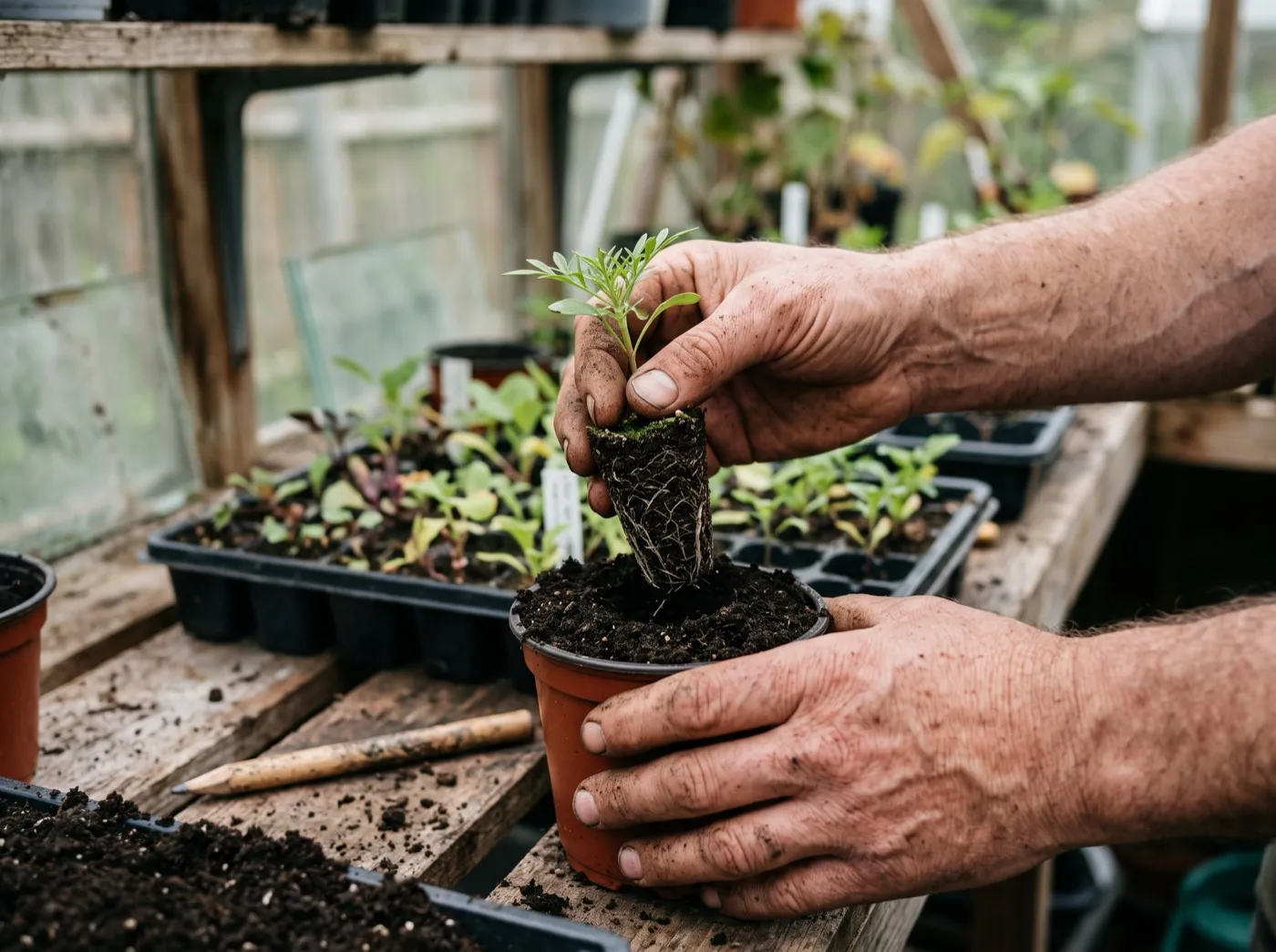
Plant each plug at the depth it grew before and firm it in gently. It soon gets into a rhythm.
Growing on plug plants: light, warmth and water
Give potted plugs plenty of light, gentle warmth and compost that never quite dries out. Get it right and a mini plug fills its pot with roots in four to six weeks.
- Light: a frost-free greenhouse or bright porch is ideal. A windowsill works if it’s your brightest, but turn pots a quarter turn each day.
- Warmth: aim for 10-15°C by day. A warm living room without much light makes plants stretch. Frost-free is the one hard rule.
- Water: little and often, from below. Check every day, as small pots can dry out in a single sunny day.
- Pinching out: once plants have five or six pairs of leaves, pinch out the tip of bushy types like petunias and fuchsias. Our guide to pinching out fuchsias and bedding plants shows how.
- Feeding: a weak liquid feed once a week from about week three keeps growth going.
Gardener’s tip: Lift a freshly watered pot and remember how heavy it feels. Then lift pots daily and water any that feel light. Peat-free compost can look dry on top while it’s wet underneath.
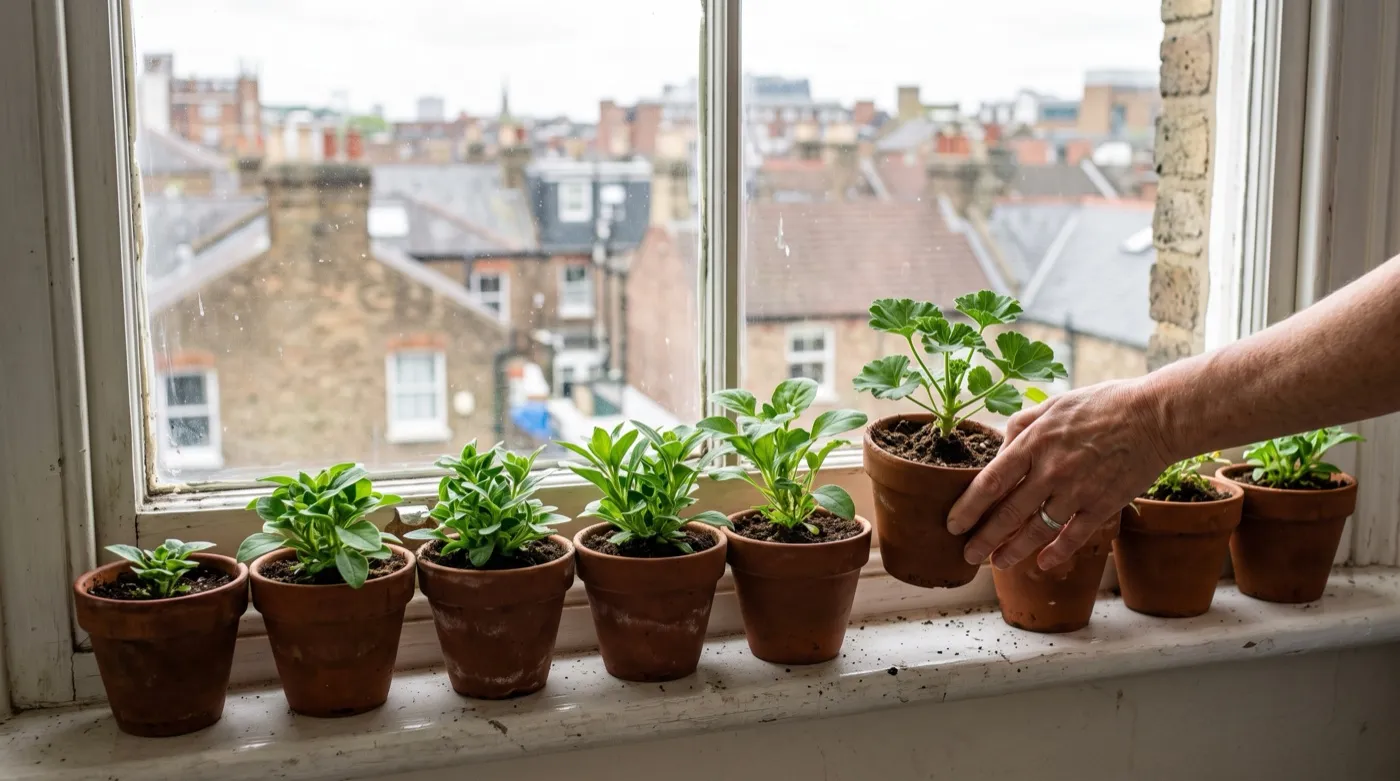
Turning pots every day stops them leaning towards the glass. Cool and bright beats warm and dim.
How to harden off plug plants
Hardening off gets plants raised indoors used to outdoor life over about two weeks. Skip it and soft leaves scorch or stall in wind, cold and sun.
In the first week, put plants outside by day in a sheltered, lightly shaded spot and bring them in at night. In the second week, leave them out at night too, unless frost is forecast. A cold frame makes this easy: open the lid a little more each day and close it on cold nights. Our guides to hardening off bedding plants and cold frame gardening cover the details.
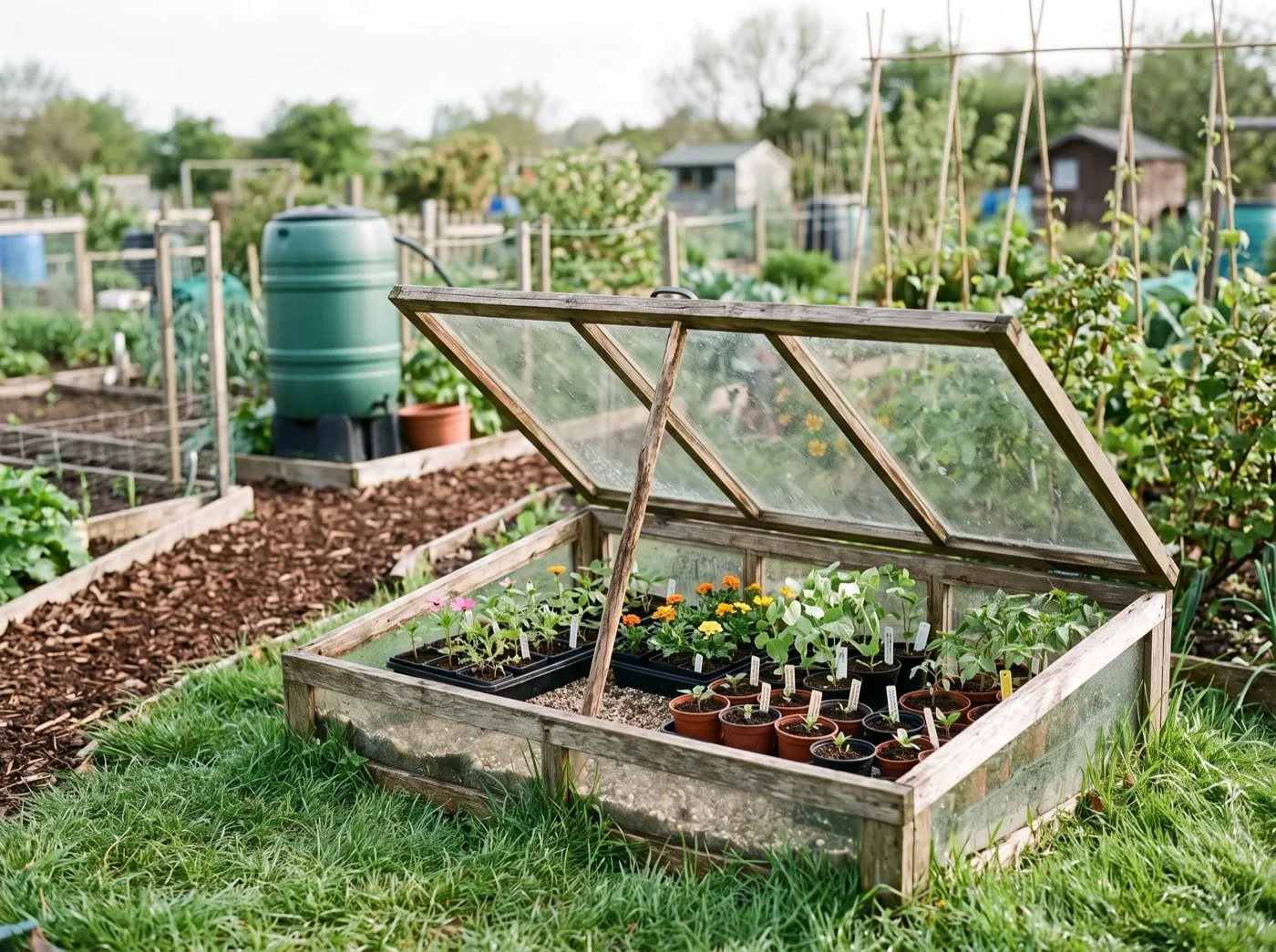
A cold frame does most of the work. Lid open by day, closed on chilly nights.
When can plug plants go outside?
Plant half-hardy plugs out after your last frost. That’s usually mid to late May in most of England and Wales, and late May to early June in the north and Scotland. Petunias, begonias, lobelia and fuchsias are damaged by a single frost, so check the forecast before planting.
Hardy plugs are easier. Pansies, violas, wallflowers and most perennials can go out in autumn or early spring, whenever the soil is workable.
To plant out:
- Water the pots an hour before.
- Dig a hole a little wider than the rootball.
- Plant at the same depth, firm in and water well.
- Space summer bedding about 15-25cm apart, depending on how big it grows.
- Water every couple of days for the first fortnight.
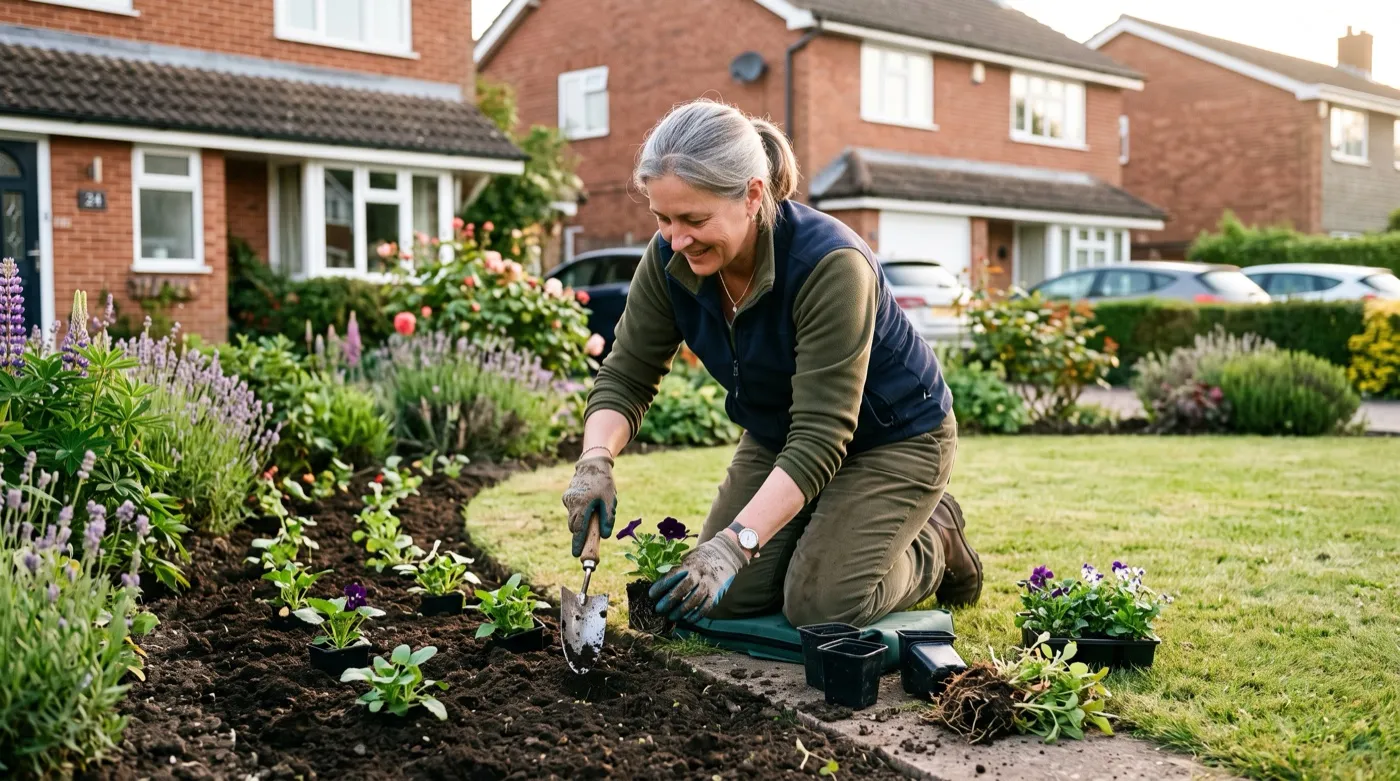
Water new plants in well, even if rain is due, then keep them moist for the first couple of weeks.
Why plug plants fail: drying out, damping off and legginess
Most losses come from three things, and all of them are easy to prevent.
Drying out
Tiny plugs hold very little compost, so they dry out fast, especially in sunny spring weather. Check every day and water from below as soon as pots feel light. A plug that wilts badly once rarely grows well afterwards.
Damping off
Damping off is a rot that makes young plants collapse at compost level, often in patches. It loves still, damp, crowded conditions. Use fresh compost and clean pots, water from below with mains water, and let air move on mild days. There’s no cure, so remove collapsed plants and space the rest out. Our guide to damping off explains more.
Leggy growth
Leggy plants are pale, stretched and floppy. Warmth with too little light is almost always the cause. Move them somewhere cooler and brighter, turn pots daily and pinch out the tips. Our guide to leggy seedlings has the full fix.
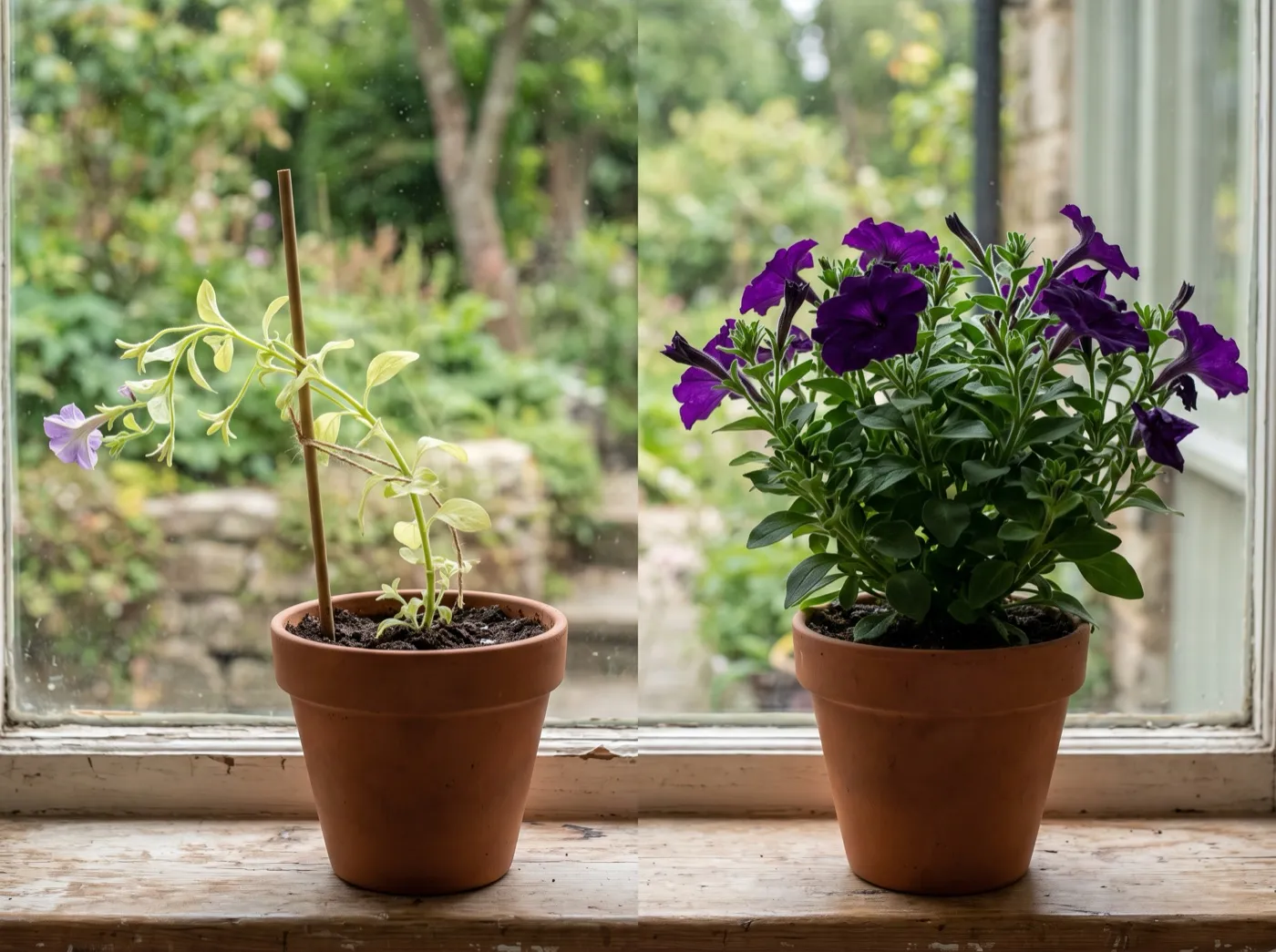
Warm and dim gives a stretched, floppy plant. Cool and bright keeps it short and sturdy.
Plug plants, seed or garden centre plants?
Each route suits a different gardener.
| Option | Cost per plant | Your work | Best for |
|---|---|---|---|
| Seed | Lowest | Most: sowing, pricking out, growing on | Easy, fast plants like calendula and nasturtiums |
| Mini plugs | Low | Potting on and growing on for weeks | Bedding in bulk with a greenhouse or porch |
| Garden-ready plugs | Medium | Hardening off only | Busy gardeners without much space indoors |
| Garden centre plants | Highest | None | Instant colour, seeing exactly what you buy |
Plug plant buying calendar
Popular varieties sell out early, so order ahead and let the delivery date set your workload.
| Month | Plug plant jobs |
|---|---|
| January | Order summer bedding plugs |
| February | First mini plug deliveries. Clear frost-free space |
| March | Main mini and standard plug deliveries. Pot on within a day or two |
| April | Jumbo plugs arrive. Water daily and pinch out tips |
| May | Garden-ready deliveries. Harden off and plant out after the last frost |
| June | Finish planting out. Water new bedding for a fortnight |
| July | Feed baskets and pots. Order autumn bedding plugs |
| August | Order pansies, violas and wallflowers |
| September | Autumn plugs arrive. Pot on or plant hardy types out |
| October | Plant out spring bedding plugs |
| November | Order perennial plugs for spring |
| December | Wash pots and trays ready for next year |
Match deliveries to your diary. A tray of minis that arrives while you’re on holiday is money wasted.
Once your plugs are growing, our summer hanging basket recipes will help you put them to work. There’s more in the growing hub.
Frequently asked questions
What are plug plants?
Plug plants are young plants raised in cell trays and sold by post. Each one has its own small plug of roots and compost. Sizes run from tiny mini plugs to garden-ready plants in 7-9cm pots. Small plugs need potting on, while the biggest can go out after hardening off.
What should I do with plug plants when they arrive?
Unpack them the same day and stand them upright in the light. Put them somewhere bright and frost-free, out of strong midday sun. If the compost feels dry, stand the tray in 2cm of water for about an hour. Pot small plugs on within a day or two.
What size pot should I use for potting on plug plants?
A 9cm pot suits most mini, standard and jumbo plugs. Fill it with fresh peat-free multipurpose compost and plant the plug at its original depth. Hold it by a leaf or the rootball, never the stem. One move from plug to 9cm pot is enough.
When can plug plants go outside in the UK?
After the last frost, usually mid to late May. In northern England and Scotland it can be early June. Half-hardy bedding like petunias, lobelia and begonias is killed by frost. Harden plants off for two weeks first. Hardy plugs such as pansies and wallflowers can go out earlier.
Why are my plug plants leggy?
Too much warmth and too little light, usually on a windowsill. Move plants to your brightest spot, keep them cooler at 10-15°C, and turn pots a quarter turn each day. Pinching out the growing tip helps stretched plants bush out again.
Are plug plants cheaper than garden centre plants?
Yes, especially the small sizes bought in trays. You pay much less per plant than for potted bedding, but you do the growing on yourself. Garden-ready plugs cost more but save weeks of work. Seed is cheaper still but needs more time, heat and space.
Can you plant plug plants straight into the ground?
Only garden-ready sizes, and only after hardening off. Plants in 7-9cm pots have enough root to go straight into borders and baskets after the last frost. Mini and standard plugs planted straight out usually dry out or get eaten. Grow small plugs on in pots first.
Our team produces practical UK gardening guidance from source research, contributor records and established horticultural practice. Editorial standards are overseen by Matt W.