Key takeaways
- Damping off rots seedling stems at the soil line, so they topple and never stand back up
- Cold, wet compost, still air and thick sowing give the disease its chance
- There is no cure once a seedling collapses, so remove it and save the rest
- Use clean trays, fresh seed compost and mains water rather than water butt water
- Sow thinly, water from below and keep air moving round the trays
- Never re-sow into compost where seedlings have already damped off
Damping off is why a tray of healthy seedlings can be lying flat the next morning. The stems rot right at the soil line, the seedlings topple, and they never get back up. It is frustrating, but it is mostly about growing conditions, so you can stop it happening again.
This guide helps you work out what went wrong in your seed tray. It covers damping off first, then the other common sowing failures: seeds that never come up, mould and moss on the compost, and seedlings that stall.
What does damping off look like?
Damping off shows as sudden collapse. Seedlings that stood up yesterday are flat on the compost today, often still green. Look at the stem where it meets the compost. You will see a thin, dark, water-soaked pinch, as if someone squeezed it between finger and thumb.
It comes in two forms. Before emergence, the seed or shoot rots under the surface, so it looks as if the seed was dud. After emergence, young seedlings keel over. Losses usually spread out in a patch rather than at random, as the disease moves through the wet compost.
Don’t confuse it with wilting from dry compost, which perks up after watering. Leggy seedlings that flop from weak light stand back up too. Damping off never does.
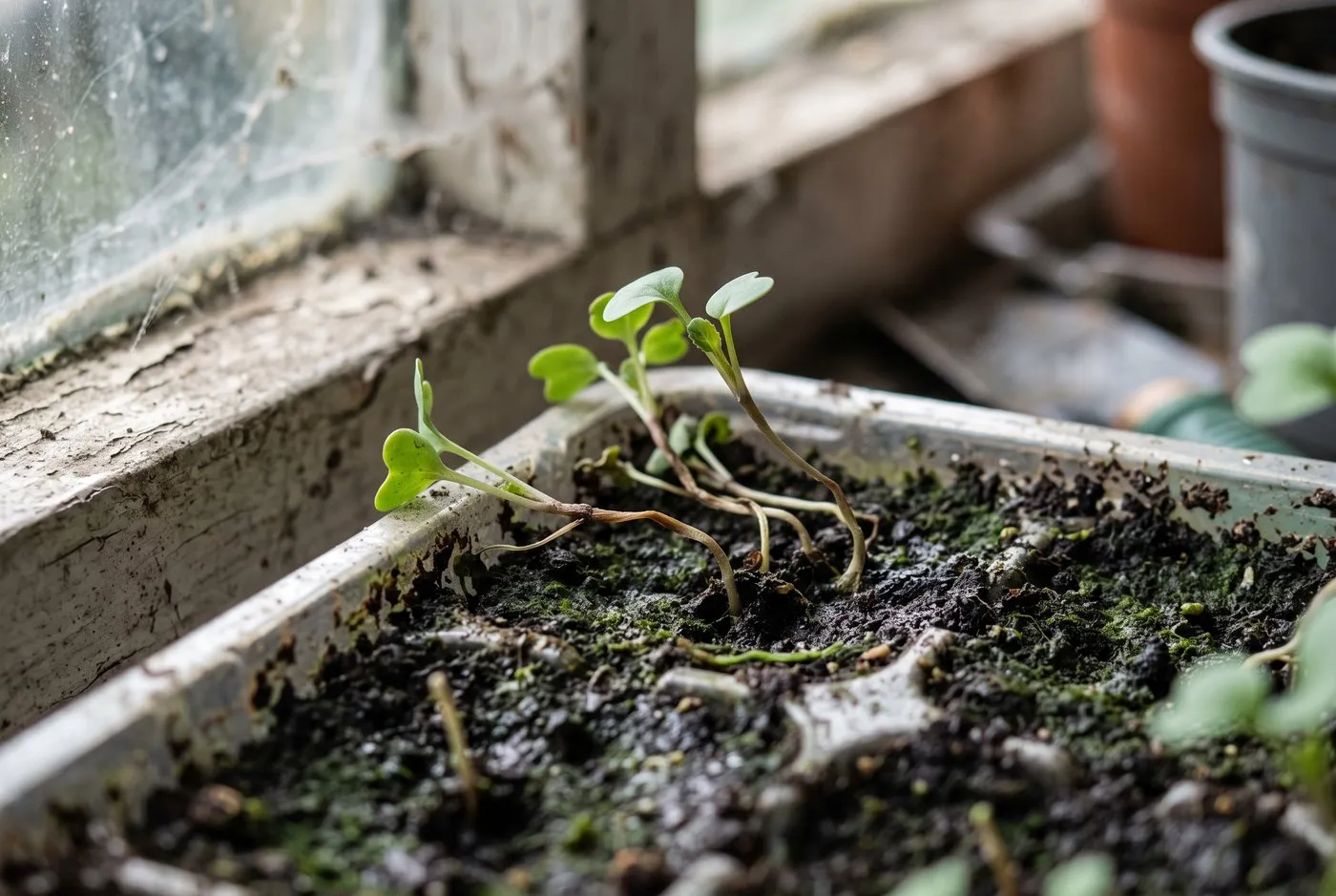
This is the giveaway: seedlings flat on the compost with a thin brown pinch at the base. The leaves can still look green for a day.
What causes damping off?
Damping off is caused by organisms that live in soil, old compost and stored water. The main ones are Pythium and Phytophthora, which are water moulds, and the fungus Rhizoctonia. Grey mould (Botrytis) can also attack crowded, weak seedlings.
They sit in dirty trays, used compost, garden soil and water butts, waiting. Water moulds need wet compost to spread, so a soggy tray lets them move from seedling to seedling. They attack the soft stem just above the roots.
The common mistake is to keep watering and re-sow into the same tray after the first collapse. That compost is now full of the disease, and every new seed meets it.
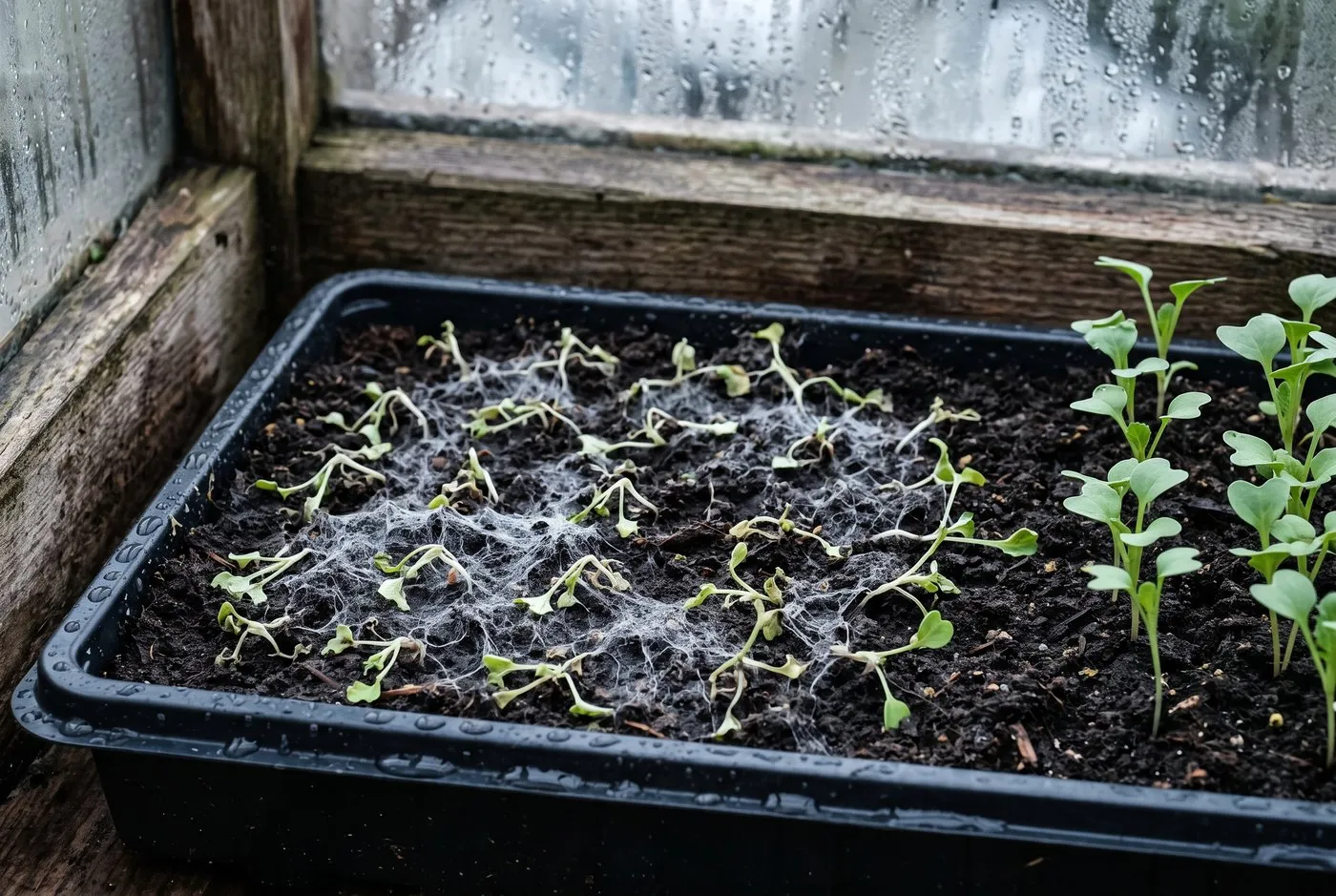
Damping off spreads in a patch. Fine white threads across a soggy surface show it moving between seedlings.
Why cold, wet seed trays are the danger zone
The root cause is almost never the seed. It is the conditions. Damping off organisms struggle in a warm, airy, well-drained tray. Give them cold, wet, still, crowded compost and they take over.
Four things stack the odds against seedlings:
- Cold compost slows germination, so seedlings stay soft and at risk for longer.
- Waterlogging gives water moulds the film of water they travel through.
- Still air keeps the surface damp and humid.
- Thick sowing packs seedlings so close that one infection reaches the lot.
Cold and wet together are far worse than either alone. A soaking tray on a chilly windowsill in February is high risk. The same seeds in a propagator, watered from below and allowed to dry on top, are much safer. Warmth hurries seedlings through their weakest stage.
How to prevent damping off
No single fix stops damping off, so stack these together:
- Start clean. Wash trays and pots in hot soapy water, rinse and dry them before sowing.
- Use fresh seed compost. Old compost and garden soil carry the disease. The guide to sterilising garden soil and compost explains when home treatment is worth it.
- Water with mains water. Water butts can harbour damping off organisms, so keep them for established plants.
- Water from below. Stand trays in shallow water until the surface darkens, then lift them out. The bottom watering method for seed trays walks you through it.
- Sow thinly. Space larger seeds and prick out or thin early.
- Give gentle warmth. A heated propagator or warm windowsill speeds germination.
- Keep air moving. Open vents, prop up propagator lids once seedlings are up, or run a small fan nearby.
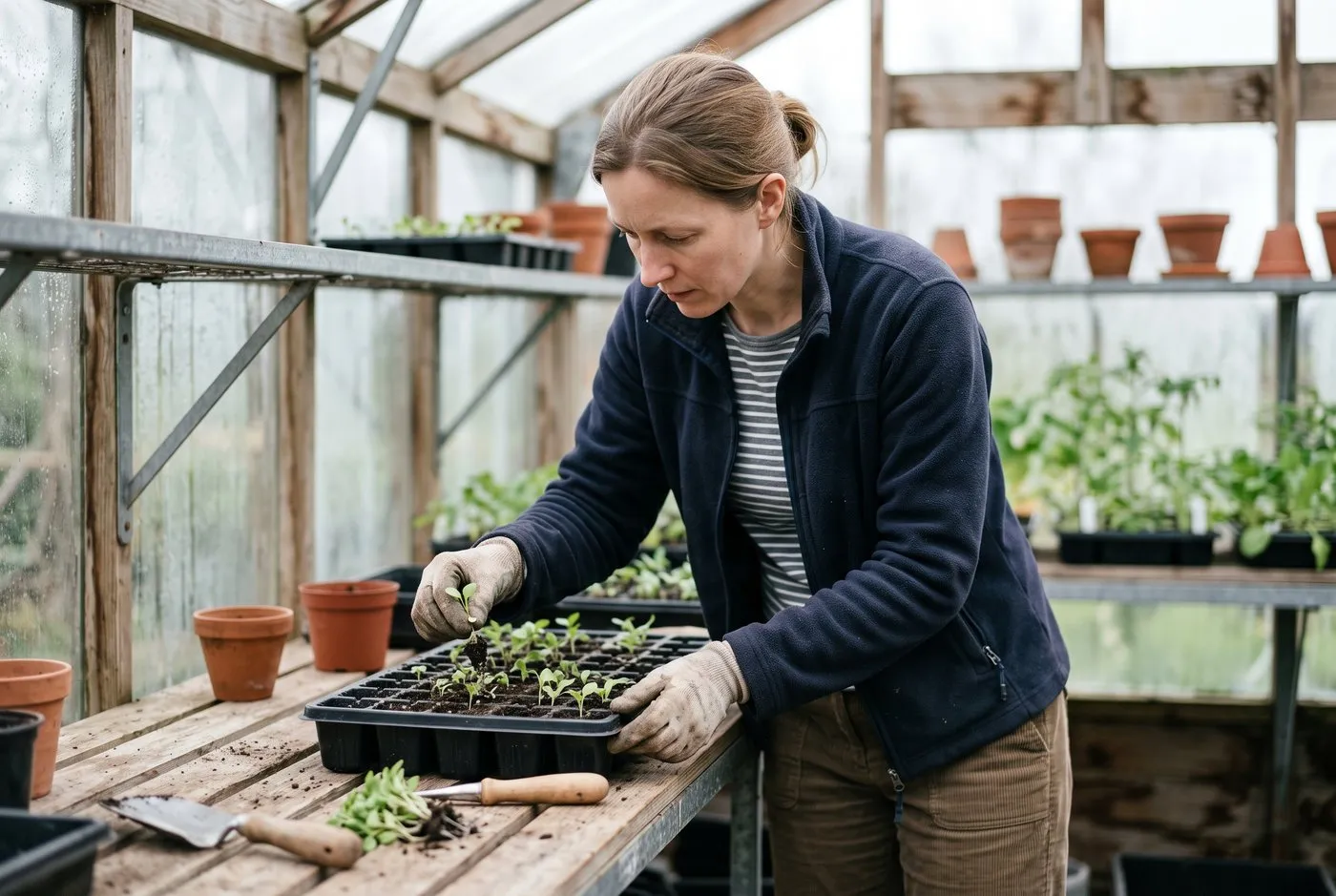
Thinning early lets air move between seedlings and stops the disease jumping from one to the next.
As soon as you see collapse, lift out the fallen seedlings and any around them. Move the tray somewhere brighter and airier, and let the surface dry a little. If many have gone, prick the healthy ones into fresh compost and start again.
Warning: Never re-sow into compost where seedlings have damped off, even if you scrape the top. Empty the tray, wash it well and start again with fresh seed compost.
Why are my seeds not coming up?
Not every failure is damping off. Seeds that never appear are the most common problem, and the seed is often not to blame.
Temperature is the big one. Each crop has a minimum temperature for germination. Tomatoes like about 20C, and chillies and aubergines want warmer still. Sown on a cold windowsill, they sit and rot. The seed germination temperatures table lists the figures for the main crops.
Old seed is the second cause. Parsnip seed in particular loses its vigour fast, so buy fresh each year and check packet dates on everything else.
Sowing depth is the third. As a rule, cover seed to about its own depth. Very fine seed, such as lobelia and foxglove, goes on the surface. Lettuce needs light to germinate, so cover it only lightly.
Gardener’s tip: If a tray hasn’t moved after two or three weeks, dig up a few seeds. Plump, firm seed is still alive and just needs warmth. Soft or hollow seed has rotted, so re-sow into fresh, warm compost.
White mould, moss and liverwort on seed compost
Most green or white growth on the compost surface is harmless in itself. It does tell you the tray is too wet.
Fluffy white mould is usually a fungus feeding on the compost, not damping off. Scrape it off, water from below and get air moving. Tiny black flies often turn up in the same soggy trays. The guide to sciarid fly in seed trays explains how to deal with them.
Moss and liverwort form a green, flat crust across the surface. They show up on trays and pots that stay wet for weeks. The crust can smother small seedlings and stop water soaking in. Water from below, let the surface dry, and add a thin layer of grit or vermiculite on top.
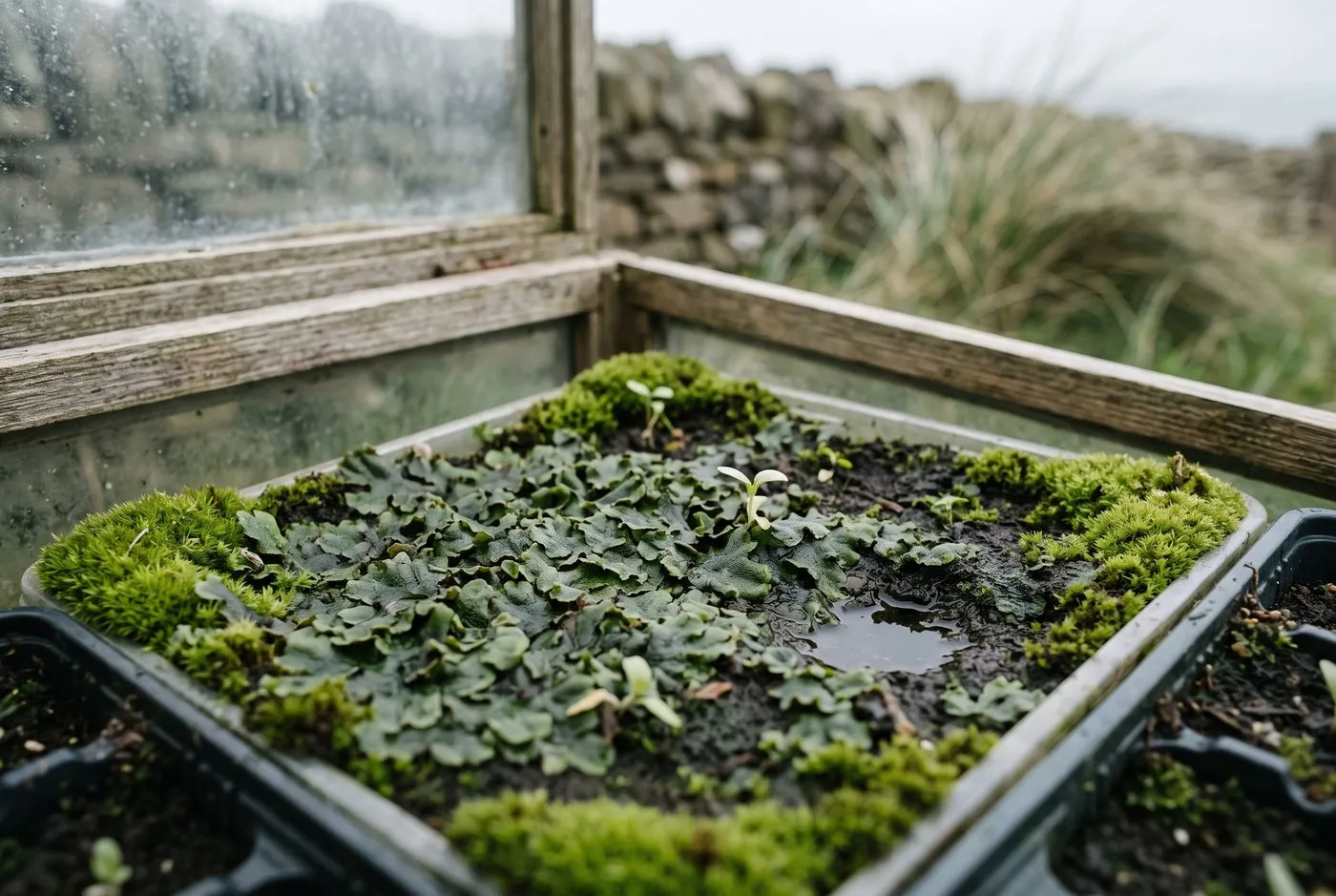
Moss and liverwort on the compost mean the tray stays too wet. A thin grit topping and bottom watering soon sort it.
Leggy seedlings and seedlings that stall
Two more problems look like disease but aren’t. Both come down to light and warmth.
Leggy seedlings grow tall, thin and pale, then flop. They are stretching for light that is too weak. Their weak stems are more likely to damp off, so the two problems often arrive together. Give them more light and slightly cooler conditions once they are up. The guide to why seedlings go leggy covers the full fix.
Stalled seedlings open their first pair of seed leaves, then sit for weeks without making true leaves. Cold roots, soggy compost or tired compost are the usual causes. Prick them out into fresh compost and give some warmth, and they usually move on.
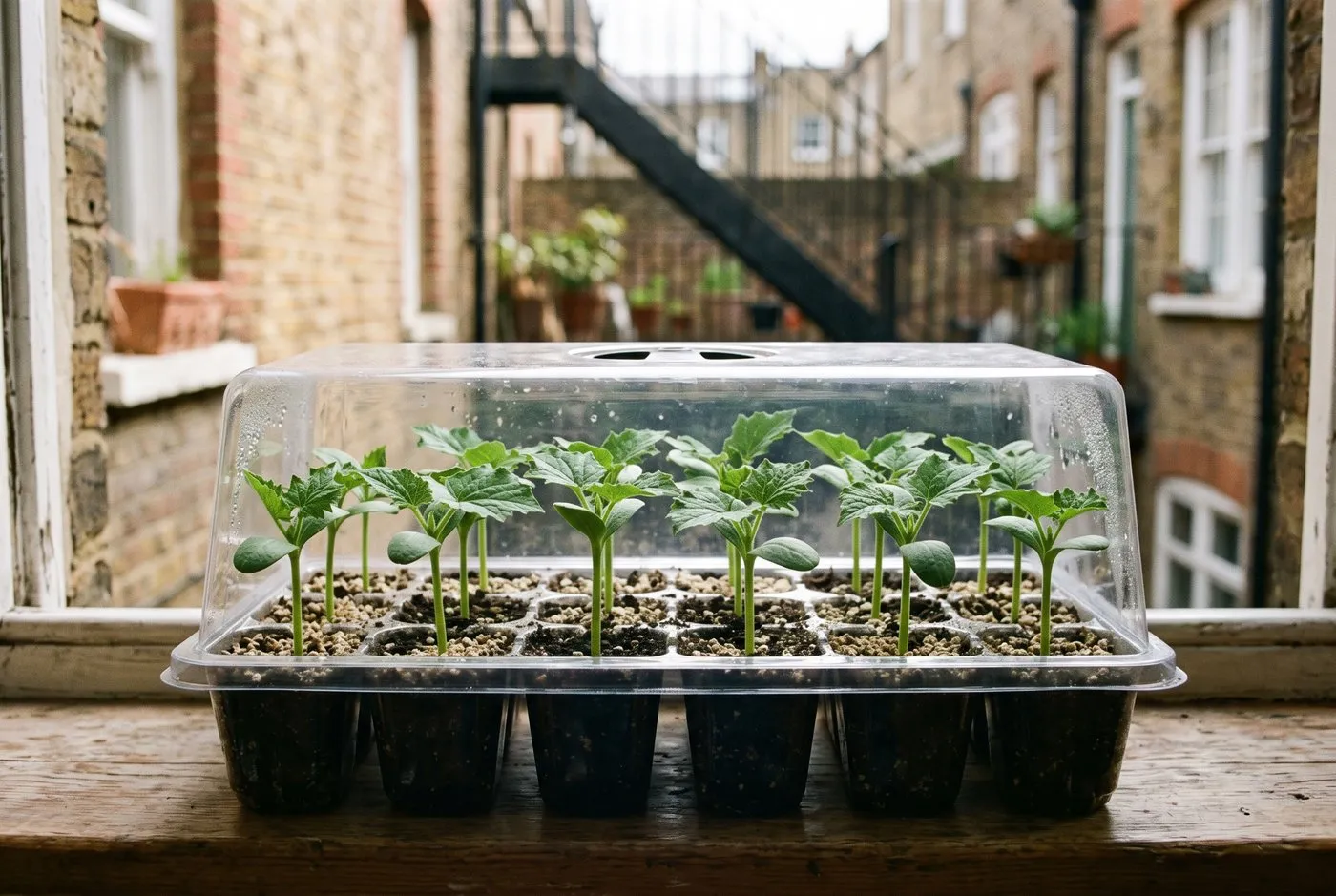
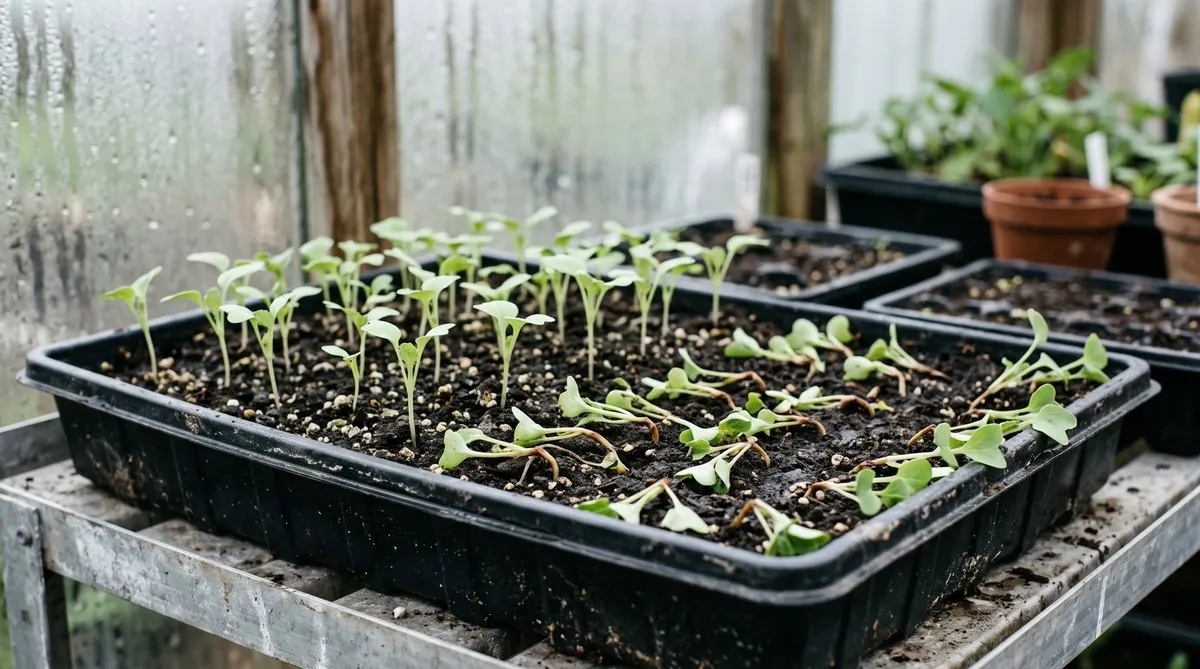
This is what you’re aiming for: sturdy, evenly spaced seedlings with firm stems and true leaves on the way.
Damping off risk month by month
Risk rises with cold and dark and falls as days warm up. Use this as a guide for UK sowing under cover.
| Month | Sowing jobs and damping off risk |
|---|---|
| January | Very high risk. Only sow chillies and aubergines with heat and good light |
| February | High risk. Sow tomatoes in a heated propagator. Watch for weak, leggy seedlings |
| March | High risk on cold windowsills. Use bottom heat and mains water, and ventilate on mild days |
| April | Moderate risk. Main sowing month under cover. Sow thinly and keep air moving |
| May | Lower risk. Sow tender crops under cover as compost warms up |
| June | Low risk. Keep trays out of fierce midday sun |
| July | Low risk. Sow biennials and autumn salads |
| August | Low risk. Water in the morning so trays dry off by night |
| September | Rising risk as nights cool. Ventilate cold frames freely |
| October | Moderate risk. Keep autumn-sown sweet peas and broad beans airy, never sitting wet |
| November | High risk. Little sowing. Prop cold frame lids open on dry days |
| December | Very high risk. Clean trays and pots ready for spring |
What happened to Cheshunt compound?
Older books tell you to water seed trays with Cheshunt compound. It was a copper-based drench used against damping off for decades. It has been withdrawn, and there is no approved copper drench for home gardeners now, so don’t mix your own.
Home-made chamomile or cinnamon waterings also crop up online. They are not approved plant protection products, so they aren’t a legal treatment either. The RHS guide to damping off agrees that prevention is the answer. There is nothing to spray, so the battle is won before the seedlings come up.
Common seed sowing mistakes
- Watering with butt water. It is fine for the garden, but wrong for a seed tray. Use mains water at the seedling stage.
- Sowing too thickly. Crowded seedlings share disease and stay damp. Sow thinly and thin early.
- Reusing old compost or garden soil. Both can carry the disease. Use fresh seed compost.
- Cold, wet trays with no airflow. Add gentle warmth, water from below and open a vent.
- Sowing too early. February sowings on a cold sill grow weak and disease-prone. Wait for more light or use heat.
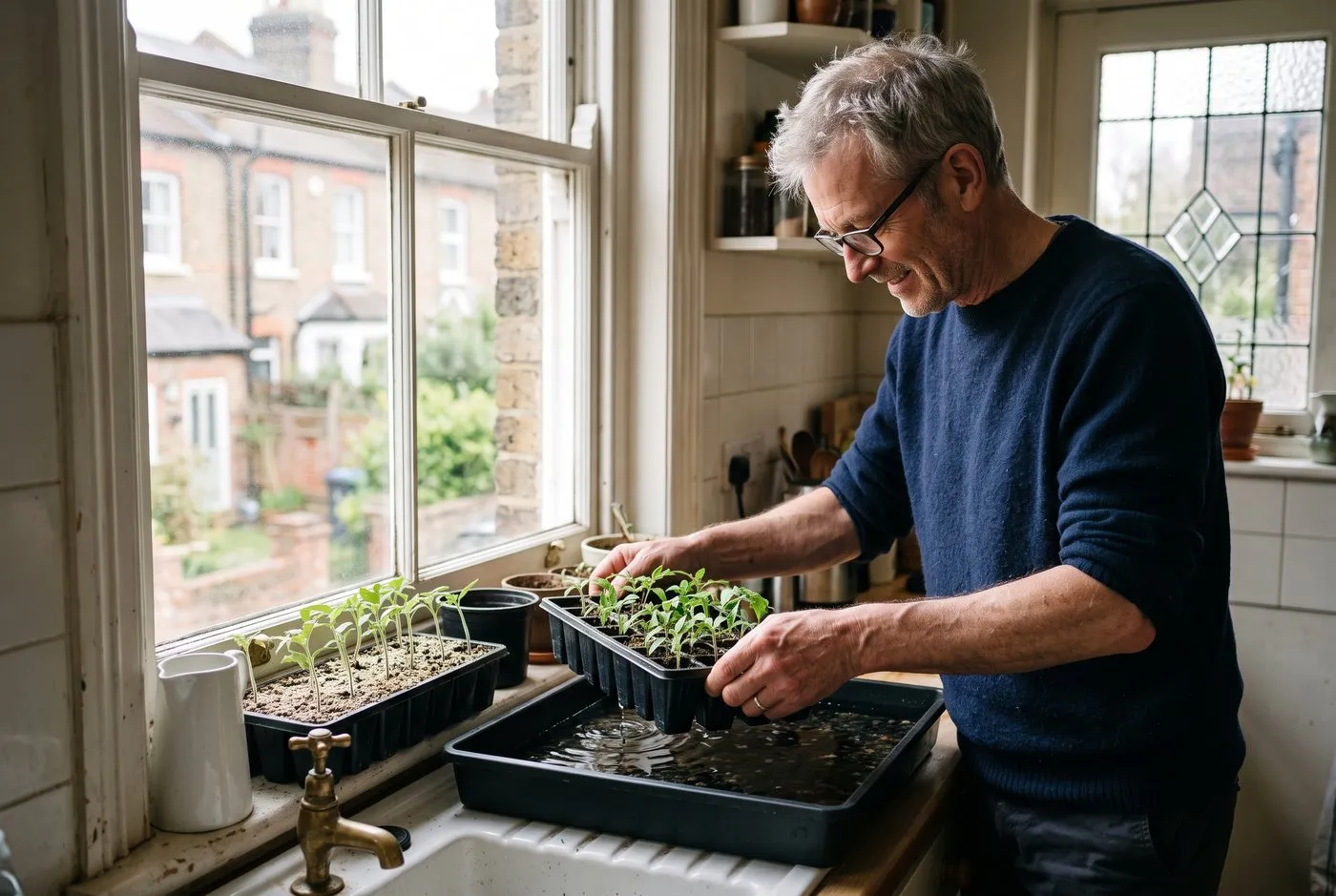
Bottom watering keeps the stem bases and surface drier. Stand trays in a couple of centimetres of mains water for ten minutes, then lift them out.
Clean benches matter as much as clean trays. Brush down the potting bench and wash used pots between sowings, because the disease lingers on dirty kit. For more help when things go wrong, browse the garden problems guides.
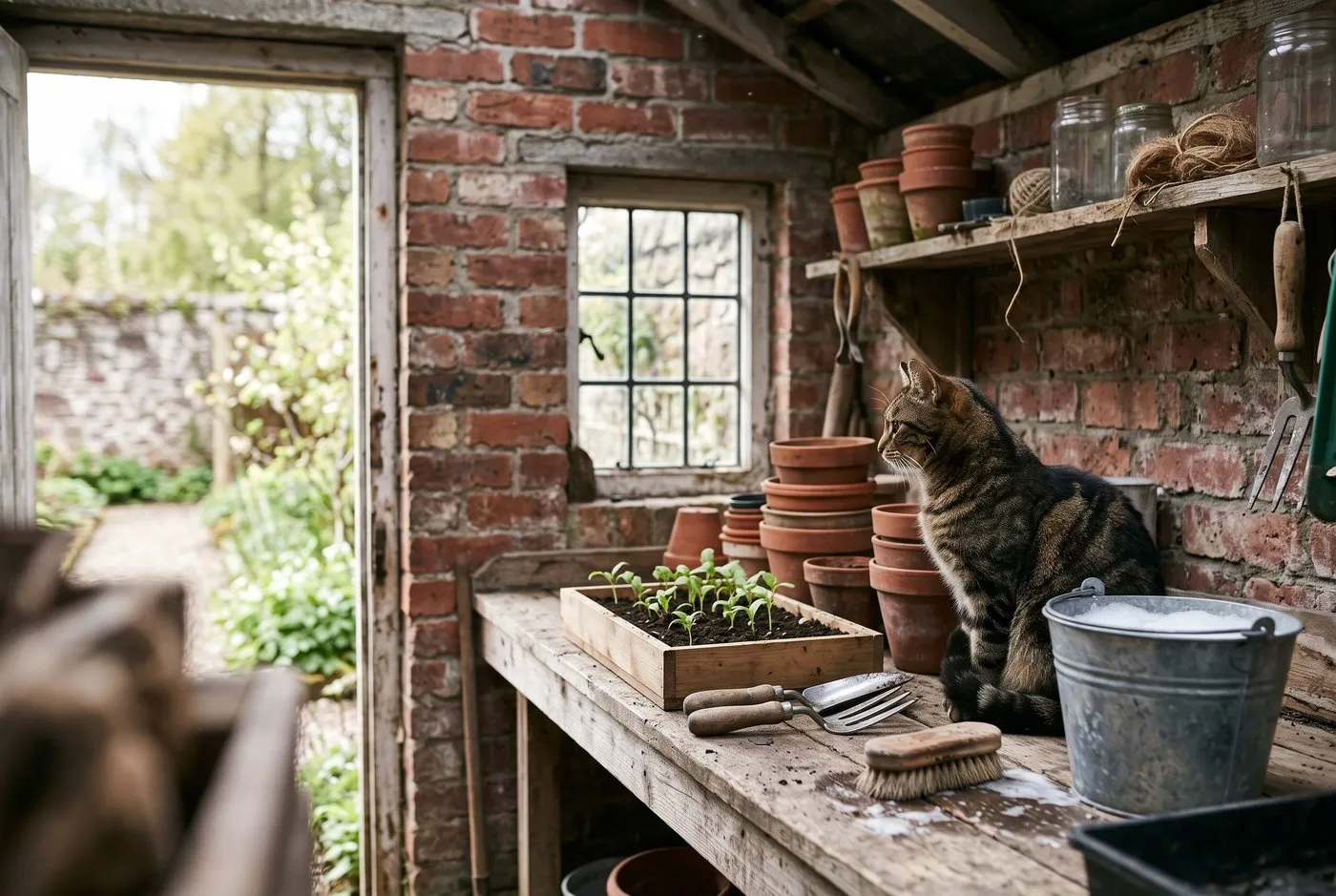
Potting benches are shared spaces. Brushing them down and washing pots between sowings stops disease carrying over.
Once your seedlings are growing strongly, move them on before they get cramped. Read the guide to fixing root-bound seedlings for the next step.
Frequently asked questions
What is damping off in seedlings?
It is a disease that rots seedling stems at the soil line. Water moulds and fungi such as Pythium and Rhizoctonia cause it. The seedling topples over and cannot recover, and it can spread across a tray in a day or two.
How do you stop damping off?
Prevent it with clean kit, fresh compost, mains water and good airflow. Sow thinly, water from below and let the surface dry a little between waterings. Gentle warmth helps seedlings grow through the risky stage quickly. There is no spray that cures it.
Can seedlings recover from damping off?
No, a seedling that has collapsed at the soil line is lost. The stem has rotted through. Remove affected seedlings straight away and move the tray somewhere brighter and airier to protect the ones still standing.
Why are my seeds not germinating at all?
Usually the compost is too cold, too wet, or the seed is too deep. Old seed is the next suspect, especially parsnip. Check the packet date, the sowing depth and the temperature the seed needs before blaming the seed itself.
What is the white mould growing on my seed compost?
It is usually a harmless mould feeding on the compost, not damping off. It shows up when the surface stays wet in still air. Scrape it off, water from below and get air moving, because the same conditions suit damping off.
Is tap water or rainwater better for seedlings?
Use mains tap water for seedlings, not water butt water. Stored rainwater can carry the organisms that cause damping off. Save the butt for established plants in the ground or in big pots.
Does Cheshunt compound still work against damping off?
You can no longer buy Cheshunt compound in the UK. It was an old copper-based drench that has been withdrawn. Prevention is now the only approach: clean trays, fresh compost, mains water, thin sowing and airflow.
Our team produces practical UK gardening guidance from source research, contributor records and established horticultural practice. Editorial standards are overseen by Matt W.