Key takeaways
- Only treat garden soil or reused compost heading for seed trays; fresh bagged compost is already clean
- Oven method: damp soil, 8cm deep, covered, until the centre reads 82C, then hold for 30 minutes
- Use a probe thermometer in the middle of the tray, not the oven dial
- Don't overheat; very hot, dry soil can harm seedlings and smells awful
- Cool the soil for a day before sowing, and mix in a handful of fresh compost if you like
- In the UK, covering soil with polythene in summer won't sterilise it
Sterilising garden soil at home is simple: sieve it, dampen it and bake it in a covered tray until the middle reaches 82C, then hold it there for 30 minutes. That kills most weed seeds, compost pests and the moulds that make seedlings flop.
It’s a handy trick if you mix your own seed compost from garden soil, or want to reuse old compost for sowing. Below you’ll find the oven, microwave and steam methods, how to cool the soil afterwards, and when you can skip the whole job. If your seedlings are already collapsing and you want to know why, start with the guide to damping off and other seed-sowing problems.
Why sterilise garden soil or compost?
To give seedlings a clean start. Garden soil and old compost can hold weed seeds, sciarid fly larvae and the soil moulds behind damping off, which topples young seedlings at soil level.
Established plants shrug these off. Tiny seedlings in a warm, damp tray don’t. A batch of heat-treated soil means fewer weeds in your modules and less risk of losing a whole tray.
It’s only worth doing for small amounts heading for seed trays, modules or pots. You can’t treat a whole border, and you don’t need to.
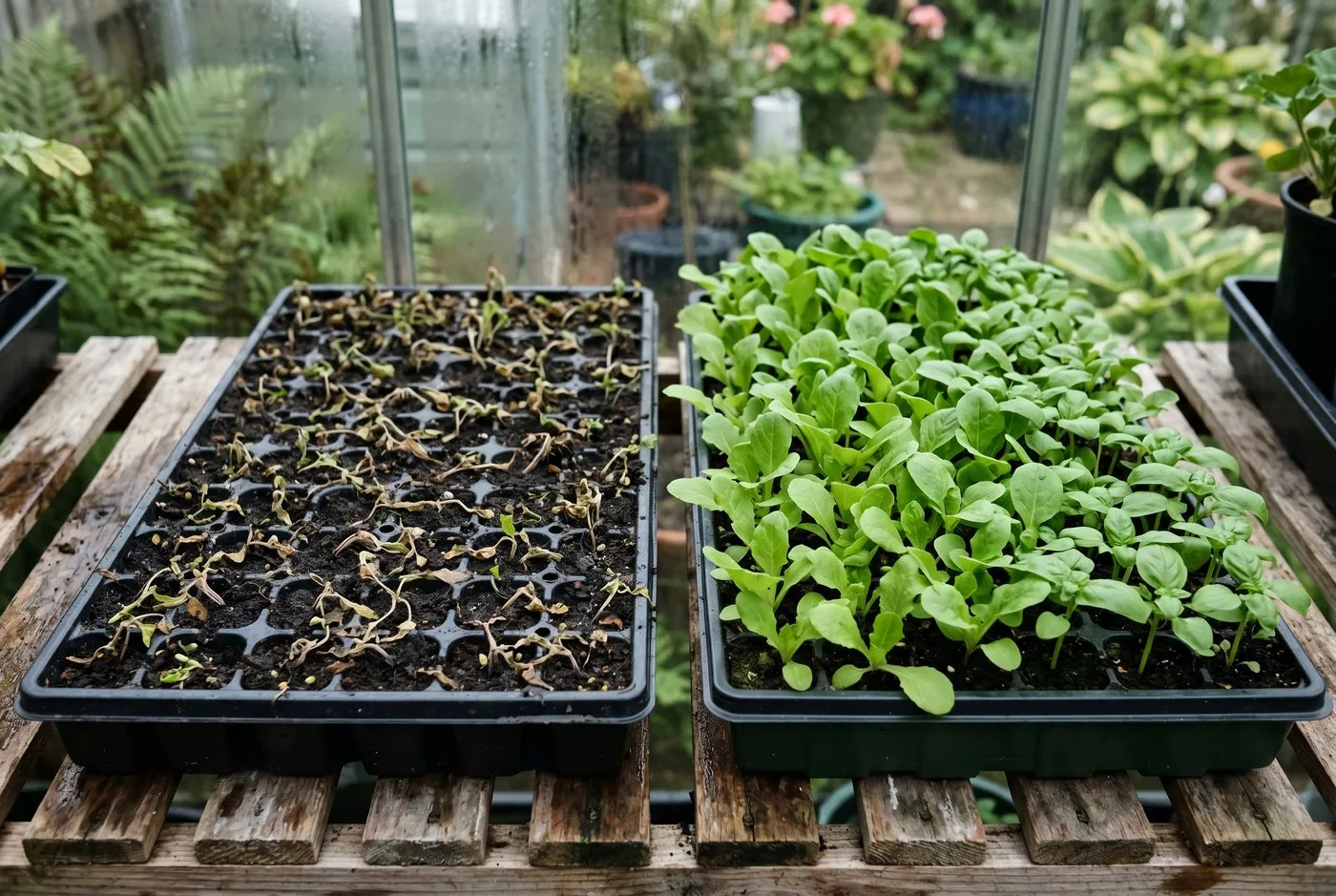
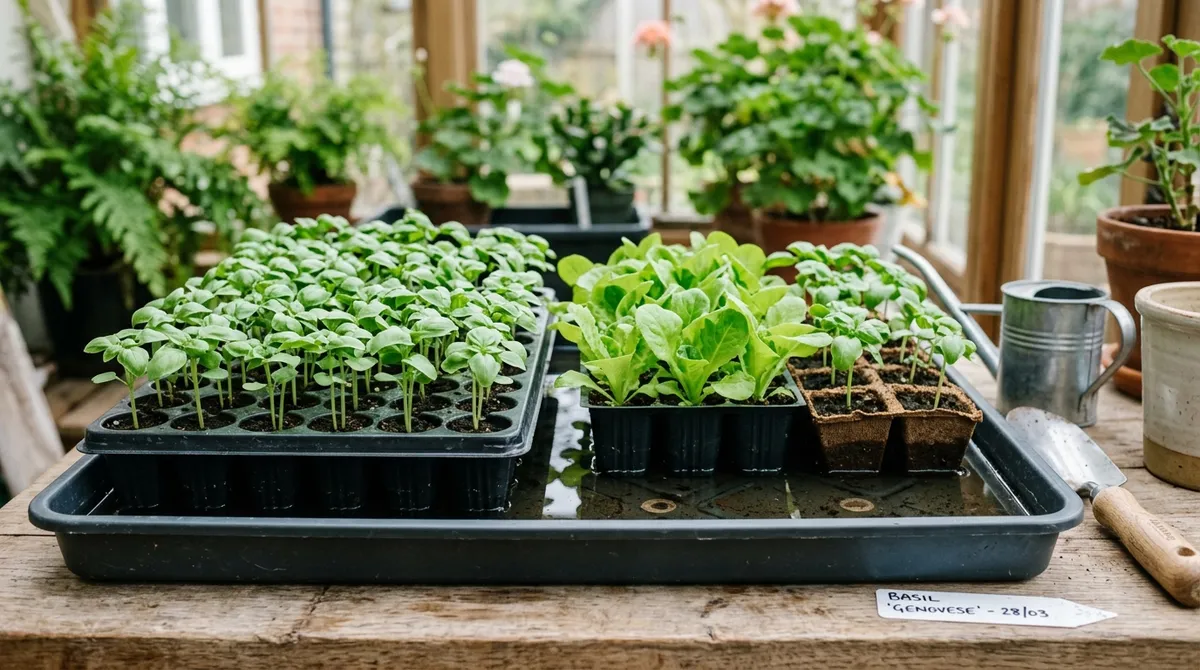
Damping off topples seedlings at soil level, as on the left. Clean compost and clean trays give them a much better chance.
Sterilising or pasteurising: which do you need?
For seed sowing, you need pasteurising, which means gentle heat that kills the troublemakers. Sterilising, in the strict sense, means heating until nothing at all survives.
The difference matters. Gentle heat leaves some helpful soil life behind, which helps keep disease from moving straight back in. Blasting soil much hotter than needed gains you nothing for seed sowing. It can also make the soil sticky and airless, and the smell is dreadful.
So the sweet spot is 82C held for 30 minutes. Most gardeners still call it sterilising, and that’s fine. Just aim for that temperature rather than “as hot as possible”.
How to sterilise soil in the oven
The oven is the easiest way to control the heat. You need a sieve, a foil tray, foil and a probe thermometer.
- Sieve the soil or compost to remove stones, roots and lumps.
- Dampen it so it holds together when squeezed but doesn’t drip. Damp soil heats far more evenly.
- Spread it no more than 8cm deep in a foil or metal tray and cover tightly with foil.
- Push the thermometer through the foil into the middle of the soil.
- Heat at about 90C on the middle shelf.
- Once the middle reads 82C, hold it there for 30 minutes.
- Turn off the oven and leave the tray covered to cool.
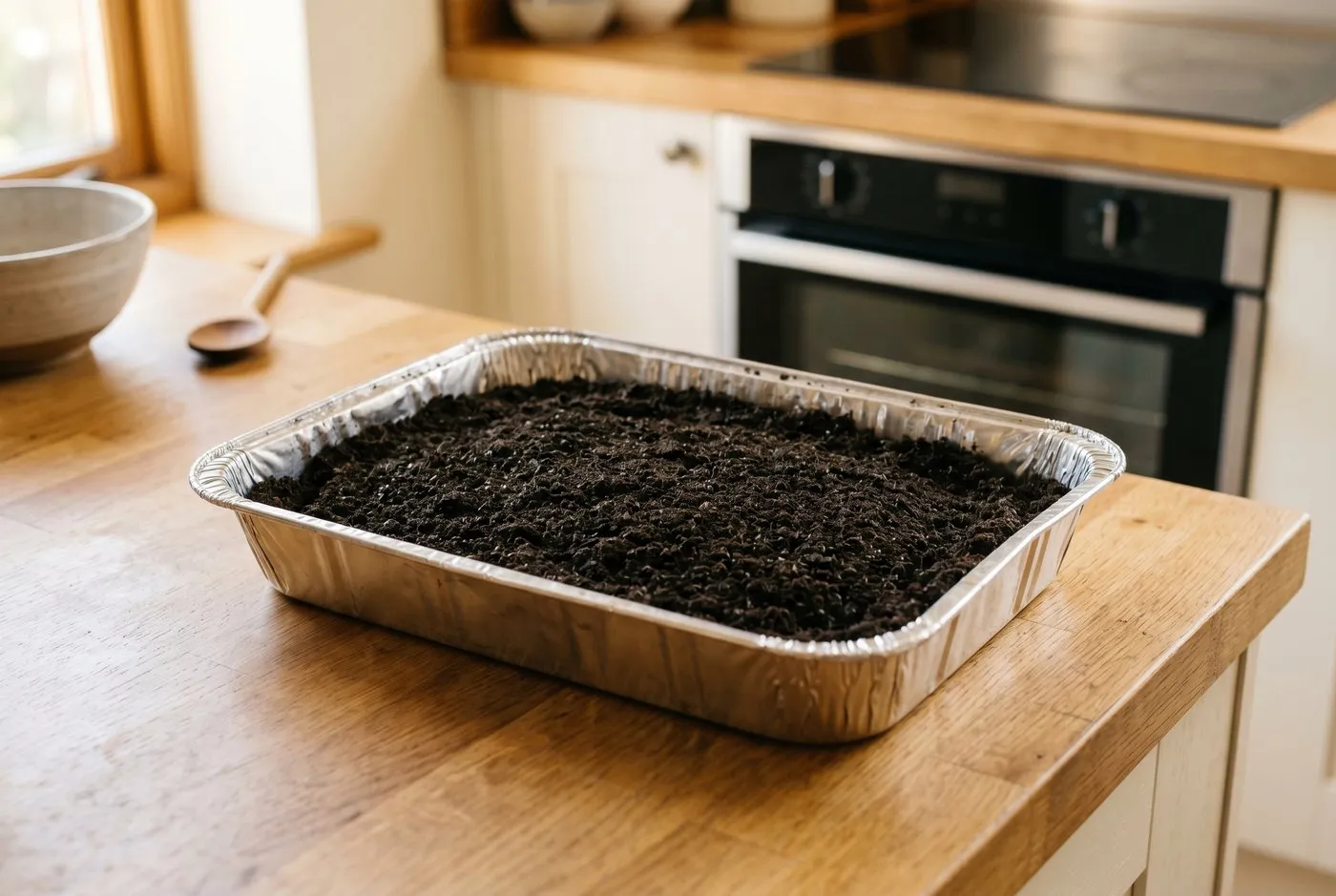
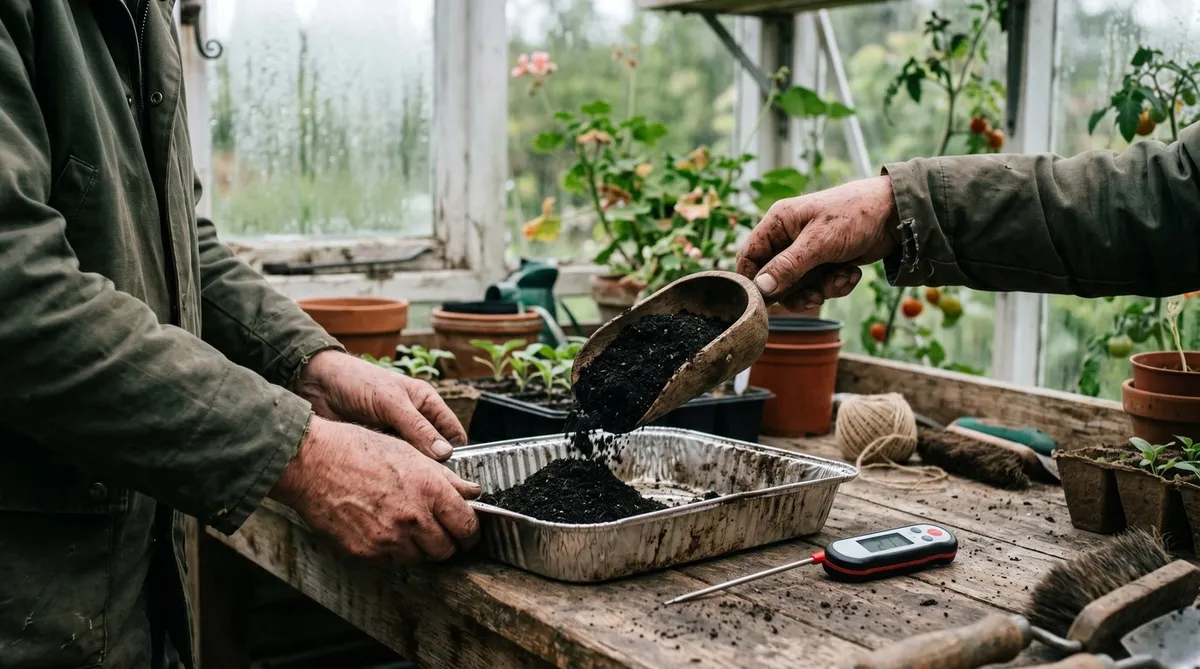
Spread the soil no deeper than 8cm. A deeper tray leaves a cool middle where problems survive.
Gardener’s tip: Baking soil smells strongly earthy. Open a window, run the extractor fan, and don’t plan a roast straight afterwards.
The thermometer reading in the middle of the tray is the number that counts. The oven dial only tells you the air temperature, and the soil lags well behind it.
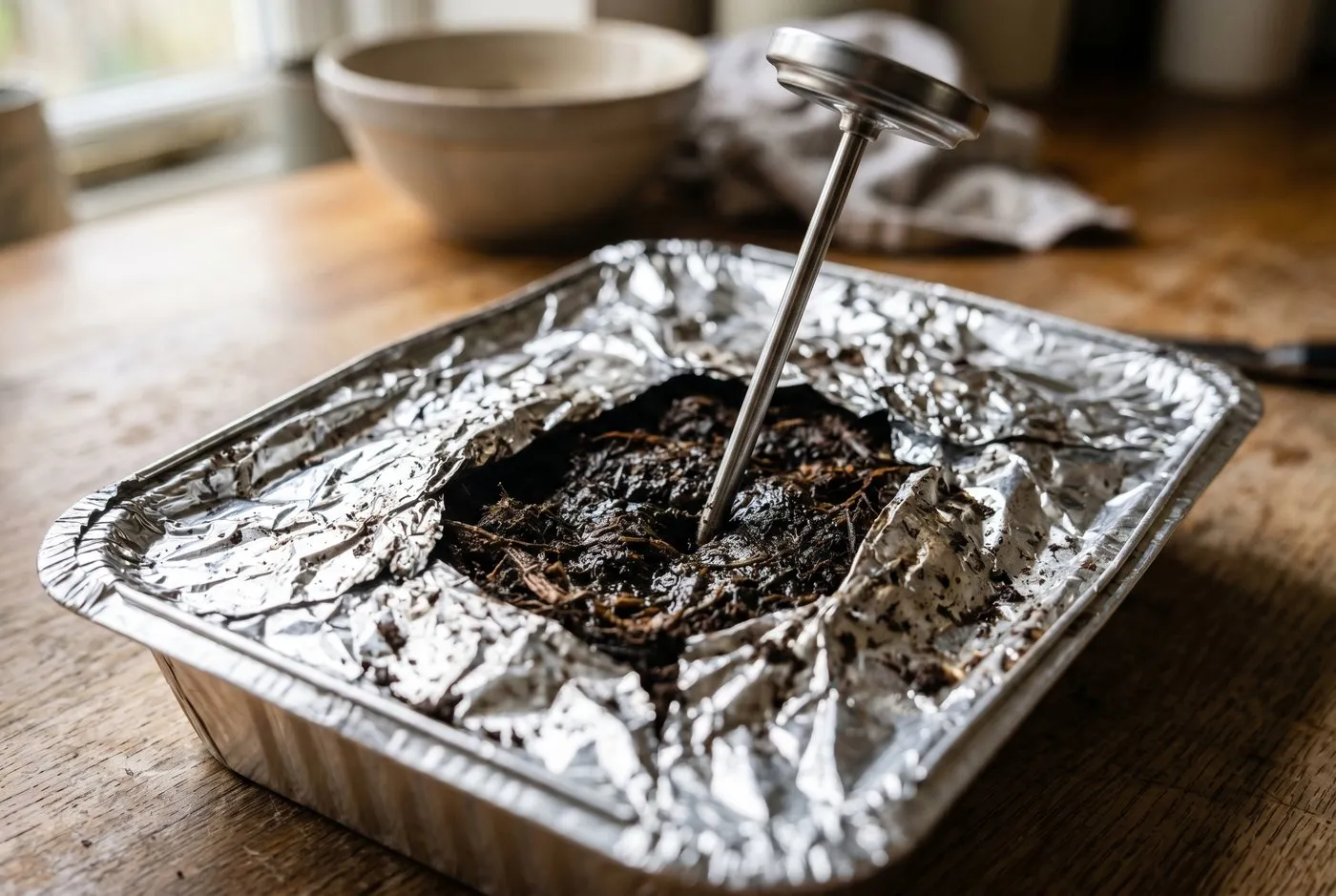
Push the probe into the deepest part of the tray. When that reads 82C, start your 30-minute timer.
Can you sterilise soil in the microwave?
Yes, and it’s the quickest way to treat a small amount. It suits a single seed tray or a few pots.
Put damp soil in a microwave-safe container with a loose lid so steam can escape. Heat on full power in short bursts of a minute or so. Stir between bursts, as microwaves heat unevenly, and check the middle with your thermometer. Once it reaches 82C, leave it to stand, covered, while it cools.
Never microwave dry soil, and keep anything metal out, including foil. For more than a few litres, the oven is less fiddly.
Steaming soil on the hob
Steaming is a gentle option that’s hard to overdo, since steam won’t go above 100C. It suits gardeners who want to keep as much helpful soil life as possible.
Put a few centimetres of water in a large pan. Sit a colander or steamer basket lined with an old cloth above it, add the damp soil and cover with a lid. Once steam is flowing freely, steam for about 30 minutes, checking the middle reaches 82C. Keep an eye on the water level so the pan doesn’t boil dry.
Steamed loam is a good base for homemade mixes. The guide to peat-free potting compost recipes shows how to blend it with leaf mould and grit.
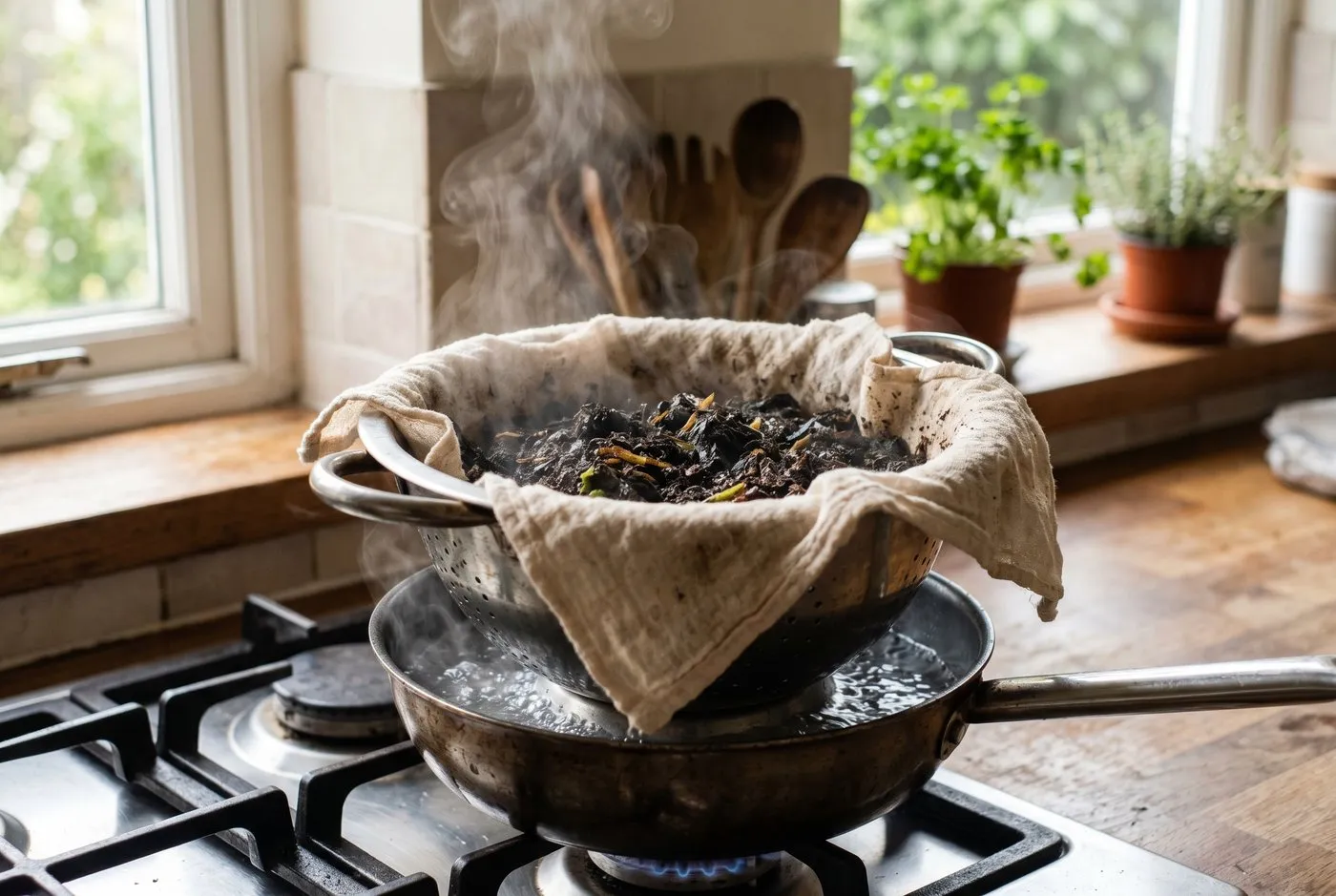
A colander, a cloth and a pan with a lid are all you need. Steam heats the soil gently and evenly.
Does solarisation work in UK gardens?
Not for sterilising. Solarisation means covering damp soil with clear polythene in summer so the sun heats it. It works in hot countries, but UK summers rarely get the soil hot enough below the surface.
It can still help as a weed-control trick. Stretch clear polythene tightly over a damp, weeded bed for several weeks in midsummer. Some weed seedlings near the surface will cook. Don’t rely on it to clear soil diseases.
Pouring a kettle of boiling water over a small patch works in the same limited way. It kills weed seedlings on the surface, but the heat fades within a few centimetres.
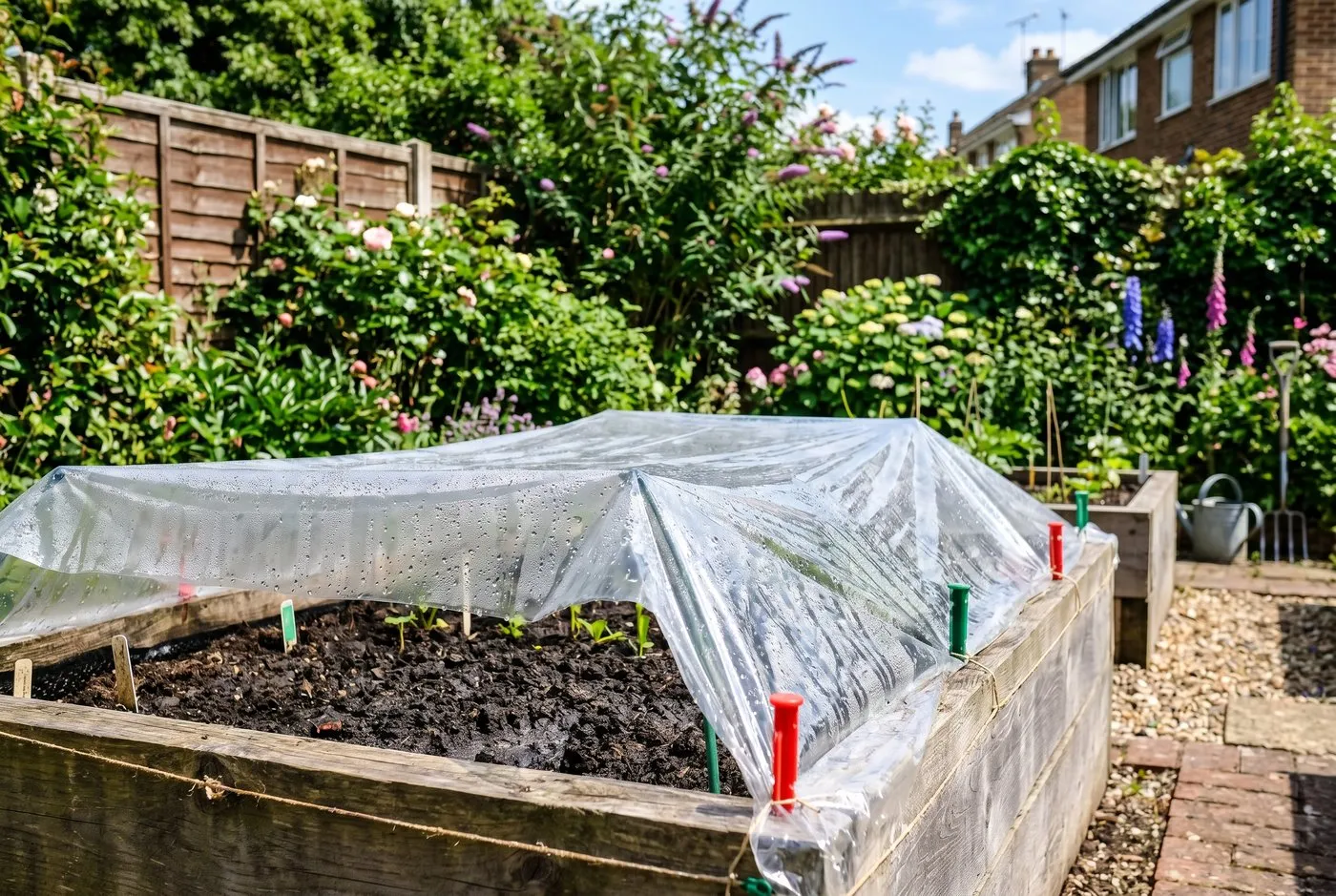
Clear polythene warms the top of the soil and can scorch weed seedlings, but a UK summer won’t sterilise the bed.
How to cool and use treated soil
Let it cool completely, ideally for 24 hours, before you sow. Warm soil can damage tender roots. Keep the tray covered while it cools, so sciarid flies and mould spores don’t settle straight back on.
Heat-treated soil has lost much of its life. You can stir in a handful of fresh garden compost or worm casts to bring some back. It isn’t essential, but it helps the soil feel less dead.
Then use it for sowing or potting up. When the seedlings come through, they’ll be ready for hardening off before going outside.
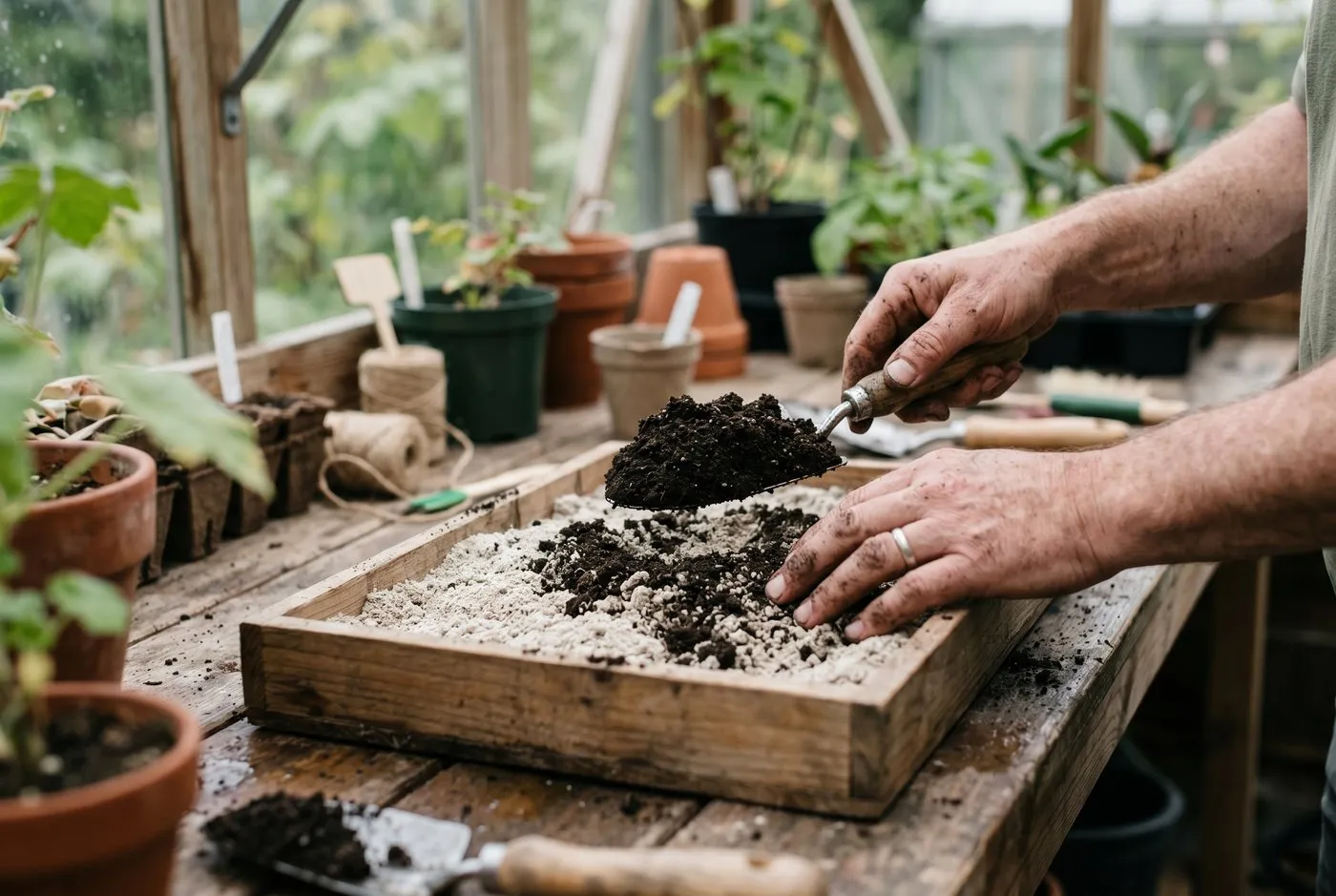
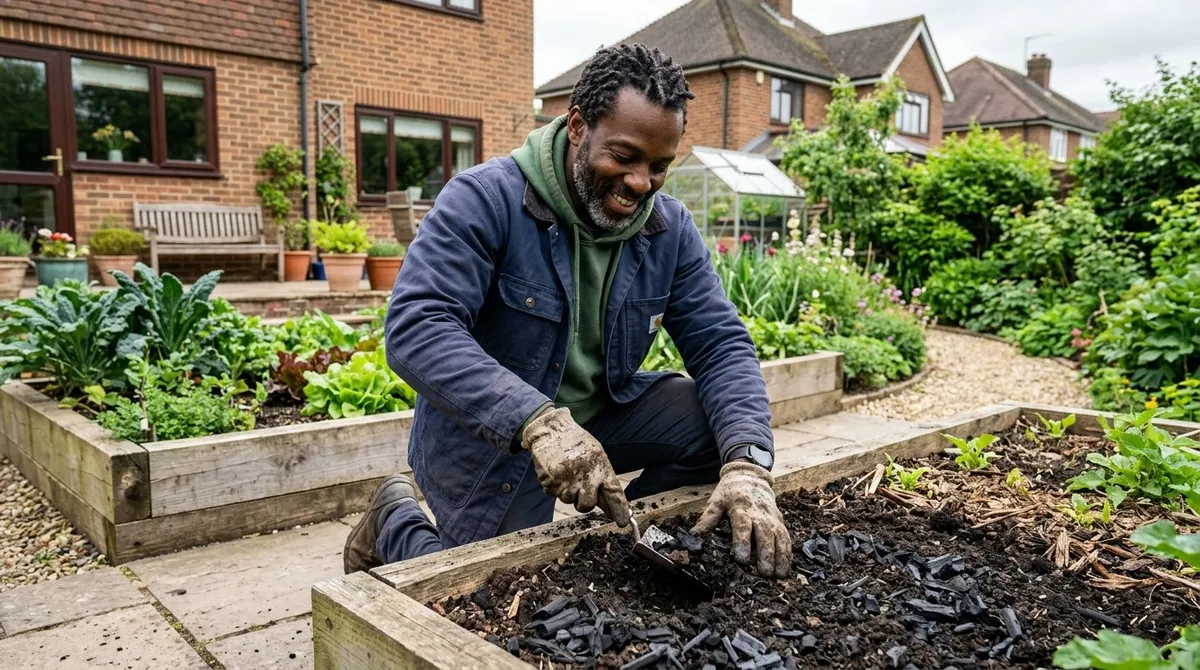
Once the soil has cooled, a trowel of fresh compost brings back a little life before you sow.
When you don’t need to sterilise at all
Most of the time, you don’t. Fresh bagged seed compost is ready to use. Heating it gains you nothing, so keep it sealed and dry, then use it straight from the bag.
Skip borders and veg beds too. The soil there does valuable work, and mulching and hand-weeding beat heat for weed control. Leave homemade leaf mould alone as well, as the guide to making leaf mould explains.
If damping off keeps coming back, hygiene usually matters more than baking soil. Sow into fresh seed compost, wash trays and pots between uses, and don’t overwater. Old compost from last year’s pots is better used as a mulch or soil improver. The guide to reusing spent compost has plenty of ideas. For sciarid flies, the guide to sciarid fly control in seed trays covers nematodes and other fixes.
Gardener’s tip: Keep one sealed bag of fresh compost just for seed sowing. Put old compost on the beds instead. That one habit avoids most seedling troubles without an oven in sight.
Common mistakes when sterilising soil
- Using dry soil. It heats unevenly, leaving cool pockets. Dampen it first.
- Piling it too deep. More than 8cm and the middle may never get hot enough.
- Trusting the oven dial. Only a thermometer in the soil tells you when to start timing.
- Overheating. Hotter isn’t better. Very hot soil can turn sticky and airless, and seedlings struggle in it.
- Sowing straight away. Let it cool fully first, or you risk scorching young roots.
Frequently asked questions
What temperature kills weed seeds and diseases in soil?
Holding the soil at about 82C for 30 minutes deals with most of them. That heat kills most weed seeds, compost pests and the moulds behind damping off. Going much hotter gains little and can spoil the soil.
What is the difference between sterilising and pasteurising soil?
Pasteurising uses gentler heat, so some helpful soil life survives. Sterilising means heating until almost nothing is left alive. For seed sowing, gentle pasteurising at around 82C is all you need.
Can I sterilise compost in the oven?
Yes, bake damp compost until the centre reaches 82C, then hold it for 30 minutes. Spread it no more than 8cm deep in a foil tray, cover it with foil and check it with a probe thermometer. Open a window, as it smells earthy.
Does soil solarisation work in the UK?
Not well enough to sterilise soil. UK summers rarely get soil hot enough under clear polythene. It can kill some weed seedlings near the surface, so treat it as a weed-control trick rather than a cure for disease.
Do I need to sterilise bought bagged compost?
No, fresh bagged compost is ready to use straight from the bag. Keep it sealed and dry until you need it. Only treat garden soil, reused compost or homemade compost that might carry weed seeds or disease.
Can I microwave soil to sterilise it?
Yes, for small amounts of damp soil. Use a microwave-safe container with a loose lid and heat it in short bursts on full power. Stir and check the temperature between bursts until it reaches 82C, then let it stand covered.
Now your soil is clean, read the guide on how to sow seeds indoors to get your first trays going, or browse more how-to guides for seed-sowing season. The RHS advice on damping off is also worth a look.
Our team produces practical UK gardening guidance from source research, contributor records and established horticultural practice. Editorial standards are overseen by Matt W.