
Key takeaways
- Biochar is a long-lasting soil improver, not a fertiliser or a compost
- Charge it with compost or liquid feed for a couple of weeks before use
- Uncharged biochar can soak up nutrients and leave plants pale for a while
- It helps most on poor sandy soil and in raised beds and pots
- Most biochar is alkaline, so go easy near blueberries, rhododendrons and azaleas
- Never use barbecue briquettes, and buy certified biochar for veg beds
Biochar is a long-lasting soil improver that can help poor soil hold water and support soil life. It isn’t a fertiliser or a compost, and it isn’t a quick fix. Used well, it’s a useful extra for raised beds, pots and hungry sandy soil. Used badly, it can leave plants pale and hungry for weeks.
This guide explains what biochar does, how to prepare it, how much to add and when not to bother. If you’re not sure what kind of soil you have, start with the guide to UK soil types.
What is biochar and how does it work?
Biochar is wood or other plant material heated with very little air until it turns to charcoal. The result is light, crumbly and full of tiny holes.
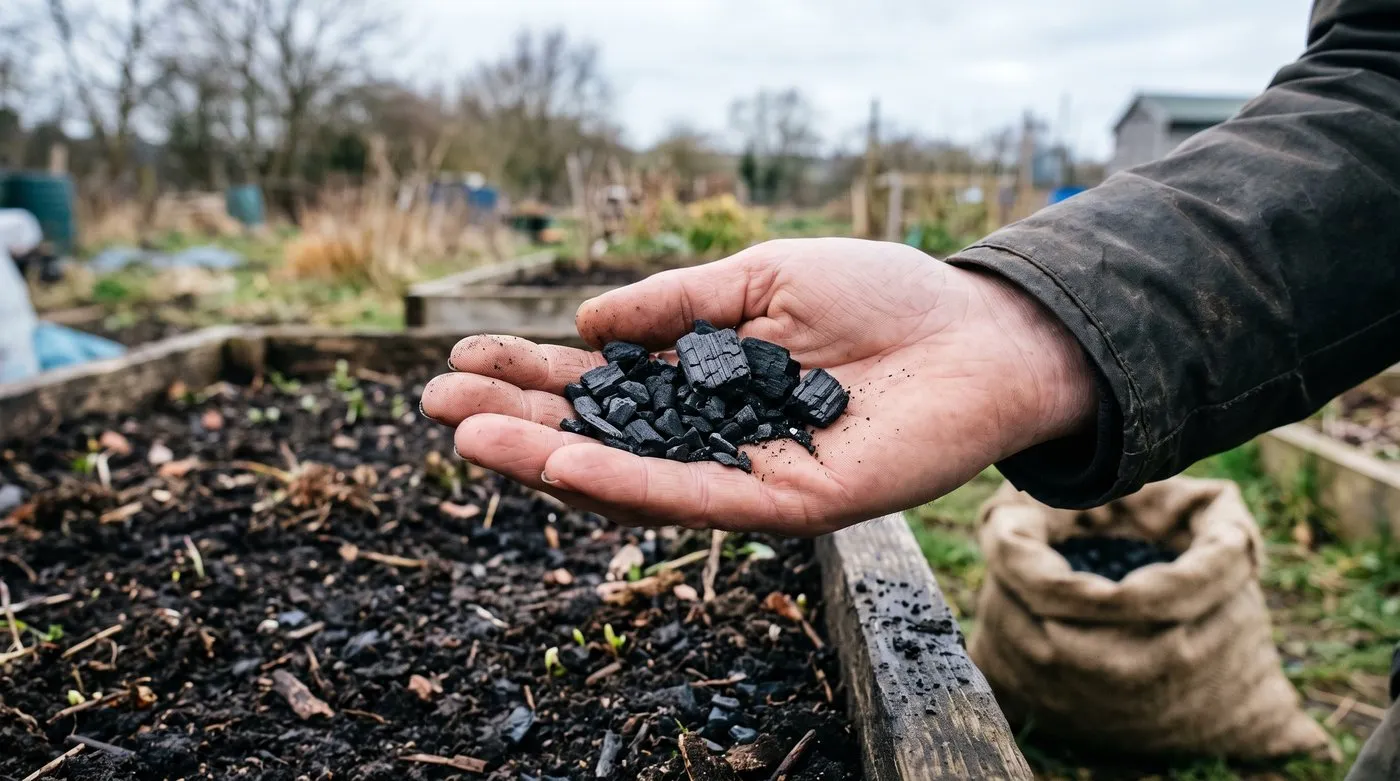
Real biochar looks like small, light charcoal chunks. It is the tiny holes inside each piece that hold water and soil life.
Those holes do the useful work. They hold water like a sponge, give helpful bacteria and fungi somewhere to live, and hang on to nutrients so they don’t wash away so quickly. Biochar also breaks down extremely slowly, so it stays in the soil for a very long time.
The idea isn’t new. The rich, dark soils of the Amazon known as terra preta were made centuries ago by people adding charcoal and waste to the ground.
Why you must charge biochar before using it
Fresh biochar straight from the bag is “empty”. Dig it in raw and it can soak up nutrients from the soil around it. Plants then look pale and grow slowly for a few weeks until things settle down.
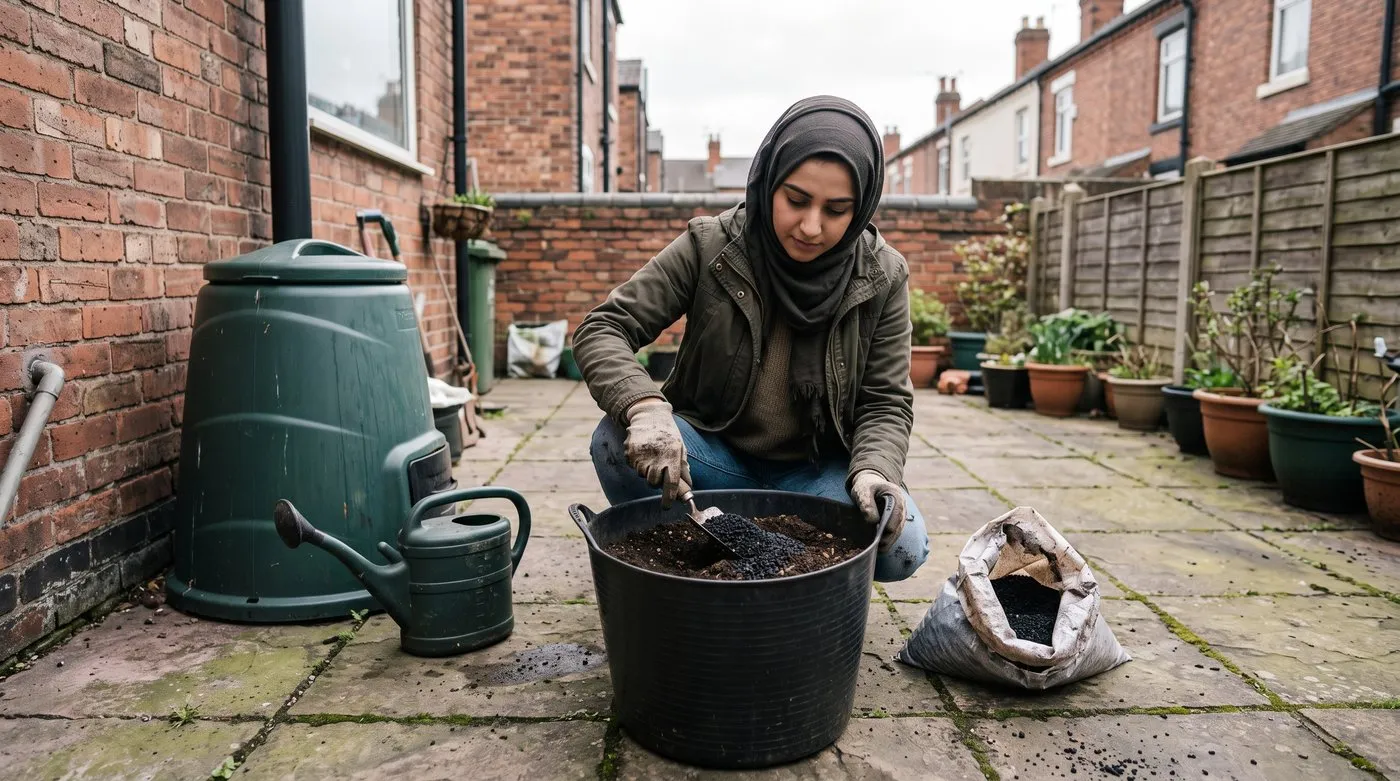
Mixing biochar into compost and leaving it moist for a few weeks fills it with nutrients and soil life before it goes in the ground.
Charging biochar means filling it with nutrients and soil life before it goes in. It’s easy to do.
- Mix it with compost. Combine biochar with an equal amount of garden compost or worm compost, keep it moist and leave it for a few weeks. This is the simplest method if you run a compost heap.
- Soak it in liquid feed. Steep biochar in a diluted seaweed or general liquid feed for a week or two, then drain it.
- Add it to your compost heap. Sprinkle biochar through the heap as you build it, then use the finished compost as normal.
Some products are sold ready-charged, often mixed with compost or manure. Check the bag.
How much biochar to use and how to apply it
Follow the rate on the bag. As a rough guide, many suppliers suggest about one part biochar to ten to twenty parts soil or compost. More isn’t better, and very heavy doses can make soil too free-draining.
- Raised beds and borders: spread charged biochar thinly over the surface and fork it into the top 15-20cm.
- Pots: mix a handful or two into each bag of potting compost. It works well with peat-free compost, helping it hold water.
- Planting holes: a little mixed into the backfill for shrubs and perennials is fine, but don’t pack the hole with it.
The best times are autumn or early spring, while beds are empty. Autumn gives soil life the winter to move in before planting.

Mixing biochar with compost before it goes on the bed charges it and makes it easier to spread evenly.
Which soils does biochar help most?
Biochar helps most where soil struggles to hold water and nutrients.
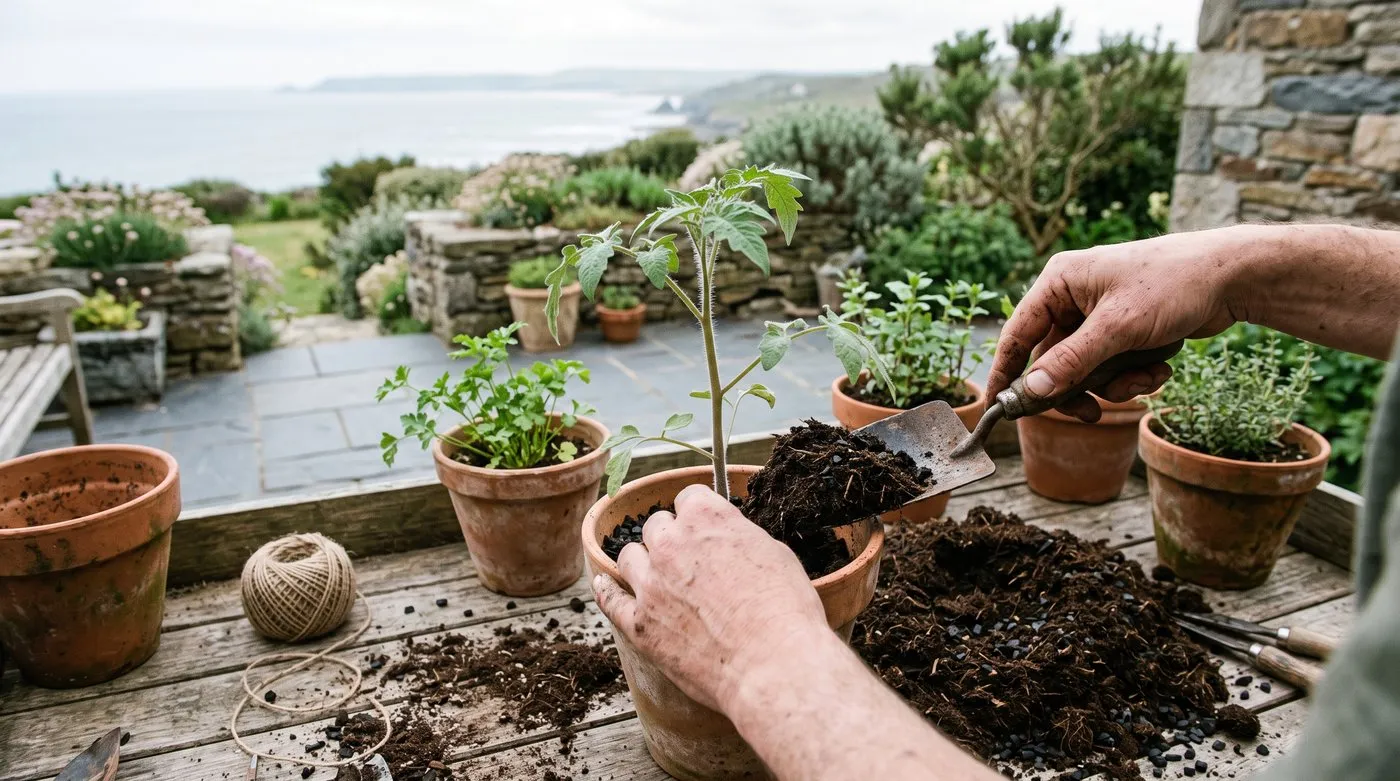
A little biochar in potting compost helps pots hold water between waterings, which is handy on a sunny patio.
- Sandy soil. Sand drains fast and holds little food. Biochar helps it hold on to both, so you water and feed less. Pair it with plenty of compost, as covered in the guide to improving sandy soil.
- Heavy clay. Biochar may help open up clay a little, but compost, mulch and not walking on wet soil do far more. The guide on how to improve clay soil covers the main fixes.
- Good loam. Already healthy soil gains little you’d notice. Save your money for compost.
- Pots and raised beds. These benefit nicely, as biochar helps compost hold water between waterings.
Results in ordinary garden soils vary a lot, so treat biochar as an extra, not a fix. Good soil still comes down to adding organic matter year after year.
Buying biochar or making your own
Bought biochar is made in controlled kilns from wood or plant waste. Look for products sold for soil use, ideally with a quality certificate such as the European Biochar Certificate. These are checked for unwanted chemicals, which matters most on veg beds.
Homemade biochar is possible in a purpose-made kiln or drum, but quality varies a lot. Char from an ordinary bonfire is often part-burnt or mostly ash. Burning can also annoy neighbours and is restricted in smoke control areas and on many allotments. The guide to bonfires on allotments covers the rules. Keep homemade char for ornamental beds rather than food crops.
Warning: Never use barbecue briquettes or charcoal made from painted, treated or waste timber. They can contain binders, firelighting chemicals and other substances that don’t belong in your soil.
When not to use biochar
- Beds for acid-loving plants. Most biochar is alkaline. Keep it away from blueberries, rhododendrons, azaleas and camellias. A soil pH test shows where you’re starting from.
- Chalky or limy soil. It can push the pH up further. Use less, or use compost instead.
- Waterlogged ground. Biochar won’t fix poor drainage. Sort the drainage first or build raised beds.
- Straight from the bag. Uncharged biochar can leave plants hungry for a few weeks.
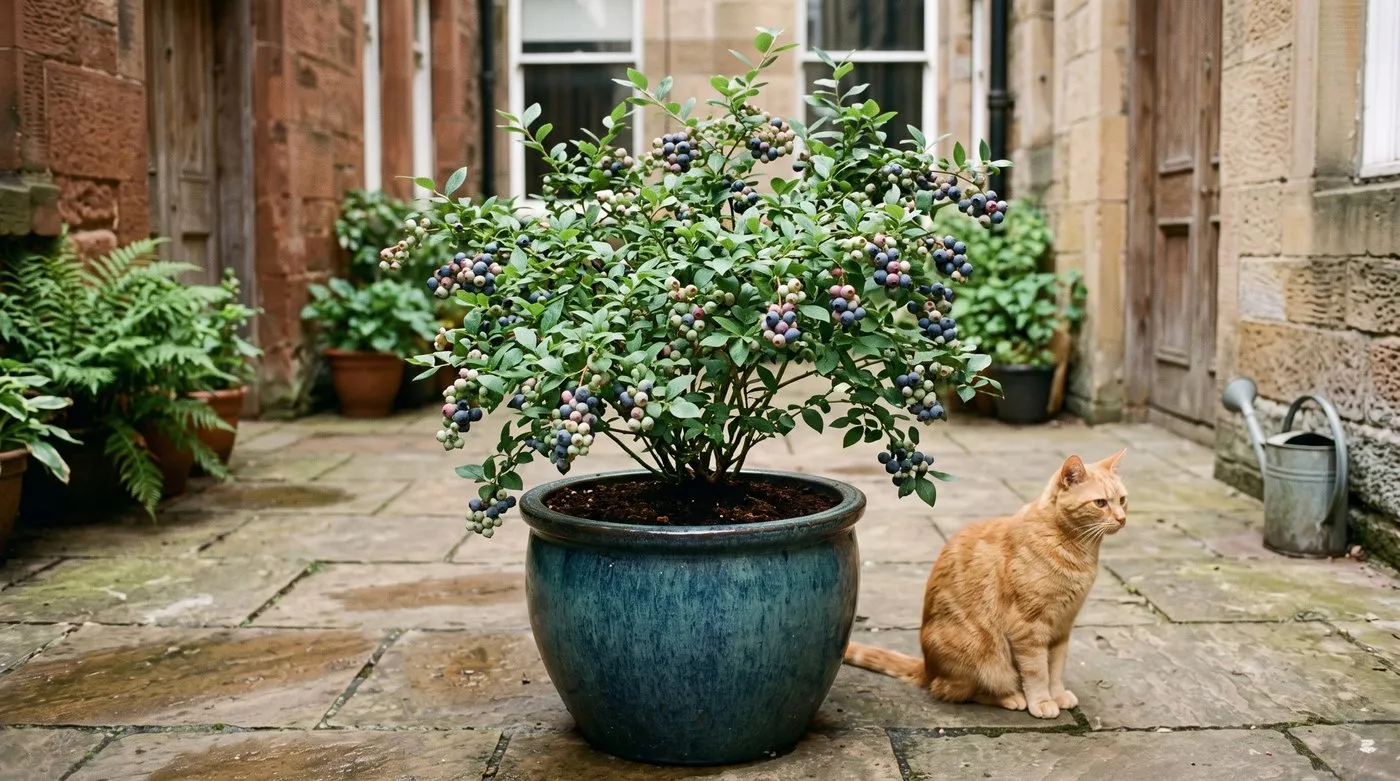
Keep biochar out of pots and beds for acid lovers like blueberries. Most biochar is alkaline and can push the pH the wrong way.
Common mistakes when using biochar
- Skipping the charging step. Always mix with compost or soak in feed first.
- Using too much. Stick to the bag rate. A little goes a long way.
- Leaving it on the surface. Biochar on top of the soil blows and washes about. Fork it in.
- Using poor-quality char. Barbecue briquettes and burnt treated timber don’t belong in a garden.
- Expecting overnight results. Biochar is a slow, long-term improver. Keep adding compost as well.
Frequently asked questions
Is biochar worth it for a small UK garden?
It can be, especially for raised beds, pots and poor sandy soil. Because it lasts so long, you add it once rather than every year. It isn’t a cure-all, though, and compost does more for most beds. Treat biochar as an extra, not a replacement.
Does biochar make soil acidic?
No, most biochar is alkaline and nudges soil pH up slightly. That can help on acid soil but is unhelpful for blueberries, rhododendrons and azaleas. If you grow acid-loving plants, keep biochar out of their beds or check the product’s pH first.
How long does biochar last in soil?
Biochar lasts a very long time, centuries rather than years. Unlike compost or manure, soil life can’t easily break it down. That’s why it’s a one-off addition rather than something you top up every season.
Can I make biochar at home?
You can, with a purpose-made kiln or drum, but quality varies. Homemade char from a bonfire is often part-burnt or full of ash. Check local rules on burning first, and use certified biochar for vegetable beds where quality matters most.
When is the best time to apply biochar in the UK?
Autumn or early spring, while beds are empty. Dig charged biochar into the top 15-20cm of soil, or mix it into compost for pots. Autumn gives soil life the winter to settle in before planting.
Does biochar replace compost?
No, biochar does not replace compost. Biochar has almost no nutrients of its own. Compost feeds plants and soil life. Used together, the biochar helps hold on to the water and nutrients the compost provides.
Should I use biochar on alkaline soil?
Go carefully, because most biochar is alkaline too. On chalky or limy soil it can push the pH higher still. Use a smaller amount, or spend the money on compost and well-rotted manure instead.
Want to fix the soil from the ground up? The soil drainage and structure guide explains how to get water and air moving through any soil, and you’ll find more on the how-to hub.
Our team produces practical UK gardening guidance from source research, contributor records and established horticultural practice. Editorial standards are overseen by Matt W.


