Key takeaways
- Roots circling the outside of the root ball, roots out of the drainage holes and fast wilting are the signs
- Tease the bottom roots outwards with your fingers for mild cases
- For a tight mat of roots, make a few shallow vertical cuts down the sides with a clean knife
- Pot on one size up rather than into a huge pot
- Tomatoes can go a little deeper than before; peppers and most other plants go at the same depth
- Check roots by tipping out a plant every week or so to pot on before it happens again
A root-bound seedling has run out of room. Its roots have hit the sides of the pot and started circling round, so the plant stalls, dries out fast and struggles once planted out. The good news is it is quick to fix: loosen the roots, move it on to a slightly bigger pot, and it will soon get going again.
This guide is for seedlings and young plants such as tomatoes, courgettes, brassicas and bedding plants. For houseplants that have filled their pots, the guide to fixing root-bound houseplants is the one you need. If your seedlings are tall and floppy rather than stuck, see why seedlings go leggy.
How to tell if a seedling is root-bound
The surest check is to look at the roots. Water the plant first, then put your fingers either side of the stem, turn the pot upside down and tap the rim. The root ball should slide out in one piece.
Healthy roots spread through the compost, and you can still see plenty of compost between them. Root-bound roots form a dense white mat round the outside, often circling the base, with little compost showing.
Other signs:
- Roots poking out of the drainage holes
- Compost that dries out within a day of watering
- Water running straight through the pot
- A plant that has stopped growing or has yellowing lower leaves
Never pull a seedling out by its stem. It can snap at the base.

Dense white roots wrapped round the outside and little compost showing: this tomato is ready to be loosened and potted on.
How to rescue a root-bound seedling
The fix takes a few minutes per plant.
- Water first. Water the plant an hour or so before. Damp roots hold together and tease apart without snapping.
- Tip it out. Support the stem between your fingers, turn the pot over and tap the rim.
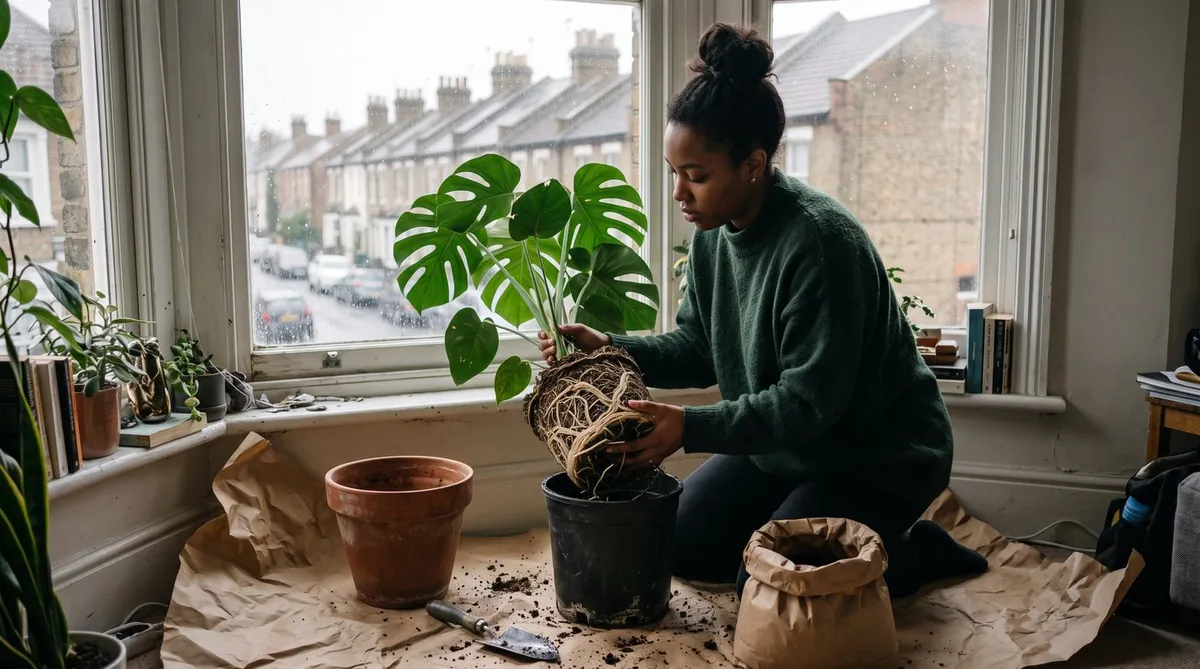
- Loosen the roots. For mild cases, gently pull the bottom roots outwards with your fingers so they point out rather than round. Don’t tear them off.
- Score tight root balls. If the roots are a solid mat, make three or four shallow vertical cuts down the sides with a clean, sharp knife. New roots grow out from the cuts.
- Pot on. Put a little fresh compost in a pot one size bigger. Set the plant in, fill round it and firm gently.
- Water well. Water to settle the compost, then keep it just moist rather than soggy.

For a mild case, gently tease the bottom roots outwards with your fingers so they head out into the new compost.
Wipe your knife clean between plants so you don’t carry problems from one to the next.
How deep to plant after rescuing
Tomatoes can go a little deeper than before, up to the seed leaves. They grow new roots along the buried stem. Most other seedlings, including peppers, aubergines, courgettes and brassicas, should sit at the same depth as before. Never bury any leaves.
After care
Keep rescued plants out of strong sun for a few days while they settle. Water when the top of the compost feels dry. You’ll see fresh growth at the tip within a week or two in warm weather. The bottom watering method is a handy way to water small pots without soaking the stems.
What pot size to move a root-bound seedling to
Go up one size at a time. A 9cm pot moves to a 12-13cm pot, and a module plug to a 7-9cm pot.
A much bigger pot sounds kind, but a small root system can’t use all that compost. It stays wet and cold, and the roots can rot. Two small steps give stronger plants than one big jump. The guide to plant pot sizes helps you match pot diameters to litres.

Once roots are heading outwards again, young plants soon settle and grow on strongly.
Why seedlings become root-bound
Most root-bound seedlings come down to timing. The roots fill the pot before you notice, because the leaves above can look fine for a while.
- Potting on late. Leaves are a poor guide. Roots often fill the pot well before the plant looks too big.
- Weather holding up planting out. A cold spell in May can leave tomatoes and courgettes waiting in small pots for weeks.
- Sowing too early. Seeds sown long before they can go outside spend too long in their pots.
- Very small cells. Tiny module cells fill up fast, especially with quick growers such as squash and sweetcorn.
How to stop seedlings getting root-bound
A quick weekly check stops it happening again.
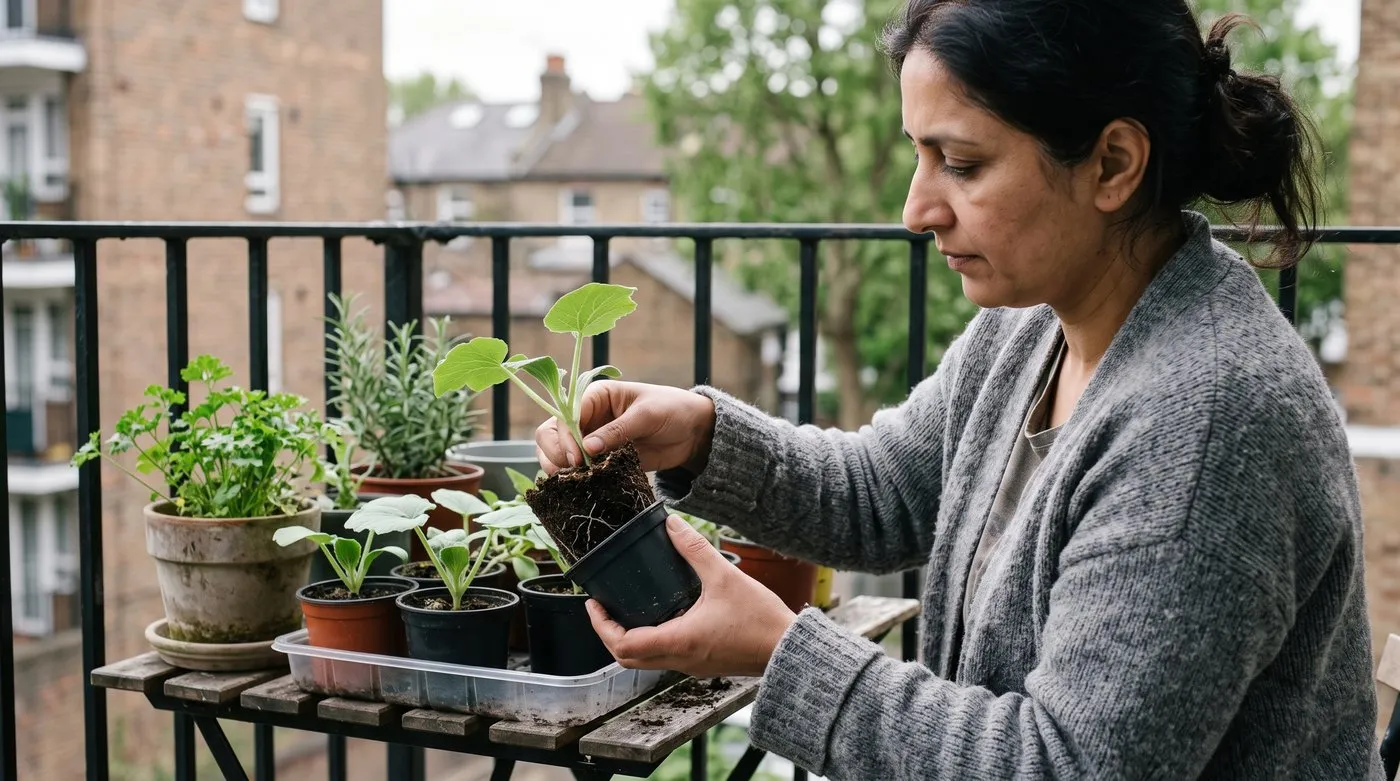
A quick tip-out every week or so tells you when roots are reaching the edge, before they start to circle.
- Tip out one plant from each batch every week or so once seedlings have a few true leaves. When roots are showing round most of the outside, pot the batch on.
- Sow at the right time so plants are ready just as it’s warm enough to plant out. The seed sowing calendar helps with timings.
- Start fast growers in bigger pots. Courgettes, squash and sweetcorn appreciate a 9cm pot or a deep root trainer from the start.
- Try soil blocks. Roots stop at the edge of a soil block rather than circling.
- Harden off and plant out on time. Don’t leave plants waiting in pots once they are ready.
Common mistakes with root-bound seedlings
- Pulling the plant out by its stem. Tip the pot over and tap the rim instead.
- Planting it straight out as it is. At least tease the bottom roots out first.
- Tearing off big chunks of root. Tease gently or make a few shallow cuts. Don’t rip the root ball apart.
- Moving it into a huge pot. Go up one size at a time.
- Burying peppers and courgettes deeper. Only tomatoes like a deeper planting.
Root problems on older plants in pots are a slightly different job, covered in root pruning plants in pots. More seedling troubleshooting is in the garden problems guides.
Once your rescued plants are growing well, read the guide to hardening off seedlings for the next step before they go outside.
Frequently asked questions
Will a root-bound plant recover after planting?
Usually, yes, if you loosen the roots first. Teasing or lightly cutting circling roots encourages new ones to grow out into fresh compost. Left as they are, the roots can keep circling and the plant may sulk for weeks.
How do I know if my seedling is root-bound?
Tip it out and look for roots circling the outside. Other signs are roots poking from the drainage holes, compost drying out within a day and a plant that has stopped growing.
Can you cut the roots of a root-bound seedling?
Yes, a few shallow cuts help a tight root ball. Use a clean, sharp knife to make three or four shallow vertical cuts down the sides. Only do this on a properly matted root ball; mild cases just need teasing.
How long does it take a root-bound plant to recover?
Usually a week or two in warm conditions. You will see fresh growth at the tip once new roots have spread into the compost. Recovery is slower when it is cold.
What pot size should I move a root-bound seedling to?
Go one size up rather than a big jump. A 9cm pot moves to a 12-13cm pot. Too much wet compost around a small root system can stay soggy and cause rot.
Should I water a root-bound seedling before or after rescue?
Both. Water it an hour or so before so the root ball slides out and holds together. Then water well after potting on to settle the compost around the roots.
Can I plant a root-bound seedling without cutting the roots?
You can, but loosening them first helps. At the very least, tease the bottom roots outwards with your fingers. That nudges new roots out into the soil instead of round in circles.
Our team produces practical UK gardening guidance from source research, contributor records and established horticultural practice. Editorial standards are overseen by Matt W.