Key takeaways
- Root pruning keeps a long-term pot plant at the same size, in the same pot
- Do it in late winter or early spring, before new leaves appear
- Trim about a quarter of the root ball, and never more than a third
- Repot with fresh compost, ideally a loam-based mix for shrubs and trees
- Lightly trim the top growth so the smaller root system can keep up
- Most woody pot plants benefit every few years; magnolias resent it
Root pruning lets a long-term pot plant stay in the same pot for years. Instead of moving a tired acer or bay tree into an ever-bigger container, you trim back its roots, give it fresh compost and put it back. It sounds brutal, but it’s one of the kindest things you can do for a pot-bound shrub.
This guide is for woody plants that live in pots for the long haul: small trees, shrubs and patio fruit. For houseplants, see the guide to fixing root-bound houseplants. For young plants bursting out of their cells, see fixing root-bound seedlings.
How to tell a pot plant is pot-bound
A pot-bound plant has filled its pot with roots, leaving little compost to hold water and food. Look for these signs:
- Water runs straight through. It pours out of the drainage holes almost as soon as you water.
- It dries out fast. The plant wilts within a day or two of a good soak.
- Growth slows. New shoots are short, leaves get smaller and flowering tails off.
- Roots poke out of the drainage holes or bulge at the surface.
Tip the plant out to be sure. A pot-bound root ball is a solid mass of roots circling the inside of the pot, often with a dense mat at the base. If you can still see plenty of compost between the roots, the plant is probably just hungry. A top-dress of fresh compost and a feed may be all it needs.

On the left, roots circle the whole pot with hardly any compost left. On the right, there’s still room, so a feed is enough for now.
Why circling roots are a problem
A root in open ground spreads outwards. A root in a pot hits the wall and turns, then keeps going round. Over the years, the pot fills with circling roots and the old compost breaks down into a dense, airless plug.
That plug holds little water or air, so the plant struggles even when you water and feed it. Thick roots can also wrap around the base of the stem and squeeze it as they grow, which is called girdling.
Root pruning fixes both problems at once. It removes the worst of the circling roots and makes room for fresh, open compost.
When to root prune container plants
The best time is late winter to early spring, before new growth starts. In most of the UK that’s roughly February to March. The plant is resting, so losing some roots causes little stress. New roots and shoots then grow away together as the weather warms.
Check the plant rather than the calendar. Fat buds that haven’t opened mean it’s ready. Once soft new leaves are out, the smaller root system may struggle to keep them supplied. Evergreens such as bay and box are also best done in early to mid-spring.
Avoid root pruning in hot, dry weather or just before a hard frost. Freshly cut roots in a pot are easily damaged by both. A cool, overcast, frost-free spell is ideal.

A potted acer in late winter. With no leaves to support, this is the ideal moment to trim its roots.
How to root prune a plant in a pot, step by step
It takes about 45 minutes for a medium pot. The steps are the same for an acer, an olive or a bay tree.
- Water the day before. A moist root ball slides out more easily and the roots don’t snap.
- Tip the plant out. Lay the pot on its side, support the base of the stem and slide the root ball out.
- Slice off the base. With an old bread knife, cut a layer off the bottom, where the matted roots are thickest.
- Pare the sides. Trim a few centimetres off the sides. Aim to remove about a quarter of the roots in total, and never more than a third.
- Loosen the outer roots. Tease them out with a hand fork so they point outwards. Cut away any thick roots wrapping around the stem.
- Trim the top lightly. Shorten the longest stems and thin out crowded ones, so the smaller root system can keep up.
- Repot in fresh compost. Scrub the pot, add fresh compost, set the plant at the same depth as before and firm compost down the sides.
- Water in well and move the pot somewhere sheltered.

Support the base of the stem and slide the root ball out. Then check how tightly the roots are circling before you cut.
Cutting the root ball cleanly
Clean, firm strokes are better than slow sawing, which tears the roots. An old serrated bread knife kept just for the potting shed is perfect. For very woody root balls, switch to a pruning saw.
Take the base first, where the densest circling roots sit. Then trim the sides. Hold the removed roots against the root ball to judge how much you’ve taken. If it looks like a quarter, stop there.

Slice the matted base off in firm, clean strokes. An old bread knife kept for the shed is ideal.
Choosing fresh compost
Fresh compost is half the job. Putting the trimmed plant back into its old, worn-out compost wastes the effort.
For shrubs and trees that will stay in the pot for years, a loam-based compost such as John Innes No 2 or No 3 holds its structure well. You can mix it with some peat-free multipurpose to make the pot lighter. Add grit for plants that hate wet roots, such as olives and bay. The guide to mixing your own potting compost has recipes that suit container shrubs.
Work the compost firmly down the sides so there are no air gaps. The new roots then grow straight out into it.

The trimmed root ball, ready to go back into its scrubbed pot with fresh compost around it.
Which plants can be root pruned?
Most woody pot plants with fibrous roots take root pruning well. A few are better left alone.
| Plant | Root prune? | Notes |
|---|---|---|
| Acers (Japanese maples) | Yes | Late winter, while bare |
| Bay, box and other evergreen shrubs | Yes | Early to mid-spring |
| Olives and citrus | Yes | Spring, before strong growth starts |
| Patio fruit trees | Yes | Late winter, while dormant |
| Bamboo in pots | Yes, or divide | Spring; use a saw on dense roots |
| Hostas and other perennials | Divide instead | Split the clump in spring |
| Agapanthus | Usually no | Flowers best when snug; divide when very crowded |
| Magnolias | No | Resent root disturbance; pot up instead |
For perennials such as hostas, dividing the clump does the same job and gives you extra plants. For citrus, the citrus growing guide covers year-round care, and the Japanese maple care guide has more on acers in pots.
You don’t need special kit. An old bread knife, secateurs and a hand fork cover most jobs. Add a pruning saw for the toughest roots.

A simple kit: an old bread knife for most roots, a sturdier knife or saw for woody ones, and secateurs for the top growth.
Root prune, pot up or top-dress?
Root pruning is one of three ways to help a tired pot plant. The right one depends on what you want.
| Method | Effort | Best for |
|---|---|---|
| Root prune and repot | Most | Keeping a plant the same size in the same pot |
| Pot up one size | Medium | A plant you’re happy to let grow bigger |
| Top-dress | Least | A plant that’s hungry but not yet pot-bound |
Top-dressing means scraping off the top few centimetres of old compost and replacing it with fresh. It’s a good holding job in the years between root pruning.
Potting up is fine when you want a bigger plant and have room. The catch is that it only delays the problem. Eventually the pot gets too heavy to move and the plant is pot-bound again. For long-lived patio plants, root pruning every two or three years is the way to keep them happy. Bonsai growers use exactly this idea to keep trees in tiny pots for decades, as the bonsai care guide explains.
Aftercare for the first few weeks
The first couple of weeks decide how quickly the plant recovers. The smaller root system can’t supply as much water yet, so give it some help.
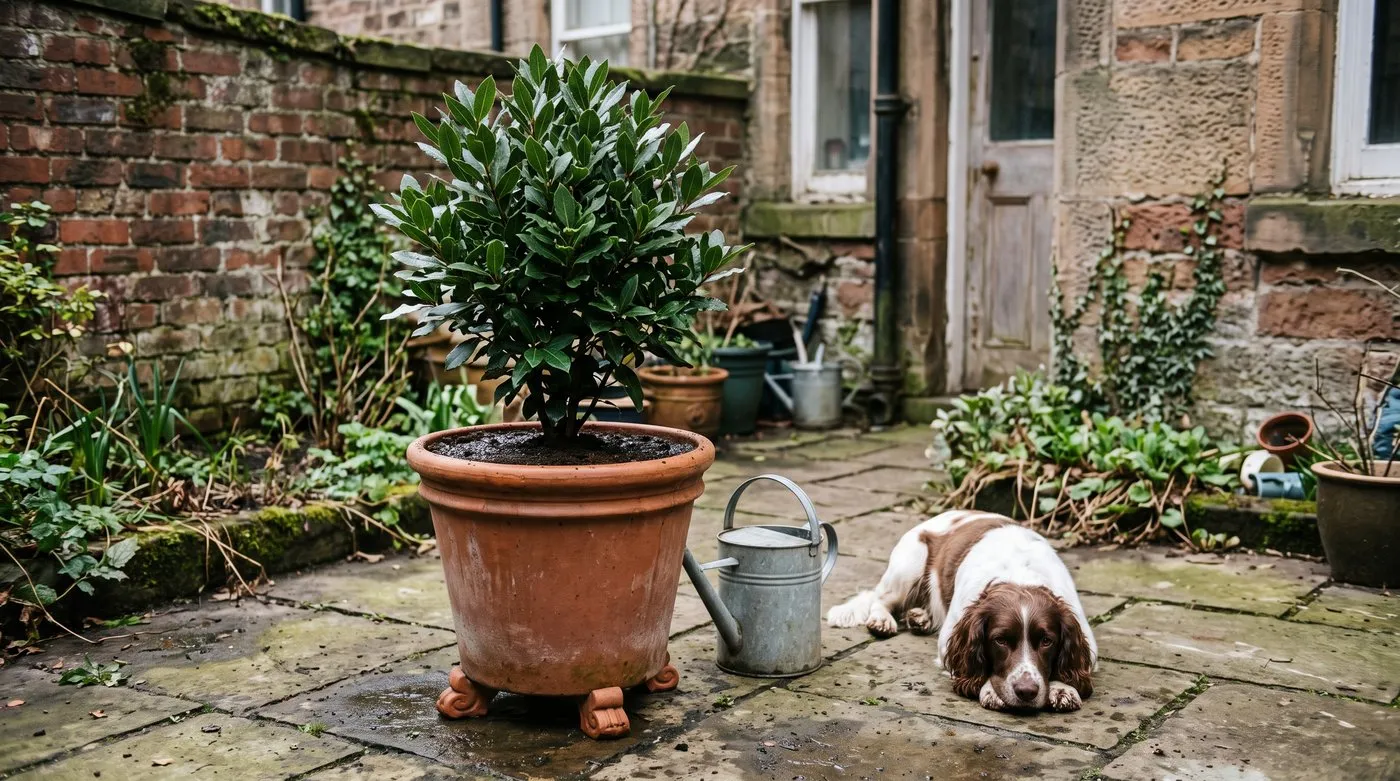
A sheltered, shady corner for a couple of weeks gives trimmed roots time to settle before the plant goes back on show.
- Shelter it. Move the pot out of strong sun and wind for about two weeks.
- Water carefully. Keep the compost moist but not soggy. Check with a finger and water when the top feels dry.
- Hold off feeding. Fresh compost has enough food for the first few weeks. Start feeding once the plant is growing strongly, usually after about six weeks.
- Watch for new growth. Fresh leaves and shoots mean the roots have settled in.
Raise the pot on feet afterwards so the drainage holes stay clear. The guide to fruit in pots and containers has more on looking after potted trees through the year.
Common root pruning mistakes
- Cutting too little. A token slice doesn’t break up the circling roots. Aim for about a quarter.
- Cutting too much. Taking half the root ball is more than most plants can cope with. Never go past a third.
- Wrong timing. Root pruning a plant in full leaf, or in a hot spell, can make it wilt badly.
- Reusing the old compost. The new roots need fresh, open compost to grow into.
- Forgetting the top growth. A light trim helps the plant balance its smaller root system.
Frequently asked questions
Can you root prune a plant in a pot?
Yes, it’s a good way to revive a pot-bound plant. Tip it out, trim about a quarter of the roots from the base and sides, and repot in fresh compost. The plant can then stay in the same pot instead of moving to an ever-bigger one.
How much root can you safely cut off a pot-bound plant?
About a quarter of the root ball is a safe amount. Never take more than a third in one go. Lightly trim the top growth too, so the smaller root system can keep the leaves supplied with water.
When is the best time to root prune container plants?
Late winter to early spring, before new growth starts. The plant is resting, so it copes well and regrows as the weather warms. Avoid summer heat, drought and frosty spells.
Which plants should you not root prune?
Magnolias and other plants that hate root disturbance are best left alone. Agapanthus actually flowers better when snug in its pot. If you’re unsure, move the plant into a slightly larger pot or top-dress it instead.
What tools do you need to root prune a plant?
An old bread knife does most of the work. Add secateurs for the top growth and a pruning saw for very woody roots. A hand fork helps tease out the roots, and a sheet or tray keeps the mess contained.
Do you feed a plant after root pruning?
Not straight away, as fresh compost contains enough food for the first few weeks. Wait until the plant is growing again, usually after about six weeks. Then feed as normal through the growing season.
Now your pot plants have room to grow again, find ideas for planting up new containers in container gardening ideas, or browse more how-to guides.
Our team produces practical UK gardening guidance from source research, contributor records and established horticultural practice. Editorial standards are overseen by Matt W.