Key takeaways
- The classic beginner mistake is keeping an outdoor tree such as juniper indoors, or leaving a tropical tree in the cold
- Chinese elm is the most forgiving first bonsai, happy in a cool bright room or a sheltered garden
- Water by feel, never by rota, and expect to water daily in hot summer weather
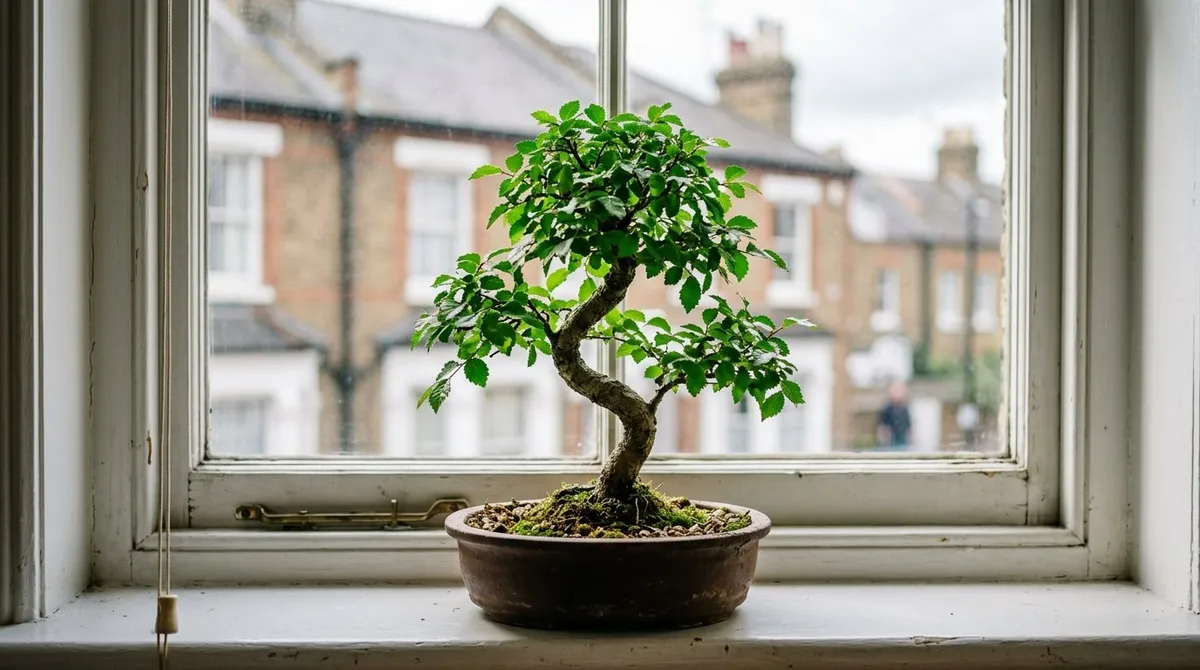
- Indoor bonsai need the brightest windowsill in the house, close to the glass
- Feed every two weeks from April to September and repot every 2-3 years in early spring
- Hardy bonsai need winter cold outside, with shelter only in hard frosts
Bonsai tree care is mostly about one decision: where the tree lives. A bonsai isn’t a special kind of plant. It’s an ordinary tree kept small in a shallow pot. Some bonsai are tropical houseplants and some are hardy garden trees, and each one struggles in the other’s home. Get that right, then water, feed and trim, and a bonsai can live for decades.
Why do most beginner bonsai trees die in the UK?
Most beginner bonsai die because an outdoor tree is kept indoors, or a tropical tree is left in the cold. That one placement mistake catches more people than bad watering.
Junipers are often sold as desk ornaments, especially at Christmas. A juniper is a hardy conifer that needs a cold winter. Kept in a warm room it slowly fails, and because conifers stay green for weeks after they die, the owner usually blames the watering.
It happens the other way round too. Carmona, the Fukien tea tree often sold in supermarkets, is tropical. It dislikes anything much below 10°C, so a cold porch or unheated conservatory in January can finish it. Ficus wants to stay above about 12°C all year.
Chinese elm sits in between. It copes with a cool, bright room or a sheltered garden, which is a big part of why it makes such a good first tree. Let the species decide the spot, not a vague “indoor bonsai” label.
Indoor or outdoor bonsai: which trees go where?
Decide where the tree will live before you choose which one you like. Indoor bonsai are tropical trees that never see frost. Outdoor bonsai are hardy trees that need real seasons.
| Tree | Indoor or outdoor | Where to keep it | Winter care | Good for beginners? |
|---|---|---|---|---|
| Ficus (Ficus retusa) | Indoor | Bright windowsill, above about 12°C | Indoors, water less | Yes, the easiest indoors |
| Carmona (Fukien tea) | Indoor | Warm, bright sill with some humidity | Indoors, away from cold glass | Fussy, not ideal |
| Chinese elm (Ulmus parvifolia) | Either | Cool bright room or sheltered garden | Cold frame or cool room | Yes, the best first tree |
| Juniper (Juniperus chinensis) | Outdoor | Outside all year, full sun | Outside, shelter in hard frost | Yes, the best outdoor starter |
| Japanese maple (Acer palmatum) | Outdoor | Outside, light shade at midday | Outside, protect from late frost | Moderate |
| Larch (Larix decidua) | Outdoor | Outside all year, full sun | Outside, very hardy | Yes |
A maple bonsai has the same weak spots as a full-size one: wind scorch, late frost and harsh midday sun. They just show faster in a shallow pot. The Japanese maple care guide explains how to deal with each one.
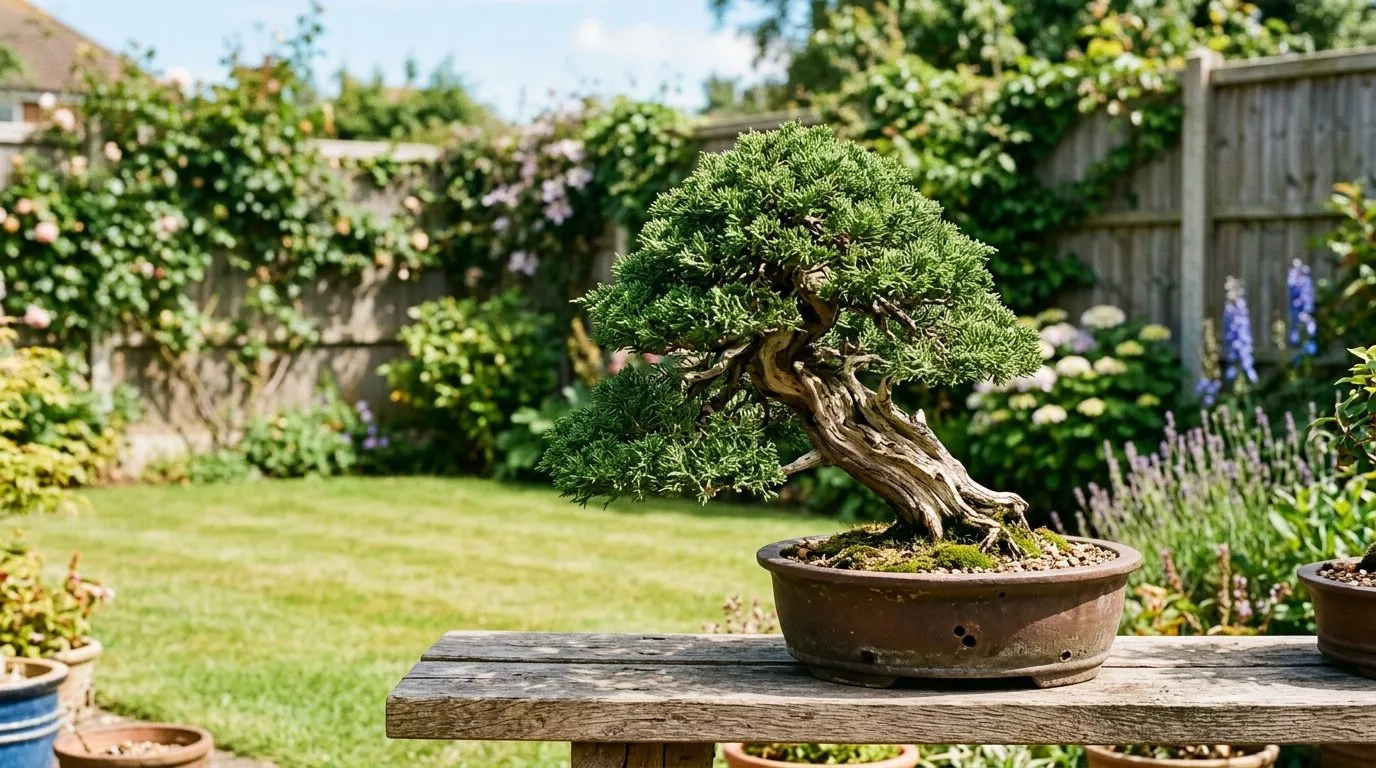
A juniper where it belongs: outside on a bench in full sun, all year round.
How often should you water a bonsai tree?
Water a bonsai when the surface starts to dry, never on a fixed rota. A bonsai pot holds very little soil, so it goes from soaked to bone dry much faster than an ordinary pot. In hot summer weather that often means watering every day, sometimes twice. Drying out in summer is the commonest killer once a tree is in the right place.
Two simple checks take out the guesswork.
The chopstick test. Push a plain wooden chopstick a few centimetres into the soil and leave it for a while. If it comes out damp and darkened, wait. If it’s clean and dry, water now.
The dunk. Stand the whole pot in a bowl of water up to the rim until the air bubbles stop, then let it drain. This is the rescue for a rootball that has dried hard. A dry bonsai mix can shed water from a can, so the surface looks wet while the middle stays parched.
Rainwater is better than tap water if you can collect it, because hard water leaves white limescale on the soil and pot. In winter everything slows down. An indoor elm might want water weekly, and an outdoor juniper hardly at all.
Gardener’s tip: Water in the morning, and keep going until water runs out of the drainage holes. A quick splash only wets the top centimetre, and the roots that matter are lower down.
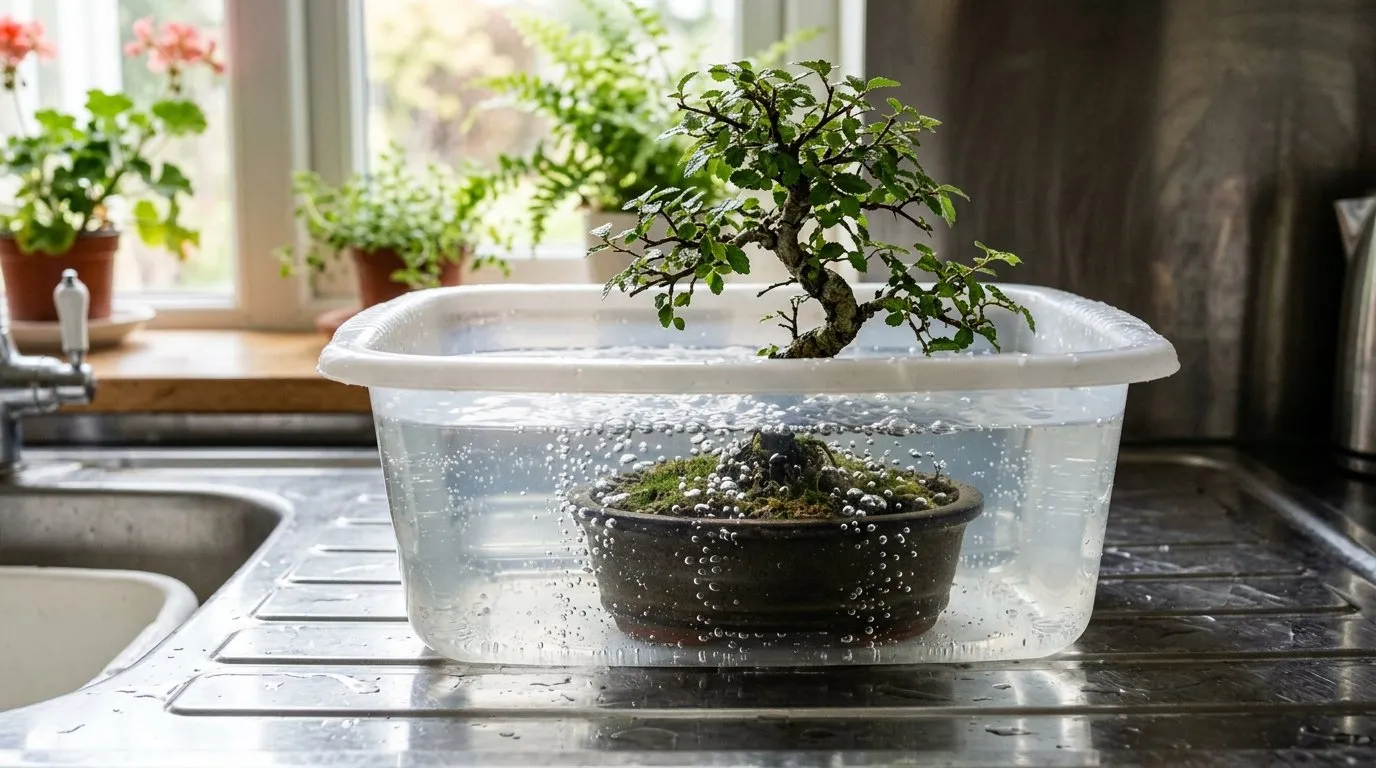
Dunking a dried-out bonsai until the bubbles stop is the surest way to wet the whole rootball again.
How much light does an indoor bonsai need?
An indoor bonsai needs the brightest windowsill in the house, close to the glass. A bonsai on a coffee table or a shelf across the room starts failing the day it arrives. It just takes a few months to show it.
Winter is the hard part, when UK days are short and dull. From October to March give an indoor tree a south- or west-facing sill. Turn the pot a quarter-turn each week so it grows evenly instead of leaning into the light. Keep it away from radiators, which dry the air and the soil.
Indoor elms and ficus enjoy a summer holiday outside from June to September. Start them in light shade for a couple of weeks so the leaves don’t scorch, then give them morning sun. The guide to putting houseplants outside for summer covers the hardening-off steps.
Pet safety: Ficus sap is an irritant and the plant is toxic to cats and dogs if chewed. Keep it out of reach of pets that like to nibble.
Feeding and repotting your bonsai
Feed every two weeks from April to September, and repot every two to three years in early spring. Those two habits keep a bonsai healthy for decades.
A shallow pot holds very little goodness, so the tree only gets what you give it. Use a balanced liquid feed at half strength every two weeks in the growing season, or a feed made for bonsai. Stop feeding outdoor trees in autumn. Indoor tropical trees need a feed once a month at most through winter. The little-and-often idea in the houseplant feeding guide works the same way.
Repotting is less scary than it sounds. In early spring, as the buds swell, ease the tree out of its pot. Comb out the edge of the rootball and trim off up to a third of the roots with clean, sharp scissors. Put it back in the same pot with fresh, gritty bonsai mix, never ordinary compost.
The steps are much like repotting houseplants, except you trim the roots instead of moving up a pot size. Cut roots regrow as a dense, fibrous mat that feeds the tree well. Root pruning plants in pots works on the same idea for bigger container plants.
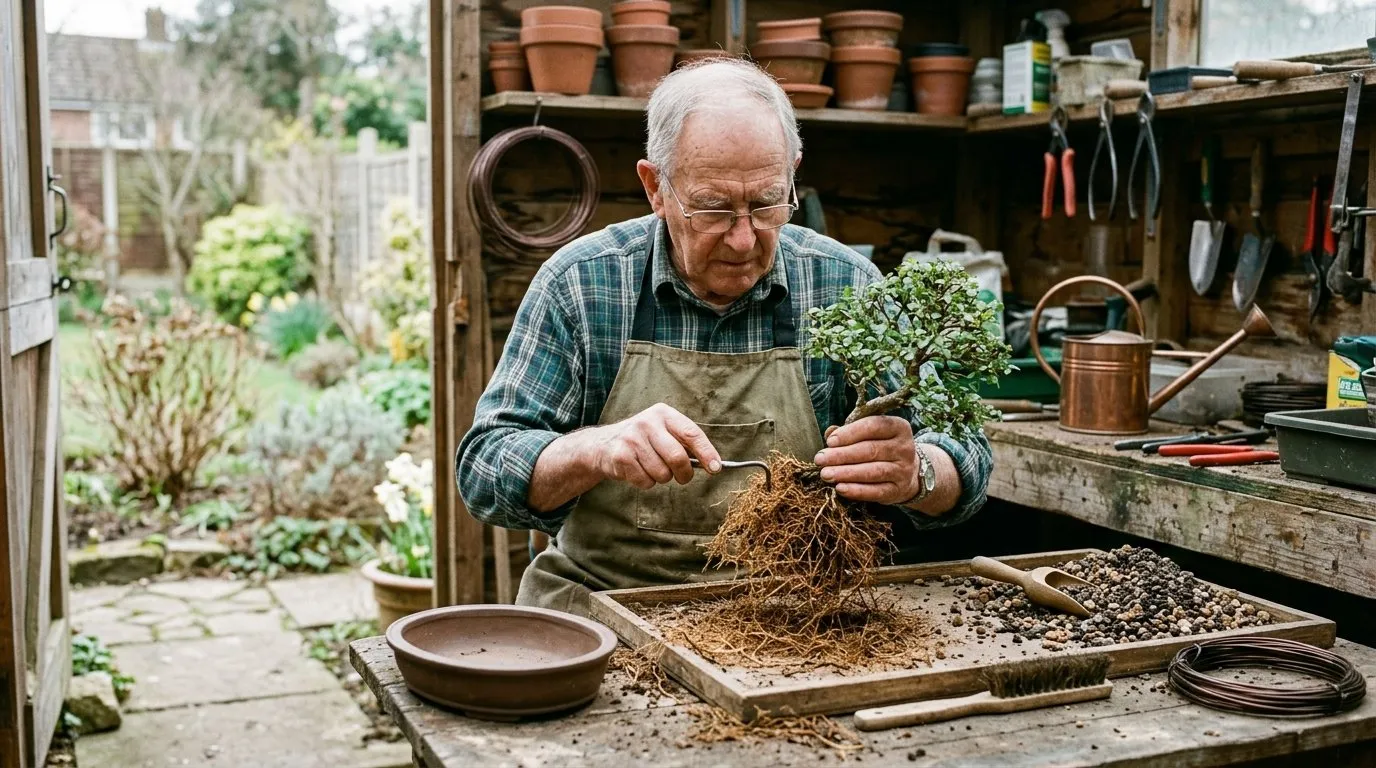
An early spring repot: comb the roots out, trim up to a third, then settle the tree back into fresh gritty mix.
How do you prune a bonsai as a beginner?
Pinch new growth all summer, and save big cuts for late winter. Keep those two jobs separate and pruning stops being a mystery.
Pinching keeps the shape you bought. When a new shoot has grown 6-8 leaves, cut it back to the first 2-3 with sharp scissors. On a Chinese elm you’ll do this every few weeks from May to September. Each cut makes the foliage thicker and the shape neater.
Structural pruning removes whole branches to change the design. Do it in late winter, while the tree is resting. Beginners rarely need it in the first year. If one branch clearly spoils the outline, take it off in February with a clean cut, then leave the rest alone for a season.
Wiring bends branches into new positions. Growers use soft aluminium wire about a third as thick as the branch, wound on at an angle. Check it every few weeks and take it off before it bites into the bark. It’s worth learning later, but pinching alone keeps a shop-bought tree in shape.
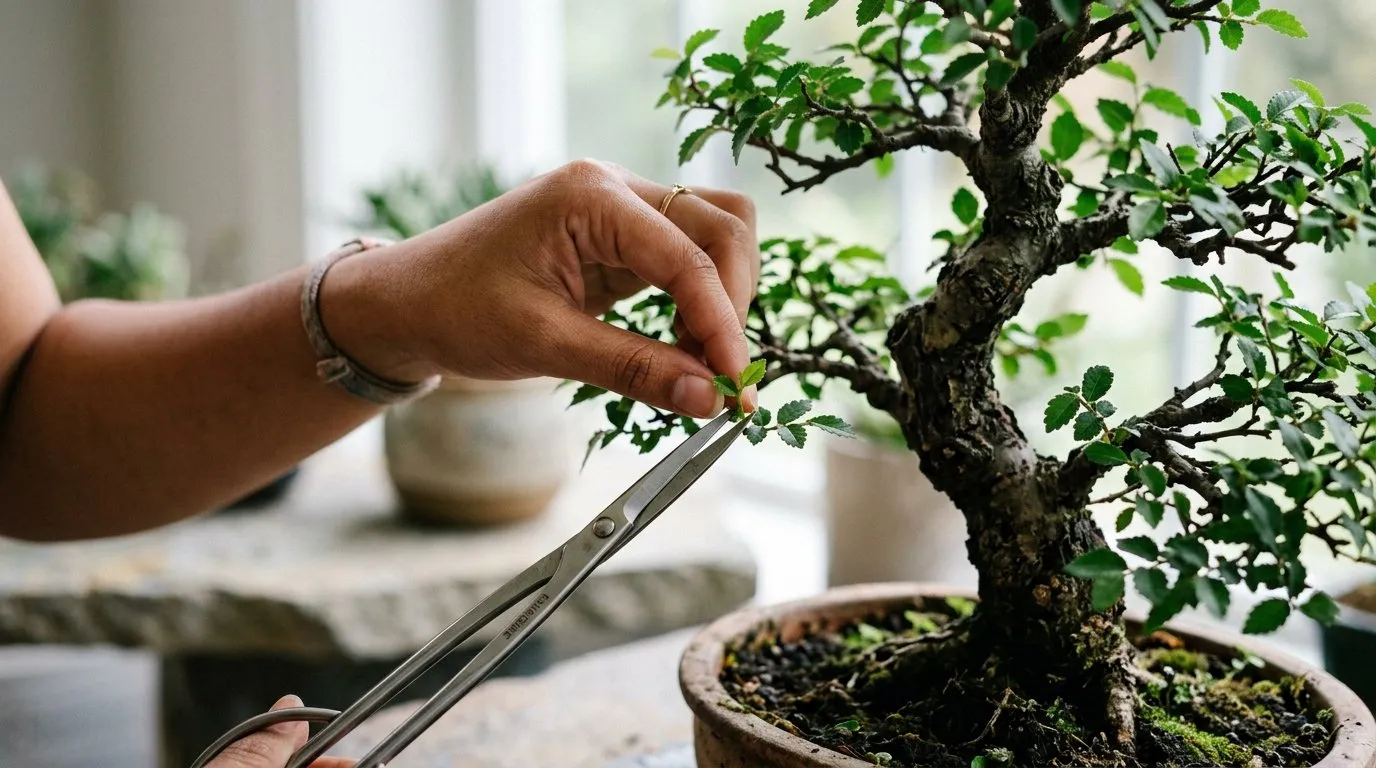
Cut each new shoot back to two or three leaves. Small, regular trims do more for the shape than one big haircut.
Winter care for outdoor bonsai in the UK
Outdoor bonsai must stay outside in winter, because the cold sends them into their winter rest. A juniper or maple carried into a warm lounge in late autumn thinks spring has come. It burns through its stored energy and often doesn’t make it to spring.
The roots are the weak point. In the ground they’re insulated by soil, but in a shallow dish they can freeze solid. When a hard frost of around -4°C or colder is forecast, move pots into an unheated greenhouse, shed with a window, or cold frame. You can also sink the pot into a border so the soil protects it. Put trees back out once the freeze lifts.
Keep an eye on watering too. Check pots in mild, dry or windy spells, as winter wind can dry evergreens out even when it’s cold. And enjoy the view: a bare elm shows off its branches far better in January than in July.
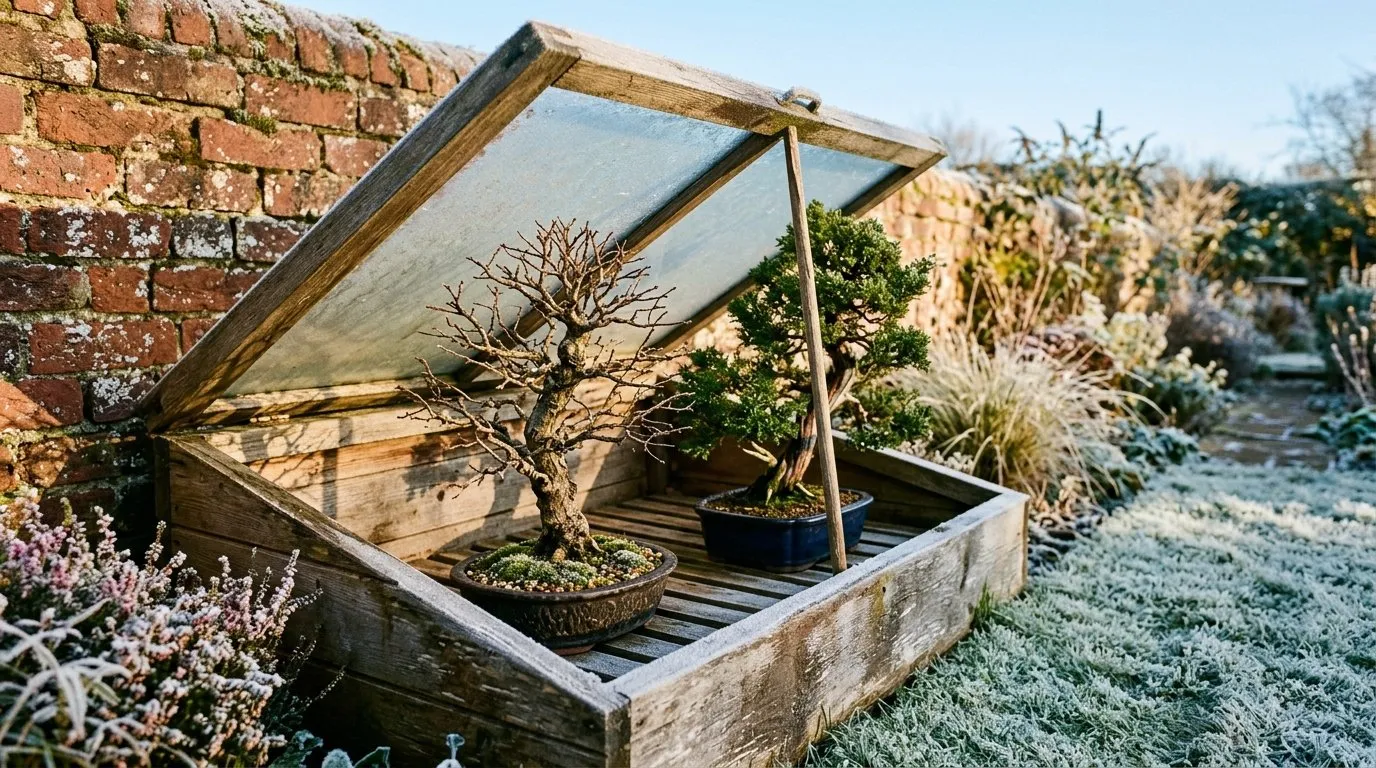
A cold frame is a hard-frost shelter only. Open it up or move trees back out in mild spells so they stay dormant.
Which bonsai tree is best for beginners?
Chinese elm is the best first bonsai, ficus is the most forgiving indoors, and juniper is the easiest outdoors. All three put up with the odd beginner mistake.
Chinese elm has small, toothed leaves and fine twigs. It sprouts again after a clumsy prune and copes indoors or out. If you buy one tree, buy this.
Ficus has glossy leaves and thick trunks. It shrugs off dry indoor air and uneven watering better than anything else on a windowsill, so it suits a warm flat.
Juniper is very hard to kill outdoors and looks great with age. It just can’t live indoors.
The supermarket carmona is surprisingly fussy. It wants steady warmth, humidity and bright light, and sulks when any of them slips. A specialist bonsai nursery or a local bonsai society sale is a good place to buy, as you’ll get a healthier tree and honest advice.
Before you buy, check four things:
- The trunk should sit firm in the pot. A wobbly trunk means few roots.
- The leaves should be glossy and full-sized, with no crispy edges.
- The soil should be gritty, not black, soggy compost.
- The pot must have drainage holes underneath.
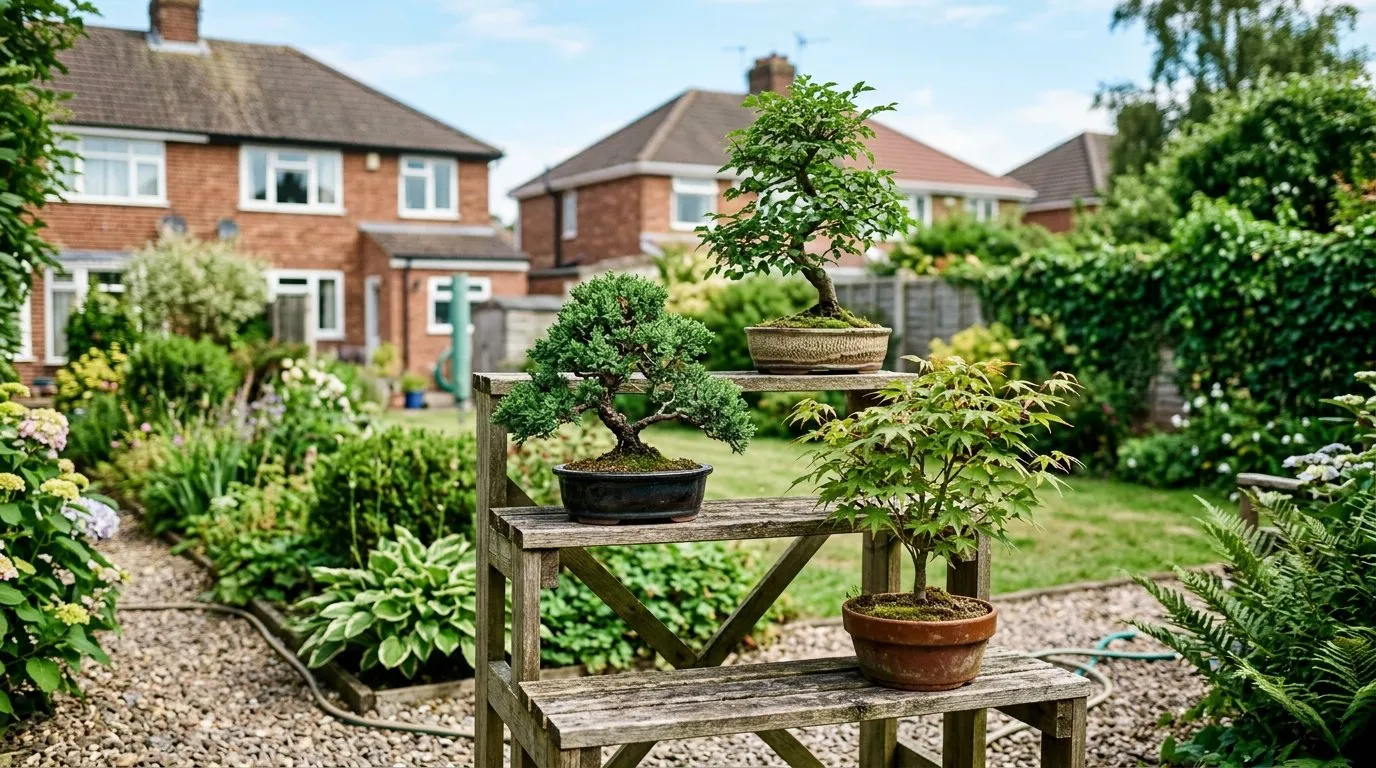
Juniper, elm and maple make a good starter trio for a garden, each with its own simple needs.
Why is my bonsai losing leaves?
Leaves dropping straight after a move is usually the tree settling in, not disease. Ficus is famous for it. Keep the watering steady and give it a few weeks, and new buds usually appear.
Other signs are easier to read:
- Crispy, brown leaves mean it has dried out. Dunk the pot straight away. Scratch a twig gently with a fingernail: green underneath means it’s alive.
- Yellow leaves on wet soil mean overwatering. Check the drainage holes are clear and let the surface dry before watering again.
- Pale, thin, stretched growth means too little light. Move it somewhere brighter rather than feeding more.
- Fine webbing and speckled leaves mean red spider mite, common on indoor elms near radiators. The spider mite control guide covers what to do.
- Autumn colour and leaf fall on an outdoor maple or larch is normal. It’s getting ready for winter.
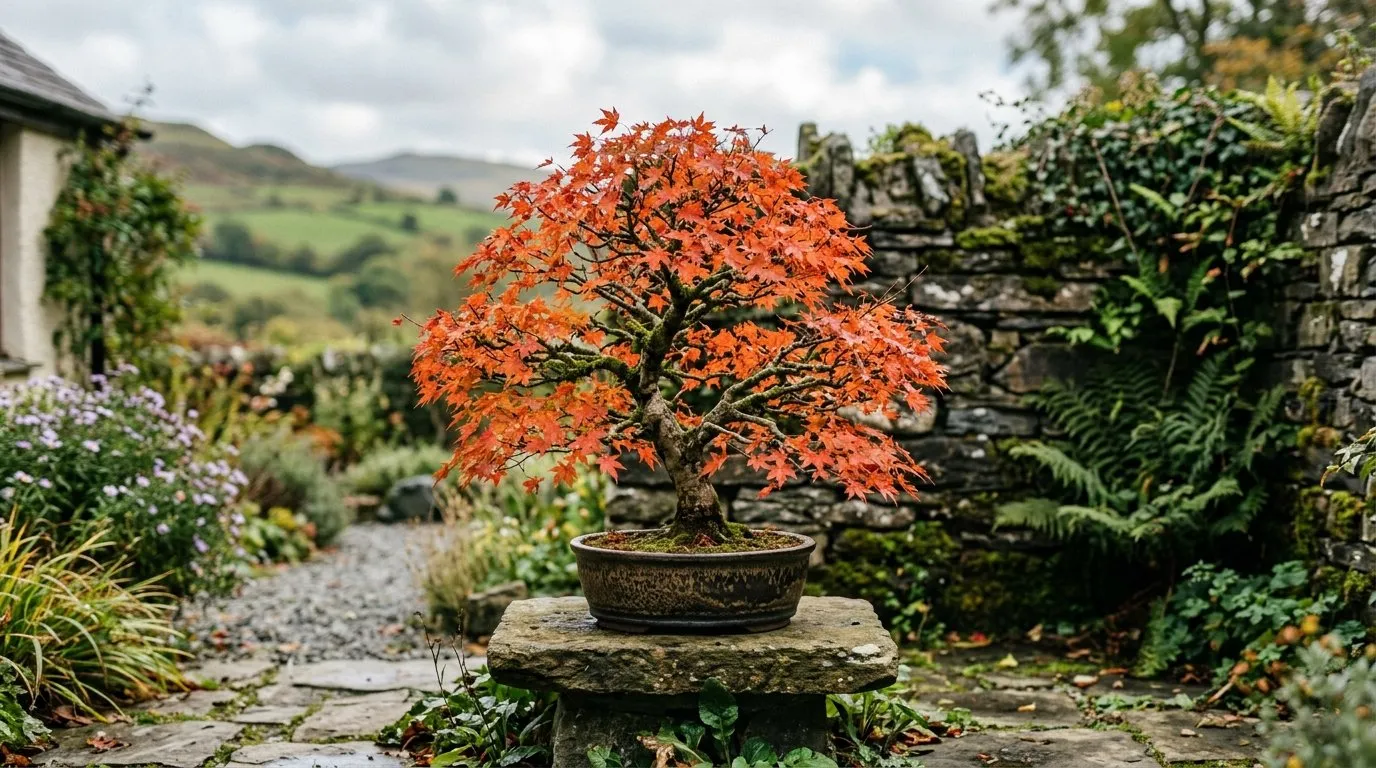
Autumn colour on an outdoor maple is a sign of a healthy tree getting ready for its winter rest.
Common bonsai mistakes to avoid
- Keeping a juniper indoors. It needs to live outside all year.
- Watering on a schedule. Check the soil every day instead.
- Using ordinary compost. It stays wet in a shallow pot and the roots rot.
- A dark spot indoors. Indoor bonsai need the brightest window you have.
- Bringing hardy trees in for winter. Give them a cold frame in hard frost, nothing warmer.
There’s plenty more for indoor growers on the houseplants hub.
Frequently asked questions
Can you keep a bonsai tree indoors in the UK?
Yes, but only tropical types such as ficus and carmona live indoors all year. Hardy trees like juniper, maple and larch need a cold winter outside and slowly fail in a heated room. Chinese elm copes with either, given a cool, bright spot. If the label just says “indoor bonsai”, find out the actual species.
How often should you water a bonsai tree?
Check every day and water when the surface starts to feel dry. In hot summer weather a small pot can need water daily, sometimes twice. An indoor tree in winter may only need water once a week. A wooden chopstick pushed into the soil shows whether it is still damp lower down.
Why is my bonsai dropping leaves?
Leaf drop just after moving a tree is usually it settling in. Crispy brown leaves point to drying out, and yellow leaves on soggy soil point to overwatering. Pale, stretched growth means too little light. Fix the position and the watering first, and new buds usually follow within a few weeks.
What is the best bonsai tree for beginners?
Chinese elm is the most forgiving first bonsai for UK beginners. It copes with the odd missed watering and sprouts again after a clumsy prune. Ficus is the toughest pick for a warm indoor room, and juniper is the easiest outdoor starter.
Do bonsai trees need special soil?
Yes, they need a free-draining, gritty bonsai mix, not ordinary compost. Most mixes are based on akadama, a Japanese baked clay, blended with pumice and fine bark. Ordinary compost stays too wet in a shallow pot and can rot the roots.
Should outdoor bonsai come inside for winter?
No, hardy bonsai need the cold to rest properly. A juniper or maple brought into a heated room in late autumn thinks spring has come and usually fails. Move pots into an unheated greenhouse or cold frame during hard frosts, then put them back out.
Once your tree is settled, read the guide on how to overwinter plants to keep the rest of your pots safe through the cold months.
Our team produces practical UK gardening guidance from source research, contributor records and established horticultural practice. Editorial standards are overseen by Matt W.