Key takeaways
- A cold frame lets you sow earlier in spring and keep picking salads later into autumn
- Put it against a sunny south-facing wall, out of the wind
- Open the lid on warm days and close it by late afternoon
- It's the perfect halfway house for hardening off seedlings
- Water sparingly, as soil inside dries out more slowly
- Aluminium frames with toughened glass last for years with little care
A cold frame is one of the handiest things you can add to a UK garden. It lets you sow earlier, gives seedlings a safe place to toughen up, and keeps salads going well into autumn. And it takes up barely more space than a doormat.
Here’s how to get the most from one, from where to put it to what to grow each month. If you’re raising seedlings indoors first, our guide on how to sow seeds indoors covers that earlier stage.
What is a cold frame and how does it work?
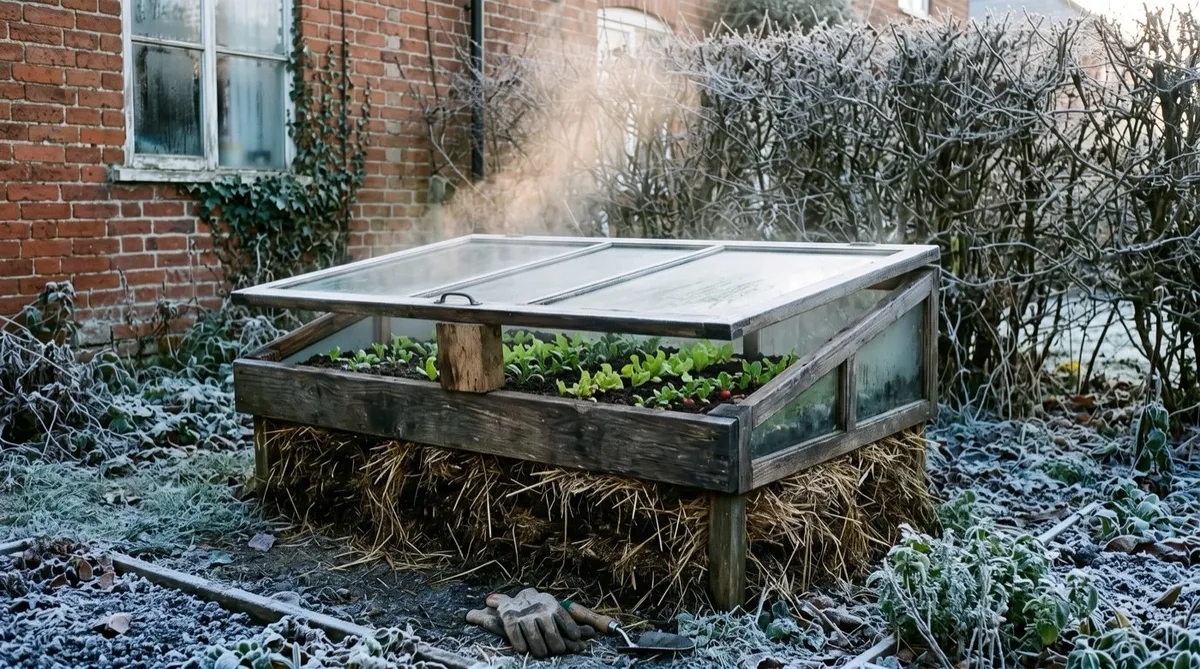
A cold frame is a low, unheated box with a clear lid that traps the sun’s warmth and keeps off frost, wind and heavy rain. It has solid sides of timber, brick or aluminium and a sloping see-through top facing the sun. No electricity needed.
Sunlight warms the soil and air inside, and the box holds on to some of that warmth overnight. Even on a chilly March day it can feel noticeably warmer inside. That warmer soil is often the difference between seeds coming up and sitting there doing nothing.
The sloping lid sheds rain, so the inside stays drier. It also tilts towards the sun, catching as much light as possible on short winter and spring days.
 An aluminium cold frame with toughened glass, full of seedlings getting used to life outdoors.
Shop the Access 4x4 Coldframe at Greenhouse Stores →
How to position a cold frame
Put your cold frame against a south-facing wall or fence for the most sun and shelter. The wall soaks up heat during the day and gives some back at night.
Keep it out from under trees. Branches block light and drip on the glass, which encourages mould. Avoid low spots where cold air settles on still nights, as these frost pockets cancel out the benefit.
Stand it on level, free-draining ground. Soggy soil inside a closed box leads to root rot. On heavy clay, set the frame on a layer of gravel.
Face it the right way. The tall back should be on the north side, with the lid sloping down to the south. That catches the low winter sun best.
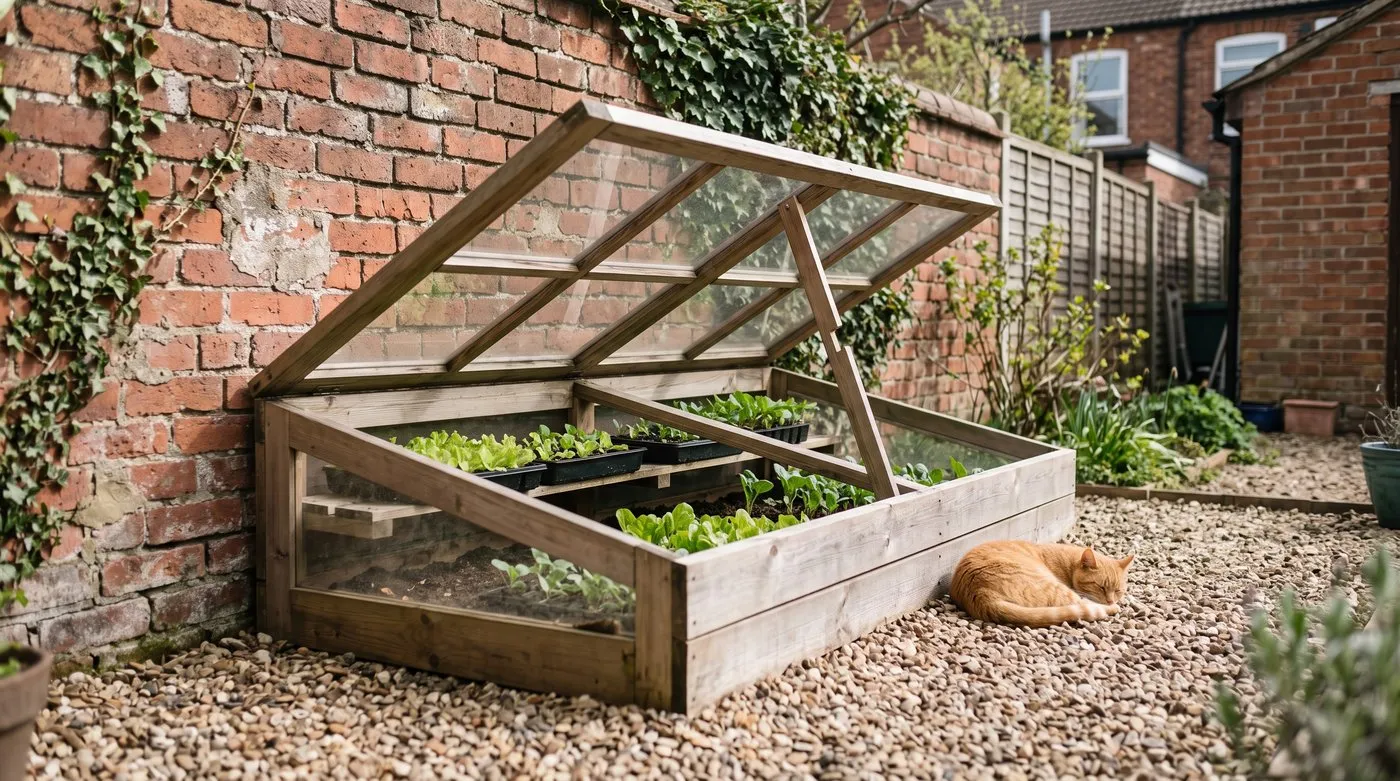
A south-facing wall gives the most sun and gives back warmth at night. Gravel underneath stops the soil inside getting soggy.
Ventilation: the key to cold frame success
Opening the lid at the right time is the most important cold frame skill. Get it wrong and plants either cook on sunny days or rot in stale, damp air.
On a warm day, prop the lid open by mid-morning. A notched stay or a piece of wood is fine. Close it by late afternoon to keep warmth in overnight. In summer, leave it fully open in the day and half open at night.
An automatic vent opener takes away the worry. It’s a little wax-filled arm that pushes the lid open as it warms up and closes it as it cools, with no power needed. If you’re out at work all day, it’s well worth having.
 A slim cold frame keeps winter salads growing when the open ground is too cold and wet.
Shop the Elite Min E Lite at Greenhouse Stores →
What to grow in a cold frame
A cold frame can be busy all year. The trick is matching crops to the season.
Spring: hardening off and early sowings
From March, use it to harden off seedlings you started indoors. Move the trays in and open the lid a bit more each day for one to two weeks before planting out. This is the most popular use for a cold frame, and your plants will thank you for it.
At the same time, sow salads straight into the soil inside. Lettuce, radish and spring onions come up weeks earlier than outside. Our lettuce growing guide has the best varieties for early sowing.
Summer: herbs and tender crops
In summer, use the frame for growing herbs that like extra warmth. Basil especially does far better in a frame than in the open, particularly further north. Keep the lid wide open during the day.
Autumn: extending the harvest
In autumn, sow winter lettuce, lamb’s lettuce, mizuna and pak choi in September for picking into December. These crops cope with cold but not with cold, wind and wet all at once, and a frame gives just the shelter they need. For sowing dates and the best varieties, see our guide to winter salad harvesting.
Succession planting works really well too. Sow a short row every two weeks for a steady supply.
Winter: overwintering and forcing
From November to February, give rosemary, thyme and other herbs some shelter in the frame. Protect autumn-sown broad beans from the worst frosts. You can also force early rhubarb by covering a crown with an upturned bucket inside the frame.
In southern England you can sow hardy lettuce, spinach and even carrots in a frame in late January, weeks before outdoor sowing. For a full month-by-month plan, see our greenhouse growing calendar, which covers cold frames too.
Choosing a cold frame
The material, size and glazing all make a difference to how well a frame works and how long it lasts.
Material
Aluminium frames with toughened glass last the longest. They don’t rot, need no painting and let in plenty of light. Toughened glass is also safer, as it breaks into small blunt pieces rather than sharp shards.
Wooden frames are cheaper but need treating regularly, especially at the base where they sit on damp soil.
Size
A small 4x2 ft frame holds two seed trays and suits a small garden or patio. A 6x4 ft frame gives room to harden off plenty of seedlings and grow salads alongside.
Slim frames tuck neatly against a wall, like the Elite Min-E-Lite 4x2 or the wider Elite Min-E-Lite 6x2. Deeper ones give enough room to grow root veg straight in the soil underneath, such as the 4x4 Access Aluminium Coldframe or the 6x4 Access Aluminium Coldframe. If you only have paving, a raised cold frame that doubles as a planter, like the Palram Canopia Plant Inn, is a good choice.
 Lamb’s lettuce and mizuna keep cropping in a cold frame long after open-ground salads have finished.
Month-by-month cold frame calendar
| Month | Jobs |
|---|---|
| January-February | Sow hardy lettuce and spinach. Force rhubarb. Open up on mild days. |
| March | Start hardening off indoor seedlings. Sow radish and spring onions. |
| April-May | Keep hardening off. Sow carrots and beetroot. Open the lid more each day. |
| June-August | Grow basil and tender herbs. Leave the lid open day and night in hot spells. |
| September | Sow winter salads: lamb’s lettuce, mizuna, winter lettuce, pak choi. |
| October-November | Close the lid earlier. Shelter tender herbs. Protect autumn-sown broad beans. |
| December | Pick winter salads. Keep the glass clean so plants get every bit of light. |
For a wider plan, our grow your own vegetables guide has a full UK planting calendar.
A cold frame is the perfect halfway house for indoor seedlings on their way to the open ground.
Common cold frame mistakes
Forgetting to open the lid is the big one. A closed frame in spring sunshine can kill seedlings in a few hours. If you can’t check daily, fit an automatic opener.
Overwatering does more harm than underwatering, because the soil inside dries slowly. Water only when the top 2cm feels dry, and do it in the morning so the surface dries before the lid closes.
Putting it in shade defeats the point. A cold frame needs at least six hours of direct sun a day.
Forgetting about pests is easy when the lid is shut. Check for slugs, aphids and vine weevil grubs, which like the cosy conditions as much as your plants do. Our organic pest control guide has safe ways to deal with them.
Getting started with a cold frame
A cold frame pays off from the very first season. Even a small one against a sunny wall lets you start growing tomatoes and other tender crops earlier. Not sure if you need a full greenhouse? Our guide on do you need a greenhouse compares it with cheaper options like cold frames and polytunnels. Pair a frame with container vegetable gardening and even a small patio becomes a busy little veg plot.
The RHS guide to cold frames is a good next read. A well-made aluminium frame lasts for many years and gives you healthier seedlings, earlier crops and fresh salad well into winter.
Start small, put it in full sun, remember to open the lid, and you’ll wonder how you managed without one.
Next, try our guide on growing tomatoes in the UK, the perfect crop to start under glass. No frame yet? A layer of garden fleece gives some of the same protection for much less money.
Frequently asked questions
What is a cold frame used for in the UK?
Hardening off seedlings, sheltering plants in winter and growing for longer. It keeps frost, wind and heavy rain off while the sun warms the soil. Use it from late winter to autumn for salads and herbs, and for raising seedlings before they go into the open ground.
Where should I position a cold frame?
Pick a sunny spot, ideally against a south-facing wall or fence. Keep it out of the wind and away from overhanging trees, which block light and drip on the lid. Avoid low frost pockets. Level, free-draining ground stops water collecting inside. Make sure it’s easy to reach for daily opening and watering.
When should I open a cold frame?
Open the lid on mild, sunny days. It warms up fast inside, even in early spring. Prop it open in the morning and close it in late afternoon to keep warmth in overnight. In summer, leave it fully open during the day. An automatic vent opener helps if you’re out all day.
Can I grow vegetables in a cold frame year round?
Yes, if you pick the right crops for each season. Sow salad leaves, radishes and spring onions from late winter. Grow lettuce and herbs through summer. In late summer and autumn, sow winter lettuce, lamb’s lettuce and mizuna for winter picking. Growth slows in midwinter, so expect smaller harvests then.
What is the difference between a cold frame and a mini greenhouse?
A cold frame sits low with a sloping, hinged lid. A mini greenhouse stands upright with shelves and a zip or door. Cold frames are better for hardening off and growing in the soil. Mini greenhouses suit pots and seed trays on shelves. Both keep frost and wind off.
Do I need a cold frame if I have a greenhouse?
It’s still really handy alongside one. It’s the halfway stage for greenhouse seedlings before they go outside. It also frees up greenhouse space for hardy crops that don’t need much warmth. In winter, it shelters hardy plants without any heating.
Our team produces practical UK gardening guidance from source research, contributor records and established horticultural practice. Editorial standards are overseen by Matt W.