Key takeaways
- Peg runners into sunken 9cm pots in July and the first half of August
- Use only the first plantlet on each runner and take no more than five per plant
- Runners usually root in four to six weeks; a gentle tug tells you when
- Plant out 35-45cm apart by mid-September for strawberries next June
- Only propagate from healthy plants, and buy fresh certified stock every few years
- Cut off runners you don't need so the parent puts its energy into fruit
Strawberry runners give you new plants for free. In summer, established plants send out long, thin stems with baby plants along them. Peg a few of those babies into pots in July, and by September you’ll have a fresh batch of plants ready for a new bed.
This guide covers when and how to peg runners, how many to take, when to cut them free and how to plant them out. For planting, feeding and picking, start with the guide on how to grow strawberries in the UK.
What are strawberry runners?
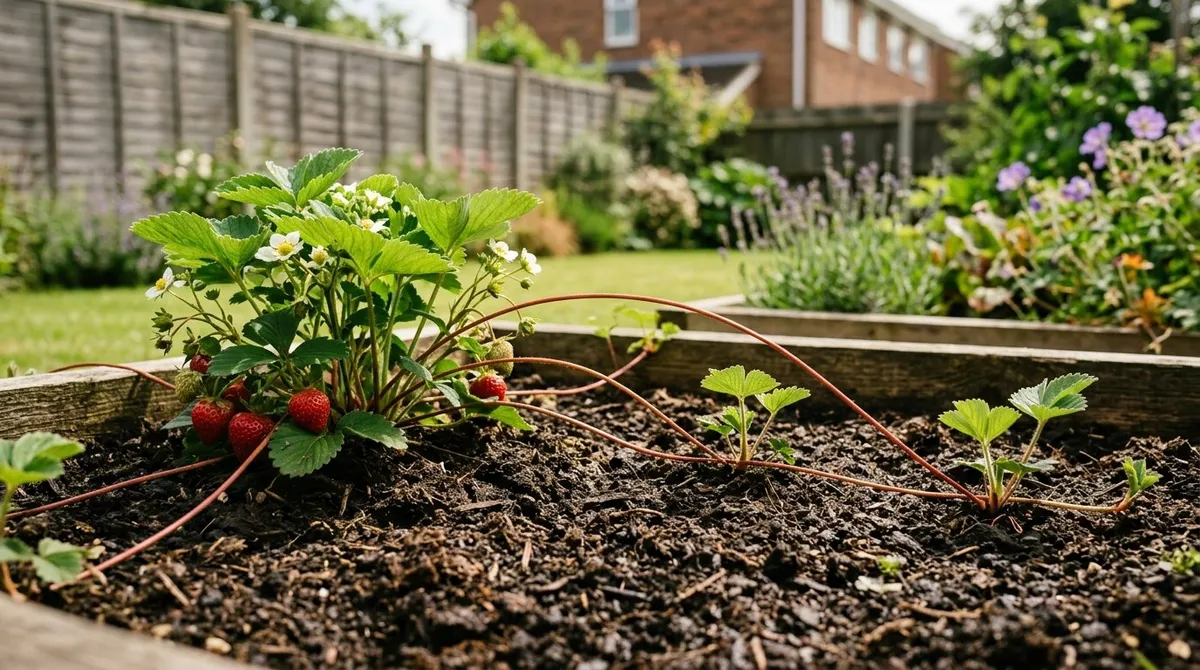
Runners are long stems that strawberry plants send out across the soil. Along each one, small tufts of leaves form. Each tuft roots where it touches the ground and grows into a new plant, an exact copy of its parent.
Plants send out most runners in July and August, after fruiting. Left alone, they root everywhere and a tidy bed becomes a tangle of small, crowded plants.
Growing new plants this way is a simple kind of layering, where a stem roots while still attached to its parent. It’s one of the easiest methods in the plant propagation guide.
Only take runners from healthy, strong plants. A parent with mottled, crinkled or oddly marked leaves may carry a virus, and every new plant will inherit it. Mark your best plants with a cane while they’re fruiting.
When to peg down strawberry runners
Peg runners down in July and the first half of August. That gives them several weeks of warm soil to root, so they’re ready to plant out by mid-September. Their roots then settle before winter, and they fruit the following June.
Runners pegged later root more slowly in cooling soil. Keep those in their pots in a cold frame over winter and plant them out in March. They grow away well, but expect a smaller first crop.
Snip off any runners that appear in June while fruit is still ripening. Fruit first, then runners is the order that suits the plant.
How to peg strawberry runners into pots
Pegging a runner into a pot takes a couple of minutes.
- Fill a 9cm pot with peat-free multi-purpose compost and sink it to its rim in the soil beside the parent.
- Choose the first plantlet on the runner, the one nearest the parent. It’s the biggest and roots fastest.
- Pin it onto the compost with a U-shaped peg. A bent piece of wire or an opened paperclip works fine.
- Snip off the runner just beyond the pegged plantlet. Any further plantlets would only drain the parent.
- Water the pot whenever it’s dry. Small pots dry out fast in summer, and this is the step people forget.
Leave the runner attached to the parent. It keeps feeding the plantlet until its own roots take over.
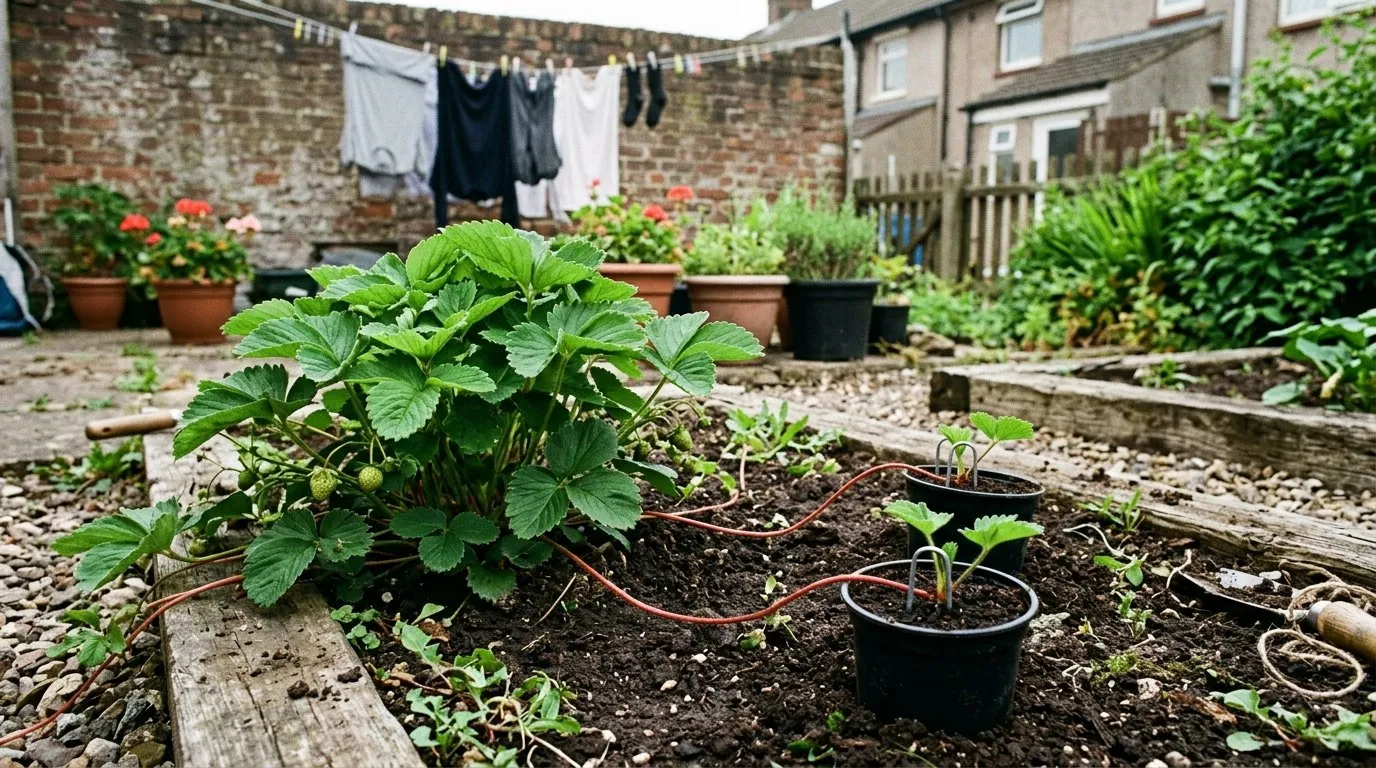
Each plantlet sits in its own pot, still joined to the parent. Keep the pots watered and they’ll root in a few weeks.
Pots or straight into the bed?
Rooting straight into the soil suits filling gaps or extending a bed. Peg the plantlet exactly where you want the new plant and the job’s done.
Rooting into pots is better if the new plants are going somewhere else, such as a fresh bed, containers or a friend’s garden. You can move them without disturbing the roots. Strawberries do well in pots and troughs, and the guide to growing fruit in pots covers compost and feeding.
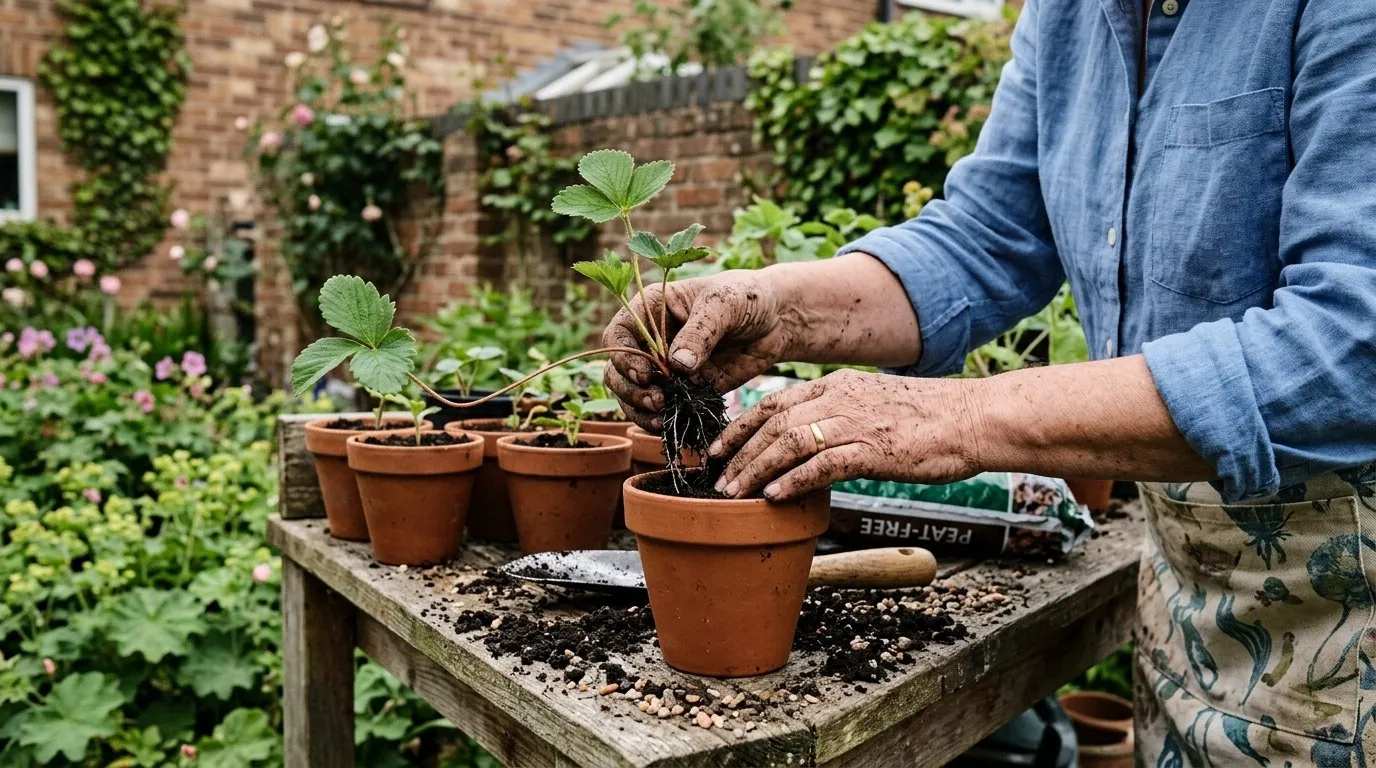
Runners that rooted straight into the bed can be lifted and potted up if their new home isn’t ready yet.
How many runners to take from one plant
Take no more than five runners from a plant you want to keep fruiting. The parent feeds each one for weeks, and a plant supporting lots of them gives a poorer crop the next year. Five plants giving five runners each still fills a good-sized new bed.
Use only one plantlet per runner, the first one. Plantlets further along the stem are smaller and weaker, and they fruit less well.
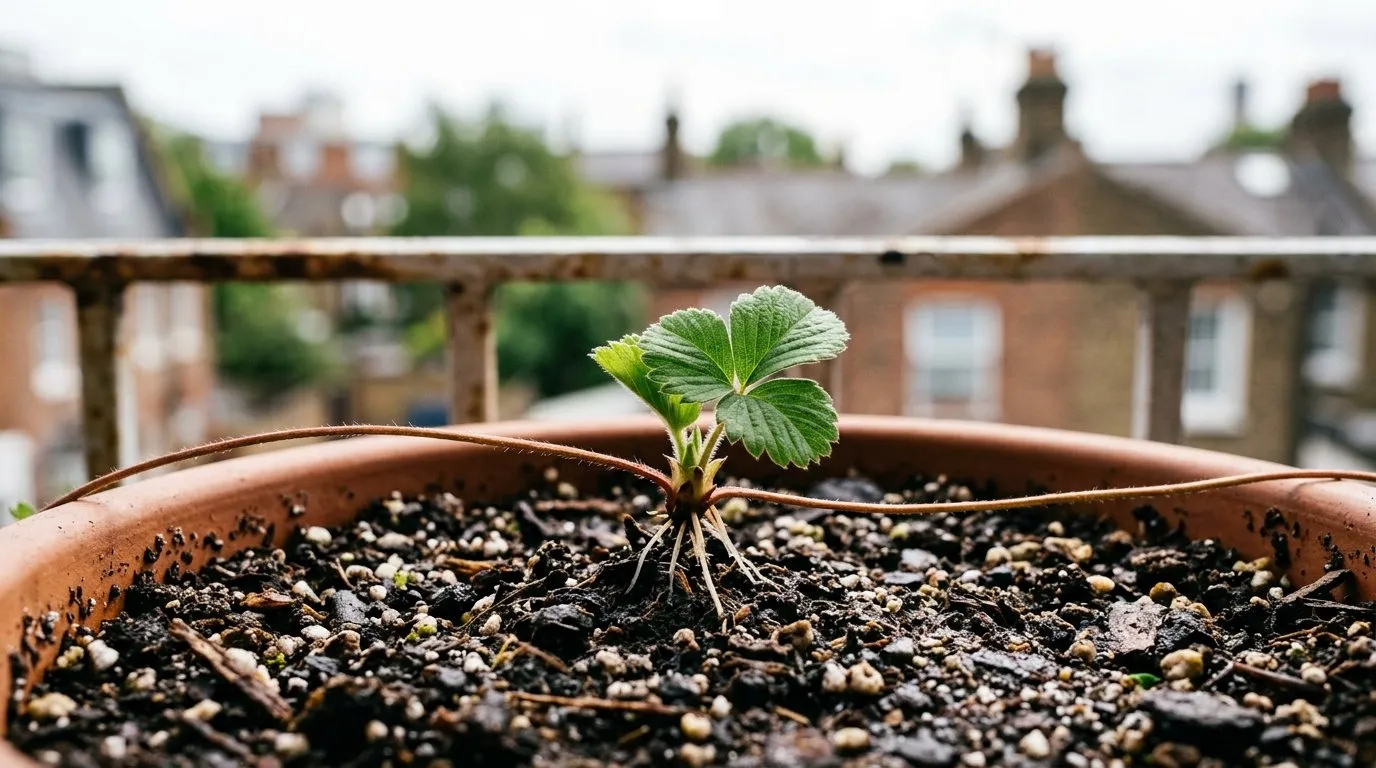
The first plantlet on a runner is the strongest. You can see the new roots starting to grip the compost.
When to cut the runner from the parent
Cut the runner about four to six weeks after pegging, once the plantlet has rooted. Test with a gentle tug on the leaves. If it holds firm, it’s rooted. If it lifts, pin it back down and check again in a week or so.
Cut the runner close to the young plant with scissors or secateurs, then remove the length leading back to the parent. Don’t pull runners off by hand, as that can tear the parent’s crown.
Leave the young plant in its pot for another week or so before moving it. If it wilts during that time, it wasn’t quite ready.
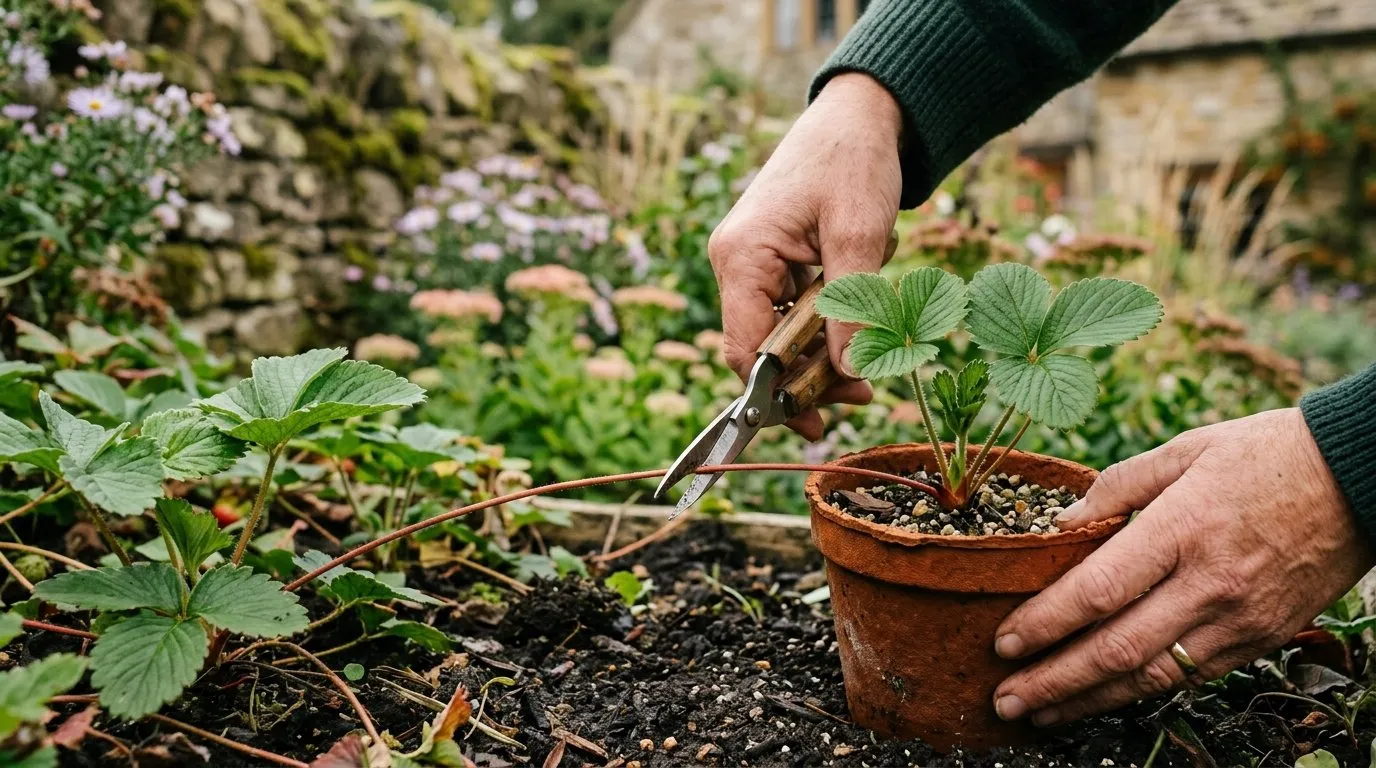
Once the tug test says it’s rooted, snip the runner. A clean cut is kinder to the parent than pulling.
How to plant rooted runners in a new bed
Plant the new plants 35-45cm apart, in rows about 75cm apart, in full sun. Choose ground that hasn’t grown strawberries, potatoes or tomatoes for a few years. They can all suffer from verticillium wilt, a soil-borne disease. The verticillium wilt guide explains the signs. Dig in some garden compost before planting.
Set each plant with its crown (the point where leaves meet roots) exactly at soil level. Too deep and it rots, too high and it dries out. Firm in, water well, and keep watering if autumn is dry.
Plants set out by mid-September fruit the following June. In early spring, give the bed a light feed of general or high-potash fertiliser. The guide to feeding fruit bushes explains the potash-for-fruit idea.

Plant into fresh ground by mid-September, with the crown sitting right at soil level.
Should you replace strawberry beds every few years?
Yes. Strawberry plants crop best in their second and third years, then slowly decline. Most growers replace a bed every three or four years, using runners from the best plants.
Even healthy-looking plants can slowly pick up viruses, spread by aphids. Every few generations, buy certified virus-free plants and start a fresh line. Plant them away from your older bed.
Which strawberry varieties produce the most runners?
Summer-fruiting varieties make the most runners. Everbearers put their energy into flowering over a long season and make fewer.
| Variety | Type | Runners | Worth knowing |
|---|---|---|---|
| ’Cambridge Favourite’ | Mid-season summer fruiter | Plenty | A reliable old favourite |
| ’Honeoye’ | Early summer fruiter | Plenty | One of the first to crop |
| ’Elsanta’ | Mid-season summer fruiter | Good | Easy to multiply |
| ’Malwina’ | Late summer fruiter | Moderate | Stretches picking into late summer |
| ’Mara des Bois’ | Everbearer | Fewer | Lovely flavour, crops for months |
| ’Albion’ | Everbearer | Few | Crops into autumn |
| Alpine strawberries | Alpine | Usually none | Grow from seed or divide clumps |
What to do with runners you don’t want
Snip off unwanted runners at the base every few weeks through summer. That sends the plant’s energy into its crown, where next year’s flower buds are forming. On everbearers, remove runners all season.
Use scissors or secateurs and cut close to the crown. Check the bed edges too, as runners root into paths, gravel and weed matting.
Spare rooted plants make great gifts for neighbours or allotment swaps. You could also use them to fill a vertical strawberry tower on the patio.
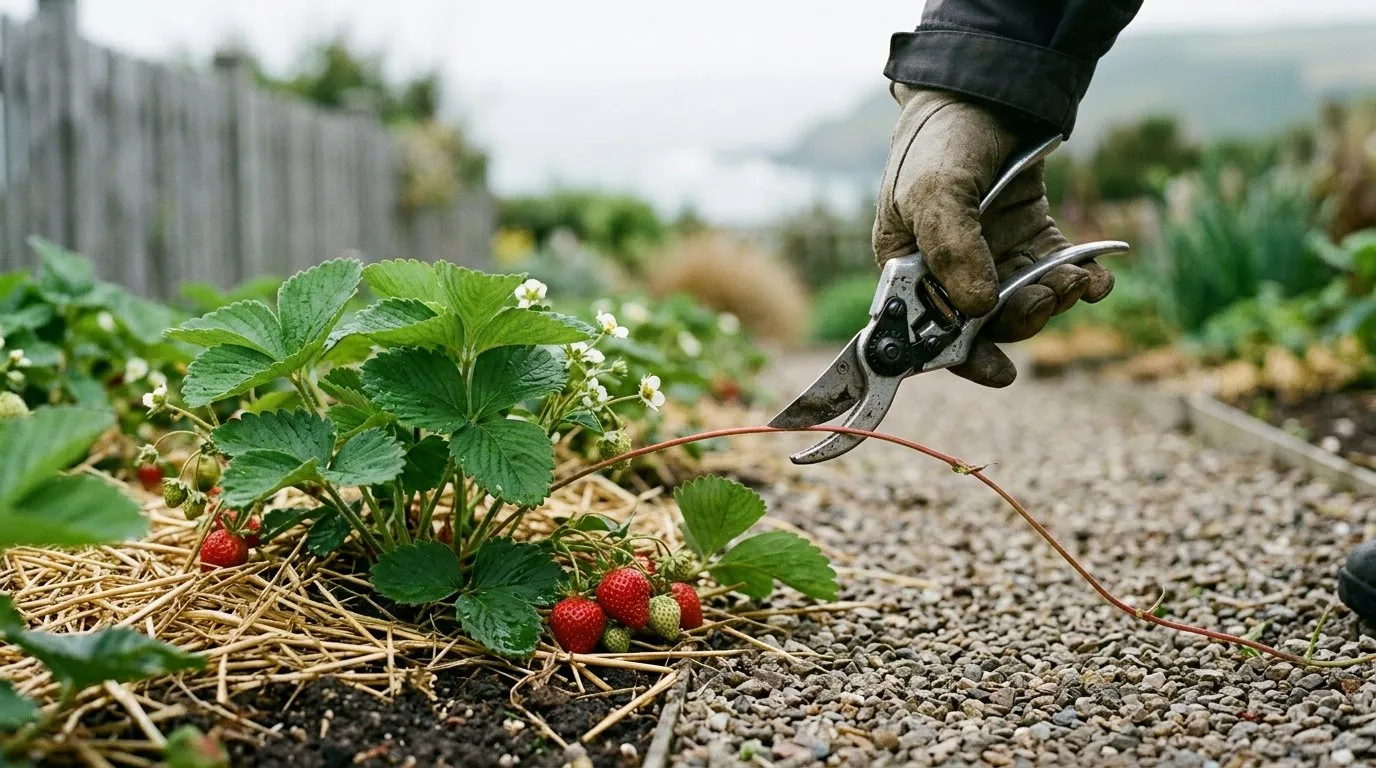
Runners you don’t need are best snipped off early. Left alone, they root into paths and gravel.
Common mistakes with strawberry runners
Taking too many. A parent feeding lots of runners crops poorly next year. Five is plenty.
Using weak plantlets. The second and third plantlets on a runner make small plants. Use the first one only.
Letting pots dry out. Small pots in summer sun dry quickly. Check them every day in warm weather.
Propagating from sickly plants. Any virus passes straight to the new plants. Use only your healthiest parents.
Planting too deep. A buried crown rots. Keep it right at soil level.
Frequently asked questions
When should I take runners off strawberry plants?
Peg runners down in July and early August, once fruiting has finished. That gives them several weeks of warm soil to root, ready to plant out by mid-September. Snip off any runners that appear in June so the parent can finish ripening its fruit.
Can you put strawberry runners straight into the ground?
Yes, runners root well pegged straight into the soil. This suits filling gaps or extending an existing bed, as the plant roots where it will grow. Pots are better if the new bed is somewhere else, as you can move them without disturbing the roots.
How long do strawberry runners take to root?
Usually four to six weeks in warm summer soil. Give the plantlet a gentle tug. If it holds firm, it has rooted and you can cut the runner. Rooting slows as the soil cools in autumn.
Will strawberry runners fruit in their first year?
Yes, if pegged in July and planted by mid-September, they fruit next June. Runners planted out in spring should have their first flowers removed. That lets them build strong roots before they crop.
Should I cut the runners off my strawberry plants?
Yes, cut off any runners you don’t need for new plants. Runners use up energy the plant could put into next year’s fruit. Snip them off at the base every few weeks through summer.
Why does my strawberry plant have no runners?
It’s probably an everbearing or alpine variety. Everbearers such as ‘Albion’ and ‘Mara des Bois’ make fewer runners, as they put their energy into flowering over a long season. Most alpine strawberries make none. Young plants also send out fewer runners in their first year.
Caught the free-plant bug? Try turning tomato side-shoots into free tomato plants from cuttings, or browse more growing guides.
Our team produces practical UK gardening guidance from source research, contributor records and established horticultural practice. Editorial standards are overseen by Matt W.