Key takeaways
- A greenhouse lets you sow earlier in spring and pick later into autumn
- Sow tomatoes, peppers and aubergines from February in a heated propagator at 18-21C
- From late spring, open vents and add shading to keep it below about 25-27C
- Clean and insulate in October and November to protect winter crops
- A small heater keeps the greenhouse frost-free for early and late sowings
- Staging gives you more room for seed trays and young plants
A greenhouse lets you sow earlier, pick later and grow crops that sulk in British weather. Knowing what to do each month turns it from a pricey shed into a busy, productive space.
This calendar shows what to sow, grow, look after and pick under glass from January to December. For a crop-by-crop companion, see our best greenhouse plants month by month. For outdoor sowing, see our seed sowing calendar and vegetable planting calendar.
The complete month-by-month greenhouse calendar
Here’s the whole year at a glance. More detail on each month follows below.
| Month | Sow under glass | Jobs | Pick |
|---|---|---|---|
| January | Chillies, aubergines | Clean glass, check heater, order seeds | Forced rhubarb |
| February | Tomatoes, peppers, onions, broad beans | Set up staging, check propagator | Winter salads |
| March | Cucumbers, lettuce, French beans, courgettes | Open vents on warm days | Overwintered spinach |
| April | Sweetcorn, squash, basil | Prick out seedlings, pot on | Spring onions, radish |
| May | Runner beans, late cucumbers | Harden off tender crops for outdoors | Lettuce, early strawberries |
| June | Autumn calabrese, kale | Ventilate daily, feed tomatoes, damp down | First tomatoes |
| July | Winter lettuce, pak choi | Water twice a day in heatwaves | Tomatoes, cucumbers, peppers |
| August | Overwintering onions, spring cabbage | Keep feeding, clear finished crops | Tomatoes, aubergines, chillies |
| September | Winter salads, spinach | Reduce shading and watering, close vents earlier | Green tomatoes, last peppers |
| October | Broad beans (overwintering) | Clean glass, insulate with bubble wrap | Autumn lettuce, late chillies |
| November | Nothing (rest time) | Fix damage, oil hinges, check heater | Winter salads |
| December | Nothing (planning time) | Check insulation, plan next year | Forced chicory |
Gardener’s tip: Pin this table inside the greenhouse door. A quick look on the first of each month keeps you ahead.
January and February: the quiet start
January is for getting ready, not planting. Clean every pane inside and out, because winter light is precious and dirty glass blocks it. Scrub algae off the frame, wash the staging and clean last year’s seed trays. Check your heater works before you need it. The Eden 2kW greenhouse heater is one option for keeping the frost out during early sowings. Our greenhouse heating guide compares electric, gas and paraffin heaters.
Order your seeds in January, as popular varieties can sell out.
February is when things really start. Sow tomatoes and peppers in a heated propagator at 18-21C. The RHS tomato guide suggests sowing from late February to mid-March if you plan to grow tomatoes under glass. For good varieties, see our guide to greenhouse tomato varieties. Sow aubergines and chillies too, as these slowcoaches need all the time they can get. Our guide to growing chilli peppers helps you pick varieties and heat levels.
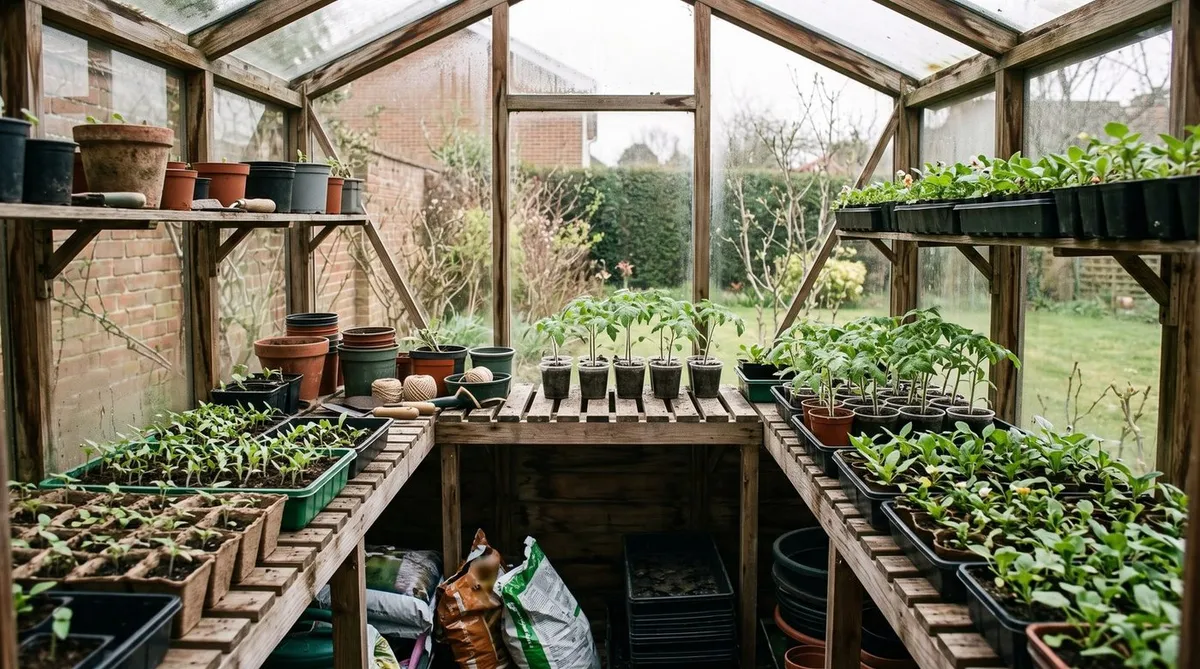
Set up staging to make the most of your space. A two-tier staging unit gives you a second level for seed trays. Put it along the north side so it doesn’t shade other plants.
Gardener’s tip: Stand seed trays on capillary matting on the staging. It keeps the compost evenly damp and means less watering.
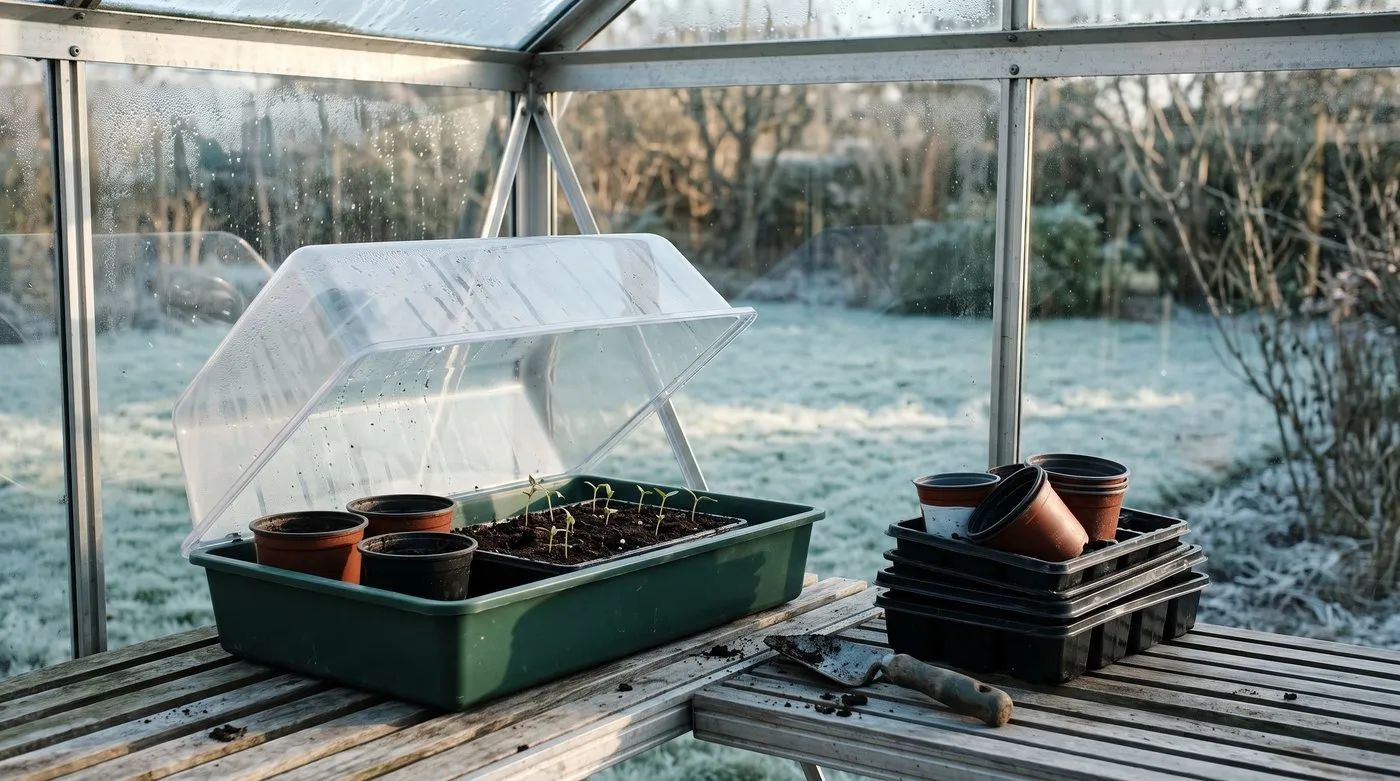
February is when sowing really starts. Tomatoes and peppers need a heated propagator at 18-21C, and clean glass lets in every bit of winter light.
March and April: peak sowing season
March is the busiest month in the greenhouse. Sow cucumbers, courgettes, French beans and lettuce. Start sweetcorn in modules from late March, and sow basil for summer. Check the seed packets for the warmth each variety needs.
Keep an eye on your earlier sowings. Prick out tomato and pepper seedlings when their first true leaves appear, and pot them on into 9cm pots of multipurpose compost. New to this? Our guide on how to sow seeds indoors walks you through pricking out.
April is for potting on and hardening off. Move hardy crops like broad beans and peas out to a cold frame. Keep tender crops under glass, as April nights can still bring frost and cold nights slow tomatoes and peppers down.
Ventilation matters from mid-April. Open the door and roof vents on sunny mornings and close them by mid-afternoon. An automatic vent opener opens and closes the vent for you as the temperature changes, with no electricity needed.
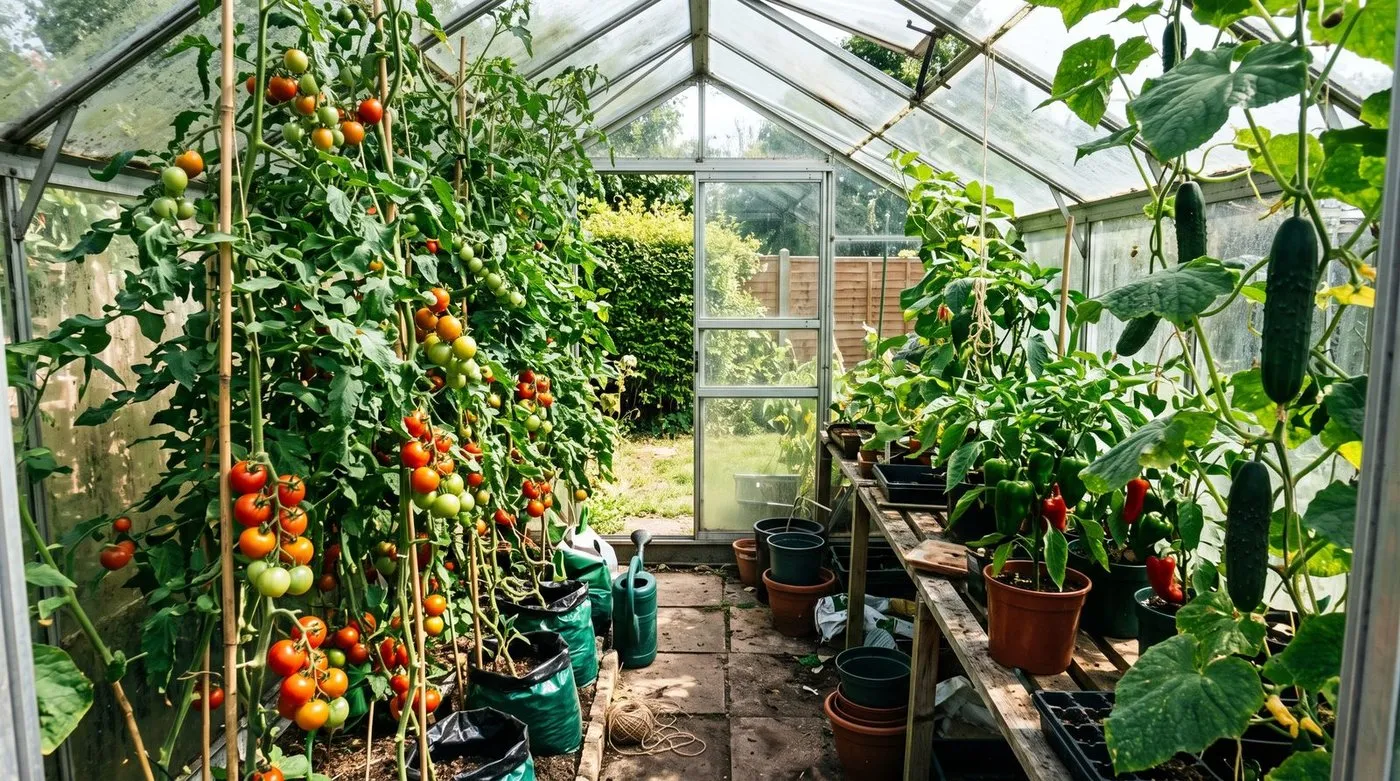
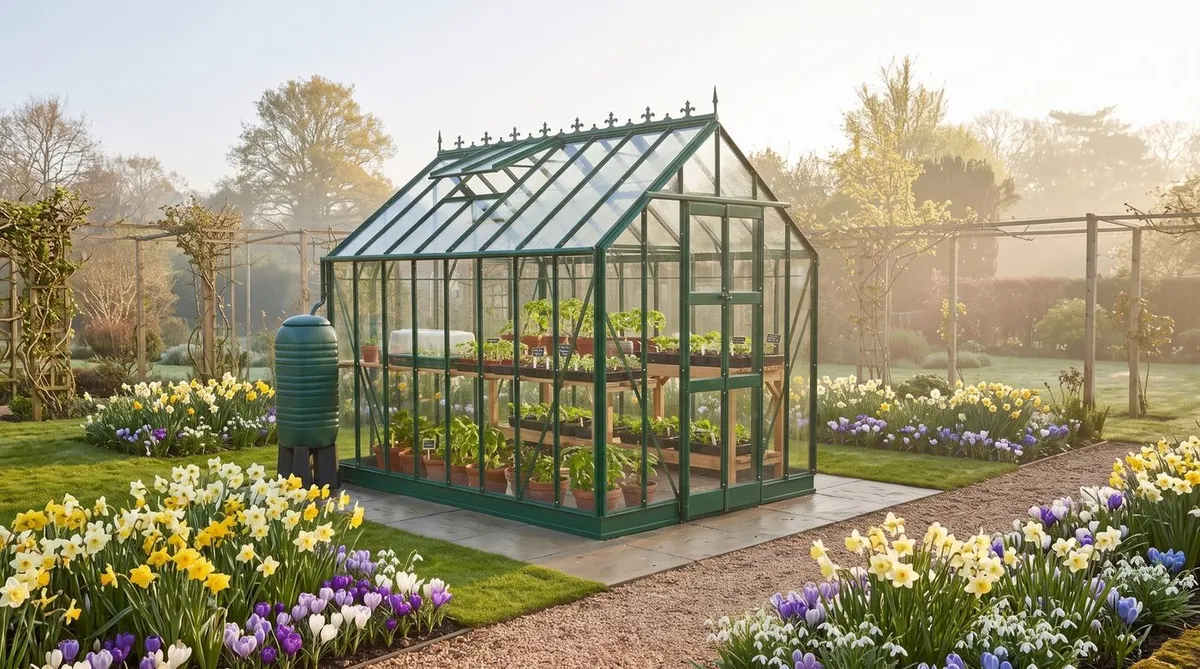
A greenhouse in full swing, with tomatoes, cucumbers and peppers all cropping together.
If you’re after a greenhouse this size, you can shop the Elite Thyme 6x8 at Greenhouse Stores.
May: the transition month
May is when plants start heading outside. Harden off seedlings over 10-14 days before planting out after your last frost. In southern England you can usually start in mid-May. Further north and in Scotland, wait until early June.
Plant tomatoes, cucumbers and peppers into their final spots in the greenhouse, in grow bags or 30cm pots of multipurpose compost. Give tomatoes support from day one, tying cordon types to canes or strings fixed to the frame.
Sow a late batch of runner beans and cucumbers to keep the harvest going. Sow a little basil every three weeks for a steady supply. Our cucumber growing guide covers growing them under glass.
Gardener’s tip: Hang a max-min thermometer at plant height. It shows how cold it got overnight, so you know when tender crops need a layer of fleece.
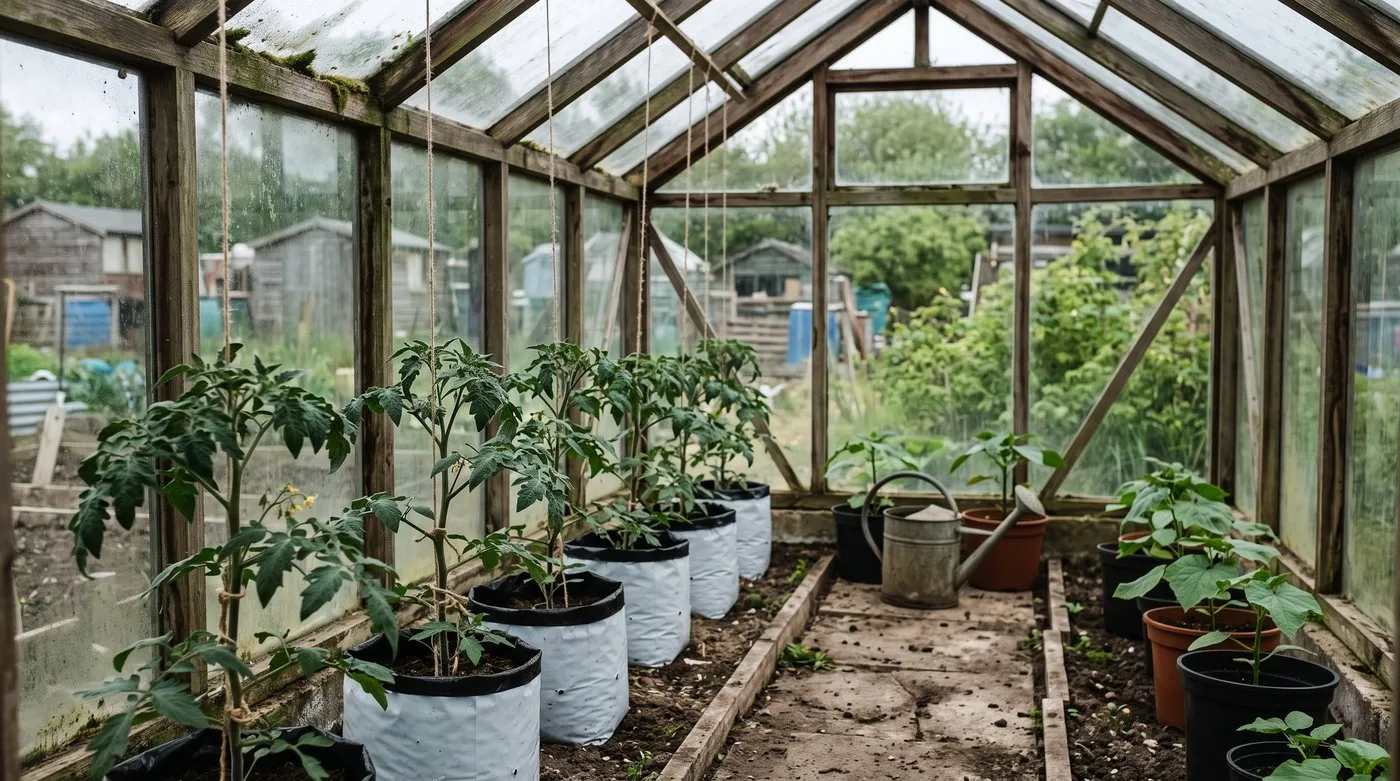
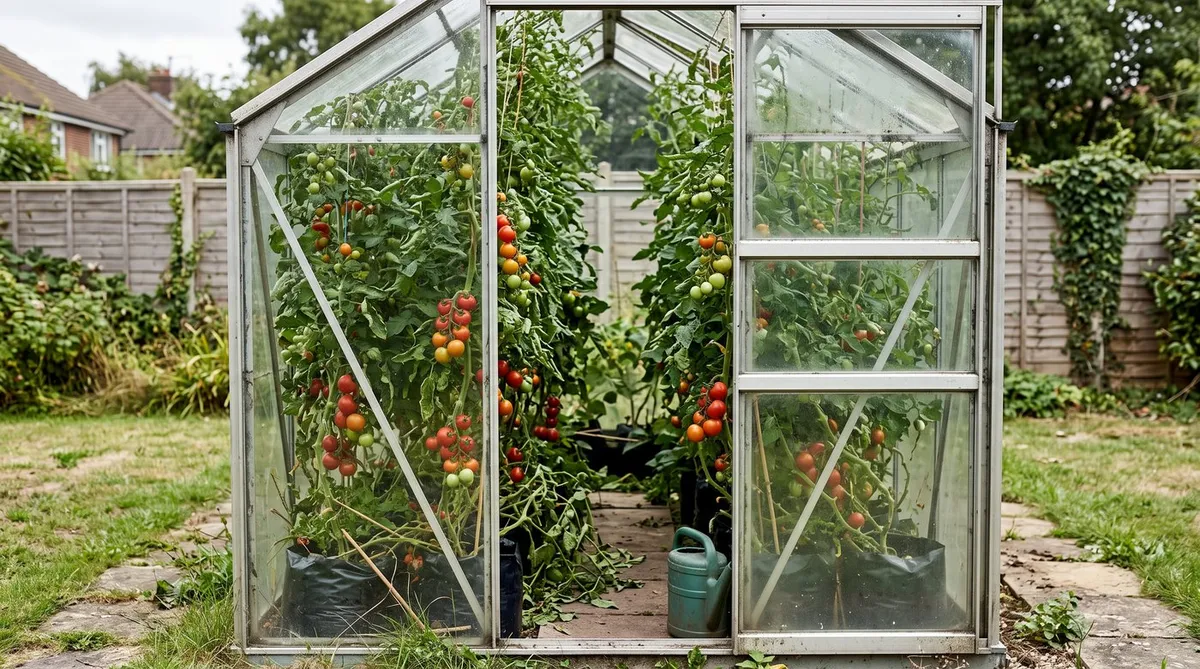
Give tomatoes support from day one. Tie cordon types to canes or strings fixed to the frame as soon as they go into their final spots.
When should you put shading on a greenhouse?
Put shading on in spring, before the first hot spell, and take it off bit by bit from September. The RHS ventilation and shading guide suggests using just enough shade to keep things below about 25-27C. Shading paint goes on the outside of glass, can be thickened as summer goes on, and is washed off in early autumn. Don’t use it on polycarbonate or acrylic, as it leaves marks. Use shade netting instead, ideally on the outside. External blinds work best but cost more and can get in the way of vents.
June to August: peak growing and harvest
Summer means opening up, damping down, watering and feeding every day. A shut greenhouse heats up fast on a sunny day, so ventilation comes first. Open every vent and the door by mid-morning, then close up in late afternoon to hold some warmth for the night.
How much ventilation does a greenhouse need?
More than most greenhouses come with. As a rough guide, aim for roof vents about a fifth the size of the floor. Most small greenhouses only have one roof vent, so the door does a lot of the work. Add a louvre side vent if you can, as hot air leaves through the roof while cooler air comes in lower down. Automatic openers react slowly, so on sunny mornings open the door yourself rather than waiting for them.
Damping down helps on hot days. Splash water on the floor. As it dries, it cools the air and adds the moisture tomatoes and cucumbers like. In bright, sunny weather you can do this several times a day.
Feeding starts when the first tomatoes begin to swell. Give pot-grown plants a high-potash liquid feed every 10-14 days, or as the label says. Peppers, cucumbers and aubergines like the same. Hungry plants give fewer, smaller fruit.
Watering goes up to once or twice a day in summer. Water at the base of each plant in the morning, as wet leaves in a warm greenhouse invite disease. Check again in the afternoon. If the compost is dry 2cm down, water again.
In August, take off the lower leaves on tomatoes to let in light and air. Pinch out the top of cordon tomatoes once they reach the roof or have set about seven trusses. This sends their energy into ripening the fruit they’ve already got.

High summer: tomatoes ripen on the vine, with the feed and watering can close at hand.
September and October: winding down
September and October are for clearing summer crops, sowing winter salads, cleaning and insulating. In September, pick the last tomatoes. Green ones ripen indoors on a windowsill or in a paper bag with a banana. Our guide on what to harvest this month covers all the September crops.
Sow winter lettuce, rocket, lamb’s lettuce and spinach in greenhouse borders or pots. They grow slowly through winter and give you fresh leaves from November to March. Our winter salad harvesting guide covers varieties and picking little and often.
Pull out finished tomato plants, cucumber vines and other spent crops. Compost healthy material and bin anything that looks diseased.
October is clean-up time. Wash all the glass inside and out. Scrub the frame, staging and floor with a mild disinfectant, and clear out any debris where pests could spend the winter. Fix cracked panes and worn seals.
Insulate with horticultural bubble wrap pinned inside the frame. It keeps heat in and lets light through. Our guide on how to insulate a greenhouse for winter shows you how to fit it and stop draughts.
Sow overwintering broad beans in pots in late October. They grow slowly through winter and give you an early crop next year.
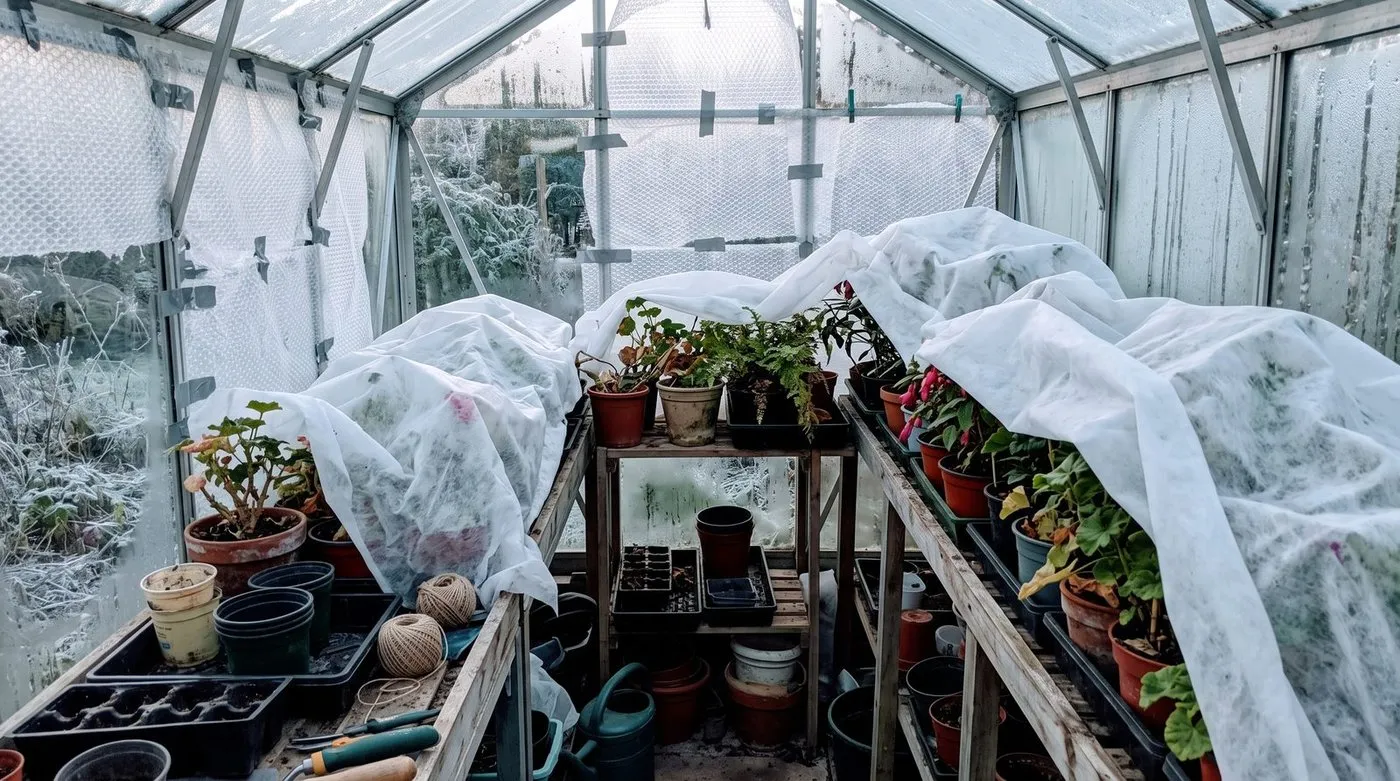
Bubble wrap on the glass and fleece over the plants keep overwintering crops snug.
You can shop the Palram Hybrid 6x8 at Greenhouse Stores if you’d like a polycarbonate greenhouse like this one.
November and December: rest and plan
November is for the last odd jobs, and December is for planning. Make sure all summer shading is off. Oil door and vent hinges. Check the heater and thermostat work before the first hard frost, and that rain drains away rather than pooling inside.
Pick the winter salads you sowed in September. Cut-and-come-again lettuce gives you several pickings from one sowing. Throw fleece over crops on the coldest nights.
December is for planning. Think about what worked and what didn’t, and order seeds and supplies for next year.
Don’t sow in December unless you have grow lights. The days are so short that seedlings grow weak and leggy.
Common greenhouse mistakes to avoid
Most greenhouse losses come from overheating, overwatering in winter, skipping the clean-up and sowing too early without heat.
Overheating in summer. A closed greenhouse heats up fast on a sunny June day, and plants can suffer above about 27C. Open vents in the morning and leave them open overnight in hot spells. Automatic openers are great insurance if you forget.
Overwatering in winter. Cold, wet compost kills roots. In winter, only water when the top 3cm of compost is dry. Most greenhouse plants need water once a week at most from November to February.
Skipping the autumn clean. Pests and diseases hide over winter in cracks and old plant bits. A good October clean breaks the cycle. Our greenhouse pest control guide covers prevention and natural controls. For red spider mite, see our spider mite control guide.
Sowing too early without heat. An unheated greenhouse in February is barely warmer than outside at night, and seeds can rot in cold compost. Either use heat or wait until March.
Forgetting fresh air. Stale, damp air breeds disease. Even in winter, open the door for an hour on dry, mild days.
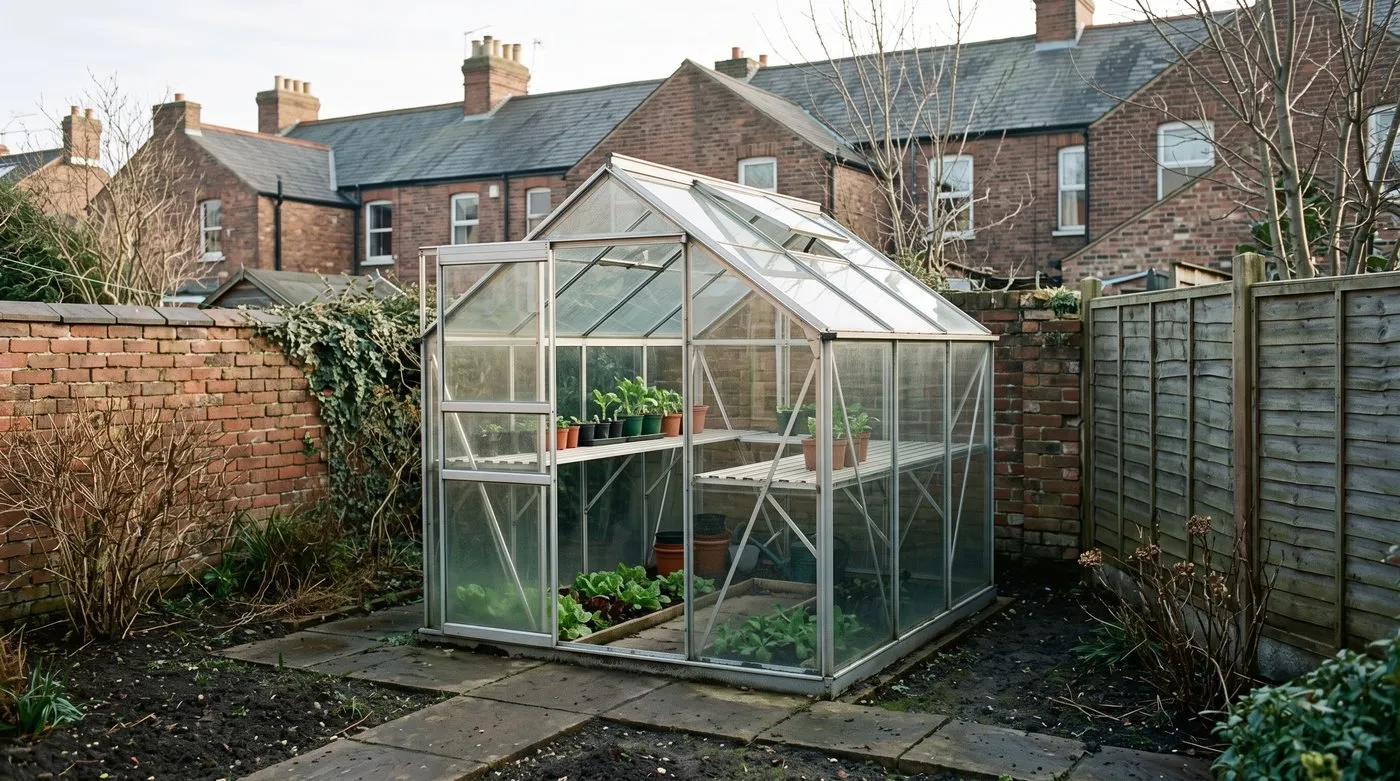
Stale, damp air breeds disease, even in winter. Open the door for an hour on dry, mild days, and only water when the top 3cm of compost is dry.
Essential greenhouse equipment
Three bits of kit make the biggest difference all year round.
| Kit | What it does |
|---|---|
| Eden 2kW Heater | Keeps the frost out and gives early-season warmth |
| Palram Auto Vent Opener | Opens the vent when it gets warm |
| Vitavia 2-Tier Staging | Gives you a second level for seed trays |
A heater lets you sow and plant earlier. An auto vent looks after things when you’re out. Staging turns empty space into growing space.
Gardener’s tip: A cheap max-min thermometer at bench height is one of the best buys you’ll make. Check the overnight low each morning to see whether your heating is doing its job and your tender crops are safe.
Now you’ve got the calendar sorted, read our guide on greenhouse heating to keep things going through winter.
Frequently asked questions
What can I grow in a greenhouse in winter UK?
Winter salads, spinach and overwintering broad beans all do well. In a frost-free greenhouse, October sowings of lettuce, rocket, pak choi and spring onions keep you in fresh leaves. Clean the glass in October to let in as much light as possible.
When should I start sowing in a greenhouse UK?
Start in January with slow growers like chillies and aubergines. Most sowing happens in February and March, as the light improves. A heated propagator at 18-21C gets tomatoes, peppers and cucumbers going. Without heat, wait until mid-March.
Do I need to heat my greenhouse in winter?
Not for every crop. Hardy salads cope without heat. For tender plants or early sowings, a small electric heater keeps the greenhouse above 5C. Lining the glass with bubble wrap first helps cut the running costs.
How do I stop my greenhouse overheating in summer?
Open the roof vents and door from mid-morning. Automatic vent openers do this for you without electricity. Add shading paint or netting before the first hot spell, and splash water on the floor on hot afternoons to cool the air.
What is the best greenhouse temperature for growing?
Most crops are happiest at 18-25C during the day. Tomatoes and peppers like nights above 12C. Above about 27C plants can suffer, and below 5C tender crops get damaged. A max-min thermometer shows you what’s going on.
Can I grow tomatoes in an unheated greenhouse UK?
Yes, they grow well in an unheated greenhouse. Plant them in late April in the south or May further north, once frosts have passed. They usually crop from July to September. With heat, you can plant earlier and pick into October.
Our team produces practical UK gardening guidance from source research, contributor records and established horticultural practice. Editorial standards are overseen by Matt W.