Key takeaways
- Tough foliage houseplants such as Monstera, spider plants and aspidistra enjoy a summer outdoors
- Put them out once nights stay above about 10-12°C, usually in June
- Ease them in over one to two weeks, starting in full shade
- Keep most in dappled shade, as direct midday sun scorches indoor leaves
- Bring them back in during September, checking every pot for slugs and pests first
Many houseplants love a summer holiday outdoors. Brighter light, fresh air and rain often bring a flush of new growth you’d never see on a windowsill. The catch is that outdoor light is much stronger than indoor light. Move a plant straight into the sun and its leaves can scorch within days.
The answer is to ease them in slowly and keep most in dappled shade. This guide covers which houseplants enjoy going outside, when to move them, where to put them, and how to bring them back in without bringing pests too. It’s a little like hardening off bedding plants, only gentler.
Which houseplants enjoy a summer outdoors?
Tough foliage plants gain the most. These are good candidates:
- Monstera, spider plants and aspidistra
- Many palms, such as kentia and parlour palms
- Ferns, kept in shade
- Cacti and succulents, in a brighter spot once eased in
- Citrus and clivia, which often flower better after a summer outside
A few are best kept in or treated with care. Fussy, humidity-loving plants such as calatheas need deep, sheltered shade if they go out at all. Leave delicate plants, very small pots and anything newly bought indoors until they’ve settled. The guide to growing Monstera has more on that favourite.

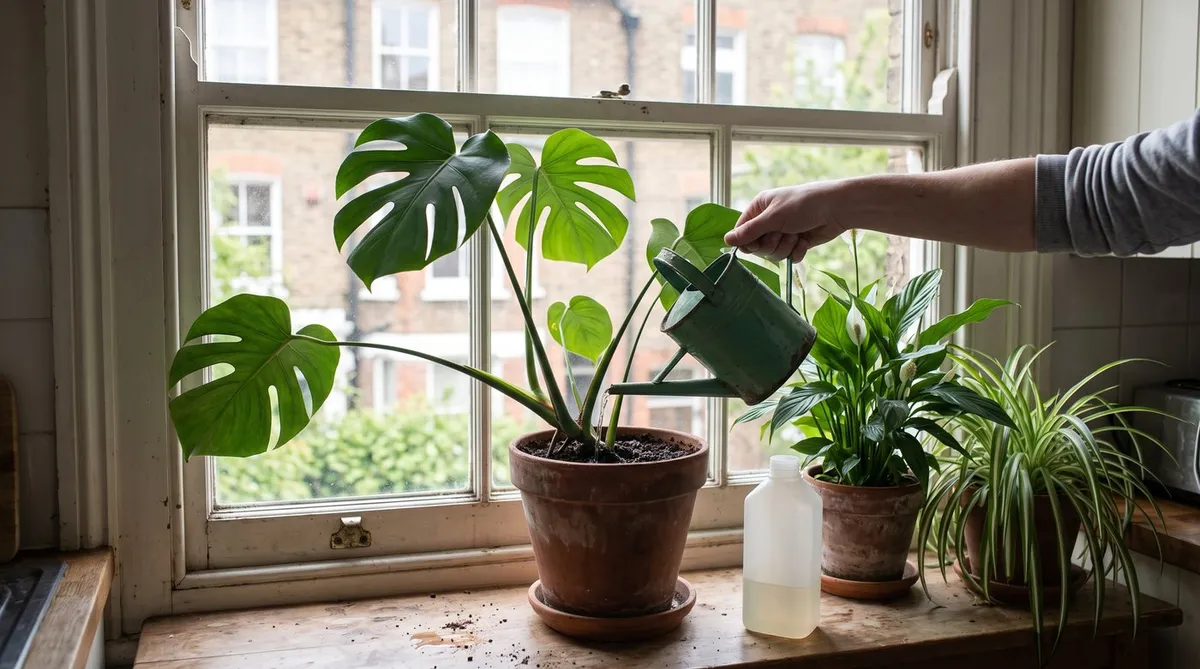
Monstera, spider plants and ferns are some of the easiest houseplants to take outside for the summer.
When to put houseplants outside
Wait until nights stay above about 10-12°C. In most of the UK that’s June, though it can be late May in a warm spell in the south and later in the north.
Cold nights are the main risk. Most houseplants come from warm places, and a chilly night can damage leaves even without a frost. Check the forecast before you start, and keep an eye out for any cold snaps in early summer.
How to harden off houseplants
Ease them in over one to two weeks, starting in full shade. This lets the leaves get used to brighter light and moving air.
- Days 1-3: put plants in full shade, out of the wind, for a few hours. Bring them back in at night.
- Days 4-7: leave them out for most of the day, still in shade.
- Week two: leave them out day and night if nights are mild. Move them a little closer to their summer spot.
- Final spot: for most houseplants, that’s dappled shade.
Don’t rush it. Bleached, burnt leaves almost always come from moving a plant into too much light too quickly.

A shady corner by a wall is the perfect first stop. Leave plants here for a week or so before giving them more light.
Gardener’s tip: If a leaf feels warm to the touch in the sun, the plant is getting too much light. Move it somewhere shadier.
Where to put houseplants outside
Most houseplants are happiest in dappled or light shade outdoors, even those that like a sunny windowsill indoors. Direct midday sun is too strong for indoor leaves.
| Spot | Light | Good for |
|---|---|---|
| Under a tree or in deep shade | Low | Ferns, calatheas, aspidistra |
| By a north or east-facing wall | Bright shade, gentle morning sun | Monstera, palms, spider plants |
| Dappled shade on a patio | Medium | Most foliage houseplants |
| Sheltered, with some sun | Medium to high | Citrus, clivia |
| Open, sunny spot | High | Cacti and succulents, once eased in |
When in doubt, go shadier. A plant in too little light just grows slowly. One in too much light scorches. Choose a spot out of the wind, as large leaves tear and tall plants blow over. Stand big pots against a wall, or group plants so they shelter each other.

Pale, bleached patches and crisp brown edges mean too much sun too soon. Move the plant into deeper shade straight away.
Watering and feeding houseplants outdoors
Outdoors, pots dry out faster. Wind and warmth suck moisture from compost. Check pots every day or two in warm weather, and water when the top of the compost feels dry.
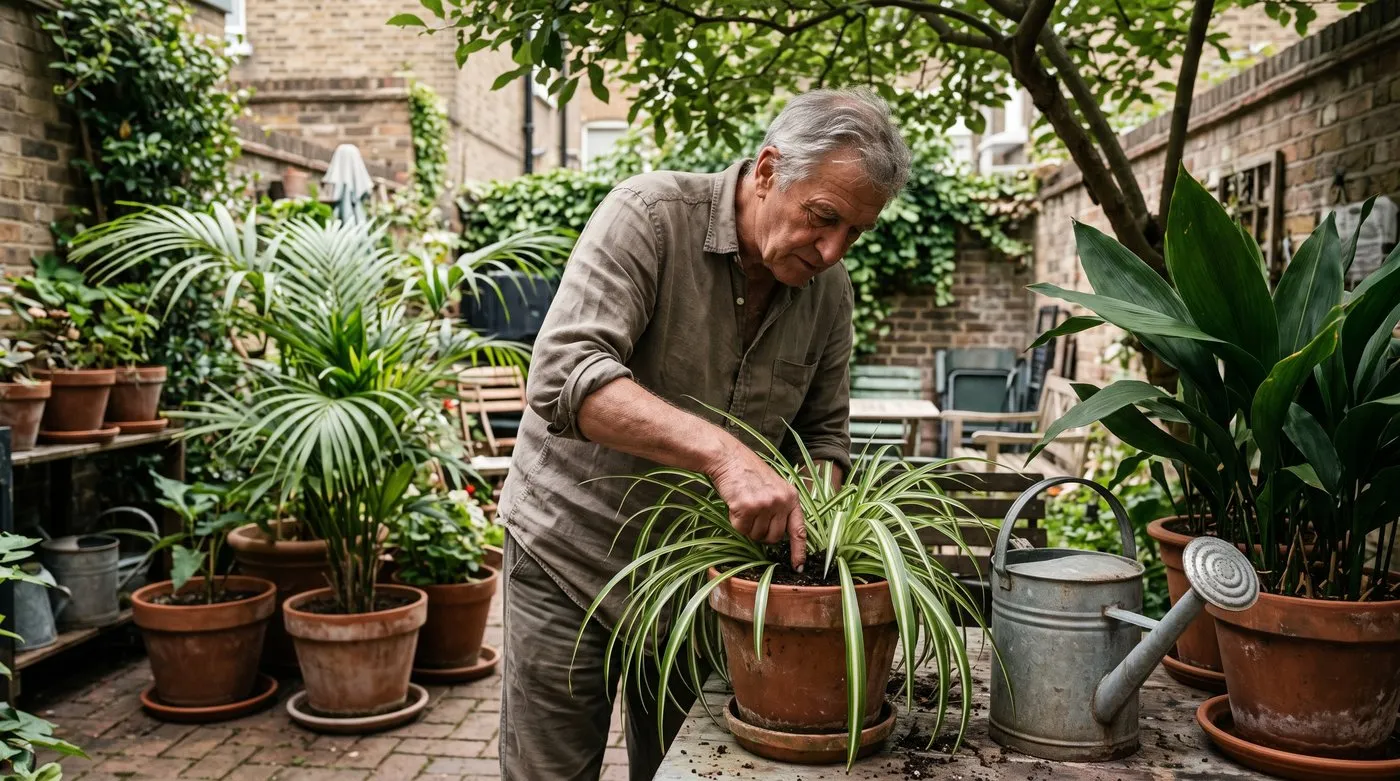
Pots dry out much faster outside. A quick finger in the compost tells you if it’s time to water.
Rain helps, but plants under a tree, a table or the eaves can stay dry even after a downpour. Make sure pots have drainage holes. Plants in cachepots without holes can drown after heavy rain, so tip out any water that collects.
With more light, plants grow faster and use more food. A regular liquid feed through summer keeps them going. The guide to feeding houseplants explains how much and how often. If you’re away, the guide to holiday watering solutions has ways to keep pots damp.
Pests to watch for outside
Outdoors, houseplants meet pests they never see indoors. Slugs and snails chew soft leaves and hide under pots. Aphids gather on new shoots. Ants sometimes nest in dry pots.
Check plants every few days and pick off slugs, snails and aphids by hand. Raising pots on feet makes it harder for slugs to hide underneath. The guide to container pest protection covers the common patio pests and how to keep them off.
Bringing houseplants back inside
Bring houseplants in during September, before nights turn cold. Tender plants such as calatheas come in first, and tougher ones can stay out a little longer if the weather stays mild.
Check every plant before it comes in. One pest-ridden plant can spread problems to the rest of your collection.
- Look under leaves for aphids and other pests
- Lift the pot and check underneath for slugs and snails
- Tip out saucers and cachepots
- Wipe or gently hose down the leaves
- Look for ants in the compost and repot if you find a nest
Expect a short sulk once they’re back indoors. Some plants drop a leaf or two while they adjust to the lower light. Potted bougainvillea and citrus follow the same rhythm: summer outside, winter under cover.

Bring plants back in during September, before cold nights. Check under the leaves and the pot for stowaways first.
Common mistakes with houseplants outdoors
- Moving them out too early. Cold nights damage tropical leaves. Wait until nights stay mild.
- Putting them straight into sun. Leaves scorch within days. Start in full shade.
- Forgetting to water. Pots dry out much faster outside. Check them often.
- Pots without drainage. Heavy rain can drown roots. Tip out standing water.
- Bringing pests back in. Check every plant, pot and saucer before it comes inside.
Houseplants outdoors through the year
| Month | What to do |
|---|---|
| May | Check plants are healthy. Pot on any that are root-bound |
| June | Start hardening off once nights stay mild |
| July | Water often and feed regularly. Check for pests |
| August | Keep up watering. Watch for scorch in hot spells |
| September | Check for pests and bring plants back inside |
| October | Settle plants back indoors in good light |
For more indoor plant ideas, browse the houseplants hub. Now your plants are ready for their summer outdoors, read the guide to repotting houseplants to give any that have outgrown their pots a fresh start.
Frequently asked questions
Can you put houseplants outside in summer?
Yes, many foliage houseplants enjoy a summer outdoors. Wait until nights stay above about 10-12°C, usually June. Ease them in gradually, starting in full shade, and keep most in dappled shade. Many reward you with a flush of new growth.
How do you harden off houseplants?
Move them outside gradually over one to two weeks. Start in full shade for a few hours a day, bringing them in at night. Then leave them out longer, and move them into a little more light, a bit at a time.
Which houseplants like being outdoors?
Tough foliage plants like Monstera, spider plants and aspidistra do well. Many palms and ferns enjoy shade outside too. Cacti, succulents and citrus like a brighter spot once eased in. Leave delicate or newly bought plants indoors.
Will my houseplants get sunburn outside?
Yes, if they go into strong sun too quickly. Outdoor light is far brighter than indoors, so leaves can bleach or brown within days. Start in full shade and add light slowly. Most houseplants are happiest in dappled shade outside.
When should I bring houseplants back inside?
In September, before nights turn cold. Bring tender plants in first. Check each one for slugs, snails, aphids and ants, tip out the saucers and wipe the leaves before they come in.
Should I leave houseplants out in the rain?
Yes, a summer shower does them good. Just make sure the pots have drainage holes and aren’t sitting in water afterwards. Move plants in cachepots without holes, or tip out the water after heavy rain.
Our team produces practical UK gardening guidance from source research, contributor records and established horticultural practice. Editorial standards are overseen by Matt W.