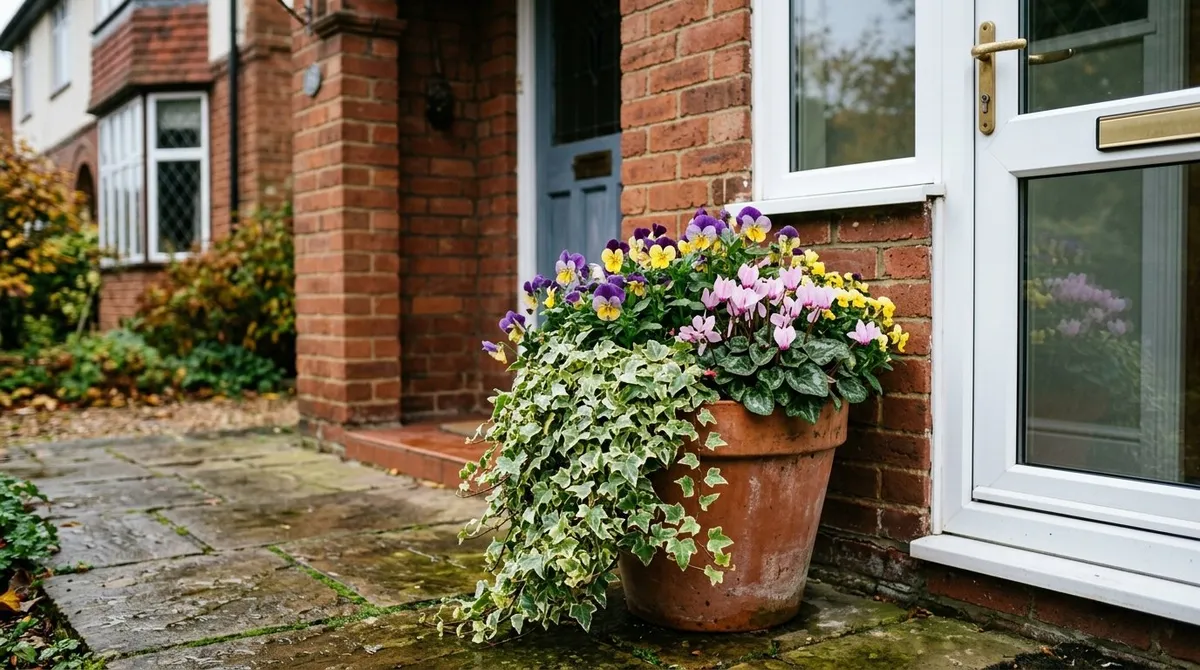
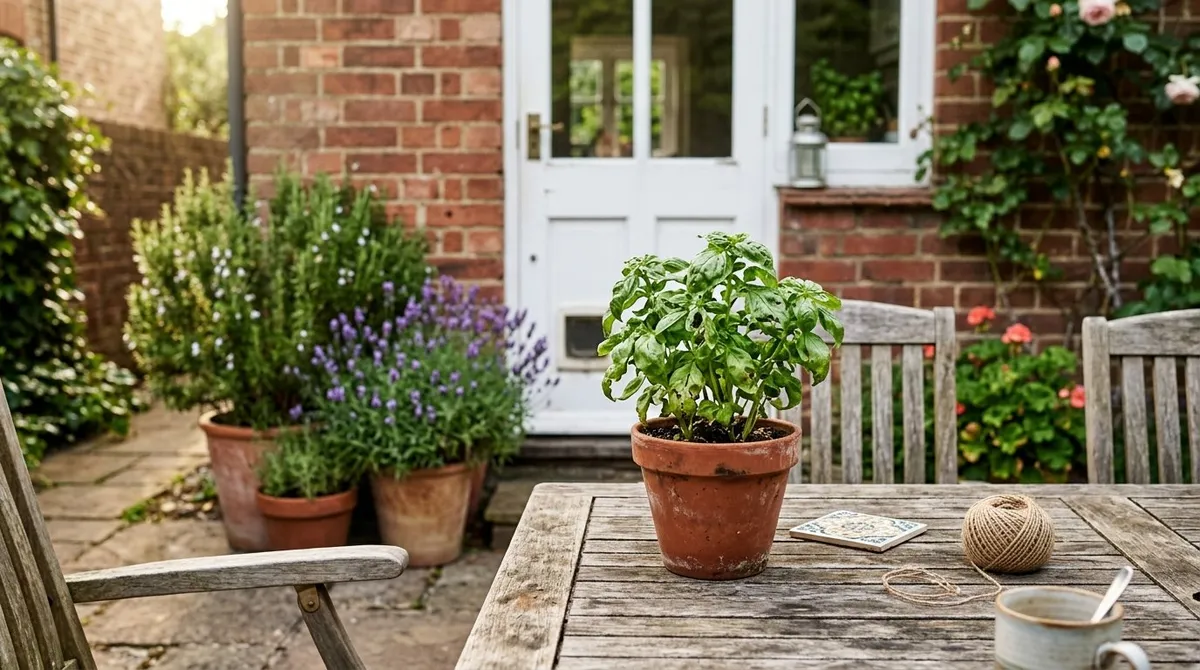
Key takeaways
- Box, skimmia, euonymus and heuchera give pots shape all year
- Layer bulbs in autumn: tulips deepest, daffodils in the middle, crocus on top
- Pelargoniums, petunias and trailing lobelia fill summer pots from June to October
- Winter heathers, hellebores and violas flower through the coldest months
- Small pots freeze solid in winter, so use pots at least 40cm wide for permanent plants
- Raise pots on feet in winter so they don't sit in water
A pot that looks good all year starts with one tough evergreen, then gets fresh seasonal plants tucked around it. Here’s what to grow in each season, and how to keep your pots happy through a British winter.
What are the best evergreen plants for pots year-round?
Evergreens are the backbone of a year-round pot. They give shape and greenery when seasonal plants have finished. Without them, pots look bare from November to March.
Box (Buxus sempervirens) is a classic permanent pot plant. You can clip it into balls, cones or spirals, and it’s fully hardy. A box ball only needs clipping twice a year, in June and September. Box blight is a real problem, so buy healthy UK-grown plants, water at the base rather than over the leaves, and clear up fallen leaves. If blight is common near you, choose a different evergreen.
Skimmia japonica ‘Rubella’ has evergreen leaves, red buds from November to March and white flowers in April. It’s happy in part shade. For more shrubs that keep their shape all year, see our guide to evergreen shrubs for year-round interest.
Euonymus fortunei ‘Emerald Gaiety’ has white and green leaves that blush pink in frosty weather. It stays compact and is happy in a pot just 30cm wide.
What spring bulbs grow best in pots?
Spring bulbs turn sleepy winter pots into bursts of colour from late February to May. With the lasagne method, you layer different bulbs at different depths in the same pot for weeks of flowers.
Plant in October or November. Use a pot at least 30cm wide and 30cm deep with drainage holes. Layer the bulbs like this:
- Bottom layer (15cm deep): tulips such as ‘Apeldoorn’ (red) or ‘Queen of Night’ (dark purple)
- Middle layer (10cm deep): daffodils such as ‘Tete-a-Tete’ (dwarf yellow) or ‘Thalia’ (white)
- Top layer (5cm deep): Crocus ‘Remembrance’ (purple) and grape hyacinths (blue)
Cover with 5cm of compost, water once and leave the pot outside. The cold helps the roots grow. Expect crocus in late February, daffodils in March and tulips in April. It even works in a 25cm pot, though 30cm gives a fuller show.
 Layered spring bulbs in doorstep pots. Plant tulips deepest and crocus on top.
Tuck primroses and violas in between the bulbs from February. Both shrug off frost and keep flowering until June. For more spring ideas, see our guide to the best spring flowers for UK gardens.
What are the best summer pot plants UK?
Summer is when pots really shine. Long, warm days from June to September suit bedding plants that flower non-stop.
Pelargoniums are the kings of summer pots. Zonal pelargoniums have big clusters of red, pink, salmon or white flowers from June until the first frost. They cope with drought, full sun and hot south-facing walls. Deadhead weekly to keep the flowers coming. They’re tender, so bring them in before the frosts.
Petunias tumble from tall planters and window boxes. Surfinia types trail a long way and flower all summer without deadheading. Give them full sun and a weekly high-potash liquid feed, such as tomato feed, diluted as the label says.
Trailing lobelia fills gaps between bigger plants with a haze of blue, purple or white. Sow it indoors in March or buy plug plants in May. It hates drying out, so water often.
 Pelargoniums and trailing lobelia in terracotta pots on a sunny patio.
Herbs deserve a place in summer pots too. Rosemary, thyme and sage are evergreen, so they keep a pot looking good all year. Our guide on how to grow herbs in the UK covers the best ones for pots. Agapanthus ‘Blue Storm’ is another great pot plant, with striking blue flower heads in July and August. It’s happy in a 40cm pot and flowers best when its roots are a bit cramped.
What plants look good in pots in autumn?
Autumn pots bridge the gap between summer bedding and winter. Mix plants with colourful leaves with a few late flowers.
Heuchera is the autumn star. Varieties like ‘Palace Purple’ (deep burgundy), ‘Caramel’ (amber-orange) and ‘Lime Marmalade’ (zingy lime) give bright leaves from September right through winter. They’re fully hardy and evergreen, so they can stay in the pot for good.
Cyclamen hederifolium is the hardy outdoor cyclamen that flowers from September to November. Pink or white flowers appear before the marbled leaves. Plant the corms just below the surface in part shade. Don’t mix it up with the florist’s cyclamen sold in supermarkets, which is tender and won’t survive frost.
Ornamental grasses add movement and texture. Carex ‘Evergold’ has gold-striped leaves all year. Stipa tenuissima has feathery seed heads that catch the low autumn light. Both stay compact in pots.
 Bronze grasses, deep red heuchera and pink cyclamen make a rich autumn pot.
What flowers survive winter in pots UK?
Winter is when most people struggle for pot colour. But several fully hardy plants flower reliably in UK pots from November to March, even in exposed spots.
Winter heather (Erica carnea) flowers from December to April. ‘Springwood White’ and ‘Myretoun Ruby’ (deep pink) are tough as old boots. Unlike most heathers, it doesn’t need ericaceous compost. Give it full sun and plant 3-5 in a 40cm pot for a full look. For more ideas, see our guide to winter flowering plants.
Hellebores are the queens of the winter garden. Helleborus x hybridus flowers from January to March in white, pink, plum and green. They like part shade and rich, moist compost, and a good plant lasts for years.
Skimmia japonica ‘Rubella’ carries clusters of deep red buds from October through winter, opening to scented white flowers in spring. It’s a male plant, so it won’t have berries itself, but it helps nearby female skimmias produce red berries. It likes shade.
Violas and winter pansies are cheap and cheerful colour from October to April, and they shrug off frost. Deadhead them regularly and give a half-strength liquid feed in February to keep them going into spring. If you live somewhere dry and want plants that need less watering, our drought-tolerant plants guide covers the toughest options.
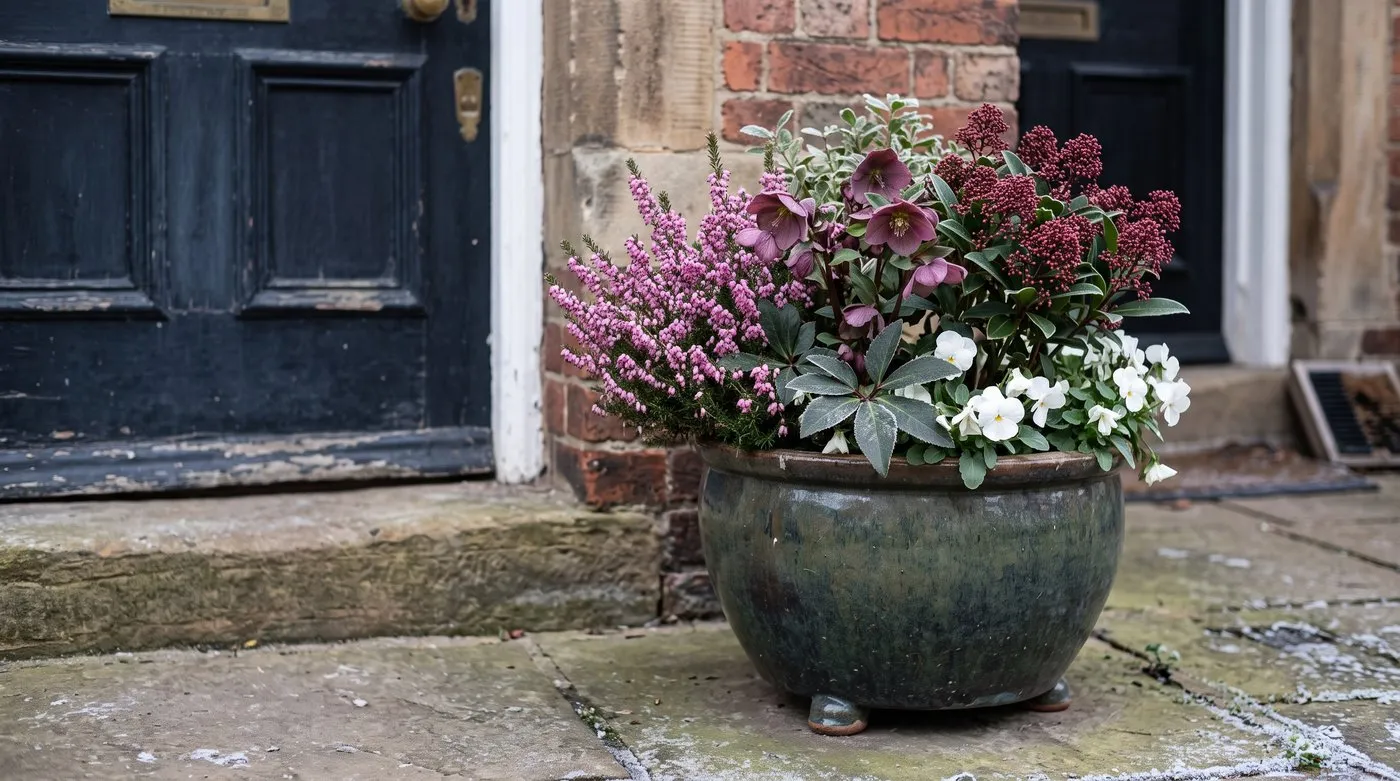
Heather, hellebores, skimmia and violas all flower through frost. Pot feet stop the compost sitting in winter wet.
Best plants for pots by season
| Season | Top 3 plants | Hardy? | Flowers | Pot size |
|---|---|---|---|---|
| Spring | Tulips, daffodils, crocus | Yes | February to May | 30cm+ |
| Summer | Pelargoniums, petunias, lobelia | No, bring in or replace | June to October | 30cm+ |
| Autumn | Heuchera, cyclamen, grasses | Yes | September to December | 25cm+ |
| Winter | Heathers, hellebores, skimmia | Yes | November to April | 40cm+ |
| All year | Box, euonymus, ivy | Yes | Leaves all year | 40cm+ |
How do you keep pots looking good all year?
January to February: check winter pots aren’t waterlogged, and tilt them slightly if water sits on top. Give hellebores a handful of general fertiliser. Move tender plants indoors if a late cold snap is forecast.
March to April: scrape off the top few centimetres of compost in permanent pots and replace it with fresh John Innes No. 3 mixed with some slow-release fertiliser. Take out winter pansies as they fade. Plant primroses and violas.
May to June: plant summer bedding after the last frost, usually mid-May in the Midlands and late May further north. Water daily in warm spells. Start a fortnightly tomato feed.
July to August: water twice a day in heatwaves. Deadhead pelargoniums and petunias weekly and feed weekly with a high-potash feed. Tip out a pot and check the compost for vine weevil grubs, which are fat, cream, C-shaped grubs. If you find them, water on vine weevil nematodes (a natural control) following the pack.
September to October: clear out tired summer bedding. Plant spring bulbs in layers. Add cyclamen and heuchera for autumn colour. Bring pelargoniums and other tender plants in before the first frost.
November to December: raise pots on pot feet. Wrap thin pots in horticultural bubble wrap. Stop feeding, and only water pots that rain can’t reach.
Choosing the right pot size and material
The pot matters as much as the plant. The wrong material cracks in frost, and a pot that’s too small freezes solid.
Pot size: at least 40cm wide for permanent shrubs and perennials, and 30cm for bulbs and bedding. Smaller pots give roots little protection from frost and dry out fast in summer.
Which material?
| Material | Copes with frost | Weight | Keeps roots snug | Lasts |
|---|---|---|---|---|
| Terracotta (frost-proof) | Yes, if labelled frost-proof | Heavy | Well | Many years |
| Glazed ceramic | Yes | Heavy | Well | Many years |
| Fibreclay | Very well | Light | Fairly well | Many years |
| Plastic | Very well | Very light | Poorly | A few years |
| Stone | Very well | Very heavy | Very well | Decades |
Drainage is a must. Every pot needs drainage holes. Cover them with crocks (bits of broken pot) or mesh so the compost doesn’t wash out. Raise pots on feet so water can escape. Sitting in water over winter kills more pot plants than frost does.
For more design ideas, the RHS container gardening guide has lovely seasonal planting combinations.
Frequently asked questions
What plants stay alive in pots all year UK?
Fully hardy evergreen shrubs survive in pots all year in most of the UK. Box, skimmia, euonymus and dwarf conifers are all good choices. Use pots at least 40cm wide so the roots are protected from frost. Add crocks for drainage and raise pots on feet so they don’t get waterlogged.
Can you leave pots outside in winter UK?
Yes, as long as the pots and plants can take frost. Ordinary terracotta can crack in a hard frost, so look for pots labelled frost-proof. Glazed and fibreclay pots cope better. Move pots against a sheltered wall and wrap thin pots in bubble wrap from November to March.
What is the best compost for year-round pots?
John Innes No. 3 is the best compost for permanent outdoor pots. It’s loam-based, so it holds on to food and keeps its structure for a few years. Mix in some perlite for extra drainage, and top it up each spring.
How often should you water pots in winter?
Most outdoor pots need little or no watering from November to February. The rain usually does the job, and too much water in winter kills more pot plants than cold does. Check pots under eaves or against walls that rain can’t reach. Water those if the compost feels dry 5cm down.
What spring bulbs work best in pots?
Tulips, daffodils, crocus and muscari all do really well in pots. Plant them in layers: tulips 15cm deep, daffodils 10cm and crocus and muscari 5cm. This lasagne method gives you weeks of flowers from late February to April. Use pots at least 30cm wide with drainage holes.
Do pelargoniums come back every year in pots?
Yes, if you bring them in before the first frost. They’re tender and won’t survive a UK winter outside in most areas. Cut them back by half, keep them barely moist somewhere frost-free, and put them back out after the last frost in late May.
What trailing plants look good in pots year-round?
Variegated ivy trails over the edge of pots all year. For seasonal colour, add trailing lobelia in summer, ivy-leaved pelargoniums from June to October and trailing violas from autumn to spring. Creeping Jenny is fully hardy and trails nicely in part shade.
Our team produces practical UK gardening guidance from source research, contributor records and established horticultural practice. Editorial standards are overseen by Matt W.