Key takeaways
- Scented plants put off flies mainly when their leaves are brushed or crushed
- Put them where flies gather, by doorways, path edges and the table
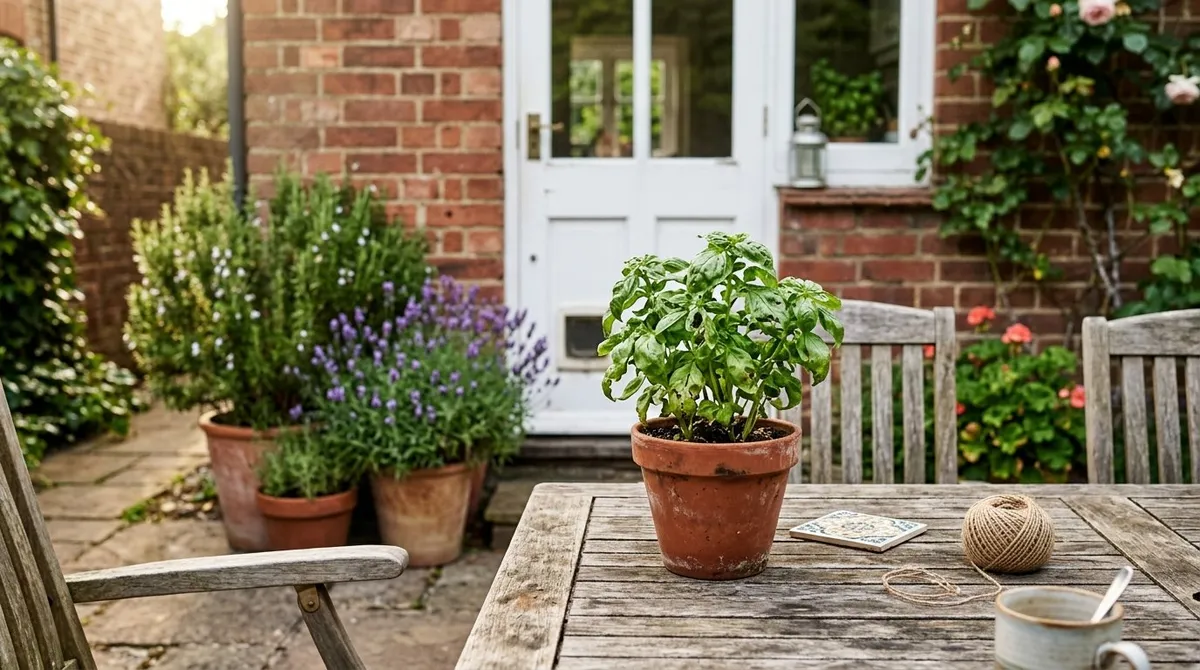
- Basil on the table and rosemary or bay by the back door are the best starting points
- Grow mint and lemon balm in pots, as both spread fast in open ground
- A lidded bin, covered food and a quick clear-up beat any plant
- Several fly-repelling plants aren't pet-safe, so check before you plant
Plants that repel flies work by scent, and they work best when their leaves are brushed or crushed. A pot of basil on the table, rosemary by the back door and lavender along the path can all help keep flies away from your food. Where you put them matters far more than how many you buy.
Plants are a helpful extra, not a force field. The biggest difference comes from keeping bins closed and food covered. This guide covers the 12 best plants, where to put them, a handy doorway pot, and the simple fixes that stop flies arriving in the first place. Bothered by biting insects at dusk rather than flies on food? See our guide to plants that repel mosquitoes.
Do plants really repel flies?
Yes, a little, mainly when you brush or crush the leaves. Flies find food by smell. Strong plant scents get in the way of that for a short time.
The scent sits inside the leaves. It escapes when you pinch, bruise or brush past the plant. That’s why rosemary by a busy back door works better than the same plant at the end of the garden. A table herb works because you crush a leaf during the meal.
So rather than dotting herbs everywhere, put your best-scented plants in the three places flies gather: doorways, path edges and the table.
The 12 best plants that repel flies
Basil, rosemary and mint are the easiest wins. The rest each suit a particular spot.
Basil is the best table plant. Pinch a leaf and it releases a strong, sweet scent. It’s tender, so grow it in a pot and bring it in before the first frost.
Lavender lines a sunny path beautifully and releases scent whenever a leg brushes past. Our guide to growing lavender covers the pruning that keeps it bushy.
Rosemary is the best doorway shrub. It’s evergreen and tough, and keeps releasing scent all year as people knock it.
Mint has a strong scent and does well in a doorway pot. Never plant it in open ground. Our guide to growing mint explains how to keep it in check.
Lemon balm has a fresh lemon scent. Like mint, it spreads hard, so keep it in a pot.
Bay makes a smart clipped shrub for a doorway pot and copes with constant brushing.
Tansy is an old cottage-garden fly plant for the back of a border near the bins. It spreads by its roots and is toxic if eaten, so site it with care.
French marigolds have pungent leaves and bright flowers. They suit the edge of a veg bed or a pot. See how to grow marigolds for sowing tips.
Lemon-scented pelargoniums, often sold as citronella plants, release a lemony scent when rubbed. Use them on the table or a doorway shelf, and bring them in for winter.
Catnip (Nepeta cataria) has a strong minty scent and suits a path edge. Expect visits from local cats.
Chives have an oniony smell and look neat edging a herb pot. Bees love the purple flowers in early summer.
Wormwood has silvery, very bitter-smelling leaves. Plant it near the bins, well away from where children play.
Warning: Lavender, catnip, chives, bay, tansy, wormwood and pelargoniums aren’t pet-safe if eaten. If you have a dog or cat that chews plants, stick to basil and rosemary near the seating.
Fly-repelling plants compared
| Plant | Best spot | Pot or ground | Hardy? |
|---|---|---|---|
| Basil | Table, doorway | Pot | No, summer only |
| Lavender | Sunny path edge | Either | Yes |
| Rosemary | Doorway, path edge | Either | Yes |
| Mint | Doorway | Pot only | Yes |
| Lemon balm | Brush-past spots | Pot only | Yes |
| Bay | Doorway | Either | Mostly, protect in hard frost |
| Tansy | Back of border, bins | Ground | Yes |
| French marigold | Veg bed and pot edges | Either | No, summer only |
| Lemon-scented pelargonium | Table, doorway shelf | Pot | No, bring in for winter |
| Catnip | Path edge | Either | Yes |
| Chives | Herb pot, bed edge | Either | Yes |
| Wormwood | Near bins | Ground | Yes |
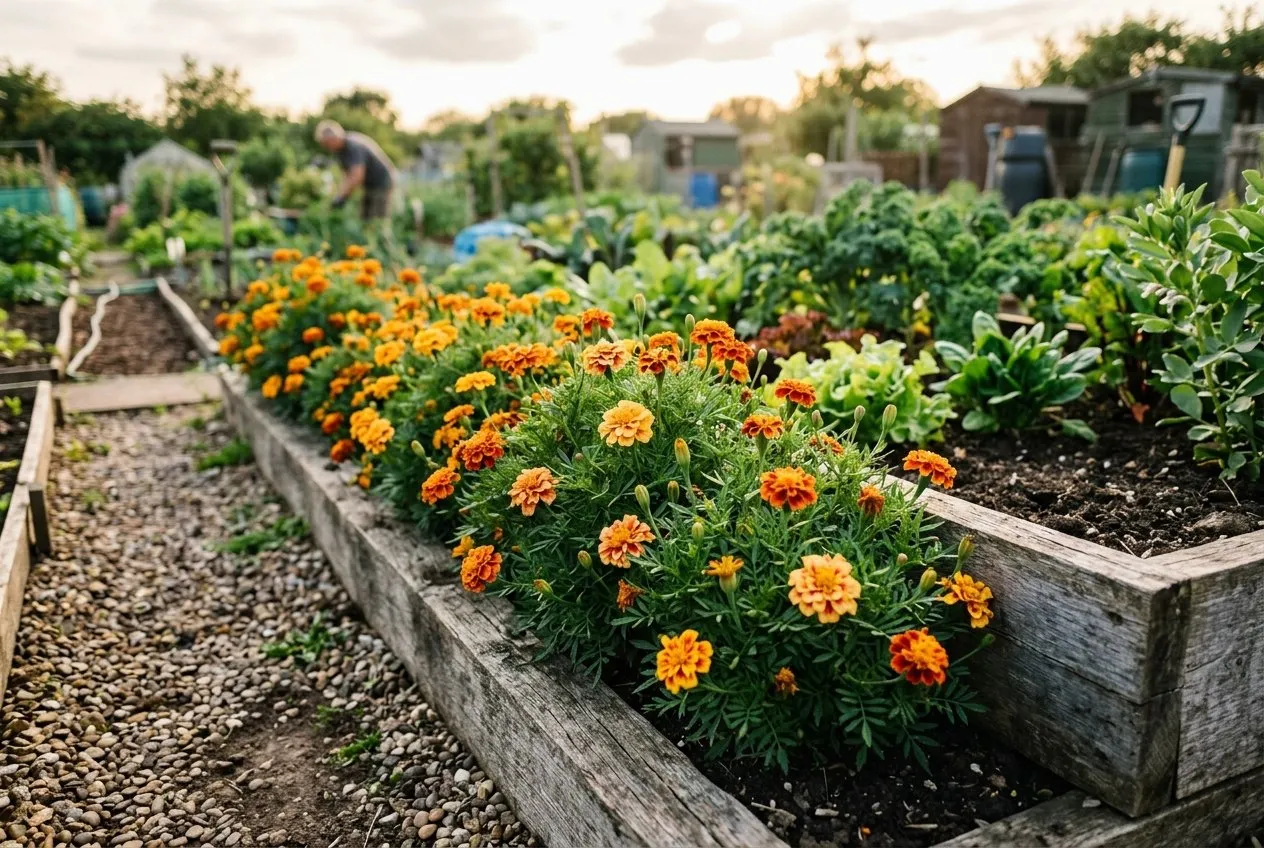
French marigolds make a cheerful edge to a veg bed, and their pungent leaves add to the scent barrier.
Where to put fly-repelling plants
Focus on the back door, the path and the table. That’s where flies gather, so that’s where the scent needs to be.
Start with the doorway. A pot of rosemary or bay on each side of the back door works because everyone brushes it going in and out. That releases scent right where flies try to follow you inside. Choose tough, evergreen plants that don’t mind being knocked.
Next, line paths with lavender or catnip, so legs brush the leaves as people walk past.
Then the table. Basil or a lemon-scented pelargonium earns its keep here. Keep it within arm’s reach and pinch a leaf every so often during the meal.
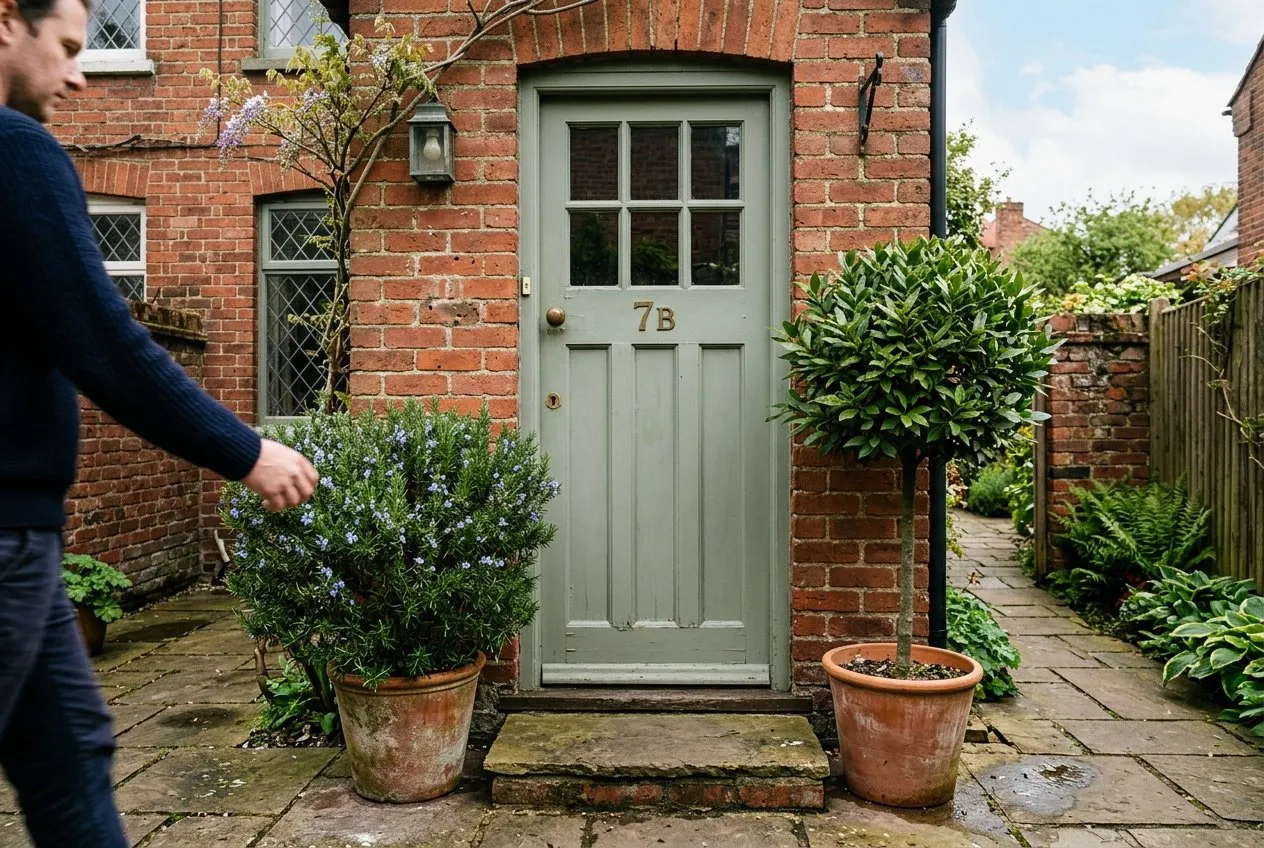
Rosemary and bay by the back door release scent every time someone brushes past.
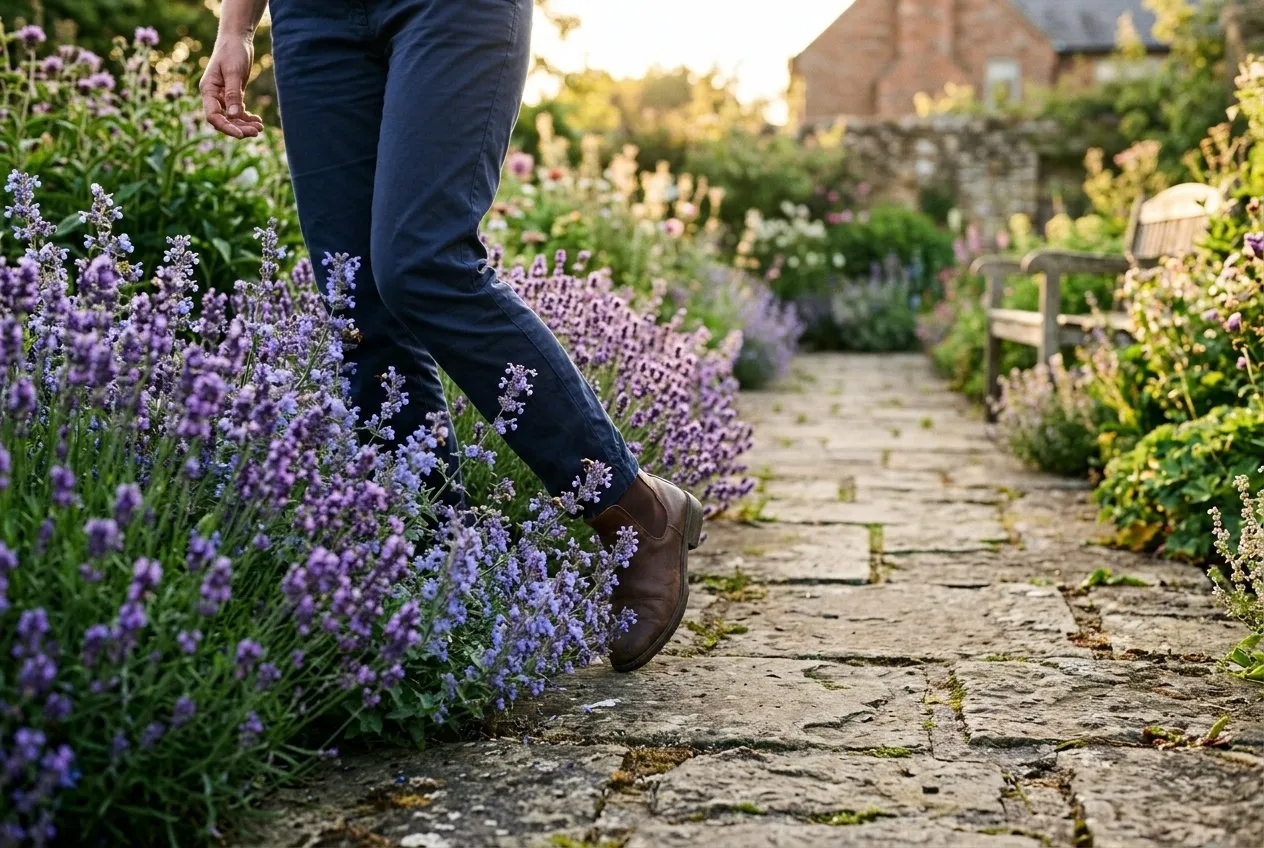
Lavender along a path gets brushed by every passing leg, which releases its scent.
A doorway pot that works
Plant rosemary, mint and basil together in one big pot by the back door. It looks good, smells great and puts the scent right where you need it.
- Choose a pot about 40-45cm across with drainage holes.
- Fill it with peat-free multipurpose compost mixed with some grit.
- Plant an upright rosemary in the middle for height and year-round structure.
- Add a mint at the front, where it can trail and be brushed. The pot keeps it from spreading.
- Tuck a basil in on the sunniest side for summer.
- Put the pot on the side of the door people naturally brush past.
Water it often in hot weather and pinch the mint and basil to keep them bushy. Replace the basil each spring. The rosemary and mint will carry on for years, though you may need to divide the mint every couple of years.
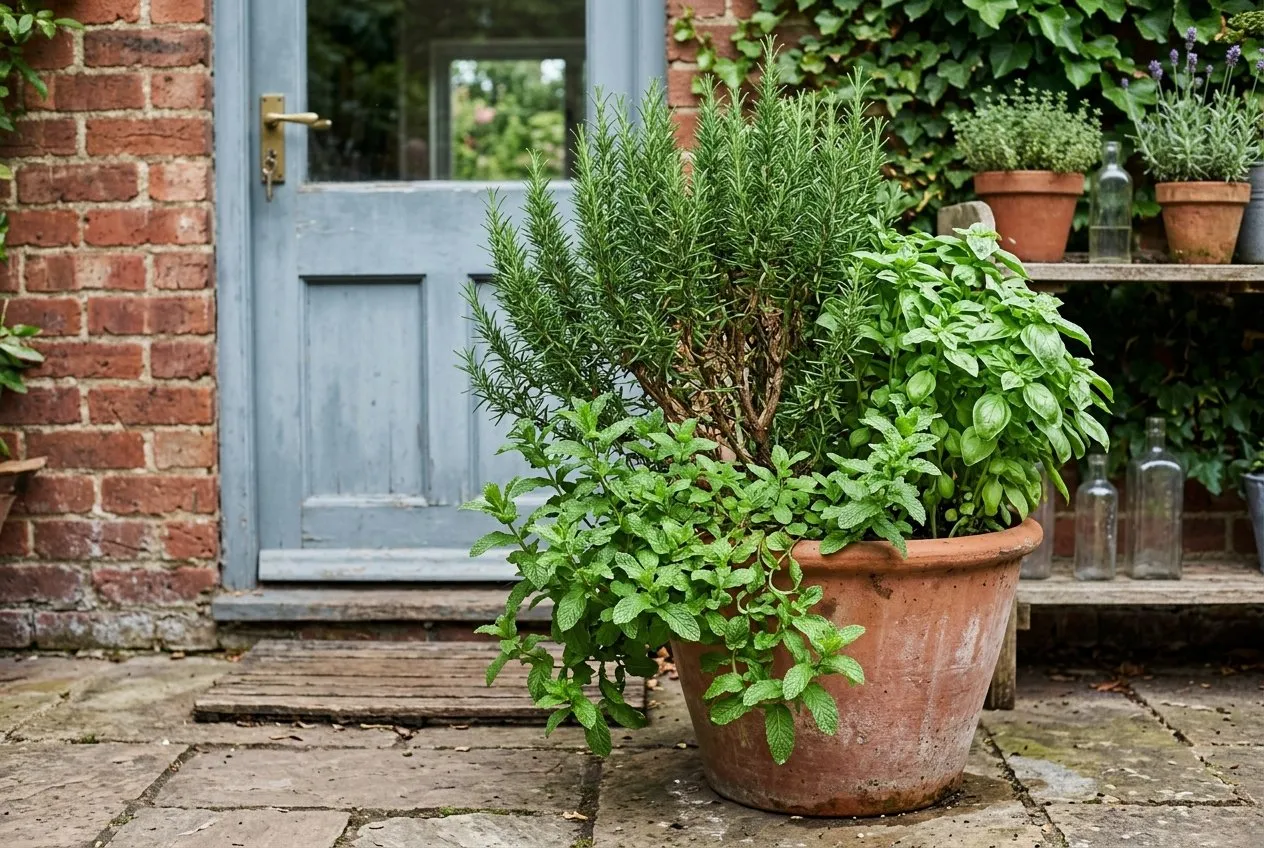
Rosemary for height, mint at the front and basil in the sunny spot: an easy pot for the back door.
Simple fixes that beat any plant
Take away what flies come for. Flies visit patios to feed and breed. Remove both and numbers drop, whatever you grow.
- Keep the bin lid shut. Bluebottles lay eggs on meat scraps very quickly. Rinse the bin now and then, and keep it away from the seating.
- Cover food and fruit. Use food covers between courses and clear plates soon after eating. Wipe up sticky spills.
- Clear pet mess daily. It’s a favourite breeding spot for flies.
- Keep drains and gullies clear. Rotting leaves and food in damp corners attract flies.
- Fit fly screens on doors and windows. They’re the best way to stop flies following you inside.
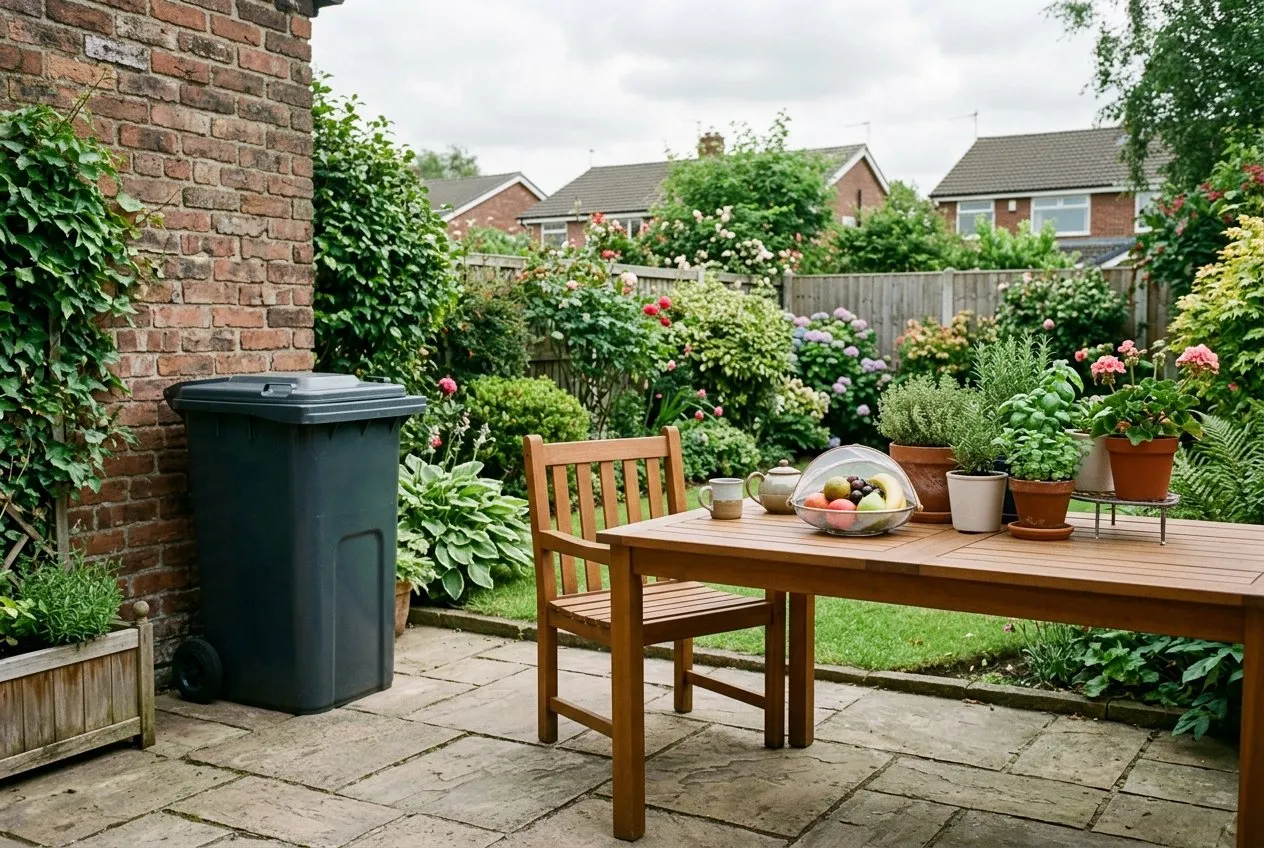
A lidded bin and a covered fruit bowl do more than any plant to keep flies away.
Fruit flies hovering round the kitchen bowl need a different approach, covered in our guide to fruit fly traps that work.
What doesn’t keep flies away
Ultrasonic repellers and carnivorous plants won’t help much on a patio. There’s little good evidence that ultrasonic gadgets put flies off, so save your money.
A Venus flytrap or pitcher plant catches the odd insect but makes no difference to the flies around your table. They’re fun to grow for their own sake. Tiny flies around houseplant pots are usually fungus gnats, which need a different fix. Our guide to getting rid of houseplant flies explains what to do.
Citronella candles and torches help only a little. Any breeze carries the smoke away, and it’s not pleasant to breathe while you eat.
Which flies are on your patio?
Most patio flies are house flies or bluebottles. Knowing which you have tells you where they’re breeding.
House flies are grey, medium-sized flies that land on food. They breed in rotting waste, compost, bins and manure. Table herbs like basil and mint are aimed at them.
Bluebottles and greenbottles are bigger, shiny blue or green flies. They’re drawn to meat, so a barbecue brings them fast. A shut bin matters most here.
Cluster flies are an autumn problem. They gather on sunny walls and creep into lofts and window frames for winter. Their larvae live in the lawn, feeding on earthworms. Plants won’t help with these, but sealing gaps around windows will.
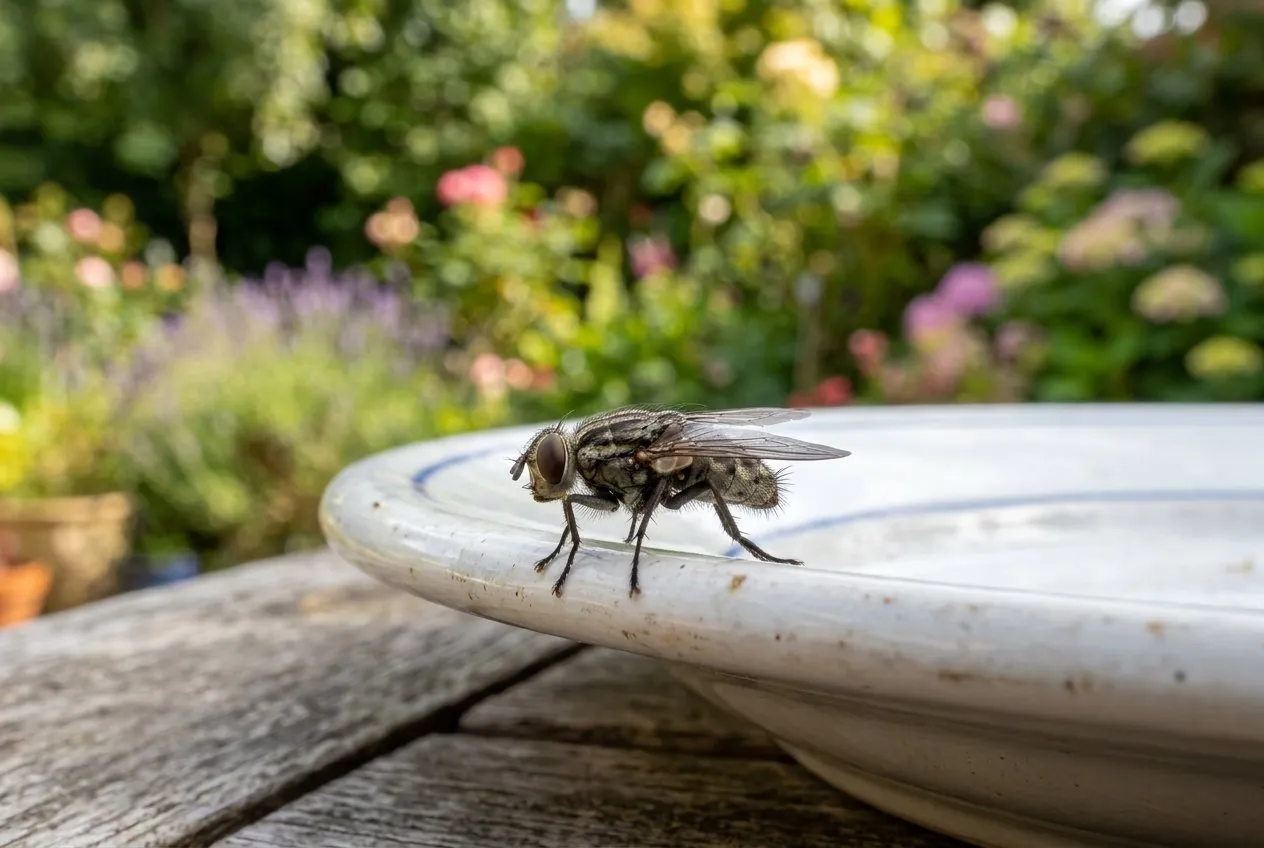
A house fly on a plate. These grey flies follow food smells straight to the table.
Hoverflies are friends, not pests. They hover over flowers and look like small wasps, and their larvae eat aphids. Our hoverfly guide shows how to tell them apart. The Wildlife Trusts’ page on the marmalade hoverfly has good pictures of a common one.
Month-by-month fly-repelling calendar
| Month | What to do |
|---|---|
| March | Pot up rosemary, bay and mint. Prune lavender lightly as new growth starts |
| April | Sow basil and French marigolds indoors. Plant catnip and chives |
| May | Plant out marigolds and move basil outside once frosts have passed |
| June | Put the table and doorway pots in place. Pinch herbs to keep them bushy |
| July | Peak fly season. Keep bins shut and food covered. Water pots often |
| August | Keep pinching basil and mint. Trim lavender after flowering |
| September | Seal gaps round windows before cluster flies arrive |
| October | Bring basil and pelargoniums indoors before the first frost |
Common mistakes with fly-repelling plants
- Leaving the plants untouched. The scent lives in the leaves. If nothing brushes them, little scent escapes.
- Planting mint and lemon balm in the ground. Both spread fast and pop up for years. Keep them in pots.
- Relying on plants instead of hygiene. If the bin’s open and food is out, no amount of basil will help.
- Putting the scent in the wrong place. A lavender hedge at the far end of the garden won’t help at the table.
- Forgetting about pets. Several of these plants aren’t pet-safe. Check before you plant where dogs and cats roam.
Caring for your fly-repelling plants
Healthy, leafy plants give off more scent. Most of these herbs want sun, free-draining compost and regular pinching.
Water basil, mint, lemon balm and marigolds often in summer, as pots dry out quickly. A liquid feed every couple of weeks keeps them leafy. Pinch out the tips to stop them getting leggy, and take off basil and mint flowers to keep the leaves coming.
Bring basil and pelargoniums indoors before the first frost. Pelargoniums overwinter on a cool, bright windowsill. Basil is usually grown fresh each spring. The hardy herbs stay outside all year and need only a light trim in spring. For more ideas, browse our plants section.
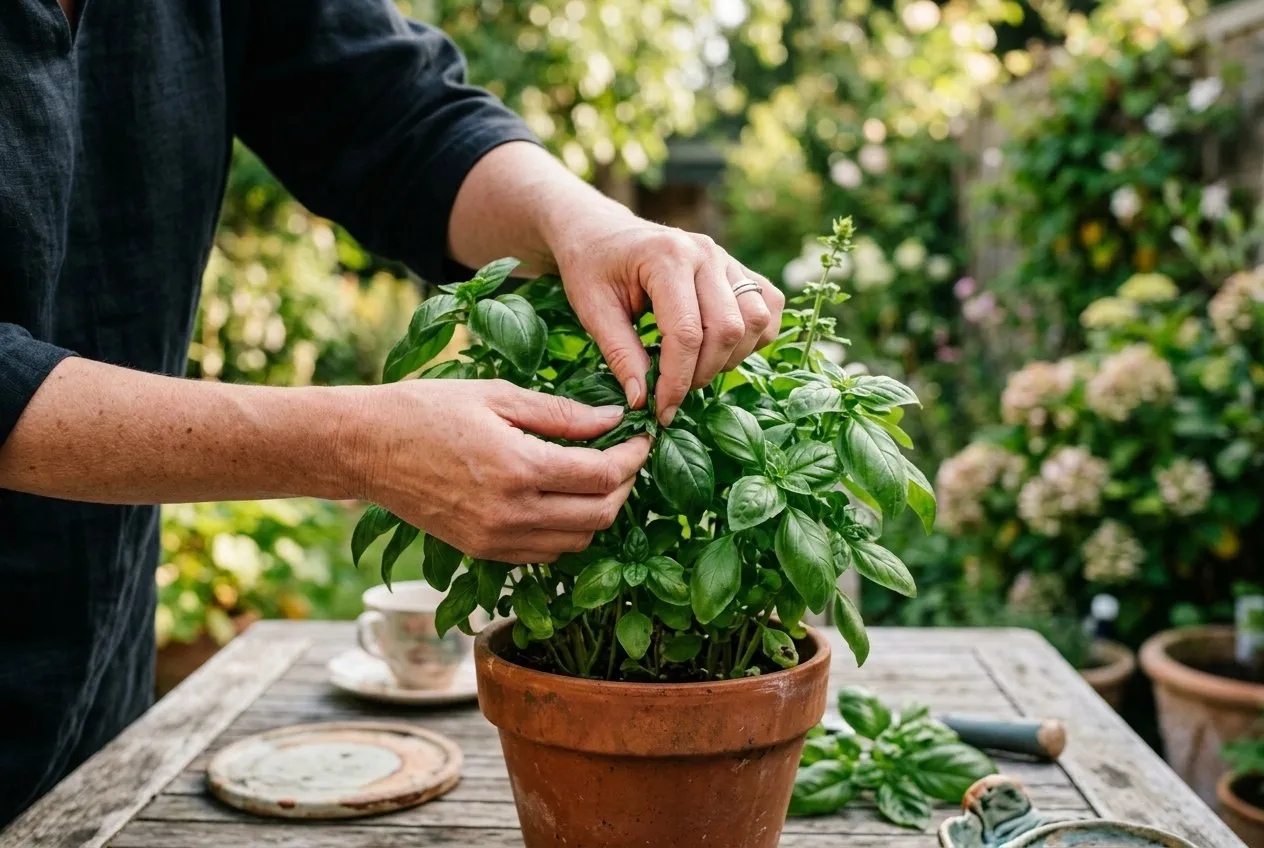
Pinching basil at the table releases its scent and keeps the plant bushy.
Now you’ve got the plants placed, read our guide to growing basil to keep a fresh pot going all summer.
Frequently asked questions
Do plants really repel flies?
A little, and mostly when you brush or crush their leaves. That releases the scent that puts flies off. A pot left untouched does far less. Put plants where people brush past them, and pinch table herbs during the meal.
What is the best plant to keep flies away from a patio?
Basil on the table is a great choice. Pinch a leaf now and then to release its scent. Rosemary or bay by the back door and a scented pelargonium on a shelf add to the effect.
Where should I put fly-repelling plants?
By doorways, along path edges and on the table. Flies gather round doors, food and seating, so the scent needs to be there. A lavender bush at the bottom of the garden won’t help at the table.
Which fly-repelling plants should go in pots?
Mint and lemon balm, because both spread fast in open ground. Basil and scented pelargoniums are tender, so pots let you move them inside before frost. Rosemary and bay are happy either way.
Do citronella plants keep flies away?
They help a little, but less than the name suggests. The so-called citronella plant is a lemon-scented pelargonium, not citronella grass. Rub the leaves to release the scent, and treat it as one small extra.
Are fly-repelling plants safe for pets?
Not all of them. Lavender, catmint, chives, bay, tansy, wormwood and pelargoniums aren’t pet-safe if eaten. Basil and rosemary are safe choices for gardens with dogs and cats that like to chew.
Are the flies on my patio the same as hoverflies?
No, and hoverflies are worth keeping. They hover over flowers and look like small wasps. Their larvae eat aphids. House flies and bluebottles are the ones that land on food.
Our team produces practical UK gardening guidance from source research, contributor records and established horticultural practice. Editorial standards are overseen by Matt W.


