Key takeaways
- French and African marigolds are tender, so plant them out after the last frost
- Pot marigolds (calendula) are hardy, self-seed and have edible petals
- Sow indoors in March or April, or outdoors in late May
- Deadhead every week for flowers until the first frost
- French marigolds are a popular companion for tomatoes
- Give them full sun and don't overfeed
Marigolds are one of the most cheerful, easy flowers you can grow. They come up fast, flower for months and earn their keep in the veg patch too.
The name “marigold” covers three different plants. French marigolds, African marigolds and pot marigolds (calendula) look similar but behave quite differently. Here’s how to tell them apart and grow each one.
What are the three types of marigold?
Three different plants share the name, and they don’t all grow the same way.
French marigolds (Tagetes patula) are bushy plants about 20-35cm tall. They’re covered in small, ruffled flowers in orange, yellow, red and two-tones. Despite the name, they come from Central America. They’re tender, so frost kills them.
African marigolds (Tagetes erecta) are taller, at 60-90cm, with big, round double flowers. Colours run from pale yellow to deep orange. They’re also tender and also from Central America. The “African” bit is an old mix-up.
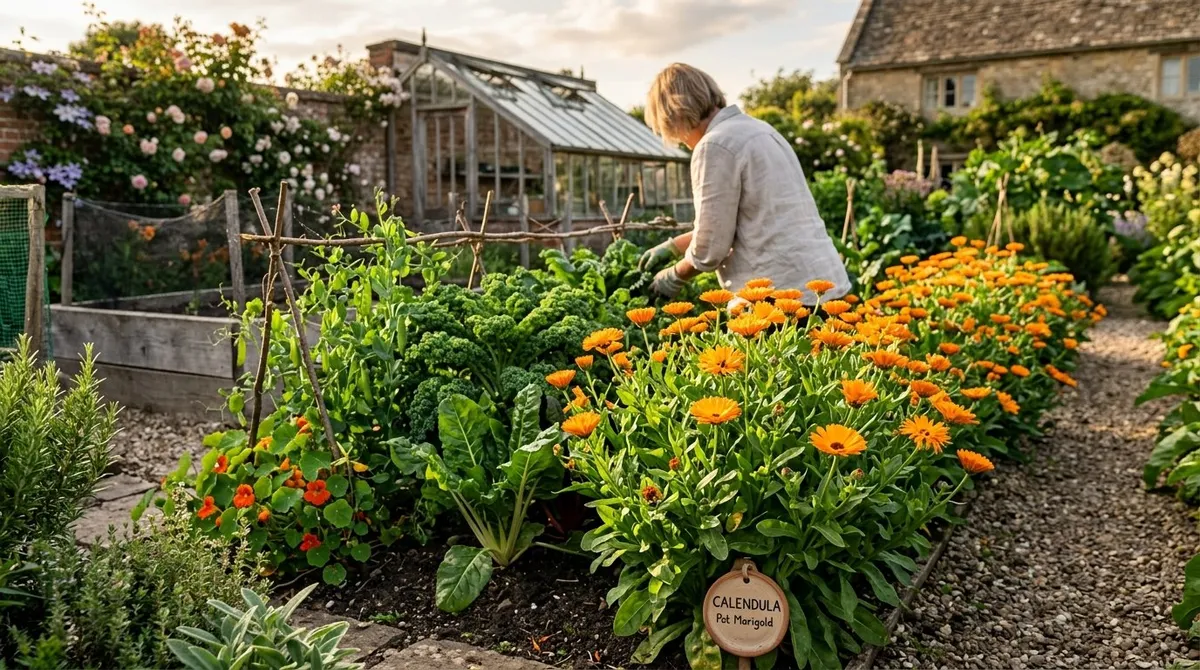
Pot marigolds (Calendula officinalis) are a different plant altogether. They’re hardy annuals from southern Europe, 30-60cm tall, with daisy-like orange and yellow flowers. Unlike the others, calendula copes with frost, seeds itself around and has edible petals.
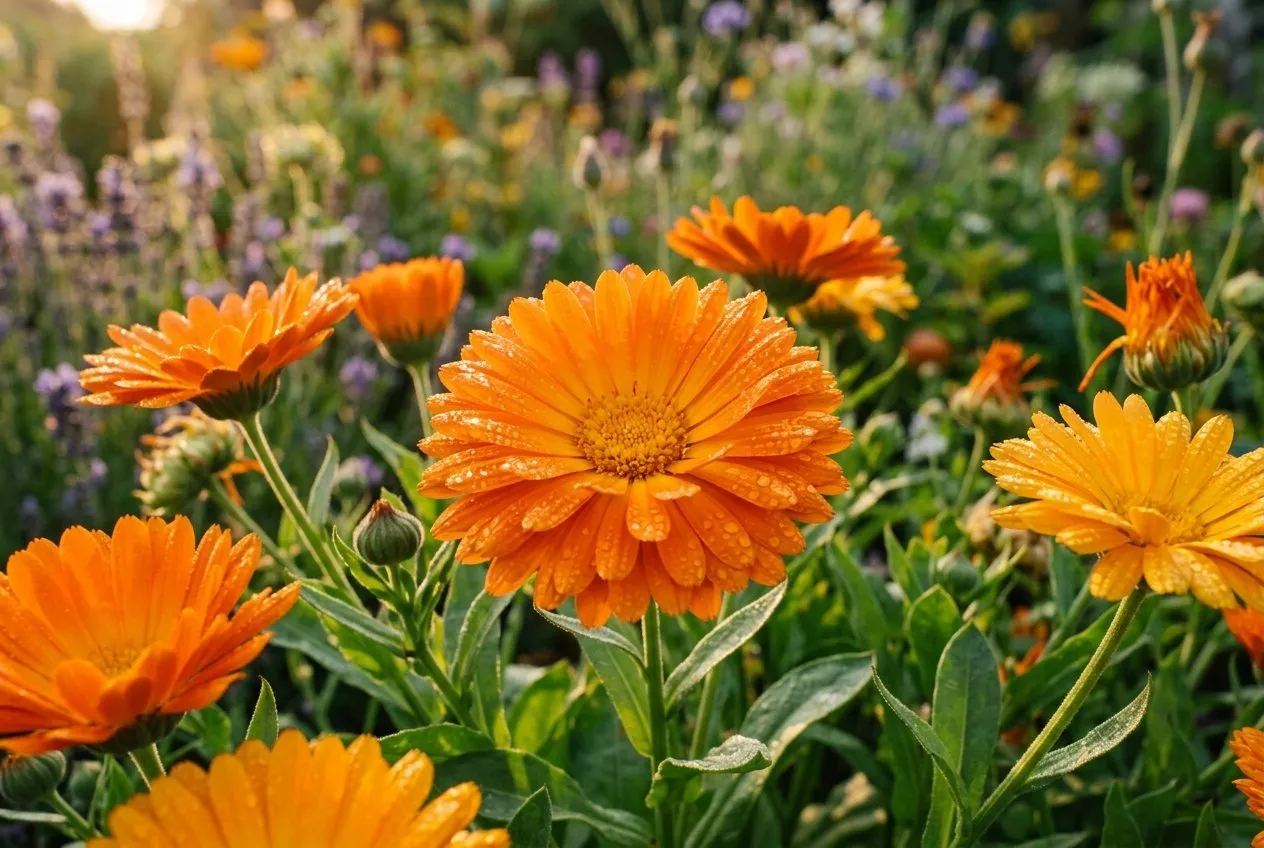
Pot marigolds are edible, hardy and happily seed themselves around.
Which marigold varieties grow best in the UK?
These are reliable choices that cope well with British summers.
French marigold varieties
Bonanza series is a great all-rounder. Compact at 25-30cm, with big double flowers in orange, yellow, gold and two-tones. With deadheading, it flowers from June until the frosts.
Safari series has crested flowers in tangerine, scarlet and yellow, at about 30cm.
Durango series has big flowers for a French marigold and a tidy 25cm habit. Great for containers and edging.
African marigold varieties
Inca series grows 35-40cm with huge blooms. It’s shorter than older African types, so it stands up better to wind.
Vanilla is a lovely creamy-white African marigold, about 35cm tall. It looks striking among orange ones.
Calendula varieties
Indian Prince has deep orange petals with dark red backs, on 60cm stems. Great for cutting, and it seeds itself around.
Art Shades is a mix of apricot, orange and cream, about 45cm tall. The softer colours suit cottage borders.
How do I sow marigold seeds?
Marigold seeds are big, easy to handle and quick to sprout. That makes them great for children and beginners, and among the easiest flowers to grow from seed.
Sowing indoors (March-April)
Fill module trays with seed compost and water. Push one seed into each module about 1cm deep and cover lightly with vermiculite or compost. Keep on a warm windowsill or in a propagator at 18-21C. Seedlings should appear within a week or so.
Keep them in good light. Move them into 9cm pots when they have two pairs of proper leaves. Pinch out the tip at about 10cm tall for bushier plants.
Direct sowing outdoors (May)
Wait until the last frost has passed, usually mid to late May. Rake the soil fine, scatter the seeds thinly and cover with 1cm of soil. Thin to 20-30cm apart once they have their first proper leaves.
These flower a few weeks later than indoor-sown plants, but they often grow strong roots and cope well with dry spells later on.
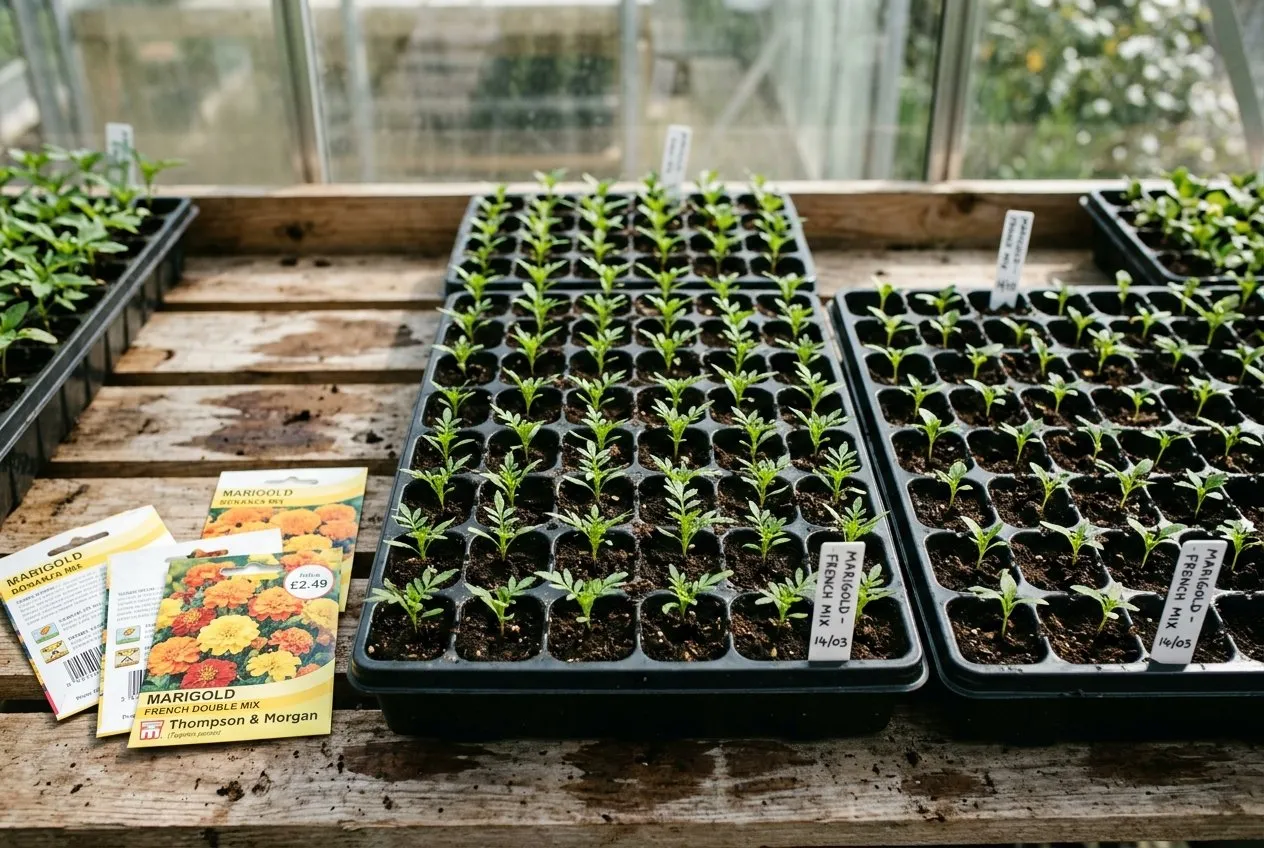
Sow marigolds in modules from March. They come up fast in a warm greenhouse.
When should I plant marigolds outside?
Harden off indoor seedlings for a week or so in late May. Put them outside in the day and bring them in at night, then plant them out.
Spacing: French marigolds 20-30cm apart, African 30-40cm and calendula 25-35cm.
Soil: Almost any well-drained soil is fine. They actually flower better in ordinary soil than rich, heavily fed ground, which just gives you leaves.
Position: Full sun for the most flowers. They’ll cope with a bit of shade but flower much less. Sunny beds, borders and pots are perfect.
How do I use marigolds as companion plants?
This is where French marigolds earn their place in the veg patch.
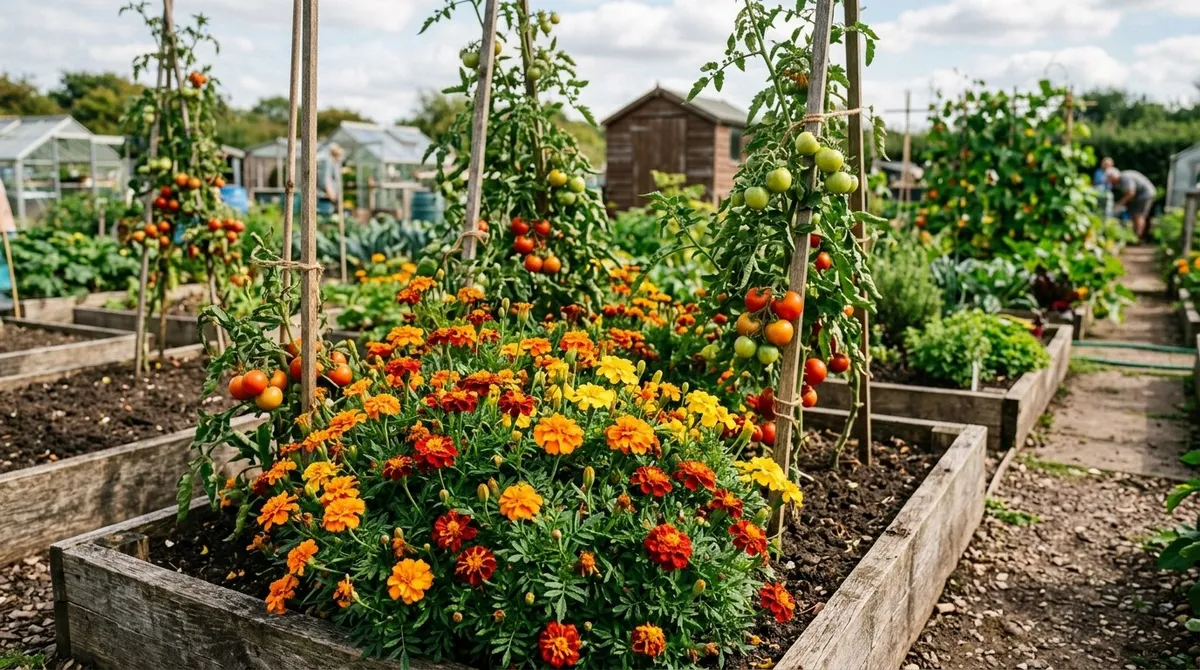
Whitefly. French marigolds have a strong smell that’s thought to help keep whitefly away from tomatoes. Many gardeners plant a few in the greenhouse or around outdoor tomatoes for exactly this reason.
Hoverflies. Both French marigolds and calendula bring in hoverflies. The adults feed on the flowers, and their larvae eat lots of aphids. A row of marigolds along the edge of a veg bed is a cheerful way to invite them in.
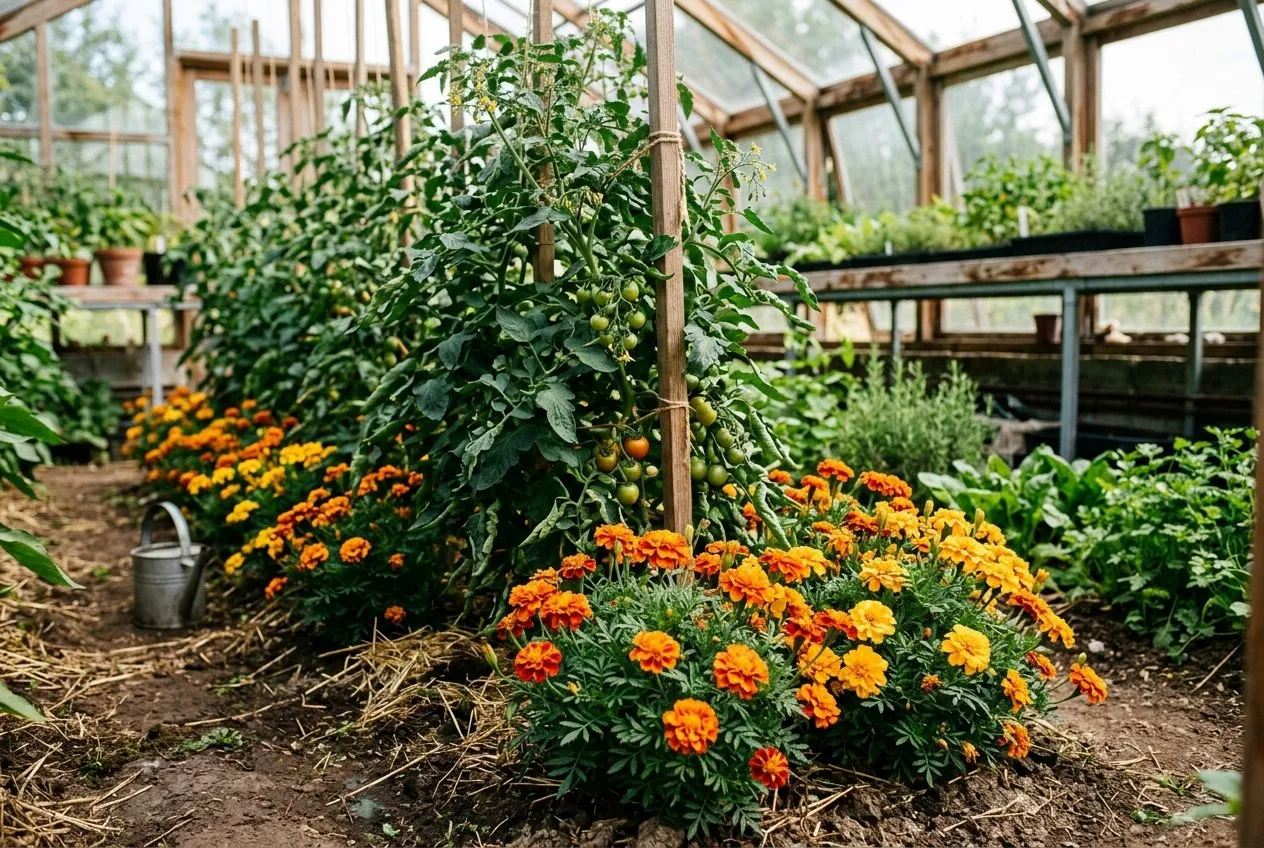
French marigolds around greenhouse tomatoes: bright, cheerful and good company.
How do I deadhead marigolds for continuous flowering?
Deadheading is the most important job for a long flowering season. Leave the faded flowers and the plant makes seed and stops flowering. Deadhead and it keeps going until the frosts.
Check plants once a week. Pinch off faded flowers just above the next leaves, taking the whole seed pod, not just the petals. Fingers work for French marigolds. Use secateurs for the thicker stems of African ones.
In wet summers, also snip off any flowers with grey fuzzy mould, cutting back into healthy growth.
Can I eat pot marigold (calendula) flowers?
Yes, calendula petals are edible. They taste mildly peppery, with a hint of saffron.
In the kitchen. Scatter fresh petals over salads, stir them into rice for a golden colour or add them to bakes. Dried petals keep well in an airtight jar.
Other uses. Dried calendula petals are also popular in homemade soaps and balms.
Good to know: Only eat calendula, not French or African marigolds, which taste bitter. Only eat flowers grown without pesticides. Calendula is one of the nicest edible flowers to grow, alongside nasturtiums and violas.
How do I save marigold seeds?
Saving seed is easy and free. Leave a few flower heads to dry on the plant in late summer.
French and African marigolds. Wait until the seed head is brown and papery. Pull it apart to find the long, thin black and white seeds. Dry them on newspaper for a week, then store in a labelled paper envelope somewhere cool and dry.
Calendula. The seeds are curly and easy to spot. Shake the dry head over a bowl to collect them. Calendula seeds itself so freely you may not need to bother.
Stored somewhere cool and dry, seed should keep for two or three years.
What problems affect marigolds?
Marigolds are tough and have few problems. Watch for these two.
Slugs and snails. Young plants are at risk, especially in wet springs. Protect new plants with copper tape, ferric phosphate slug pellets or beer traps for the first few weeks. Once the stems toughen up, slugs lose interest.
Grey mould. In wet summers, grey fluffy mould can appear on old flowers and damaged stems. Deadhead often, space plants so air can move, and water the soil rather than the leaves. Remove affected bits quickly. Full double flowers are most prone. For more easy flowers, see our hardy annual guide.
Marigold variety comparison table
| Variety | Type | Height | Colours | Good for | Edible |
|---|---|---|---|---|---|
| Bonanza | French | 25-30cm | Orange, yellow, gold, two-tone | Edging, around tomatoes | No |
| Safari | French | About 30cm | Tangerine, scarlet, yellow | Edging, around tomatoes | No |
| Durango | French | About 25cm | Orange, yellow, red | Pots, edging | No |
| Inca | African | 35-40cm | Gold, orange, yellow | Big flowers in borders | No |
| Vanilla | African | About 35cm | Creamy white | Mixing with orange | No |
| Indian Prince | Calendula | About 60cm | Deep orange, red backs | Cutting, hoverflies | Yes |
| Art Shades | Calendula | About 45cm | Apricot, orange, cream | Cottage borders | Yes |
Frequently asked questions
When should I sow marigold seeds in the UK?
Sow indoors from mid-March to April. Use module trays on a warm windowsill or in a propagator at 18-21C, and seedlings should appear within a week or so. Harden them off in May and plant out after the last frost, usually mid to late May. You can also sow straight outside in late May, but they’ll flower a few weeks later.
Are marigolds and calendula the same plant?
No, they’re different plants that share a name. French and African marigolds are Tagetes, tender annuals from Central America. Pot marigolds are Calendula officinalis, a hardy annual from southern Europe. Both are in the daisy family, which is why it gets confusing.
Do marigolds really deter pests?
French marigolds may help keep whitefly off tomatoes. Their strong smell is thought to put whitefly off, and many gardeners plant them with tomatoes for that reason. Both French marigolds and calendula also bring in hoverflies, whose larvae eat aphids. Think of them as helpers rather than a cure.
How do I deadhead marigolds?
Pinch or snip off faded flowers once a week. Take off the whole flower head, including the swollen seed pod underneath, back to the next leaves. This stops the plant making seed so it keeps flowering. Deadheaded French marigolds will keep going until the first hard frost.
Can I eat marigold flowers?
Calendula petals are edible, but French marigolds aren’t really eaten. Calendula petals taste mildly peppery and add colour to salads, rice and bakes. French marigold petals taste bitter. Only eat flowers you’ve grown yourself without pesticides.
Will marigolds come back every year?
No, marigolds are annuals that die at the end of the season. Calendula seeds itself around very happily, so new plants often pop up each spring. French and African marigolds rarely do in the UK. Save seed from dry flower heads in September to grow more next year.
What is the best marigold for companion planting?
French marigold is the usual choice. The Bonanza and Safari series stay compact at 25-30cm and flower all summer. Plant them 20-30cm apart around tomatoes, peppers and aubergines. For bringing in aphid-eating hoverflies and lacewings, add some calendula too.
Further reading
Our team produces practical UK gardening guidance from source research, contributor records and established horticultural practice. Editorial standards are overseen by Matt W.