Key takeaways
- No plant reliably stops mosquitoes, so treat scented plants as a bonus, not a barrier
- Catmint, lavender, lemongrass and citronella-scented geraniums smell strongest when brushed
- Emptying standing water every week does more than any plant
- A breeze or a small fan keeps mosquitoes and midges off a seating area
- In much of the UK, midges are a bigger nuisance than mosquitoes
No plant will keep mosquitoes away on its own. Catmint, lavender, lemongrass and citronella-scented geraniums smell lovely, but they release their scent mainly when you brush or crush the leaves. A pot sitting quietly by the bench does very little.
They’re still worth growing, for the scent, the flowers and the bees. This guide covers which plants to try, where to put them and the simple things that actually cut bites. If midges are your main problem, skip to the midges section further down.
Why scented plants don’t stop mosquitoes
The scents that people link with keeping insects away come from oils in the leaves. They stay inside until a leaf is brushed, bruised or crushed.
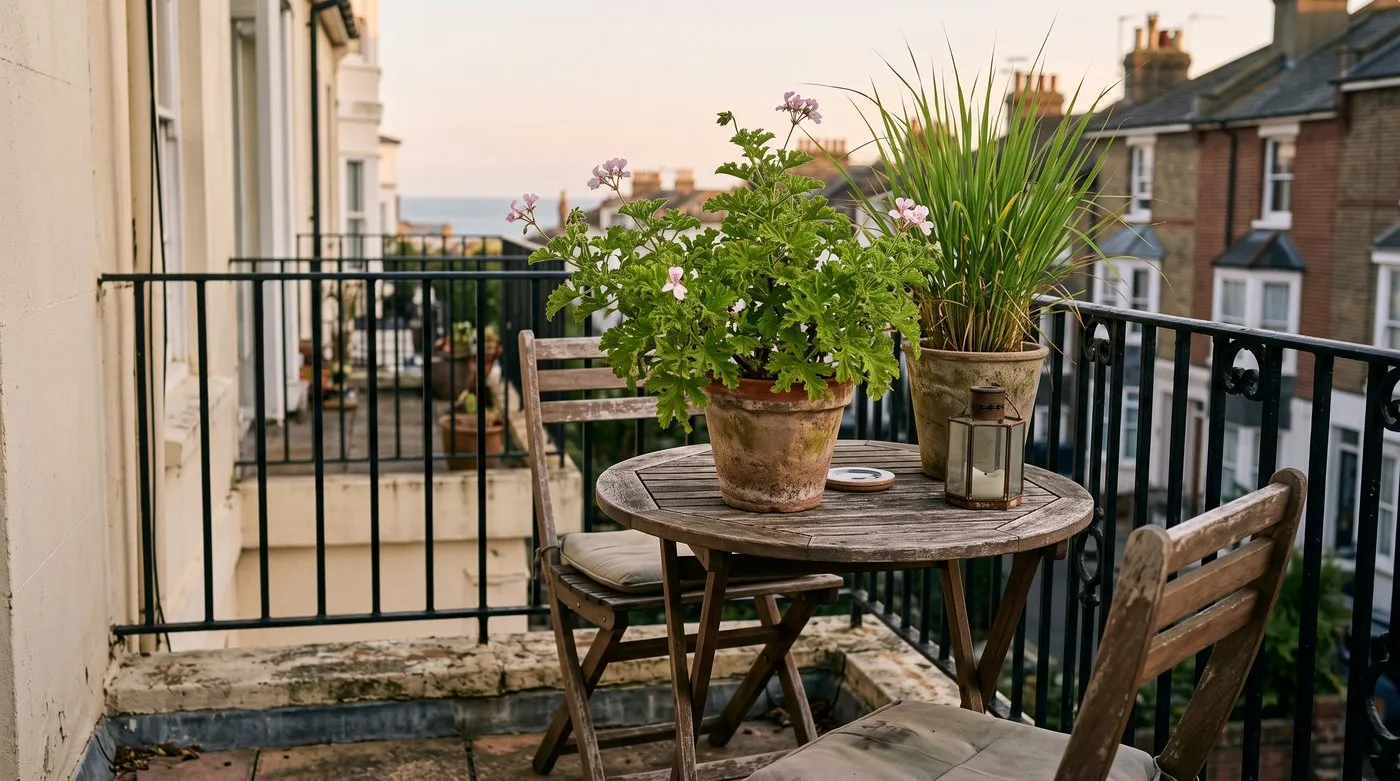
A lemon-scented geranium smells lovely when you brush it. Just don’t expect it to keep the mosquitoes off on its own.
Outdoors, even a strong smell drifts away quickly, especially in a breeze. So a pot of citronella geranium next to your chair can’t build up enough scent to keep mosquitoes off you. Mosquitoes find people mainly by the carbon dioxide we breathe out and by body warmth and smell.
The repellents that work are concentrated, tested products. If you’re being bitten, use an approved insect repellent on your skin and follow the label. Don’t rub crushed leaves on your skin instead. Some plant oils irritate skin, and they don’t give reliable protection.
Scented plants worth growing near seating
These plants are popular choices for patios. Grow them for scent and flowers, and enjoy brushing past them.
| Plant | Scent | Hardy outdoors? | Best grown | Pet note |
|---|---|---|---|---|
| Catmint (Nepeta) | Minty, herby | Yes | Border edge or large pot, full sun | Can upset cats and dogs if eaten |
| Lavender | Sweet, floral | Yes, in free-draining soil | Pots or a sunny path edge | Not safe for pets to eat |
| Citronella-scented geranium | Lemony | No, bring in before frost | Pot on a sunny patio | Toxic to cats and dogs |
| Lemongrass | Lemony | No, bring in before frost | Pot in a warm, sunny spot | Can upset cats and dogs |
| Lemon balm | Lemony | Yes | Pot, as it spreads | Generally fine |
| Rosemary | Pine-like | Yes, in free-draining soil | Pot or sunny bed | Generally fine |
Catmint is the easiest of the lot. It’s hardy, copes with poor soil and flowers from early summer into autumn, so bees love it too. Cats often roll in it, so expect visitors. The guide to growing catmint covers varieties.
Lemon balm is easy but spreads and seeds about, so the guide to growing lemon balm suggests keeping it in a pot. Lavender needs full sun and soil that drains well. The guide to growing lavender explains how to keep it from going woody.
The plant sold as “citronella” is usually a lemon-scented geranium (Pelargonium), not the grass that citronella oil comes from. It smells lovely when brushed but is tender, so bring it under cover before the first frost.

Catmint along a path smells lovely as you brush past on a summer evening. Enjoy it for the scent and the bees.
Where to put scented plants
Put scented plants right beside where you sit or walk. That way you brush past them and get the scent. Spread thinly through a border, you’ll hardly notice them.
Pots work best on a patio. You can move them to follow the evening sun, and keep the leaves at hand height. Tender plants such as lemongrass and scented geraniums can come into a porch, greenhouse or bright windowsill before the first frost, usually in October or November.
Most of these plants need full sun and free-draining compost. A sunny, sheltered patio suits them well.

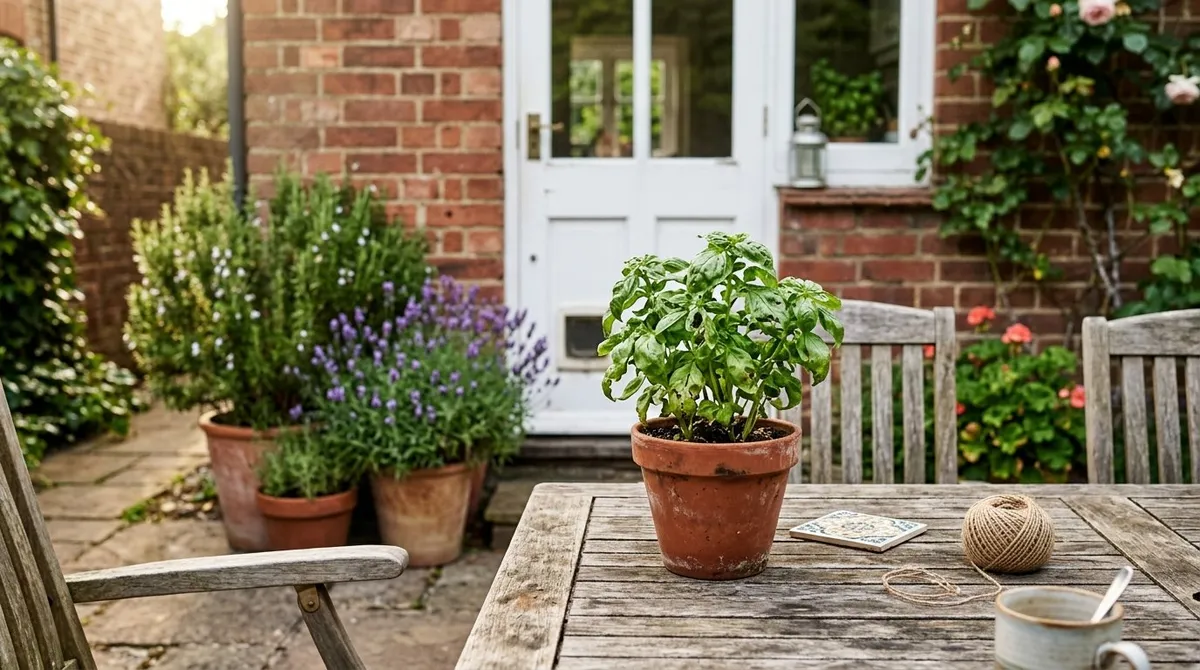
Group pots of scented plants close to the bench, so you brush past them as you sit down.
What actually keeps mosquito bites down
These simple steps do far more than any plant:

Tipping out still water every week stops mosquitoes breeding. It does more than any plant.
- Empty standing water every week. Mosquitoes breed in still water. Tip out buckets, plant saucers, toys and old pots. Clear blocked gutters.
- Cover water butts. A well-fitting lid keeps mosquitoes from laying eggs. The guide to installing a water butt covers lids and fittings.
- Refresh bird baths every few days.
- Sit in a breeze. Mosquitoes and midges are weak fliers. An open, breezy spot, or a small fan on the patio, helps a lot.
- Cover up at dusk. Long sleeves and trousers on still evenings make a big difference.
- Use an approved repellent on skin when you need one, and follow the label.
A wildlife pond is fine. Moving water and natural predators, such as dragonfly larvae and newts, keep mosquito larvae in check. The guide to building a wildlife pond explains how to get one going.
Mosquitoes or midges?
In much of the UK, biting midges are a bigger nuisance than mosquitoes, especially in western Scotland. They swarm on still, damp, overcast evenings and at dawn, from late spring to early autumn.
Midges are tiny and hard to keep off. A breezy spot, covering up and a fine mesh head net work far better than any planting. Bog myrtle, a native shrub, has a long folk reputation against midges, but it isn’t a reliable fix. The guide to midges in the garden covers them in detail.

Still, damp evenings in Scottish glens are midge weather. Fine mesh and a breeze help more than any plant.
Mosquito and midge season in the UK
| Month | What to expect | What to do |
|---|---|---|
| March to April | Very few biters | Pot up hardy scented plants. Sow basil indoors |
| May | Midges rising, especially in Scotland | Put tender pots out once frosts are over |
| June | More mosquitoes on warm, still nights | Group pots by seating. Empty standing water weekly |
| July to August | Peak for both, especially on muggy evenings | Use a fan or sit in a breeze. Cover up at dusk |
| September | Falling, but still active on mild evenings | Keep emptying water. Plan to bring in tender plants |
| October onwards | Very few | Bring lemongrass and scented geraniums under cover |
Common mistakes with mosquito repelling plants
- Expecting a plant to clear the air. A plant in a pot can’t do that. Enjoy it for the scent and flowers.
- Rubbing leaves on your skin. Some plant oils irritate skin and the protection is unreliable. Use an approved repellent instead.
- Ignoring standing water. A forgotten bucket or blocked gutter can keep mosquitoes coming back all summer.
- Leaving tender plants out too late. Lemongrass and scented geraniums die in frost.
- Treating midges like mosquitoes. Midges need a breeze, cover and mesh, not plants.
For more scented plants that also put off flies around the patio, see the guide to plants that repel flies. There are plenty more ideas on the plants hub.
Frequently asked questions
Do mosquito repelling plants actually work?
Not on their own, though they smell lovely. Most release their scent only when leaves are brushed or crushed. A plant sitting in a pot gives off too little to keep mosquitoes away in open air. Emptying standing water and sitting in a breeze help far more.
What is the best plant to keep mosquitoes away?
No plant does the job reliably, but catmint is a good one to try. It is hardy, easy and flowers for months. Lavender, lemongrass and citronella-scented geraniums are other popular choices. Grow them for their scent and flowers, not as your only defence.
Does the citronella plant repel mosquitoes?
Not much, as a living plant. The plant sold as “citronella” is usually a lemon-scented geranium (Pelargonium), not the grass citronella oil comes from. Its leaves smell lemony when brushed, but the plant does little to stop bites.
Are mosquitoes a real problem in UK gardens?
Usually only on still, warm evenings near standing water. Biting midges are a bigger nuisance in much of the UK, especially western Scotland. Emptying water containers and sitting in a breeze help with both.
Where should I put scented plants on a patio?
Put them in pots right beside where you sit or walk. Brushing past releases the scent. Pots also let you bring tender plants such as lemongrass and scented geraniums under cover before frost.
Are mosquito repelling plants safe for pets?
Not all of them. Catmint, lavender, scented geraniums and lemongrass can all upset cats and dogs if eaten. Most pets leave them alone, but don’t plant them where a pet chews plants.
Our team produces practical UK gardening guidance from source research, contributor records and established horticultural practice. Editorial standards are overseen by Matt W.