Key takeaways
- Only female biting midges bite, mostly at dawn and dusk from late May to September
- A steady breeze grounds midges, so sit in an open, breezy spot or use a fan
- Repellents containing DEET or icaridin (also called picaridin) work best
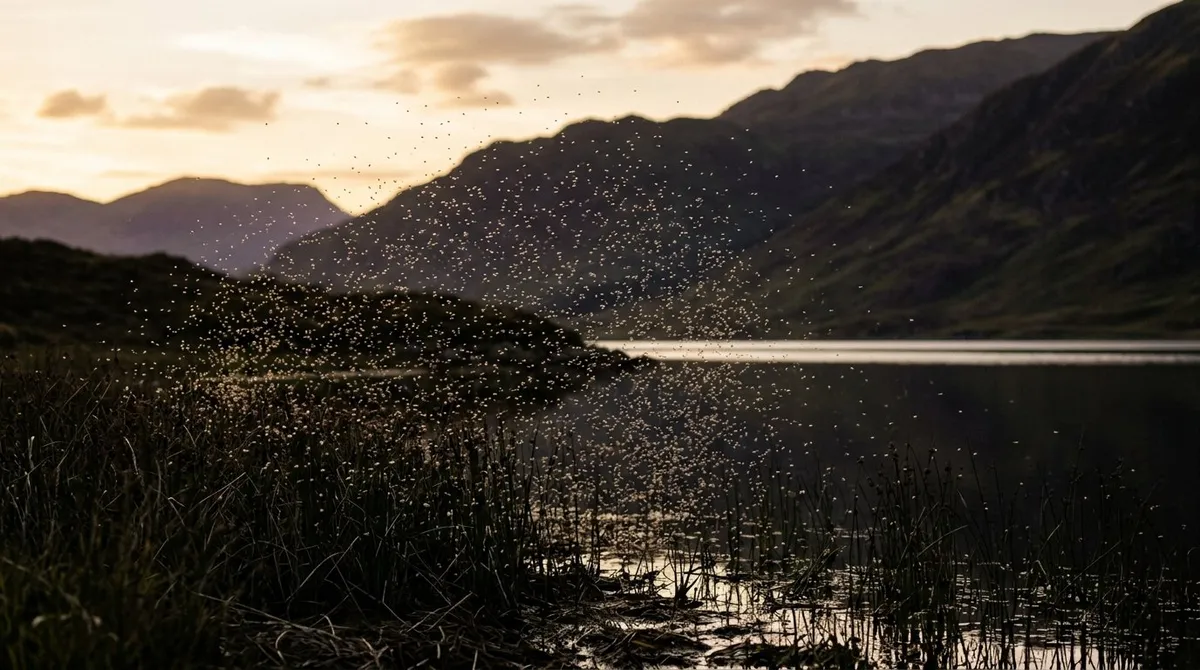
- Clouds of midges dancing over a pond are usually harmless non-biting midges
- Citronella candles, ultrasonic plug-ins and bug zappers do very little
- Highland midges breed in wet, peaty soil, so draining boggy patches helps more than tipping out buckets
The best way to deal with midges in the garden is to stop them landing on you: sit somewhere breezy, avoid dawn and dusk, cover up and use a repellent containing DEET or icaridin. You can’t wipe out midges from a garden, but you can make them far less of a nuisance.
Midges are mainly a problem in damp, sheltered gardens in Scotland, northern England, Wales and Ireland, though they turn up anywhere on a still summer evening. This guide explains which midges bite, what really keeps them off, and which popular fixes to skip. It’s about biting midges on people. If you’ve got tiny flies in houseplant pots, see the guide to getting rid of houseplant flies instead.
Which midges actually bite?
Several kinds of tiny fly get called midges in the UK, and most of them never bite. It’s worth knowing which is which before you spend money.
Biting midges are the ones that ruin a barbecue. The best known is the Highland midge, a tiny dark fly that comes in clouds on still evenings. Only the females bite, because they need a blood meal to make eggs. You often feel them before you see them.
Non-biting midges look similar and often form big dancing swarms over ponds, lawns and hedges at dusk. They can’t bite at all. Their larvae, called bloodworms, are an important food for pond wildlife.
Owl midges are small, fuzzy, moth-like flies that breed in drains and turn up on bathroom walls. They’re a nuisance, not a danger.
Pear midge is a different thing again: a pest of pear fruitlets that never bites people. For blackened, dropping pears, see the guide to pear midge control.
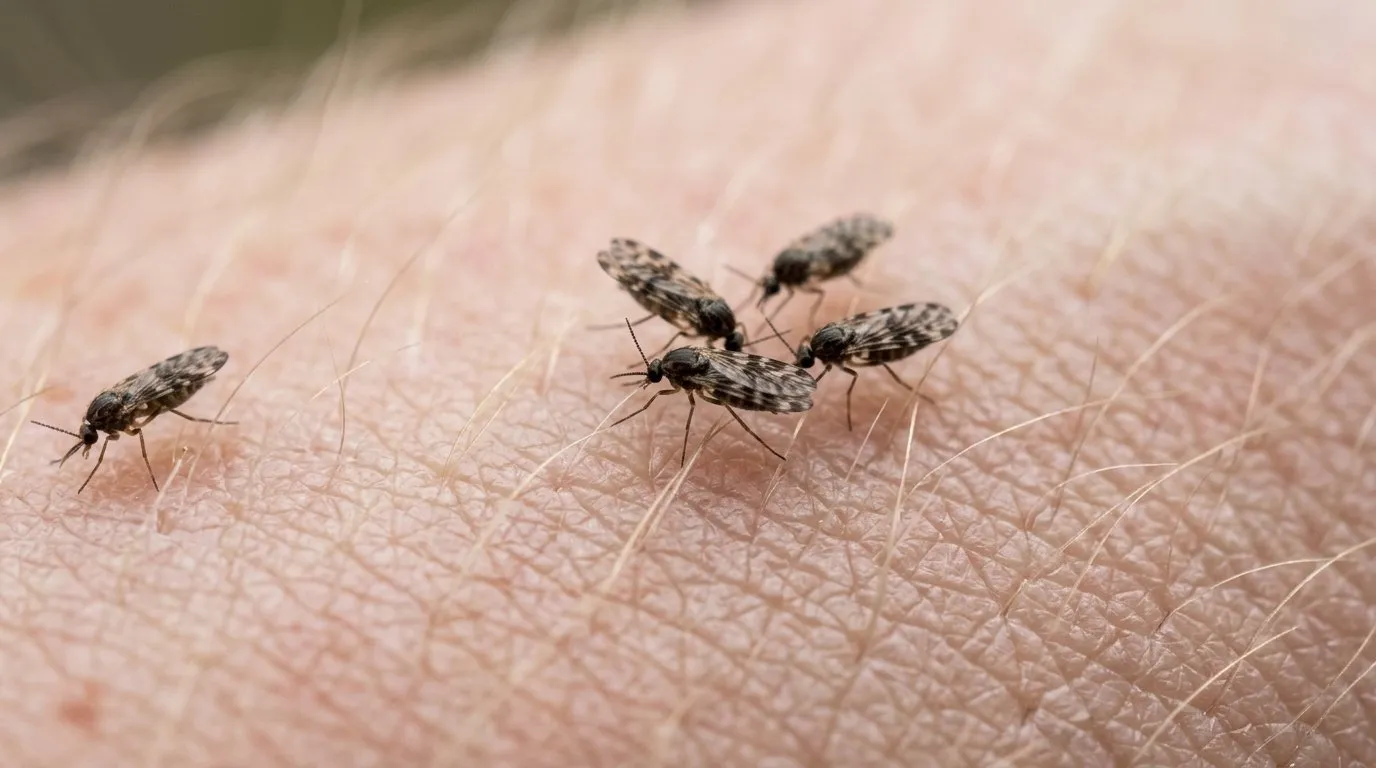
Biting midges are tiny, dark and easy to miss until they start biting. This is the insect you’re actually fighting.
Why midges are worse in some gardens
Highland midges love damp, sheltered places. Their larvae live in wet, peaty, acid soil, such as bogs, rushy fields and soggy corners. That’s why the west of Scotland suffers most, but any garden next to wet ground can have them.
The biting season runs from late May to September. There are usually two waves, with the second, often bigger one in late summer. Midges are busiest at dawn and dusk, and on dull, muggy, windless days. Bright sunshine, dry air and wind all keep them down.
A breeze beats every product you can buy
Midges are very weak fliers. A steady breeze of around 7mph, enough to keep leaves moving, stops them flying. That’s the most useful midge fact of all, and it’s free.
Use it in your garden:
- Put seating in the open, not in a sheltered corner against a hedge or wall.
- Run an outdoor fan on the patio or decking on still evenings. A steady draught keeps midges off the table.
- Keep sheltered nooks for daytime, when midges are less active.
- Choose breezy days for evening meals outside when you can.
If a candle seems to work on a breezy evening, thank the breeze.

An open, breezy seat is the cheapest midge fix there is. Midges struggle to fly once the grasses start swaying.
Repellents and nets that work
When there’s no breeze, covering up and a good repellent do the most. Here’s how the common options compare.
| Option | Does it help? | Notes |
|---|---|---|
| Repellent with DEET | Yes | Follow the label, especially for children |
| Repellent with icaridin (picaridin) | Yes | Pleasant to use and kind to clothes |
| Midge head net | Yes | Choose one sold for midges, as some mosquito mesh is too coarse |
| Long sleeves and trousers | Yes | Light colours and a close weave are best |
| Outdoor fan | Yes | Works well on a patio or deck |
| Citronella candles | A little | Only in completely still air, close to the candle |
| Ultrasonic gadgets | No | No good evidence they reduce bites |
| Bug zappers | No | Mostly kill harmless moths and other insects |
Put repellent on before you go out, not once the midges arrive. Cover your ankles, neck and hairline, where midges often bite first. Always read the label for age limits before using repellent on children.

On the worst evenings, a midge net is unbeatable. Buy one made for midges, as ordinary mosquito mesh can let them through.
What about Avon Skin So Soft?
Avon Skin So Soft is famous as a midge remedy, especially in Scotland. It’s a body oil, not a designed insect repellent. Some people find it keeps midges off for a short spell. It won’t last a whole evening the way a proper repellent does.
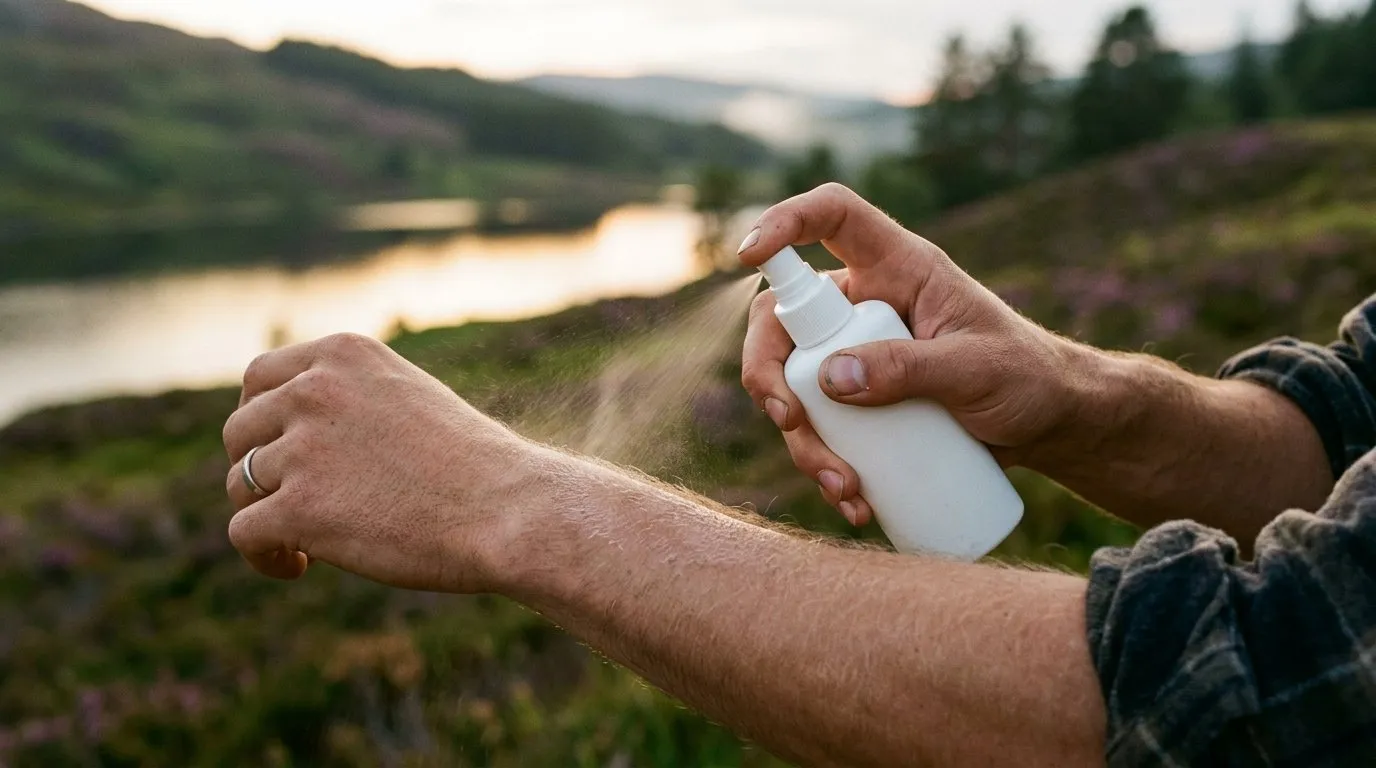
Put repellent on before you head outside, and don’t forget wrists, ankles and the back of your neck.
Midge myths that don’t work
Citronella candles give off scent that any breeze blows away. They only help right next to the flame in dead still air.
Ultrasonic repellers have no good evidence behind them. Midges don’t seem to react to the sound.
Bug zappers catch mostly moths and other harmless insects, not the midges biting you.
Plants in pots such as lemon-scented pelargoniums give off very little scent unless you crush the leaves. The guide to plants that repel mosquitoes explains why scented plants are lovely but not much of a shield. The same goes for the plants said to repel flies.
Midge traps that give off carbon dioxide do catch lots of midges. But they’re costly, and in an open garden new midges keep drifting in from the land around you. They work best on enclosed sites.
The swarm over your pond is harmless
Those dancing clouds of insects over a pond at dusk are almost always non-biting midges. The males gather in columns over water, pale lawns or hedges to attract females. They live only a few days as adults and don’t feed on people at all.
Leave them be. Their larvae, the red bloodworms in pond mud, feed frogs, newts, fish, birds and dragonfly nymphs. A pond full of them is a healthy one. If you’d like more of the predators that eat them, the guide to building a wildlife pond shows how. Buglife’s page on non-biting midges has more about them.
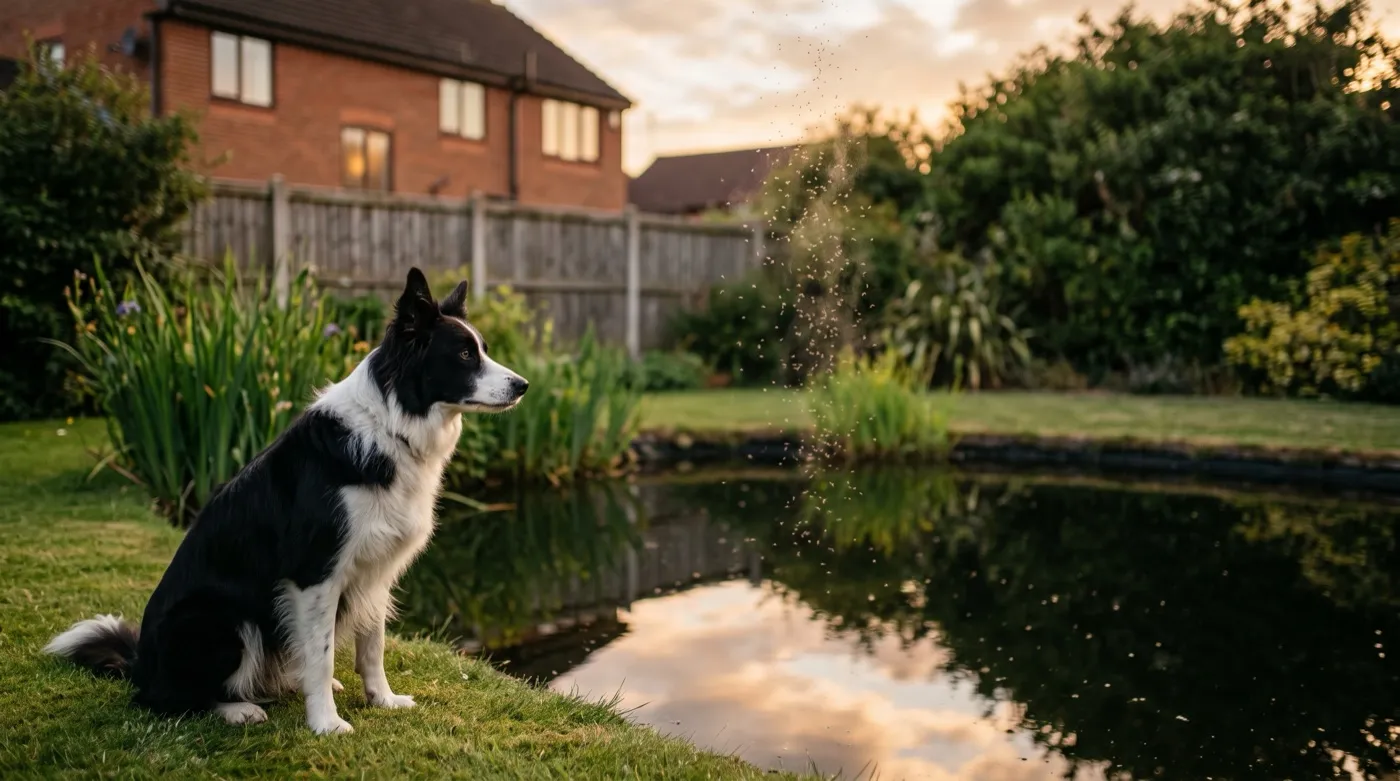
That dancing column over the pond is non-biting midges. They can’t bite you or the dog, and they’re a feast for wildlife.
Cutting down midges where they breed
You won’t get rid of midges entirely, but you can make your garden less welcoming.
Highland midges breed in wet, peaty soil, not in standing water. So tipping out buckets won’t help with them. If part of your garden stays boggy all summer, improving the drainage can help. Or turn it into a planted bog garden and put your seating somewhere breezier.
Other small flies and mosquitoes do use standing water and gunk, so a bit of tidying helps:
- Clear blocked gutters. Gutters full of leaves and silty water breed small flies and mosquitoes.
- Flush outdoor drains with hot water and a brush every couple of months to clear owl midges.
- Keep water butts lidded so mosquitoes can’t lay eggs in them.
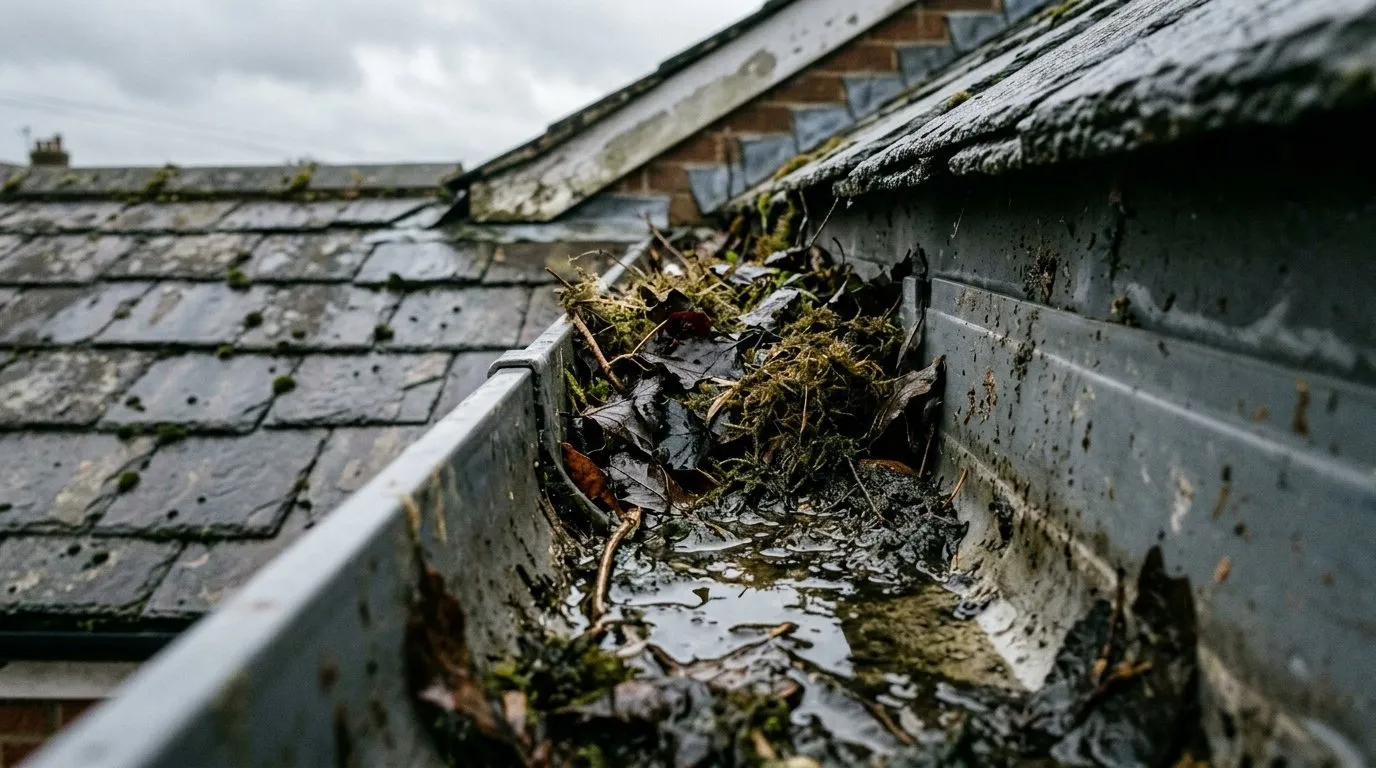
A blocked gutter holding dirty water is a breeding spot for small flies and mosquitoes. Clearing it is a quick win.
Midges through the year
| Month | What to expect and do |
|---|---|
| January to March | No adults flying. Clear gutters and look at drainage on boggy ground |
| April | A few non-biting swarms over ponds. Biting midges not out yet |
| May | First biting midges from late May. Stock up on repellent |
| June | Biting picks up, especially in the north and west |
| July | Still, muggy evenings are the worst. Use a fan or sit somewhere breezy |
| August | Often the peak of biting. Midge nets for the worst spots |
| September | Numbers drop as nights get cooler |
| October to December | Activity over. Plan open, breezy seating for next summer |
Common midge mistakes
Fighting the wrong insect. The swarm over the pond is harmless, and flies from houseplant pots are fungus gnats. Neither bites.
Sitting in the most sheltered spot. Sheltered corners are cosy for midges too. Move the table into the open.
Spending on gadgets. Ultrasonic plug-ins and zappers don’t help. A fan, a net and a good repellent do.
Putting repellent on too late. Apply it before you go out, and reapply as the label says.
Frequently asked questions
What actually keeps midges away?
A breeze, covering up and a DEET or icaridin repellent work best. Midges are weak fliers, so sit in an open spot or run a fan on the patio. Avoid dawn and dusk on still, muggy days, and wear a midge net in the worst spots.
Do citronella candles repel midges?
Not much. Citronella only gives a small zone of protection in completely still air. The slightest breeze carries the scent away. Enjoy them as garden lighting, but use a proper repellent if midges are biting.
Why do midges bite at dawn and dusk?
They dislike bright sun and dry air, which dry them out. Midges are busiest in the low light and damp air around dawn and dusk. On dull, still, muggy days they can bite at any time.
Are the midges swarming over my pond dangerous?
No, they are almost always non-biting midges. The males dance in columns over water and lawns at dusk to find a mate. They can’t bite you, and their larvae are useful food for frogs, newts, fish and birds.
Does Avon Skin So Soft work on midges?
Some people find it helps for a short while. It’s a body oil, not a proper insect repellent, so any effect wears off quickly. For a full evening outside, use a repellent containing DEET or icaridin.
Do ultrasonic midge repellers work?
No, there’s no good evidence they reduce bites. Midges don’t seem to respond to the sound they make. Spend the money on a fan, a midge net or a proper repellent.
How do I stop midges breeding in my garden?
Improve drainage on ground that stays wet and boggy. Highland midge larvae live in damp, peaty soil, not in water butts or buckets. Clearing gutters and drains helps with other small flies and mosquitoes.
Now you know how to keep midges at bay, read our guide to dragonflies and damselflies to welcome the garden predators that feast on flying insects, or browse more garden problem guides.
Our team produces practical UK gardening guidance from source research, contributor records and established horticultural practice. Editorial standards are overseen by Matt W.