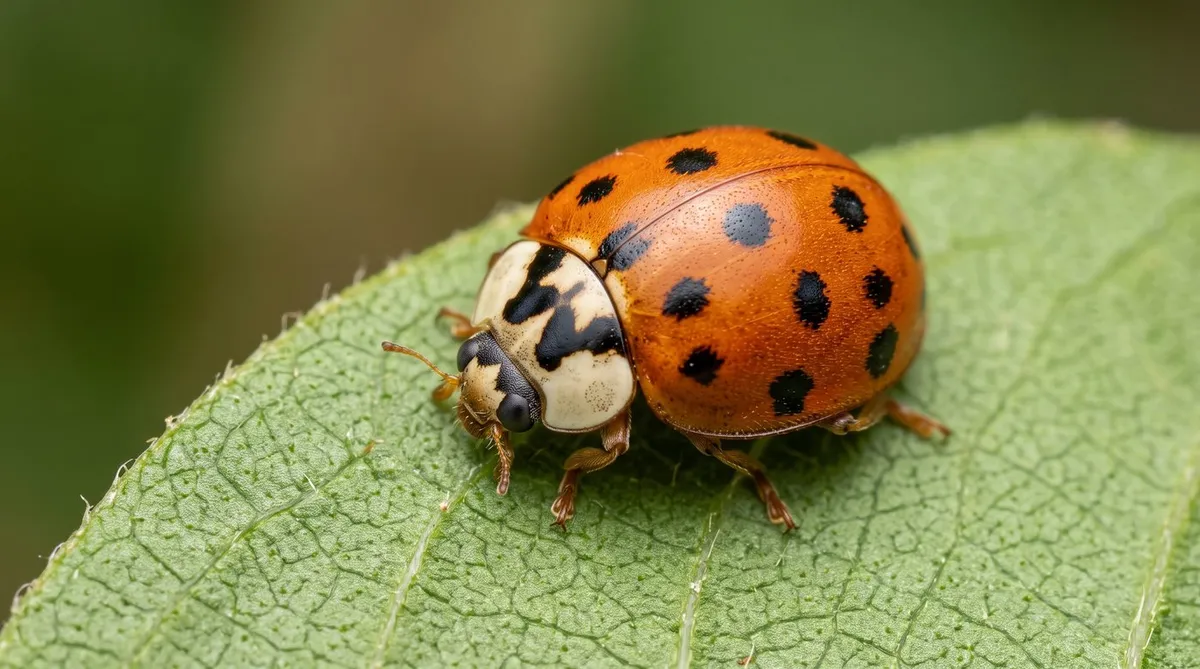
Key takeaways
- A small sunny pond with one deeper part is enough for dragonflies to breed
- No fish, plenty of sun and native pond plants are the three must-haves
- Dragonflies rest with wings open; damselflies fold them along the body
- They spend most of their lives underwater as larvae before climbing out
- Look for them from late April to October, most of all June to August
Dragonflies and damselflies are some of the most dazzling insects you can bring to a UK garden. They’re brilliant hunters too, snapping up midges, mosquitoes and flies.
The good news is you don’t need a lake. A small sunny pond with no fish and a few native plants is all it takes. Here’s how to tell them apart, which ones you’re likely to see and how to make your pond a place they’ll breed.
How do I tell a dragonfly from a damselfly?
Look at the wings when it lands. Dragonflies rest with their wings held flat and open. Damselflies fold theirs along the body.
Dragonflies are bigger and chunkier, and fly fast and straight. Their huge eyes meet on top of the head.
Damselflies are slim and delicate, with a gap between the eyes. They flutter rather than zoom, stay close to the water and stop to rest often.
 A banded demoiselle with its wings folded, as damselflies do. The males have dark wing patches that flash in the sun.
Which dragonflies and damselflies visit UK gardens?
These are the ones you’re most likely to see around a garden pond.
| Species | Type | How to spot it | When it flies | Where you’ll see it |
|---|---|---|---|---|
| Common darter | Dragonfly | Males rusty red, females yellow-brown | June-October | Any still water, even small ponds |
| Broad-bodied chaser | Dragonfly | Males powder-blue and very broad, females brown | May-August | New ponds with bare edges |
| Emperor dragonfly | Dragonfly | Big, bright blue body, green front | June-September | Larger ponds, hunts over gardens |
| Southern hawker | Dragonfly | Green and blue spots, apple-green eyes | July-October | Shady ponds, near trees |
| Migrant hawker | Dragonfly | Blue spots, small yellow triangle near the waist | August-November | Any pond, one of the last of the year |
| Azure damselfly | Damselfly | Males pale blue with a black U mark | May-August | Ponds with plenty of plants |
| Blue-tailed damselfly | Damselfly | Dark body with one blue band near the tail | May-September | Almost any water |
| Common blue damselfly | Damselfly | Males blue with a mushroom-shaped mark | May-September | Bigger ponds and lakes |
| Large red damselfly | Damselfly | Bright red body, black legs | April-August | The first to appear each spring |
| Banded demoiselle | Damselfly | Males shiny blue with dark wing patches | May-August | Slow rivers, sometimes visits ponds |
What kind of pond attracts dragonflies?
A sunny pond with gently sloping edges, no fish and native plants. Get those three right and you’re most of the way there.
Sun. Dragonflies need warmth to fly, so a sunny wildlife pond gets far more visitors than a shady one. Aim for sun on the water for most of the day.
Depth. Make one part about 60cm deep so the pond doesn’t freeze solid in winter, as the larvae spend the winter underwater. Slope the rest gently up to shallow edges.
No fish. Goldfish and koi eat dragonfly eggs and larvae. If you want fish too, give them a separate pond. A wildlife garden puts native wildlife first.
 A dragonfly-friendly pond in a suburban garden: sloping edges, flat stones for basking, native plants and no fish.
Pond construction checklist for dragonflies
| What | Aim for | Why |
|---|---|---|
| Size | About 1m x 1.5m or bigger | Room for males to patrol |
| Depth | One part about 60cm deep | Stops it freezing solid |
| Edges | Gentle slopes with a muddy shallow bit | Easy way in and out for larvae |
| Sun | Sunny for most of the day | Warms the adults and the water |
| Fish | None | Fish eat eggs and larvae |
| Liner | A tough butyl or EPDM liner | Lasts far longer than cheap PVC |
| Water | Rainwater if you can | Kinder to pond life than tap water |
| Stones | A few large flat stones at the edge | Sunny spots for basking |
Which plants should I put in a dragonfly pond?
Native plants give dragonflies somewhere to lay eggs, hide and climb out. Female damselflies lay eggs inside plant stems. The larvae hide in underwater leaves. When they’re ready, they climb up a tall stem to turn into adults.
Good choices from our list of the best pond plants:
Around the edges (shallow water):
- Water mint: lots of stems for egg-laying, and a lovely smell
- Purple loosestrife: tall stems to climb, and bees love the flowers
- Yellow flag iris: strong upright stems, perfect for climbing out
- Marsh marigold: cheerful early flowers and low cover
Under and on the water:
- Hornwort: floats free, no planting needed, great hiding place
- Water starwort: a native plant that keeps water fresh
- Frogbit: floating leaves that shade the water and help keep algae down
A bog garden next to the pond gives adults even more places to perch and shelter.
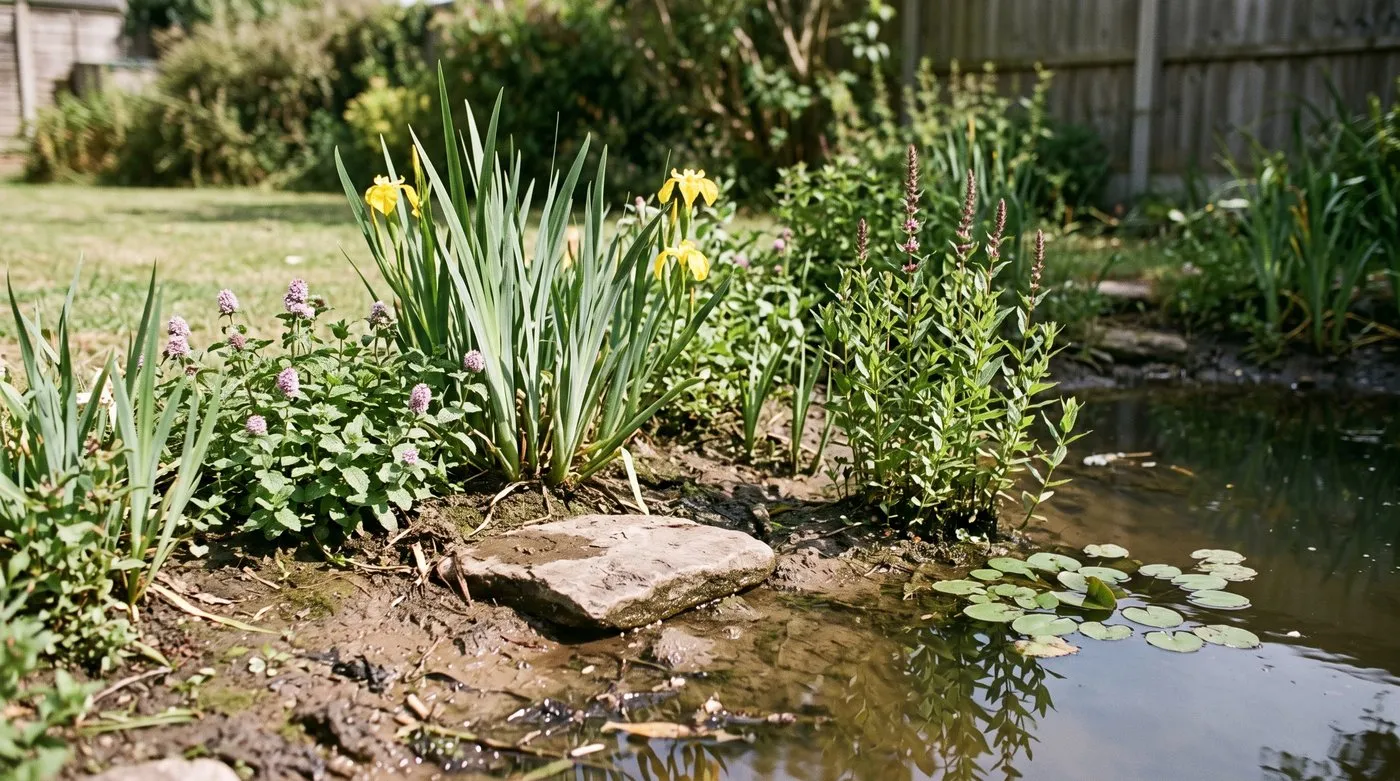
Upright stems like yellow flag iris give larvae a way to climb out of the water. Floating frogbit shades the surface and helps keep algae down.
What is the dragonfly lifecycle?
Dragonflies spend most of their lives underwater. The adult you see is just the final chapter.
Eggs. Females lay eggs in or near water. Damselflies tuck them into plant stems below the surface. Darters dip their tails into the water and drop them in.
Larvae. The larvae are fierce little underwater hunters. They grab prey with a jaw that shoots out at lightning speed, eating mosquito larvae, water fleas and even tadpoles. They stay underwater for one to several years, depending on the species.
Climbing out. When it’s ready, the larva climbs a stem out of the water, usually early on a warm morning. Its skin splits and the adult wriggles free, then waits a few hours for its wings to harden. The empty skin left on the stem is proof they’ve bred in your pond.
Adults. The flying adults live only a few weeks. Males guard patches of water and mate with visiting females. They hunt over gardens and meadows and come back to the water to breed.
| Stage | How long | Where | Main danger |
|---|---|---|---|
| Egg | A few weeks | In plant stems or on the pond floor | The pond drying out |
| Larva | One to several years | Pond floor and underwater plants | Fish, the pond being drained |
| Climbing out | A few hours | A stem above the water | Birds, wind, rain |
| Adult | A few weeks | Gardens, meadows, woodland edges | Cold, wet summers |
How do I attract dragonflies to an existing pond?
Take out the fish, add native plants and let in more sun. These changes make the biggest difference.
Step 1: Think about the fish. Goldfish and koi eat eggs and larvae, so dragonflies won’t breed with them. Rehome them to a separate pond or tank if you want dragonflies. Frogs and newts live happily alongside dragonfly larvae.
Step 2: Let the sun in. Cut back branches that shade the water. Dragonflies need sun to warm up, and larvae grow faster in warmer water.
Step 3: Add native plants. Plant yellow flag iris, purple loosestrife, water mint and marsh marigold around the edges. Steer clear of invasive pond plants like New Zealand pygmyweed and parrot’s feather, which are banned from sale and smother ponds.
Step 4: Make basking spots. Put a few large flat stones on the sunny side of the pond. A log laid flat near the edge works too, and beetles will move in underneath.
Step 5: Leave wild edges. Don’t mow right up to the pond. A metre-wide strip of long grass and wildflowers gives new adults shelter and perches. Hoverflies and beetles love it too.
 A common darter warming up on a sunny stone. It’s one of the most common garden dragonflies and flies well into autumn.
Can I attract dragonflies without a pond?
You’ll see visitors, but they can’t breed without water. Adults hunt well away from ponds, so gardens near rivers, canals or lakes often get passing dragonflies.
A mini pond in a large tub or half-barrel may tempt the odd damselfly, especially the blue-tailed damselfly, which isn’t fussy. Sink the tub into the ground so the water stays a steadier temperature. Add water mint and a clump of miniature bulrush. It’s a lovely project for a patio or small garden.
Other ways to make dragonflies linger:
- Tall perches. Dragonflies love tall stems and canes. Try verbena bonariensis, fennel or ornamental grasses
- Warm, sheltered spots. Sunny walls and fences are perfect for basking
- Lots of flowers. Bee-friendly plants and butterfly flowers bring in the insects dragonflies eat
- Go easy on sprays. Pesticides kill their food and can end up in the pond
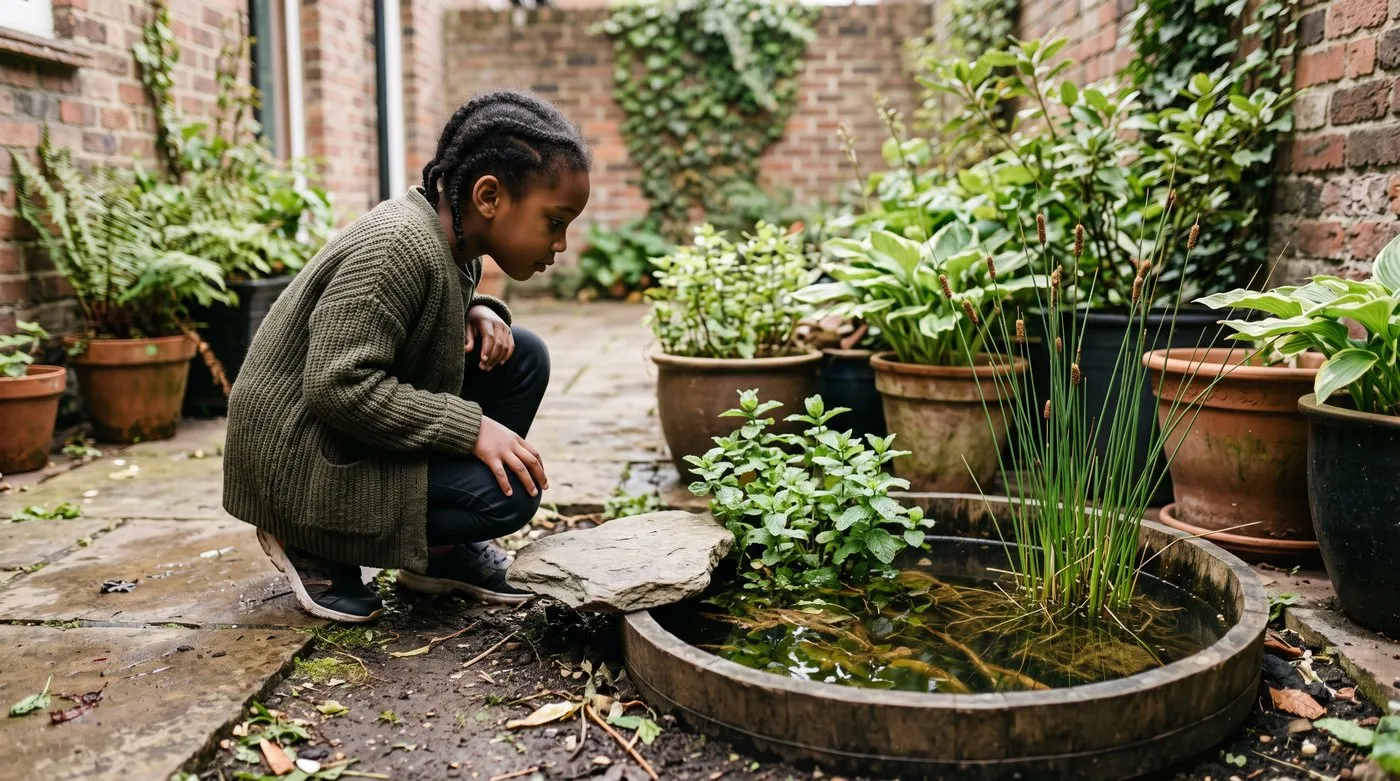
A sunken half-barrel with water mint and miniature bulrush may tempt the odd damselfly. Sinking it keeps the water at a steadier temperature.
When can I see dragonflies in my UK garden?
From late April to October. Exact timing depends on the species, where you live and the weather.
| Month | What to look for |
|---|---|
| April | Large red damselfly, the first of the year |
| May | Azure and blue-tailed damselflies. Broad-bodied chasers at new ponds |
| June | Emperor dragonfly and common darter join in |
| July | The busiest month. Southern hawker appears |
| August | Migrant hawker arrives. Brown hawker over fields and gardens |
| September | Fewer about, but plenty of common darters and migrant hawkers |
| October | The last common darters, and migrant hawkers in mild years |
The British Dragonfly Society would love your sightings. Sending in what you see helps them keep track of how dragonflies are doing.
Conservation status of UK dragonflies
Some kinds are doing well and some are struggling. A few southern species have spread north in recent years, and some newcomers have arrived from Europe.
Others need very particular homes, like the Norfolk hawker of the Norfolk Broads or the white-faced darter of northern bog pools. Garden ponds can’t help those, but they’re a real lifeline for the common kinds. Lots of countryside ponds have been lost over the years, so every new garden pond counts.
Start with a small wildlife pond and a few native plants, and the dragonflies will find you. Our guide on building a wildlife pond shows you how, step by step.
Frequently asked questions
What is the difference between a dragonfly and a damselfly?
Look at the wings when it lands. Dragonflies rest with their wings held open. Damselflies fold theirs along the body. Dragonflies are also bigger and chunkier, with big eyes that meet on top of the head. Damselflies are slim, with a gap between the eyes.
Do I need a pond to attract dragonflies to my garden?
You need one for them to breed. Adults hunt well away from water, so if you live near a river, canal or lake you may see them anyway. To have them coming back year after year, you’ll need a pond with native plants.
What size pond do dragonflies need?
Smaller than you might think. A pond about 1m by 1.5m will do, as long as one part is around 60cm deep so it doesn’t freeze solid. A bigger pond usually brings more kinds.
How long do dragonflies live?
Most of their life is spent underwater. The flying adults you see only live a few weeks. Before that, the larvae live in the pond for anything from one to several years, depending on the species.
Why do dragonflies hover over my pond?
It’s usually a male guarding his patch. He flies a regular route around the pond, chasing off other males and waiting for females. You’ll see it most from June to August. Females visit to mate and then lay their eggs in or near the water.
Are dragonflies declining in the UK?
Some are, and some are spreading. A few southern kinds have moved further north in recent years. Others that need special wetland homes are struggling. Garden ponds help the common kinds, and you can send your sightings to the British Dragonfly Society.
When is the best time to see dragonflies in a UK garden?
June to August is best. The first, the large red damselfly, appears in late April. The common darter and migrant hawker keep going into October. Warm, sunny, still days around midday give the best views.
Our team produces practical UK gardening guidance from source research, contributor records and established horticultural practice. Editorial standards are overseen by Matt W.