Key takeaways
- The harlequin ladybird arrived in Britain in 2004 and is now very common
- Check the legs first; harlequins usually have brown legs, while 7-spots and 2-spots have black legs
- Look for a cream or white patch behind the head with a black M or W
- Don't count spots; harlequins can have none or up to 21, in many colours
- They eat native ladybird eggs and larvae as well as aphids
- Never squash a ladybird you haven't identified; record sightings instead
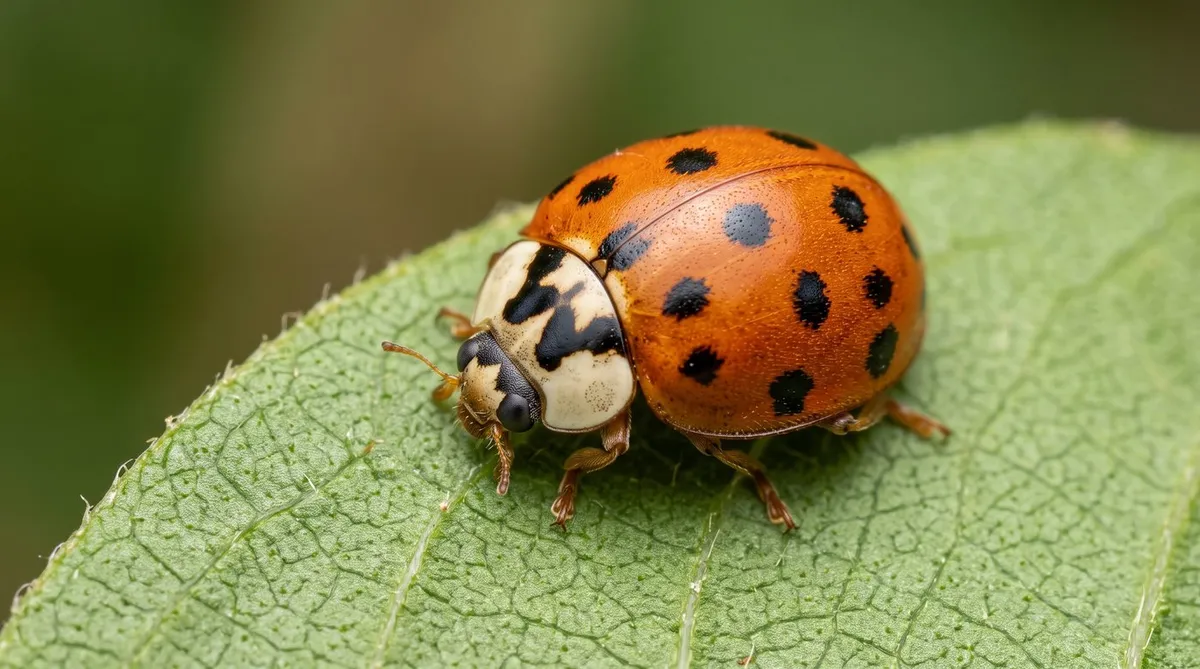
If you’ve spotted a big, bold ladybird that doesn’t look like the classic red one with seven spots, it’s probably a harlequin ladybird. Harlequins were first found in Britain in 2004 and are now one of our commonest ladybirds. They eat aphids, but they also eat native ladybirds’ eggs and larvae.
Telling them apart takes a few seconds once you know what to look for. Here’s how, plus what to do when they turn up indoors in autumn. For the full cast of native ladybirds and how to attract them, see the guide to ladybird identification.
How to identify a harlequin ladybird
Forget counting spots. Harlequins vary so much that spot-counting won’t help. Check these three things instead.
- Legs: harlequins usually have brown or reddish-brown legs. Our common 7-spot and 2-spot have black legs.
- The patch behind the head: on a harlequin, this is usually cream or white with a black M or W shape, or a solid black blob.
- Size and shape: harlequins are 5-8mm long, chunky and very domed.
The wing cases come in lots of patterns:
- Orange or red with lots of black spots, the most common form
- Black with two or four red or orange spots, which is easy to mix up with a dark 2-spot
- Plenty of in-between versions, sometimes with no spots at all
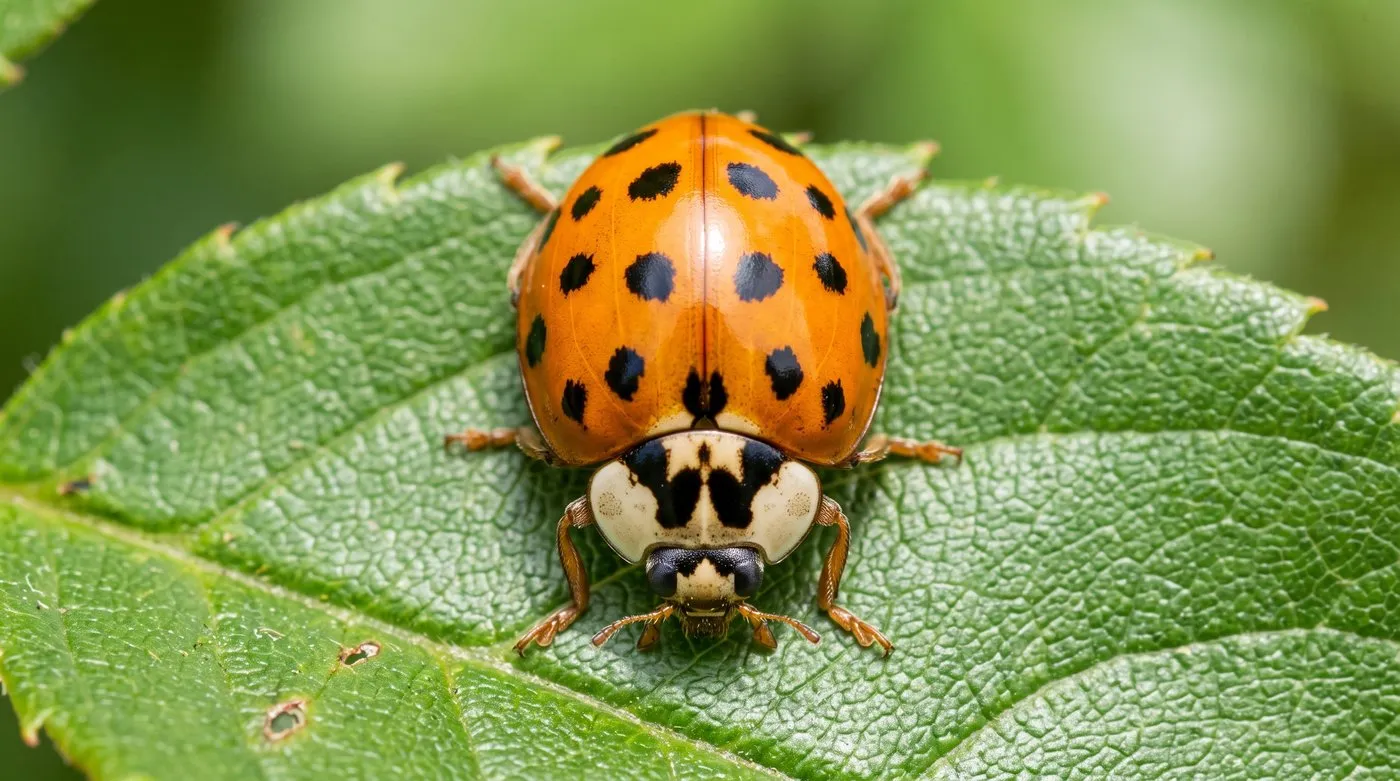
The black M on a cream patch and the brown legs are the giveaways. Ignore the spots.
Harlequin or native? The key differences
Most confusion is between harlequins and our two most familiar natives, the 7-spot and the 2-spot.
| Feature | Harlequin | 7-spot (native) | 2-spot (native) |
|---|---|---|---|
| Size | 5-8mm, chunky | 5-8mm | 4-5mm, small |
| Legs | Usually brown | Black | Black |
| Pattern | Very variable, 0-21 spots, or black with red | Red with 7 black spots | Red with 2 spots, or black with red |
| Patch behind head | Cream with black M or W | Black with white front corners | Black with white edges |
| Status | Non-native | Native, common | Native, declined |
The 7-spot is the classic ladybird: red, seven black spots, black legs and a mostly black patch behind the head with two white front corners. A dark harlequin is easily mistaken for a black 2-spot, but the 2-spot is noticeably smaller.
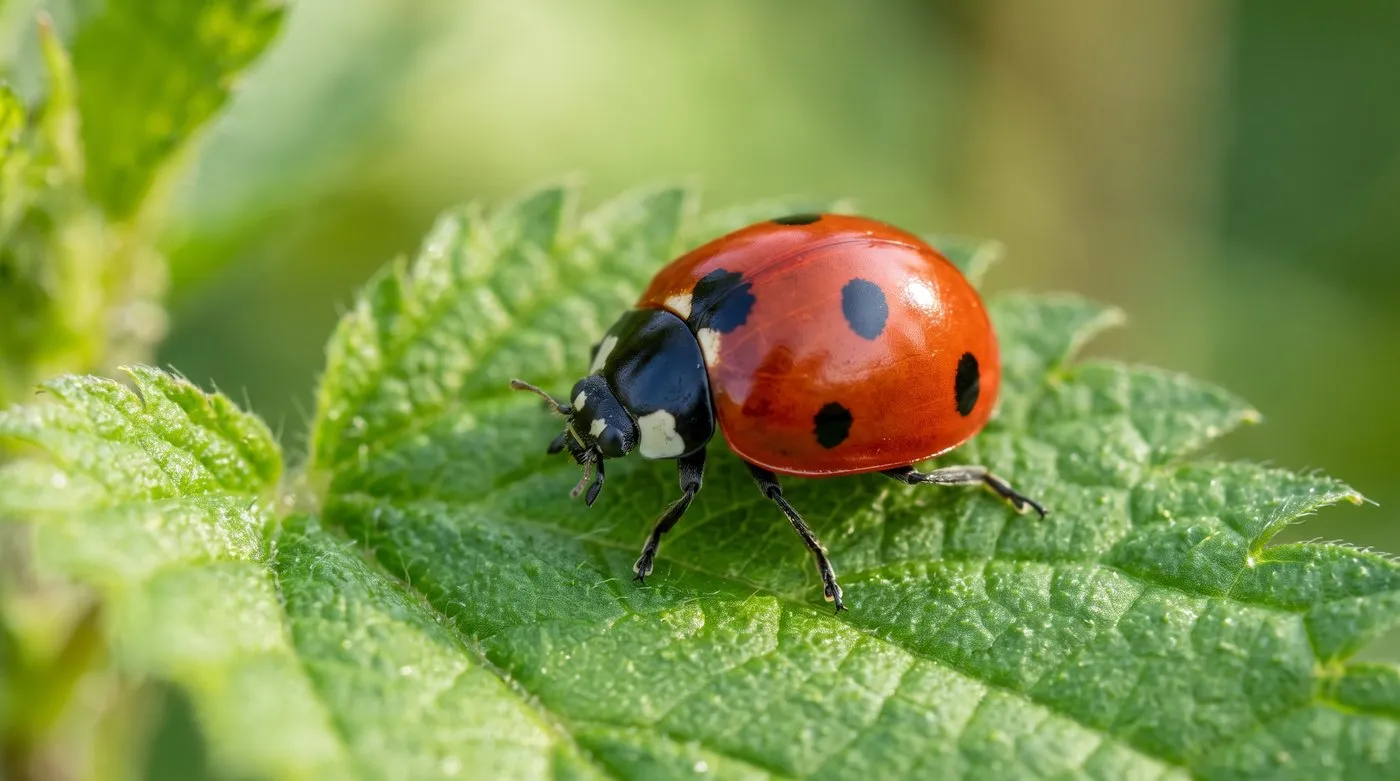
Our native 7-spot has black legs and neat white corners behind the head. No M in sight.
Why harlequin ladybirds are a problem
Harlequins are greedy and aren’t fussy eaters. They eat aphids, which is helpful, but they compete with native ladybirds for them and usually win. When aphids run short, they eat native ladybird eggs, larvae and pupae too.
That’s a double blow for our natives. The 2-spot ladybird has been hit hardest, and several other species have declined since harlequins spread.
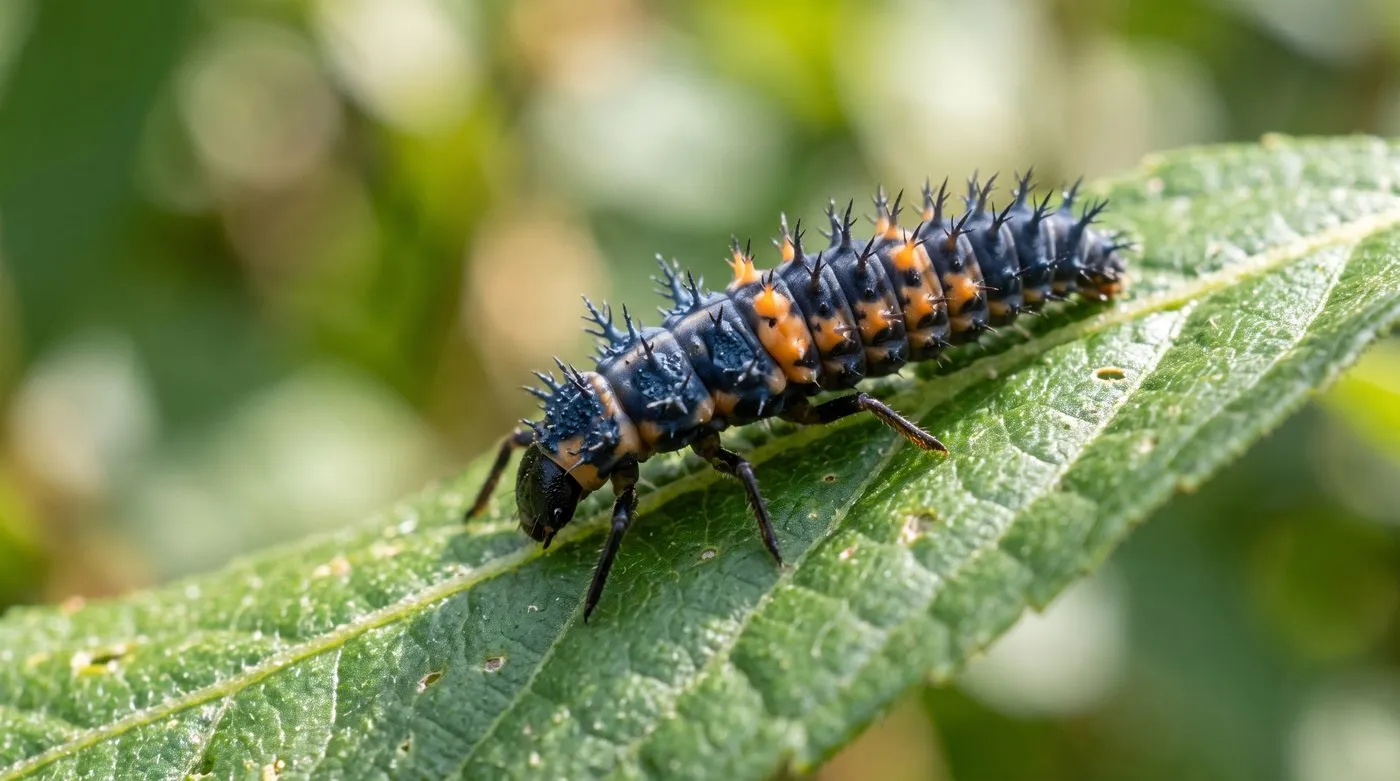
Harlequin larvae are spiky and black with orange markings. They eat aphids, but also the young of native ladybirds.
Growing plenty of plants and leaving some wild corners gives native ladybirds the best chance. The guide to creating a wildlife garden is a good place to start.
Harlequin ladybirds in the house
Harlequins often come indoors in autumn to spend the winter. Unlike most natives, they gather in clusters, sometimes dozens together, in window frames, lofts, porches and the corners of rooms.
They’re harmless. They don’t breed indoors, don’t eat anything in the house and don’t carry disease. Two small things to know:
- If you squash or upset one, it may leave a yellow stain, so be gentle on pale surfaces
- A hungry one might give you a tiny nip, which is startling but harmless
The kind fix is easy. Gently sweep them into a pot or jar and move them to a shed, garage or outbuilding where they can see out the winter. Or simply leave them if they’re out of the way. There’s no need for sprays indoors.
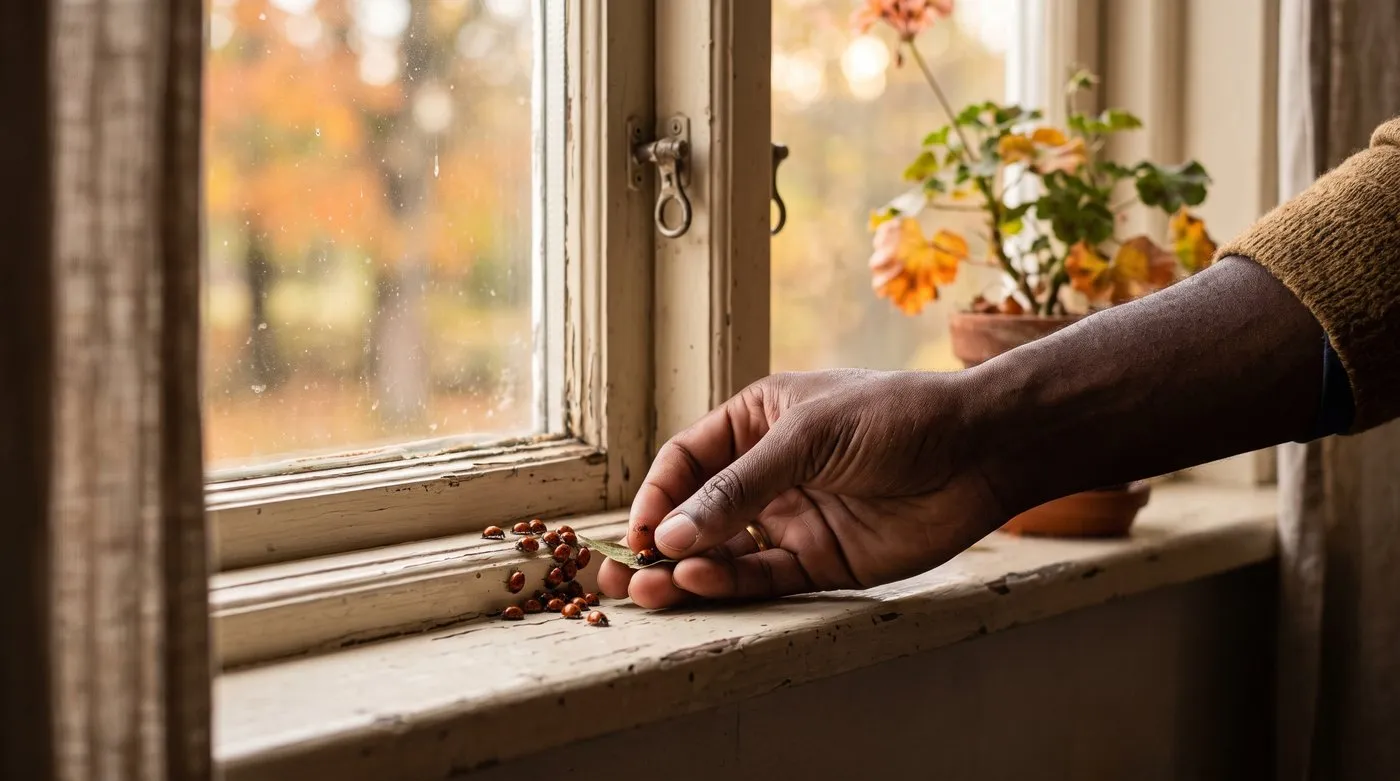
Clusters on the window sill in autumn are usually harlequins. Scoop them up gently and move them somewhere cool and sheltered.
Gardener’s tip: If harlequins pile in through the same window every year, fit a fine insect mesh over it in early autumn. It keeps them out without harming them.
What to do about harlequin ladybirds
Don’t try to kill them. Harlequins are established right across Britain. Removing the ones in your garden won’t make a dent. Worse, squashing ladybirds risks killing natives by mistake.
Don’t spray. A spray that kills harlequins also kills native ladybirds, lacewings and hoverfly larvae. If aphids are the real worry, the guide to getting rid of aphids has gentle fixes.
Do record what you see. The UK Ladybird Survey collects sightings of all ladybirds, native and harlequin. You can send in a photo with the date and place through the iRecord website or app. Your records help track how native ladybirds are coping.

A quick phone photo with the date and place is all a ladybird record needs. It’s the most useful thing you can do.
Common mistakes with ladybird ID
- Counting spots on a harlequin. Their patterns vary too much. Check the legs and the M behind the head.
- Assuming any orange ladybird is native. The orange, many-spotted form is the commonest harlequin.
- Mixing up a black harlequin and a black 2-spot. The 2-spot is much smaller and has black legs.
- Squashing ladybirds to “control” harlequins. It won’t work and risks killing natives.
- Spraying them indoors. They’re harmless winter guests. Move them gently instead.
Frequently asked questions
How do I identify a harlequin ladybird?
Check for brown legs and a black M or W behind the head. Harlequins are 5-8mm, domed and very variable in colour. The cream or white patch behind the head with a black M or W is the clearest clue. Native 7-spots and 2-spots have black legs.
Are harlequin ladybirds bad for the garden?
They’re good at eating aphids but bad news for native ladybirds. Harlequins compete with natives for aphids and also eat their eggs and larvae. They’re linked to the decline of several native species, including the 2-spot.
What is the difference between a harlequin and a 7-spot ladybird?
Look at the legs, the spots and the patch behind the head. The 7-spot is red with seven black spots, black legs and a black patch with white front corners. Harlequins usually have brown legs, a cream patch with a black M, and a variable pattern.
Should I kill harlequin ladybirds?
No, killing them makes no real difference. Harlequins are established right across Britain. Squashing ladybirds also risks killing natives by mistake. Recording your sightings is far more useful.
Why do ladybirds gather in my house in autumn?
They’re usually harlequins looking for somewhere to spend winter. They cluster in window frames, lofts and room corners from autumn. They’re harmless. Gently sweep them into a jar or pot and put them in a shed or outbuilding, or leave them be.
Do harlequin ladybirds bite?
They can give a tiny nip, but they’re harmless. Hungry harlequins sometimes nibble bare skin in autumn. It feels like a little pinch and does no harm. They can also leave a yellow stain if squashed.
Which native ladybirds are most at risk?
The 2-spot ladybird has been hit hardest. Its numbers have fallen as harlequins spread, and several other natives have declined too. Recording all the ladybirds you see helps track how they’re doing.
Now you can spot a harlequin, find out which other bugs are helping your garden in the guide to good bugs and bad bugs, or browse more garden wildlife guides.
Our team produces practical UK gardening guidance from source research, contributor records and established horticultural practice. Editorial standards are overseen by Matt W.