Key takeaways
- The common green shield bug is a native, about 12-14mm long, and does little or no harm
- It turns bronze-brown in autumn and goes green again in spring
- Shield bugs give off a smell when handled, which is why they're also called stink bugs
- The young (nymphs) are rounder and patterned, but they're the same harmless bug
- The southern green shield bug is a newer arrival in the south-east that can mark beans and tomatoes
- No spraying needed; hand-pick or net a prized crop if you really want to
That bright green, shield-shaped bug on your beans is almost certainly the common green shield bug, and it’s nothing to worry about. It’s a native UK insect, it does little or no harm, and the birds are glad of it. The only one worth a second look is the southern green shield bug, a newer arrival in the south-east.
Here’s how to identify it, why it changes colour and what its odd-looking young are. You’ll also find out how to tell it from its southern cousin.
What does a green shield bug look like?
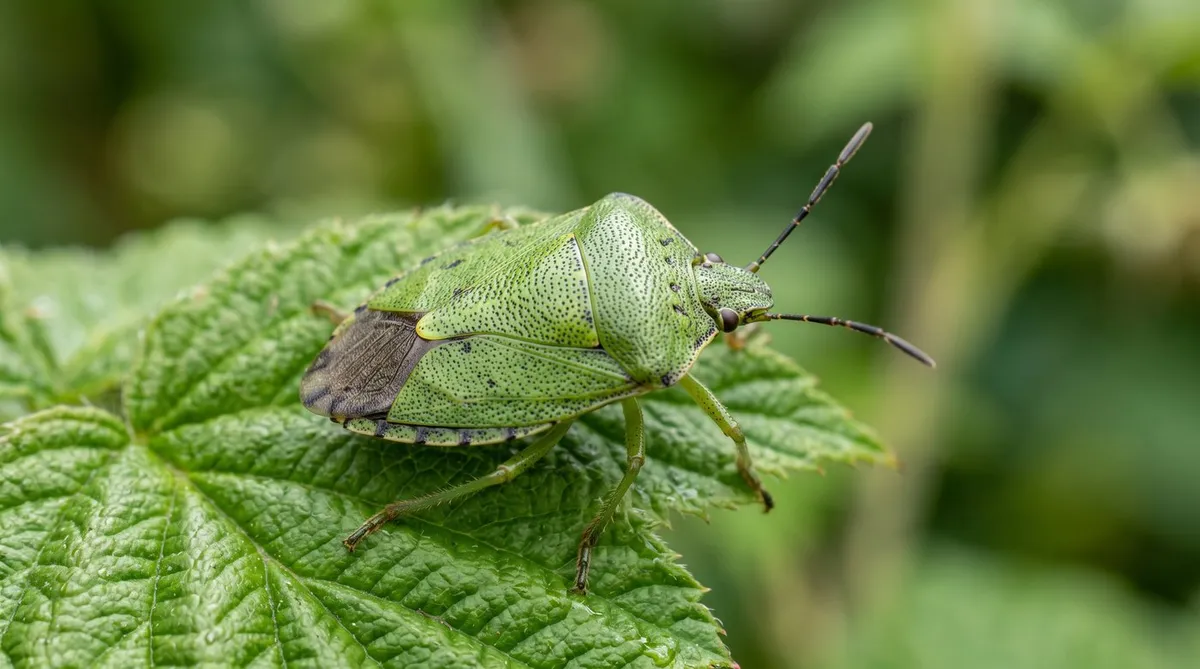
The common green shield bug (Palomena prasina) is a flat, broad, shield-shaped bug about 12-14mm long. It’s bright green and covered in fine dark dots, with dark brown wing tips at the back. It has long antennae, green with darker tips.
You’ll find it on beans, raspberries, hazel, brambles and lots of other plants from spring to autumn. Pick one up and you may notice a faint smell. That’s its defence against predators.
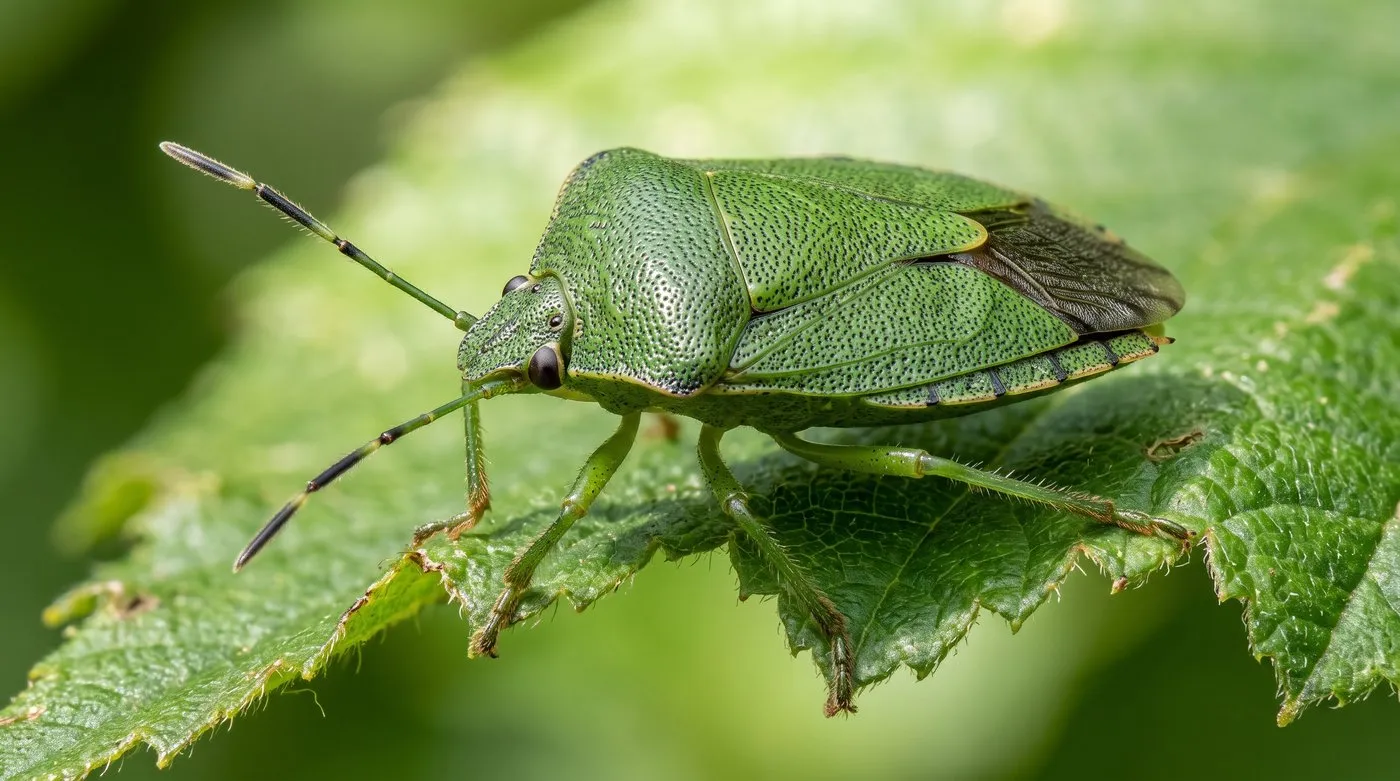
That shield outline, the fine dark dots and the brown wing tips at the back are the easy giveaways.
Why is my green shield bug turning brown?
It’s getting ready for winter. In autumn, the green shield bug darkens to a bronze-brown colour. That hides it among dead leaves and bark while it hibernates as an adult.
In spring, when it wakes up and starts feeding, it turns bright green again. So a brown shield bug in October and a green one in June can be the very same insect.
The green shield bug life cycle
The young look nothing like their parents, which can be confusing.
- Spring: adults wake from hibernation, turn green and mate.
- Early summer: females lay neat clusters of barrel-shaped eggs on the undersides of leaves.
- Summer: the eggs hatch into nymphs. These are rounder, wingless and often patterned with black, green and cream. They moult several times as they grow.
- Late summer: the nymphs become adults, feed up and turn bronze for winter.
There’s one generation a year. None of the stages needs controlling.
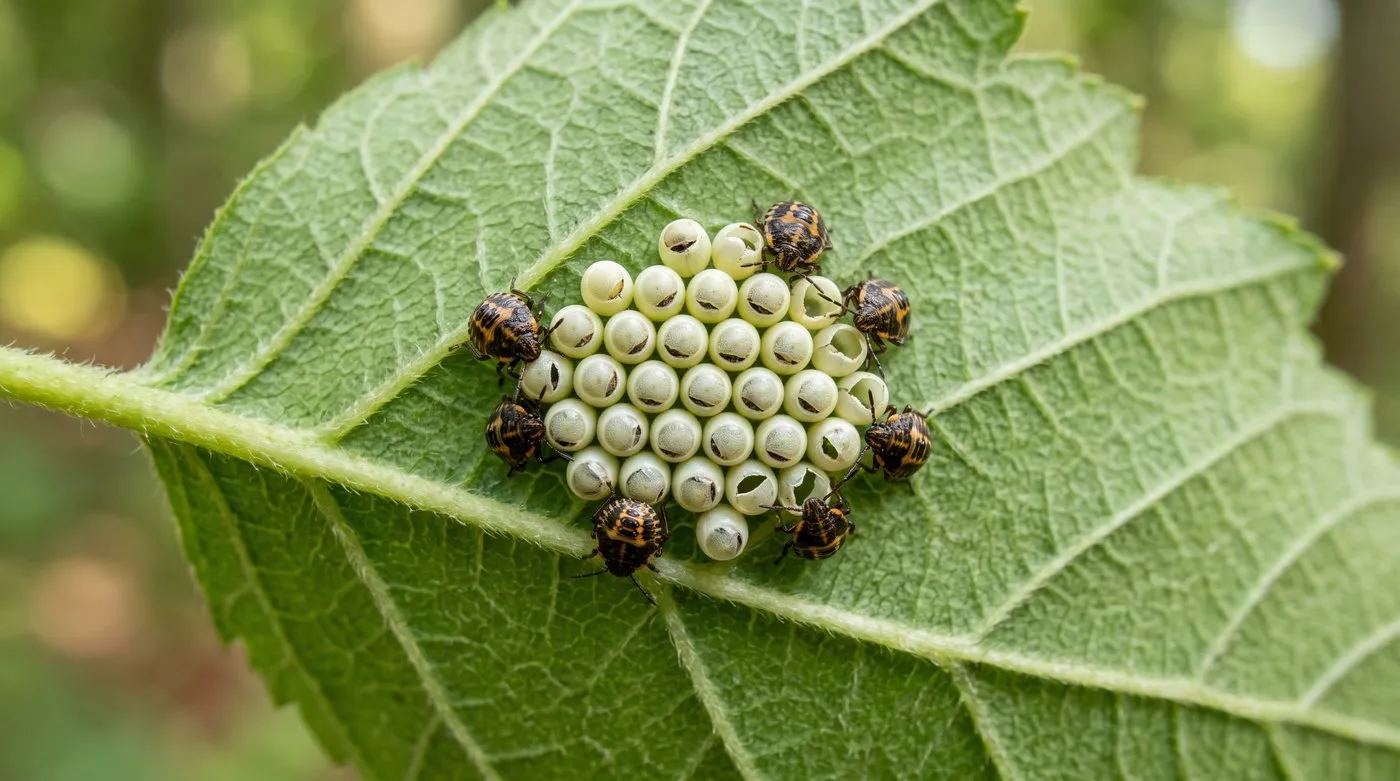
Shield bug eggs sit in tidy clusters under leaves. The little patterned nymphs that hatch are the same harmless species.
Are green shield bugs good or bad for the garden?
They’re mostly harmless. Green shield bugs suck a little sap from leaves, pods and fruit, but in normal garden numbers you won’t see real damage.
They’re also part of the garden’s food chain. Birds, spiders and other predators eat them. Killing them doesn’t help your plants and takes away a meal for wildlife. For a wider look at who’s helping and who’s harming, see the guide to good bugs and bad bugs.
If your beans really are struggling, look for other causes first. The guide to runner bean pests and diseases covers the usual culprits.
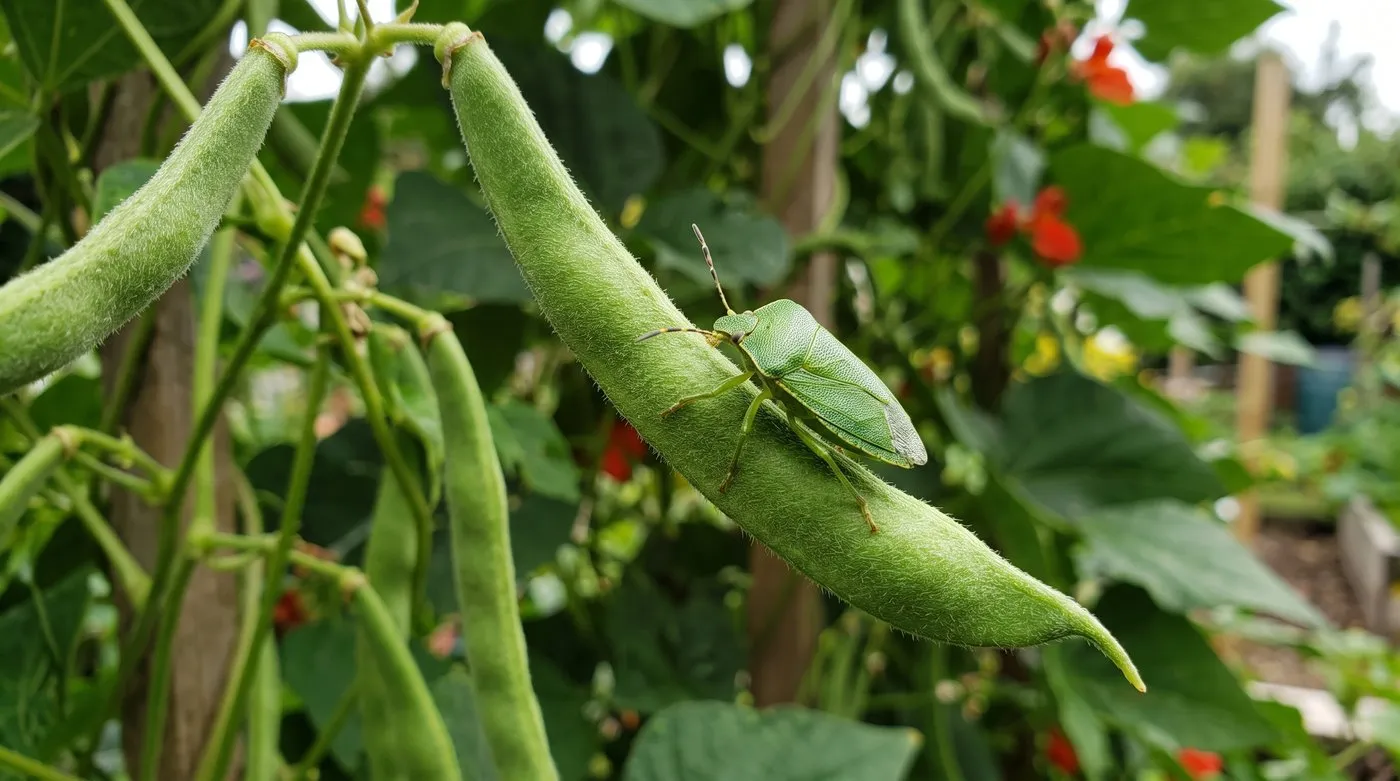
Shield bugs often turn up on beans in summer. In normal numbers they don’t do the pods any real harm.
How to spot the southern green shield bug
The southern green shield bug (Nezara viridula) is a non-native species. It’s been breeding in London since the early 2000s and has spread into other parts of the south-east. Unlike the native, it can leave marks and hard patches on beans, tomatoes and peppers.
The adults look very like our native green shield bug, so check these clues:
- Pale dots: it usually has a row of small pale dots across its back, near the front of the triangular plate in the middle
- Wing tips: they’re pale rather than the native’s dark brown
- Nymphs: the young are very striking, black or green with white, yellow and red spots
If you garden in London or the south-east and spot one, pick it off by hand. You can also log sightings on a recording site such as iRecord, which helps track the spread. Further north, a green shield bug is almost certainly the native one.

A hand lens makes it much easier to see the tell-tale dots and wing tips that separate the two green species.
Other shield bugs you might find
Several other shield bugs turn up in UK gardens. All of these are harmless natives.
| Shield bug | How to spot it | Where you’ll see it |
|---|---|---|
| Common green shield bug | Bright green, dark wing tips, bronze in autumn | Beans, fruit bushes, hazel, brambles |
| Hawthorn shield bug | Green with deep red markings | Hawthorn and other trees |
| Forest bug | Dark brown with reddish legs | Trees, sometimes fruit trees |
| Gorse shield bug | Green, often with pinkish or purple tinges | Gorse, broom and other pea-family plants |
The only non-native to watch for is the southern green shield bug, and mainly in the south-east.
What to do about green shield bugs
For the native green shield bug, the answer is easy: nothing. No control is needed. Enjoy them, and show the patterned nymphs to any curious children.

Shield bugs are slow and harmless, so they’re perfect for a bit of bug spotting with children. No need to move them on.
If you want to keep shield bugs off a prized crop, there are simple options:
- Hand-pick the odd bug and pop it somewhere else
- Cover beans or soft fruit with fine mesh netting
- Check leaf undersides in early summer for egg clusters
Don’t spray. A broad insecticide kills the ladybirds and lacewings doing useful work in your garden. The lacewing guide shows why those are worth keeping.
Common mistakes with shield bugs
- Assuming any green bug is a pest. The native green shield bug does no real harm.
- Mixing it up with capsid bugs. Capsids are smaller, narrower and fast-moving, and they do leave ragged holes in leaves. The capsid bug guide shows the difference.
- Panicking about the nymphs. The patterned young are the same harmless species growing up.
- Thinking a brown one is something new. It’s the same bug in its winter colours.
- Reaching for a spray. Hand-picking is all you ever need, even for the southern green shield bug.
Frequently asked questions
Are green shield bugs harmful to my garden?
No, the common green shield bug is largely harmless. It sucks a little sap from beans, fruit and other plants, but rarely does any damage worth worrying about. It’s a native part of your garden’s wildlife.
How do I identify a green shield bug?
Look for a flat, bright green, shield-shaped bug about 12-14mm long. The common green shield bug has fine dark dots all over and dark brown wing tips at the back. In autumn it turns bronze-brown.
Do green shield bugs bite or sting?
No, green shield bugs don’t bite or sting people. They feed only on plant sap. Their only defence is a smelly fluid they give off when disturbed, which is why they’re nicknamed stink bugs.
What is the difference between a green shield bug and a stink bug?
They’re the same family; shield bugs are also called stink bugs. In the UK, the common green one is the native Palomena prasina. The southern green shield bug, Nezara viridula, is a different, non-native species that can mark crops.
Should I kill green shield bugs?
No, there’s no need to kill the native green shield bug. It does no real harm and birds and spiders eat it. If the southern green shield bug is spoiling your beans or tomatoes, pick the bugs off by hand.
Why is my green shield bug brown?
It’s the same bug changing colour for winter. The common green shield bug turns bronze-brown in autumn, which hides it among dead leaves while it hibernates. It turns green again when it wakes up in spring.
Are shield bug eggs a problem?
No, the eggs are harmless and fun to spot. Green shield bugs lay neat clusters of barrel-shaped eggs under leaves in early summer. The nymphs that hatch look quite different from adults but don’t cause damage worth controlling.
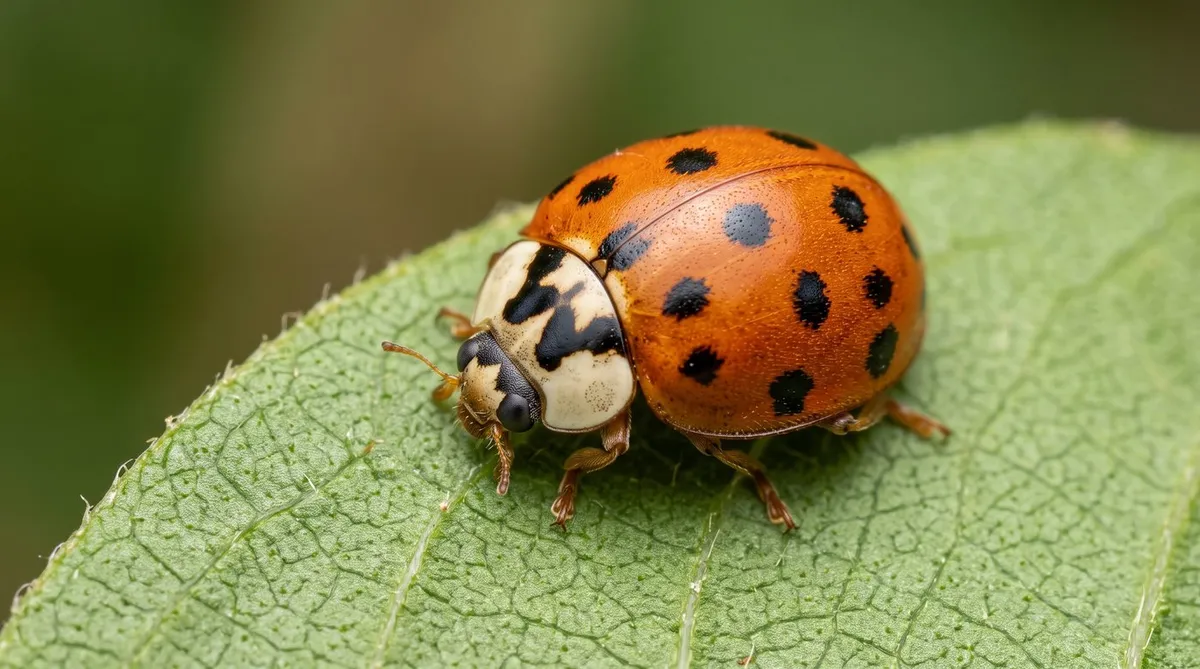
Curious about other bugs on your plants? Find out how to tell a harlequin ladybird from our native ones, or browse more garden wildlife guides.
Our team produces practical UK gardening guidance from source research, contributor records and established horticultural practice. Editorial standards are overseen by Matt W.