
Key takeaways
- Lemon balm is fully hardy and grows in every part of the UK
- It self-seeds everywhere, so grow it in a pot or snip off the flowers
- Pick before it flowers for the best lemon flavour, cutting stems to 5cm
- Golden 'All Gold' is pretty and much less vigorous than the plain green kind
- Bees and hoverflies love the small flowers
- Divide clumps in spring or autumn, or root cuttings in a glass of water
Lemon balm is one of the easiest and most useful herbs you can grow in the UK. It gives you lovely lemon-scented leaves from May to October, comes back every spring and grows in almost any soil.
There’s one thing to know before you plant it: lemon balm loves to self-seed. Leave it to flower and you’ll find little plants in your beds, lawn and paving cracks. Keep it in a pot or snip off the flowers and it’s a joy.
What is lemon balm and why grow it?
Lemon balm (Melissa officinalis) is a hardy perennial herb in the mint family, grown for its lemony leaves. Melissa comes from the Greek word for honeybee, and beekeepers have grown it near their hives for centuries.
It forms bushy clumps 30-80cm tall with bright green, crinkly leaves. Small white or pale yellow flowers appear from June to September, and bees and hoverflies love them. The RHS lemon balm guide is a handy extra read.
One plant gives you plenty of leaves for tea, salads and cooking all season. It comes back every spring, and dried leaves keep for winter tea. It also makes a good companion plant, bringing bees close to your fruit and veg.

Splitting a clump in spring is the quickest way to make new plants.
How do I stop lemon balm spreading in the garden?
The main culprit is seed, so grow it in a pot or cut off the flowers before they set seed. Left to its own devices, it can fill a border with seedlings in a couple of years.
Each flower spike drops lots of tiny seeds that come up in lawns, gravel, paving and any bare soil. The clump itself also gets wider each year.
Container growing is the safest approach
Grow it in a pot at least 30cm wide on a patio or gravel. Seed that drops onto hard ground has nowhere to grow. Use multi-purpose compost mixed with a few handfuls of perlite, and stand the pot on feet so roots can’t wander out of the drainage holes.
If you want it in a border, sink the whole pot into the ground with the rim 5cm above the soil. It’s the same trick used for growing mint, its more famously wandering cousin.
Deadheading prevents self-seeding
Cut off the flower spikes before they set seed. It’s the best way to stop seedlings, and the plant puts its energy into leaves instead. Check weekly from June and snip off flower stems as they appear.
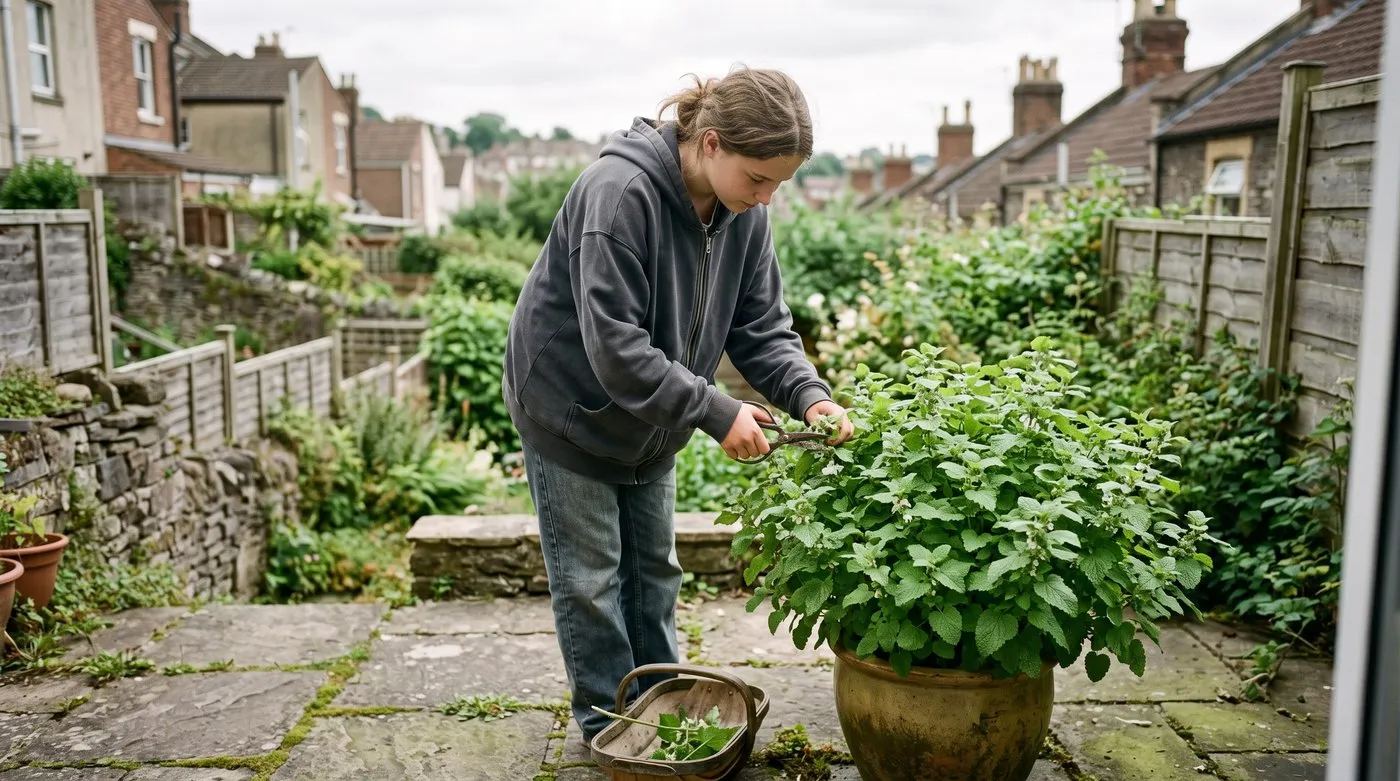
Snip off flower stems weekly from June, before they set seed. The plant puts its energy back into leaves instead.
Which lemon balm varieties grow best in the UK?
There are a few named kinds to choose from. Pick by whether you want lots of leaves, pretty foliage or a plant that’s easier to keep in check.
| Variety | Leaves | Size | How vigorous | Best for |
|---|---|---|---|---|
| Common lemon balm | Bright green | Tall | Very | Tea, cooking, bees |
| Aurea | Green splashed with gold | Medium | Moderate | Looks, cooking |
| All Gold | Golden | Short | Low | Brightening borders |
| Variegata | Green and gold | Medium | Moderate | Looks, salads |
| Compacta | Dark green, dense | Short | Low | Pots, edging |
| Lime | Lime-green | Medium | Moderate | Tea with a lime twist |
Common green lemon balm is the best for tea and cooking, with the strongest lemon scent. The downside is its vigour, so be ready to deadhead.
All Gold has the brightest leaves of all and lights up a gloomy corner. Hot afternoon sun can scorch it, so give it morning sun and afternoon shade. It’s the least vigorous, so it’s ideal if you’re worried about spreading.
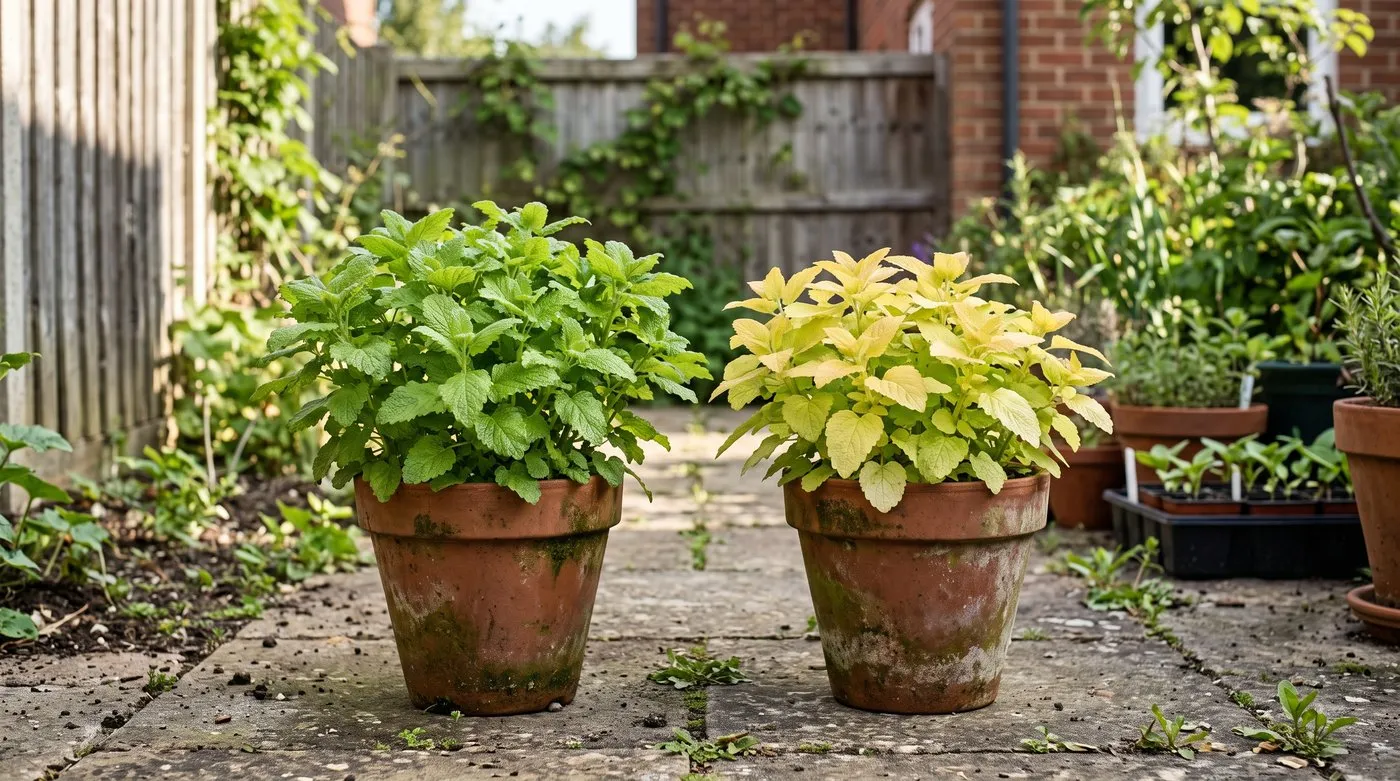
All Gold brightens a dull corner and spreads far less than the green kind. Give it morning sun so the leaves don’t scorch.
How do I plant and care for lemon balm?
Plant in spring, water pots regularly and cut the whole plant back in midsummer for fresh new leaves. Once it’s settled, it’s very low-maintenance.
Soil and position
Lemon balm grows in any reasonable soil, from clay to sand and chalk. It likes soil that’s moist but drains well. Sun or part shade both suit it. In a very hot, sunny spot, a bit of afternoon shade stops golden kinds scorching.
Watering and feeding
Pots need watering every two or three days in summer. Push a finger into the compost, and if it’s dry, water until it runs out the bottom. Plants in the ground rarely need watering once settled, except in long dry spells.
Give pots a balanced liquid feed every month from April to August. Plants in the ground don’t need feeding. Too much feed gives lots of leaves with less flavour.
The midsummer cut-back
By July, lemon balm often looks leggy with yellowing lower leaves. Cut the whole plant back to 5cm and water well. Fresh, bushy growth comes back within a few weeks and lasts until October. It also stops it flowering and seeding later on.

A pot on the patio is the easiest way to enjoy lemon balm without it seeding all over the garden.
How do I propagate lemon balm?
It’s easy from division, cuttings or seed. Division and cuttings give you plants just like the parent. Seedlings can vary a little.
Division (fastest method)
Lift a clump in March or October and pull it apart into pieces, each with some shoots and roots. Replant straight away and water well. They settle in quickly and you’ll be picking again within a couple of months.
It’s the same technique you’d use for propagating other perennials. Splitting big clumps every few years also keeps them vigorous.
Stem cuttings
Take 10-15cm cuttings from healthy shoots without flowers, between May and August. Strip off the lower leaves and stand them in a glass of water on a bright windowsill. Change the water every couple of days. Roots usually appear within a couple of weeks. Pot them up once the roots are a few centimetres long.
Seed
Sow indoors in March or April. Press the seeds onto moist compost but don’t cover them, as they need light to come up. Keep them somewhere warm. Harden off the seedlings and plant out after the last frost in May.
What can I use lemon balm for?
The leaves have a soft, sweet lemon scent that gets stronger when you crush them.
Tea and drinks
Fresh lemon balm makes one of the nicest herbal teas from the garden. Use a small handful of leaves per cup, bruise them gently and steep in boiling water for 5-7 minutes. It’s light and lemony and goes well with mint, chamomile and honey. For a summer cooler, pack a jug with leaves, fill with cold water and leave in the fridge overnight.
Cooking
Add fresh leaves to salads, fruit, fish and chicken. Lemon balm pesto with pine nuts, Parmesan and olive oil is lovely on pasta. The flavour fades with heat, so add it at the end or use it raw. Try chopped leaves mashed into soft butter for grilled fish and new potatoes.
Companion planting and pollinator support
Honeybees, bumblebees and hoverflies love the flowers. Stand a pot near your courgettes, runner beans and tomatoes to bring the bees in. The Bumblebee Conservation Trust has lots of ideas for feeding bees in your garden. Grow it with other bee-friendly garden plants for flowers all summer.
Medicinal uses
Lemon balm has a long history as a soothing herbal remedy, and many people drink it as a calming evening tea. It’s a popular choice for a medicinal herb garden. If you’re pregnant or take regular medicines, check with your doctor before using herbal remedies.

Pick before it flowers for the strongest lemon flavour.
How do I harvest and store lemon balm?
Pick before the plant flowers for the best flavour. Morning, once the dew has dried, is the best time.
Cut whole stems to 5cm above the soil rather than picking single leaves. It makes the plant bushier and gives you more to pick. You can cut again every few weeks from May to October.
Fresh storage
Wrap stems in damp kitchen paper and keep them in a bag in the fridge for up to a week. Or stand them in a glass of water on the windowsill for a few days. Your kitchen will smell lovely.
Drying
Hang small bundles upside down somewhere warm, dry and airy, out of direct sun. They’re ready in about a week, when the leaves crumble easily. Strip them off the stems and store in airtight jars. Our guide to drying and storing herbs at home has more tips.
Freezing
Chop the leaves, pack them into ice cube trays, top up with water and freeze. Tip the cubes into labelled freezer bags. Each one is a ready portion for tea or cooking, and frozen leaves keep more flavour than dried.
What problems affect lemon balm in the UK?
Lemon balm is very trouble-free here.
Powdery mildew
A white, powdery coating on the leaves in late summer, usually when plants are crowded. The midsummer cut-back stops most of it. If it appears, cut affected stems to the base and give plants more space.
Mint rust
Now and then you may see orange-brown spots under the leaves. Cut off affected stems and bin them rather than composting. It spreads in damp weather, so good air flow and watering at the base help.
Slugs and snails
Seedlings and fresh spring shoots can tempt slugs. Protect young plants with a few slug pellets approved for use near edible crops, or go on an evening torch patrol.
Want another lemony herb? Try lemon verbena, which has an even stronger scent but needs winter protection.
Frequently asked questions
Is lemon balm invasive in UK gardens?
It can be, mainly because it self-seeds so freely. Seedlings pop up in lawns, paving cracks and nearby beds. The clumps also slowly get wider. Grow it in a pot, or cut off the flowers before they set seed, and it’s easy to keep in check.
Can I grow lemon balm in shade?
Yes, it copes well with part shade. Plants in shade get a bit leggier and the flavour is a little milder. A spot with around four to six hours of sun is ideal. In deep shade it grows weak and sparse.
When should I harvest lemon balm leaves?
Pick from May to October. The flavour is best before the plant flowers. Cut whole stems to 5cm above the soil to make it bush out, and you can pick again every few weeks.
How do I make tea from fresh lemon balm?
Use a small handful of leaves per cup. Bruise them gently to release the scent, pour on boiling water and leave for 5-7 minutes. Strain and drink hot or cold. It has a soft lemony taste that’s lovely with honey. Dried leaves work too but are milder.
Does lemon balm die back in winter in the UK?
Yes, it dies down after the first hard frost. The roots stay alive underground through winter. New shoots come up in March or April, no replanting needed. Divide big clumps every few years to keep them vigorous.
What is the difference between lemon balm and lemon verbena?
Lemon balm is fully hardy, but lemon verbena isn’t. Lemon balm survives UK winters outside, while lemon verbena needs winter protection. Lemon balm has broad, crinkly leaves with a gentle lemon scent. Lemon verbena has narrow, pointed leaves with a much stronger, sharper lemon smell.
How do I stop lemon balm from spreading?
Grow it in a pot on a hard surface. Cut off the flower spikes before they set seed. In a border, sink a pot into the ground and keep an eye on how wide the clump gets. Pull up any seedlings you spot around the garden while they’re small.
Our team produces practical UK gardening guidance from source research, contributor records and established horticultural practice. Editorial standards are overseen by Matt W.


