Key takeaways
- Calendula, chamomile and mint are the easiest herbs to start with
- Most medicinal herbs want sun and soil that doesn't stay wet in winter
- A bed of about 2m by 3m is plenty, or grow a few in pots
- Comfrey must never be eaten or drunk
- St John's wort clashes with lots of medicines, including the pill
- Check with your GP or pharmacist before using any herbal remedy
A medicinal herb garden is one of the oldest traditions in British gardening, and it’s a lovely thing to grow. These twelve herbs are happy in UK gardens, most settle in within a season, and many are pretty enough for any border. Here’s what to grow, how to lay out a bed, and what to know before you use them.
Please note: This is a growing guide, not medical advice. Always check with your GP or pharmacist before using any herb as a remedy, especially if you take medicines, are pregnant or are breastfeeding.
What is a physic garden?
A physic garden is a garden of healing plants. Monks grew herbs to treat the sick in medieval monastery gardens. The Chelsea Physic Garden in London, founded in 1673, still grows a huge collection of medicinal and useful plants. Cottage gardeners kept the tradition going for centuries, mixing healing herbs with vegetables and flowers.
The tradition faded as modern medicines took over, but plenty of gardeners love growing these plants again today, for their looks, their scent and their history.

Purple echinacea is one of the showiest plants in a medicinal herb garden, and bees love it.
Which medicinal herbs grow best in the UK?
Calendula (Calendula officinalis)
Calendula, or pot marigold, is the best place to start. Sow it straight into the ground in spring and it flowers within a couple of months. The bright orange petals are traditionally used in skin creams and balms. It seeds itself about, so one packet keeps you going for years. It’s happy in any soil in full sun.
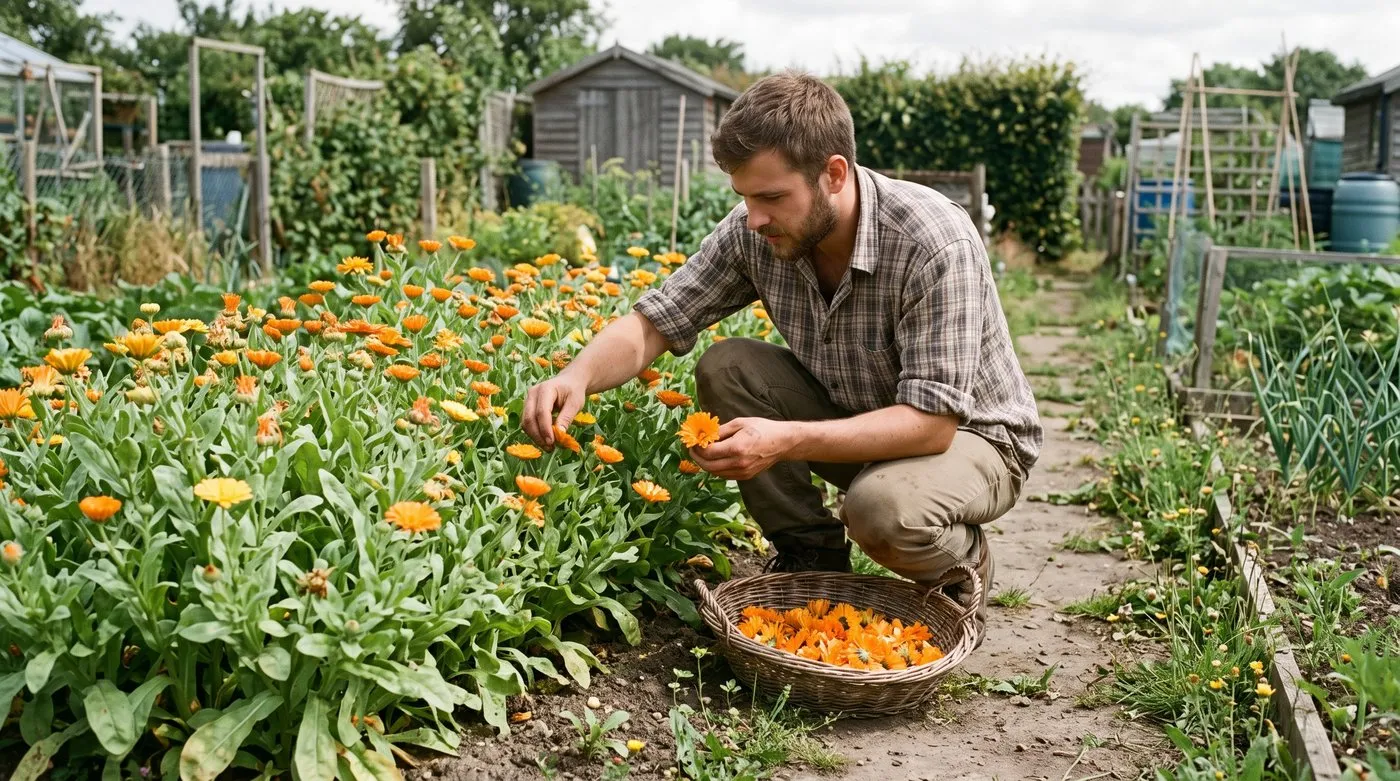
Calendula flowers within a couple of months of sowing. Keep picking the heads and it carries on flowering, then seeds itself for next year.
Chamomile (Matricaria chamomilla)
German chamomile is the one grown for tea. Its little apple-scented flowers dry easily and make a soothing cup that people have enjoyed before bed for centuries. Sow seed on the surface of damp compost in spring. It flowers through summer and seeds itself reliably. Give it sun and well-drained soil.
Echinacea (Echinacea purpurea)
Echinacea is a gorgeous perennial with big purple daisy flowers. It’s traditionally taken during colds. From seed it takes a couple of years to settle, but then lives for years. Give it well-drained soil and full sun.
Comfrey (Symphytum officinale)
Comfrey has an old country name, “knitbone”, from its traditional use on bruises and sprains. It’s a big, tough plant that grows almost anywhere, even heavy clay. One very important point: comfrey can damage the liver, so it must never be eaten or drunk.
Valerian (Valeriana officinalis)
Valerian root has been used to help with sleep for a very long time. Its tall stems carry clusters of pale pink flowers that pollinators love. Dig the roots in autumn once the plant is two or three years old. It likes damp soil and copes with part shade, so it’s handy for shadier corners.
Feverfew (Tanacetum parthenium)
Feverfew is traditionally used for headaches and migraine. It makes a bushy plant with little white daisies and strongly scented leaves. It seeds itself everywhere and grows in sun or part shade. Chewing the fresh leaves can give some people mouth ulcers.

Calendula and chamomile are the easiest medicinal herbs to grow from seed.
St John’s wort (Hypericum perforatum)
St John’s wort is traditionally used for low mood. Bright yellow flowers appear through summer on wiry stems. It likes sun and well-drained soil. This herb comes with a big safety warning: it interferes with many medicines, including the contraceptive pill, warfarin and some antidepressants. Always speak to your GP or pharmacist.
Lemon balm (Melissa officinalis)
Lemon balm makes one of the nicest herbal teas. Its lemony leaves are used fresh or dried for a calming cup. Cut it back hard in midsummer for a fresh flush of leaves. It grows in almost any soil and copes with part shade.
Sage (Salvia officinalis)
Sage is a kitchen favourite with a long medicinal history. Sage tea was a traditional remedy for sore throats. The soft grey-green leaves are evergreen and pretty. It needs full sun and sharp drainage. For more tips, see our guide on how to grow sage.
Thyme (Thymus vulgaris)
Thyme has long been used for coughs and sore throats. It stays low, so it’s lovely along path edges. It needs full sun and very free-draining soil.
Rosemary (Salvia rosmarinus)
Rosemary is traditionally linked with memory and digestion. This evergreen shrub gives the herb garden shape all year. It needs full sun and sharp drainage, as cold, wet soil in winter is what usually kills it. Our rosemary growing guide has all the details.
Lavender (Lavandula angustifolia)
English lavender is loved for its calming scent. The dried flowers go into sachets, pillows and teas. It wants full sun and well-drained soil. For planting and pruning tips, see our lavender growing guide.
The twelve herbs at a glance
| Herb | Traditionally used for | How easy | Part you pick |
|---|---|---|---|
| Calendula | Skin balms | Easy | Petals |
| Chamomile | Sleep, tea | Easy | Flowers |
| Echinacea | Colds | Medium | Root, leaves, flowers |
| Comfrey | Bruises (never eat or drink) | Easy | Leaves |
| Valerian | Sleep | Medium | Root |
| Feverfew | Headaches | Easy | Leaves, flowers |
| St John’s wort | Low mood (check medicines) | Easy | Flowering tops |
| Lemon balm | Calming tea | Easy | Leaves |
| Sage | Sore throats | Easy | Leaves |
| Thyme | Coughs | Easy | Leaves, flowers |
| Rosemary | Memory, digestion | Easy | Leaves |
| Lavender | Relaxing scent | Easy | Flowers |
How to design a medicinal herb garden
There are two lovely ways to do it: a neat, formal physic garden or a relaxed cottage-style mix. Both grow the same herbs. It’s just down to taste.
A formal physic garden
Lay out geometric beds with paths between them. The classic design is four rectangular beds around a sundial, bird bath or pot. Edge each bed with low box hedging, or lavender for a scented option. It’s a nod to the old monastery and apothecary gardens.
Plant by height. Put tall herbs like valerian, echinacea and comfrey at the back or centre. Mid-height ones like sage, lemon balm and feverfew go next. Low growers like thyme, chamomile and calendula sit at the front. A bed of about 2m by 3m fits eight to ten kinds.
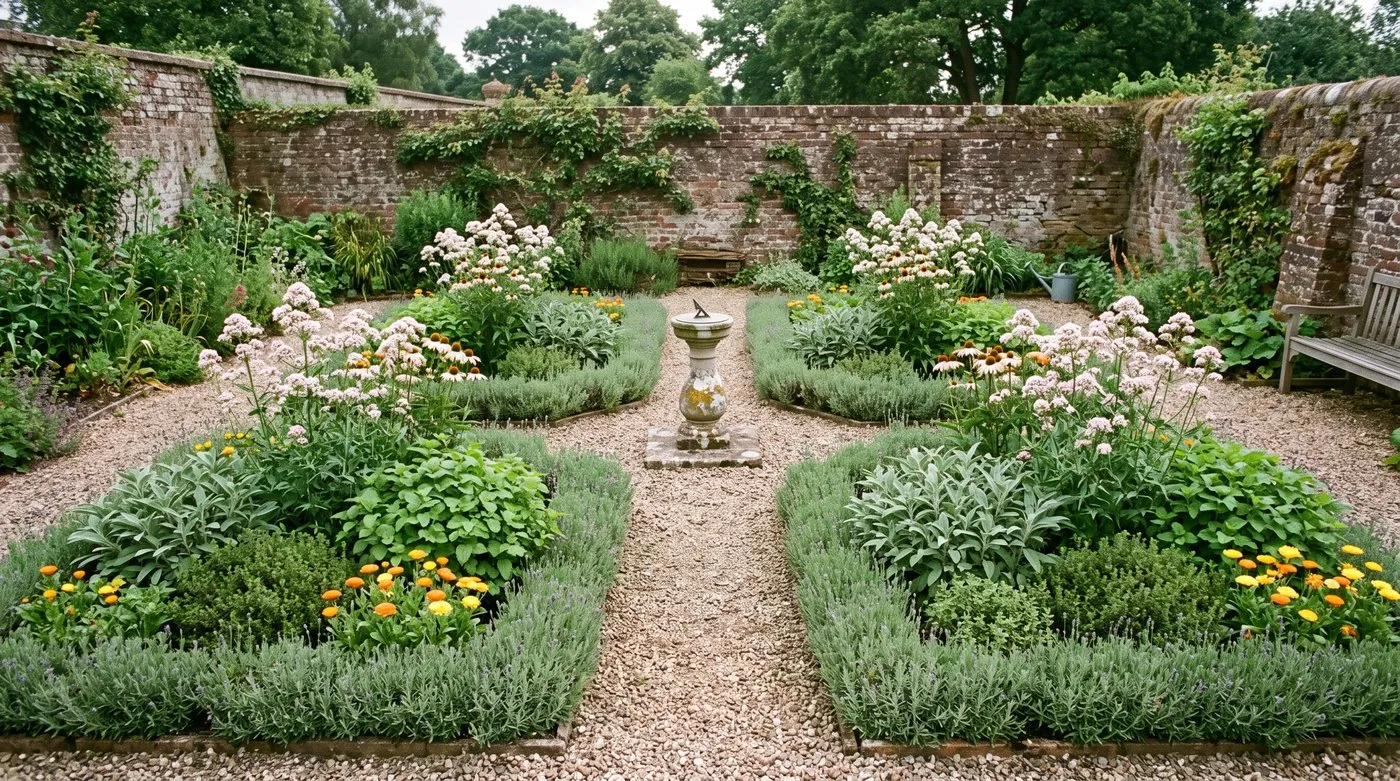
Plant by height: valerian and echinacea at the back or centre, sage and lemon balm in the middle, and thyme and calendula at the front.
A relaxed cottage-style mix
Here there are no rules. Mix herbs with flowers and vegetables. Let chamomile seed into gravel paths, train rosemary against a sunny wall, and dot calendula between your veg for colour and pollinators.
It’s ideal for smaller gardens. Tuck herbs into existing borders and raised beds, where they hold their own as ornamental plants. Echinacea is as showy as any border perennial, and sage gives silvery leaves all year.
What they need to grow well
Most medicinal herbs want the same two things: at least six hours of sun a day and soil that doesn’t sit wet in winter.
Go easy on feeding. Rich soil gives lots of soft leaves but less flavour and scent. A light feed in spring is plenty for most, and rosemary, lavender and thyme prefer poor soil with no feeding at all.
Water new plants regularly through their first summer. After that, most only need a drink in long dry spells. Comfrey and valerian are the exceptions and like damp soil.

Dried calendula, chamomile, lavender and sage keep well in glass jars for winter.
Simple things to make
You don’t need special kit to enjoy your herbs. These need only a kitchen, a few jars and a little patience. For tips on preserving your harvest, see our guide to drying and storing herbs.
Herbal tea
The simplest of all. Put one or two teaspoons of dried herb, or a small handful of fresh leaves or flowers, in a cup. Pour on just-boiled water, cover and steep for 5-10 minutes. Strain and enjoy. Chamomile, lemon balm, sage and thyme all make nice teas.
Calendula balm
Fill a clean jar with dried calendula petals and cover them with olive oil. Leave it somewhere warm for a few weeks, then strain through muslin. Gently melt about 25g of beeswax into every 200ml of oil in a bowl over a pan of hot water, and pour into small tins. It makes a lovely balm for dry, chapped hands.
Comfrey
Comfrey leaves have a long history as a traditional poultice for bruises. If you’re thinking of using it, speak to a pharmacist first. Never use it on broken skin, and never eat or drink it.
Lavender pillow
Fill a small muslin bag with dried lavender and pop it inside your pillowcase. The scent is lovely and relaxing. Refill it every few months as the scent fades.
Stay safe
Herbs are natural, but that doesn’t mean they’re all harmless. Keep these points in mind.
- Check with your GP or pharmacist before using herbal remedies if you take any medicine. Some herbs, especially St John’s wort, can stop medicines working properly.
- Never eat or drink comfrey. It can damage the liver.
- Be sure what you’re picking. Only use herbs you can identify for certain, as some have poisonous look-alikes. Label every plant.
- Pregnancy and breastfeeding. Many herbs aren’t safe in pregnancy, including sage, rosemary in large amounts, feverfew and St John’s wort. Ask your midwife or GP.
- Children. Don’t give herbal remedies to children without professional advice.
For advice on using herbs as medicine, speak to a practitioner registered with the National Institute of Medical Herbalists. For growing tips, the RHS herb guides are a great place to start.
How to start your medicinal herb garden
Making a herb garden from scratch is easy. Pick a sunny, sheltered spot and mark out a bed of about 2m by 3m. On heavy soil, dig in grit to help drainage. Plant in April or May, spacing each herb by its final size.
Start with five or six herbs in your first year. Calendula, chamomile, lemon balm, sage, thyme and lavender make a great first collection. Add echinacea, valerian, comfrey and the rest as you go.
Label everything with its common and botanical name. It looks smart, and it’s important for safety, because you should never use a plant you can’t name for sure.
No room for a bed? A few pots on a sunny patio can still hold a useful collection. If you enjoy growing vegetables on a windowsill, chamomile and lemon balm can be grown in pots on a bright sill too.
Frequently asked questions
What are the easiest medicinal herbs to grow in the UK?
Calendula, chamomile and mint are the easiest. All three settle in fast, cope with ordinary soil and give you a harvest in their first year. Mint spreads, so grow it in a pot or sink a pot into the ground. Lemon balm is another easy one.
How much space do I need for a medicinal herb garden?
A bed of about 2m by 3m is plenty. Put tall plants like valerian and echinacea at the back, mid-height ones like sage and lemon balm in the middle, and low ones like thyme and chamomile at the front. Leave a narrow path so you can reach everything.
Can I grow medicinal herbs in pots?
Yes, lots of them grow well in pots. Use pots at least 30cm across with drainage holes and free-draining compost. Rosemary, sage, thyme, chamomile and lemon balm all suit pots. Big plants like comfrey and valerian are better in the ground. Water pots regularly in summer.
Are medicinal herbs safe to use at home?
Not always, so take care. St John’s wort can interfere with the contraceptive pill, blood thinners and antidepressants. Comfrey can damage the liver and must never be eaten or drunk. Always check with your GP or pharmacist first, especially if you take any medicines.
When should I harvest medicinal herbs?
Pick leaves in the morning, once the dew has dried. Pick flowers when they’re fully open, before they fade. Dig roots like valerian and echinacea in autumn, once plants are two or three years old. Dry your harvest quickly somewhere warm, airy and shady.
Do medicinal herbs need full sun?
Most do, ideally six hours of sun a day. Rosemary, lavender, thyme and sage really need a sunny, well-drained spot. Lemon balm, mint and valerian cope with some shade. Put sun-lovers in your brightest spot and the others where there’s less light.
Can I make herbal tea from garden herbs?
Yes, lots of garden herbs make nice tea. Chamomile flowers, lemon balm, mint and sage are popular. Use a teaspoon or two of dried herb, or a small handful of fresh leaves, per cup. Pour on just-boiled water and steep for 5-10 minutes. Only use herbs you know for certain.
Our team produces practical UK gardening guidance from source research, contributor records and established horticultural practice. Editorial standards are overseen by Matt W.