
Key takeaways
- German chamomile is an annual grown for tea, while Roman chamomile is a low perennial
- Sow seed on the surface from March to May, as it needs light to sprout
- 'Treneague' is the one for chamomile lawns, as it doesn't flower
- Pick flowers when the petals start to bend back, from June to August
- It loves poor, well-drained soil and sun, so don't feed it
- Dry flowers somewhere warm and airy, then keep them in an airtight jar
Chamomile is one of the easiest and most rewarding herbs you can grow. Both main types are happy in poor soil, shrug off dry spells and bring hoverflies and bees into the garden. German chamomile gives you a summer of fresh tea. Roman chamomile carpets paths and borders with soft, feathery, apple-scented leaves.
The name comes from the Greek for “ground apple”, after the sweet smell of the crushed leaves. Growing it takes very little effort. The only real choice is which type suits your garden.
Which type of chamomile should I grow?
The two main types look alike but behave very differently. It comes down to whether you want tea, ground cover or a chamomile lawn.
German chamomile (Matricaria chamomilla) is a hardy annual. It grows upright to 45-60cm and is smothered in small white daisies from June to August. This is the one grown for herbal tea. It seeds itself about happily and will pop up around most gardens.
Roman chamomile (Chamaemelum nobile) is a low perennial, only 10-15cm tall. It spreads by creeping runners into a dense mat of feathery leaves with a strong apple scent. This is the type used for chamomile lawns.
| German chamomile | Roman chamomile | |
|---|---|---|
| Type | Hardy annual | Hardy perennial |
| Height | 45-60cm | 10-15cm |
| Spread | 20-30cm | 30-45cm, by runners |
| Best for | Tea, attracting helpful insects | Lawns, paths, ground cover |
| Seeds itself about | Lots | Rarely |
| Soil | Any well-drained soil | Sandy, free-draining soil |
How to sow chamomile from seed
Chamomile seed is tiny and needs light to sprout, so never bury it.
Indoors (March to April): fill 9cm pots or module trays with seed compost mixed with some perlite. Water and let it drain. Scatter the seed thinly on top and press it in gently with a flat piece of card. Don’t cover it. Put the pots in a propagator or on a bright windowsill. Seedlings appear in about two weeks.
Outdoors (late April to May): rake the soil fine, scatter the seed on the surface and tap it down with the back of the rake. Water with a fine rose and keep it moist until the seedlings come up. Our guide to sowing seeds indoors covers the basics.
Thin seedlings when they have two pairs of true leaves. Space German chamomile 20-25cm apart. Space Roman chamomile 15cm apart for ground cover, or 30cm for single plants. Harden off indoor plants for a week or so and plant them out after the last frost, usually late May in most of England.
 A ‘Treneague’ chamomile lawn makes a dense green carpet with no flowers to deadhead.
How to create a chamomile lawn
Chamomile lawns have been around in British gardens for centuries. The secret is picking the right plant and preparing the ground well.
‘Treneague’ is the one to use. It doesn’t flower, so it’s grown from divisions rather than seed. That means no deadheading, just an even green carpet that smells of apples when you walk on it.
Get the ground ready first. Clear away turf and weeds. Dig the soil over to about 15cm and mix in sharp sand if it’s heavy clay, because chamomile lawns fail on soggy ground. Rake it level and firm it by walking over a board.
Plant plugs 15cm apart in a grid. Water daily for the first three weeks. After that, water only in long dry spells.
A chamomile lawn is best for small, pretty areas of a few square metres. It won’t take heavy wear like grass. If you need something tougher, have a look at our lawn alternatives and ground cover plants.
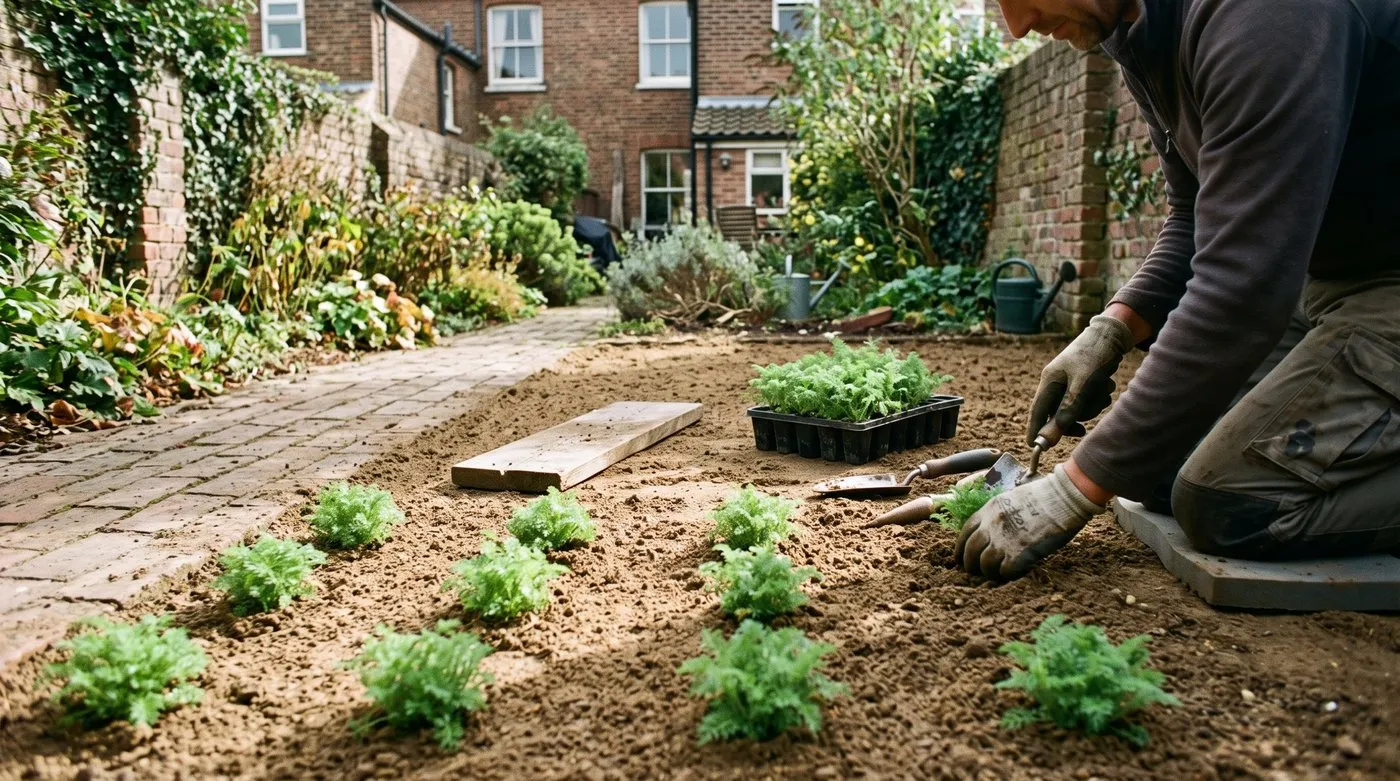
Plant plugs in a grid about 15cm apart on well-drained, firmed soil. Water daily for the first three weeks while they knit together.
Month-by-month chamomile calendar
| Month | What to do |
|---|---|
| January | Order seed. Plan where it’s going. |
| February | Clean pots and trays. Check stored dried flowers are still dry. |
| March | Sow German chamomile indoors. Divide Roman chamomile clumps. |
| April | Keep sowing indoors. Sow outside in mild areas. |
| May | Plant out hardened-off seedlings after the last frost. Sow outside in the north. |
| June | First flowers. Start picking when the petals bend back. |
| July | Main picking time. Trim Roman chamomile after flowering. |
| August | Keep picking. Leave some German chamomile flowers to set seed. |
| September | Collect German chamomile seed. Plant ‘Treneague’ plugs. |
| October | Clear old German chamomile stems. Top-dress Roman chamomile with grit, not compost. |
| November | Tidy beds. Self-sown seedlings may appear in a mild autumn. |
| December | Enjoy your dried flowers. Order ‘Treneague’ plugs for spring. |
Use this alongside our herb growing guide to plan your whole herb garden.
Making chamomile tea from your harvest
Growing your own tea is one of the nicest reasons to have a herb garden. German chamomile has the best flavour for tea.
 Freshly picked flowers drying on a rack, with a cup of golden chamomile tea behind.
When to pick: pick the flower heads when the white petals start to bend back from the yellow centre. Pick in the morning once the dew has dried, before the heat of the day.
Drying: spread the flowers in a single layer on a mesh screen or dehydrator tray. In a dehydrator, a low setting dries them in two or three days. Air-drying in a warm, airy room takes about a week. They’re ready when the petals feel papery and snap rather than bend. Keep them in an airtight glass jar away from light and use within a year.
Fresh tea: use 4-5 fresh flower heads per cup. Pour over just-boiled water and leave for 5 minutes. Any longer and it can turn bitter. Strain and enjoy, perhaps with a little honey.
Dried tea: use 1-2 teaspoons of dried flowers per cup. The flavour is stronger than fresh, with a honey-like warmth. It’s lovely mixed with other home-grown herbal teas such as mint, lemon balm and lemon verbena.
Chamomile as a companion plant
Gardeners have long called chamomile the “plant doctor”. The real benefit is that its flowers bring in hoverflies, ladybirds and other helpful insects that eat aphids, plus plenty of bees.
Good places to grow it:
- Around the veg patch, near cabbages and other brassicas, to draw in aphid-eaters
- Near onions and garlic, which like the same sunny, well-drained spots
- Under fruit trees, where the flowers help bring in pollinators
- At the front of a rose bed, for a soft cottage look
Keep it away from mint, which spreads fast and will crowd it out.
 Chamomile is happy in raised beds and pots, so it’s great for small city gardens.
Common chamomile mistakes
Burying the seed. Chamomile seed needs light to sprout. Always sow on the surface and press it in gently.
Overwatering. Chamomile copes with dry spells far better than with wet feet. On heavy clay, waterlogged roots soon rot. Mix plenty of grit or sharp sand into the planting hole.
Overfeeding. Chamomile flowers best in poor soil. Compost or fertiliser gives you lush leaves and fewer flowers. At most, give one half-strength tomato feed in late May.
Mixing it up with lookalikes. Stinking mayweed looks a lot like chamomile but can irritate skin. Crush a leaf to check: true chamomile smells of sweet apples, while stinking mayweed smells nasty. The RHS chamomile guide has photos to help.
Cutting a chamomile lawn too short. Never scalp a ‘Treneague’ lawn. A light trim with shears, or a mower on its highest setting, now and then is plenty.
Growing chamomile in pots
Both types grow well in pots, so chamomile is great for balconies, patios and windowsills. German chamomile needs a pot at least 20cm deep and 25cm wide. Roman chamomile is happy in a wide, shallow pot of 10-15cm.
Use half multipurpose compost and half grit, so it drains well. Terracotta suits it better than plastic, as it doesn’t stay as wet. Stand the pot in full sun and water when the top 3cm of compost feels dry.
German chamomile in a pot gives a few less flowers than in the ground. But having it close by makes picking easy, and it looks lovely in a balcony herb garden with basil, parsley and chives.
In winter, move pots of Roman chamomile to a sheltered spot by a south-facing wall. Raise them on pot feet so they don’t sit in water.
Now you know how to grow chamomile from seed to teacup, read our guide on edible flowers to find more blooms you can eat and drink from your garden.
Frequently asked questions
What is the difference between Roman and German chamomile?
Roman chamomile is a low perennial, German is a taller annual. Roman chamomile (Chamaemelum nobile) grows about 15cm tall, spreads by runners and suits lawns and paths. German chamomile (Matricaria chamomilla) grows 45-60cm tall, seeds itself about and is the one most people grow for tea. Both are hardy here.
When should I sow chamomile seeds in the UK?
Sow indoors from March or outside from late April. The seed needs light to sprout, so scatter it on the surface and don’t cover it. Indoors, seedlings appear in a couple of weeks. In northern England and Scotland, wait until mid-May to sow outside.
Can you grow a chamomile lawn in the UK?
Yes, chamomile lawns grow well in most of the UK. Use the non-flowering ‘Treneague’, which spreads to make a dense, fragrant carpet. Plant plugs 15cm apart in spring on well-drained soil. It copes with light footsteps and smells of apples when you walk on it. Expect to hand weed in the first year.
How do I make chamomile tea from fresh flowers?
Pick the flowers when the petals start to bend back. Use 4-5 fresh heads per cup, or 1-2 teaspoons of dried flowers. Pour over boiling water and leave for 5 minutes, as longer can taste bitter. Fresh flowers give a lighter, sweeter cup than dried. Pick in the morning once the dew has dried.
Is chamomile safe for pets and children?
It’s mild, but not completely harmless. Chamomile belongs to the daisy family, so people with daisy or ragweed allergies may react to it. Pets that eat a lot of it can get an upset tummy, so don’t let them graze on it. Don’t mix it up with stinking mayweed, a lookalike weed that can irritate skin.
Does chamomile come back every year?
Roman chamomile does, as it’s a hardy perennial. German chamomile is an annual, but it seeds itself so freely it often seems to come back. Leave a few flower heads to go to seed and new seedlings pop up in spring. Thin them to about 20cm apart.
Why is my chamomile not flowering?
Usually not enough sun. Chamomile needs a sunny spot to flower well. Too much feeding also gives you leaves instead of flowers. Poor, free-draining soil with no fertiliser gives the best show. In shade or rich, damp soil you’ll get leafy plants with few flowers.
Our team produces practical UK gardening guidance from source research, contributor records and established horticultural practice. Editorial standards are overseen by Matt W.


