Key takeaways
- It only copes with light frost, so it needs winter protection or a pot you can move
- The leaves have the strongest lemon scent of any herb
- It loves a sunny south-facing wall and soil that drains freely
- A pot is the safest way to grow it in most of the UK
- Take soft cuttings in June for easy new plants
- A few fresh leaves in boiling water make a gorgeous tea
Lemon verbena is the most lemony herb you can grow in a UK garden. Just brush past it and the scent is amazing. It beats lemon balm, lemon thyme and lemongrass for pure citrus punch.
It needs a bit more care than tough herbs like rosemary or thyme. It drops its leaves in winter and the bare stems look dead for months, so lots of people give up too soon. Give it a warm spot and some winter protection, and it’ll reward you with armfuls of fragrant leaves from May to October.
What is lemon verbena?
Lemon verbena (Aloysia citrodora) is a deciduous shrub from South America. In the wild it can grow 3m tall. In UK gardens, expect 1-1.5m in a sheltered spot.
The leaves are the star. They’re long, narrow and pointed, growing in threes around the stem, and packed with lemon scent.
Small white or pale lilac flowers appear in late summer. Bees and hoverflies like them, but the leaves are really what you grow it for.
The RHS plant page for lemon verbena rates it as half-hardy, meaning it only takes light frost. Older plants in well-drained soil by a warm wall sometimes come through colder spells, but it’s best not to count on it.
 A big terracotta pot is the safest way to grow lemon verbena in most of the UK, as you can move it to shelter in winter.
Where should I plant lemon verbena in the UK?
Where you put it matters most. Get it right and the plant looks after itself all summer. Get it wrong and you could lose it in the first winter.
Sunlight and warmth
Lemon verbena wants full sun, at least six hours a day. A south-facing wall is perfect, as the brick soaks up heat by day and gives it back at night. A west-facing wall is the next best thing.
Don’t plant it in shade or against a north wall. Without warmth and light, the leaves lose their scent and the plant goes leggy and weak.
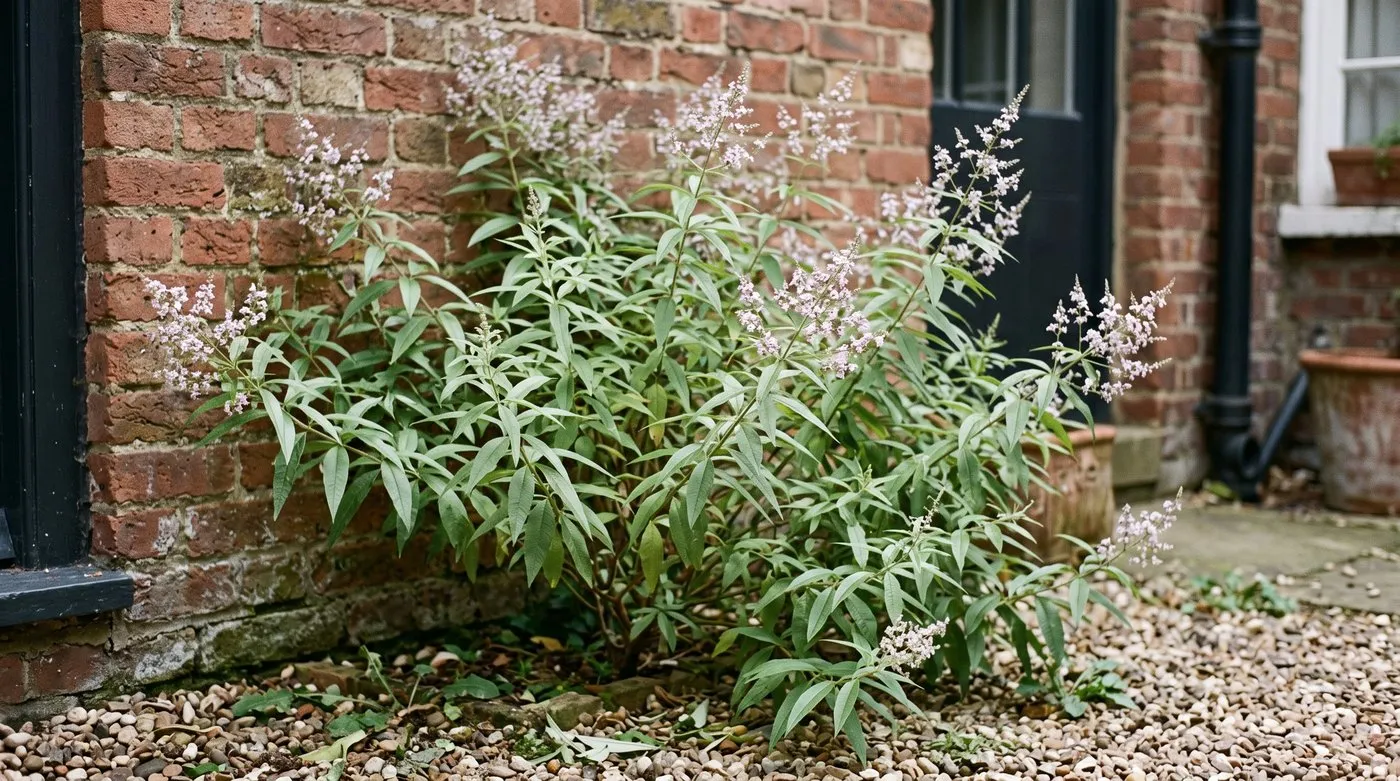
A south-facing wall gives lemon verbena the warmth it needs. In shade the leaves lose their scent and the plant gets leggy.
Soil requirements
It must have soil that drains freely. Cold, wet clay in winter will finish it off.
On heavy soil, mix plenty of horticultural grit into the planting hole. Or build a little raised bed at the foot of a south-facing wall, using half topsoil and half grit. Reasonably fertile soil is best. Unlike rosemary, which likes lean soil, lemon verbena enjoys a little feeding in summer.
Wind protection
Shelter from cold north and east winds makes a big difference. A corner between two walls, a courtyard or a spot behind a solid fence is ideal. Cold wind plus frost does more harm than still cold air.
If you’re planning a Mediterranean-style garden, lemon verbena is a star for a warm, sheltered corner with lavender, rosemary and sage.
How to grow lemon verbena in containers
A pot is the best way for most UK gardeners. It sorts out both drainage and winter cold, as you control the compost and can move it under cover when frost threatens.
Choosing the right pot
Use a terracotta pot at least 40cm across. Terracotta lets moisture escape through the sides, so the roots stay drier than in plastic. Make sure it has drainage holes, and stand it on pot feet.
Bigger is better. Lemon verbena has a big root system, and a cramped pot means weak growth and a plant that suffers more in drought and cold. Big, older plants are happy in a 50cm pot or half-barrel.
Compost mix
Fill with half John Innes No.2 and half horticultural grit. It feeds the plant and drains fast. Plain multi-purpose compost holds too much water and packs down over the summer.
Top the pot with 2cm of gravel or grit. It keeps the base of the plant dry and helps it through winter.
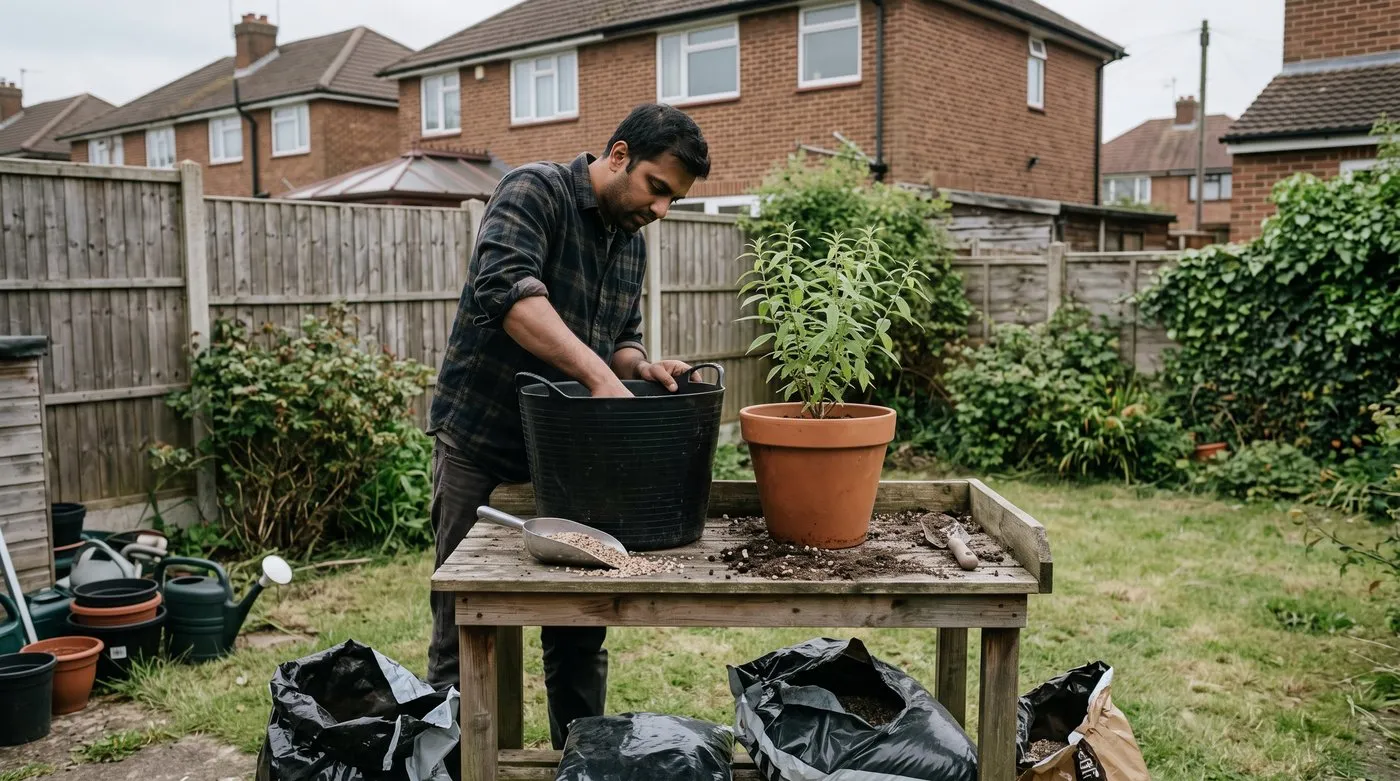
Half loam-based compost and half grit gives the fast drainage it needs. Top the pot with a little gravel to keep the base dry over winter.
Watering and feeding
Water regularly from May to September, letting the top few centimetres dry out between drinks. In hot weather, a pot in full sun may need water every other day. Give a half-strength balanced liquid feed every fortnight from June to August. Stop feeding in September so the stems firm up before winter.
From November to March, hardly water at all. A resting plant with no leaves uses very little. A light drink every few weeks stops the roots drying right out.
Repotting
Repot every two years in April, into a pot one size bigger with fresh compost. Gently tease out circling roots as you go. Healthy roots are white or pale cream. Brown, mushy roots mean it’s been too wet.
If you like growing edibles in pots, our guide to growing fruit in pots has more tips on drainage and feeding.
How to protect lemon verbena in winter
Winter protection is the key skill for growing lemon verbena in the UK.
The winter timeline
October: Water less as growth slows. Don’t feed.
November: Once the leaves drop, move pots into an unheated greenhouse, conservatory, cold porch or a garage with a window. It needs to stay frost-free or close to it, not warm. You can trim stems lightly to make the pot easier to move, but save the main prune for spring.
December to February: Keep the compost barely damp and check once a month. It will look completely dead, with dry brown stems. That’s normal.
March: Look for green buds swelling. Scratch the bark gently with a thumbnail. Green underneath means it’s alive.
April to May: Move pots back outside once the nights are reliably frost-free. That’s usually late April in southern England and mid-May further north. Ease it into full sun over a week or so.
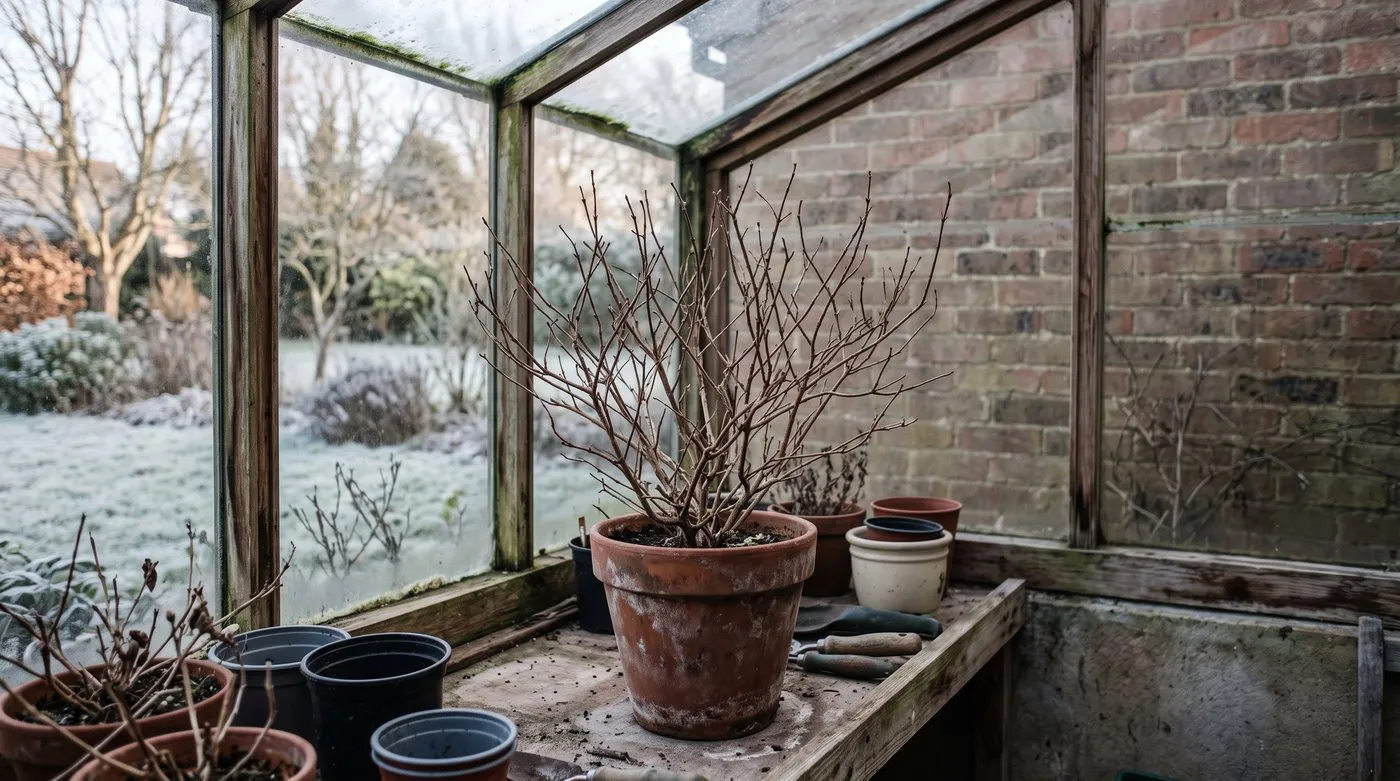
It looks dead all winter, and that’s normal. Keep it frost-free and the compost barely damp until spring.
Protecting plants in the ground
For plants in the ground, spread a 10-15cm mulch of bark chips or straw over the base in November. In cold spells, cover the plant with fleece pegged down at the edges. Take the fleece off in March as growth starts.
In the mildest parts of the UK, such as coastal Cornwall and Devon, London and the Channel Islands, older plants against a warm wall often come through an average winter with no help. A really hard winter can still kill them, so a mulch is good insurance.
How to propagate lemon verbena from cuttings
Cuttings are easy and give you free plants, either as spares or to share with friends.
Softwood cuttings (June)
This is the most reliable method.
- Pick healthy, bright green shoot tips without flowers
- Cut 10cm lengths just below a leaf joint with clean, sharp secateurs
- Strip the leaves off the bottom 5cm
- Dip the cut end in rooting powder
- Push into 9cm pots of half perlite, half peat-free compost
- Water once and cover with a clear plastic bag, or use a propagator
- Keep warm, in bright light but out of direct sun
- Lift the cover for a bit each day to let fresh air in and stop mould
- Roots usually form in 3-4 weeks. A gentle tug that meets resistance means it’s rooted
Semi-ripe cuttings (August)
Take 10-15cm lengths of this year’s growth that are firming up at the base but still soft at the tip. Treat them the same way. They take a little longer to root.
Once rooted, pot them up in 9cm pots of John Innes No.2 and grit. Keep them in a frost-free greenhouse or on a bright windowsill over winter, then plant out or pot on in May. Young plants feel the cold more, so keep them in pots with winter protection for an extra year.
 Pick leaves regularly from May to October. Pinching out shoot tips keeps the plant bushy.
How to harvest and use lemon verbena
The leaves are at their most fragrant from June to August, but you can pick from May until the first frosts.
Harvesting technique
Pick single leaves or pinch out whole shoot tips just above a pair of leaves. Regular picking keeps it bushy and stops it going leggy. One good-sized plant gives you enough for a daily cup of tea all summer.
Don’t take more than a third of the leaves at once. It needs them to build up strength for winter.
Making lemon verbena herbal tea
This is one of the loveliest teas you can make from your garden. It’s clean, bright and very lemony, without the bitterness of lemon peel. In France it’s called verveine and you’ll find it in every café.
Fresh leaf tea: Put 5-6 fresh leaves in a cup, pour on boiling water and leave for 5-7 minutes. It turns a pale golden-green. Drink it without milk, with a little honey if you like.
Dried leaf tea: Use a teaspoon of dried leaves per cup and leave for 7-10 minutes. It’s milder but still lovely.
It’s caffeine-free, and many people enjoy it as a soothing after-dinner drink.
Cooking with lemon verbena
The leaves add a bright lemon note to sweet and savoury dishes, and unlike lemon zest they don’t turn bitter with heat.
Sweet: Infuse the leaves in cream or milk for ice cream, panna cotta and custard. Add them to sugar syrup for cocktails and fruit salad. Bake them into sponges and shortbread. Layer fresh leaves with caster sugar in a jar for lemon verbena sugar, ready in a couple of weeks.
Savoury: Tuck leaves inside chicken or fish before roasting. Add finely chopped leaves to salad dressings and herb butter.
Drying and preserving
Air drying: Cut stems in the morning once the dew has dried. Tie small bundles with string and hang them upside down somewhere warm, dry and airy, out of direct sun. They take about a week. Strip off the leaves and keep them in an airtight jar, where they hold their scent for many months.
Freezing: Freeze single leaves flat on a tray, then bag them up. Use them straight from the freezer in tea and cooking within about six months.
 Fresh lemon verbena tea: 5-6 leaves in boiling water for 5-7 minutes.
How does lemon verbena compare to other lemon-scented herbs?
Plenty of herbs smell of lemon, but they differ a lot in strength, toughness and use.
| Lemon verbena | Lemon balm | Lemon thyme | Lemongrass | |
|---|---|---|---|---|
| What it is | Shrub | Bushy herb | Low, mat-forming herb | Tropical grass |
| Hardiness | Light frost only | Fully hardy | Hardy | Frost-tender |
| Size | Tall | Medium | Low | Medium-tall |
| Lemon strength | Very strong | Mild | Medium | Strong |
| Best for | Tea, puddings, scent | Tea, salads | Cooking, ground cover | Asian cooking, soups |
| In winter | Drops all its leaves | Dies back, regrows | Evergreen | Needs to come indoors |
| How easy | Medium (needs protection) | Very easy (self-seeds) | Easy | Hard (needs warmth) |
Lemon verbena wins for scent and kitchen uses. Lemongrass is strong too but very hard to grow outside here. Lemon balm is the easiest but much milder and seeds everywhere. Lemon thyme makes good ground cover but its leaves are tiny.
For a good mix in a UK kitchen garden, grow lemon verbena in a pot and lemon thyme in the ground.
Common mistakes when growing lemon verbena
Overwatering in winter
The number one killer. A resting plant in cold, wet compost soon gets root rot. Hardly water at all from November to March, and tip pots slightly after heavy rain to drain them.
Giving up on dead-looking stems
Every year, people throw out healthy lemon verbena because the bare brown stems look dead. It’s just dropped its leaves for winter. Scratch the bark in March. Green underneath means it’s alive, and new shoots usually appear in April.
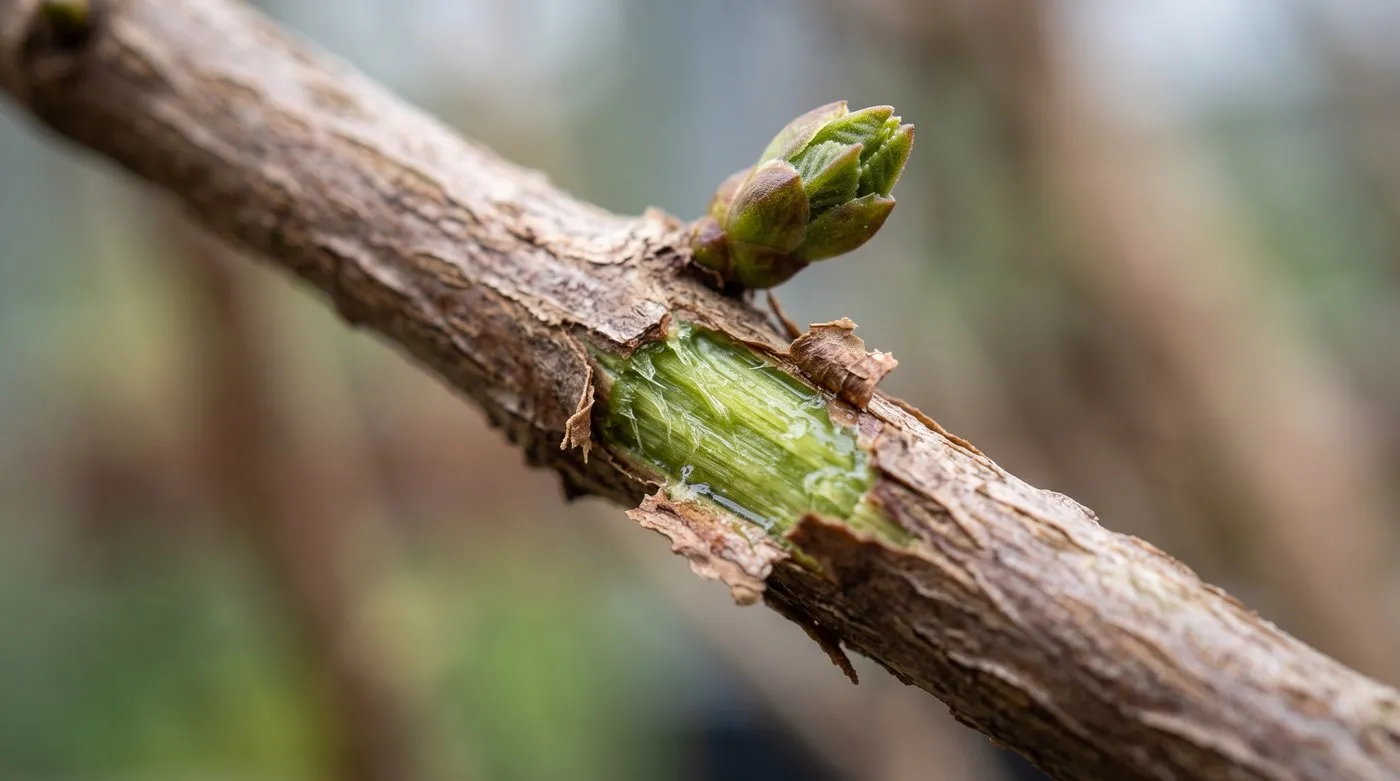
Scratch the bark gently in March. Green underneath means it’s alive, and new shoots usually follow in April.
Planting in heavy clay without drainage
Heavy clay holds too much winter wet. If you really want it in the ground, dig out a big hole and refill it with half topsoil and half grit, with some gravel in the bottom. Even then, a pot is safer on clay.
Not hardening off after winter
Moving a plant straight from its winter shelter into full sun can scorch the soft new leaves. Ease it out over a week or so, starting in dappled shade.
Pruning at the wrong time
Don’t prune hard in autumn or winter. Wait until new growth appears in April or May, then cut back to the strongest new shoots and remove any dead wood.
Month-by-month lemon verbena calendar
| Month | What to do |
|---|---|
| January | Leave it resting. Make sure it’s frost-free. Water only if bone-dry |
| February | Check for signs of life. Order new plants for spring |
| March | Scratch the bark to check for green. Look for swelling buds |
| April | Prune out dead wood and cut back to strong new shoots. Start watering |
| May | Move pots outside after hardening off. Plant new ones. Start picking |
| June | Take softwood cuttings. Feed every fortnight. Keep picking |
| July | Keep feeding and watering. Peak picking time. Pinch out flower spikes |
| August | Take semi-ripe cuttings. Dry spare leaves for winter |
| September | Stop feeding. Water less. Pick the last leaves before frost |
| October | Leaves yellow and drop. Get winter protection ready |
| November | Move pots under cover. Mulch plants in the ground |
| December | Leave it resting. Water very little. Keep frost off |
How to protect lemon verbena from frost
Frost protection matters for anyone growing tender plants in the UK. Lemon verbena sits right at the edge of what survives a British winter, so a little care goes a long way.
Pots: Move them into an unheated greenhouse, conservatory or frost-free garage with a window by early November. A lean-to greenhouse against the house is ideal, as it gets some warmth from the building.
In the ground: Spread 10-15cm of bark mulch over the base. In cold spells, cover with a double layer of fleece pegged down at the edges, and wrap the lower stems too. Take it all off in late March once frosts ease.
Surprise frosts: If a hard frost is forecast and the plant is still outside, throw fleece over the whole thing and tuck it in at the base.
Now you’ve got lemon verbena sorted, try our guide to growing herbs in the UK for all the other kitchen herbs that do well in British gardens.
Frequently asked questions
Is lemon verbena hardy in the UK?
Not fully, as it only survives light frost. In a sheltered south-facing spot in southern England, established plants often get through winter outside with a thick mulch over the base. Elsewhere, grow it in a pot and move it into an unheated greenhouse or porch from November to April.
Can I grow lemon verbena in a pot?
Yes, and it’s the best way for most UK gardeners. Use a 40cm terracotta pot with drainage holes, filled with half John Innes No.2 and half horticultural grit. You can then move it somewhere frost-free in winter and back outside in May. Repot every two years in spring, into a slightly bigger pot.
When should I take lemon verbena cuttings?
June is the best time, using soft new growth. Cut 10cm tips just below a leaf joint, strip the lower leaves and push them into half perlite, half peat-free compost. Keep them warm and they usually root in 3-4 weeks. Cuttings in August work too, but take a little longer.
How do I make lemon verbena tea?
Use 5-6 fresh leaves per cup of boiling water. Leave for 5-7 minutes. It tastes clean, bright and very lemony, with no bitterness. Dried leaves work too but are milder. It’s caffeine-free and a favourite after-dinner drink in France and Spain.
Why has my lemon verbena lost all its leaves?
Don’t worry, that’s normal in autumn and winter. Lemon verbena drops all its leaves once the nights turn cold. The bare stems look dead but usually aren’t. In March, scratch the bark gently with a thumbnail. Green underneath means it’s alive, and new leaves should follow from April.
What is the difference between lemon verbena and lemon balm?
They’re completely different plants from different families. Lemon verbena is a tender South American shrub. Lemon balm is a hardy European herb in the mint family. Lemon verbena has a much stronger, cleaner lemon scent. Lemon balm is tougher but self-seeds everywhere.
Can lemon verbena survive winter outdoors in the UK?
Sometimes, in mild, sheltered gardens. In southern England, London and coastal areas, established plants by a warm wall often survive mild winters. Mulch the base with 10-15cm of bark chips in November. In colder areas, a pot moved under cover is far safer. Young plants are more at risk than older ones.
Our team produces practical UK gardening guidance from source research, contributor records and established horticultural practice. Editorial standards are overseen by Matt W.